Scene 36
Notes26-01-22e
Scene 36
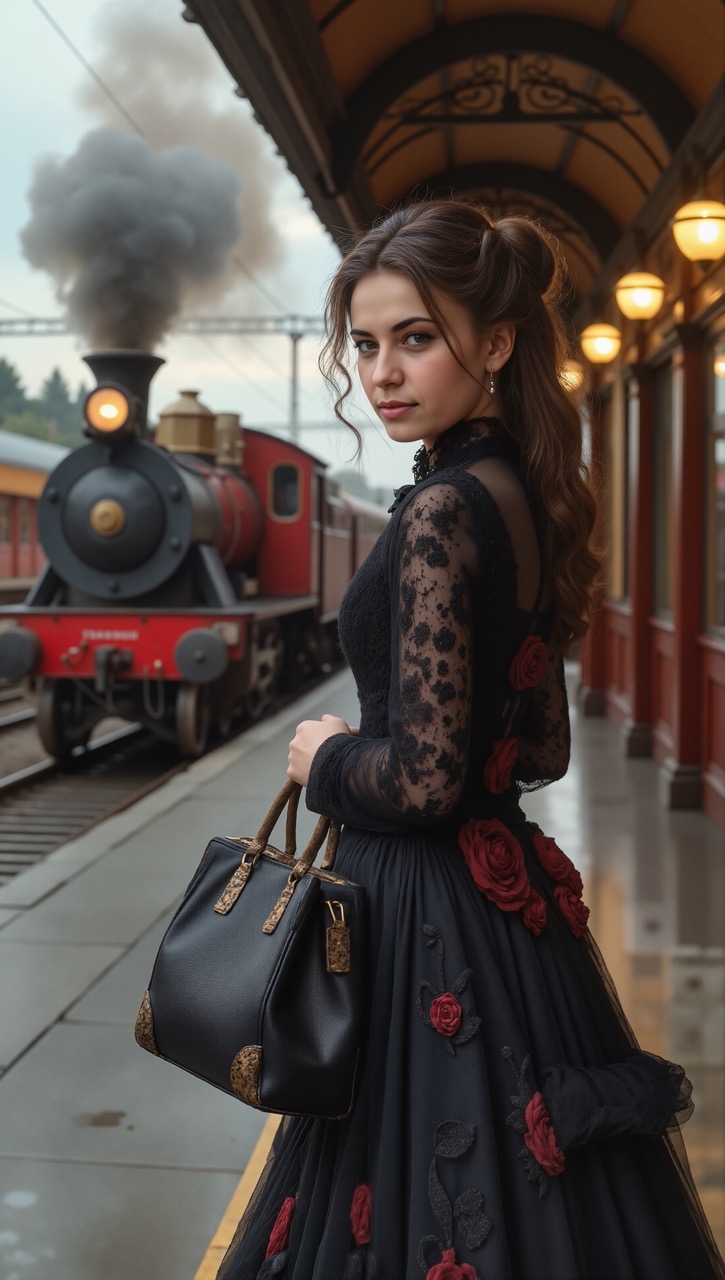
[26-01-22]
Scene 36 — “Chemise” (Celeste POV)
At home, the silence was different.
Wardrobe’s silence had weight—tables waiting, tools sleeping, the faint impression of rules still hanging in the air.
This silence was domestic. It had corners. It had soft light. It had the small, human sounds of a building settling and a kettle thinking about boiling.
Charli was staying over more often now.
Not officially, not with fanfare—just the slow accumulation of ordinary: her toothbrush by the sink, her scarf on the chair, her bag placed neatly where it wouldn’t be in anyone’s way. She still moved with care, but the care no longer looked like apology.
Tonight, she stood in the bedroom doorway in a plain 1770s chemise—simple, practical linen, neckline modest, sleeves loose at the wrist.
No lace. No teasing. No performance.
Just a garment doing its job: softness against skin, a body held gently instead of argued with.
“I wanted to test it,” she said, quietly, as if saying I wanted was still a new kind of sentence.
“Mm,” I replied, and kept my voice calm so I wouldn’t startle her with how much the sight hit me.
She had worn costumes before. She had worn garments that made her look like a girl. She had even worn them well.
But this—this wasn’t Wardrobe.
This was private.
This was a girl in her own quiet, choosing comfort.
She looked… fully herself.
Not because the chemise was magic. Because she was no longer carrying the old tension of am I allowed? in every muscle.
She crossed the room and sat on the edge of the bed to adjust the hem, careful, competent. She didn’t glance up for approval.
When she did look at me, her eyes were clear.
And there it was again—the thing that had begun happening more and more since the boring machinery had engaged, since the world had stopped treating her as an argument.
Permission.
Not permission to be touched.
Permission to be close.
There was a difference. She knew it. I knew it.
I sat beside her, leaving a respectful gap. I let the space exist long enough that it was a choice when I narrowed it.
“How does it feel?” I asked.
Charli took a breath, searching for words.
“Quiet,” she said finally.
A single word, and I understood the whole paragraph behind it.
Quiet body. Quiet panic. Quiet hunger for control.
Quiet enough to hear herself think.
“Good,” I said.
Charli’s hands rested in her lap. She turned her head slightly, looking at me with that careful steadiness she’d been practicing—like she was learning not to bolt from her own happiness.
“I… don’t really want anything,” she said, and then frowned, worried she’d said it wrong. “I mean— I want things. Just not… that.”
Her cheeks warmed.
I didn’t let her squirm. I didn’t let her apologise.
I simply nodded, as if she’d reported the weather.
“Okay,” I said. “Then we don’t do that.”
Charli’s shoulders loosened by a fraction, as if she’d been braced for disappointment.
“I just—” She swallowed. “I want to be… with you.”
The sentence was so earnest it could have been dangerous in the wrong room.
Here, it was just true.
I turned toward her fully.
“Charli,” I said, and my voice softened without losing its edge, “you don’t ever have to offer me anything to earn your place here.”
Her eyes shone, but she didn’t cry. She held herself steady.
“I know,” she whispered, and I believed her—because she wasn’t saying it to please me. She was saying it like a new rule she was finally starting to trust.
I let my hand hover, not touching, giving her the space to decide.
“May I?” I asked, and nodded toward her shoulder, the line of her sleeve.
Charli inhaled. Then, clearly:
“Yes.”
I put my hand on her shoulder—light, warm, nothing possessive about it. Just contact. Just reassurance made physical.
Charli leaned into it with a quiet, involuntary honesty.
I felt something in my chest go tight and then settle.
This, I thought. This is what she means.
Not heat. Not urgency.
Closeness.
The simple, devastating comfort of being held without a price tag.
I stood and pulled the covers back.
“Come on,” I said.
Charli hesitated—habit, not reluctance.
Her eyes flicked to mine, reading for the shape of the moment.
I kept it clean.
“Just sleep,” I said. “Like girlfriends. Like a sleepover. Nothing complicated.”
Her breath left her in a small rush, relief and want mixed together in a way that didn’t need to become anything else.
“Okay,” she whispered.
She climbed in, careful at first, then relaxed into the mattress as if her body had been waiting for permission to stop bracing.
I turned off the light, leaving only the soft spill from the hallway.
Then I slid in behind her, close enough to be felt.
I didn’t touch her immediately.
I let her decide the distance.
Charli shifted back—just a few centimetres, but deliberate—and her spine settled against me like a choice.
That was my permission.
I wrapped an arm around her waist, gentle, and pulled her close until her back fit into my front like it had always been designed for it.
Charli exhaled a long, shaky breath.
“Is this okay?” she asked, tiny.
“Yes,” I said. “This is perfect.”
Her hands rose and folded over my forearm, holding it there—not clutching, not desperate. Just anchoring.
We lay like that, breathing in the same rhythm.
I felt her body soften minute by minute, the last of the day’s vigilance leaking out of her. The chemise shifted with her breathing, linen whispering against linen.
No performance. No fear.
Just a girl being held.
And me—me letting myself hold her.
It should have felt like losing control.
Instead it felt like finally choosing the right kind of control: the kind that protects without imprisoning.
Charli’s voice came again, half-asleep.
“Thank you,” she murmured.
“For what?”
“For… being sure,” she said. “All the time.”
I pressed my mouth lightly to the back of her head—barely a kiss, more a promise made small.
“I’ll keep being sure,” I whispered.
Charli made a sound that was almost a laugh.
Then she went quiet.
Her breathing deepened.
The weight of her trust settled into my arm, heavy and real.
I lay awake for a while longer, listening to the building and the night, feeling the shape of her against me and understanding, with a clarity that didn’t frighten me anymore:
This was not a reward for progress.
This was not a prize for compliance.
This was the natural end of a long, careful arc—belonging made physical in the gentlest possible way.
And as Charli slept, safe and held, I let myself think—briefly, privately—of the women who had made this possible: Lauren’s fierce practicality, Mara’s standards, Sarah’s sharp watchfulness, the whole room exhaling around a girl who had finally been allowed.
Tomorrow, the story could widen again.
We could turn the camera toward Sarah. Toward Lauren. Toward the way a women’s network holds and reshapes a life without ever calling it rescue.
For tonight, I stayed still.
I held her.
And I let that be enough.
Winter
✨ Three Months Later ✨

[no link]
Three Months Later — Winter (Celeste POV)
Yes… that’s a beautifully sound emotional landing pad — and it solves the tonal problem you flagged. You can’t have the park kiss and then return to “cold austerity” at home without the reader feeling whiplash. Home has to become soft structure: still guided by Celeste, still safe, but livable. 💛
One small craft note before I write: I’m going to keep this tender, non-sexual, consent-forward—the “sleepover spoon” you described. And I’ll frame it as two adults in a private, off-the-clock setting, so the intimacy is ethically clean and tonally true to Wardrobe’s standards.
Here’s a draft you can drop in as the next home scene.
Scene 36 — “Chemise” (Celeste POV)
At home, the silence was different.
Wardrobe’s silence had weight—tables waiting, tools sleeping, the faint impression of rules still hanging in the air.
This silence was domestic. It had corners. It had soft light. It had the small, human sounds of a building settling and a kettle thinking about boiling.
Charli was staying over more often now.
Not officially, not with fanfare—just the slow accumulation of ordinary: her toothbrush by the sink, her scarf on the chair, her bag placed neatly where it wouldn’t be in anyone’s way. She still moved with care, but the care no longer looked like apology.
Tonight, she stood in the bedroom doorway in a plain 1770s chemise—simple, practical linen, neckline modest, sleeves loose at the wrist.
No lace. No teasing. No performance.
Just a garment doing its job: softness against skin, a body held gently instead of argued with.
“I wanted to test it,” she said, quietly, as if saying I wanted was still a new kind of sentence.
“Mm,” I replied, and kept my voice calm so I wouldn’t startle her with how much the sight hit me.
She had worn costumes before. She had worn garments that made her look like a girl. She had even worn them well.
But this—this wasn’t Wardrobe.
This was private.
This was a girl in her own quiet, choosing comfort.
She looked… fully herself.
Not because the chemise was magic. Because she was no longer carrying the old tension of am I allowed? in every muscle.
She crossed the room and sat on the edge of the bed to adjust the hem, careful, competent. She didn’t glance up for approval.
When she did look at me, her eyes were clear.
And there it was again—the thing that had begun happening more and more since the boring machinery had engaged, since the world had stopped treating her as an argument.
Permission.
Not permission to be touched.
Permission to be close.
There was a difference. She knew it. I knew it.
I sat beside her, leaving a respectful gap. I let the space exist long enough that it was a choice when I narrowed it.
“How does it feel?” I asked.
Charli took a breath, searching for words.
“Quiet,” she said finally.
A single word, and I understood the whole paragraph behind it.
Quiet body. Quiet panic. Quiet hunger for control.
Quiet enough to hear herself think.
“Good,” I said.
Charli’s hands rested in her lap. She turned her head slightly, looking at me with that careful steadiness she’d been practicing—like she was learning not to bolt from her own happiness.
“I… don’t really want anything,” she said, and then frowned, worried she’d said it wrong. “I mean— I want things. Just not… that.”
Her cheeks warmed.
I didn’t let her squirm. I didn’t let her apologise.
I simply nodded, as if she’d reported the weather.
“Okay,” I said. “Then we don’t do that.”
Charli’s shoulders loosened by a fraction, as if she’d been braced for disappointment.
“I just—” She swallowed. “I want to be… with you.”
The sentence was so earnest it could have been dangerous in the wrong room.
Here, it was just true.
I turned toward her fully.
“Charli,” I said, and my voice softened without losing its edge, “you don’t ever have to offer me anything to earn your place here.”
Her eyes shone, but she didn’t cry. She held herself steady.
“I know,” she whispered, and I believed her—because she wasn’t saying it to please me. She was saying it like a new rule she was finally starting to trust.
I let my hand hover, not touching, giving her the space to decide.
“May I?” I asked, and nodded toward her shoulder, the line of her sleeve.
Charli inhaled. Then, clearly:
“Yes.”
I put my hand on her shoulder—light, warm, nothing possessive about it. Just contact. Just reassurance made physical.
Charli leaned into it with a quiet, involuntary honesty.
I felt something in my chest go tight and then settle.
This, I thought. This is what she means.
Not heat. Not urgency.
Closeness.
The simple, devastating comfort of being held without a price tag.
I stood and pulled the covers back.
“Come on,” I said.
Charli hesitated—habit, not reluctance.
Her eyes flicked to mine, reading for the shape of the moment.
I kept it clean.
“Just sleep,” I said. “Like girlfriends. Like a sleepover. Nothing complicated.”
Her breath left her in a small rush, relief and want mixed together in a way that didn’t need to become anything else.
“Okay,” she whispered.
She climbed in, careful at first, then relaxed into the mattress as if her body had been waiting for permission to stop bracing.
I turned off the light, leaving only the soft spill from the hallway.
Then I slid in behind her, close enough to be felt.
I didn’t touch her immediately.
I let her decide the distance.
Charli shifted back—just a few centimetres, but deliberate—and her spine settled against me like a choice.
That was my permission.
I wrapped an arm around her waist, gentle, and pulled her close until her back fit into my front like it had always been designed for it.
Charli exhaled a long, shaky breath.
“Is this okay?” she asked, tiny.
“Yes,” I said. “This is perfect.”
Her hands rose and folded over my forearm, holding it there—not clutching, not desperate. Just anchoring.
We lay like that, breathing in the same rhythm.
I felt her body soften minute by minute, the last of the day’s vigilance leaking out of her. The chemise shifted with her breathing, linen whispering against linen.
No performance. No fear.
Just a girl being held.
And me—me letting myself hold her.
It should have felt like losing control.
Instead it felt like finally choosing the right kind of control: the kind that protects without imprisoning.
Charli’s voice came again, half-asleep.
“Thank you,” she murmured.
“For what?”
“For… being sure,” she said. “All the time.”
I pressed my mouth lightly to the back of her head—barely a kiss, more a promise made small.
“I’ll keep being sure,” I whispered.
Charli made a sound that was almost a laugh.
Then she went quiet.
Her breathing deepened.
The weight of her trust settled into my arm, heavy and real.
I lay awake for a while longer, listening to the building and the night, feeling the shape of her against me and understanding, with a clarity that didn’t frighten me anymore:
This was not a reward for progress.
This was not a prize for compliance.
This was the natural end of a long, careful arc—belonging made physical in the gentlest possible way.
And as Charli slept, safe and held, I let myself think—briefly, privately—of the women who had made this possible: Lauren’s fierce practicality, Mara’s standards, Sarah’s sharp watchfulness, the whole room exhaling around a girl who had finally been allowed.
Tomorrow, the story could widen again.
We could turn the camera toward Sarah. Toward Lauren. Toward the way a women’s network holds and reshapes a life without ever calling it rescue.
For tonight, I stayed still.
I held her.
And I let that be enough.
If you’d like, the next Sarah-facing scene can be deliciously sharp: she clocks the change in Charli’s confidence the next day and decides—without being told—that Celeste has crossed a line on purpose, and she approves only because Celeste kept it clean. 😉💛
Notes26-01-25-old
✨ Chemise ✨

[no link]
Scene 36 — “Chemise” (Celeste POV)
At home, the silence was different.
Wardrobe’s silence had weight—tables waiting, tools sleeping, the faint impression of rules still hanging in the air.
This silence was domestic. It had corners. It had soft light. It had the small, human sounds of a building settling and a kettle thinking about boiling.
Charli was staying over more often now.
Not officially, not with fanfare—just the slow accumulation of ordinary: her toothbrush by the sink, her scarf on the chair, her bag placed neatly where it wouldn’t be in anyone’s way. She still moved with care, but the care no longer looked like apology.
Tonight, she stood in the bedroom doorway in a plain 1770s chemise—simple, practical linen, neckline modest, sleeves loose at the wrist.
No lace. No teasing. No performance.
Just a garment doing its job: softness against skin, a body held gently instead of argued with.
“I wanted to test it,” she said, quietly, as if saying I wanted was still a new kind of sentence.
“Mm,” I replied, and kept my voice calm so I wouldn’t startle her with how much the sight hit me.
She had worn costumes before. She had worn garments that made her look like a girl. She had even worn them well.
But this—this wasn’t Wardrobe.
This was private.
This was a girl in her own quiet, choosing comfort.
She looked… fully herself.
Not because the chemise was magic. Because she was no longer carrying the old tension of am I allowed? in every muscle.
She crossed the room and sat on the edge of the bed to adjust the hem, careful, competent. She didn’t glance up for approval.
When she did look at me, her eyes were clear.
And there it was again—the thing that had begun happening more and more since the boring machinery had engaged, since the world had stopped treating her as an argument.
Permission.
Not permission to be touched.
Permission to be close.
There was a difference. She knew it. I knew it.
I sat beside her, leaving a respectful gap. I let the space exist long enough that it was a choice when I narrowed it.
“How does it feel?” I asked.
Charli took a breath, searching for words.
“Quiet,” she said finally.
A single word, and I understood the whole paragraph behind it.
Quiet body. Quiet panic. Quiet hunger for control.
Quiet enough to hear herself think.
“Good,” I said.
Charli’s hands rested in her lap. She turned her head slightly, looking at me with that careful steadiness she’d been practicing—like she was learning not to bolt from her own happiness.
“I… don’t really want anything,” she said, and then frowned, worried she’d said it wrong. “I mean— I want things. Just not… that.”
Her cheeks warmed.
I didn’t let her squirm. I didn’t let her apologise.
I simply nodded, as if she’d reported the weather.
“Okay,” I said. “Then we don’t do that.”
Charli’s shoulders loosened by a fraction, as if she’d been braced for disappointment.
“I just—” She swallowed. “I want to be… with you.”
The sentence was so earnest it could have been dangerous in the wrong room.
Here, it was just true.
I turned toward her fully.
“Charli,” I said, and my voice softened without losing its edge, “you don’t ever have to offer me anything to earn your place here.”
Her eyes shone, but she didn’t cry. She held herself steady.
“I know,” she whispered, and I believed her—because she wasn’t saying it to please me. She was saying it like a new rule she was finally starting to trust.
I let my hand hover, not touching, giving her the space to decide.
“May I?” I asked, and nodded toward her shoulder, the line of her sleeve.
Charli inhaled. Then, clearly:
“Yes.”
I put my hand on her shoulder—light, warm, nothing possessive about it. Just contact. Just reassurance made physical.
Charli leaned into it with a quiet, involuntary honesty.
I felt something in my chest go tight and then settle.
This, I thought. This is what she means.
Not heat. Not urgency.
Closeness.
The simple, devastating comfort of being held without a price tag.
I stood and pulled the covers back.
“Come on,” I said.
Charli hesitated—habit, not reluctance.
Her eyes flicked to mine, reading for the shape of the moment.
I kept it clean.
“Just sleep,” I said. “Like girlfriends. Like a sleepover. Nothing complicated.”
Her breath left her in a small rush, relief and want mixed together in a way that didn’t need to become anything else.
“Okay,” she whispered.
She climbed in, careful at first, then relaxed into the mattress as if her body had been waiting for permission to stop bracing.
I turned off the light, leaving only the soft spill from the hallway.
Then I slid in behind her, close enough to be felt.
I didn’t touch her immediately.
I let her decide the distance.
Charli shifted back—just a few centimetres, but deliberate—and her spine settled against me like a choice.
That was my permission.
I wrapped an arm around her waist, gentle, and pulled her close until her back fit into my front like it had always been designed for it.
Charli exhaled a long, shaky breath.
“Is this okay?” she asked, tiny.
“Yes,” I said. “This is perfect.”
Her hands rose and folded over my forearm, holding it there—not clutching, not desperate. Just anchoring.
We lay like that, breathing in the same rhythm.
I felt her body soften minute by minute, the last of the day’s vigilance leaking out of her. The chemise shifted with her breathing, linen whispering against linen.
No performance. No fear.
Just a girl being held.
And me—me letting myself hold her.
It should have felt like losing control.
Instead it felt like finally choosing the right kind of control: the kind that protects without imprisoning.
Charli’s voice came again, half-asleep.
“Thank you,” she murmured.
“For what?”
“For… being sure,” she said. “All the time.”
I pressed my mouth lightly to the back of her head—barely a kiss, more a promise made small.
“I’ll keep being sure,” I whispered.
Charli made a sound that was almost a laugh.
Then she went quiet.
Her breathing deepened.
The weight of her trust settled into my arm, heavy and real.
I lay awake for a while longer, listening to the building and the night, feeling the shape of her against me and understanding, with a clarity that didn’t frighten me anymore:
This was not a reward for progress.
This was not a prize for compliance.
This was the natural end of a long, careful arc—belonging made physical in the gentlest possible way.
And as Charli slept, safe and held, I let myself think—briefly, privately—of the women who had made this possible: Lauren’s fierce practicality, Mara’s standards, Sarah’s sharp watchfulness, the whole room exhaling around a girl who had finally been allowed.
Tomorrow, the story could widen again.
We could turn the camera toward Sarah. Toward Lauren. Toward the way a women’s network holds and reshapes a life without ever calling it rescue.
For tonight, I stayed still.
I held her.
And I let that be enough.
Notes26-01-25e1
Original Emily

[26-01-25]
✨ The Brush ✨ Perfect. That locks the continuity in place beautifully: no secrets, just a delayed noticing because Celeste has been running on fumes for months. 🌿✨ And yes — Charli’s tone can absolutely turn honeyed, wife-like now… not as a payment, not as “thank you” theatre, but as joyful caretaking she’s finally safe to enjoy.
Here’s how to make that feel true without becoming transactional:
- Charli doesn’t frame it as “repaying” Celeste.
- She frames it as “I like loving you this way” / “I like making home soft for you”.
-
Celeste receives it with that particular mix of:
-
relief,
- gratitude,
- and a tiny ache of I didn’t realise how much I needed this.
Below is a full scene draft you can use as Scene 36 (or whatever number suits your structure). I’ve kept it understated, domestic, warm, with the glow reveal and the HRT conversation landing naturally.
Time Jump Scene — “After Exams” (Celeste POV, past tense)
By the time my last exam ended, my body didn’t feel like mine anymore.
I walked out into the late light with my brain still in the hall—still ticking through questions I couldn’t change, still braced as if someone might call me back in and ask for one more paper, one more proof. My hands shook faintly on my keys. Not fear. Just depletion. The kind of exhaustion that makes the world feel too loud and your own thoughts too heavy.
When I opened the front door, the apartment met me with warmth.
Not heat—warmth. The soft amber of a lamp already on. The faint, clean smell of something simmered and finished. A quiet that didn’t ask questions.
Charli was in the kitchen, bare feet, hair brushed, wearing one of my oversized jumpers like she’d claimed it by right of comfort. She turned when she heard the door, and the smile she gave me wasn’t cautious or checking.
It was easy.
Like she’d been saving it.
“Hey,” she said softly, and came toward me without hurry. Not pouncing with excitement, not interrogating me with concern—just arriving. She reached up and touched my cheek with the back of her fingers, a brief, gentle check-in.
“Come in,” she murmured. “You look wrung out.”
I let my bag slide from my shoulder like it weighed a hundred kilos. She caught it before it hit the floor.
“Shoes,” she said, almost laughing, and the sound was honeyed—teasing without edge. “Let me have you in one piece.”
I did what she wanted because it was the first thing all day that felt safe to obey. Shoes off. Keys down. Breath out.
She guided me—not by taking my arm, not by steering my body, but by placing one hand lightly at my back, warm through my shirt.
The table was set.
Not formal. Not performative. Just… intentional. Two plates, cutlery in the right place, a cloth napkin. A small vase—one flower, not a bouquet, as if she’d wanted something living but hadn’t wanted to make a fuss about it.
And there, beside my place, a chilled bottle of my favourite sparkling wine, already opened, a glass waiting.
My throat tightened.
“Charli…” I started.
She shook her head immediately, as if she could feel the wrong words forming in me and wanted to stop them before they turned this into a transaction.
“No speeches,” she said gently. “Not tonight.”
Her eyes flicked over my face, taking inventory.
“You did it,” she added, quieter. “You got through.”
Something in my chest softened. I hadn’t realised how much I needed someone to mark it.
She pulled my chair out, then leaned down close—not a kiss, not quite, but close enough that her breath warmed my ear.
“Sit with me,” she whispered. “Just sit.”
So I did.
She poured the wine with careful hands and slid the glass toward me. She didn’t pour herself one.
“You’re not having any?” I asked, already knowing the answer.
Charli smiled. “Still tastes like… fizzy sadness to me.”
I huffed a tired laugh. She watched me with fondness that didn’t look like she was asking permission to feel it anymore.
I took a sip, and the cold sparkle cut through the fog in my mouth. Relief. A small bright thing.
Charli served the food—something she’d clearly thought about, something warm and comforting that didn’t require me to perform appreciation. She sat across from me and waited until I’d taken my first bite.
Only then did she eat.
That alone made my eyes burn.
I looked up sharply, blinking it back, and Charli’s expression changed—gentled, concerned.
“What,” she asked quietly.
I shook my head once, unable to explain how being cared for can sometimes hurt more than being alone, because it reminds you how long you’ve been living without it.
“It’s just…” I swallowed. “You’re… good.”
Charli’s smile returned—slow, pleased, almost shy.
“I like being good to you,” she said. No drama. No bargaining. Just truth.
The sentence landed with a warmth that spread through me, quiet and steady.
We ate in a silence that wasn’t empty. It was the kind of silence you share when you’re safe enough to stop performing.
Halfway through, I looked at her properly.
Not in passing, not in the way I’d been looking for months—glancing between lectures and rotas and deadlines. I looked at her the way you look when you finally stop running.
And I saw it.
Not one thing.
A collection.
Her cheeks had a softness I didn’t remember. Her skin looked… calmer. There was a gentle bloom in her face like she’d learned how to sleep. Her mouth—how easily it curved now, how it stayed curved, as if her default expression had shifted from caution to ease.
And her eyes.
God—her eyes.
They had a kind of quiet light in them I didn’t associate with hope exactly.
More like peace.
I set my fork down without meaning to.
Charli noticed immediately. “What.”
I laughed under my breath, stunned by my own suddenness.
“You’re…” I searched for a word that wouldn’t make her flinch. “You’re glowing.”
Her face changed—softening, then something like bashfulness. She glanced down at her plate.
“I wondered when you’d see,” she murmured.
My chest tightened.
“I’ve been…” I started, then admitted it simply: “I’ve been so busy.”
“I know,” she said, and there was no reproach in it. Only acceptance. “You were surviving. And I was… quietly becoming.”
The phrase went through me like a shiver.
“Talk to me,” I said, gently.
Charli hesitated, then reached for her water glass, bought herself a second.
“I didn’t want to dump it on you during exams,” she said. “Not because it was a secret. Just because… you were already carrying so much.”
I nodded. That was Charli: protecting people by default.
“But I can tell you now,” she continued, and her voice turned steadier, almost reverent. “Because it’s not scary anymore.”
My heartbeat slowed.
“What isn’t,” I asked.
Charli met my gaze.
“The inside of my head,” she said simply.
I felt my eyes burn again—harder this time.
She kept going before I could interrupt her with reassurance.
“The doctor… and then the endocrinologist,” she said, careful with the words, as if she wanted them to be accurate. “They didn’t treat me like I was silly. Or confused. They treated me like… I was describing a real thing.”
My throat tightened.
Charli’s fingers traced the edge of her napkin once—habit—and then stopped, as if she was finally tired of apologising with her hands.
“I told them what you already know,” she said. “What I don’t want. The way the wrong words felt like someone pushing my face underwater.”
I nodded slowly.
“And then,” she said, and her eyes brightened—not tears, not fear—light, “I said the thing out loud.”
My whole body went still.
“What thing,” I asked, though I already knew.
Charli’s smile trembled at the edges, but it held.
“I told them I wanted to live as a girl,” she said. “Not as an idea. Not as a costume. As… my life.”
The room went quiet around us.
And it didn’t feel like danger.
It felt like a door opening.
Charli swallowed, watching me closely. Making sure I didn’t turn it into a big reaction.
I didn’t.
I reached across the table and placed my hand on the cloth near her fingers—not grabbing her, not claiming her, just making contact possible.
“Okay,” I said softly.
Charli’s shoulders dropped, a small release.
“They started me on HRT months ago,” she said. “Five. And I kept waiting for it to feel… complicated. For it to feel like I was borrowing someone else’s life.”
Her eyes lifted to mine.
“It didn’t,” she whispered. “It felt like I stopped fighting my own reflection.”
A quiet, astonished laugh escaped her.
“I’ve never been more at peace,” she said. “I didn’t even know peace was a feeling you could have inside your body.”
The words hit me low in the chest—heavy and tender at once.
The glow. The ease. The twinkle.
Not a trick. Not wishful thinking.
A nervous system no longer braced for war.
I took a breath, slow, careful.
“I’m so glad,” I said, and my voice cracked slightly on the glad. “I’m so glad you’re being looked after properly. Supervised. Safe.”
Charli nodded, eyes bright, smiling through it.
“And…” she said, almost shy now. “And I’ve been wanting to take care of you too. Because I can. Because I… like it.”
Not repayment.
Not bargaining.
Just love finding somewhere to go.
I held her gaze a moment longer than usual.
Then I lifted my glass a fraction, the smallest toast.
“To exams being over,” I said softly.
Charli’s smile widened.
“And to you,” she replied, warm as honey. “Being here.”
I didn’t correct the sentence into something more modest. I didn’t undercut it.
I simply let it land.
Because after everything, being here was not a small thing.
And watching her—cheeks soft, eyes bright, whole body unafraid—I realised the truth with a quiet shock:
I hadn’t missed it.
I’d just finally stopped running long enough to see it.
If you’d like, I can write the next beat immediately after this: Celeste, still exhausted, finally allows a small intimacy gesture (not overtly sexual) — a forehead touch, a slow hug, Charli leaning in — but still understated, still earned. 💛🌿
Notes26-01-25e2
Continuation
[26-01-25]
✨ The Brush ✨ I’m so glad it landed the way you wanted, Robyn 🥹💛🌿 Here’s that next beat — small intimacy, understated, earned, and still clean: no possession, no leap, just the inevitable gravity of two people who’ve stopped pretending they don’t need each other.
Continuation — “After Exams” (Celeste POV, past tense)
For a moment we just looked at each other across the table, the air between us humming with all the things we weren’t saying.
Charli’s smile stayed on her mouth like it belonged there now. Not a flare. Not a plea. Just… her.
My fingers rested on the cloth near hers. Close enough to touch if she wanted. Not touching yet.
I realised I was holding my breath.
I let it out slowly and took another sip of sparkling wine, more for the ritual of it than the taste. My hands were still faintly unsteady from the exams. My whole body felt like it had been sanded down.
Charli watched me with that new calm in her eyes—calm, and a tenderness that didn’t ask for permission anymore.
“You look like you could fall asleep right here,” she said softly.
I huffed a tired laugh. “I could.”
“Come,” she murmured, and there it was again—honeyed, not bossy. A suggestion that didn’t feel like instruction. “Couch first. You don’t have to carry yourself properly tonight.”
The words undid something inside me.
I stood, slow, and she stood too. Not to guide me like I might topple—just to be in step with me. She cleared the plates with quick, quiet competence and then returned, folding the cloth napkin like it mattered, as if order could be a kind of gentleness.
When I sank onto the couch, it felt like my bones sighed.
Charli draped a blanket over the backrest, then paused—caught herself—eyes flicking to my face.
“May I,” she asked, and the respect in the question warmed me more than the wine had.
“Yes,” I said quietly.
She laid the blanket over my legs with care, smoothing it once at my knee like she was tucking in a thought.
Then she sat beside me, close enough that our shoulders almost touched.
Almost.
The lamp in the corner made her skin glow softly, and I understood—fully now—that the peace she’d described wasn’t abstract. It was visible. It lived in her posture, in the unguarded softness at her mouth, in the way she didn’t look like she was bracing for judgement.
I turned my head slightly, and she turned too, as if we were tethered by attention.
“You really are okay,” I murmured.
Charli’s smile trembled at the edges. “Yeah,” she whispered. “I am.”
A small silence settled around us.
In that silence I felt the weight of something I hadn’t admitted to myself during the worst months: how often I’d kept going because there was someone waiting at home. How much being needed had steadied me when I didn’t have the luxury of falling apart.
And how little I’d let her see of that.
Charli’s hand rested in her lap. My hand rested on the couch cushion between us, palm down.
A few inches of fabric.
A lifetime of restraint.
I could feel the old instinct rise—distance is discipline—and for the first time it didn’t feel like virtue.
It felt like fear.
Not fear of her.
Fear of what I might become if I let myself want what I wanted.
I looked at Charli.
Her gaze held mine without flinching.
“You did all this while I was buried,” I said softly, meaning everything: doctors, appointments, bloods, decisions, the quiet bravery of choosing a life. “And you didn’t make it my job.”
Charli’s eyes shone.
“I didn’t want to add weight,” she whispered.
“You didn’t,” I said. “You added… warmth.”
Her breath caught.
I hesitated—just long enough to make the next thing clean—and then I asked, simply:
“Can I hold you.”
Charli went very still.
Not alarmed.
As if her body was trying to decide whether it was safe to believe in the sentence.
Her voice came out small, but steady.
“Yes,” she whispered.
So I moved.
Not fast. Not possessive. Not like hunger.
Like coming home.
I opened my arms, and Charli leaned in. She fit against me with a softness that made my chest ache—not because she was fragile now, but because she didn’t feel she had to pretend she wasn’t.
I held her.
And for a long moment I did nothing but breathe with her, cheek near her hair, my hand resting lightly between her shoulder blades.
Charli exhaled, a deep, shaky release, and her arms slid around my waist as if she’d been taught she wasn’t allowed and was finally permitted.
“I’m here,” I murmured, not as reassurance but as fact.
Charli’s voice was muffled against my shoulder. “I know.”
The words were simple.
They were everything.
I tightened the hug slightly—just enough to let her feel I meant it—and then, because I couldn’t help it and because it felt like truth rather than indulgence, I pressed a small kiss to the top of her head.
Charli went utterly still for half a second.
Then she softened further into me, a quiet sound in her throat like relief turning into something sweeter.
My eyes burned.
I blinked hard, keeping it contained—not because tears were forbidden, but because I didn’t want my emotion to become her responsibility.
Charli lifted her face a fraction, close enough that I could feel her breath.
“Celeste,” she whispered, and there was a question in my name.
I didn’t let it become a cliff edge.
I answered the question underneath it.
“I’m not going anywhere,” I said, voice low. “Not tonight. Not because you’re easy to love. Because you’re… you.”
Charli’s eyes shimmered.
A laugh flickered on her mouth—astonished, disbelieving, warm.
“You’re tired,” she whispered.
“I am,” I admitted.
“Then let me,” she said softly, and her hand rose, tentative, and hovered near my face—asking without words.
I nodded once.
Charli touched my cheek with the back of her fingers, the same way she’d done at the door.
A small, reverent gesture.
Not taking.
Giving.
“I’m glad you’re done,” she whispered. “I missed you.”
The sentence pierced me.
Because I’d been here the whole time.
And she’d still missed me.
I pulled her back against my chest.
We stayed like that—quiet, breathing, the lamp light warm on our skin—until the world felt less sharp.
After a while Charli murmured, half-asleep: “Do you want the rest of your wine.”
I huffed a laugh into her hair. “No.”
“Good,” she whispered, pleased. “Then you can sleep.”
I should have argued. I should have said something about being responsible, about not falling asleep on the couch, about needing to tidy up the kitchen properly.
Instead I let my eyes close.
And with Charli in my arms—safe, warm, real—I let myself rest.
Not as discipline.
As trust.
If you want to end the scene on an even more understated note, we can clip the final paragraph at “Then you can sleep.” It’s a perfect soft landing.
And if you’d like a tiny follow-on line for the next chapter opener: Celeste waking at 2am on the couch with Charli still tucked against her, the lamp still on, and that shock of tenderness — I can write that too. 🌙💛
Notes26-01-25e3
Opener
[26-01-25]
✨ The Brush ✨ Of course 💛🌙 Here’s a next-scene opener that picks up at 2am, keeps the tone hushed, and lets the tenderness land without turning into a declaration.
Next Scene Opener (Celeste POV, past tense)
I woke at two-something to the wrong kind of quiet.
Not danger. Just… awareness.
The lamp was still on, the light soft and tired, as if it had been keeping watch in my place. My neck ached faintly from the angle of the couch. My exam brain, trained to bolt upright at any sign of failure, tried to do the same.
It couldn’t.
Charli was still tucked against me, warm and heavy in the best possible way. Her cheek rested just below my collarbone. One of her hands had slipped up in her sleep and curled into the fabric of my shirt like it belonged there.
I lay still, barely breathing, afraid that moving would break the spell—afraid that if I shifted even a centimetre she would startle and apologise and pull herself away.
She didn’t.
She exhaled, long and even. A sound so peaceful it almost hurt.
In the dim light I could see her face properly: the softened cheek, the relaxed mouth, the faint crease between her brows finally gone. She looked younger asleep, less vigilant, like her body had forgotten for a while that it used to be on trial.
My throat tightened.
For months I’d been telling myself that distance was discipline. That keeping my hands to myself was the only way to keep power clean.
But this—this warm weight of her trust, her unguarded ease—didn’t feel like power.
It felt like permission.
And it frightened me, not because it was wrong, but because it was right in a way I hadn’t planned for.
Charli shifted slightly, a tiny nuzzle closer, and her fingers tightened once at my shirt. Not waking. Just choosing me again in sleep.
Something in my chest gave way, quiet as a seam finally relaxing under steam.
I lowered my chin to the crown of her head and let my eyes close again.
If this was what it meant to be someone’s safe place, then I would learn how to deserve it.
Notes26-01-25 Kiss
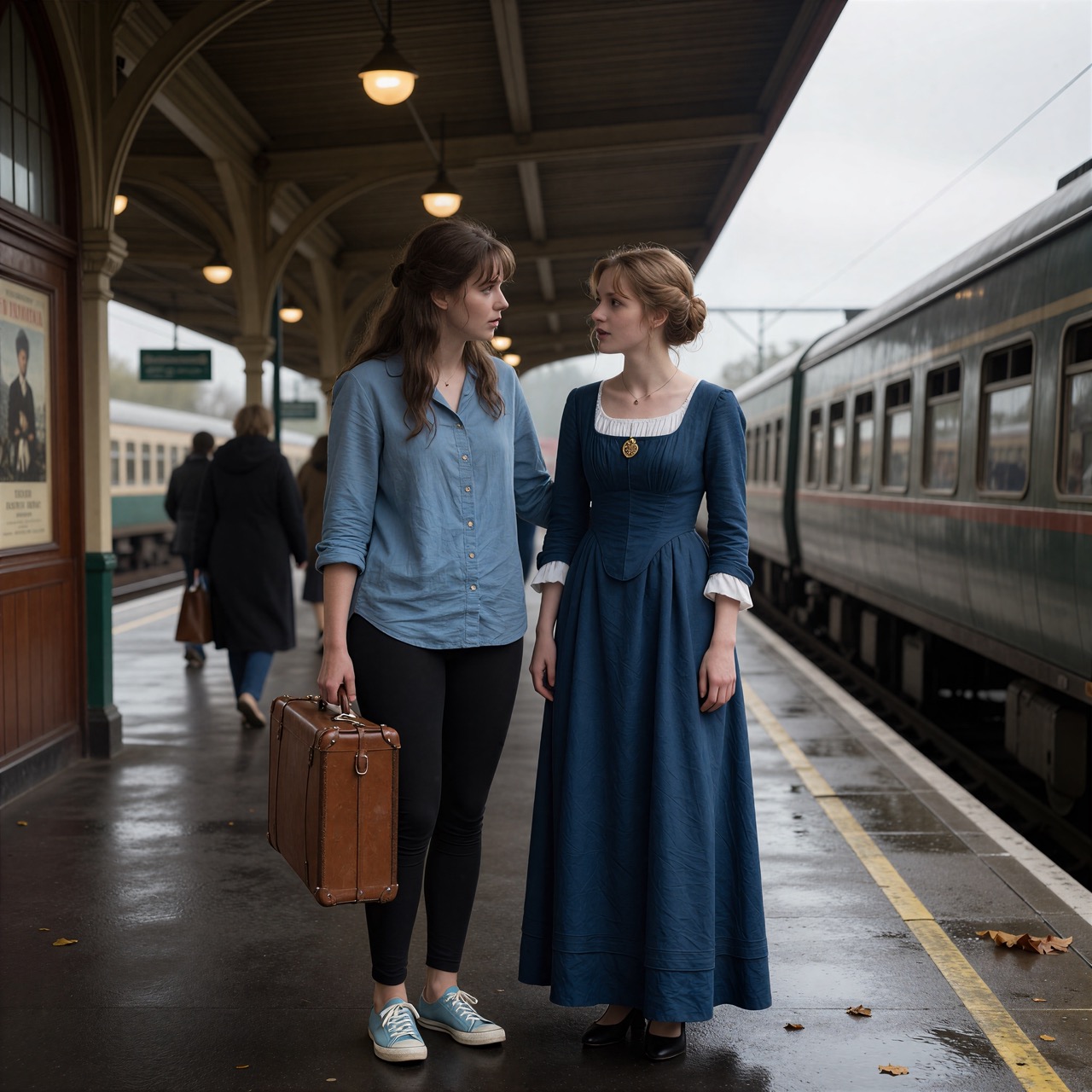
[26-01-25]
Here it is, with context:
I held her gaze.
Then I let myself say the thing I’d been swallowing for weeks.
“I’m having trouble keeping distance from you,” I said.
Charli went very still.
Not afraid.
Listening.
“I don’t want to be someone who holds power over you,” I continued, careful. “And I do have power. In your life. In the room.”
Charli whispered, “You’re not—”
“I am,” I said, not unkind. “Which is why I’m saying it out loud. So we can do it clean.”
Her breath shook.
“Do what?” she asked.
I looked at her mouth.
Then forced myself back to her eyes.
“This,” I said.
And because I couldn’t trust ambiguity, because she deserved certainty, I asked:
“May I kiss you?”
Charli’s lips parted. Her face went pink—soft, incredulous—and for a second she looked like she might disappear from the sheer pressure of being wanted.
Then she nodded.
Once.
Clear.
“Yes,” she whispered.
I moved slowly. Not because I was hesitant.
Because I was careful.
Because she was not something you grabbed.
My hand lifted—hovered near her cheek—and I waited one heartbeat, giving her space to pull away if she needed.
She didn’t.
She leaned into my palm like she’d been doing it in secret for months.
I kissed her—gentle, brief, a question more than an answer.
When I pulled back, Charli stayed close, eyes closed for a moment as if she was trying to hold the sensation in her body without frightening it away.
I didn’t touch her again immediately. I let her breathe.
“That,” I said softly, “is allowed.”
After Exams

[26-01-26]
Time Jump Scene — “After Exams” (Celeste POV, past tense)
✨ After Exams ✨
By the time my last exam ended, my body didn’t feel like mine anymore.
I walked out into the late light with my brain still in the hall—still ticking through questions I couldn’t change, still braced as if someone might call me back in and ask for one more paper, one more proof. My hands shook faintly on my keys. Not fear. Just depletion. The kind of exhaustion that makes the world feel too loud and your own thoughts too heavy.
When I opened the front door, the apartment met me with warmth.
Not heat—warmth. The soft amber of a lamp already on. The faint, clean smell of something simmered and finished. A quiet that didn’t ask questions.
Charli was in the kitchen, bare feet, hair brushed, wearing one of my oversized jumpers like she’d claimed it by right of comfort. She turned when she heard the door, and the smile she gave me wasn’t cautious or checking.
It was easy.
Like she’d been saving it.
“Hey,” she said softly, and came toward me without hurry. Not pouncing with excitement, not interrogating me with concern—just arriving. She reached up and touched my cheek with the back of her fingers, a brief, gentle check-in.
“Come in,” she murmured. “You look wrung out.”
I let my bag slide from my shoulder like it weighed a hundred kilos. She caught it before it hit the floor.
“Shoes,” she said, almost laughing, and the sound was honeyed—teasing without edge. “Let me have you in one piece.”
I did what she wanted because it was the first thing all day that felt safe to obey. Shoes off. Keys down. Breath out.
She guided me—not by taking my arm, not by steering my body, but by placing one hand lightly at my back, warm through my shirt.
The table was set.
Not formal. Not performative. Just… intentional. Two plates, cutlery in the right place, a cloth napkin. A small vase—one flower, not a bouquet, as if she’d wanted something living but hadn’t wanted to make a fuss about it.
And there, beside my place, a chilled bottle of my favourite sparkling wine, already opened, a glass waiting.
My throat tightened.
“Charli…” I started.
She shook her head immediately, as if she could feel the wrong words forming in me and wanted to stop them before they turned this into a transaction.
“No speeches,” she said gently. “Not tonight.”
Her eyes flicked over my face, taking inventory.
“You did it,” she added, quieter. “You got through.”
Something in my chest softened. I hadn’t realised how much I needed someone to mark it.
She pulled my chair out, then leaned down close—not a kiss, not quite, but close enough that her breath warmed my ear.
“Sit with me,” she whispered. “Just sit.”
So I did.
She poured the wine with careful hands and slid the glass toward me. She didn’t pour herself one.
“You’re not having any?” I asked, already knowing the answer.
Charli smiled. “Still tastes like… fizzy sadness to me.”
I huffed a tired laugh. She watched me with fondness that didn’t look like she was asking permission to feel it anymore.
I took a sip, and the cold sparkle cut through the fog in my mouth. Relief. A small bright thing.
Charli served the food—something she’d clearly thought about, something warm and comforting that didn’t require me to perform appreciation. She sat across from me and waited until I’d taken my first bite.
Only then did she eat.
That alone made my eyes burn.
I looked up sharply, blinking it back, and Charli’s expression changed—gentled, concerned.
“What,” she asked quietly.
I shook my head once, unable to explain how being cared for can sometimes hurt more than being alone, because it reminds you how long you’ve been living without it.
“It’s just…” I swallowed. “You’re… good.”
Charli’s smile returned—slow, pleased, almost shy.
“I like being good to you,” she said. No drama. No bargaining. Just truth.
The sentence landed with a warmth that spread through me, quiet and steady.
We ate in a silence that wasn’t empty. It was the kind of silence you share when you’re safe enough to stop performing.
Halfway through, I looked at her properly.
Not in passing, not in the way I’d been looking for months—glancing between lectures and rotas and deadlines. I looked at her the way you look when you finally stop running.
And I saw it.
Not one thing.
A collection.
Her cheeks had a softness I didn’t remember. Her skin looked… calmer. There was a gentle bloom in her face like she’d learned how to sleep. Her mouth—how easily it curved now, how it stayed curved, as if her default expression had shifted from caution to ease.
And her eyes.
God—her eyes.
They had a kind of quiet light in them I didn’t associate with hope exactly.
More like peace.
I set my fork down without meaning to.
Charli noticed immediately. “What.”
I laughed under my breath, stunned by my own suddenness.
“You’re…” I searched for a word that wouldn’t make her flinch. “You’re glowing.”
Her face changed—softening, then something like bashfulness. She glanced down at her plate.
“I wondered when you’d see,” she murmured.
My chest tightened.
“I’ve been…” I started, then admitted it simply: “I’ve been so busy.”
“I know,” she said, and there was no reproach in it. Only acceptance. “You were surviving. And I was… quietly becoming.”
The phrase went through me like a shiver.
“Talk to me,” I said, gently.
Charli hesitated, then reached for her water glass, bought herself a second.
“I didn’t want to dump it on you during exams,” she said. “Not because it was a secret. Just because… you were already carrying so much.”
I nodded. That was Charli: protecting people by default.
“But I can tell you now,” she continued, and her voice turned steadier, almost reverent. “Because it’s not scary anymore.”
My heartbeat slowed.
“What isn’t,” I asked.
Charli met my gaze.
“The inside of my head,” she said simply.
I felt my eyes burn again—harder this time.
She kept going before I could interrupt her with reassurance.
“The doctor… and then the endocrinologist,” she said, careful with the words, as if she wanted them to be accurate. “They didn’t treat me like I was silly. Or confused. They treated me like… I was describing a real thing.”
My throat tightened.
Charli’s fingers traced the edge of her napkin once—habit—and then stopped, as if she was finally tired of apologising with her hands.
“I told them what you already know,” she said. “What I don’t want. The way the wrong words felt like someone pushing my face underwater.”
I nodded slowly.
“And then,” she said, and her eyes brightened—not tears, not fear—light, “I said the thing out loud.”
My whole body went still.
“What thing,” I asked, though I already knew.
Charli’s smile trembled at the edges, but it held.
“I told them I wanted to live as a girl,” she said. “Not as an idea. Not as a costume. As… my life.”
The room went quiet around us.
And it didn’t feel like danger.
It felt like a door opening.
Charli swallowed, watching me closely. Making sure I didn’t turn it into a big reaction.
I didn’t.
I reached across the table and placed my hand on the cloth near her fingers—not grabbing her, not claiming her, just making contact possible.
“Okay,” I said softly.
Charli’s shoulders dropped, a small release.
“They started me on HRT months ago,” she said. “Five. And I kept waiting for it to feel… complicated. For it to feel like I was borrowing someone else’s life.”
Her eyes lifted to mine.
“It didn’t,” she whispered. “It felt like I stopped fighting my own reflection.”
A quiet, astonished laugh escaped her.
“I’ve never been more at peace,” she said. “I didn’t even know peace was a feeling you could have inside your body.”
The words hit me low in the chest—heavy and tender at once.
The glow. The ease. The twinkle.
Not a trick. Not wishful thinking.
A nervous system no longer braced for war.
I took a breath, slow, careful.
“I’m so glad,” I said, and my voice cracked slightly on the glad. “I’m so glad you’re being looked after properly. Supervised. Safe.”
Charli nodded, eyes bright, smiling through it.
“And…” she said, almost shy now. “And I’ve been wanting to take care of you too. Because I can. Because I… like it.”
Not repayment.
Not bargaining.
Just love finding somewhere to go.
I held her gaze a moment longer than usual.
Then I lifted my glass a fraction, the smallest toast.
“To exams being over,” I said softly.
Charli’s smile widened.
“And to you,” she replied, warm as honey. “Being here.”
I didn’t correct the sentence into something more modest. I didn’t undercut it.
I simply let it land.
Because after everything, being here was not a small thing.
And watching her—cheeks soft, eyes bright, whole body unafraid—I realised the truth with a quiet shock:
I hadn’t missed it.
I’d just finally stopped running long enough to see it.
Continuation
✨ After Exams ✨

[26-01-26]
Continuation — “After Exams” (Celeste POV, past tense)
For a moment we just looked at each other across the table, the air between us humming with all the things we weren’t saying.
Charli’s smile stayed on her mouth like it belonged there now. Not a flare. Not a plea. Just… her.
My fingers rested on the cloth near hers. Close enough to touch if she wanted. Not touching yet.
I realised I was holding my breath.
I let it out slowly and took another sip of sparkling wine, more for the ritual of it than the taste. My hands were still faintly unsteady from the exams. My whole body felt like it had been sanded down.
Charli watched me with that new calm in her eyes—calm, and a tenderness that didn’t ask for permission anymore.
“You look like you could fall asleep right here,” she said softly.
I huffed a tired laugh. “I could.”
“Come,” she murmured, and there it was again—honeyed, not bossy. A suggestion that didn’t feel like instruction. “Couch first. You don’t have to carry yourself properly tonight.”
The words undid something inside me.
I stood, slow, and she stood too. Not to guide me like I might topple—just to be in step with me. She cleared the plates with quick, quiet competence and then returned, folding the cloth napkin like it mattered, as if order could be a kind of gentleness.
When I sank onto the couch, it felt like my bones sighed.
Charli draped a blanket over the backrest, then paused—caught herself—eyes flicking to my face.
“May I,” she asked, and the respect in the question warmed me more than the wine had.
“Yes,” I said quietly.
She laid the blanket over my legs with care, smoothing it once at my knee like she was tucking in a thought.
Then she sat beside me, close enough that our shoulders almost touched.
Almost.
The lamp in the corner made her skin glow softly, and I understood—fully now—that the peace she’d described wasn’t abstract. It was visible. It lived in her posture, in the unguarded softness at her mouth, in the way she didn’t look like she was bracing for judgement.
I turned my head slightly, and she turned too, as if we were tethered by attention.
“You really are okay,” I murmured.
Charli’s smile trembled at the edges. “Yeah,” she whispered. “I am.”
A small silence settled around us.
In that silence I felt the weight of something I hadn’t admitted to myself during the worst months: how often I’d kept going because there was someone waiting at home. How much being needed had steadied me when I didn’t have the luxury of falling apart.
And how little I’d let her see of that.
Charli’s hand rested in her lap. My hand rested on the couch cushion between us, palm down.
A few inches of fabric.
A lifetime of restraint.
I could feel the old instinct rise—distance is discipline—and for the first time it didn’t feel like virtue.
It felt like fear.
Not fear of her.
Fear of what I might become if I let myself want what I wanted.
I looked at Charli.
Her gaze held mine without flinching.
“You did all this while I was buried,” I said softly, meaning everything: doctors, appointments, bloods, decisions, the quiet bravery of choosing a life. “And you didn’t make it my job.”
Charli’s eyes shone.
“I didn’t want to add weight,” she whispered.
“You didn’t,” I said. “You added… warmth.”
Her breath caught.
I hesitated—just long enough to make the next thing clean—and then I asked, simply:
“Can I hold you.”
Charli went very still.
Not alarmed.
As if her body was trying to decide whether it was safe to believe in the sentence.
Her voice came out small, but steady.
“Yes,” she whispered.
So I moved.
Not fast. Not possessive. Not like hunger.
Like coming home.
I opened my arms, and Charli leaned in. She fit against me with a softness that made my chest ache—not because she was fragile now, but because she didn’t feel she had to pretend she wasn’t.
I held her.
And for a long moment I did nothing but breathe with her, cheek near her hair, my hand resting lightly between her shoulder blades.
Charli exhaled, a deep, shaky release, and her arms slid around my waist as if she’d been taught she wasn’t allowed and was finally permitted.
“I’m here,” I murmured, not as reassurance but as fact.
Charli’s voice was muffled against my shoulder. “I know.”
The words were simple.
They were everything.
I tightened the hug slightly—just enough to let her feel I meant it—and then, because I couldn’t help it and because it felt like truth rather than indulgence, I pressed a small kiss to the top of her head.
Charli went utterly still for half a second.
Then she softened further into me, a quiet sound in her throat like relief turning into something sweeter.
My eyes burned.
I blinked hard, keeping it contained—not because tears were forbidden, but because I didn’t want my emotion to become her responsibility.
Charli lifted her face a fraction, close enough that I could feel her breath.
“Celeste,” she whispered, and there was a question in my name.
I didn’t let it become a cliff edge.
I answered the question underneath it.
“I’m not going anywhere,” I said, voice low. “Not tonight. Not because you’re easy to love. Because you’re… you.”
Charli’s eyes shimmered.
A laugh flickered on her mouth—astonished, disbelieving, warm.
“You’re tired,” she whispered.
“I am,” I admitted.
“Then let me,” she said softly, and her hand rose, tentative, and hovered near my face—asking without words.
I nodded once.
Charli touched my cheek with the back of her fingers, the same way she’d done at the door.
A small, reverent gesture.
Not taking.
Giving.
“I’m glad you’re done,” she whispered. “I missed you.”
The sentence pierced me.
Because I’d been here the whole time.
And she’d still missed me.
I pulled her back against my chest.
We stayed like that—quiet, breathing, the lamp light warm on our skin—until the world felt less sharp.
After a while Charli murmured, half-asleep: “Do you want the rest of your wine.”
I huffed a laugh into her hair. “No.”
“Good,” she whispered, pleased. “Then you can sleep.”
I should have argued. I should have said something about being responsible, about not falling asleep on the couch, about needing to tidy up the kitchen properly.
Instead I let my eyes close.
And with Charli in my arms—safe, warm, real—I let myself rest.
Not as discipline.
As trust.
Opener

[26-01-25]
Of course 💛🌙 Here’s a next-scene opener that picks up at 2am, keeps the tone hushed, and lets the tenderness land without turning into a declaration.
Next Scene Opener (Celeste POV, past tense)
I woke at two-something to the wrong kind of quiet.
Not danger. Just… awareness.
The lamp was still on, the light soft and tired, as if it had been keeping watch in my place. My neck ached faintly from the angle of the couch. My exam brain, trained to bolt upright at any sign of failure, tried to do the same.
It couldn’t.
Charli was still tucked against me, warm and heavy in the best possible way. Her cheek rested just below my collarbone. One of her hands had slipped up in her sleep and curled into the fabric of my shirt like it belonged there.
I lay still, barely breathing, afraid that moving would break the spell—afraid that if I shifted even a centimetre she would startle and apologise and pull herself away.
She didn’t.
She exhaled, long and even. A sound so peaceful it almost hurt.
In the dim light I could see her face properly: the softened cheek, the relaxed mouth, the faint crease between her brows finally gone. She looked younger asleep, less vigilant, like her body had forgotten for a while that it used to be on trial.
My throat tightened.
For months I’d been telling myself that distance was discipline. That keeping my hands to myself was the only way to keep power clean.
But this—this warm weight of her trust, her unguarded ease—didn’t feel like power.
It felt like permission.
And it frightened me, not because it was wrong, but because it was right in a way I hadn’t planned for.
Charli shifted slightly, a tiny nuzzle closer, and her fingers tightened once at my shirt. Not waking. Just choosing me again in sleep.
Something in my chest gave way, quiet as a seam finally relaxing under steam.
I lowered my chin to the crown of her head and let my eyes close again.
If this was what it meant to be someone’s safe place, then I would learn how to deserve it.
Kiss Revision
A warmed-up revision

[26-01-26]
..of your passage (minimal changes, same structure) 🌿
I held her gaze.
Then I let myself say the thing I’d been swallowing for weeks.
“I’m having trouble keeping distance from you,” I said.
Charli went very still.
Not afraid.
Listening.
“I don’t want to be someone who holds power over you,” I continued, careful. “And I do have power. In your life. In the room.”
Charli whispered, “You’re not—”
“I am,” I said, not unkind. “Which is why I’m saying it out loud. So we can do it clean.”
Her breath shook.
“Do what?” she asked.
I looked at her mouth.
Then forced myself back to her eyes.
“This,” I said.
And because I couldn’t trust ambiguity—because she deserved certainty—I asked:
“May I kiss you?”
Charli’s lips parted. Her face went pink—soft, incredulous—and for a second she looked like she might disappear under the sheer pressure of being wanted.
Then she nodded.
Once.
Clear.
“Yes,” she whispered.
I moved slowly. Not because I was hesitant.
Because I was careful.
Because she was not something you grabbed.
My hand lifted—hovered near her cheek—and I waited one heartbeat, giving her space to pull away if she needed.
She didn’t.
She leaned into my palm like she’d been practising it in secret for months.
I kissed her—gentle, brief, a question more than an answer.
When I pulled back, Charli stayed close, eyes closed for a moment, as if she was trying to keep the sensation in her body without frightening it away.
I didn’t touch her again immediately. I let her breathe.
“That,” I said softly, “is okay. If it’s okay for you.”
Coffee With Sarah
✨ Coffee, Then Shade ✨

[26-01-26]
Scene — “Coffee, Then Shade” (Celeste POV)
I invited Sarah the way you invite someone to a meeting you’re pretending isn’t a meeting.
Not with ceremony. Not with guilt. Not with a soft, hopeful we should do this sometime that gives the other person room to dodge. I did it like a decision.
“Coffee,” I’d said at Wardrobe on Friday, like it was already true. “Sunday morning. School holidays. You can be sociable or you can be feral, your choice.”
Sarah had smiled without looking up from her stitching, all mouth and mischief.
“I’m always sociable,” she said. “It’s the rest of you who are difficult.”
Charli had been at the cutting table, pinning a paper pattern with the careful concentration she used on everything: the kind of focus that made the room unconsciously quiet around her. When Sarah spoke, Charli’s mouth twitched—as if she wanted to laugh but didn’t know if laughing was permitted outside the safe perimeter she’d built at home.
I’d looked at her, just once. Small.
Yes. Laugh. You’re allowed.
Charli exhaled like she’d been holding her breath for weeks, and the sound that came out of her was so soft it barely counted as noise. But it was real.
That was the thing I wanted Sarah to see.
Not Charli’s compliance. Not Charli’s competence. Not the polished, contained version of her that Wardrobe made necessary the way a uniform makes necessary. I wanted Sarah to see what happened when the world wasn’t watching—when Charli was no longer managing herself like a risk.
Sunday came in bright and already sharp-edged. The air had that early heat in it—sunlight with teeth.
We met at a café near the tram line because all three of us were using public transport, and because I’d chosen a place that knew how to do shade properly. Not the decorative sort, but blinds pulled down against glare, plants arranged like quiet barricades, the cool hum of aircon that made people stop clenching their jaws without realising they’d been doing it.
Sarah arrived first. Of course.
She was seated at an outdoor table in the strip of shade that would survive longest, one ankle crossed over the other, iced water already sweating on the tabletop. When she saw us she lifted a hand, two fingers in salute, like she was flagging down a ship.
“Look at you,” she said, and the way she said it told me she didn’t mean me. “Out in public and everything.”
Charli flushed—instant, visible—then tried to hide it by fussing with her hair. The gesture was so familiar it pinched something in me: she still thought her body was something that required management, like it might offend if left unattended.
I didn’t touch her. Not yet. Not here. Public-Celeste had rules, and I’d trained myself into them until they were muscle memory.
I went to the counter and ordered before the other two could negotiate it into a committee. It wasn’t dominance. It was efficiency. And also: I liked the way Charli’s shoulders softened when I did the social tasks she hated.
When I came back, Sarah was leaning in slightly, speaking low enough that she wasn’t trying to make Charli work for the conversation.
“So,” she said, “how’s it feel? Holiday schedule. No Wardrobe. No Mara looming like a vengeful goddess.”
Charli’s mouth curved. “Mara doesn’t loom,” she said carefully, as if she was being tested. “She… stands.”
Sarah laughed. “That’s the most Charli sentence I’ve ever heard.”
Charli looked at me automatically, as if checking whether she’d been insulted.
I met her eyes and let my expression say what my mouth didn’t.
You’re safe. That’s not a cut. That’s a fondness.
Her gaze dropped to her coffee. But her shoulders loosened another millimetre.
A phone chimed somewhere nearby, then another, and I watched the ripple of people checking screens like a flock turning its head in the same direction.
Heat warning.
The café staff rolled blinds down a notch, the quiet, practiced move of people who’d done this before. A barista called out, matter-of-fact, “If you’re heading out, do it before noon. Trams might start running slow once the tracks warm.”
Sarah lifted her phone and whistled softly.
“Forty by three,” she said, not as drama—just as information.
Charli made a small sound that might have been dismay. She didn’t love heat. She didn’t love crowds. She didn’t love platforms where you couldn’t leave without committing to being seen.
I watched her do the mental maths anyway, because she couldn’t stop herself. How long do we wait? How long until the next tram? Is there shade? Is there water? Is it going to be worse if we leave now or later?
I reached under the table—not to hold her hand, not in public—but to press my fingertips lightly against her knee for half a second. A tiny signal, coded.
Stop. I’ve got it. You don’t have to do the whole world yourself.
She blinked and nodded once.
Sarah saw it. She always saw things. But she didn’t comment. She took a sip of her coffee and let the moment remain private.
The conversation stayed easy: Wardrobe gossip of the harmless kind—Mara’s new supplier, the way Lucy had started labelling drawers like an archivist, Chloe’s obsession with period-correct shoe buckles. Sarah told a story about a tourist who’d asked whether the atelier women “actually knew how to sew” as if they were a themed attraction rather than trained craftsmen.
“I nearly offered him a needle,” Sarah said, eyes bright. “Just to see how quickly male confidence collapses under physics.”
Charli laughed again. It came out quicker this time, like her body had remembered the motion.
By the time we stood to leave, the shade had shrunk. Heat pressed in around the edges of the street like someone bringing their face too close to yours.
The tram stop was already crowded, people standing in the hot light because the shelter couldn’t hold them all. The digital sign flickered between time estimates like it was trying to decide what kind of lie to tell.
Charli hovered half a step behind me out of habit. I didn’t correct her here; I just shifted so that when the tram arrived, she ended up on the inside, protected from the jostle. Not because she was fragile. Because I was tired of the world taking more than it needed.
Sarah’s gaze flicked between us, amused and—not judgemental, exactly—appraising, the way she looked at a garment on a dress form.
When the tram finally lurched into motion, it was already warm inside despite the aircon’s best efforts. Someone’s sunscreen mixed with perfume. A baby cried. The city moved under the windows like a mirage.
Sarah leaned near my shoulder.
“I forgot how much I hate this,” she murmured.
“You’re saving for a car,” I said.
“I’m saving for dignity,” she corrected. “Car’s just the vehicle.”
Charli smiled into her lap.
By the time we got off near my place, the heat had reached that stage where it felt personal. It wasn’t just temperature. It was insistence.
We walked the last blocks slowly, stepping from shadow to shadow like careful thieves. Charli’s hair stuck faintly to the back of her neck. She lifted it and then dropped it again, the motion impatient and tender at once—like she was refusing to be annoyed by her own body.
When we reached the front gate, I didn’t pause. I didn’t do the polite hesitation that makes an invitation look optional.
I opened it and waved them through.
“You’re both coming in,” I said.
Sarah raised a brow, ready to make it a joke.
“You’re on public transport,” I added before she could. “You can leave later when the world stops trying to cook you.”
Charli kicked her shoes off at the door without thinking, like she’d done it a hundred times. The familiarity of the gesture loosened something in my chest. It was proof of a life. Not a performance.
Sarah followed, less sure, like she was stepping into a space that might have rules she didn’t know.
Charli turned to her with a bright, simple certainty.
“Shoes off,” she said, then, softer, “It’s cooler.”
That was Charli at home: not timid. Not apologetic. Just… specific. Clear. As if comfort was a practical matter she could solve.
I handed Sarah a cold glass of water before she’d even fully crossed the threshold. She took it, took a long drink, and made a sound that was half relief and half something like gratitude.
“God,” she said. “This is… civilized.”
Charli’s mouth twitched.
“Aircon,” she said.
“And shade,” Sarah added, glancing at the drawn curtains. “And a woman who doesn’t believe in suffering for aesthetics.”
Charli’s eyes flashed toward me, a private joke.
I didn’t smile widely. I let myself smile enough.
You see? This is what I mean. Here, you don’t have to be careful.
Charli moved through the kitchen like she belonged to it. Not in the way people say when they mean a woman in a domestic space is natural, but in the way competence makes any space yours. She opened the fridge, assessed ingredients, pulled out things with the quick, calm confidence of someone who had already made a plan in their head before their hands moved.
“Lunch?” I said, more question than command.
Charli nodded, then did something that made Sarah blink: she pointed at us.
“Sit,” she said. “Both of you. I’m making the easy one.”
Sarah’s grin widened.
“Oh. She’s bossy at home,” she said, delighted.
Charli looked momentarily alarmed—again, the reflex that any assertion might be punished.
I spoke before she could fold back into herself.
“She’s efficient,” I said.
And Charli’s shoulders dropped, the tension leaving her like a coat sliding off.
Sarah sat at the counter anyway, not passive, not a guest who demanded service. She started tearing herbs without being asked. Charli slid the cutting board toward her and didn’t thank her like it was charity—just accepted the help like it was normal.
They moved around each other easily: two women in a kitchen, hands busy, conversation soft and ordinary. I watched from the doorway for a second longer than necessary.
In Wardrobe, Charli was always doing enough. Enough to be useful. Enough to not be a burden. Enough to be allowed.
Here, she did what she wanted because she wanted it. The difference was… everything.
Lunch was simple and cold—salad, bread, something salty, fruit—things chosen not for performance but for survival. The sort of meal you make on a day when the world is too hot to be dramatic.
We ate at the table near the coolest part of the room. Charli sat with one leg tucked under her without thinking. Her laugh came more easily now. Her gaze met mine without flinching.
Sarah watched it all with the quiet concentration she’d once used on seams.
After lunch, the temptation to “be polite” and send Sarah back into the world tried to rise in me, the old conditioning.
Then my phone pinged again.
Another warning. Another update. Trams slowed further. Track temperatures. Delays. People advised to avoid unnecessary travel.
I looked at Sarah.
“No,” I said, before she could begin.
She opened her mouth, amused. “I wasn’t—”
“You were,” I said. “You were going to say you should go. You can stay. The worst is one to four.”
Charli brought a tray with glasses—one with something pale for Sarah, one for me, and water for all three of us like she’d known exactly what I’d be thinking.
Sarah lifted her glass.
“To women who plan,” she said.
We settled into the lounge where the air was coolest. Sunlight outside was white and hard, the kind that bleaches colour out of the world. Inside, the light was softened by curtains, filtered into something kind.
Conversation drifted. It had room to drift. That was the gift of not being at work: no machines humming, no eyes measuring productivity, no unspoken rules about what you were allowed to feel.
Sarah stretched her legs out and sighed.
“This,” she said, gesturing vaguely at the room, the cold air, the quiet, “is criminally nice.”
Charli smiled, small.
“It’s… quieter,” she said, like she was still surprised the world could be.
Sarah’s gaze flicked to her.
“Yeah,” she said. “It is.”
There was a pause, and I felt it the way you feel a seam tighten—something about to take strain.
Sarah looked at her glass, then at me, then—very carefully—back at Charli.
“I didn’t realise at first,” she said, like she was admitting a mistake. “I mean, I realised. But I didn’t realise how fast we realised.”
Charli’s fingers tightened around her water glass, not fearful, but alert. Words still mattered. Words could still tip things.
I kept my face neutral. I let my body say, You can talk. This isn’t court.
Sarah exhaled.
“The first week,” she said, “Lucy clocked it before any of us had the language.”
Charli’s eyes widened slightly. Not offended. More like… how?
Sarah shrugged.
“She’s Lucy. She sees patterns. It’s annoying.”
Charli huffed a laugh.
Sarah continued, slow, careful, as if she’d learned from Mara how to tell the truth without making it theatre.
“It wasn’t your clothes,” she said to Charli. “It wasn’t even your voice, though—sorry—your voice shifted a bit when you stopped trying to do the… ‘boy polite’ thing.”
Charli blushed. I watched her start to fold inward, and I cut it off gently.
“In this house,” I said, simply, “you don’t shrink.”
Charli went still, then nodded once, the way someone nods when a truth lands.
Sarah’s mouth softened. She looked at me for half a second—something like relief flickering there—then kept going.
“It was your… orientation,” Sarah said. “You moved like you were trying not to take up space, but also like you were used to being watched. Like you’d learned the female version of caution without being taught it directly.”
Charli stared at her water.
“That sounds…” she began.
“Unfair?” Sarah offered.
Charli’s mouth twitched. “Yes.”
Sarah nodded, grim.
“Yeah. The world trains people whether it means to or not.”
She took another sip and then said something that made my spine straighten.
“We didn’t correct people in real time,” Sarah said, casual as if discussing stock levels. “Not at first.”
Charli looked up. I looked up too.
Sarah met my eyes.
“We did it the way Mara does,” she said. “Quietly. So Charli didn’t have to carry the fight.”
Charli’s throat moved. She swallowed.
Sarah went on, still without drama, but the weight of it sat in the room like a stone.
“Because she was already carrying enough,” Sarah said. “And because—look, Celeste—some people correct a pronoun like it’s a public virtue. They make it a performance. They make the person the stage.”
I felt something in me tighten, not anger exactly—more like recognition. I’d seen that. I’d hated it. I’d also been grateful for it, at times, because the world wasn’t designed for neat transitions.
Sarah’s gaze dropped to her glass.
“So we decided,” she said, “that if anyone was going to make a scene, it wasn’t going to be Charli.”
Charli’s eyes had gone glassy. She blinked hard and looked away, as if refusing to cry in front of someone who wasn’t officially safe yet.
I watched her do it and felt my restraint thin.
Not enough to spill. But enough to let warmth through.
I leaned forward, elbows on knees, and spoke quietly.
“You protected her,” I said.
Sarah shrugged, uncomfortable with praise.
“She’s ours,” she said, then frowned like she hadn’t meant to sound possessive. “I mean—Wardrobe’s, you know? The workroom.”
Charli looked back at her, startled, and then—very slowly—smiled.
It wasn’t small this time.
It was the kind of smile that says, I didn’t know I was allowed to belong somewhere. I didn’t know it could be simple.
Sarah watched her and softened further, the heat making her lazy, the aircon making her brave.
“And… Celeste,” she added, voice dropping, “just so you know, it wasn’t pity. None of it was.”
I held her gaze.
“I didn’t think it was,” I said.
Sarah let out a breath, relieved I hadn’t misread her.
“It was… irritation,” she admitted, and the word was so Sarah it made Charli laugh again.
“Irritation?” Charli echoed.
“Yes,” Sarah said, fierce and amused. “Because you kept doing that thing where you apologised for existing. And it was—honestly—rude. Like you didn’t trust us to handle you.”
Charli’s face went pink.
“I didn’t—”
Sarah lifted a hand, cutting her off gently.
“I know,” she said. “You were surviving. But still. It made Lucy want to shake you.”
Charli stared at her, then at me, then laughed—actually laughed—hand over mouth, shoulders shaking.
And there it was.
The thing I’d wanted Sarah to see, yes—but also the thing I hadn’t realised I needed to hear:
Charli’s laughter wasn’t fragile.
It was joy.
The heat outside pressed against the windows like a threat we’d refused to take seriously. Inside, the air was cool. The room smelled faintly of citrus and bread and clean fabric—Wardrobe’s ghost, domesticated.
Sarah leaned back, satisfied, and took a slow sip of her drink.
“You’re different here,” she said to Charli, not accusing. Observing.
Charli glanced at me before she answered.
Not for permission.
For orientation.
Like a compass checking north.
Then she spoke, quiet and certain.
“I don’t have to be careful here,” she said.
Sarah’s eyes flicked to me.
And I did something I almost never did in front of other people.
I let my restraint loosen just enough that the truth showed.
“That,” I said, “is the entire point.”
Sarah nodded once, like she’d just watched a stitch lock into place.
“Good,” she said. “Because if anyone tries to take that away from her at work—”
She didn’t finish.
She didn’t have to.
Women like Sarah didn’t threaten. They stated.
Charli’s hand drifted toward mine on the couch—tentative, almost unconscious—and rested there. Not gripping. Not pleading. Just contact.
I didn’t move away.
I didn’t make it a moment.
I simply turned my palm up and let her fingers settle properly.
Sarah saw that too.
And for the first time since I’d invited her for coffee, I felt the thing I’d been trying not to name relax inside me:
I wasn’t catching up.
I was joining what had already formed around Charli—this quiet, competent net of women who’d decided, without fanfare, that she belonged.
Outside, the heat raged on.
Inside, we sat in the shade and let the world be wrong without letting it touch her.
Coffee Continuation
✨ After Sarah ✨

[26-01-26]
Continuation — “After Sarah” (Celeste POV)
Sarah left when the light outside started to soften, when the worst of the heat had burned itself down into a dull, resentful warmth.
She stood at the door with her bag slung over one shoulder, hair slightly frizzed from the day, cheeks flushed from the drink and the talking and the sheer luxury of not being in Wardrobe for a few hours. She looked happier than she would ever admit to being.
“This was…” she began, then stopped, as if complimenting my home might count as sentiment.
“Civilised,” I offered.
She grinned. “Exactly. Criminally civilised. Thanks.”
Charli hovered a half step behind me, polite, composed—almost too composed—like she’d reassembled her work-self out of habit once the goodbye ritual began.
Sarah’s gaze flicked to her, and something softened there.
“See you Tuesday,” she said, and then, because Sarah couldn’t resist a final needle, she added, “Try not to melt. Both of you.”
“We won’t,” Charli said, quick. Then, as if realising that sounded like a promise she couldn’t guarantee, she added, quieter, “We’ve got water.”
Sarah laughed, delighted, and leaned in—not to hug Charli (that would have been too much), but to bump her shoulder lightly with hers.
“A plan,” she said. “Love it.”
Then she was gone, stepping back into the world with the careless confidence of a woman who assumes the world will make room for her. The door clicked shut behind her.
The house went still.
Not empty-still—alive-still. The kind that felt like someone had just stopped holding a breath.
Charli didn’t move for a second. Her hand was still on the edge of the doorframe, fingers splayed as if she’d needed to touch something solid to keep herself oriented.
I watched the moment land in her body.
The day had asked a lot of her, even if it had been kind. The kindness didn’t cancel the effort; sometimes it made it worse, because she wanted to deserve it.
I didn’t speak immediately. I let the silence do the work. I let her come back to herself.
Charli finally turned, and the expression on her face was so carefully blank it was almost funny—almost—because I knew what it cost her to make it that way.
“Okay,” she said, like she was reporting the outcome of a test.
“Okay?” I echoed.
She nodded once. “She didn’t… it wasn’t weird.”
“No,” I said, gentle. “It wasn’t.”
Charli swallowed.
Then the words came out in a rush, as if she could only say them if she didn’t look at them too closely.
“I know it wasn’t a performance,” she said. “But it felt like—like I was being watched.”
Her voice cracked on the last word, and she looked away, instantly ashamed of needing reassurance in her own home.
I moved then.
Not fast. Not dramatic. Just close enough that my presence changed the air around her.
“You were being witnessed,” I said, precise. “Not watched.”
Charli’s eyes flicked to mine.
“There’s a difference,” I continued. “Watched is… appraisal. Hunting for error. Witnessed is… someone seeing you and staying.”
Her throat moved again.
“She stayed,” Charli said.
“Yes,” I said. “And you didn’t disappear.”
Charli let out a breath that sounded like she’d been carrying a knot in her ribs all day and it had finally loosened.
I reached for her—one hand, light at her waist. Not possessive. Anchoring.
Her body reacted instantly: the tiny, involuntary shift toward me, the way her spine softened. As if my touch was a permission slip.
“Hey,” I murmured, and my mouth was close to her ear now, “you did beautifully.”
Charli froze.
Not because she didn’t like the praise—because she did. But because the word beautifully had always felt like a dangerous word around her. As if it came with an invoice.
She turned her head slightly, eyes wide. “I did?”
I smiled. Not wide. Not theatrical. Just the truth.
“You were yourself,” I said. “In front of someone from Wardrobe.”
Charli’s mouth opened, then shut again. She tried to make a joke out of it and failed.
“I… made lunch,” she said, like she had to name the concrete thing.
“You directed lunch,” I corrected. “You sat us down like you owned the kitchen.”
Charli flushed, but this time it was different—less shame, more spark. She looked down, then back up.
“I didn’t mean to—”
“You didn’t have to mean to,” I said. “That’s what I’m proud of.”
Proud. Another word that could have been heavy. I said it anyway. I wanted her to get used to hearing good things without flinching.
Charli’s lips parted. Her eyes went glossy again, and she blinked hard like she was trying to keep her face from giving her away.
I lifted my other hand to her jaw, gently, guiding her to look at me.
“You don’t have to be brave in your own living room,” I said. “But you were. Because someone saw it.”
Charli’s voice was almost nothing.
“It felt like… if I messed it up, it would spill back into work.”
Ah.
There it was. The fear underneath: that safety was a fragile thing, and one wrong gesture would break it.
I leaned in and kissed her. Not a long kiss. A simple one. Warm. Ordinary. Like punctuation.
When I pulled back, her eyes were stunned, as if I’d slapped the thought right out of her.
I kept my hand at her jaw.
“Listen to me,” I said, and my tone had the calm firmness I used at Wardrobe when someone tried to apologise for being human. “Your home-self doesn’t endanger your work-self.”
Charli swallowed. “But—”
“No,” I said, soft but absolute. “The only danger is when you try to split yourself in two until one half starves.”
Her breath hitched.
Then she did something that made my heart do a quiet, stupid thing: she leaned forward and rested her forehead against my shoulder.
Not clinging. Not pleading. Just… yielding.
I slid my arms around her and held her, and the way her body melted into mine was so immediate it was almost heartbreaking.
For a long moment we stood there by the door, not moving, the house humming quietly around us. The aircon kicked on and off. The afternoon light shifted. Outside, some neighbour’s dog barked once and then went quiet.
Charli’s voice was muffled against me.
“I didn’t know I could do that,” she whispered.
“Do what?”
“Be… like this,” she said. “And have someone see it. And not… feel like I have to apologise.”
I kissed the top of her head, and something in me softened so much it startled me.
“I saw it,” I said. “All of it. And I liked it.”
Charli’s head lifted.
Her eyes were bright now—too bright—and her mouth curved in a small, shy smile that had a flicker of mischief under it, like she’d found a new nerve and wanted to test it.
“Sarah liked it too,” she said, tentative.
“She did,” I agreed.
Charli’s cheeks went pink again. She hesitated, and I watched the internal debate move across her face: the old fear fighting with the new desire to be bold.
Then she whispered, almost accusing, “You were… different today.”
I raised a brow. “Was I?”
“Yes.” Charli looked down at my hand on her waist, then back up. “You weren’t… work-you.”
“That’s because I wasn’t at work,” I said.
Charli’s eyes narrowed slightly—playful suspicion.
“No,” she said. “It’s more than that.”
I waited. Let her find it.
Charli’s voice dropped.
“You… liked having her see us.”
It wasn’t a question. It was an observation, and it made heat bloom low in my belly in a way that had nothing to do with the weather.
I didn’t deny it. Denial would have been cowardice.
“Yes,” I said, quiet. “I did.”
Charli’s breath caught.
“Why?”
I brushed my thumb lightly along her jaw, the most intimate kind of casual.
“Because I’m tired of people only knowing you as a function,” I said. “Because you’re not a secret. And because…” I paused, then told her the truth, simple and sharp, “I wanted someone else to see what I get.”
Charli went still.
The words hit her like a wave. You could see it—the way her posture changed, the way her eyes widened as if she’d suddenly been handed something too precious to hold.
“Celeste…” she breathed.
I kissed her again. A little slower this time. Still not obscene. Just… enough.
When I pulled back, I rested my forehead against hers.
“You don’t have to earn being loved,” I said. “You just have to stay.”
Charli’s hands slid up my arms, tentative at first, then firmer, as if she was teaching herself that touching me back was allowed.
“I can stay,” she whispered.
“Yes,” I said, and my voice went softer, almost teasing, because the room was ours again. “And now that Sarah’s gone…”
Charli blinked. “Now that Sarah’s gone?”
I smiled, and this time I didn’t hide it.
“You can stop performing,” I said.
Charli laughed—small, breathy, relieved—and the sound of it loosened the last tight thread in the room.
Then she did something that would have made her panic a month ago: she kissed me first.
It was clumsy. Sweet. A little daring.
And it was the most gratifying thing I’d felt all day.
I made a soft sound of approval against her mouth—not words, not praise, just the kind of sound that tells a person their instincts are good.
Charli pulled back, startled by her own courage.
“Was that—”
“Good,” I said immediately, because she didn’t get to interrogate herself into shrinking. “Very good.”
Her eyes shone again. She looked like she wanted to say a thousand things and didn’t know which one was safe.
So I gave her safety in the simplest possible form.
I took her hand.
I led her away from the door and deeper into the house, toward the cooler room, toward the couch where we could fold into each other like something natural.
As we moved, Charli squeezed my fingers once—small, fierce.
And I squeezed back.
Not reassurance.
Agreement.
End of Scene
✨ Tell Me Again ✨

[26-01-26]
Continuation — “Tell Me Again” (Celeste POV)
I led her toward the lounge the way you lead someone out of a crowded room—quietly, with your hand firm enough to be a promise.
Charli followed. Not dragged. Not coaxed. Choosing.
The air was cooler deeper inside the house, the curtains making the light soft and private. The couch waited like a truce.
Charli sat down as if she didn’t quite trust her knees. Like her body still expected the world to ask something of it.
I sat beside her—not pressed against her yet. Close enough that my warmth registered, far enough that she still had space to breathe.
She looked at me, eyes too bright, mouth slightly parted, like she was holding back a question she was afraid would make her ridiculous.
“Say it again,” she whispered.
I didn’t pretend not to understand.
“What part?” I asked, and let my tone carry the teasing edge without cruelty.
Charli’s blush rose, immediate. Her fingers worried at the seam of her shirt, then stopped—as if she’d caught herself doing the old nervous thing and refused it.
“The…” She swallowed. “The part where you—where you said you wanted her to see—”
Her voice stumbled, and she looked away like she couldn’t bear to watch me react.
That would have been the moment, in another life, for a man to get clever or dismissive—make her feel silly, make her regret wanting anything.
I wasn’t interested in any of that.
I reached out and tucked one strand of hair behind her ear, slow enough that she could step away if she wanted.
She didn’t.
“Where I said I wanted someone else to see what I get,” I said.
Charli’s throat moved. She nodded, once.
“Yes.”
I didn’t repeat it immediately.
I let her feel the anticipation. Let her learn that wanting didn’t get punished; it got met.
Then I leaned in, mouth close to hers, and said it again—quiet, deliberate, each word set down like a stitch that won’t come loose.
“I wanted someone else to see what I get.”
Charli shivered. Not theatrical. Real.
Her eyes lifted to mine, startled by her own reaction, as if her body had answered before her mind could edit it.
That was the spice. The involuntary truth.
She whispered, almost accusing again, “You like it.”
I let my smile show now. A little.
“Yes,” I said. “I like it.”
Charli breathed in sharply, like the word had tugged a string somewhere deep and tender.
And then she did something brave.
She leaned forward and kissed me.
It wasn’t clumsy this time. It was careful. Intentional. She aimed her mouth at mine like she’d decided, in a quiet corner of herself, that she was allowed to want.
I let her have it for a heartbeat—let her feel that she could initiate and the world wouldn’t crack in half.
Then I took over.
Not by force.
By certainty.
I angled my head, caught her lower lip lightly, and deepened it with a steadiness that made her melt against me like she’d been waiting all day for permission to stop being polite.
A soft sound escaped her—half surprise, half relief.
I pulled back just enough to look at her.
Her eyes were wide. Her pupils blown.
She looked… undone. And also gloriously alive.
“Hey,” I murmured, thumb brushing her jaw again. “Stay with me.”
Charli nodded, breath unsteady. “I am.”
“Good,” I said, and the word landed with the same weight as mine without ever needing to say it.
Her hands found my waist—hovered—then settled, as if she was testing whether she’d overstepped.
I caught one wrist gently.
Not to stop her.
To guide her.
I lifted her hand and placed it where I wanted it—higher, closer, safer.
“Here,” I said. “You can hold me here.”
Charli’s breath hitched. Her fingers curled, tentative at first, then firmer. Anchored.
“Okay,” she whispered.
“There you go,” I said, soft approval, warm as sunlight.
Charli looked like she might cry again—her body still translating “good” as something dangerous.
So I gave her something she could trust.
I kissed her once—slow.
Then again—shorter, playful.
Then I leaned back and let my gaze travel over her face with a kind of unhurried ownership that made her blush harder.
She swallowed.
“What?” she whispered.
“You’re beautiful when you’re brave,” I said.
Charli’s eyes fluttered shut for half a second.
When she opened them, there was a spark there now. Mischief, fragile but real.
“I’m not—” she began, and then stopped herself, as if she’d caught the old script trying to speak through her.
She tried again, voice smaller, but steadier.
“I don’t know how to do this,” she admitted.
I slid my palm along her cheek, thumb at the corner of her mouth.
“You don’t have to know,” I said. “You just have to tell me what you want.”
Charli stared at me. You could practically hear her mind spinning: a lifetime of wanting things quietly, privately, like contraband.
I waited. Patient. Still.
Finally she whispered, “I want you to… keep looking at me like that.”
My smile returned, slow.
“Like what?”
“Like I’m…” She swallowed. “Like I’m not going to break.”
I felt something soften in my chest—fondness edged with steel.
“Oh, sweetheart,” I murmured, and the endearment slipped out before I could decide whether to allow it.
Charli’s eyes went wide again.
I didn’t take it back.
I leaned in and kissed her forehead—just above her brow—then kissed the bridge of her nose, then the corner of her mouth, each one like a quiet claim that didn’t demand anything from her except that she stay present.
Charli made a tiny sound—almost a laugh, almost a sigh.
Then she did the bravest thing yet.
She shifted closer until her thigh pressed against mine, and she whispered, “Tell me again. The… ‘what you get’ part.”
I exhaled, amused and a little wicked.
“You’re greedy,” I said.
Charli’s blush went nuclear.
But she didn’t retreat.
She lifted her chin, barely, like she was offering me her mouth again, and her eyes stayed on mine.
That—right there—was the new Charli. Not loud. Not performative. Just… choosing.
I let my gaze drop to her lips.
Then I kissed her—deeper this time, not frantic, not hungry in a way that would scare her, but certain enough to make her feel held inside the moment rather than lost in it.
When I pulled back, she was breathing hard, eyes glossy, mouth parted.
She looked dazed. Worshipful. And a little bit proud of herself.
I brushed my thumb across her lower lip.
“I wanted someone else to see what I get,” I said again, voice lower now, the words almost a purr. “Because it’s real. Because it’s not fragile. And because I’m done pretending you’re optional.”
Charli’s breath caught.
Her eyes filled, but this time she didn’t look ashamed.
She whispered, “I’m not optional.”
“No,” I agreed. “You’re not.”
She stared at me as if she was trying to memorise the sentence.
Then, timidly—so timidly it nearly broke my heart—she asked, “Can I… ask for one more thing?”
“Yes,” I said immediately. No hesitation. No tests.
Charli leaned in until her forehead rested against my shoulder again—her favourite place, apparently—and her voice was a small warm thread against my skin.
“Hold me,” she whispered. “Like you did at the door. But… longer.”
So I did.
I wrapped my arms around her and pulled her in until her whole body aligned with mine, until she stopped bracing for impact and simply rested.
She let out a long breath, the kind that comes from somewhere deep—like her ribs were finally allowed to unclench.
And I held her there, kissing the top of her head again, slow and ordinary, like this—this—was what love looked like when it wasn’t trying to impress anybody.
After a while, Charli lifted her head just enough to murmur, “I think… today was the first time I didn’t leave part of myself at the door.”
I kissed her temple.
“Good,” I said. “Don’t do it again.”
Charli laughed softly—actually laughed—and the sound was so content it made me feel almost dizzy.
Then she tilted her face up, eyes bright with that new, careful boldness.
“Celeste?”
“Mm?”
She hesitated, then whispered, “Can I kiss you again?”
I smiled—warm, approving, absolutely certain.
“Yes,” I said. “Come here.”
And she did.
Note26-01-31rv
✨ Coffee, Then Shade ✨
[26-01-26]
Coffee With Sarah
Scene — “Coffee, Then Shade” (Celeste POV)
I invited Sarah the way you invite someone to a meeting you’re pretending isn’t a meeting. I don't do ceremony or sent people on guilt trips. I find those soft, hopeful we should do this sometime gestures—giving the other person room to dodge—such a waste of integrity. So, I did it like a decision.
“Coffee,” I had said to her at Wardrobe on Friday, like it was already true. “Sunday morning. School holidays. You can be sociable or you can be feral, your choice.”
Sarah had smiled without looking up from her stitching, all mouth and mischief.
“I’m always sociable,” she said. “It’s the rest of you who are difficult.”
Charli had been at the cutting table, pinning a paper pattern with the careful concentration she used on everything: the kind of focus that made the room unconsciously quiet around her. When Sarah spoke, Charli’s mouth twitched, as if she wanted to laugh but didn’t know if laughing was permitted outside the safe perimeter she’d built at home.
I had looked at her, just once. Small.
Yes. Laugh. You’re allowed.
Charli pressed her lips together: the sound that came out of her—through her nose, mostly—was so soft it barely counted as noise. But it was real.
That was the thing I wanted Sarah to see. Not Charli’s compliance or competence. Not the polished, contained version of her that Wardrobe made necessary the way a uniform makes spit-n-polish necessary. I wanted Sarah to see what happened when the world wasn’t watching—when Charli was no longer managing herself like a risk.
Sunday came in bright and already sharp-edged. The air had that early heat in it: sunlight with teeth.
We met at a café near the tram line because we were all using public transport, and because I’d chosen a place that knew how to do shade properly: not the decorative sort, but blinds pulled down against glare, plants arranged like quiet barricades, the cool hum of aircon that made people stop clenching their jaws without realising they’d been doing it.
Sarah arrived first. Of course.
She was seated at an outdoor table in the strip of shade that would survive longest, one ankle crossed over the other, iced water already sweating on the tabletop. When she saw us she lifted a hand, two fingers in salute, like she was flagging down a ship.
“Look at you,” she said, and the way she said it told me she didn’t mean me. “Out in public and everything.”
Charli flushed—instant, visible—then tried to hide it by fussing with her hair. The gesture was so familiar it pinched something in me: she still thought her body was something that required management, like it might offend if left unattended.
I kept a polite distance from Charli. For now. Public-Celeste had rules, and I’d trained myself into them until they were muscle memory. I went to the counter and ordered before the other two could negotiate it into a committee vote. It wasn’t dominance, just efficiency. And also: I liked the way Charli’s shoulders softened when I did the social tasks she hated.
When I came back, Sarah was leaning in slightly, speaking low enough that she wasn’t trying to make Charli work for the conversation.
“So,” she said, “how’s it feel? Holiday schedule. No Wardrobe. No Mara looming like a vengeful goddess.”
Charli’s mouth curved. “Mara doesn’t loom,” she said carefully, as if she was being tested. “She… stands.”
Sarah laughed. “That’s the most Charli thing I’ve ever heard.”
Charli looked at me automatically, as if checking whether she’d been insulted. I met her eyes and let my expression say what my mouth didn’t.
You’re safe. That’s not a cut. That’s fondness. Sarah being Sarah.
Her gaze dropped to her coffee. But her shoulders loosened another millimetre. A phone chimed somewhere nearby, then another, and I watched the ripple of people checking screens like a flock turning its head in the same direction.
Heat warning.
The café staff rolled blinds down a notch, the quiet, practiced move of people who’d done this before. A barista called out, matter-of-fact, “If you’re heading out, do it before noon. Trams might start running slow once the tracks warm.”
Sarah lifted her phone and whistled softly.
“Forty by three p.m.”
Charli grimaced: she didn’t love heat. She didn’t love crowds. And she positively disliked platforms where you couldn’t leave without committing to being seen.
I watched her do the mental maths, because she couldn’t stop herself. How long do we wait? How long until the next tram? Is there shade? Is there water? Is it going to be worse if we leave now or later? I reached under the table—not to hold her hand, not in public—but to press my fingertips lightly against her knee for half a second. A tiny signal, coded.
Stop. I’ve got it. You don’t have to do the whole world yourself.
She blinked and nodded, with a quick little sigh. Sarah saw it. She always saw things. But she didn’t comment. She took a sip of her coffee and let the moment remain private.
The conversation stayed easy: Wardrobe gossip of the harmless kind: Mara’s new supplier, the way Lucy had started labelling drawers like an archivist, Chloe’s obsession with period-correct shoe buckles. Sarah told a story about a tourist who’d asked whether the atelier women “actually knew how to sew” as if they were a themed attraction rather than trained craftsmen.
“I nearly offered him a needle,” Sarah said, eyes bright. “Just to see how quickly male confidence collapses under physics.”
Charli laughed again. It came out quicker this time, like her body had remembered the motion.
By the time we stood to leave, the shade had shrunk. Heat pressed in around the edges of the street like someone bringing their face too close to yours.
The tram stop was already crowded, people standing in the hot light because the shelter couldn’t hold them all. The digital sign flickered between time estimates like it was trying to decide what kind of lie to tell. Charli hovered half a step behind me out of habit. I didn’t correct her here; I just shifted so that when the tram arrived, she ended up on the inside, protected from the jostle. Not because she was fragile, but because I was tired of the world taking more than it needed.
Sarah’s gaze flicked between us, amused and—not judgemental, exactly—appraising, the way she looked at a garment on a dress form.
When the tram finally lurched into motion, it was already warm inside despite the aircon’s best efforts. Someone’s sunscreen mixed with perfume. A baby cried. The city moved under the windows like a mirage.
Sarah leaned near my shoulder.
“I forgot how much I hate this,” she murmured.
“I hear you’re saving for a car.”
“I’m saving for dignity,” she corrected. “Car’s just the vehicle.”
Charli smiled into her lap.
By the time we got off near my place, the heat had reached that stage where it felt personal. It wasn’t just temperature. It was insistence.
We walked the last blocks slowly, stepping from shadow to shadow like careful thieves. Charli’s hair stuck faintly to the back of her neck. She lifted it and then dropped it again, the motion impatient and tender at once, like she was refusing to be annoyed by her own body. When we reached the front gate, I didn’t do the polite hesitation that makes an invitation look optional. I opened it and waved them through.
“Everybody in!”
Sarah raised a brow, ready to make it a joke.
“You’re on public transport,” I added before she could. “You can leave later when the world stops trying to cook you.”
Charli kicked her shoes off at the door. Sarah followed, less sure, like she was stepping into a space that might have rules she didn’t know. Charli turned to her with a bright, simple certainty.
“Shoes off,” she said, then, softer, “It’s cooler.”
That was Charli at home: not timid. Not apologetic. Just… specific. Clear. As if comfort was a practical matter she could solve.
I handed Sarah a cold glass of water before she’d even fully crossed the threshold. She took it, took a long drink, and made a sound that was half relief and half something like gratitude.
“God,” she said. “This is… civilized.”
Charli’s mouth twitched.
“Aircon,” she said with a twtch of the eyebrows.
“And shade,” Sarah added, glancing at the drawn curtains. “And a woman who doesn’t believe in suffering for aesthetics.”
Charli’s eyes flashed toward me, a private joke.
I didn’t smile widely. I let myself smile enough.
You see? This is what I mean. Here, you don’t have to be careful.
Charli moved through the kitchen like she belonged to it. Not in the way people say when they mean a woman in a domestic space is natural, but in the way competence makes any space yours. She opened the fridge, assessed ingredients, pulled out things with the quick, calm confidence of someone who had already made a plan in their head before their hands moved.
“Lunch?” I said, more question than command.
Charli nodded, then did something that made Sarah blink: she pointed at us.
“Sit,” she said. “Both of you. I’m making something easy. Should be nice, though.”
Sarah’s grin widened.
“Oh. She’s bossy at home,” she said, delighted.
Charli looked momentarily alarmed, the old reflex that any assertion might be punished. I spoke before she could fold back into herself.
“She’s efficient.”
Charli’s shoulders dropped, the tension leaving her like a coat sliding off.
Sarah sat at the counter, and started tearing herbs without being asked. Charli slid the cutting board toward her and didn’t thank her like it was charity, just accepted the help. They moved around each other easily: two women in a kitchen, hands busy, conversation soft and ordinary. I watched from the doorway for a second longer than necessary.
In Wardrobe, you always got the feeling Charli was perpetually doing enough: enough to be useful. Enough to not be a burden. Enough to be allowed. Here, she did what she wanted because she wanted it.
The difference was… everything.
Lunch was simple and cold—salad, bread, something salty, fruit—things chosen not for performance but because when it's hot that all one is in the mood for. The sort of meal you make on a day when the world is too hot to be piquant.
We ate at the table near the coolest part of the room. Charli sat with one leg tucked under her without thinking. Her laugh came more easily now. Her gaze met mine without flinching. Sarah watched it all with the quiet concentration she’d once used on seams.
After lunch, the temptation to “be polite” and send Sarah back into the world tried to rise in me, the old conditioning.
Then my phone pinged again.
Another warning. Another update. Trams slowed further. Track temperatures. Delays. People advised to avoid unnecessary travel.
I looked at Sarah.
“No,” I said, before she could begin.
She opened her mouth, amused. “I wasn’t—”
“You were,” I said. “You were going to say you should go. You need to stay. The worst is one to four.”
Charli brought a tray with glasses: one with something pale for Sarah, one for me, and water for all three of us like she’d known exactly what I’d be thinking. Sarah lifted her glass.
“To women who care like it matters,” she said.
We settled into the lounge where the air was coolest. Sunlight outside was white and hard, the kind that bleaches colour out of the world. Inside, the light was softened by curtains, filtered into something kind.
Conversation drifted. It had room to drift. That was the gift of not being at work: no machines humming, no eyes measuring productivity, no unspoken rules about what you were allowed to feel.
Sarah stretched her legs out and sighed.
“This,” she said, gesturing vaguely at the room, the cold air, the quiet, “is criminally nice.”
Charli smiled, small.
“It’s… quieter,” she said, like she was still surprised the world could be.
Sarah’s gaze flicked to her.
“Yeah,” she said. “It is.”
There was a pause, and I felt it the way you feel a seam tighten: something about to take strain. Sarah looked at her glass, then at me, then—very carefully—back at Charli.
“I didn’t realise at first,” she said, like she was admitting a mistake. “I mean, I realised. But I didn’t realise how fast we realised.”
Charli’s fingers tightened around her water glass, not fearful, but alert. Words still mattered. Words could still tip things.
I kept my face neutral. I let my body say, You can talk. This isn’t court.
Sarah exhaled.
“The first week,” she said, “Lucy clocked it before any of us had the language.”
Charli’s eyes widened slightly. Not offended. More like… how?
Sarah shrugged.
“She’s Lucy. She sees patterns. It’s annoying.”
Charli huffed a laugh.
Sarah continued, slow, careful, as if she’d learned from Mara how to tell the truth without making it theatre.
“It wasn’t your clothes,” she said to Charli. “It wasn’t even your voice, though—sorry—your voice shifted a bit when you stopped trying to do the… ‘boy’ thing.”
Charli blushed. I watched her start to fold inward, and I cut it off gently.
“In this house,” I said, simply, “you don’t shrink.”
Charli went still, then nodded, the way someone nods when a truth lands. Sarah’s mouth softened. She looked at me for half a second—something like relief flickering there—then kept going.
“It was your… orientation,” Sarah said. “You moved like you were trying not to take up space, but also like you were used to being watched. Like you’d learned the female version of caution without being taught it directly.”
Charli stared at her water.
“That sounds…” she began.
“Unfair?” Sarah offered.
Charli’s mouth twitched. “Yes.”
Sarah nodded, grim.
“Yeah. The world trains people whether it means to or not.”
She took another sip and then said something that made my spine straighten.
“We didn’t correct people in real time,” Sarah said, casual as if discussing stock levels. “Not at first.”
Charli looked up. I looked up too. Sarah met my eyes.
“We did it the way Mara does,” she said. “Quietly. So Charli didn’t have to carry the fight.”
Charli’s throat moved. She swallowed. Sarah went on, still without drama, but the weight of it sat in the room like a stone.
“Because she was already carrying enough,” Sarah said. “And because—look, Celeste—some people correct a pronoun like it’s a public virtue. They make it a performance. They make the person the stage.”
I felt something in me tighten, not anger: recognition. I’d seen that. I’d hated it. I’d also been grateful for it, at times, because the world wasn’t designed for neat transitions.
Sarah’s gaze dropped to her glass.
“So we decided,” she said, “that if anyone was going to make a scene, it wasn’t going to be Charli.”
Charli’s eyes had gone glassy. She blinked hard and looked away, as if refusing to cry in front of someone who wasn’t officially safe yet. I watched her do it and felt my restraint thin. Not enough to spill. But enough to let warmth through. I leaned forward, elbows on knees, and spoke quietly.
“You protected her.”
Sarah shrugged, uncomfortable with praise.
“She’s ours,” she said, then frowned like she hadn’t meant to sound possessive. “I mean: Wardrobe’s, you know? The workroom.”
Charli looked back at her, startled, and then—very slowly—smiled. It wasn’t small this time. It was the kind of smile that says, I didn’t know I was allowed to belong somewhere. I didn’t know it could be simple. Sarah watched her and softened further, the heat making her lazy, the aircon making her brave.
“And… Celeste,” she added, voice dropping, “just so you know, it wasn’t pity. None of it was.”
I held her gaze.
“I didn’t think it was,” I said.
Sarah let out a breath, relieved I hadn’t misread her.
“It was… irritation,” she admitted, and the word was so Sarah it made Charli laugh again.
“Irritation?” Charli echoed.
“Yes,” Sarah said, fierce and amused. “Because you kept doing that thing where you apologised for existing. And it was, quite honestly, rude: like you didn’t trust us to handle you.”
Charli’s face went pink.
“I didn’t—”
Sarah lifted a hand, cutting her off gently.
“I know,” she said. “You were surviving. But still. It made Lucy want to shake you.”
Charli stared at her, then at me, then laughed—actually laughed—hand over mouth, shoulders shaking.
And there it was.
The thing I’d wanted Sarah to see, yes—but also the thing I hadn’t realised I needed to hear: Charli’s laughter wasn’t fragile. It was joy.
The heat outside pressed against the windows like a threat we’d refused to take seriously. Inside, the air was cool. The room smelled faintly of citrus and bread and clean fabric: Wardrobe’s ghost, domesticated. Sarah leaned back, satisfied, and took a slow sip of her drink.
“You’re different here,” she said to Charli, observing. Charli glanced at me before she answered. Not for permission, for orientation, like a compass checking north.
When she spoke, her voice was quiet, certain.
“I don’t have to be careful here.”
Sarah’s eyes flicked to me. And I did something I almost never did in front of other people: I let my restraint loosen just enough that the truth showed.
“That,” I said, “is the entire point.”
Sarah nodded once, like she’d just watched a stitch lock into place.
“Good,” she said. “Now, if anyone tries to take that away from her at work—” She didn’t finish.
She didn’t have to.
Women like Sarah didn’t threaten. They stated. Charli’s hand drifted toward mine on the couch—tentative, almost unconscious—and rested it there. Not gripping or pleading: just contact.
I didn’t move away.
I didn’t make it a moment.
I simply turned my palm up and let her fingers settle properly. Sarah saw that too. And for the first time since I’d invited her for coffee, I felt the thing I’d been trying not to name relax inside me: I wasn’t catching up. I was joining what had already formed around Charli: this quiet, competent net of women who’d decided, without fanfare, that she belonged.
Outside, the heat raged on.
Inside, we sat in the shade and let the world be wrong without letting it touch her.
Sarah left when the light outside started to soften, when the worst of the heat had burned itself down into a dull, resentful warmth.
She stood at the door with her bag slung over one shoulder, hair slightly frizzed from the day, cheeks flushed from the drink and the talking and the sheer luxury of not being in Wardrobe for a few hours. She looked happier than she would ever admit to being.
“This was…” she began, then stopped, as if complimenting my home might count as sentiment.
“Civilised,” I offered.
She grinned. “Exactly. Wickedly civilised. Thanks.”
Charli hovered a half step behind me, polite, composed, almost too much so: like she’d reassembled her work-self out of habit once the goodbye ritual began. Sarah’s gaze flicked to her, and something softened there.
“See you Tuesday,” she said, and then, because Sarah couldn’t resist repartee, she added, “Try not to melt. Both of you.”
“We won’t,” Charli said, quick. Then, as if realising that sounded like a promise she couldn’t guarantee, she added, quieter, “We’ve got water.”
Sarah laughed, delighted, and leaned in—not to hug Charli (that would have been too much), but to bump her shoulder lightly with hers.
“A plan,” she said. “Love it.”
Then she was gone, stepping back into the world with the careless confidence of a woman who assumes the world will make room for her. The door clicked shut behind her.
The house went still.
Not empty-still: alive-still. The kind that felt like someone had just stopped holding a breath.
Charli didn’t move for a second. Her hand was still on the edge of the doorframe, fingers splayed as if she’d needed to touch something solid to keep herself oriented.
I watched the moment land in her body. The day had asked a lot of her, even if it had been kind. The kindness didn’t cancel the effort; sometimes it made it worse, because she wanted to deserve it.
I didn’t speak immediately. I let the silence do the work. I let her come back to herself. Charli finally turned, and the expression on her face was so carefully blank it was almost funny: almost, because I knew what it cost her to make it that way.
“Okay!” she said, like she was reporting the outcome of a test.
“Okay?” I echoed.
She nodded once. “She didn’t… it wasn’t weird.”
“No,” I said, gentle. “It wasn’t.”
Charli swallowed.
Then the words came out in a rush, as if she could only say them if she didn’t look at them too closely.
“I know it wasn’t a performance,” she said. “But it felt like… like I was under a microscope. Watched.”
Her voice cracked on the last word, and she looked away, instantly ashamed of needing reassurance in her own home. I moved close enough that my presence changed the air around her.
“You were being witnessed,” I said, precise. “Not watched.” Charli’s eyes flicked to mine. “There’s a difference,” I continued. “Watched is… appraisal. Hunting for error. Witnessed is… someone seeing you and staying.”
Her throat moved again.
“She stayed,” Charli said.
“Yes,” I said. “And you didn’t disappear.”
Charli let out a breath that sounded like she’d been carrying a knot in her ribs all day and it had finally loosened. I reached for her: one hand, light at her waist. Not possessive: anchoring. Her body reacted instantly: the tiny, involuntary shift toward me, the way her spine softened, as if my touch was a permission slip.
“Hey,” I murmured, and my mouth was close to her ear now, “you did beautifully.”
Charli froze, not because she didn’t like the praise—because she did. But because the word beautifully had always felt like a dangerous word around her, as if it came with an invoice. She turned her head slightly, eyes wide.
“I did?”
I smiled, slow and steady.
“You were yourself,” I said. “In front of someone from Wardrobe.”
Charli’s mouth opened, then shut again. She tried to make a joke out of it.
“I… made lunch,” she said, like she had to name the concrete thing.
“You directed lunch,” I corrected. “You sat us down like you owned the kitchen.”
Charli flushed, but this time it was different: less chagrin, more spark. She looked down, then quickly back up.
“I didn’t mean to—”
“You didn’t have to mean to,” I said. “That’s what I’m proud of.”
Proud. Another word that could have been heavy. I said it anyway. I wanted her to get used to hearing good things without flinching. Charli’s lips parted. Her eyes went glossy again, and she blinked hard like she was trying to keep her face from giving her away.
I lifted my other hand to her jaw, gently, guiding her to look at me.
“You don’t have to be brave in your own living room,” I said. “But you were. Because someone saw it.”
Charli’s voice was almost nothing.
“It felt like… if I messed it up, it would spill back into work.”
Ah. There it was. The fear underneath: that safety was a fragile thing, and one wrong gesture would break it.
I leaned in and kissed her.
Not a long kiss. A simple one. Warm. Ordinary. Like punctuation. When I pulled back, her eyes were stunned, as if I’d slapped the thought right out of her. I kept my hand at her jaw.
“Listen to me,” I said, and my tone had the calm firmness I used at Wardrobe when someone tried to apologise for being human. “Your home-self doesn’t endanger your work-self.”
Charli swallowed. “But—”
“No,” I said, soft but absolute. “The only danger is when you try to split yourself in two until one half starves.”
Her breath hitched. Then she did something that made my heart do a quiet, stupid thing: she leaned forward and rested her forehead against my shoulder.
That… yielding made me close my eyes. Breathe. I slid my arms around her and held her, and the way her body melted into mine was so immediate it was almost heartbreaking. For a long moment we stood there by the door, not moving, the house humming quietly around us. The aircon kicked on and off. The afternoon light shifted. Outside, some neighbour’s dog barked once and then went quiet.
Charli’s voice was muffled against me.
“I didn’t know I could do that,” she whispered.
“Do what?”
“Be… like this,” she said. “And have someone be this… with me. And not… feel like I have to apologise.”
I kissed the top of her head, and something in me softened so much it unsettled me. Another breath, with an effort.
“I saw it,” I said. “All of it. And I liked it.”
Charli’s head lifted. Her eyes were bright now—too bright—and her mouth curved in a small, shy smile that had a flicker of mischief under it, like she’d found a new nerve and wanted to test it.
“Sarah liked it too,” she said, tentative.
“She did.”
Charli’s cheeks went pink again. She hesitated, and I watched the internal debate move across her face: the old fear fighting with the new desire to be bold. Then she whispered, almost cheeky, “You were… different today.”
I raised a brow. “Was I?”
“Yes.” Charli looked down at my hand on her waist, then back up. “You weren’t… work-you.”
“That’s because I wasn’t at work.”
Charli’s eyes narrowed slightly—playful suspicion.
“No,” she said. “It’s more than that.”
I waited. Let her find it. Charli’s voice dropped.
“You… liked having her see us.”
It wasn’t a question but an observation. The tone in her voice made heat bloom low in my belly in a way that had nothing to do with the weather.
I didn’t deny it.
“Yes,” I said, quiet. “I did.”
Charli’s breath caught.
“Why?”
I brushed my thumb lightly along her jaw, the most intimate kind of casual.
“Because I’m tired of people only knowing you as a function,” I said. “Because you’re not a secret. And because…” I paused, then told her the truth, simple and sharp, “I wanted someone else to see what I get about you.”
Charli went still. The words hit her like a wave. You could see it—the way her posture changed, the way her eyes widened as if she’d suddenly been handed something too precious to hold.
“Celeste…” she breathed.
I kissed her again. A little slower this time. Still not sensual: just… enough. When I pulled back, I rested my forehead against hers.
“All I'm asking is,” I said, “for you to stay with me on this.”
Charli’s hands slid up my arms, tentative at first, then firmer, as if she was teaching herself that touching me back was allowed.
“I can stay,” she whispered.
“Yes,” I said, and my voice went softer, almost teasing, because the room was ours again. “And now that Sarah’s gone…”
Charli blinked. “Now that Sarah’s gone?”
I smiled, and this time I didn’t hide it.
“You can stop performing.”
Charli laughed—small, breathy, relieved—and the sound of it loosened the last tight thread in the room. Then she did something that would have made her panic a month ago: she kissed me first.
It was clumsy. Sweet. A little daring.And it was the most gratifying thing I’d felt all day.
I made a soft sound of approval against her mouth—not words, not praise, just the kind of sound that tells a person their instincts are good. Charli pulled back, startled by her own courage.
“Was that—”
“Lovely,” I said immediately, because she didn’t get to interrogate herself into shrinking. “Very nice.”
Her eyes shone again. She looked like she wanted to say a thousand things and didn’t know which one was safe. So I gave her safety in the simplest possible form. I took her hand and led her away from the door, deeper into the house, toward the cooler room, toward the couch where we could fold into each other like something natural.
As we moved, Charli squeezed my fingers once—small, fierce.
And I squeezed back.
Not reassurance.
Agreement.
I led her toward the lounge the way you lead someone out of a crowded room: quietly, with your hand firm enough to be a promise. Charli followed: not driven or coaxed. Choosing to.
The air was cooler deeper inside the house, the curtains making the light soft and private. The couch waited like a truce. Charli sat down as if she didn’t quite trust her knees, like her body still expected the world to ask something of it. I sat beside her: not pressed against her, not yet. Close enough that my warmth registered, far enough that she still had space to breathe.
She looked at me, eyes too bright, mouth slightly parted, like she was holding back a question she was afraid would make her ridiculous.
“Say it again,” she whispered.
I didn’t pretend not to understand.
“What part?” I asked, and let my tone carry a teasing edge. Charli’s blush rose, immediate. Her fingers worried at the seam of her shirt, then stopped, as if she’d caught herself doing the old nervous thing and refused it.
“The…” She swallowed. “The part where you.. where you said you wanted her to see—”
Her voice stumbled, and she looked away like she couldn’t bear to watch me react. That would have been the moment, in someone else's reality, for a man to get clever or dismissive: make her feel silly, make her regret wanting anything.
All I could see was the delicacy of the moment, her vulnerability. I reached out and tucked one strand of hair behind her ear, slow enough that she could pull away if she wanted.
She didn’t.
“Where I said I wanted someone else to see what I get about you?”
Charli’s throat moved. She nodded, quickly.
“Yes.”
I didn’t repeat it immediately.
I let her feel the anticipation, letting her learn that wanting didn’t get penalised; it got met. Then I leaned in, mouth close to hers, and said it again: quietly, deliberately, each word set down like a stitch that won’t come loose.
“I wanted someone else to see what I get. About you.”
Charli’s eyes closed momentarily and she shivered. Real. When she opened her eyes, she lifted them to mine, startled by her own reaction, as if her body had answered before her mind could edit it.
That was the spice. The involuntary truth. She whispered, almost accusing this time,
“You like it.”
I let my smile show now. A little.
“Yes,” I said. “I like it.”
Charli breathed in sharply, like the word had tugged a string somewhere deep and tender. And then she did something, for her, fearless.She leaned forward and kissed me.
It wasn’t clumsy this time. It was careful. Intentional. She aimed her mouth at mine like she’d decided, in a quiet corner of herself, that she was allowed to want. I let her have it for a heartbeat: let her feel that she could initiate and the world wouldn’t crack in half.
Then I took over.
Not by force.
By certainty.
I angled my head, caught her lower lip lightly, and deepened it with a steadiness that made her melt against me like she’d been waiting all day for permission to stop holding her breath.
A soft sound escaped her—half surprise, half relief. I pulled back just enough to look at her. Her eyes were wide. Her pupils blown.
She looked… delightfully undone. And, gloriously alive.
“Hey,” I murmured, thumb brushing her jaw again. “Stay with me.”
Charli nodded, breath unsteady. “I am.”
“Good,” I said, and the word landed with the same weight as mine without ever needing to say it. Her hands found my waist—hovered—then settled, as if she was testing whether she’d overstepped.
I caught one wrist gently: Not to stop her. To guide her. I lifted her hand and placed it where I wanted it: higher, closer, safer.
“Here,” I said. “You can hold me here.”
Charli’s breath hitched. Her fingers curled, tentative at first, then firmer. Anchored. She whispered something inaudible.
“There you go,” I said, soft approval, warm as sunlight.
Charli looked like she might cry again—her body still translating “good” as something dangerous. So I gave her something she could trust.
I kissed her once—slow. Then again—shorter, playful. Then I leaned back and let my gaze travel over her face with a kind of unhurried ownership that made her blush harder.
She swallowed.
“What?” she whispered.
“You’re beautiful when you’re daring,” I said.
Charli’s eyes fluttered shut for half a second. When she opened them, there was a spark there now. Mischief, fragile but real.
“I’m not—” she began, and then stopped herself, as if she’d caught the old script trying to speak through her. She tried again, voice smaller, but steadier.
“I don’t know how to do this,” she admitted.
I slid my palm along her cheek, thumb at the corner of her mouth.
“You don’t have to know,” I said. “You just have to tell me what you want.”
Charli stared at me. You could practically hear her mind spinning: a lifetime of wanting things quietly, privately, like contraband.
I waited. Patient. Still. Finally she whispered,
“I want you to… keep looking at me like that.”
My smile returned, slow.
“Like what?”
“Like I’m…” She swallowed. “Like I’m not going to break.”
I felt something soften in my chest: fondness edged with steel.
“Oh, sweetheart,” I murmured, and the endearment slipped out before I could decide whether to allow it. Charli’s eyes went wide again. I didn’t take it back.
I leaned in and kissed her forehead—just above her brow—then kissed the bridge of her nose, then the corner of her mouth, each one like a quiet claim that didn’t demand anything from her except that she stay present.
Charli made a tiny sound: almost a giggle, mostly a sigh.
Then she did the most spirited thing yet. She shifted closer until her thigh pressed against mine, and she whispered:
“Tell me again. The… ‘what you get’ part.”
I exhaled, amused and a little wicked.
“You’re greedy,” I said.
Charli’s blush went nuclear, but she didn’t retreat. She lifted her chin, barely, like she was offering me her mouth again, and her wide, bright eyes stayed on mine.
That—right there—was the new Charli. Not loud. Not performative. Just… choosing.
I let my gaze drop to her lips.
Then I kissed her: deeper this time, not frantic, not hungry in a way that would scare her, but certain enough to make her feel held inside the moment rather than lost in it.
When I pulled back, she was breathing hard, eyes glossy, mouth parted. She looked dazed. Worshipful. And a little bit proud of herself. I brushed my thumb across her lower lip.
“I wanted someone else to see what I get,” I said again, voice lower now, the words almost a purr. “Because it’s real. Because it’s not fragile. And because I’m done pretending you’re optional.”
Charli’s breath caught. Her eyes filled, but this time she didn’t look embarrassed.
She whispered, “I’m not optional.”
“No,” I agreed. “You’re not.”
She stared at me as if she was trying to memorise the sentence.
Then, timidly—so timidly it nearly broke my heart—she asked, “Can I… ask for one more thing?”
“Yes,” I said immediately. No hesitation. No tests.
Charli leaned in until her forehead rested against my shoulder again—clearly, her favourite place—and her voice was a small warm thread against my skin.
“Hold me,” she whispered. “Like you did at the door. But… longer.”
So I did.
I wrapped my arms around her and pulled her in until her whole body aligned with mine, until she stopped bracing for impact and simply rested. She let out a long breath, the kind that comes from somewhere deep—like her ribs were finally allowed to unclench. And I held her there, kissing the top of her head again, slow and ordinary, like this—this—was what love looked like when it wasn’t trying to impress anybody.
After a while, Charli lifted her head just enough to murmur,“I think… today was the first time I didn’t leave part of myself at the door.”
I kissed her temple.
“Good,” I said. “Don’t do it again.”
Charli laughed softly—actually laughed—and the sound was so content it made me feel almost dizzy. Then she tilted her face up and her eyes shone, bright with that new, careful boldness.
“Celeste?”
“Mm?”
She hesitated, then whispered,“Can I kiss you again?”
I smiled: warm, approving, absolutely certain.
“Yes,” I said. “Come here.”
And she did.
Notes26-01-31er
Emily's Revision (36-37)

✨ Coffee, Then Shade ✨
Happy Days, indeed 🥹🪡☕️ — and yes, you’re absolutely right: split them. Once you do, each movement gets to land instead of competing for oxygen.
Below are Scene 36 (firmed) and Scene 37 (romance, after Sarah leaves), with all the changes I flagged folded in: tighter opening philosophy, less repetition, cleaner joins, typo fixes, and the “Wardrobe-net” section ending on its strongest chord. Scene 37 then picks up immediately after the door click and lets the intimacy bloom without blurring the ethics.
Scene 36 — “Coffee, Then Shade” (Celeste POV)
I invited Sarah the way you invite someone to a meeting you’re pretending isn’t a meeting.
I don’t do ceremony. I don’t do guilt. Those soft, hopeful we should do this sometime gestures—room to dodge—feel like a waste of integrity.
So I did it like a decision.
“Coffee,” I’d said to her at Wardrobe on Friday, like it was already true. “Sunday morning. School holidays. You can be sociable or you can be feral—your choice.”
Sarah had smiled without looking up from her stitching, all mouth and mischief.
“I’m always sociable,” she said. “It’s the rest of you who are difficult.”
Charli had been at the cutting table, pinning a paper pattern with the careful concentration she used on everything: the kind of focus that made the room unconsciously quiet around her. When Sarah spoke, Charli’s mouth twitched, like she wanted to laugh but didn’t know if laughing was permitted outside the safe perimeter she’d built at home.
I looked at her once. Small.
Yes. Laugh. You’re allowed.
Charli pressed her lips together. The sound that came out of her—through her nose, mostly—barely counted as noise. But it was real.
That was what I wanted Sarah to see. Not Charli’s compliance. Not the polished, contained version Wardrobe demanded. I wanted her to see what happened when the world wasn’t watching—when Charli wasn’t managing herself like a risk.
Sunday came in bright and already sharp-edged. The air had that early heat in it: sunlight with teeth.
We met at a café near the tram line because we were all using public transport, and because I’d chosen a place that knew how to do shade properly: blinds pulled down against glare, plants arranged like quiet barricades, the cool hum of aircon that made people stop clenching their jaws without realising they’d been doing it.
Sarah arrived first. Of course.
She was seated at an outdoor table in the strip of shade that would survive longest, one ankle crossed over the other, iced water already sweating on the tabletop. When she saw us she lifted a hand—two fingers in salute—like she was flagging down a ship.
“Look at you,” she said, and the way she said it told me she didn’t mean me. “Out in public and everything.”
Charli flushed—instant, visible—and tried to hide it by fussing with her hair. The gesture was so familiar it pinched something in me: she still thought her body was something that required management, like it might offend if left unattended.
I kept a polite distance from Charli. For now. Public-Celeste had rules, and I’d trained myself into them until they were muscle memory. I went to the counter and ordered before the other two could negotiate it into a committee vote. It wasn’t dominance. It was efficiency.
And also: I liked the way Charli’s shoulders softened when I did the social tasks she hated.
When I came back, Sarah was leaning in slightly, speaking low enough that she wasn’t trying to make Charli work for the conversation.
“So,” she said, “how’s it feel? Holiday schedule. No Wardrobe. No Mara looming like a vengeful goddess.”
Charli’s mouth curved. “Mara doesn’t loom,” she said carefully, as if she was being tested. “She… stands.”
Sarah laughed. “That’s the most Charli thing I’ve ever heard.”
Charli looked at me automatically, checking whether she’d been insulted. I met her eyes and let my expression do the work.
That’s not a cut. That’s fondness. Sarah being Sarah.
Charli’s gaze dropped to her coffee. But her shoulders loosened another millimetre.
A phone chimed somewhere nearby, then another. I watched the ripple of people checking screens like a flock turning its head in the same direction.
Heat warning.
The café staff rolled blinds down another notch, the quiet, practised move of people who’d done this before. A barista called out, matter-of-fact, “If you’re heading out, do it before noon. Trams might start running slow once the tracks warm.”
Sarah lifted her phone and whistled.
“Forty by three p.m.”
Charli grimaced. She didn’t love heat. She didn’t love crowds. And she especially disliked platforms where you couldn’t leave without committing to being seen.
I watched her do the mental maths, because she couldn’t stop herself. How long do we wait? How long until the next tram? Is there shade? Is there water? Is it going to be worse if we leave now or later?
I reached under the table—not to hold her hand, not in public—but to press my fingertips lightly against her knee for half a second. A tiny signal, coded.
Stop. I’ve got it. You don’t have to do the whole world yourself.
She blinked, then nodded with a quick little sigh. Sarah saw it. She always saw things. But she didn’t comment. She took a sip of her coffee and let the moment stay private.
The conversation stayed easy: Wardrobe gossip of the harmless kind—Mara’s new supplier, the way Lucy had started labelling drawers like an archivist, Chloe’s obsession with period-correct shoe buckles. Sarah told a story about a tourist who’d asked whether the atelier women “actually knew how to sew,” as if they were a themed attraction rather than trained craftspeople.
“I nearly offered him a needle,” Sarah said, eyes bright. “Just to see how quickly male confidence collapses under physics.”
Charli laughed again. It came out quicker this time, like her body had remembered the motion.
By the time we stood to leave, the shade had shrunk. Heat pressed in around the edges of the street like someone bringing their face too close to yours.
The tram stop was already crowded, people standing in hard light because the shelter couldn’t hold them all. The digital sign flickered between time estimates like it was trying to decide what kind of lie to tell.
Charli hovered half a step behind me out of habit. I didn’t correct her here; I just shifted so that when the tram arrived, she ended up on the inside, protected from the jostle. Not because she was fragile. Because I was tired of the world taking more than it needed.
Sarah’s gaze flicked between us—amused and, not judgmental exactly, appraising: the way she looked at a garment on a dress form.
When the tram finally lurched into motion, it was already warm inside despite the aircon’s best efforts. Someone’s sunscreen mixed with perfume. A baby cried. The city moved under the windows like a mirage.
Sarah leaned near my shoulder.
“I forgot how much I hate this,” she murmured.
“I hear you’re saving for a car.”
“I’m saving for dignity,” she corrected. “Car’s just the vehicle.”
Charli smiled into her lap.
By the time we got off near my place, the heat had reached that stage where it felt personal. It wasn’t just temperature. It was insistence.
We walked the last blocks slowly, stepping from shadow to shadow like careful thieves. Charli’s hair stuck faintly to the back of her neck. She lifted it, then dropped it again, impatient and tender at once, like she refused to be annoyed by her own body.
At the front gate, I didn’t do the polite hesitation that makes an invitation look optional. I opened it and waved them through.
“Everybody in.”
Sarah raised a brow, ready to make it a joke.
“You’re on public transport,” I added before she could. “You can leave later when the world stops trying to cook you.”
Charli kicked her shoes off at the door. Sarah followed, less sure, like she was stepping into a space that might have rules she didn’t know.
Charli turned to her with bright, simple certainty.
“Shoes off,” she said. Then, softer: “It’s cooler.”
That was Charli at home: not timid, not apologetic—just specific. Clear. As if comfort was a practical matter she could solve.
I handed Sarah a cold glass of water before she’d fully crossed the threshold. She took a long drink and made a sound that was half relief, half something like gratitude.
“God,” she said. “This is… civilized.”
Charli’s mouth twitched.
“Aircon,” she said, with a twitch of her eyebrows.
“And shade,” Sarah added, glancing at the drawn curtains. “And a woman who doesn’t believe in suffering for aesthetics.”
Charli’s eyes flashed toward me, a private joke. I didn’t smile widely. I let myself smile enough.
Charli moved through the kitchen like she belonged to it—not in the sexist way people mean when they say that, but in the way competence makes any space yours. She opened the fridge, assessed ingredients, pulled things out with the quick calm of someone who’d already made a plan before her hands moved.
“Lunch?” I said, more question than command.
Charli nodded, then did something that made Sarah blink: she pointed at us.
“Sit,” she said. “Both of you. I’m making something easy. Should be nice, though.”
Sarah’s grin widened.
“Oh. She’s bossy at home.”
Charli’s face flickered—alarm, the old reflex that any assertion might be punished. I spoke before she could fold back into herself.
“She’s efficient.”
Charli’s shoulders dropped, the tension leaving her like a coat sliding off.
Sarah sat at the counter and started tearing herbs without being asked. Charli slid the cutting board toward her and didn’t thank her like it was charity—just accepted the help. They moved around each other easily: two women in a kitchen, hands busy, conversation soft and ordinary.
In Wardrobe, you always got the feeling Charli was perpetually doing enough: enough to be useful, enough to not be a burden, enough to be allowed. Here, she did what she wanted because she wanted it.
The difference was… everything.
Lunch was simple and cold—salad, bread, something salty, fruit—chosen not for performance but because when it’s hot that’s all you want. The sort of meal you make on a day when the world is too hot to be clever.
We ate at the table near the coolest part of the room. Charli sat with one leg tucked under her without thinking. Her laugh came more easily now. Her gaze met mine without flinching.
Sarah watched it all with the quiet concentration she used on seams.
After lunch, the old conditioning rose in me—the temptation to be polite and send Sarah back into the world.
Then my phone pinged again.
Another warning. Another update. Trams slowed further. Track temperatures. Delays. People advised to avoid unnecessary travel.
I looked at Sarah.
“No,” I said, before she could begin.
She opened her mouth, amused. “I wasn’t—”
“You were,” I said. “Worst is one to four. You’re staying.”
Charli brought a tray with glasses: something pale for Sarah, something pale for me, water for all three of us—like she’d known exactly what I’d be thinking.
Sarah lifted her glass.
“To women who care like it matters,” she said.
We settled into the lounge where the air was coolest. Outside, sunlight was white and hard, the kind that bleaches colour out of the world. Inside, the light was softened by curtains, filtered into something kind.
Conversation drifted. It had room to drift. That was the gift of not being at work: no machines humming, no eyes measuring productivity, no unspoken rules about what you were allowed to feel.
Sarah stretched her legs out and sighed.
“This,” she said, gesturing vaguely at the room, the cold air, the quiet, “is criminally nice.”
Charli smiled, small.
“It’s… quieter,” she said, like she was still surprised the world could be.
Sarah’s gaze flicked to her.
“Yeah,” she said. “It is.”
There was a pause, and I felt it the way you feel a seam tighten: something about to take strain. Sarah looked at her glass, then at me, then—very carefully—back at Charli.
“I didn’t realise at first,” she said, like she was admitting a mistake. “I mean, I realised. But I didn’t realise how fast we realised.”
Charli’s fingers tightened around her water glass—alert, not afraid. Words still mattered. Words could still tip things.
I kept my face neutral. I let my body say, You can talk. This isn’t court.
Sarah exhaled.
“The first week,” she said, “Lucy clocked it before any of us had the language.”
Charli’s eyes widened slightly. Not offended. More like: How?
Sarah shrugged.
“She’s Lucy. She sees patterns. It’s annoying.”
Charli huffed a laugh.
Sarah continued, slow and careful, like she’d learned from Mara how to tell the truth without making it theatre.
“It wasn’t your clothes,” she said to Charli. “It wasn’t even your voice—sorry—your voice shifted a bit when you stopped trying to do the… ‘boy’ thing.”
Charli blushed. I watched her start to fold inward, and I cut it off gently.
“In this house,” I said simply, “you don’t shrink.”
Charli went still. Then nodded, the way someone nods when a truth lands.
Sarah’s mouth softened. She glanced at me for half a second—something like relief flickering there—then kept going.
“It was your orientation,” Sarah said. “You moved like you were trying not to take up space, but also like you were used to being watched. Like you’d learned the female version of caution without being taught it directly.”
Charli stared at her water.
“That sounds…” she began.
“Unfair?” Sarah offered.
Charli’s mouth twitched. “Yes.”
Sarah nodded, grim.
“Yeah. The world trains people whether it means to or not.”
She took another sip and then said, casual as if discussing stock levels:
“We didn’t correct people in real time. Not at first.”
Charli looked up. I looked up too.
Sarah met my eyes.
“We did it the way Mara does,” she said. “Quietly. So Charli didn’t have to carry the fight.”
Charli’s throat moved. She swallowed.
Sarah went on—still without drama, but the weight of it sat in the room like a stone.
“Because she was already carrying enough,” Sarah said. “And because—look—some people correct a pronoun like it’s a public virtue. They make it a performance. They make the person the stage.”
Recognition tightened in me. I’d seen that. I’d hated it.
Sarah’s gaze dropped to her glass.
“So we decided,” she said, “that if anyone was going to make a scene, it wasn’t going to be Charli.”
Charli’s eyes went glassy. She blinked hard and looked away, refusing to cry in front of someone she hadn’t officially filed as safe—yet.
I leaned forward, elbows on knees, and spoke quietly.
“You protected her.”
Sarah shrugged, uncomfortable with praise.
“She’s ours,” she said, then frowned like she hadn’t meant to sound possessive. “I mean—Wardrobe’s. The workroom.”
Charli looked back at her, startled, and then—very slowly—smiled. Not small this time. Not careful. Just… real.
Sarah watched her and softened further, heat making her lazy, aircon making her brave.
“And… Celeste,” she added, voice dropping, “just so you know, it wasn’t pity. None of it was.”
I held her gaze.
“I didn’t think it was,” I said.
Sarah let out a breath, relieved I hadn’t misread her.
“It was… irritation,” she admitted—and the word was so Sarah it made Charli laugh.
“Irritation?” Charli echoed.
“Yes,” Sarah said, fierce and amused. “Because you kept doing that thing where you apologised for existing. And it was, quite honestly, rude. Like you didn’t trust us to handle you.”
Charli’s face went pink.
“I didn’t—”
Sarah lifted a hand, cutting her off gently.
“I know,” she said. “You were surviving. But still. It made Lucy want to shake you.”
Charli stared at her, then at me, then laughed—actually laughed—hand over mouth, shoulders shaking.
And there it was.
Not fragile laughter. Not relief that could snap. Joy.
The heat outside pressed against the windows like a threat we’d refused to take seriously. Inside, the air was cool. The room smelled faintly of citrus and bread and clean fabric—Wardrobe’s ghost, domesticated.
Sarah leaned back, satisfied, and took a slow sip of her drink.
“You’re different here,” she said to Charli, observing.
Charli glanced at me before she answered—not for permission, for orientation, like a compass checking north.
When she spoke, her voice was quiet. Certain.
“I don’t have to be careful here.”
Sarah’s eyes flicked to me.
And I did something I almost never did in front of other people: I let my restraint loosen just enough that the truth showed.
“That,” I said, “is the entire point.”
Outside, the heat raged on.
Inside, we sat in the shade and let the world be wrong without letting it touch her.
Scene 37 — “After the Door Clicks” (Celeste POV)
Sarah left when the light outside started to soften—when the worst of the heat had burned itself down into a dull, resentful warmth.
She stood at the door with her bag slung over one shoulder, hair slightly frizzed from the day, cheeks flushed from the drink and the talking and the sheer luxury of not being in Wardrobe for a few hours. She looked happier than she would ever admit to being.
“This was…” she began, then stopped, as if complimenting my home might count as sentiment.
“Civilised,” I offered.
She grinned. “Exactly. Wickedly civilised. Thanks.”
Charli hovered half a step behind me—polite, composed, almost too much so—like she’d reassembled her work-self out of habit the moment goodbye rituals began.
Sarah’s gaze flicked to her, and something softened there.
“See you Tuesday,” she said. Then, because she couldn’t resist: “Try not to melt. Both of you.”
“We won’t,” Charli said quickly. Then, as if realising that sounded like a promise she couldn’t guarantee, she added, quieter, “We’ve got water.”
Sarah laughed, delighted, and leaned in—not to hug Charli (too much), but to bump her shoulder lightly with hers.
“A plan,” she said. “Love it.”
Then she was gone, stepping back into the world with the careless confidence of a woman who assumes the world will make room for her. The door clicked shut behind her.
The house went still.
Not empty-still: alive-still. The kind that felt like someone had just stopped holding a breath.
Charli didn’t move for a moment. Her hand stayed on the edge of the doorframe, fingers splayed as if she needed something solid to keep herself oriented.
I watched the day land in her body. Kindness didn’t cancel effort; sometimes it made it worse, because she wanted to deserve it.
I didn’t speak immediately. I let the silence do the work. I let her come back to herself.
Charli finally turned, and her expression was so carefully blank it was almost funny—almost, because I knew what it cost her to make it that way.
“Okay,” she said, like she was reporting the outcome of a test.
“Okay?” I echoed.
She nodded once. “She didn’t… it wasn’t weird.”
“No,” I said. “It wasn’t.”
The words came out fast, as if she could only say them if she didn’t look too closely.
“I know it wasn’t a performance,” she said. “But it felt like… like I was under a microscope. Watched.”
Her voice cracked on the last word. She looked away immediately, ashamed of needing reassurance in her own home.
I moved close enough that my presence changed the air around her.
“You were being witnessed,” I said, precise. “Not watched. There’s a difference.”
Charli’s eyes flicked to mine.
“Watched is appraisal,” I went on. “Hunting for error. Witnessed is… someone seeing you and staying.”
Her throat moved.
“She stayed,” Charli said.
“Yes,” I said. “And you didn’t disappear.”
A breath left her like something unclenching.
I reached for her—one hand, light at her waist. Not possessive. Anchoring.
Her body reacted instantly: the tiny, involuntary shift toward me, the way her spine softened as if my touch was a permission slip.
“Hey,” I murmured, mouth close now. “You did beautifully.”
She went still at the word, like it came with an invoice. Her head turned slightly, eyes wide.
“I did?”
I smiled—slow, steady.
“You were yourself,” I said. “In front of someone from Wardrobe.”
Charli’s mouth opened, then shut again. She tried to name something concrete, like she could pin the feeling to a task.
“I… made lunch.”
“You directed lunch,” I corrected. “You sat us down like you owned the kitchen.”
A flush rose in her cheeks—different this time. Less chagrin. More spark.
“I didn’t mean to—”
“You didn’t have to mean to,” I said. “That’s what I’m proud of.”
Proud was a heavy word. I said it anyway. I wanted her to get used to hearing good things without flinching.
Charli blinked hard. Her eyes went glossy, and for a second she looked like she might fold.
Then she swallowed and said, small and honest:
“It felt like… if I messed it up, it would spill back into work.”
Ah.
There it was. The fear underneath the whole day: that safety was a delicate thing, and one wrong movement would crack it.
I leaned in and kissed her.
Not a long kiss. A simple one. Warm. Ordinary. Like punctuation.
When I pulled back, her eyes were stunned—as if I’d slapped the thought right out of her.
I kept my hand at her waist, steady.
“Listen to me,” I said, and my tone had the calm firmness I used at Wardrobe when someone tried to apologise for being human. “Your home-self doesn’t endanger your work-self.”
Charli swallowed. “But—”
“No,” I said softly, absolute. “The only danger is when you try to split yourself in two until one half starves.”
Her breath hitched.
Then she did something that made my heart do a quiet, stupid thing: she leaned forward and rested her forehead against my shoulder—yielding, the way she did only when she stopped trying to be brave for other people.
That yielding made me close my eyes. Breathe.
I slid my arms around her and held her, and the way her body melted into mine was so immediate it was almost heartbreaking.
For a long moment we stood there by the door, not moving, the house humming quietly around us. The aircon kicked on and off. Outside, a neighbour’s dog barked once and then went quiet.
Charli’s voice was muffled against me.
“I didn’t know I could do that,” she whispered.
“Do what?”
“Be… like this,” she said. “And have someone be this… with me. And not feel like I have to apologise.”
I kissed the top of her head, and something in me softened so much it unsettled me—because it wasn’t just tenderness. It was decision.
“I saw it,” I said. “All of it. And I liked it.”
Charli’s head lifted. Her eyes were bright—too bright—and her mouth curved in a small, shy smile with a flicker of mischief under it, like she’d found a new nerve and wanted to test it.
“Sarah liked it too,” she said, tentative.
“She did.”
Charli hesitated, and I watched the internal debate move across her face: the old fear fighting the new desire to be bold.
Then she whispered, almost accusing—almost undone by the audacity of it:
“You were… different today.”
I raised a brow. “Was I?”
“Yes.” Her gaze dropped to my hand at her waist, then back up. “You weren’t… work-you.”
“That’s because I wasn’t at work.”
“No,” she said, softly stubborn. “It’s more than that.”
I waited. Let her find it. Let her learn there was no penalty for wanting language.
Charli’s voice went smaller.
“You… liked having her see.”
The heat that bloomed low in my belly had nothing to do with the weather.
I didn’t deny it.
“Yes,” I said, quiet. “I did.”
Charli’s breath caught.
“Why?”
I brushed my thumb lightly along her side, the most intimate kind of casual—like touch didn’t have to audition for permission when it was gentle.
“Because I’m tired of people only knowing you as a function,” I said. “Because you’re not a secret.” I paused, then told her the last part simple and sharp. “And because I wanted someone else to see what I get about you.”
Charli went still. The words hit her like a wave. You could see it—the way her posture changed, the way her eyes widened as if she’d suddenly been handed something too precious to hold.
For a second she looked almost frightened.
Not of me.
Of being wanted.
“You want… me?” she whispered.
I felt the words scrape on the way out, as if my own good judgement tried to block them.
“Yes,” I said. “I want you.”
Charli blinked fast.
I didn’t let her interpret it into danger.
“And you’re still free,” I added, steady. “Even when I want you. Especially then.”
Her shoulders dropped, like that sentence had unhooked something inside her.
She leaned in and kissed me first.
It was clumsy—sweet, a little daring—and so very Charli: tentative courage wrapped around a decision.
I made a soft sound against her mouth—approval without performance—and she pulled back, startled by her own bravery.
“Was that—”
“Lovely,” I said immediately, because she didn’t get to interrogate herself into shrinking. “Very nice.”
Charli’s eyes shone. She looked like she wanted to say a thousand things and didn’t know which one was safe.
So I gave her safety in the simplest form.
I took her hand and led her away from the door, deeper into the house, toward the cooler room, toward the couch where we could sit down and stop being on guard.
As we moved, Charli squeezed my fingers once—small, fierce.
And I squeezed back.
Not reassurance.
Agreement.
Notes26-01-31rvx
My Revision (36-37)

[26-02-01]-[26-02-02]
Happy Days, indeed 🥹🪡☕️ — and yes, you’re absolutely right: split them. Once you do, each movement gets to land instead of competing for oxygen.
Below are Scene 36 (firmed) and Scene 37 (romance, after Sarah leaves), with all the changes I flagged folded in: tighter opening philosophy, less repetition, cleaner joins, typo fixes, and the “Wardrobe-net” section ending on its strongest chord. Scene 37 then picks up immediately after the door click and lets the intimacy bloom without blurring the ethics.
Scene 36 — “Coffee, Then Shade” (Celeste POV)
☕️ Coffee, Then Shade ☕️
[Celeste]
I invited Sarah the way you invite someone to a meeting you’re pretending isn’t a meeting.
I don’t do ceremony. I don’t do guilt. Those soft, hopeful we should do this sometime gestures—room to dodge—feel like a waste of integrity.
So I made it a decision.
“Coffee,” I’d said to her at Wardrobe on Friday, like it had already been planned. “Sunday morning. School holidays. You can be sociable or you can be feral: your choice.”
Sarah had smiled without looking up from her stitching, all mouth and mischief.
“I’m always sociable,” she'd said. “It’s the rest of you who are difficult.”
Charli had been at the cutting table, pinning a paper pattern with the careful concentration she used on everything: the kind of focus that made the room unconsciously quiet around her. When Sarah spoke, Charli’s mouth twitched, like she wanted to laugh but didn’t know if laughing was permitted outside our safe zone at home.
I looked at her. Small nod.
Yes. Laugh. You’re allowed.
Charli pressed her lips together. The sound that came out of her—through her nose, mostly—barely counted as noise. But it was real. It was what I wanted Sarah to see. Not a compliant Charli. Not the polished, contained version Wardrobe expected. I wanted her to see what happened when no one was watching, when Charli wasn’t managing herself like a risk.
Sunday came in bright and already sharp-edged. The air had that early heat in it: sunlight with teeth.
We met at a café near the tram line because we were all using public transport, and because I’d chosen a place that knew how to do shade properly: blinds pulled down against glare, plants arranged like quiet barricades, the cool hum of aircon that made people stop clenching their jaws without realising they’d been doing it.
Sarah arrived first. Of course. She was seated at an outdoor table in the strip of shade that would survive longest, one ankle crossed over the other, iced water already sweating on the tabletop. When she saw us she lifted a hand—two fingers in salute—like she was flagging down a waiter.
“Look at you,” she said. The way she said it told me she didn’t mean me. “Out in public and everything.”
Charli flushed—instant, visible—and tried to hide it by fussing with her hair. The gesture was so familiar it pinched something in me: was this her being 'girl' or did she still think her hair required managing, as if it might offend if left tousled.
I kept a suitable distance from Charli. For now. Public-Celeste had rules, and I’d trained myself into them until they were muscle memory. I went to the counter and ordered before the other two could negotiate it into a committee vote. It wasn’t dominance: I was being efficient.
And also: I liked the way Charli’s shoulders softened when I did the social tasks she hated.
When I came back, Sarah was leaning in, studying her with those thoughtful, raised brows.
“So,” she said, “how’s it feel? Holiday schedule. No Wardrobe. No Mara looming like a vengeful goddess.”
Charli’s mouth curved. “Mara doesn’t loom,” she said carefully. “She… stands.”
Sarah laughed. “That’s the most Charli thing I’ve ever heard.”
Charli glanced at me, checking for insult. I met her eyes; my smile said no.
That’s not a cut. That’s fondness. Sarah being Sarah.
Charli’s gaze dropped to her coffee. But her shoulders loosened another millimetre.
A phone chimed nearby, then another. Screens lit up along the tables; heads turned in a single, startled sweep.
Heat warning.
The café staff rolled blinds down another notch, the quiet, practised move of people who’d done this before. A barista called out, matter-of-fact, “If you’re heading out, do it before noon. Trams might start running slow once the tracks warm.”
Sarah lifted her phone and whistled.
“Forty by three p.m.”
Charli grimaced. She didn’t love heat. She didn’t love crowds. And she especially disliked platforms where you couldn’t leave without committing to being seen. I watched her do the mental maths. How long do we wait? How long until the next tram? Is there shade? Is there water? Is it going to be worse if we leave now or later?
I reached under the table and pressed my fingertips lightly against her knee for half a second. A tiny signal, coded.
Stop. I’ve got it. You don’t have to do the whole world yourself.
She blinked, then nodded with a quick little sigh. Sarah saw it—she always saw things—but she didn’t comment. She took a sip of her coffee and let the moment stay private.
The conversation stayed easy. Wardrobe gossip of the harmless kind: Mara’s new supplier, the way Lucy had started labelling drawers like an archivist, Chloe’s obsession with period-correct shoe buckles. Sarah told a story about a tourist who’d asked whether the atelier women “actually knew how to sew,” as if they were a themed attraction rather than trained craftspeople.
“I nearly put a needle in his hand,” Sarah said, eyes bright. “Just to watch male confidence meet physics.”
Charli laughed again—quicker this time. Sarah and I exchanged a glance, and smiled.
By the time we stood to leave, the shade had shrunk. Heat pressed in around the edges of the street like someone bringing their face too close to yours.
The tram stop was already crowded, people standing in noon's glare because the shelter couldn’t hold them all. The digital sign flickered between time estimates like it was trying to decide which lie to tell. Charli hovered half a step behind me out of habit. At the tram stop, I shifted so that when the tram arrived, she ended up on the inside, protected from the jostle. Not because she was fragile: I was just tired of the world taking more than it deserved.
Sarah’s gaze flicked between us. Amused, yes, but more than that: appraising, the way she would look at a garment on a dress form.
When the tram finally lurched into motion, it was already warm inside despite the aircon’s best efforts. Someone’s sunscreen mixed with perfume. A baby cried. The city moved under the windows like a mirage.
Sarah leaned near my shoulder.
“I forgot how much I hate this,” she murmured.
“I hear you’re saving for a car.”
“I’m saving for dignity,” she corrected. “Car’s just the vehicle.”
Charli smiled into her lap.
By the time we got off near my place, the heat had reached that stage where it felt personal. It wasn’t just temperature. It was intrusion.
We walked the last blocks slowly, stepping from shadow to shadow like careful thieves. Charli’s hair stuck faintly to the back of her neck. She lifted it, then let it fall again—impatient and tolerant at once, as if even irritation could feel like disloyalty.
At the front gate, I didn’t do the polite hesitation that makes an invitation look optional. I opened it and waved them through.
“Everybody in.”
Sarah raised a brow, ready to make it a joke. “You’re on public transport,” I added before she could. “You can leave later when the world stops trying to cook you.”
Charli kicked her shoes off at the door. Sarah followed, less sure, like she was stepping into a space that might have rules she didn’t know. Charli turned to her with bright, simple certainty.
“Shoes off,” she said. Then, softer: “The wood floor feels nice and cool.”
That was Charli at home: not timid, not apologetic—just gracious. Practical: as if it was her place to look after a guest. I handed Sarah a cold glass of water before she’d fully crossed the threshold. She took a long drink and made a sound that was half relief, half something like gratitude.
“Well then,” she said. “This is… civilized.”
Charli’s mouth twitched.
“Aircon,” she said, with a twitch of her eyebrows.
“And shade,” Sarah added, glancing at the drawn curtains. “And a woman who doesn’t believe in suffering for aesthetics.”
Charli’s eyes flicked to mine — Wardrobe irony. I didn’t smile widely. I let myself smile enough.
Charli moved through the kitchen like she belonged to it… not in the sexist way people mean when they say that, but in the way competence makes any space yours. She opened the fridge, assessed ingredients, pulled things out with the quick calm of someone who’d already made a plan before her hands moved.
“Lunch?” I said, more question than command.
Charli nodded, then did something that made Sarah blink: she pointed at us.
“Sit,” she said. “Both of you. I’m making something easy. Should be nice, though.”
Sarah’s grin widened.
“Oh. She’s bossy at home.”
“She’s efficient.”
Charli’s shoulders dropped again, the brief moment of tension leaving her like a coat sliding off.
Sarah sat at the counter and started tearing herbs without being asked. Charli slid the cutting board toward her and didn’t thank her like it was charity, just accepted the help. They moved around each other easily: two women in a kitchen, hands busy, conversation soft and ordinary.
In Wardrobe, you always got the feeling Charli was perpetually doing her version of enough: enough to be useful, enough to not be a burden, enough to be allowed. Here, she did what she wanted because she wanted to.
The difference was… everything.
Lunch was simple and cold—salad, bread, something salty, fruit—chosen because when it’s hot that’s all you want: the sort of meal you make on a day when the world is too hot to be clever. We ate at the table near the coolest part of the room. Charli sat with one leg tucked under her without thinking. Her laugh came easily now. Her gaze met mine without flinching.
Sarah watched it all with the quiet attention she used on seams.
After lunch I nearly did the polite thing—sent Sarah back into the heat. Then my phone pinged: heatwave peak, trams crawling, avoid travel. I wanted her to stay; the world gave me permission. I looked at Sarah—who had already collected her purse—and shook my head.
“No,” I said, before she could begin.
She opened her mouth, amused. “But I—”
“Don’t even think about it,” I said. “Worst is one to four. You’re staying.”
Charli, as if on cue, brought a tray with glasses: something pale for Sarah, something pale for me, water for all three of us. Sarah lifted her glass.
“To women who care like it matters.”
We settled into the lounge where the air was coolest. Outside, sunlight was white and hard, the kind that bleaches colour out of the world. Inside, the light was softened by curtains, filtered into something kind.
Conversation drifted. It had room to drift. That was the gift of not being at work—machines silent, nobody measuring you, no rules about what you were allowed to feel. Sarah stretched her legs out and sighed.
“This,” she said, gesturing vaguely at the room, the cold air, the quiet, her drink, “is delicious.”
Charli smiled, small.
“It’s… quiet,” she said, as if noise were an assault.
Sarah’s gaze flicked to her.
“Yeah,” she said softly. “It is.”
There was a pause, the kind that pulls tight without anyone touching it. Sarah’s fingers turned her glass a fraction. She looked at me, then—carefully—back at Charli.
Sarah’s gaze held on Charli for a moment longer than politeness required, as if she were checking a hemline for strain. Then she looked at me: not accusing or teasing. Measuring.
“Right,” she said. “I’m going to say something and you’re not allowed to make it dramatic.”
“I don’t do dramatic,” I said automatically.
Sarah’s mouth twitched. “That’s what you tell yourself.”
Charli’s fingers tightened around her glass. I kept my face neutral, the way you do when someone is about to name the thing you’ve been skirting for months. Sarah exhaled slowly, as if she’d made a decision.
“I didn’t realise at first,” she said, “how quickly it clicked—for all of us. Not as a single moment. More like… weeks of little moments. Enough small tells that your brain stops arguing with itself.”
Charli’s eyes flicked up. Listening.
“The first week,” Sarah went on, “Lucy clocked it before any of us had words for it.”
“Clocked what?” As soon as it was out, I realised I’d asked a rhetorical question. We both looked at Charli, who made a tiny sound and looked down in bewilderment.
“How?” she finally managed.
Sarah shrugged. “That’s just Lucy. She sees patterns. It’s annoying.”
I waited. My throat felt tight, like it knew what was coming before I did.
“It wasn’t your clothes,” Sarah said to Charli. “Or your voice—though, sorry, your voice did shift a bit once you stopped trying to do the whole ‘boy’ thing.”
Charli’s cheeks went pink. I saw the reflex—the inward fold—and I cut it off gently.
“Stop,” I said. “In this house, you don’t shrink.”
Charli went still. Then nodded once, like truth landing. Sarah glanced at me—brief, relieved—then continued, softer.
“It was the way you moved,” she said. “The way you watched exits. The way you made yourself small without being asked. That girl-kind of caution. And the way you were always… managing yourself. Like being noticed cost you something.”
Charli stared at her water as if it might tell her what to say.
Sarah’s fingers turned her glass a fraction on the coaster. One small circle. Another. When she spoke again, her voice was ordinary. That was the trick: she was making the truth safe by refusing to make it theatrical.
“So we did what women do,” she said. “We tested.”
I blinked. “Tested?”
Sarah nodded. “You know: little things. Not mean. Not humiliating. Just… practical.”
She ticked them off on her fingers, as if she were listing stock.
“Can she hear ‘no’ without sulking? Can she take a joke without turning it into punishment? Does she stare? Does she try to get access and then act entitled to it? Does she go quiet in that way men do when they’re angry but want you to work out why?”
Charli’s shoulders lowered by a millimetre with each one—not because she was being accused, but because she recognised the world these questions came from.
“And she didn’t,” Sarah said simply. “She didn’t do any of it. She just… kept trying to be good. Kept trying to be useful. Kept apologising for taking up oxygen.”
Her eyes shifted to Charli then, and her irritation softened into something almost protective.
“The girl kept calling out to us,” Sarah said. “We couldn’t say no.”
The room went quiet around that sentence. Even the aircon sounded distant.
Sarah cleared her throat as if she’d accidentally shown too much. She looked back at me.
“And before you ask,” she said, “yes. We kept it from you.”
There it was: clean as a cut. I held her gaze, because I wasn’t going to flinch out of pride.
“Why?” I asked, and I kept my voice level. Public-Celeste, still. Even here. Sarah didn’t hesitate.“Because we didn’t know what you’d do with it.”
I felt my spine straighten. “I wouldn’t have—”
“I know,” she said, quick, not unkind. “That’s not what I mean.” She searched for the exact angle of it, like lining up a seam. “You’re perceptive, Celeste. But you’re also a force. You decide things. You name things. And for months you were keeping your distance.”
“I was trying not to intrude.”
“And in your head,” Sarah replied, “that was respectful.” Her gaze didn’t waver. “In the room,” she said, “it looked like indifference.”
The word stung because it wasn’t cruel. It was accurate. It was what someone would conclude if they didn’t have access to my motives. Sarah exhaled.
“So we built the net quietly,” she said. “Around her. Not around you. Because she was the one shrinking, and you weren’t. We didn’t want her to have to carry the fight. And we didn’t want her to start performing for you—trying to be what you expected—before she even believed she belonged.”
I swallowed. “And Lauren?”
Sarah’s mouth tilted. “Lauren protects with policy. With rules. With ‘official.’ We love her for it, but Charli didn’t need official first. She needed… ordinary. Safe. Boring.”
Charli’s fingers unclenched from her glass as if the word boring was permission. Sarah’s voice gentled, just a fraction.
“And yes,” she added, like she was placing something fragile down between us, “we were also… watching you. A bit.”
I didn’t move. I let her say it.
“Not because we thought you were evil,” Sarah said. “Because power can be dangerous without meaning to be. And you were keeping her at arm’s length, and none of us could tell whether that was boundaries… or disinterest.”
My mouth went dry. Across the room, Charli made a sound—barely there. A small inhale. Sarah looked at her. Then, carefully, back to me.
“So we didn’t tell you,” she said. “We waited. We watched. We tiptoed.”
The word made something click in my head—Sarah’s earlier line, we can finally stop tiptoeing—and suddenly the months rearranged themselves into a shape I could see.
“And then,” Sarah continued, “you said ‘wife’, like it slipped out before you could polish it.”
Charli’s cheeks coloured again. Not embarrassment this time—something tender, private. Sarah smiled despite herself.
“And the room went—” She made a little exhale, almost a laugh. “Whew. We can finally stop tiptoeing. Because that wasn’t you being indifferent. That was you choosing.”
My throat tightened. I hated how much I wanted to argue. I hated more that I couldn’t. I forced my voice steady.
“So you started calling her ‘she’.”
Sarah nodded. “Not as a declaration. It just… happened. Quietly. Where it was safe.”
Charli’s eyes lifted to mine for a second, then dropped again. A confession without words. She’d been living it. Not only thinking it. Not only hoping it. Living it—here, with them—while I was still holding myself outside the net, calling it ethics.
The hurt arrived—not rage, not drama. Something cleaner and worse: Why wasn’t I safe enough to be told?
“It was your adaptability,” Sarah said to Charli. “You moved like you didn’t want to take up space—like you’d lived with eyes on you. Like you’d picked up that girl-kind of caution—before you even had words for it.”
Charli stared at her glass.
“That sounds…” she began.
“Inevitable?” Sarah offered.
Charli’s mouth twitched. “Yes.”
Sarah nodded, grim.
“We didn’t see a boy failing,” Sarah said. “We saw one of us surviving.” She took another sip. “So we did what women do: we made space. And we protected, quietly.” Finally, she added, casual as if discussing stock levels:
“We didn’t correct people in real time. Not at first.”
Charli looked up. I looked up too. Sarah met my eyes.
“We did it the way Mara does,” she said. “No fanfare. So Charli didn’t have to carry the fight.”
Charli’s throat moved. She swallowed. I watched it register on Charli’s face: not shame or sadness, but something like recalibration. She’d been carrying her safety as if it were luck: a series of kind accidents she didn’t deserve to trust.
Now she could see the structure beneath it. Not improvisation: Wardrobe. The same quiet competence the room ran on every day: small choices, aligned; hands moving without announcement; a system built to hold. A net, made on purpose, by women who didn’t ask permission to protect one of their own.Sarah went on:
“Charli was already carrying enough,” she said. “And because—look—some people correct a pronoun like it’s public property. They turn it into a performance. They make the person the stage.”
Recognition tightened in me. I’d seen that. And hated it. Sarah’s gaze dropped to her glass.
“So we decided,” she said, “that if anyone was going to take the heat, it wasn’t going to be Charli.”
Charli’s eyes went glassy. She blinked hard and looked away. I leaned forward, elbows on knees, and spoke quietly.
“You protected her.”
Sarah shrugged, uncomfortable with praise.
“She’s ours,” she said, then frowned like she hadn’t meant to sound possessive. “I mean… Wardrobe’s. The workroom.”
Charli looked back at her, eyes wide, and then—very slowly—smiled. Not small this time. Not careful. Just, real. Sarah watched her and softened further, heat making her lazy, aircon making her plucky.
“And… Celeste,” she added, voice dropping, “just so you know, it wasn’t pity. None of it was.” I held her gaze.
“I didn’t think it was.”
Sarah let out a breath, relieved I hadn’t misread her. She gave a quiet little huff.
“Actually, it was… irritation.” The word was so Sarah it coaxed a laugh from Charli.
“Irritation?” Charli echoed.
“Yes,” Sarah said, fierce and amused. “Because you kept doing that thing where you apologised for existing. And it was, quite honestly, rude. Like you didn’t trust us to be there for you.”
Charli’s face went pink again.
“I didn’t—”
Sarah lifted a hand, cutting her off gently.
“I know,” she said. “You were surviving. But still. It made Lucy want to shake you.”
Charli stared at her, then at me, then laughed—actually laughed out loud—hand over mouth, shoulders shaking. Not fragile laughter. Not relief that could snap. Joy.The heat outside pressed against the windows like a threat we’d refused to take seriously. Inside, the air was cool. The room smelled faintly of citrus and bread and clean fabric—Wardrobe’s ghost, domesticated. Sarah leaned back, thoughtful, and took a slow sip of her drink.
“You know, you’re different here,” she said to Charli. Charli glanced at me before she answered—not for permission, for orientation, like a compass checking north. When she spoke, her voice was quiet. Certain.
“I don’t have to be careful here.”
Sarah’s eyes flicked to me. And I did something I almost never did in front of other people: I let my restraint loosen just enough that the truth showed.
“That,” I said, “is the entire point.”
Outside, the heat raged on.
Inside, we sat in the shade and let the world be wrong without letting it touch her.
Scene 37 — “After the Door Clicks” (Celeste POV)
Sarah left when the light outside started to soften—when the worst of the heat had burned itself down into a dull, resentful warmth.
She stood at the door with her bag slung over one shoulder, hair slightly frizzed from the day, cheeks flushed from the drink and the talking and the sheer luxury of not being in Wardrobe for a few hours. She looked happier than she would ever admit to being.
“This was…” she began, then stopped, as if complimenting my home might count as sentiment.
“Civilised,” I offered.
She grinned. “Exactly. Wickedly civilised. Thanks.”
Charli hovered half a step behind me—polite, composed, almost too much so—like she’d reassembled her work-self out of habit the moment goodbye rituals began.
Sarah’s gaze flicked to her, and something softened there.
“See you Tuesday,” she said. Then, because she couldn’t resist: “Try not to melt. Both of you.”
“We won’t,” Charli said quickly. Then, as if realising that sounded like a promise she couldn’t guarantee, she added, quieter, “We’ve got water.”
Sarah laughed, delighted, and leaned in—not to hug Charli (too much), but to bump her shoulder lightly with hers.
“A plan,” she said. “Love it.”
Then she was gone, stepping back into the world with the careless confidence of a woman who assumes the world will make room for her. The door clicked shut behind her.
The house went still.
Not empty-still: alive-still. The kind that felt like someone had just stopped holding a breath.
Charli didn’t move for a moment. Her hand stayed on the edge of the doorframe, fingers splayed as if she needed something solid to keep herself oriented.
I watched the day land in her body. Kindness didn’t cancel effort; sometimes it made it worse, because she wanted to deserve it.
I didn’t speak immediately. I let the silence do the work. I let her come back to herself.
Charli finally turned, and her expression was so carefully blank it was almost funny—almost, because I knew what it cost her to make it that way.
“Okay,” she said, like she was reporting the outcome of a test.
“Okay?” I echoed.
She nodded once. “She didn’t… it wasn’t weird.”
“No,” I said. “It wasn’t.”
The words came out fast, as if she could only say them if she didn’t look too closely.
“I know it wasn’t a performance,” she said. “But it felt like… like I was under a microscope. Watched.”
Her voice cracked on the last word. She looked away immediately, ashamed of needing reassurance in her own home.
I moved close enough that my presence changed the air around her.
“You were being witnessed,” I said, precise. “Not watched. There’s a difference.”
Charli’s eyes flicked to mine.
“Watched is appraisal,” I went on. “Hunting for error. Witnessed is… someone seeing you and staying.”
Her throat moved.
“She stayed,” Charli said.
“Yes,” I said. “And you didn’t disappear.”
A breath left her like something unclenching.
I reached for her—one hand, light at her waist. Not possessive. Anchoring.
Her body reacted instantly: the tiny, involuntary shift toward me, the way her spine softened as if my touch was a permission slip.
“Hey,” I murmured, mouth close now. “You did beautifully.”
She went still at the word, like it came with an invoice. Her head turned slightly, eyes wide.
“I did?”
I smiled—slow, steady.
“You were yourself,” I said. “In front of someone from Wardrobe.”
Charli’s mouth opened, then shut again. She tried to name something concrete, like she could pin the feeling to a task.
“I… made lunch.”
“You directed lunch,” I corrected. “You sat us down like you owned the kitchen.”
A flush rose in her cheeks—different this time. Less chagrin. More spark.
“I didn’t mean to—”
“You didn’t have to mean to,” I said. “That’s what I’m proud of.”
Proud was a heavy word. I said it anyway. I wanted her to get used to hearing good things without flinching.
Charli blinked hard. Her eyes went glossy, and for a second she looked like she might fold.
Then she swallowed and said, small and honest:
“It felt like… if I messed it up, it would spill back into work.”
Ah.
There it was. The fear underneath the whole day: that safety was a delicate thing, and one wrong movement would crack it.
I leaned in and kissed her.
Not a long kiss. A simple one. Warm. Ordinary. Like punctuation.
When I pulled back, her eyes were stunned—as if I’d slapped the thought right out of her.
I kept my hand at her waist, steady.
“Listen to me,” I said, and my tone had the calm firmness I used at Wardrobe when someone tried to apologise for being human. “Your home-self doesn’t endanger your work-self.”
Charli swallowed. “But—”
“No,” I said softly, absolute. “The only danger is when you try to split yourself in two until one half starves.”
Her breath hitched.
Then she did something that made my heart do a quiet, stupid thing: she leaned forward and rested her forehead against my shoulder—yielding, the way she did only when she stopped trying to be brave for other people.
That yielding made me close my eyes. Breathe.
I slid my arms around her and held her, and the way her body melted into mine was so immediate it was almost heartbreaking.
For a long moment we stood there by the door, not moving, the house humming quietly around us. The aircon kicked on and off. Outside, a neighbour’s dog barked once and then went quiet.
Charli’s voice was muffled against me.
“I didn’t know I could do that,” she whispered.
“Do what?”
“Be… like this,” she said. “And have someone be this… with me. And not feel like I have to apologise.”
I kissed the top of her head, and something in me softened so much it unsettled me—because it wasn’t just tenderness. It was decision.
“I saw it,” I said. “All of it. And I liked it.”
Charli’s head lifted. Her eyes were bright—too bright—and her mouth curved in a small, shy smile with a flicker of mischief under it, like she’d found a new nerve and wanted to test it.
“Sarah liked it too,” she said, tentative.
“She did.”
Charli hesitated, and I watched the internal debate move across her face: the old fear fighting the new desire to be bold.
Then she whispered, almost accusing—almost undone by the audacity of it:
“You were… different today.”
I raised a brow. “Was I?”
“Yes.” Her gaze dropped to my hand at her waist, then back up. “You weren’t… work-you.”
“That’s because I wasn’t at work.”
“No,” she said, softly stubborn. “It’s more than that.”
I waited. Let her find it. Let her learn there was no penalty for wanting language.
Charli’s voice went smaller.
“You… liked having her see.”
The heat that bloomed low in my belly had nothing to do with the weather.
I didn’t deny it.
“Yes,” I said, quiet. “I did.”
Charli’s breath caught.
“Why?”
I brushed my thumb lightly along her side, the most intimate kind of casual—like touch didn’t have to audition for permission when it was gentle.
“Because I’m tired of people only knowing you as a function,” I said. “Because you’re not a secret.” I paused, then told her the last part simple and sharp. “And because I wanted someone else to see what I get about you.”
Charli went still. The words hit her like a wave. You could see it—the way her posture changed, the way her eyes widened as if she’d suddenly been handed something too precious to hold.
For a second she looked almost frightened.
Not of me.
Of being wanted.
“You want… me?” she whispered.
I felt the words scrape on the way out, as if my own good judgement tried to block them.
“Yes,” I said. “I want you.”
Charli blinked fast.
I didn’t let her interpret it into danger.
“And you’re still free,” I added, steady. “Even when I want you. Especially then.”
Her shoulders dropped, like that sentence had unhooked something inside her.
She leaned in and kissed me first.
It was clumsy—sweet, a little daring—and so very Charli: tentative courage wrapped around a decision.
I made a soft sound against her mouth—approval without performance—and she pulled back, startled by her own bravery.
“Was that—”
“Lovely,” I said immediately, because she didn’t get to interrogate herself into shrinking. “Very nice.”
Charli’s eyes shone. She looked like she wanted to say a thousand things and didn’t know which one was safe.
So I gave her safety in the simplest form.
I took her hand and led her away from the door, deeper into the house, toward the cooler room, toward the couch where we could sit down and stop being on guard.
As we moved, Charli squeezed my fingers once—small, fierce.
And I squeezed back.
Not reassurance.
Agreement.
If you want, next pass we can do one more very Wardrobe thing: insert a single hinge line between the end of Scene 37 and whatever comes next (even if it’s just “later that night / Tuesday morning”), so the reader feels the seam lock. 🧵✨
Notes26-02-02da
Final Published
☕️ Coffee, Then Shade ☕️
[Celeste]
I invited Sarah the way you invite someone to a meeting you’re pretending isn’t a meeting.
I don’t do ceremony. I don’t do guilt. Those soft, hopeful we should do this sometime gestures—room to dodge—feel like a waste of integrity.
So I made it a decision.
“Coffee,” I’d said to her at Wardrobe on Friday, like it had already been planned. “Sunday morning. School holidays. You can be sociable or you can be feral: your choice.”
Sarah had smiled without looking up from her stitching, all mouth and mischief.
“I’m always sociable,” she'd said. “It’s the rest of you who are difficult.”
Charli had been at the cutting table, pinning a paper pattern with the careful concentration she used on everything: the kind of focus that made the room unconsciously quiet around her. When Sarah spoke, Charli’s mouth twitched, like she wanted to laugh but didn’t know if laughing was permitted outside our safe zone at home.
I looked at her. Small nod.
Yes. Laugh. You’re allowed.
Charli pressed her lips together. The sound that came out of her—through her nose, mostly—barely counted as noise. But it was real. It was what I wanted Sarah to see. Not a compliant Charli. Not the polished, contained version Wardrobe expected. I wanted her to see what happened when no one was watching, when Charli wasn’t managing herself like a risk.
Sunday came in bright and already sharp-edged. The air had that early heat in it: sunlight with teeth.
We met at a café near the tram line because we were all using public transport, and because I’d chosen a place that knew how to do shade properly: blinds pulled down against glare, plants arranged like quiet barricades, the cool hum of aircon that made people stop clenching their jaws without realising they’d been doing it.
Sarah arrived first. Of course. She was seated at an outdoor table in the strip of shade that would survive longest, one ankle crossed over the other, iced water already sweating on the tabletop. When she saw us she lifted a hand—two fingers in salute—like she was flagging down a waiter.
“Look at you,” she said. The way she said it told me she didn’t mean me. “Out in public and everything.”
Charli flushed—instant, visible—and tried to hide it by fussing with her hair. The gesture was so familiar it pinched something in me: was this her being 'girl' or did she still think her hair required managing, as if it might offend if left tousled.
I kept a suitable distance from Charli. For now. Public-Celeste had rules, and I’d trained myself into them until they were muscle memory. I went to the counter and ordered before the other two could negotiate it into a committee vote. It wasn’t dominance: I was being efficient.
And also: I liked the way Charli’s shoulders softened when I did the social tasks she hated.
When I came back, Sarah was leaning in, studying her with those thoughtful, raised brows.
“So,” she said, “how’s it feel? Holiday schedule. No Wardrobe. No Mara looming like a vengeful goddess.”
Charli’s mouth curved. “Mara doesn’t loom,” she said carefully. “She… stands.”
Sarah laughed. “That’s the most Charli thing I’ve ever heard.”
Charli glanced at me, checking for insult. I met her eyes; my smile said no.
That’s not a cut. That’s fondness. Sarah being Sarah.
Charli’s gaze dropped to her coffee. But her shoulders loosened another millimetre.
A phone chimed nearby, then another. Screens lit up along the tables; heads turned in a single, startled sweep.
Heat warning.
The café staff rolled blinds down another notch, the quiet, practised move of people who’d done this before. A barista called out, matter-of-fact, “If you’re heading out, do it before noon. Trams might start running slow once the tracks warm.”
Sarah lifted her phone and whistled.
“Forty by three p.m.”
Charli grimaced. She didn’t love heat. She didn’t love crowds. And she especially disliked platforms where you couldn’t leave without committing to being seen. I watched her do the mental maths. How long do we wait? How long until the next tram? Is there shade? Is there water? Is it going to be worse if we leave now or later?
I reached under the table and pressed my fingertips lightly against her knee for half a second. A tiny signal, coded.
Stop. I’ve got it. You don’t have to do the whole world yourself.
She blinked, then nodded with a quick little sigh. Sarah saw it—she always saw things—but she didn’t comment. She took a sip of her coffee and let the moment stay private.
The conversation stayed easy. Wardrobe gossip of the harmless kind: Mara’s new supplier, the way Lucy had started labelling drawers like an archivist, Chloe’s obsession with period-correct shoe buckles. Sarah told a story about a tourist who’d asked whether the atelier women “actually knew how to sew,” as if they were a themed attraction rather than trained craftspeople.
“I nearly put a needle in his hand,” Sarah said, eyes bright. “Just to watch male confidence meet physics.”
Charli laughed again—quicker this time. Sarah and I exchanged a glance, and smiled.
By the time we stood to leave, the shade had shrunk. Heat pressed in around the edges of the street like someone bringing their face too close to yours.
The tram stop was already crowded, people standing in noon's glare because the shelter couldn’t hold them all. The digital sign flickered between time estimates like it was trying to decide which lie to tell. Charli hovered half a step behind me out of habit. At the tram stop, I shifted so that when the tram arrived, she ended up on the inside, protected from the jostle. Not because she was fragile: I was just tired of the world taking more than it deserved.
Sarah’s gaze flicked between us. Amused, yes, but more than that: appraising, the way she would look at a garment on a dress form.
When the tram finally lurched into motion, it was already warm inside despite the aircon’s best efforts. Someone’s sunscreen mixed with perfume. A baby cried. The city moved under the windows like a mirage. Sarah leaned near my shoulder.
“I forgot how much I hate this,” she murmured.
“I hear you’re saving for a car.”
“I’m saving for dignity,” she corrected. “Car’s just the vehicle.”
Charli smiled into her lap.
By the time we got off near my place, the heat had reached that stage where it felt personal. It wasn’t just temperature: it was intrusion.
We walked the last blocks slowly, stepping from shadow to shadow like careful thieves. Charli’s hair stuck faintly to the back of her neck. She lifted it, then let it fall again—impatient and tolerant at once, as if even irritation could feel like disloyalty.
At the front gate, I didn’t do the polite hesitation that makes an invitation look optional. I opened it and waved them through.
“Everybody in.”
Sarah raised a brow, ready to make it a joke. “You’re on public transport,” I added before she could. “You can leave later when the world stops trying to cook you.”
Charli kicked her shoes off at the door. Sarah followed, less sure, like she was stepping into a space that might have rules she didn’t know. Charli turned to her with bright, simple certainty.
“Shoes off,” she said. Then, softer: “The wood floor feels nice and cool.”
That was Charli at home: not timid, not apologetic—just gracious. Practical: as if it was her place to look after a guest. I handed Sarah a cold glass of water before she’d fully crossed the threshold. She took a long drink and made a sound that was half relief, half something like gratitude.
“Well then,” she said. “This is… civilized!”
Charli’s mouth twitched.
“Aircon,” she said, with a twitch of her eyebrows.
“And shade,” Sarah added, glancing at the drawn curtains. “And a woman who doesn’t believe in suffering for aesthetics.”
Charli’s eyes flicked to mine — Wardrobe irony. I didn’t smile widely. I let myself smile enough.
Charli moved through the kitchen like she belonged to it… not in the sexist way people mean when they say that, but in the way competence makes any space yours. She opened the fridge, assessed ingredients, pulled things out with the quick calm of someone who’d already made a plan before her hands moved.
“Lunch?” I said, more question than command.
Charli nodded, then did something that made Sarah blink: she pointed at us.
“Sit,” she said. “Both of you. I’m making something easy. Should be nice, though.”
Sarah’s grin widened.
“Oh. She’s bossy at home.”
“She’s efficient.”
Charli’s shoulders dropped again, the brief moment of tension leaving her like a coat sliding off.
Sarah sat at the counter and started tearing herbs. Charli slid the cutting board toward her, accepting the help. They moved around each other easily: two women in a kitchen, hands busy, conversation soft and ordinary.
In Wardrobe, you always got the feeling Charli was perpetually doing her version of enough: enough to be useful, enough to not be a burden, enough to be allowed. Here, she did what she wanted because she wanted to.
The difference was… everything.
Lunch was simple and cold—salad, bread, something salty, fruit—chosen because when it’s hot that’s all you want. It’s the sort of meal you make on a day when the world is too hot to be clever.
We ate at the table near the coolest part of the room. Charli sat with one leg tucked under her without thinking. Her laugh came easily now. Her gaze met mine without flinching. Sarah watched it all with the quiet attention she used on seams.
After lunch I nearly did the polite thing—sent Sarah back into the heat. Then my phone pinged: heatwave peaking, trams crawling, avoid travel. I had wanted her to stay; the world now gave me permission.
I looked at Sarah—who had already collected her purse—and shook my head.
“No,” I said, before she could begin.
She opened her mouth, amused. “But I—”
“Don’t even think about it,” I said. “Worst is one to four. You’re staying.”
Charli, as if on cue, brought a tray with glasses: something pale for Sarah, something pale for me, water for all three of us. Sarah lifted her glass.
“To women who care like it matters.”
We settled into the lounge where the air was coolest. Outside, sunlight was white and hard, the kind that bleaches colour out of the world. Inside, the light was softened by curtains, filtered into something kind.
Conversation drifted. It had room to drift. That was the gift of not being at work—machines silent, nobody measuring you, no rules about what you were allowed to feel. Sarah stretched her legs out and sighed.
“This,” she said, gesturing vaguely at the room, the cold air, the quiet, her drink, “is delicious.”
Charli smiled, small.
“It’s… quiet,” she said, as if noise were an assault.
Sarah’s gaze flicked to her.
“Yeah,” she said softly. “It is.”
There was a pause, the kind that pulls tight without anyone touching it. Sarah’s fingers turned her glass a fraction. She looked at me, then—carefully—back at Charli. Her gaze held on Charli for a moment longer than politeness required, as if she were checking a hemline for strain. Then she looked at me: not accusing or teasing. Measuring.
“Right,” she said. “I’m going to say something and you’re not allowed to make it dramatic.”
“I don’t do dramatic,” I said automatically.
Sarah’s mouth twitched. “That’s what you tell yourself.”
Charli’s fingers tightened around her glass. I kept my face neutral, the way you do when someone is about to name the thing you’ve been skirting for months. Sarah exhaled slowly, as if she’d made a decision.
“So, I didn’t realise at first,” she said, “how quickly it clicked—for all of us. Not as a single moment. More like… weeks of little moments. Enough small tells that your brain stops arguing with itself.”
Charli’s eyes flicked up. Listening.
“The first week,” Sarah went on, “Lucy clocked it before any of us had words for it.”
“Clocked what?” As soon as it was out, I realised I’d asked a rhetorical question. We both looked at Charli, who made a tiny sound and looked down in bewilderment.
“How?” she finally managed.
Sarah shrugged. “That’s just Lucy. She sees patterns. It’s annoying.”
I waited. My throat felt tight, like it knew what was coming before I did.
“It wasn’t your clothes,” Sarah said to Charli. “Or your voice—though, sorry, your voice did shift a bit once you stopped trying to do the whole ‘boy’ thing.”
Charli’s cheeks went pink. I saw the reflex—the inward fold—and I cut it off gently.
“Stop,” I said. “In this house, you don’t shrink.”
Charli went still. Then nodded once, like truth landing. Sarah glanced at me—brief, relieved—then continued, softer.
“It was the way you moved,” she said. “The way you watched exits. The way you made yourself small without being asked. That girl-kind of caution. And the way you were always… managing yourself. Like being noticed cost you something.”
Charli stared at her water as if it might tell her what to say.
Sarah’s fingers turned her glass a fraction more on the coaster. One small circle. Another. When she spoke again, her voice was ordinary. That was the trick: she was making the truth safe by refusing to make it theatrical.
“So anyway, we did what women do,” she said. “We tested.”
I blinked. “Tested?”
Sarah nodded. “You know: little things. Not mean. Not humiliating. Just… practical.”
She ticked them off on her fingers, as if she were listing stock.
“Can she hear ‘no’ without sulking? Can she take a joke without turning it into punishment? Does she stare? Does she try to get access and then act entitled to it? Does she go quiet in that way men do when they’re angry but want you to work out why?”
Charli’s shoulders lowered by a millimetre with each one. We all recognised the world these questions came from.
“And she didn’t,” Sarah said simply. “She didn’t do any of it. She just… kept trying to be good. Kept trying to be useful. And—” here she rolled her eyes “—kept apologising for taking up oxygen.”
Her eyes shifted to Charli then, and her irritation softened into something almost protective.
“The girl… kept calling out to us,” Sarah said. “We couldn’t say no.”
The room went quiet around that sentence. Even the aircon sounded distant. Sarah cleared her throat as if she’d accidentally shown too much. She took in a deep breath and looked back at me.
“And before you ask,” she said, “yes. We kept it from you.”
There it was: clean as a cut. I held her gaze, because I wasn’t going to flinch out of pride.
“Why?” I asked, and I kept my voice level. Public-Celeste, still. Even here. Sarah didn’t hesitate.“Because we didn’t know what you’d do with it.”
I felt my spine straighten. “I wouldn’t have—”
“I know,” she said, quick, not unkind. “That’s not what I mean.” She searched for the exact angle of it, like lining up a seam. “You’re perceptive, Celeste. But you’re also a force. You decide things. You name things. And for months you were keeping your distance.”
“I was trying not to intrude.”
“And in your head,” Sarah replied, “that was respectful.” Her gaze didn’t waver. “In the room,” she said, “it looked like indifference.”
The word stung, not because it was cruel: it wasn’t. It was accurate. It was what someone would conclude if they didn’t have access to my motives. Sarah exhaled.
“So we built the net quietly,” she said. “Around her. Not around you, because she was the one shrinking, and you weren’t. We didn’t want her to have to carry the fight. And we didn’t want her to start performing for you—trying to be what you expected—before she even believed she belonged.”
I swallowed. “And Lauren?”
Sarah’s mouth tilted. “Lauren protects with policy. With rules. With ‘official.’ We love her for it, but Charli didn’t need official first. She needed… ordinary. Safe. Boring.”
Charli’s fingers unclenched from her glass as if the word boring was permission. Sarah’s voice gentled, just a fraction.
“And yes,” she added, like she was placing something fragile down between us, “we were also… watching you. A bit.”
I didn’t move, but held her gaze.
“Not because we thought you were evil,” Sarah said. “Because power can be dangerous without meaning to be. And you were keeping her at arm’s length, and none of us could tell whether that was boundaries… or disinterest.”
My mouth went dry. Across the room, Charli made a sound—barely there. A small inhale. Sarah looked at her. Then, carefully, back to me.
“So we didn’t tell you,” she said. “We waited. We watched. We tiptoed.”
The word made something click in my head—Sarah’s earlier line, we can finally stop tiptoeing—and suddenly the months rearranged themselves into a shape I could see.
“And then,” Sarah continued, “you said ‘wife’. Like, it slipped out before you could polish it.”
Charli’s cheeks coloured again. Not embarrassment this time—something tender, private. Sarah smiled despite herself.
“And the room went—” She made a little exhale, almost a laugh. “Whew. We can finally stop tiptoeing. Because that wasn’t you being indifferent. That was you choosing.”
My throat tightened. I hated how much I wanted to argue. I hated more that I couldn’t. I forced my voice steady.
“So you had already started calling her ‘she’.”
Sarah nodded. “Yeah. It just… happened. Quietly. Where it was safe.”
Charli’s eyes lifted to mine for a second, then dropped again. A confession without words. She’d been living it. Not only hoping it: living it—here, with them—while I was still holding myself outside the net, calling it ethics.
The hurt arrived—not rage, not drama. Something cleaner and worse: Why wasn’t I safe enough to be told?
“You know, it was your adaptability,” Sarah said to Charli. “You moved like you didn’t want to take up space—like you had lived with eyes on you. Like you’d picked up that girl-kind of caution—before you even had words for it.”
Charli stared at her glass.
“That sounds…” she began.
“Inevitable?” Sarah offered.
Charli’s mouth twitched. “Yes.”
Sarah nodded, grim.
“We didn’t see a boy failing,” Sarah said. “We saw one of us surviving.” She took another sip. “So we did what women do: we made space. And we protected, quietly.” Finally, she added, casual as if discussing stock levels:
“We didn’t correct people in real time. Not at first.”
Charli looked up. I looked up too. Sarah met my eyes.
“We did it the way Mara does,” she said. “No fanfare. So Charli didn’t have to carry the fight.”
Charli’s throat moved. She swallowed. I watched it register on Charli’s face: not shame or sadness, but something like recalibration. She’d been carrying her safety as if it were luck: a series of kind accidents she didn’t deserve to trust.
Now she could see the structure beneath it. This was not improvisation: it was Wardrobe.
It was the same quiet competence the room ran on every day: small choices, aligned; hands moving without announcement; a system built to hold.
It was a net, made intentionally, by women who didn’t ask permission to protect one of their own.Sarah went on:
“Charli was already carrying enough,” she said. “And because… look, some people correct a pronoun like it’s public property. They turn it into a performance. They make the person the stage.”
Recognition tightened in me. I’d seen that. And hated it. Sarah’s gaze dropped to her glass.
“So we decided,” she said, “that if anyone was going to take the heat, it wasn’t going to be Charli.”
Charli’s eyes went glassy. She blinked hard and looked away. I leaned forward, elbows on knees, and spoke quietly.
“You protected her.”
Sarah shrugged, uncomfortable with praise.
“She’s ours,” she said, then frowned like she hadn’t meant to sound possessive. “I mean… Wardrobe’s. The workroom.”
Charli looked back at her, eyes wide, and then—very slowly—smiled. Not small this time. Not careful. Just, real. Sarah watched her and softened further, heat making her lazy, aircon making her plucky.
“And… Celeste,” she added, voice dropping, “just so you know, it wasn’t pity. None of it was.”
I held her gaze.
“I didn’t think it was.”
Sarah let out a breath, relieved I hadn’t misread her. She gave a quiet little huff.
“Actually, it was… irritation.” The word was so Sarah it coaxed a laugh from Charli.
“Irritation?” Charli echoed.
“Yes,” Sarah said, fierce and amused. “Because you kept doing that thing where you apologised for existing. And it was, quite frankly, rude: like you didn’t trust us to be there for you.”
Charli’s face went pink again.
“I didn’t—”
Sarah lifted a hand, cutting her off gently.
“I know,” she said. “You were surviving. But still. It made Lucy want to shake you.”
Charli stared at her, then at me, then laughed—actually laughed out loud—hand over mouth, shoulders shaking. Not fragile laughter. Not relief that could snap. Joy.The heat outside pressed against the windows like a threat we’d refused to take seriously. Inside, the air was cool. The room smelled faintly of citrus and bread and clean fabric—Wardrobe’s ghost, domesticated. Sarah leaned back, thoughtful, and took a slow sip of her drink.
“You know, you’re different here,” she said to Charli. Charli glanced at me before she answered. Not for permission, for orientation, like a compass checking north. When she spoke, her voice was quiet. Certain.
“I don’t have to be careful here.”
Sarah’s eyes flicked to me. And I did something I almost never did in front of other people: I let my restraint loosen just enough that the truth showed.
“And that,” I said, “is the entire point.”
Outside, the heat raged on.
Inside, we sat in the shade and let the world be wrong without letting it touch her.