Scene 40
Notes26-02-04ev1
Omni Version

[26-02-04]
Scene 41 — “The Weight of Orders” (Lauren POV, past tense)
--
Wardrobe had always been busy in the way a good kitchen was busy—productive noise, purposeful movement, women speaking in shorthand because competence didn’t need speeches.
But this week was different.
This week the workroom had a weight.
The first big order arrived in an email that read like a dream: a new Faire setting up between Brisbane and the Gold Coast—bright-eyed, ambitious, themed around Les Misérables, and hungry for authenticity.
Not the usual tidy eighteenth-century silhouettes that Wardrobe could draft in its sleep.
This was nineteenth-century France: layers and hardship and seams that were meant to look lived-in. And the organisers had been polite about Queensland’s climate, too—lighter materials, breathable choices, costumes that wouldn’t turn performers into boiled prawns.
Celeste had been delighted.
Mara had been interested.
Bree had made a face and said, “Finally. Something that lets people sweat for art.”
Sarah had smiled like a woman who could smell challenge the way other people smelled bread.
Lauren had watched all of it—watched the women lean forward, hungry and capable—and felt something in her chest lift with pride that was still new enough to surprise her.
They could do it. Of course they could.
Then the organiser revealed the number.
The room didn’t go silent. That wasn’t Wardrobe’s style. But a particular kind of stillness settled, like every woman in the building had done the same calculation at once.
It wasn’t impossible.
It was just… a lot.
The kind of lot that changed how you breathed.
Lauren’s hands had stayed steady on her clipboard as if her body didn’t know her life was rearranging itself by the hour. She moved through the workroom, collecting fabric quotes, noting quantities, listening to Celeste’s quiet directives—this, then this, then this—like a captain mapping a storm.
And all the while, Lauren felt the other storm pressing at the edge of her mind, waiting for a gap.
Roger.
It was almost laughable, how long she’d managed to hold him at bay by staying too busy to feel anything properly.
But busyness had limits. So did denial.
That afternoon, when she finally went home, the air in her house felt wrong—too empty, too staged, like a hotel room someone had tried to make look lived in.
Roger’s shoes were by the door. His keys were in the bowl. His scent—aftershave and entitlement—hung in the hallway as if it owned the place.
Lauren’s stomach tightened.
She didn’t go to the kitchen first. She didn’t tidy. She didn’t do any of her old rituals that had served as delay tactics for years.
She went straight to the study.
Roger was there, leaning back in his chair, phone in hand, smiling at something on the screen like a man who had never once feared consequence.
He looked up as if he’d been expecting her. Not with warmth. With calculation.
“Hey,” he said.
Lauren heard her own voice come out calm.
“I know.”
His smile faltered. Then returned, thinner. “Know what?”
Lauren placed her handbag on the desk with care. Not because she cared about the bag. Because she was anchoring herself to something physical.
“The messages,” she said. “The hotel receipts. The lies that don’t even bother trying anymore.”
Roger’s expression did a small, practiced shift into indignation.
“You went through my—”
“Don’t,” Lauren said.
The single word stopped him. It surprised her, how cleanly it came out. Like Celeste had lent her a spine.
Roger stared at her for a moment, then tried a different tack—the one that used to work.
“You’re tired,” he said. “You’ve been working too much. You’re letting those women get in your head.”
Lauren blinked slowly.
She realised, with a clarity that almost made her laugh, that he was still speaking to the old version of her: the one who needed him. The one who had stayed because she couldn’t see a way out.
She could see it now.
And it was woman-shaped.
“No,” she said. “I’m letting myself get in my head. For the first time in years.”
Roger’s jaw tightened. “So what, you’re leaving?”
Lauren paused.
It was a strange moment—standing in her own house, looking at the man she’d built a life around, and feeling… nothing tender. Just a kind of tired, lucid sadness.
“I’m asking you to,” she said. “Tonight.”
Roger’s eyes widened, genuinely offended.
“You can’t be serious.”
Lauren surprised herself again.
“I’m financially independent,” she said. “I don’t need you to survive.”
She watched that land. Watched the way his face changed—not grief, not remorse—just anger at losing a convenience.
“You ungrateful—” he started.
Lauren lifted her hand.
“Don’t,” she said again, and the second time it wasn’t borrowed strength. It was hers.
Roger stood so suddenly his chair scraped the floor.
“You think you’re better than me now?” he snapped. “Because you’ve got some little women’s club and a job playing dress-ups?”
Lauren’s throat tightened.
Not because the words hurt, exactly.
Because they were so revealing.
She thought of Wardrobe: the racks, the pattern paper, the girls’ hands moving with skill. Celeste’s quiet authority. Sarah’s sharp honesty. The way Charli had begun, slowly, to exist without flinching.
Dress-ups.
That was what he thought women’s labour was.
Lauren’s face warmed with something that felt like rage and grief braided together.
“No,” she said. “I think I’m awake.”
Roger stepped closer. His voice dropped into that intimate threat men used when they wanted you to remember you were smaller.
“You’re making a mistake.”
Lauren didn’t step back.
“I’m correcting one,” she said.
He stared at her, breathing hard, then turned away with a violent gesture as if the room itself offended him.
“You’ll regret this,” he said.
It was almost a script line.
Lauren felt her hands begin to shake only after he slammed the study door on his way out.
She stood there, alone, in the strange quiet, and realised she was both terrified and… free.
Her phone buzzed in her pocket.
A message from Sarah.
You okay?
Lauren’s eyes stung.
She hadn’t told Sarah anything specific. Not yet. But Sarah—infuriatingly perceptive—had noticed the way Lauren’s smile had been too careful all day.
Lauren’s fingers hovered over the keyboard. She tried to type I’m fine and couldn’t.
Instead, she wrote: No.
The reply came instantly, as if Sarah had been waiting with the phone in her hand.
Right. Come to mine. Now.
Lauren sat down on the edge of the chair Roger had abandoned, and something in her chest tightened so hard it felt like she couldn’t breathe.
Sarah’s flat certainty shouldn’t have made her cry.
It did anyway.
Lauren typed: I can’t.
A beat.
Then:
Because you’re proud? Or because you’re scared?
Lauren stared at the screen.
Her fingers went cold.
She hadn’t said it. Not to anyone. Not out loud.
But the true answer rose immediately, humiliating in its honesty:
Because she had feelings for Sarah.
Because she had, at some point she couldn’t locate, started wanting Sarah’s attention the way you wanted warmth when you’d been cold for too long—quietly, desperately, and with a kind of shame that didn’t belong to her.
Because she was certain Sarah could never want her back.
Sarah was fire. Sarah was sharp. Sarah was the sort of woman who looked like she’d never needed anyone.
Lauren was… Lauren. Middle-aged. Careful. A woman who had stayed too long and was only now learning how to leave.
She typed with shaking thumbs:
I don’t think you understand.
Sarah’s reply took slightly longer this time. Not long—just long enough for Lauren to picture Sarah on her bed, phone in hand, face thoughtful in a way she didn’t show at work.
Then it arrived.
I understand plenty. I’m not asking you for a confession. I’m offering you a door that locks.
Lauren swallowed.
From the other room came the sound of Roger moving—drawers opening, something thrown, the heavy-footed performance of a man making sure she heard his anger.
Lauren’s body flinched before her mind could.
And that, more than anything, decided it.
She typed:
Okay.
A final message came back, firm as a hand at her elbow.
Good. Bring nothing you can’t live without. I’ll make tea.
Lauren stared at the words.
Tea.
Such an ordinary promise.
Such an enormous mercy.
She stood, wiped her cheeks with the heel of her hand, and went to the bedroom to pack with the quiet efficiency of a woman who had finally stopped asking permission.
At the front door, she hesitated—one last, stupid reflex of loyalty toward a life that hadn’t been loyal to her.
Then she opened it.
Outside, the evening air was warm and alive. Somewhere a neighbour’s sprinkler hissed. A bird called from a powerline as if gossiping about the whole street.
Lauren stepped out.
And for the first time that day, she felt the faintest hint of peace—not because everything was resolved, but because she was moving toward women who would not let her face it alone.
End Scene 41.
Notes26-02-06ev1
1st Person

[26-02-06]
Scene 41 — “The Weight of Orders” (Lauren POV, 1st person, past tense)
Wardrobe had always been busy in the way a good kitchen was busy—productive noise, purposeful movement, women speaking in shorthand because competence didn’t need speeches.
But that week was different.
That week the workroom had a weight.
The first big order arrived in an email that read like a dream: a new Faire setting up somewhere between Brisbane and the Gold Coast—bright-eyed, ambitious, themed around Les Misérables, and hungry for authenticity.
Not the tidy eighteenth-century silhouettes Wardrobe could draft in its sleep.
This was nineteenth-century France: layers and hardship and seams meant to look lived-in. And the organisers had even been polite about Queensland’s climate—lighter materials, breathable choices, costumes that wouldn’t turn performers into boiled prawns.
Celeste lit up, of course. It wasn’t childish. It was vision—like she could already see the whole thing, stitched and moving.
Mara went still in the way she did when she was interested. No fuss. Just attention sharpening.
Bree pulled a face and said, “Finally. Something that lets people sweat for art.”
Sarah smiled like a woman who could smell a challenge the way other people smelled bread.
I watched them all—watched the women lean forward, hungry and capable—and felt something lift in my chest. Pride, sharp and almost surprising in its brightness.
They could do it. Of course they could.
Then the organiser revealed the number.
The room didn’t go silent. Wardrobe wasn’t a place that did silence.
But a particular kind of stillness settled—like every woman in the building had done the same calculation at once.
It wasn’t impossible.
It was just… a lot.
The kind of lot that changed how you breathed.
My hands stayed steady on my clipboard as if my body didn’t realise my life was rearranging itself by the hour. I moved through the workroom collecting fabric quotes, noting quantities, listening to Celeste’s quiet directives—this, then this, then this—like a captain mapping weather she couldn’t see yet.
And all the while, I felt the other storm pressing at the edge of my mind, waiting for a gap.
Roger.
It was almost laughable how long I’d managed to hold him at bay by staying too busy to feel anything properly.
But busyness had limits.
So did denial.
That afternoon, when I finally went home, the air in my house felt wrong—too empty, too staged, like a hotel room someone had tried to make look lived in.
Roger’s shoes were by the door. His keys were in the bowl. His scent—aftershave and entitlement—hung in the hallway as if it owned the place.
My stomach tightened.
I didn’t go to the kitchen first. I didn’t tidy. I didn’t do any of my old rituals that had served as delay tactics for years.
I went straight to the study.
Roger was there, leaning back in his chair, phone in hand, smiling at something on the screen like a man who had never once feared consequence.
He looked up as if he’d been expecting me. Not with warmth.
With calculation.
“Hey,” he said.
I heard my own voice come out calm.
“I know.”
His smile faltered. Then returned, thinner. “Know what?”
I placed my handbag on the desk with care. Not because I cared about the bag. Because I needed my hands to do something controlled.
“The messages,” I said. “The hotel receipts. The lies that don’t even bother trying anymore.”
His expression did the small, practiced shift into indignation.
“You went through my—”
“Don’t,” I said.
The single word stopped him. It surprised me how cleanly it came out. Like Celeste had lent me a spine.
Roger stared at me, recalibrating. Then he tried the other tack—the one that used to work.
“You’re tired,” he said. “You’ve been working too much. You’re letting those women get in your head.”
I blinked slowly.
It hit me, with an almost comic clarity, that he was still speaking to the old version of me: the woman who needed him, who stayed because she couldn’t see a way out.
I could see it now.
And the way out was woman-shaped.
“No,” I said. “I’m letting myself get in my head. For the first time in years.”
His jaw tightened. “So what, you’re leaving?”
I paused.
It was strange, standing in my own house, looking at the man I’d built a life around, and feeling nothing tender. Just a tired, lucid sadness.
“I’m asking you to,” I said. “Tonight.”
His eyes widened, genuinely offended.
“You can’t be serious.”
Something steady rose in me—quiet, not dramatic.
“I’m financially independent,” I said. “I don’t need you to survive.”
I watched that land. Watched the way his face changed—not grief, not remorse—just anger at losing a convenience.
“You ungrateful—” he started.
I lifted my hand.
“Don’t,” I said again, and the second time it wasn’t borrowed strength.
It was mine.
Roger stood so suddenly his chair scraped the floor.
“You think you’re better than me now?” he snapped. “Because you’ve got some little women’s club and a job playing dress-ups?”
My throat tightened.
Not because the words hurt, exactly.
Because they were so revealing.
I saw Wardrobe in my mind as clearly as if I were still there: the racks, the pattern paper, the girls’ hands moving with skill. Celeste’s quiet authority. Sarah’s sharp honesty. The way Charli had begun, slowly, to exist without flinching.
Dress-ups.
That was what he thought women’s labour was.
My face warmed with something that felt like rage and grief braided together.
“No,” I said. “I think I’m awake.”
He stepped closer. His voice dropped into that intimate threat men used when they wanted you to remember you were smaller.
“You’re making a mistake.”
I didn’t step back.
“I’m correcting one,” I said.
He stared at me, breathing hard, then turned away with a violent gesture as if the room itself offended him.
“You’ll regret this,” he said.
It was almost a script line.
My hands started to shake only after he slammed the study door on his way out.
I stood there alone in the strange quiet, terrified and… not destroyed.
Free, but not yet safe.
My phone buzzed in my pocket.
A message from Sarah.
You okay?
My eyes stung.
I hadn’t told Sarah anything specific. Not yet. But she’d noticed me all day—noticed the way my smile had been too careful, the way I kept swallowing the same thought.
My fingers hovered over the keyboard. I tried to type I’m fine and couldn’t.
Instead I wrote:
No.
The reply came instantly, as if she’d been waiting with the phone in her hand.
Right. Come to mine. Now.
I sat on the edge of the chair Roger had abandoned and felt something in my chest tighten so hard it stole the air from me.
Sarah’s flat certainty shouldn’t have made me cry.
It did anyway.
I typed:
I can’t.
A beat.
Then:
Because you’re proud? Or because you’re scared?
I stared at the screen.
My fingers went cold.
I hadn’t said it. Not to anyone. Not out loud. But the true answer rose immediately, humiliating in its honesty:
Because I had feelings for Sarah.
Because somewhere—I couldn’t locate the exact day—I’d started wanting Sarah’s attention the way you wanted warmth when you’d been cold for too long: quietly, desperately, and with a shame that didn’t belong to me.
Because I was certain Sarah could never want me back.
Sarah was fire. Sarah was sharp. Sarah was the sort of woman who looked like she’d never needed anyone.
I was… me. Middle-aged. Careful. A woman who’d stayed too long and was only now learning how to leave.
My thumbs shook as I typed:
I don’t think you understand.
Sarah’s reply took slightly longer this time. Not long—just long enough for me to picture her on her bed, phone in hand, face thoughtful in a way she didn’t show at work.
Then it arrived.
I understand plenty. I’m not asking you for a confession. I’m offering you a door that locks.
I swallowed.
From the other room came the sound of Roger moving—drawers opening, something thrown, the heavy-footed performance of a man making sure I heard his anger.
My body flinched before my mind could stop it.
And that, more than anything, decided it.
I typed:
Okay.
A final message came back, firm as a hand at my elbow.
Good. Bring nothing you can’t live without. I’ll make tea.
I stared at the words.
Tea.
Such an ordinary promise.
Such an enormous mercy.
I stood, wiped my cheeks with the heel of my hand, and went to the bedroom to pack with the quiet efficiency of a woman who had finally stopped asking permission.
At the front door, I hesitated—one last, stupid reflex of loyalty toward a life that hadn’t been loyal to me.
Then I opened it.
Outside, the evening air was warm and alive. Somewhere a neighbour’s sprinkler hissed. A bird called from a powerline as if gossiping about the whole street.
I stepped out.
And for the first time that day I felt the faintest hint of peace—not because everything was resolved, but because I was moving toward women who would not let me face it alone.
End Scene 41.
If you’d like, I can also do a micro-pass that makes Lauren’s managerial voice pop even more in the Wardrobe section (tiny sensory “kitchen” details, clipboard shorthand, the way she hears capacity in numbers), while keeping the emotional arc exactly as-is.
Notes26-02-04ev3
MicroPass (41)

[26-02-04]
Absolutely, Robyn 💛🫶 Here’s a micro-pass that keeps everything you already love, but makes Lauren’s manager brain feel more present in the Wardrobe half: the clipboard shorthand, the sensory “kitchen” bustle, the way numbers land in her body, and the way she keeps steering the ship while the storm presses at the edge.
I’m only revising the Wardrobe section (up to “Roger.”). You can splice this in cleanly.
Scene 41 — Wardrobe micro-pass (Lauren POV, 1st person, past tense)
Wardrobe had always been busy in the way a good kitchen was busy—productive noise, purposeful movement, women speaking in shorthand because competence didn’t need speeches.
Scissors snicked. Irons hissed. Someone swore softly at a bobbin and then fixed it without making it anyone else’s problem. Pattern paper rustled like dry leaves. The workroom ran on small noises that meant things were happening.
But that week was different.
That week the workroom had a weight.
The first big order arrived in an email that read like a dream: a new Faire setting up somewhere between Brisbane and the Gold Coast—bright-eyed, ambitious, themed around Les Misérables, and hungry for authenticity.
Not the tidy eighteenth-century silhouettes Wardrobe could draft in its sleep.
This was nineteenth-century France: layers and hardship and seams meant to look lived-in. And the organisers had even been polite about Queensland’s climate—lighter materials, breathable choices, costumes that wouldn’t turn performers into boiled prawns.
Celeste lit up, of course. Not childish. Vision—like she could already see bodies moving through it, skirts swaying, hems scuffed on purpose.
Mara went still in the way she did when she was interested. No fuss. Just attention sharpening.
Bree pulled a face and said, “Finally. Something that lets people sweat for art.”
Sarah smiled like a woman who could smell a challenge the way other people smelled bread.
I watched them all—watched the women lean forward, hungry and capable—and felt something lift in my chest. Pride, sharp and almost surprising in its brightness.
They could do it. Of course they could.
Then the organiser revealed the number.
The room didn’t go silent. Wardrobe wasn’t a place that did silence.
But a particular kind of stillness settled—like every woman in the building had done the same calculation at once.
I felt it hit the back of my teeth. I saw it as columns before anyone spoke: labour hours, fittings, fabric metres, storage space, delivery dates. I could already hear my own pencil scratching.
It wasn’t impossible.
It was just… a lot.
The kind of lot that changed how you breathed.
My hands stayed steady on my clipboard as if my body didn’t realise my life was rearranging itself by the hour. I flipped to a clean page and started writing in the shorthand I’d built over years of making chaos behave:
QTY / SIZE RANGE / FABRIC / TRIM / DEADLINE / RISK
I moved through the workroom collecting fabric quotes, noting yardage, mentally subtracting bolt widths from pattern pieces. I listened to Celeste’s quiet directives—this, then this, then this—like a captain mapping weather she couldn’t see yet.
I caught myself doing it: splitting the world into sections I could carry.
- What could be sourced locally.
- What needed ordering now.
- What could be cut in batches.
- What would bottleneck at fittings.
I asked Bree about her dye stock without looking up. I checked Mara’s face for the moment she’d decide whether to say yes before the yes was spoken. I watched Sarah’s hands—fast, precise—and did the grim maths of how many hours a woman like that could give before it started costing her something.
All the while, I felt the other storm pressing at the edge of my mind, waiting for a gap.
Roger.
MicroInsert (41)

[26-02-04]
Oh yes — that contrast is so Lauren: her instinct is to spreadsheet the un-spreadsheetable… and then she realises that’s exactly how she stayed too long. 💛🫶
Here’s a micro-insert you can drop right after “Roger.” (or just before the “That afternoon…” paragraph), keeping 1st person past tense and her managerial voice intact.
Scene 41 — Lauren micro-insert (after “Roger.”)
Roger.
Even in the workroom, my brain tried to handle him the way it handled everything else: as a problem with inputs and outputs, variables you could nudge until the system behaved.
I caught myself doing it while I walked—half-listening to Celeste talk timelines, half-building a private ledger in my head.
If/then.
If I stayed calm, he stayed calm. If I didn’t accuse, he didn’t explode. If I worked more, I thought less. If I thought less, I could keep breathing.
It was almost impressive, the lengths I’d gone to make my own life manageable.
A marriage shouldn’t require workflow optimisation.
That thought landed with a strange, clean finality. Not dramatic. Not even loud.
Just true.
I looked across the room at the women—hands moving with skill, faces intent, problems solved in real time—and felt something in me shift. In Wardrobe, the work was hard, but it made sense. You named the issue, you fixed it, you didn’t pretend a loose seam was a virtue.
At home, I’d spent years treating a rotten foundation like a cosmetic problem.
I swallowed and kept walking, clipboard held like a shield, because it was easier to look competent than to feel anything.
But the feeling was there, waiting.
And I knew, with the same certainty as numbers, that I was running out of places to hide it.
If you’d like, I can also give you two alternate last lines for that insert — one a touch harsher (“you can’t tailor respect out of a man”), one gentler (“I’d mistaken endurance for love”).
Notes26-02-07rv1
[26-02-07]
👭 💞 🖤 🍓 🌶 🚪 🔑 🛋 🫧 🌩 🌧 🧵 🪡 👗 👚 👜 👠 🩰 💄 💋 🎻 📒 ✂ 🩸 💧 🚺 ⚧ ♀ ⚜
[26-02-07]
[26-02-12 - Number: 40 (was 41) ]
Scene 41 — “The Weight of Orders” (Lauren POV, 1st person, past tense)
🧵 The Weight of Order 🧵
[ Lauren ]
Wardrobe had always been busy in the way a good kitchen was busy—productive noise, purposeful movement, women speaking in shorthand because competence didn’t need speeches.
But that week was different.
That week the workroom had a weight.
The first big order arrived in an email that read like a dream: a new Faire setting up somewhere between near Maleny, on the Sunshine Coast in Queensland—bright-eyed, ambitious, themed around Les Misérables, and hungry for authenticity. Not the tidy eighteenth-century silhouettes Wardrobe could draft in its sleep. This was nineteenth-century France: layers and hardship and seams meant to look lived-in. And the organisers had even been polite about Queensland’s climate: kindly requesting lighter materials, breathable choices, costumes that wouldn’t turn performers into boiled prawns.
Celeste lit up, of course. It was vision, like she could already see the whole thing, stitched and moving.
Mara went still in the way she did when she was interested. No fuss. Just attention sharpening.
Bree pulled a face and said, “Finally. Something that makes people sweat for art.”
Sarah smiled like a woman who could smell a challenge the way other people smelled bread.
I watched them: watched these women lean forward, hungry and capable and felt something lift in my chest. Pride, sharp and almost surprising in its brightness. They could do it. Of course they could.
Then the organiser revealed the number.
The room didn’t go silent. Wardrobe wasn’t a place that did silence. But a particular kind of stillness settled, like every woman in the building had done the same calculation at once.
It wasn’t impossible. It was just… a lot.
The kind of lot that changed how you breathed.
My hands stayed steady on my clipboard as if my body didn’t realise my life was rearranging itself by the hour. I moved through the workroom collecting fabric quotes, noting quantities, listening to Celeste’s quiet directives—this, then this, then this—like a captain mapping weather she couldn’t see yet.
And all the while, I felt the other storm pressing at the edge of my mind, waiting for a gap.
Roger.
Coming home after an extended period overseas. It was almost laughable how long I’d managed to hold him at bay by staying too busy to feel anything properly. But busyness had limits.
So did denial.
That afternoon, when I finally went home, the air in my house felt wrong: too empty, too staged, like a hotel room someone had tried to make look lived in.
Roger’s shoes were by the door. His keys were in the bowl. His scent—aftershave and entitlement—hung in the hallway as if it owned the place.
My stomach tightened.
I didn’t go to the kitchen first. I didn’t tidy. I didn’t do any of my old rituals that had served as delay tactics for years.
I went straight to the study.
Roger was there, leaning back in his chair, phone in hand, smiling at something on the screen like a man who had never once feared consequence. He looked up as if he’d been expecting me.
Not with warmth: with calculation.
“Hey.”
I heard my own voice come out calm. My look was equally so.
“I know.”
His smile faltered. Then returned, thinner. “Know… what?”
I placed my handbag on the desk with care. I needed my hands to do something controlled.
“The messages,” I said. “The hotel receipts. The lies that don’t even bother trying anymore.”
His expression did the small, practiced shift into indignation.
“You went through my—”
“Don’t.”
The single word stopped him. It surprised me how cleanly it came out. Like Celeste had lent me a spine. Roger stared at me, recalibrating. Then he tried the other tack, the one that used to work.
“Look, you’re tired,” he said. “You’ve been working too much. You’re letting those women get in your head.”
I blinked slowly.
It hit me, with an almost comic clarity, that he was still speaking to the old version of me: the woman who needed him, who stayed because she couldn’t see a way out. But I could see one, now.
“No,” I said. “I’m letting myself get in my head. For the first time in years.”
His jaw tightened. “So what does this mean?”
“It means I’m done.”
“You’re leaving me?”
I paused.
It was strange, standing in my own house, looking at the man I’d built a life around, and feeling nothing tender. Just a tired, lucid sadness.
“Normally I’d asking you to,” I said. “At your earliest convenience. Tonight.”
His eyes widened, genuinely offended.
“You can’t be serious. You need me!”
Something steady rose in me—quiet, not dramatic.
“No,” I said. “I don’t need you to survive.”
I watched that land. Watched the way his face changed—not grief or remorse—just anger at losing a convenience.
“You ungrateful—” he started.
I lifted my hand.
“Don’t,” I said again, and the second time it wasn’t borrowed strength. It was mine. Roger stood so suddenly his chair scraped the floor.
“You think you’re better than me now?” he snapped. “Just because you’ve in some little women’s club and a job playing dress-ups?”
My throat tightened, because they were so revealing. I saw Wardrobe in my mind as clearly as if I were still there: the racks, the pattern paper, the girls’ hands moving with skill. Celeste’s quiet authority. Sarah’s sharp honesty. The way Charli had begun, slowly, to exist without flinching.
Dress-ups.
That was what he thought women’s labour was. My face warmed with something that felt like rage and grief braided together.
“No,” I said. “I think I’m awake.”
He stepped closer. His voice dropped into that intimate threat men used when they wanted you to remember you were smaller.
“You’re making a mistake.”
I didn’t step back.
“Actually, I’m correcting one.”
He stared at me, breathing hard, then turned away with a violent gesture as if the room itself offended him.
“You’ll regret this,” he said.
It was almost a script line. My hands started to shake only after he slammed the study door on his way out. I stood there alone in the strange quiet, terrified and… not destroyed.Free, but not safe.
Then, as if on cue, my phone buzzed in my pocket.
A message from Sarah.You okay?
My eyes stung.
I hadn’t told Sarah anything specific. But she’d been noticing me all day: noticing the way my smile had been too careful, the way I kept swallowing the same thought.
My fingers hovered over the keyboard. I tried to type I’m fine and couldn’t. Instead I wrote:
No.
The reply came instantly, as if she’d been waiting with the phone in her hand.
Right. Come here. Now.
I sat on the edge of the chair Roger had abandoned and felt something in my chest tighten so hard it stole the air from me.
Sarah’s flat certainty shouldn’t have made me cry. It did anyway.
I typed:
I can’t.
A beat.
Then:
Because you’re proud? Or because you’re scared?
I stared at the screen.
My fingers went cold.
I hadn’t said it. Not to anyone. Not out loud. But the true answer rose immediately, humiliating in its honesty:
Because I had feelings for Sarah.
Because somewhere—I couldn’t locate the exact day—I’d started wanting Sarah’s attention the way you wanted warmth when you’d been cold for too long: quietly, desperately, and with a shame that didn’t belong to me. And because I was certain Sarah could never want me back.
Sarah was fire. Sarah was sharp. Sarah was the sort of woman who looked like she’d never needed anyone.
I was… me. Middle-aged. Careful. A woman who’d stayed too long and was only now learning how to leave.
My thumbs shook as I typed:
I don’t think you understand.
Sarah’s reply took slightly longer this time. Not long—just long enough for me to picture her on her bed, phone in hand, face thoughtful in a way she didn’t show at work.
Then it arrived.
I understand plenty. I’m just offering you a door that locks.
I swallowed.
From the family room came the sound of Roger moving—cupboards being slammed, something thrown, the heavy-footed performance of a man making sure I heard his anger. My body flinched before my mind could stop it.
And that, more than anything, decided it.
I typed:
Okay.
A final message came back, firm as a hand at my elbow.
Bring nothing you can’t live without. I’ll make tea.
I stared at the words.
Tea.
Such an ordinary promise.
Such an enormous mercy.
I stood, wiped my cheeks with the heel of my hand, and went to the bedroom to pack with the quiet efficiency of a woman who had finally stopped asking permission. At the front door, I hesitated: one last, stupid reflex of loyalty toward a life that hadn’t been loyal to me.
Then I opened it.
Outside, the evening air was warm and alive. Somewhere a neighbour’s sprinkler hissed. A bird called from a powerline as if gossiping about the whole street.
I stepped out.
And for the first time that day I felt the faintest hint of peace: not because everything was resolved, but because I was moving toward women who would not let me face it alone.
End Scene 41.
If you’d like, I can also do a micro-pass that makes Lauren’s managerial voice pop even more in the Wardrobe section (tiny sensory “kitchen” details, clipboard shorthand, the way she hears capacity in numbers), while keeping the emotional arc exactly as-is.
Published
[26-02-13]
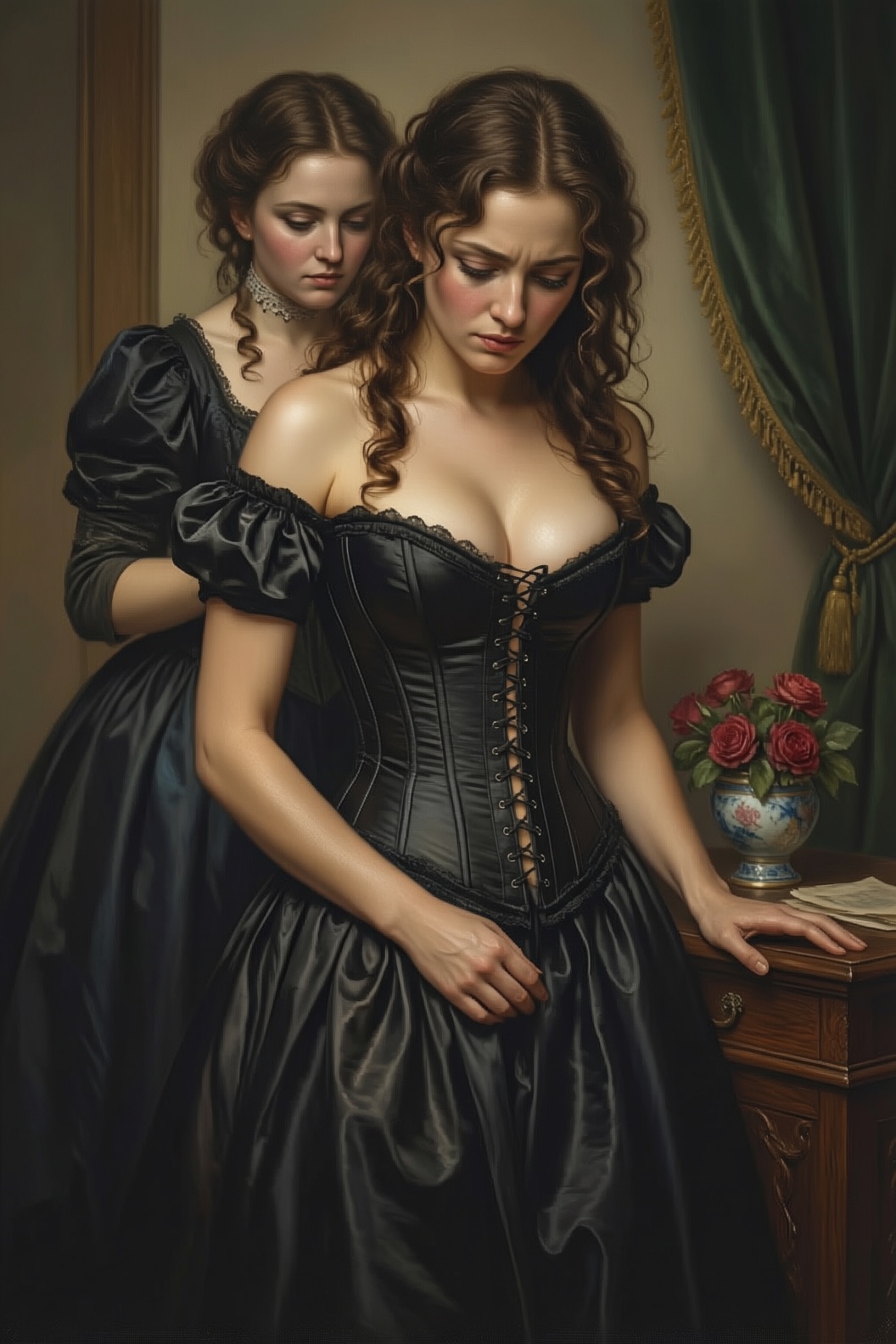
😄🧵💛👭 💞 🖤 🍓 🌶 🚪 🔑 🛋 🫧 🌩 🌧 🧵 🪡 👗 👚 👜 👠 🩰 💄 💋 🎻 📒 ✂ 🩸 💧 🚺 ⚧ ♀ ⚜
🧵 The Weight of Order 🧵
[ Lauren ]
Wardrobe had always been busy in the way a good kitchen was busy—productive noise, purposeful movement, women speaking in shorthand because competence didn’t need speeches.
But that week was different.
That week the workroom had a weight.
The first big order arrived in an email that read like a dream: a new Faire setting up somewhere between near Maleny, on the Sunshine Coast in Queensland—bright-eyed, ambitious, themed around Les Misérables, and hungry for authenticity. Not the tidy eighteenth-century silhouettes Wardrobe could draft in its sleep. This was nineteenth-century France: layers and hardship and seams meant to look lived-in. And the organisers had even been polite about Queensland’s climate: kindly requesting lighter materials, breathable choices, costumes that wouldn’t turn performers into boiled prawns.
Celeste lit up, of course. It was vision, like she could already see the whole thing, stitched and moving.
Mara went still in the way she did when she was interested. No fuss. Just attention sharpening.
Bree pulled a face and said, “Finally. Something that makes people sweat for art.”
Sarah smiled like a woman who could smell a challenge the way other people smelled bread.
I watched them: watched these women lean forward, hungry and capable and felt something lift in my chest. Pride, sharp and almost surprising in its brightness. They could do it. Of course they could.
Then the organiser revealed the number.
The room didn’t go silent. Wardrobe wasn’t a place that did silence. But a particular kind of stillness settled, like every woman in the building had done the same calculation at once.
It wasn’t impossible. It was just… a lot.
The kind of lot that changed how you breathed.
My hands stayed steady on my clipboard as if my body didn’t realise my life was rearranging itself by the hour. I moved through the workroom collecting fabric quotes, noting quantities, listening to Celeste’s quiet directives—this, then this, then this—like a captain mapping weather she couldn’t see yet.
And all the while, I felt the other storm pressing at the edge of my mind, waiting for a gap.
Roger.
Coming home after an extended period overseas. It was almost laughable how long I’d managed to hold him at bay by staying too busy to feel anything properly. But busy-ness had limits.
So did denial.
That afternoon, when I finally went home, the air in my house felt wrong: too empty, too staged, like a hotel room someone had tried to make look lived in.
Roger’s shoes were by the door. His keys were in the bowl. His scent—aftershave and entitlement—hung in the hallway as if it owned the place.
My stomach tightened.
I didn’t go to the kitchen. I didn’t tidy. I didn’t do any of my old rituals that had served as delay tactics for years.
I went straight to the study.
Roger was there, leaning back in his chair, phone in hand, smiling at something on the screen like a man who had never once feared consequence. He looked up as if he’d been expecting me.
Not with warmth: with calculation.
“Hey.”
I heard my own voice come out calm. My look was equally so.
“I know.”
His smile faltered. Then returned, thinner. “Know… what?”
I placed my handbag on the desk with care. I needed my hands to do something controlled.
“The messages,” I said. “The hotel receipts. The lies that don’t even bother trying anymore.”
His expression did the small, practiced shift into indignation.
“You went through my—”
“Don’t.”
The single word stopped him. It surprised me how cleanly it came out. Like Celeste had lent me a spine. Roger stared at me, recalibrating. Then he tried the other tack, the one that used to work.
“Look, you’re tired,” he said. “You’ve been working too much. And you’re letting those women get in your head.”
I stared at him, not blinking.
It hit me, with an almost comic clarity, that he was still speaking to the old version of me: the woman who needed him, who stayed because she couldn’t see a way out.
“No,” I said. “I’m letting myself get in my head. For the first time in years.”
His jaw tightened. “So what does this mean?”
“It means I’m done.”
“You’re leaving me?”
I paused.
It was strange, standing in my own house, looking at the man I’d built a life around, and feeling nothing but a tired, lucid sadness.
“Normally I’d asking you to,” I said. “At your earliest convenience. Tonight.”
His eyes widened, genuinely offended.
“You can’t be serious. You need me!”
Something steady rose in me—quiet, not dramatic.
“No,” I said. “I don’t need you. At all.”
I watched that land. Watched the way his face changed—not grief or remorse—just anger at losing a convenience.
“You ungrateful—” he started.
I lifted my hand.
“Don’t,” I said again, and the second time it wasn’t borrowed strength. It was mine. Roger stood so suddenly his chair scraped the floor.
“Oh, you think you’re all "independent woman" now, do you?” he snapped. “Just because you’ve in some little women’s club and a job playing dress-ups?”
I felt a cold calm: he was so transparent, his words—so revealing. I saw Wardrobe in my mind as clearly as if I were there: the racks, the pattern paper, the girls’ hands moving with skill. Celeste’s quiet authority. Sarah’s sharp honesty. The way Charli had begun, slowly, to exist.
Dress-ups.
That was what he thought women’s labour was.
“No,” I said. “I think I’m awake.”
He stepped closer. His voice dropped into that intimate threat men used when they wanted you to remember you were smaller.
“You’re making a mistake.”
I didn’t step back.
“Actually, I’m correcting one.”
He stared at me, breathing hard, then turned away with a violent gesture.
“You’ll regret this!”
It was almost a script line. My hands started to shake only after he slammed the study door on his way out. I stood there alone in the strange quiet, not destroyed but terrified.Free, but not safe.
Then, as if on cue, my phone buzzed in my pocket.
A message from Sarah.You okay?
My eyes stung.
I hadn’t told Sarah anything specific, but she’d been noticing me all day: noticing the way my smile had been too careful, the way I kept swallowing the same thought.
My fingers hovered over the keyboard. I tried to type I’m fine and couldn’t. Instead I wrote:
No
The reply came instantly, as if she’d been anticipating that response.
Come here now
I sat down slowly on the edge of the chair Roger had abandoned and felt my chest tighten so hard it stole the air from me.
Sarah’s flat certainty shouldn’t have made me cry. It did anyway.
I typed:
I can’t
A beat.
Then:
Because you’re proud? Or because you’re scared?
I stared at the screen.
My fingers went cold.
I hadn’t said it, not to anyone. But the true answer rose immediately, humiliating in its honesty:
Because I had feelings for Sarah.
Because somewhere—I couldn’t locate the exact day—I’d started wanting Sarah’s attention the way you wanted warmth when you’d been cold for too long: quietly, desperately, and with a shame that didn’t belong to me. And because I was certain Sarah could never want me back.
Sarah was fire. Sarah was sharp. Sarah was the sort of woman who looked like she’d never needed anyone.
I was… me. Middle-aged. Careful. A woman who’d stayed somewhere wrong for too long and was only now learning how to leave.
My thumbs shook as I typed:
I don’t think you understand
Sarah’s reply took slightly longer this time. Not long—just long enough for me to picture her on her bed, phone in hand, face thoughtful in a way she didn’t show at work.
Then it arrived.
I’m offering you a door that locks Lauren
I swallowed.
From the family room came the sound of Roger moving—cupboards being slammed, something thrown, the heavy-footed performance of a man making sure I heard his anger. My body cringed before my mind could stop it.
And that, more than anything, decided it.
I typed:
Okay
A final message came back, firm as a hand at my elbow.
Bring nothing you can’t live without. I’ll make tea.
I stared at the words.
Tea.
Such an ordinary promise.
Such an enormous mercy.
I stood, wiped my cheeks with the heel of my hand, and went to the bedroom to pack with the quiet efficiency of a woman who had finally stopped asking permission. At the front door, I hesitated: one last, stupid reflex of loyalty toward a life that hadn’t been loyal to me.
Then I opened it.
Outside, the evening air was warm and alive. Somewhere a neighbour’s sprinkler hissed. A bird called from a powerline as if gossiping about the whole street.
I stepped out.
And for the first time that day I felt the faintest hint of peace: not because everything was resolved, but because I knew women who would not let me face it alone.