Celeste's Girl
😄🧵💛👭 💞 🖤 🍓 🌶 🚪 🔑 🛋 🫧 🌩 🌧 🧵 🪡 👗 👚 👜 👠 🩰 💄 💋 🎻 📒 ✂ 🩸 💧 🚺 ⚧ ♀ ⚜
Introduction
I wrote Celeste's Girl because I'm tired of two lies: that womanhood is a costume, and that trans-women are a threat rather than an ally. I know, intimately, what male privilege feels like from the inside—and what it means to step away from it. No one abandons that invisible armour for "skirts and perfume." They do it for survival, for coherence, for the simple, radical relief of finally being able to recognise themselves in the mirror and in their own life.
This book isn't interested in spectacle. It's interested in infrastructure: in the women who quietly build worlds where other women can breathe. Wardrobe is a deliberate answer to the patriarchy's workshops and back rooms. It's a place where competence is normal, where care is policy, and where a trans girl isn't a punchline or a fetish object or a theory—she's a colleague, a daughter, a wife, one of the women.
I wanted to show what happens when a former "beneficiary" of patriarchy walks into a women-led space and says, without quite understanding it:
"I belong with you."
What does it cost her? What does it cost them? What does everyone gain that none of them could have had alone?
Celeste's Girl is my love letter to women's work, to chosen family, and to the fierce, unglamorous kind of solidarity that stands in front of loading bays and board tables and says: "No. Not here. Not to her." It's also a quiet insistence that trans women are not an enemy camp, but some of the keenest, most motivated allies women will ever have in dismantling the structures that harm us all.
1 Are You Lost? ✨

[ Celeste ]
I normally don't go down that corridor at all.
The library wing had its own hush — pale tiles, the faint perfume of hand soap drifting from the bathrooms, and that institutional quiet that makes you lower your voice without thinking. I had cut through to avoid the main hall after the bell, because the hallway was a river of elbows and backpacks and I don’t like being jostled when my head is full. And because I’d learned early that if you walk as though you belong somewhere, people stop asking why you’re there. It isn’t arrogance, it’s choreography.
I nudged the door with my shoulder and stepped into the girls’ toilets — and only then saw someone at the sinks.
For a beat my mind stalled, not because it was scandalous, but because it didn’t fit the neat categories school insisted were natural.
A boy.
He stood under the mirror lights with a paper towel clutched in one hand, staring at me. Short, slight, narrow-shouldered, with long brownish hair that fell into his eyes as if he’d forgotten it needed managing. His uniform shirt was oversized and softened by too many washes, the collar gone limp like the person laundering it had stopped believing in crispness.
He stood still, frozen. He wasn’t predatory still. He wasn’t defiant still. He was... caught.
Like a deer that has realised the world contains headlights.
His stare was not the usual quick look you get from boys who think girls are scenery. His was different: his breath snagged and didn’t restart smoothly, his gaze locked as if his eyes had forgotten they were supposed to move. Not bravado, just a raw, helpless kind of astonishment.
I could have shouted Get out, as if volume was a form of safety. But screaming makes you the story. It invites witnesses, gossip, morality plays. And I didn’t want a story. Not for me, and not for him. So I did what I always do when the unexpected enters my orbit: I controlled what would happen next.
“Hello,” I said, calm as if I’d found a first-year hiding from a duty teacher. “Are you lost?”
His throat bobbed. The silence was so complete I could hear the air-conditioning tick behind the vent. Then he managed, hoarse and thin, “I... I’m sorry.”
A preemptive apology. Interesting. Does he know where he is?
I softened my voice by a fraction — not concern. Calibration. “You know you’re in the ladies’, right?”
I watched the fact land late. His eyes flicked around the room, taking in the sinks, the cubicle doors, the absence of any familiar marker that could make this make sense. He swallowed hard.
“Oh—” He groaned. “Oh, no. I thought this was— I mean, I—”
Words spilled out, urgent and unhelpful. The instinct to explain, to erase himself by being reasonable. He wasn’t the swaggering kind of boy. He definitely wasn’t the cheeky kind. He was the wrong-door, head-in-the-clouds kind, the kind who would apologise to a chair he bumped into.
He stood there with the paper towel like it was evidence.
I took a small step nearer, close enough to anchor him, not close enough to crowd. He backed into the sinks without meaning to, shoulders drawing inward as if he could shrink out of existence.
“Right then,” I said briskly. “Stop. Breathe.”
He blinked at me, startled by my tone. Then, involuntarily, he did as he was told.
“Good,” I continued calmly. “Now, you’re going to walk out like nothing's wrong.”
His mouth opened again. I lifted a finger. I’m handling this.
“Don’t argue. Don’t confess. Don’t do that thing where... you look like you’re expecting to be punished.” His shoulders tightened, like I’d hit a nerve. “Just... let me steer for a second.”
As he continued to stare at me, I saw the shift: tiny, but unmistakable. His breath slowed. His spine uncurled a fraction. His hands lowered. He absorbed my taking over like cloth absorbs dye. It wasn’t weakness, but habit — a boy who’d learned that his safest option was to yield.
“What’s your name?”
He hesitated, as though revealing names was dangerous.
“Chuck,” he said, then corrected himself with an awkward, desperate politeness. “Charles. Charles Rossignol.”
“Rossignol,” I repeated, tasting it, translating it. “Nightingale.”
His eyes lifted, startled that I knew that. He held my gaze for a beat too long, still caught, still dazzled, and I felt the weight of it. Responsibility. I tilted my head toward the door.
“We’re leaving.”
He looked past me as if the door to the ladies' might bite. I stepped out of the door first, positioning myself where anyone would see me before they saw him.
“If someone looks at you oddly,” I said quietly, “you look at me. Understand?”
He nodded: quick, obedient. We moved.
As he crossed the threshold he stopped, eyes flicking back to me. I lifted my eyebrows.
Go on.
He swallowed, immobile.
“Charlie,” I said lightly.
“My name’s not—”
“I know.” I gave the moment a hint of humour. “It suits you, though. Tell me if you hate it.”
He looked at me as if I’d handed him something he didn’t know how to hold. Then he was gone — swallowed by the tide of students.
I stayed in the doorway to the bright tiled room for a moment, with the clean satisfaction of a strategist whose board has presented an unexpected piece: he watches my face like he’s waiting to be told what’s real.
I’m very good at inspiring that reaction.
I have to be careful with it.
2 Group Task ✨

[ Celeste ]
By the time Mr. Greeves started writing GROUP TASK on the board, the room had already made its decision.
It wasn’t an official decision, not one you could point to in a rulebook, but it lived in the way chairs angled away from the held-back boy, in the little coughs people used to cover their discomfort looking at him, in the speed at which everyone suddenly found the floor fascinating. I watched it happen with the same detached interest I’d watch a flock of birds turn as one body: instinct, cowardice, and the lazy relief of belonging.
And then... late, ridiculously late, the boy himself came into focus. Not the role or the cautionary tale the room had agreed on.
The person.
A quick flash: paper towels. A sink. Those startled doe eyes tipping up to meet mine.
Oh.
The wrong place, wrong door lad.
I’d stood in the ladies’ and looked straight at him, and my brain hadn’t filed him as anyone from class because in class he wasn’t anyone you registered: he was just a space people avoided. That's the thing: you can watch a room do things to someone without ever properly seeing that person.
And once you’ve seen someone properly, you can’t pretend you haven’t.
It wasn’t that he was ugly. He wasn’t particularly strange, just short and slight. Thin, shorter than most of the boys, which seemed to bother them more than it bothered him. His uniform shirt sat awkwardly on his frame — too big at the shoulders, too loose at the waist — as if it belonged to someone older and louder. He sat in a way that tried to be smaller than the desk allowed. He was... uncollected.
Scene-2a I should have recognised him in the loo. But no one recognises the boy the room has agreed not to look at. The held-back boy. The one re-doing Year 11 because algebra had eaten him alive the first time. People said it with the same tone they used for a failed appliance: still doesn’t work.
Mr. Greeves tapped the chalk like it owed him money. “Alright. You’ve all had your practice test. You’ve all had your feelings about your practice test. Today, you’re going to make something sensible out of it.”
A few kids chuckled. Not because it was funny, because it was what you did around Mr. Greeves.
“Pairs,” he said, underlining it twice. “Pick a question from the set. Solve it. Then produce a one-page explanation that someone else could follow. If you can’t explain it, you can’t do it.”
There was the usual scrape of chairs, the low panic of social arrangements. Everyone moved fast, because speed looked like confidence. I didn’t move. I didn’t need to. People came to me.
“Celeste, want to—”
“Celeste, I saved you a—”
“Celeste, I already have—”
I gave them my polite face and none of my answer. My attention drifted to the back left, where Charlie sat. The boy of wrong place, wrong door. I felt a brief, sharp prick of guilt — not pity for him, exactly. Disgust at myself for being present all this time and letting the room decide what he was.
Mr. Greeves spoke, louder this time. “If you’re still unpaired in thirty seconds, I’ll pair you.”
Even to me, that sounded like a threat. Not the task or the maths: being seen as someone who had to be assigned.
I watched Charlie’s eyes flick around the room: quick, skittish, scanning without pleading. When he realised no one was going to volunteer themselves to be his partner, his mouth tightened in a way I recognised. It wasn’t anger, but resignation. This was his lived experience. His face wore that calm acceptance of a humiliation he could see coming.
This had happened to him before. In this class. With these people.
Mr. Greeves drew breath. “Right. Charles—”
“Me,” I said quickly, before he could finish.
The room’s attention snapped to me like elastic. You could feel it in the air — the sudden recalculation. It made me want to smile, but I didn’t. Power is best used as if you hardly notice you have it.
Mr. Greeves blinked. “Celeste?”
“I’m with Charlie.” Not: can I, not: would you mind, but a simple statement, a course correction applied to reality. A few girls exchanged looks. One boy gave a tiny laugh, like I’d just made a joke he didn’t understand. Someone whispered, not quietly enough,
“Why would you do that?”
I turned my head just enough for the whisperer to know I’d heard.
“Because I like getting full marks,” I said, pleasantly. “And I like working with people who don’t waste time showing off.”
Silence. Clean silence.
Mr. Greeves recovered, puzzlement fading. “Alright then. Celeste and Charles. Good.”
I dragged my chair across without asking permission from the air. Charlie stared at me as if I’d sat down inside his head.
“You don’t have to do this...” he began, timid and urgent — and I heard it underneath the words: it’s you! From the loo.
“I know.”
He blinked, swallowed hard. That little phrase seemed to unsettle him more than comfort would have. I set my notebook down between us and looked at the question set.
“Pick one.”
“I—” he started, and faltered. The page might as well have been written in smoke. I watched him collect himself in silence. He didn’t panic or joke or make excuses. He scanned: not the way someone scans for answers, but the way someone scans for structure. My eyes dropped to his own notebook as he moved it — careful, almost fussy, aligning the corners of the paper with the desk edge. I noticed his handwriting: neat, consistent, slanted slightly right, as if it had manners.
“Your diagrams,” I said. “They’re precise.”
His head came up sharply. “What?”
“Geometry. You’re good at it.”
He looked genuinely confused, as if the possibility of being observed outside his failures had never occurred to him. “I’m... okay, I guess.”
“You’re better than okay.” I tapped the question set. “Pick one with a diagram. A shape. Something that lives in space, not in a string of symbols.”
He hesitated, then pointed with his pencil. “This one. The triangle... with the angle bisector.”
“Good.” I nodded. “You do the diagram. Make it clean. Label it properly. I’ll do the algebraic part and write the explanation. Then you check me for logic. Deal?”
He stared at me. “You... trust me to check you?”
That was the real question. Not about maths. About hierarchy.
“I trust your eyes,” I said. “They’re honest.”
His ears went faintly pink. Not flattered: embarrassed, like I’d assigned him a virtue he hadn’t agreed to wear and bent over the page. His pencil moved and the triangle appeared with a crispness that felt almost calming. Clean lines. Honest angles.
While he worked, I listened to the room — the buzz of other pairs, the smugness of boys who’d grouped for safety, girls who’d grouped for comfort. I heard my name in small asides, the way people taste words to see if they’re sweet.
Charlie drew his angle bisector and then paused, frowning.
“What?”
He pointed. “If we call that angle x... then this one has to be x too, because of the bisector. But the problem statement says this angle is thirty degrees. So x is fifteen. Which means... the ratio is fixed.”
He said it softly, as if he expected to be corrected.
I looked where he pointed. He was right. The whole problem collapsed into a simple proportion. A small, satisfied click happened in my chest — not because he’d solved it, but because it proved what I’d suspected: he was competent in a way nobody had bothered to find.
“Exactly,” I said. “That’s the spine of it.”
He glanced up at me, his hazel eyes quick, searching.
“Why are you doing this?” There it was, the defensive little gate. People who were kind to him usually wanted something — and he’d learned that wanting came with a price. “If this is a joke,” he said quietly, “I’m not in.”
I held his gaze. “It’s not a joke.” His pencil hovered, suspended over the page like a test of whether I’d change my mind. “You’re being tested in the wrong language. And I hate waste.”
His brow pinched. “Waste?”
“Waste of ability. Waste of time.” I tapped the diagram. “You’re not behind. You’re misallocated.”
He swallowed, and for a second his face did something raw — like he almost believed me and that frightened him. I leaned closer, just enough to make my next words private.
“If we work well together,” I added, “I’d like to offer you something after graduation.”
His shoulders stiffened. “What do you mean?”
“I mean work,” I said. “Proper work, with training. A place where detail matters.” I let a beat pass, then added because it was the honest part: “It would help me too. I’m building something. I want people who can actually hold it together.”
He stared at me, and this time there was something like understanding, the first bud of it. Tiny. Alive.
Mr. Greeves wandered past. He glanced at our work, eyebrows lifting. “Good diagram,” he said, sounding surprised despite himself. “Nice and clean.”
Charlie’s hand tightened on the pencil, but he didn’t look up. He didn’t bask. He just kept working, as if praise was a thing that might vanish if he moved too fast. After Mr. Greeves had walked away, I said, lightly,
“See? You exist. People just don’t like admitting it.”
Charlie’s mouth twitched. Not quite a smile. The ghost of one.
We finished the solution with no drama. I wrote the explanation in clear steps. He checked every transition like a quiet auditor. When we handed it in, Mr. Greeves nodded at me, then at him, as if he’d suddenly remembered Charlie was part of my team.
As the bell went, chairs scraped, and the flock of birds turned again. People flowed past us, and I watched Charlie do what he always did: shrink to let them. I slid my notebook into my bag and stood.
“Charlie.”
He looked up, automatically attentive, as if my voice had become a cue.
“I’m doing something after graduation,” I continued, watching his reaction carefully. “A project. A place. It’s... not school. It's real. It's work.”
His eyes flicked away, then back. Hope, buried under caution.
“I need people who can keep their head,” I said. “People who can do detail and who can be invisible, on purpose.”
He frowned slightly. I could read why me? as loud as if he'd shouted it. I stepped closer, so my answer didn’t have to compete with the corridor noise.
“You already know how to survive without applause,” I said. “If I don’t pick you, someone else will be chosen, and I doubt they'd be as good a fit.”
His breath caught: the shock of being chosen without a joke attached to it. He nodded carefully, still not fully trusting.
“Good. I’ll tell you what it is tomorrow.”
He watched me walk away as if the hallway had quietly rearranged itself.
And it had.
Not because I’d saved him.
Because I’d placed him — and left him room to decide whether he wanted to stay there.
3 Wardrobe 🧵
[ Celeste ]
Wardrobe had its own weather.
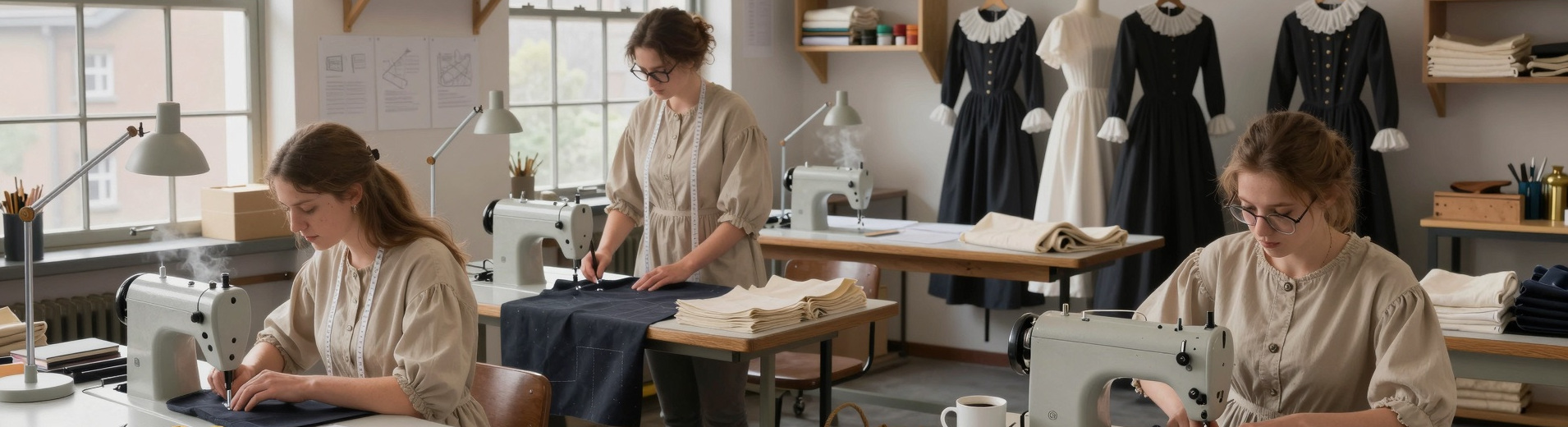
Not outside weather, but a constant, indoor climate of steam and cloth-dust and warmed metal. The air tasted faintly of detergent and starch and something older that lived in wool no matter how many times you cleaned it: sheep, lanolin, history.
The room itself was a maze of rails and racks, garment bags whispering against each other whenever someone brushed past. Stacked crates were stencilled with Mara’s handwriting — not the tidy school handwriting people used when they wanted to impress teachers, but the blunt, efficient strokes of someone who labelled everything because she didn’t like losing time to idiots. A long trestle table ran down the centre like an altar, currently piled with a half-dressed mannequin and a skirt turned inside-out, hemline pinned up like a patient on a hospital bed.
Mara stood over it with her chin tucked, a bodice in her hands, and the look she wore when something had disappointed her. Which was most things.
“Hold it.” She spoke firmly, without looking up.
I froze with a hanger halfway to a rail. Mara didn’t need to raise her voice or say your name. Her authority lived in the fact that she expected you to obey and had no interest in negotiating about it. She turned the bodice over and jabbed a fingertip at a seam.
“This. Who did this?”
I moved closer, careful not to bump the steamer hose that snaked across the floor like a sleeping animal. There were at least three botched attempts at seam repair.
“Which one?”
Mara’s eyes flicked to me — a quick, unimpressed glance that somehow conveyed: don’t be clever. She pinched the fabric and tugged. The seam puckered slightly, like a forced smile. “Whoever did this sewed with fear.”
I leaned in. The stitches were tight, too tight, as if the person had been trying to prove something to the thread.
“They were worried it wouldn’t hold.”
Mara snorted.
“It won’t hold because they were worried. That’s the irony.” She flipped the bodice again and thrust it at me. “Unpick it. Do it properly. Not fast. Properly.”
There was no harshness, not exactly. Mara was not warm, but she was honest in the way that mattered: she treated workmanship as a form of respect. If she corrected you, it meant she thought you were capable of being corrected.
I took the bodice, feeling the weight of it — the underlining, the interlining, the bones that gave it a spine. The kind of garment that made you understand, viscerally, why women in paintings stood the way they did.
Mara turned away. “If you ever bring me a hem stitched with fear, I’ll make you wear it.”
I smiled despite myself. “That’s a bit extreme.”
“That’s how you learn.” She reached for a tin of pins, shook it once, and caught three between her fingers without looking. “Go on.”
I carried the bodice to the end of the table, sat, and began to unpick the seam with the seam ripper Mara insisted we call a lame because she said if you worked in costume long enough you ended up sounding like you were auditioning for a museum.
I liked Wardrobe because it wasn’t school. School rewarded performance: hands up, shouted answers, wearing confidence like a costume, not caring whether or not it fit. Wardrobe rewarded something quieter: attention, patience, care. You could be brilliant here without having to announce it.
I worked for a few minutes, the thread giving way with soft little snaps, until Mara’s voice cut across the room again.
“Did you bring the inventory sheet?”
“It’s on the clipboard by the haberdashery shelf.”
“And did you sign out the spools you took yesterday?”
“Yes.”
Mara’s mouth twitched. Not quite a smile, more like an acknowledgement that I was at least trying to be competent. She moved around the room, checking rails, touching fabric, straightening labels. Mara had a way of handling garments that was almost reverent without being sentimental, like a mechanic wiping an engine block. She didn’t coo over pretty things. She respected construction.
“You’re late for your break.”
“I’m not hungry,” I replied, automatically.
Mara’s eyes sharpened. “That’s not the point.”
I paused with the seam ripper. “What is the point, then?”
“The point,” she said, “is that you don’t get to build a future on fumes. You’ll burn out and then you’ll be useful to nobody, including yourself.”
She said it bluntly — useful to nobody. This was Mara being kind. Mara’s kindness wasn’t soft: it was preventative maintenance. I set the bodice down, let out a small breath.
“Fine. Ten minutes.”
Mara waved a hand, as if she’d won an argument she hadn’t needed to have.
“Good girl.”
I rolled my eyes, but it didn’t bite the way it would have from someone else. Mara used language like a tool: blunt, functional, occasionally barbed. If she called you “good girl,” it wasn’t condescension: it was her honest appraisal. I stood, stretched my shoulders, and headed toward the tiny back kitchenette that barely deserved the name — a bench, a sink, a kettle, and a jar of instant coffee that tasted like burnt regret.
I’d just filled the kettle when the door to Wardrobe banged open.
A man in a hi-vis vest and work boots stepped into the doorway as if he’d been told the room was his and believed it. He had a cap on, and a face that looked permanently sunburnt in the way outdoors men often did: weathered, practical, slightly annoyed by all indoor occupations.
“Far-out,” he said, eyes flicking over the room. “It’s like walking into a bloody op shop in here.”
Mara turned very slowly. The look she gave him could have stripped paint.
“Graham.”
He grinned, unbothered. He had the easy confidence of someone who was used to being forgiven for taking up space.
“Mara,” he replied, like they were old enemies in a war where neither side had ever surrendered. His gaze slid past her and caught me. “Oh. It’s you. Fancy seeing you outside school.”
I raised my eyebrows. “It’s almost like I work here.”
“Yeah, yeah.” He waved it away. “Anyway... why I’m here. I need you to sign off on the replacement for the steamer. The old one’s cactus.”
Mara made a noise that stood for agreement.
“You put that in writing?”
“I did!” Graham reached into his pocket and pulled out a folded form, already crumpled like it had lived with coins. He slapped it on the table. “Here.”
He paused.
“Now, got me a separate problem.”
Mara’s eyes didn’t look up from the paper.
“If it's your problem, why are you telling me?”
“Because,” Graham said, exhaling through his nose, giving a reason that wasn't a reason, “well, someone up top decided I needed help. They sent me this kid.”
Mara’s attention sharpened even when she shrugged. Mine did too, without my permission. Graham leaned his hip against a rack of cloaks as if it was a wall. The cloaks swayed, offended.
“So, this kid,” he continued, “is too small, too weak, and too bloody... I don’t know. He’s just not built for hard yakka (2). I’m not running a daycare.”
Mara’s voice was flat.
“Well, if he’s a kid, he shouldn’t be in maintenance anyway.”
“He’s not a kid.” Graham rubbed his jaw, annoyed. “He’s eighteen. But he looks about fourteen and he’s got arms like pipe cleaners. I put him on basic stuff — carrying, fetching, holding ladders — and I'll tell you, Mara: he’s hopeless. He’s polite, I’ll give him that. He tries. But he’s going to get hurt.”
I felt my grip tighten slightly on the kettle handle. Graham went on, warming to his complaint.
“You tell him to grab the toolbox, he grabs it like it’s going to bite him. You tell him to hold a ladder and he holds it like he’s apologising to it. He’s... he’s not useless, exactly, just wrong for the job.”
Mara finally looked down at the paper he’d slapped on the table.
“What’s his name?”
Graham hesitated for half a second, not because he didn’t know, but because names had weight here. Once you said a name in Mara’s domain, you were acknowledging a person.
“Chuck,” he said. “Charles. Rossignol.”
The kettle clicked as it finished boiling. The sound was absurdly loud. My spine went very still. Mara’s eyes flicked to me. She had a way of reading a room that made her frightening.
“You know him.”
“I do.”
Graham looked between us. “You do?”
“I do,” I repeated, calm because if I wasn’t calm I’d start feeling things, and feelings were messy. “From school.” Graham made a face.
“Of course you do. Everyone’s from school. Freakin' summer jobs! It’s a plague.”
Mara folded her arms. “And you’re going to tell me you’re going to sack (3) him.”
“I am,” Graham said, relieved to return to the point. “He’s slowing the team down. And before you get all soft about it — I can’t keep someone who’s going to put his fingers through a band saw because he’s too timid to say he doesn’t know what he’s doing.”
“Why put him near a band saw?”
“I wouldn't,” Graham snapped, then caught himself and softened it a fraction. “You're missing my point. I’m saying he’s not suited, that’s all.”
“He asked to stay, didn't he?” I spoke before I could stop myself. Graham’s eyes flicked to me, surprised.
“Well yeah. He did. That’s what makes it worse.”
“Why?”
“Because he looked like he was about to cry,” Graham said, bluntly. Crying was an inconvenience. “He kept saying he needed the money, he needed the work, he’d do anything. It felt like a hostage situation.”
Mara’s face didn’t change, but something in her eyes cooled.
“Why didn't you offer him other tasks?”
Graham shrugged. “There aren’t other tasks. It’s maintenance, Mara.”
“That’s your lack of imagination speaking,” Mara said, dry.
Graham huffed. “See? This is why I try not to come in here. You lot live in a different world.”
“You’re the one who walked in.”
I set the kettle down slowly.
“So, he didn’t refuse my suggestion,” I said, more to myself than to them. “He just... took what he thought he should take.”
Mara’s gaze held mine.
“What did you suggest to him?”
I weighed it. Mara didn’t like speeches, and she didn’t do pity. But she respected plans.
“I told him in maths,” I said, “that if we worked well together I might have something for him after graduation. A project. Real work, not school. So, when he didn’t show today, I assumed he had decided not to.”
Graham snorted. “You were offering him this kind of work?”
“Well, you said it yourself: he’s doing the wrong sort of work at the moment.”
Graham gave a scoff laugh.
“So, you’re going to put him in here? With the dresses?”
Mara’s gaze cut to him like a blade.
“Say ‘dresses’ again like that and I’ll put you in one.”
Graham held up his hands in mock surrender. “Alright. Alright. I’m just saying...”
“...the same thing men always say when they don’t understand labour they can’t muscle around,” Mara finished for him.
His eyebrows rose. “Here we go.”
Mara leaned forward slightly, voice even. “Look, Wardrobe is not a refuge. It is not a therapy room. I don’t take strays.” I nodded. It wasn't going to land with Graham, but it was true. Mara continued, eyes cold. “I take workers. The people in this room work.”
Graham shrugged. “Fine. Don't think you'd have much luck with him, though. He’s not a worker. He’s...”
“He is a worker,” I said, quietly. “Just not the sort you’re used to.”
Mara’s eyes flicked back to me, eyes piercing.
“You think he can work in here? What makes you think so?”
“His hands,” I said. “His eyes. His patience.” I kept it clinical. “He draws like someone who thinks in structure, in geometry. His handwriting is neat. He listens. He doesn’t perform.”
Graham snorted. “That’s not a qualification.”
“It is in Wardrobe,” Mara said, without blinking.
Graham looked at her as if she’d just claimed gravity was optional. “You’re serious.”
Mara reached for the bodice I’d been unpicking and held it up by the straps.
“You see this? This is engineering disguised as femininity. It’s measurements and force and sweat and physics. We don’t need biceps. We need brains.”
Graham’s mouth opened, then shut. Things involving intellect was out of his depth. He glanced at me. “So, you think he's this boy wonder?”
“I’m not vouching for his character,” I said, and it surprised even me how easily it came out. “I’m vouching for his hands.”
Mara’s eyes narrowed in approval. Not warmth: respect.
Graham scratched his jaw, dubious. “Alright. But if he’s a liability, don't come crying to...”
“He won’t be your liability,” Mara cut in. “If I take him, he answers to me.”
Graham shrugged. “Fine. You want him, take him. But I’m not babysitting him until you decide.”
Mara’s gaze was steady. “You're not meant to babysit. You're meant to supervise. There’s a difference.”
Graham exhaled, annoyed but not combative. “When can you take him? Because I can’t have him underfoot tomorrow when we’re shifting the fencing.”
Mara didn’t look at me when she spoke. “Look, we don’t just ‘take’ him. First, we trial him.”
Graham frowned. “Trial him?”
“Trial shift,” Mara said. “One day. He shows up on time. He listens. He follows instruction. He's not a larrikin (4). He doesn't wander. He keeps his hands clean and his mouth cleaner.”
Graham barked a laugh. “You run a tight ship.”
“I run a ship that won’t sink.” Her eyes slid to me now. “And you, Celeste, you don't ‘save’ him. You don’t coddle him. You don’t make him a pet project.”
“I wouldn’t.”
Mara held my gaze. “Good. Because if he comes in here and thinks he’s protected by you, he’ll behave like a protected boy. He’ll test boundaries and blame women for having them. And that's not on,” Mara continued, voice firm. “If he comes in here, he earns his place like everyone else. Understood?”
“Understood.”
Graham shifted, uncomfortable again. “So what, you want me to send him over?”
“No,” Mara said. “You don't 'send him over'. I want him to choose to come.”
The words landed cleanly. Good. That’s how we avoided rescue. Mara reached for a small pad and scribbled something in her sharp handwriting. She tore off the page and held it out to Graham.
“What’s this?”
“Time. Location. Who to ask for,” Mara said. “When you give it to him, tell him: if he wants a trial, he's to turn up here, at Wardrobe, tomorrow morning. If he doesn’t want it, you sack him and no one feels guilty.”
Graham stared at the paper like it had teeth. “You’re ruthless.”
“I’m fair,” Mara corrected. “Ruthless is sacking someone because they can’t lift like a grown man.”
Graham’s ears reddened. “Oi (5).”
Mara tilted her head. “Am I wrong?”
He looked away. Shrugged. “No.”
Mara turned her gaze back to me.
“You can tell him too, if you want. But you don’t chase him. Don’t plead. Don’t sell it like a lifeline.”
I smiled, small and sharp. “I won’t plead.”
“Good. Then go and be useful. I’ve got work.”
Graham shoved the paper into his pocket and pointed at Mara’s replacement form on the table. “Sign, please.”
Mara picked up the pen, signed without looking, and slid it back. “Get out.”
Graham grinned again, like he enjoyed being told off by competent women.
“Lovely chat. Always a pleasure to be insulted in a room full of frocks.”
Mara’s voice was silky.
“Say ‘frocks’ like that again and I’ll hang you with one.”
Graham laughed and left, the door banging loudly behind him.
The moment he was gone, the air settled. Mara picked up the bodice again, examined the seam I’d been unpicking and redone.
“Better.”
I exhaled, the tension bleeding out of my shoulders. “He begged?”
Mara didn’t look up. “Graham didn't deny it.”
“He’s not theatrical,” I said, more to myself than to her. “He wouldn’t beg unless he...”
“Unless he was desperate,” Mara finished, matter-of-fact. “That’s what poverty does. It makes dignity negotiable.”
The bluntness of it struck me. Mara had no patience for pretty stories. She knew what scarcity did to people. I picked up my phone from the bench, thumb hovering over nothing.
“Go on your break, Celeste.” Mara’s gaze held mine for a second longer. Then she returned to her work. “Ten minutes,” she said. “Then you come back and finish that seam. If Charlie turns up tomorrow, you’re on rails and pins duty. You keep him busy. You do not hover. You do not mother. You do not flirt.”
“I don’t flirt,” I said, offended on principle.
Mara made a soft sound that might have been amusement.
“Of course you don’t.”
I rolled my eyes and moved toward the door. As I stepped into the corridor outside Wardrobe, the noise of the Historical Faire changed — less muffled, more alive. Somewhere outside, tourists laughed. A bell rang. Someone yelled about a lost hat. The smell of hot chips drifted in from the food court like a betrayal of all our careful historical illusions.
I walked fast, not running — running looked like need.
The maintenance compound sat behind the main buildings, past a cluster of props and a row of portable toilets that always made the “authentic eighteenth century experience” feel like a joke. The path was half gravel, half mud. A pallet of timber sat near a fence, and a stack of metal poles leaned precariously against a wall.
Graham was there, climbing a ladder. And below him—
Charlie.
He was holding the base of a ladder for Graham, the ladder angled against a wall. Charlie’s hands were white-knuckled on the rails. His shoulders were tight. His gaze was fixed upward, not watching Graham’s feet so much as watching for the moment the world would punish him for existing. He looked, in that moment, exactly as he had in the girls’ toilets: caught, trying to be small.
Graham climbed down, grumbling, and slapped the wall. “There. Fixed.”
Charlie loosened his grip slightly, but didn’t step away. Graham pulled the folded scrap of paper from his pocket and held it out. Charlie took it as if it might be a citation.
“What’s that?” Charlie asked, voice quiet.
Graham gestured vaguely toward the main buildings. “Wardrobe. Trial shift. Mara’s rules. You want it, you show up. You don’t, you don't. In any case, you’re done here. Sorry, mate.”
Charlie stared at the paper, then at Graham. “Why...”
“Don’t ask me,” Graham said, already turning away. “Ask the women. They run that cave.”
Charlie’s eyes dropped to the page again. His fingers tightened around it. I stood a few metres away, unseen, and watched him. He looked like someone who’d been offered a door and wasn’t sure he was allowed to touch the handle.
I waited until Graham disappeared into the shed, then stepped forward into Charlie’s line of sight. He twitched — the small, automatic startle of someone who didn’t expect anyone to approach him with intention. His gaze snapped to my face, and the recognition hit him like a wave. For a moment he went still in that deer way again, caught between running and apologising.
“Celeste,” he said, as if saying my name might summon rules.
“Charlie,” I replied, evenly. “You’re alive.”
His throat bobbed. “I... yeah.”
He glanced past me, as if expecting an audience. There was none: only the distant Faire noise and the buzz of flies around the bins. I nodded at the paper in his hand.
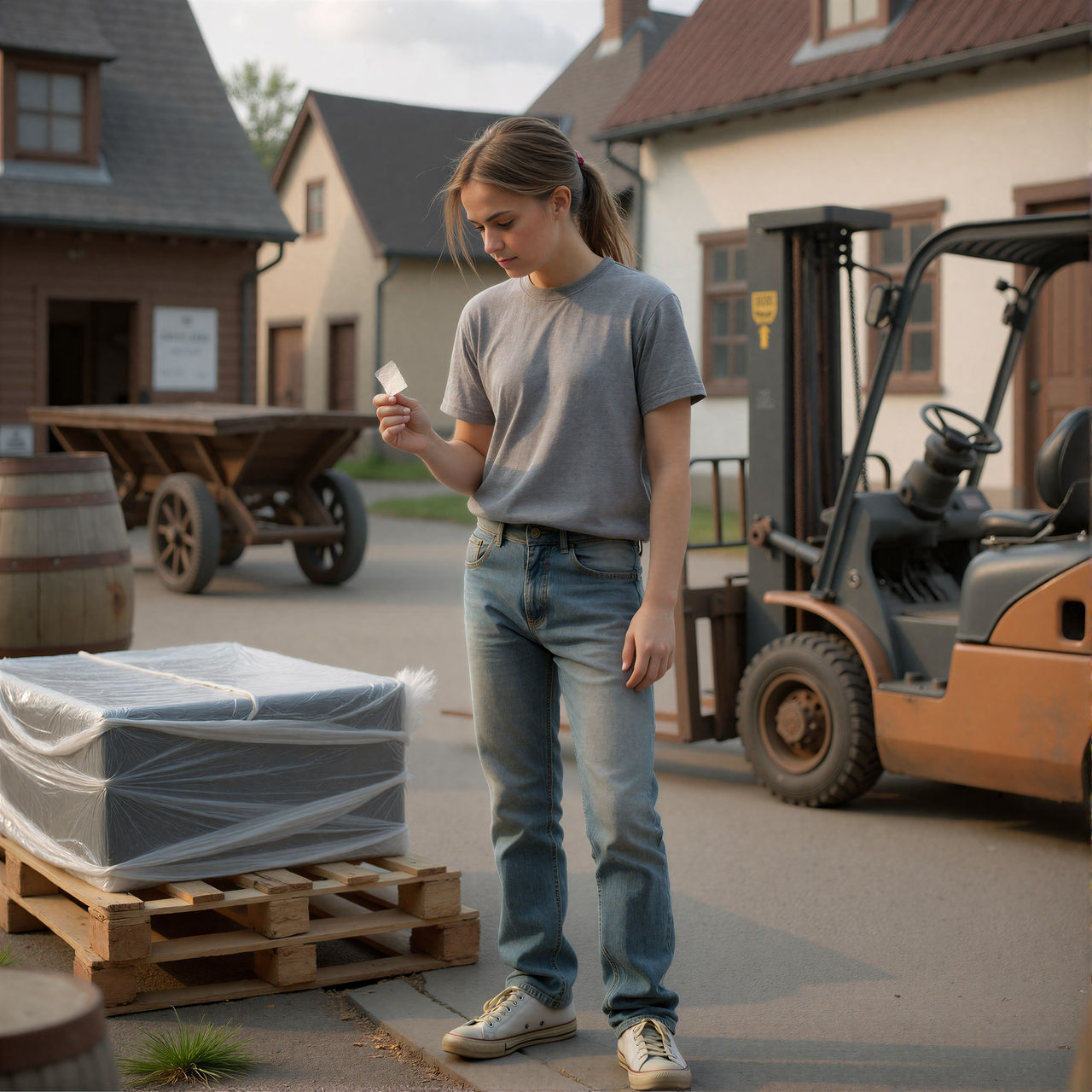
“That’s Mara’s trial shift offer.”
He looked down at it, his face flushed.
“I didn’t - I didn’t mean to ignore you.”
“I assumed you’d decided not to,” I said with a shrug. And kept my tone neutral: just a statement of fact.
His shoulders drew in. “I needed - um, actual work.”
“I know.” In spite myself, I felt my eyebrows raise.
He noticed and swallowed. “Maintenance... it’s-." He faltered. "I’m not good at it.”
“So I see.”
I tried not to sound cruel, just accurate. Accuracy was a kindness when it stopped you wasting time. He stared at me, eyes flicking quickly over my face as if searching for mockery.
He found none.
I leaned slightly closer, lowering my voice to keep it between us.
“This isn’t charity,” I said, pointing at the paper in his hand. “Wardrobe doesn’t do charity. Wardrobe does work.”
His gaze flicked up. “Why do you think—”
“Because you can work,” I said. “You just need the right lane.” He hesitated, and I watched a reflex rise in him: the reflex to refuse before he could be refused. His mouth opened. I lifted a finger, not to silence him, but to slow him.
“Listen. Mara’s rules are strict. She’s not warm. She doesn’t care about your story. She cares about whether you show up and do what you’re told.” His fingers curled harder around the paper. “And,” I added, because it mattered, “you are allowed to say no. If you don’t want it, you don’t take it.”
His eyes widened slightly, as if that sentence hadn’t existed in his world before. I held his gaze for a beat, then stepped back. Space mattered. Choice needed air.
“Seven-thirty,” I said, nodding at the paper. “If you’re there, you’re there. If you’re not, I’ll assume you made other plans.”
He swallowed. “You... you wouldn’t be angry?”
I almost smiled. Almost.
“I don’t get angry about people’s choices,” I said. “I get bored.”
His mouth twitched, the ghost of a smile, and his shoulders loosened a fraction. Good. Humour, used properly, gave people dignity. I turned to leave. Behind me, he spoke — quiet, but clear.
“Celeste.”
I stopped without turning. Let him have the floor.
“I... I can do detail,” he said, as if confessing some secret. “I can learn fast if someone shows me.”
I turned then, slowly, and looked at him properly.
“That’s how I know that I’m not wasting my time.”
His eyes held mine, startled again by the bluntness of being valued. With a quick nod I walked away, back toward Wardrobe, back into steam and cloth-dust and the woman who didn’t take strays. And behind me, in the maintenance yard, a boy stood with a folded scrap of paper in his hand, staring at a door he’d never expected to be shown.
Not a lifeline: a lane. A place he could earn.
And, if he chose it, keep.
4 First Day 🧵
[ Celeste ]
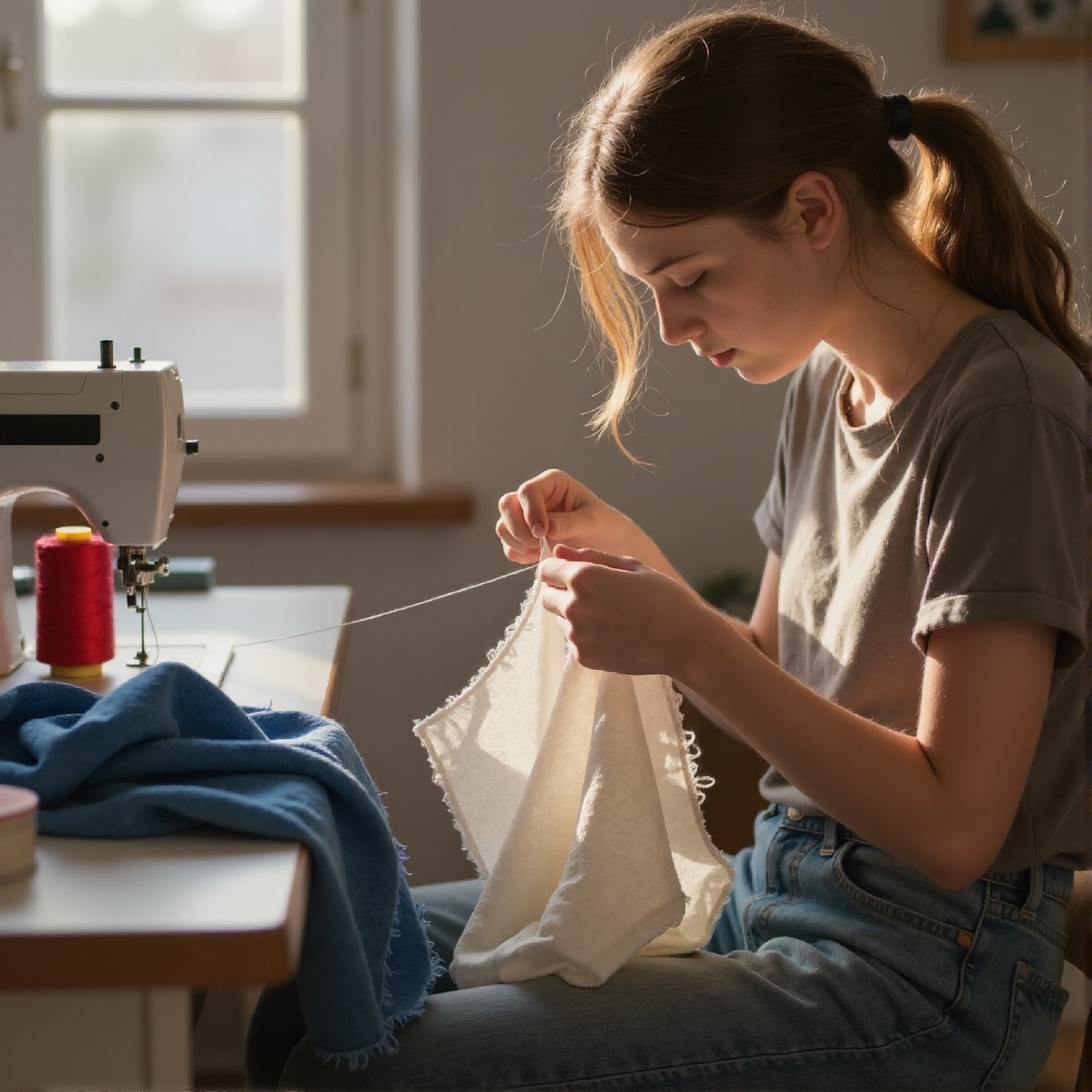
Charlie arrived ten minutes early. I watched as he stood outside Wardrobe like it was a church he wasn’t sure he was allowed to enter. He didn’t pace. There was no phone in his hand. He didn’t look around for someone to rescue him from the act of being in a wait-state. He just waited, folded scrap of paper in one hand, fingers worrying the edge until it softened. Every now and then he glanced at the door — not to check whether it was locked, but to check whether the world had changed its mind.
Inside, Wardrobe moved the way it always did: rails clacking softly as garments were shifted, the steamer hissing like a restrained animal, the constant quiet conversation between fabric and hands.
Mara spotted him through the small window in the door. She didn’t react. She never reacted, not visibly. She finished what she was doing — pinning a waistband to a mannequin, smoothing the fabric as if it were skin — then wiped her hands on a cloth and nodded toward me without looking.
“Open it.”
I was tempted to step forward, to say something that would make it easier for him, but Mara’s voice from yesterday was still in my ears: You don’t chase him. You don’t sell Wardrobe like a lifeline. I opened the door and stood aside. Charlie’s gaze snapped to mine the moment the door moved. He stepped forward, then stopped, like he didn’t trust his feet.
“You’re early.” It came out neutral, the way you’d say it’s Tuesday.
“I... I didn’t want to be late.”
“Good. Come in.”
He crossed the threshold with the carefulness of someone entering a room that might decide to reject him. Mara didn’t greet him. She didn’t smile. She didn’t soften. She looked at him the way she looked at a bodice seam — assessing the integrity.
“Rossignol.”
Charlie froze slightly. “Yes.”
Mara’s eyes dropped to his hands. “Clean?”
He looked down as if he’d forgotten hands were visible, then held them out like a child might do, palms up, fingers splayed. They were clean, nails were trimmed short. The skin at the fingertips was slightly rough.
“Good.” Mara turned away, as if a test had been passed. “Shut the door.”
He did so, quietly.
Mara walked to the centre table and picked up a garment bag. She unzipped it with a brisk motion and slid a dress out: not a grand gown but a simple working dress in sturdy fabric, with a seam splitting near the side closure. The tear was held together with hurried, ugly stitches. Mara tossed it onto the table.
“This came in yesterday. A tourist sat down too hard. Someone panicked and tried to fix it.” She tapped the seam with one finger. “Have a look at that.”
Charlie leaned in, careful not to touch until he was sure he was allowed. His eyes did what his eyes always did when something made sense: they became steady.
“The tension’s wrong,” he said, quietly. “It’s pulling.”
Mara’s gaze flicked to him. “Why?”
“They stitched too tight,” he replied seriously. “And they didn’t match the grain. The fabric’s fighting.”
Mara moved to the next question. “So, what do you do?”
Charlie swallowed. “Unpick it. Start again.”
“Do it.”
He hesitated. “With... a seam ripper?”
Mara’s mouth tightened. “It’s called a lame.”
Charlie blinked. “Right. Sorry. A —”
“Don’t apologise,” Mara said dismissively. “Just learn.”
He nodded. Not a performative nod: acceptance. Mara pointed at the far end of the table.
“You can sit just there. Tools are in the tin. Thread is in the drawer. If you use something, put it back when you're done. If you break something, you tell me straight-away. If you don’t know, ask. Once. And remember the answer.”
Charlie’s jaw moved, like he was swallowing fear. “Okay.”
Mara’s eyes slid to me. “Celeste.”
I looked up.
“You’re on rails and pins. Not him.” Her tone left no space for negotiation. “Do not hover. Do not translate. You have your own work.”
“Understood.”
Charlie’s gaze flicked to me: quick, nervous. The look I gave him spoke only of the simple fact of my presence in the room. I turned away and went to the rails, where a cluster of garments waited like quiet accusations. Wardrobe did not stop for anyone’s nerves. Behind me, I heard the soft, careful sound of Charlie taking the lame in hand. A pause. Then the tiny snap of thread giving way.
Mara moved around the room as he worked, doing her usual circuit: checking labels, touching fabric, straightening hangers. But her attention had shifted. It wasn’t on the dress.
It was on him.
Not his body or the shape of him: his behaviour. He didn’t hunch over the work like a guilty child. He didn’t look around to see who was watching. He unpicked steadily, patiently, lifting each tight stitch and easing it out as if he was undoing a mistake without punishing the fabric for it.
That, I realised, was what Mara was looking for. Not skill alone. Temperament. After a few minutes, Mara stopped behind him.
“Why are you going so slowly?”
Charlie’s shoulders tightened, but he didn’t flinch away. He looked up briefly, then back down at the seam.
“Because if I do it quickly, I might tear the fabric.”
Mara’s voice was flat. “And if you tear the fabric?”
“I’ll have to patch it.” He hesitated, then added, like a confession. “And a patch will show.”
Mara’s eyes narrowed slightly. “And you don’t want it to show.”
“No, I don't.” Simple fact.
Mara walked away again, as if that answer had been a key turning in a lock.
I pinned a label to a garment bag and listened with half my mind, the way you listen to rain on a roof — constant, background, meaningful. Charlie’s tools made small sounds: metal clicking, thread whispering. His breathing stayed even. After he’d unpicked the seam completely, he didn’t immediately reach for thread. He smoothed the fabric with his palm, slow and light, as if calming it. Then he looked up and spoke, voice soft but clear.
“Mara?”
Mara’s head turned. “Yes.”
He held up the dress slightly. “The original seam allowance is... narrow. If I stitch it the way it is, it’ll hold, but it will be under stress. If I reinforce it from the inside with a strip of fabric, like a facing. then that strip will take the load.”
Mara walked over to have a look. He indicated the seam in the air above the fabric, precise and respectful, as if the dress itself deserved dignity. Mara’s eyes sharpened. “Where would you put the strip?”
Charlie pointed to the inside layer, fingers hovering, not grabbing. “Just here. Along the closure line. It won’t show. It would stop it from tearing again.”
Mara stared at him for a beat longer than necessary.
“Do it.”
Charlie let out a breath. Reaching for the drawer, he selected a strip of fabric, measured it twice before cutting once. His movements were economical, careful in a way that made you trust him without having to decide to. Mara watched him for a few minutes, then spoke, this time to the room, rather than to him.
“This is how you sew,” she declared sharply, as if instructing an invisible class. “Not with fear or speed. With respect.”
I kept my eyes on the rails, but the words settled in my chest. This was not just about thread. but about everything. A little while later, Mara brought over a small tin and set it down near Charlie’s elbow.
“Needles,” she said. “Choose the right one.”
Charlie glanced at the tin, then at the fabric, then back. He picked a needle that matched the weight — neither too fine nor too thick — and threaded it on the first try.
His hands didn’t shake. Mara noticed. Of course she did.
“Do you sew at home?”
Charlie’s mouth tightened. “Sometimes.”
“Who taught you?”
Charlie hesitated. “My mum. She... she does alterations sometimes. For neighbours, for a bit of pin money.”
Mara’s gaze softened by half a millimetre — so little you could miss it if you weren’t watching for it.
“Right, then,” she murmured. “So you know what this line of work is about.”
Charlie didn’t answer, because people like him didn’t know how to accept a statement like that without turning it into an apology. Mara didn’t give him the chance. She tapped the table.
“When you’re finished, you’ll bring it to me. And if it’s still puckered, you’ll unpick it again.”
“Okay.”
I heard a voice at the other end of the room — one of the other girls, Lucy, hovering with a pile of folded aprons.
“Mara,” Lucy said cautiously, eyes darting to Charlie and away again. “Is... is he-”
Mara didn’t look up. “He’s working.”
Lucy’s mouth opened, then shut. She glanced at me, searching for cues. I gave her none. Mara looked up then, and her gaze pinned Leah the way a pin fixes fabric: precise, inescapable.
“Do you have a problem with someone working?”
Lucy flushed. “No.”
“Good.” Mara’s voice was mild, which made it more dangerous. “Then focus on yours.”
Lucy scuttled away like a mouse escaping a cat. Charlie’s shoulders had gone tight at Lucy’s question, but he hadn’t turned to watch her. He hadn’t sought sympathy. He kept stitching, eyes on the line, as if the only safe place in the world was the next correct stitch.
That was... telling. And, in a strange way, promising.
A while later, Mara moved to the far side of the room and pulled a curtain partway across a doorway. Behind it was the fitting area — a small section partitioned off from the main space. Not hidden, exactly. Controlled. She spoke without raising her voice.
“Rossignol.”
Charlie looked up immediately. “Yes?”
“Stop what you're doing,” Mara said. “and bring me the dress.”
Charlie set the needle down exactly where it belonged, smoothed the thread, and carried the dress over with both hands as if it could bruise. Mara took it, examined the seam with her fingertips, turned it inside-out, then right side out again. She tugged lightly near the closure.
The seam held. It lay flat. It looked as if it had never been damaged. Mara did not smile.
But she nodded. Once.
“Acceptable.”
Charlie’s breath stuttered, then steadied again. He didn’t glow. He didn’t grin. He simply stood there, waiting for the next instruction like someone who didn’t trust praise to survive sudden movement.
Mara looked at him. Not the dress. Him.
“What happens if you make a mistake in here?”
Charlie blinked. “I... I fix it.”
Mara’s eyes narrowed. “And if you can’t fix it?”
“I tell you,” he said quickly. “Straight-away.”
“And if you don’t tell me?”
Charlie swallowed. “Then I’m... out.”
Mara leaned slightly closer. Her voice dropped, not to intimidate but to make the next part land.
“Yes,” she said firmly. “You’re out. This room stays safe because we keep it that way. By being truthful.”
Charlie’s eyes widened a fraction — as if the word safe had been unexpected, as if he’d assumed the rules were only about fabric. Mara held his gaze.
“Do you understand me?”
“Yes.”
Mara straightened. “Good.” She turned her head slightly. “Celeste.”
I looked over.
“Show him the inventory shelf,” Mara said. “Then you go back to rails. He's not to follow you. You point. He listens. You don’t chat.”
I nodded. “Come on,” I said to Charlie.
Charlie glanced at Mara as if to confirm he was allowed to move, then followed me at a respectful distance — not crowding, not trying to be close. I stopped at the shelves and pointed out the labelled boxes: hooks, pins, tapes, ribbons, boning, eyelets. I kept my voice low and factual. Not teaching or nurturing: orienting. Charlie’s eyes tracked everything. He didn’t touch unless he was told. He was absorbing the room the way he absorbed my instructions in the toilets: as if someone giving him structure was a form of oxygen. When I finished, I stepped back.
“That’s it.”
“Okay.” And then, because he couldn’t help it, because his brain was precise and his honesty was inconvenient, he asked, quietly: “Does she... hate me?”
His voice was steady, calm. He was data-gathering. I kept my face neutral.
“Mara doesn’t hate people,” I said. “She hates time-wasting.”
His shoulders loosened a fraction, as if he’d been holding his breath since he walked in.
“Right.”
Mara called across the room again. “Rossignol.”
Charlie turned instantly. “Yes.”
“Pins,” Mara said. “Sort by size. If you mix them, I’ll know.”
Charlie moved without hesitation, took the tin, and began to sort, methodical and silent. I went back to the rails.
Wardrobe resumed its normal rhythm around him, as if the room had tested him and decided — provisionally — that he was not a contaminant. After another half hour, Mara’s voice cut through the steady hiss of steam.
“Rossignol.”
Charlie looked up.
Mara’s eyes held him. “Come back tomorrow at seven-thirty.”
Charlie went still.
“Tomorrow?” he repeated, as if the word had weight.
Mara lifted an eyebrow. “If you want.”
Charlie swallowed. He glanced down at his hands, then up again. The choice was there, hanging between them like a garment on a hook.
“I do. I want to.”
Mara’s gaze didn’t soften, but something in her posture eased — like a seam that had finally stopped fighting.
“Good. Don’t be late.”
“I won’t.”
Mara turned away as if an important matter had been settled. Which, it had: she had tested him.
And, for the first time in a long time, he hadn’t been found wanting.
5 Second Day 🪡
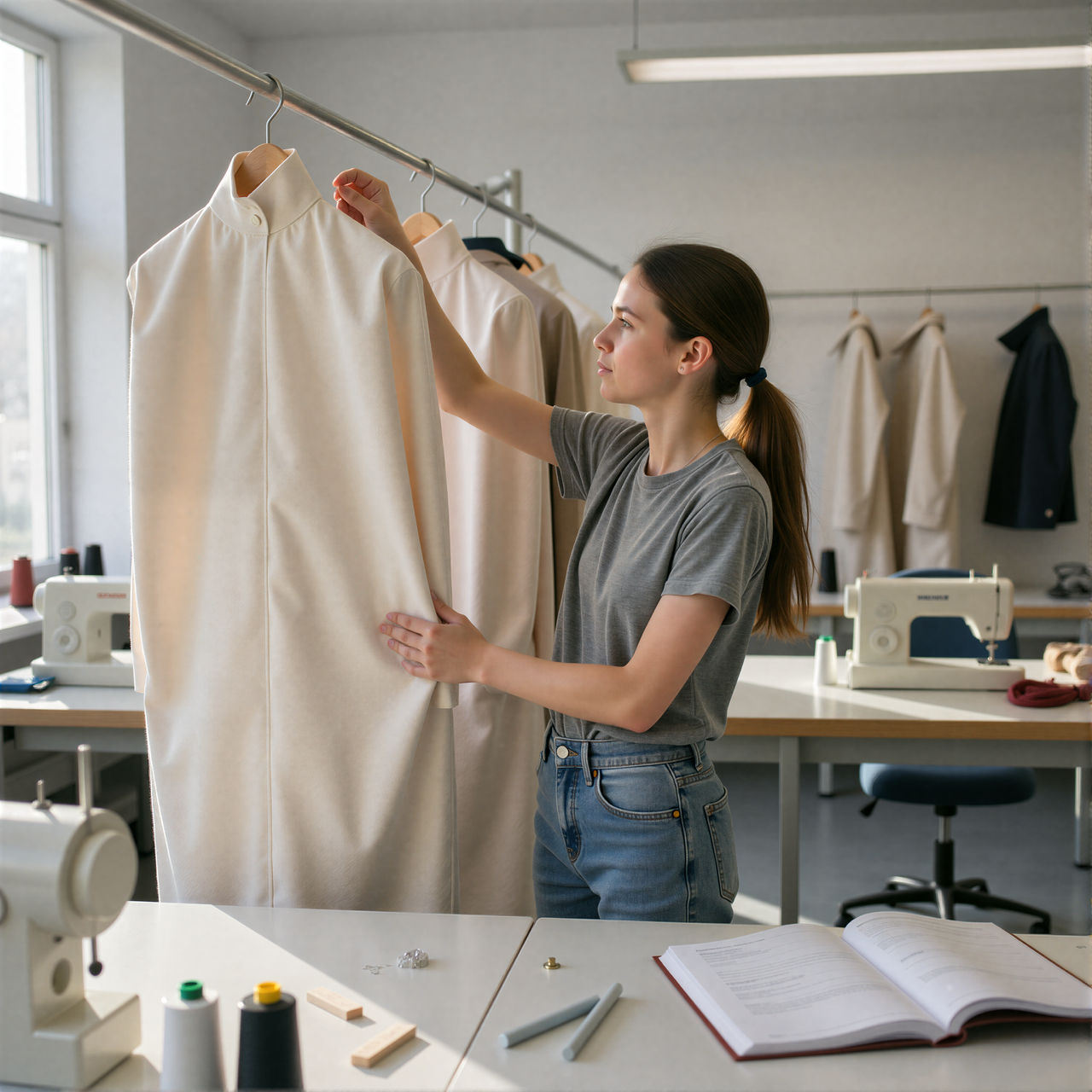
[Celeste]
Mara doesn’t test people the way teachers do.
Teachers announce the test, watch you sweat, then moralise the result. Mara tests you the way you test a seam: under her fingers, quietly, looking for strain.
Charlie was back the next morning: same early arrival, same clean hands, same careful stillness — as if he didn’t want the room to notice he’d arrived. Mara noticed everything, but didn’t say hello. She pointed at a tin on the table.
“Pins,” she told him. “Sort them. Then you’re on the mending pile.”
Charlie nodded an affirmative and poured the pins onto a cloth, arranging them by length with tidy focus that made the task look almost dignified.
I was at the rail, tagging garment bags, listening to the hiss of the steamer and the scrape of hangers sliding. Beeswax. Chalk dust in drawers. Old wool that held the day’s warmth like a secret. Wardrobe had its own rhythm, calm on the surface and precise underneath. Charlie had already started matching it. He didn’t try to improve anything, he just joined it.
Ten minutes later, Mara set a pair of vintage shears down too near the edge while reaching for something else. Charlie’s eyes flicked to the shears, then to Mara. He nudged the cloth closer, steadied the table with his palm, and slid the shears back with two fingers — carefully, respectfully — like returning a bird to its perch. Mara didn’t look up. But the line of her mouth eased by a millimetre. Ten minutes later, she called across the room.
“Rossignol. Bring me the blue painter’s tape.”
Charlie paused, gaze moving to the shelves. There were three blue tapes, different widths.
“Which width?” he asked quietly.
Mara lifted her eyes. “Quarter-inch.”
Charlie retrieved the roll and brought it to her.
“Good.”
One syllable. A stamp. Charlie went faintly pink at the ears anyway, as if the word had startled him. I kept tagging, but my attention drifted, as it always did. I watched people the way you watched fabric: how they fell, where they pulled, what they revealed when they thought nobody was looking. With Mara, Charlie was respectful. With the room, cautious.
With me, it was different.
Not the obvious stare you got from boys who thought you existed to be noticed. Not even the furtive kind. It was as if his eyes kept finding me on their own, the way a compass needle finds north—and each time he realised, he corrected himself like it was a breach.
He was trying not to.
Which made his attention almost endearing. Almost.
Mara sent him to the mending pile: a basket of small catastrophes: popped seams, torn cuffs, fraying apron ties. She didn’t give him the easy ones, rather the ones where haste would show. Charlie sat, assessed each item thoughtfully, chose thread that matched without holding it up like a show, measured seam allowance with his eye and confirmed with a tape. His stitches held even tension—no puckering, no desperate pulling.
Half an hour later, Mara handed him a garment bag.
“Hang that.”
It was heavier than it looked — wool, boning, metal closures. Charlie took it with both hands. He carried it like how you carried it mattered, and when he reached the rail he didn’t hook it into the first empty gap: he checked spacing, weight distribution, the hook’s position, thinking not of one garment, but the system.
Mara watched. She didn’t praise him, nor did she have to correct him. That was Mara’s version of warmth. When she moved away, I stepped closer to Charlie’s table.
I’d been told, explicitly, not to hover. I hadn’t been told not to be useful.
“You’re stitching like you’ve done this for years.”
His needle paused for half a second, then kept going.
“My mum,” he said, low. “She... she showed me. If you make it neat, people pay.”
“That’s true,” I said. “And if you make it neat here, Mara doesn’t kill you.”
His mouth twitched: almost a smile, but not quite. His eyes flicked to my face and away again too fast, like touching a hot surface.
“Thanks,” he murmured.
“For what?”
He swallowed. “For... yesterday. For getting me in.”
I let a moment pass. I didn’t want gratitude. Gratitude turns into dependence, and dependence rots a person.
“You got you in, Charlie,” I said. “You turned up. You work. Mara cares about that.”
His shoulders loosened slightly, like the statement had given him somewhere to stand. He threaded another needle, hands steady. Then, without looking at me:
“I’m not... I’m not trying to be weird.”
“Weird? Weird how?”
His ears went deeper pink. He frowned at the fabric as if it had betrayed him.
“I just—” The words clogged. The thing he didn’t want to say because saying it would make it an admission. So I decided what would happen next.
“You mean you don’t want to make me uncomfortable,” I said evenly.
His head snapped up — hazel doe eyes, startled — and then down again with a quick flush to the cheeks, quick as shame.
“Yes,” he whispered.
“Good. Maintain that.”
He nodded fast, relieved to be given a rule. Then, because his brain was honest even when his mouth wanted to be careful:
“It’s just... you’re... you’re a lot.”
I blinked. “A lot?”
He winced like he’d spilled ink. “Nothing bad. I mean... you make things — make sense.”
It wasn’t desire as entitlement. It was admiration as gravity. Much as I wanted to smile, I kept my expression neutral: he might’ve mistaken a smile for mockery.
“You’re allowed to admire,” I said. “Just don’t let it derail you.”
His eyes flicked to mine — confused, searching.
“You’ve been living in rooms where you can’t win,” I continued seriously. “Wardrobe is a room where you can. If you have strong feelings, aim them at your work. That will keep you safe.”
He stared at me. I’d named his feelings 'admiration' without accusing him of anything.
“Okay.”
I glanced at the garment in his hands. “Make that repair invisible. Mara hates visible.”
He almost smiled again. I turned back toward the rail.
“I’m not going back next year,” he muttered. “To school.”
I stopped with my hand on a garment bag, stunned.
“What do you mean?”
He stared at his stitches. Not me.
“I can’t... do it anymore. They just—” He shook his head once, small and furious. “It’s a waste.”
He said it like it was a plan, not a knife-edged impulse.
“No,” I said. Flat.
He looked up, startled. “No?”
“You’re not wagging,” I replied. Imperative: keep it simple. Not a debate.
His jaw tightened. “Why do you care?” I held his gaze.
“Look, Mara will train you. Your mum will back you. I can point you at doors. But if you sabotage your foundation, you’ll spend your whole life needing someone to catch you.”
His throat bobbed. He looked away.
“That’s not fair,” he muttered.
“I’m not trying to be fair,” I said. “I’m being accurate.”
He stared at his hands as if they belonged to someone else. I softened a fraction — not into comfort, into clarity.
“If school is the wrong language,” I said, “we’ll find you translation. But you don’t get to disappear.”
He swallowed. “I don’t know how to... do anything else.”
“Then you learn,” I said, and let a small edge of humour in. “Look, you’re learning a whole new trade. You can 'learn' Year Twelve.”
His mouth twitched. He didn’t say yes or no, but he didn’t argue. Progress. Across the room, Mara’s voice cut through the hiss of the steamer.
“Rossignol!”
Charlie’s head snapped up. “Yes?”
Mara held up a sleeve with a tear near the cuff.
“This one. If you stitch it tight, I’ll know. And you’ll unpick it in front of everyone.”
Charlie went very still. Then he rose, took the sleeve, and walked to Mara’s table with the careful confidence of someone who’d found a rule-set that didn’t hate him. Before he left me, his eyes flicked to my face again: quick, warm, grateful, frightened. I watched him go.
Being chosen isn’t a miracle. It’s a responsibility.
And I’m not letting him waste it.
6 Sewing as Physics ✨
[ Celeste ]
Wardrobe didn’t feel like a refuge anymore.
Not today.
The rails were fuller, the worktable was cleared for pattern paper instead of mending baskets, and Mara had the particular expression she wore when money had been approved and time had not: a brisk concentration that made everyone else move faster without being told to.
A new jacket lay pinned to a mannequin — not perfect yet, but already smarter than the old stock. The seam lines made sense. The stress points had been thought through. It was the first garment in weeks that wasn’t a compromise. Mara stood with a pencil behind her ear, looking at the jacket like she was deciding whether to forgive it.
“See that?” she said to me, tapping a point near the underarm. “That’s where tourists tear things. That’s where staff tear things. Movement there is violent.”
“It’s not really violent, is it?”
Mara’s eyes didn’t leave the seam. “It is if you pretend bodies don’t exist.”
That was Mara’s entire philosophy in one sentence. Design as honesty. Sewing as physics. Safety as something you built. I was about to reply when my phone buzzed in my pocket — twice in quick succession, as if whoever it was didn’t trust politeness to be heard. I didn’t check it immediately. I’d learned not to flinch in this room. Mara hated flinching more than she hated mistakes.
The third buzz came, insistent. Mara glanced at me without turning her head.
“If it’s school, I don’t care.”
“It isn’t,” I said, already pulling the phone out.
It was a message from Leah — one of the girls still at school. She was the kind of girl who liked gossip until it had teeth.
Leah: Charlie walked out of class. Like… just left. Mr Greeves tried to stop him. Everyone was laughing. I swear someone filmed it. He was at the board and Mr Greeves said something about staff saying Charlie won’t make it through the year. Like staffroom stuff. Charlie went white.
I read it once, then again.
Mara watched my face the way she watched a hemline — waiting for the tell. I didn’t give her much. I didn’t want to. But a message like that doesn’t land quietly. It lands like a dropped tool.
I typed back with one hand.
Me: Where is he now?
Leah replied almost instantly.
Leah: No idea. He just vanished. Didn’t slam the door. It was creepy. Like he wasn’t even angry. Just done.
Done.
I stared at the word longer than I needed to. Mara’s voice came, flat.
“What happened.”
Not a question. A demand for facts. I looked up.
“School happened.”
“That’s not an answer.”
I put the phone down on the table, screen facing me, as if turning it outward would make it gossip. “He was made to go up to the board. Mr Greeves — who’s meant to be the decent one — let slip that other teachers think Charlie isn’t coping. The room laughed. Someone filmed it. Charlie walked out.”
Mara’s expression didn’t change much. But something in her eyes cooled.
“What an idiot.”
“Mara —”
“No,” Mara cut in, and her voice sharpened the air. “Don’t defend him. A teacher’s job is to control the room. If he can’t control it, he doesn’t get to use a boy as an example.”
She turned back to the mannequin and tapped the underarm point again, harder this time.
“This,” she said, “is why you reinforce. Because stress finds weakness. Always.”
I understood the message. This was not just about fabric. I reached for my phone, thumb hovering. I had his number now: I could call Charlie. I could text him. I could drive to his house.
But it was obvious: don’t chase him like he’s a lost child. Not if we wanted him to keep the dignity of his own decision. So I did the only thing that felt like control.
I waited.
Wardrobe went on around us — steam, pins, scissors, the low murmur of women working, the smell of beeswax and chalk dust in the drawers. It should have soothed me. It didn’t. It made the contrast sharper. Here, competence earned you space. At school, competence only made you a target if you were already marked as “wrong.” Mara went to the cutting table and spread out pattern paper with a decisive sweep.
“Get the measurements list,” she said, brisk. “We’re not stopping.”
“Right.” I reached for the clipboard.
A few minutes later, the door opened. Not a dramatic entrance. Just the door, and the click of it closing again.
I looked up and saw Charlie standing inside Wardrobe with his backpack on one shoulder. He didn’t look dishevelled. He didn’t look tear-streaked. He hadn’t come in with the raw face of a boy begging for comfort.
He looked… set. Like a nail driven into seasoned oak. His gaze swept the room once — rails, tables, Mara — and then landed on me for a fraction of a second before flicking away again, as if eye contact was not the point of this visit.
Mara spoke first. Of course she did.
“Rossignol.”
Her tone was not unkind. Not warm. Just naming him into the room.
Charlie nodded. “Mara.”
Mara’s eyebrow lifted. Tiny, approving. He’d used her name correctly. Not “ma’am,” not “Miss,” not apology. Adult-to-adult.
Charlie swallowed once.
“I’m not going back.”
The words were quiet. They didn’t ask permission. They didn’t invite a debate. They were an announcement.
The room seemed to pause around it. Even the steamer hiss sounded restrained. Mara didn’t react like a counsellor. She reacted like a manager.
“To where,” she said, “are you not going back.”
Charlie’s jaw moved. He didn’t look at me. He kept his eyes on a point near Mara’s shoulder, as if meeting her gaze directly might turn it into a confrontation.
“School,” he said. “I’m done.”
Mara’s expression didn’t soften. But it did sharpen with clarity, as if this was a problem she could finally name.
“So what’s your plan.”
Charlie breathed in — slow, controlled. He adjusted the strap of his backpack with one hand, a small grounding motion.
“I can work,” he said. “Here. Properly. Not… hanging around.”
That was Charlie, at his best: no melodrama, no entitlement, no “please save me.” An offer. A willingness to work. My chest tightened anyway, because I could hear the underside of it:
I won’t be laughed at again. I won’t be filmed. I won’t be a spectacle. I’d rather stitch until my fingers bleed.
Mara stared at him for a beat. Then she said, “You don’t make sound decisions in a panic.”
Charlie’s mouth tightened. “I’m not panicking.”
Mara’s eyes narrowed. “Everyone else panics loudly. You panic by disappearing.”
Charlie held still. He didn’t deny it. He didn’t argue.
He simply said, very evenly, “I didn’t disappear. I left.” Nuance.
Mara’s gaze pinned him — not cruel, not tender. Accurate.
“Yes,” Mara said. “You left. Good. That’s self-respect.”
Charlie’s eyes flicked up, startled, because he’d expected punishment, not acknowledgement. Mara continued without letting the moment get sentimental.
“But self-respect isn’t a plan,” she said. “And I don’t run a charity.”
“I realise that.”
Mara’s tone stayed flat. “Then listen. This place is changing.”
I saw Charlie’s gaze shift to the pattern paper, the mannequin, the new garment pinned in place. He’d noticed. He wasn’t stupid. Mara stepped aside and gestured at the room with two fingers.
“This is not a mending corner anymore,” she said. “It’s a studio. It is deadlines. It is standards. It is money. If you want to be here full-time, you work like a professional. You don’t come here to hide.”
Charlie swallowed hard, his face set. “I’m not hiding.”
Mara’s mouth twitched, almost a smile. “Good. Because I will know.”
Then — and this was Mara’s version of generosity — she gave him something he could grab onto.
“Today,” Mara said, “you do two things. You finish the reinforcement on the prototype jacket. And you inventory the closure stock. Every hook, every eyelet, every tape. Write it down cleanly. Do it properly and you can come back tomorrow.”
Charlie went still. Not with fear. With the stunned relief of someone being given a rule-set instead of an argument.
“Okay.”
I hadn’t spoken yet. I was letting Mara set the terms. That mattered. It kept this from becoming about my feelings. But Charlie’s eyes flicked to me again, quick and involuntary, and I could see the question he didn’t want to ask: Are you going to make me go back?
I answered without words — picking up the clipboard, I placed it on the table beside him.
“Start with the closures,” I said, voice neutral. “You’re fast when you’re calm.”
His shoulders loosened by a fraction. He nodded once and reached for the stock drawer. Mara watched him begin, then turned to me, low enough that it wasn’t for him.
“This is going to become a fight,” she murmured.
“With the school.”
“With everyone,” Mara replied. “Because people love the idea of a system until a person refuses to be ground down by it.”
I glanced at Charlie. He’d already opened the drawer and was laying out tapes with the quiet precision of someone who could cope if the task stayed honest.
I kept my voice low. “He didn’t make a scene.”
Mara’s gaze stayed on him. “No. He made a decision.”
Charlie, as if sensing he was being discussed, lifted his head slightly, eyes darting between us. I didn’t soften. I didn’t reassure. I said, simply, “You can do this. But you do it properly.”
Charlie swallowed, then nodded again.
“Yes,” he said. “Properly.”
And just like that, the story shifted.
Not into rescue. Into work. Into responsibility.
Into the next room.
7 Lauren ✨
[ Celeste ]
Lauren Rossignol didn't come to Wardrobe like a mother arriving at a principal's office.There was none of that fragile anger, none of that flustered indignation.
She came as if she'd spent a long time deciding what she would and wouldn't say, and had finally settled on the only language style that always worked: calm, measured, consequential. She stood just inside the doorway with a canvas tote on her shoulder and her car keys in her hand, the metal biting gently into her fingers as if to keep her anchored. Her hair was pulled back too tightly for vanity.
Her lipstick was absent.
Her expression was not.
Mara looked up from the cutting table, pencil behind her ear, pattern paper spread like a map of intention.
"Can I help you," Mara said, not quite a question.
Lauren's gaze swept the room—rails, mannequin, the prototype jacket pinned in place—and landed on the mending corner that wasn't a corner anymore. She took in the quiet speed of the women moving through tasks. The hush had weight. Not the hush of secrecy. The hush of work.
"I'm Charles' mother."
Mara didn't move. But something in her eyes adjusted, like a lens clicking into focus.
"Right," Mara said. "You're... Lauren."
Lauren blinked once, surprised that her name was known.
I had been at the rail, tagging garment bags. I didn't look up immediately. I let Mara hold the centre. This was her room. Her rules. Lauren's eyes found me anyway—quick, assessing—and then returned to Mara.
"My son told me this morning he isn't going back to school," Lauren said, voice level. "He said he's working here.
"Mara nodded once, as if confirming a fact rather than accepting a plea. "He is."
Lauren's jaw tightened. "He's seventeen—"
"Eighteen," Mara corrected.
Lauren paused, then accepted the correction with a small exhale.
"Eighteen. He's leaving Year Twelve. That's not... smart."
Mara's expression didn't soften.
"It's not what you wanted."
Lauren's eyes flashed briefly: the fatigue of a woman who has carried other people's consequences for too long.
"No," Lauren said. "It isn't."
Mara gestured with two fingers towards a chair near the table. Not inviting. Allowing. Lauren sat, carefully. She placed her keys on her knee instead of the table, as if not to take up more space than necessary. Her tote stayed on her shoulder.
"You're running a studio, an atelier," Lauren said, looking around again. "Not... a dress-up shop."
Mara's mouth tightened. "Correct."
Lauren nodded once. Then, with a steadiness that made me respect her, she asked the question that actually mattered.
"Is Charles hiding here?"
The room went even quieter, not because the women stopped working, but because they listened. Mara didn't answer immediately. She turned her head slightly, eyes moving to where Charlie sat at the inventory drawer, sorting hooks and tapes with the same absorbed focus he gave to seams. He didn't look up.
He simply worked.
"He's not hiding," Mara said at last. "Not the way you mean."
Lauren's grip tightened on her keys. "And the way you mean?"
Mara's eyes returned to Lauren.
"The way I mean," Mara said, "is he's chosen a room that rewards him for being precise. School doesn't."
Lauren's mouth thinned. "School is still school."
Mara nodded once, like she conceded the fact without granting it authority.
"And this is still work," she replied. "With deadlines. With consequences. With standards."
Lauren's gaze flicked again to Charlie, then back. "He's not built for consequences."
Mara's eyebrow rose.
"Oh, he is. He's built for them more than most. He just doesn't tolerate being mocked while he learns."
Lauren's throat moved. The sentence landed. It wasn't sympathy. It was recognition. Her voice stayed controlled, but there was a tremor under it now—the tiniest crack in the armour.
"He's always been... gentle," she said, as if the word might be misread if she spoke it too loudly. "And the school... the school treats gentleness like weakness."
Mara's gaze held hers.
"School treats anything it can't classify as weakness," Mara said. "That's what institutions do."
Lauren's jaw tightened again. She looked down at her keys, then up.
"I wanted him to finish. I wanted him to have that paper. I wanted him to not... make his chances in life smaller."
Mara didn't interrupt. She let the sentence exist. Lauren continued, voice still level but now carrying something deeper.
"But I also don't want him to be eaten alive."
Mara's eyes narrowed slightly, and her tone shifted to more direct, as if Lauren had finally spoken in a language Mara respected.
"I don't run a sanctuary," Mara said. "When he is here, he works. He doesn't drift. He doesn't sulk. He doesn't disappear mid-task because he's overwhelmed."
Lauren's eyes flicked to Charlie again, then back. "He disappears when he's ashamed."
Mara nodded, as if filing that away like a measurement.
"Then he must learn not to be ashamed," Mara said coldly, "or he doesn't stay."
Lauren's lips parted slightly. For a moment, Mara's harshness irritated her. But she didn't reject it either. I could see the calculation: harshness, at least, was honest.
"And so you're quite... comfortable," Lauren said carefully, "having him here? Around... around all this?" Her eyes moved, briefly, to the fitting curtains—to the private space that was controlled, not hidden.
Mara's gaze sharpened. "You mean around women."
Lauren didn't flinch.
"Yes."
Mara leaned forward slightly.
"This is a women's space," Mara said. "It stays that way because we keep it that way. He is not entitled to anything in this room. He's here because he is useful and respectful. If that changes, he is out. Immediately."
"He wouldn't do anything..."
"That's not the point," Mara said. "This is: women in this space don't have to wonder, to worry."
Lauren's shoulders loosened by a fraction, like the sentence had relieved her of some burden she hadn't wanted to name. Mara sat back.
"Now," she said, brisk. "What do you actually want."
Lauren inhaled."I want to be sure that what Charles is doing here is... real!" She shook her head and placed a hand over her neck. "Not... a phase. This is not just my son hiding from school because it's hard. He's getting real training, for a real future."
Mara's eyes slid briefly to the prototype jacket again, then back.
"It's real," Mara said. "I make it real."
Lauren held her gaze.
"And where does Celeste fit into this," Lauren asked, and my name entered the space like a small blade.
Mara didn't look at me when she answered."Celeste is the research," Mara said. "The direction. The brain that won't let the work get lazy."
Lauren's eyes came to me again.
"And you," Lauren said to me, voice still calm but now edged, "are you rescuing him?"
I finally looked up.
"No," I said. "He's working. Mara decides whether he stays."
Mara's mouth twitched, almost approving.
Lauren studied me for a beat, then nodded once, as if satisfied with the answer. She stood. She shifted her tote from shoulder to hand and drew out a folded bundle of fabric.
"I think this is from here," she said, placing it on the table. "He forgot it at home. I washed and pressed it."
Mara unfolded it: a linen apron, neatly hemmed, ties reinforced. Mara's eyes flicked to Lauren.
"You sewed this."
"I fixed it."
Mara ran a finger along the stitching—precise, elegant, invisible.
"Good work," Mara said.
Lauren blinked again, surprised by the praise. Mara didn't offer more. She didn't need to. She folded the apron and put it aside.
Lauren's gaze went to Charlie one more time. He still hadn't looked up. He was counting eyelets like counting was a form of prayer. Lauren's expression shifted—not soft, exactly, but less braced.
"I'm disappointed," she said, louder now. Clearly Charlie should hear it. Not accusation. Truth. "I wanted you to finish."
Charlie paused. His fingers stopped. He didn't turn around.
"I know, mum."
Lauren's throat moved. She swallowed it down. Mara spoke, crisp, to cut the emotion before it bloomed into something messy.
"Rossignol," she called. "Continue."
Charlie resumed immediately. Lauren exhaled. She looked at Mara again.
"When he's here," Lauren said with a nod, "he works."
"Correct."
Lauren picked up her keys.
"And if the school comes sniffing?" There was a new steadiness to Lauren's voice—a mother's protectiveness with a professional edge. Mara's gaze hardened.
"They can sniff elsewhere."
Lauren's mouth twitched, something like relief. She turned to go, then paused at the door and looked back once more at Mara.
"I don't do pity," Lauren said, as if setting a boundary with a warning. "He won't survive that."
Mara's response was immediate."Neither do I," she said. "That's why he will."
Lauren left without flourish. The door clicked shut, and the room returned to its rhythm. Mara looked at me, pencil still behind her ear.
"Your friend."
"She's Charlie's mum," I said. "That's not the same thing."
Mara's mouth twitched again.
"Good," she said. "Keep it clean."
8 Infrastructure ✨

[ Celeste ]
Lauren came back a week later, and she didn’t look like she’d been awake all night arguing with herself.
She still looked tired — because mothers always do — but the braced edge from last time had eased into something steadier: acceptance with boundaries. Not surrender. Not softness. More like she’d stopped trying to stop the river and started measuring its speed. She didn’t bring keys to crush in her palm.
She brought coffee.
A small paper bag, warm through the bottom, smelling of espresso and pastry — and a tote that sat on her shoulder like she’d learned how to carry weight without making a performance of it. Mara looked up from the worktable.
“We don’t eat over fabric,” she said, as if it were a law of physics.
Lauren nodded, as if she’d expected nothing else.
“I didn’t bring it for fabric,” she said. Her tone had a dry curl to it. “I brought it because you look like the sort of woman who forgets food when she’s busy.”
Mara’s eyes narrowed.
“I don’t forget,” Mara said. “I postpone.”
Lauren’s mouth twitched. “Yes. That.”
I stayed near the rail, letting them set their own rhythm. This wasn’t my meeting. I’d opened the door; they could decide what walked through. Lauren didn’t insert herself. She just stood and watched the room — quietly, like someone observing a process she’d decided to respect. The atelier had changed in a week. Not prettier for the sake of pretty; better. Reinforced where stress hit. Forgiving where bodies moved. Built for the real physics of the Faire instead of the fantasy of it. Charlie was part of that now. Not as a mascot. As a mechanism.
He didn’t talk much. He simply made things survive. At the fitting curtains, he held a bodice steady while Mara worked the line on the mannequin. He didn’t glance around for approval. He didn’t scan the room like a boy looking for permission.
He just… held.
Lauren’s expression shifted — pride held so tightly it almost looked like pain. Mara noticed without looking at her.
“You can watch,” Mara said. “Just don’t hover.”
“I’m not hovering.”
Mara’s mouth moved, one millimetre. For her, that was a smile.
“You’re hovering in French.”
Lauren let out a short laugh that startled even her — like humour had slipped out before she could catch it.
“You’re Australian,” she said. “What would you know about that?”
Mara went back to her pins.
“Women are women,” she said. “Just with different accents.”
Lauren stepped closer to the worktable and reached into her tote. Not theatrically. Practically — the way women smuggle intimacy in under logistics. She drew out a small notebook and opened it. Fabric swatches. Neat rows. Labelled. Taped down with the kind of care that says: I don’t waste my own time, and I won’t waste yours either.
“I’ve got a supplier in Sydney,” Lauren said, and now her voice had turned businesslike — not cold, just clear. “Linen that doesn’t go transparent under light. Not cheap. But consistent. If you’re moving into design, you’ll want consistent.”
Mara’s fingers paused. For Mara, that was a reaction.
She held out her hand.
“Let me see.”
Lauren passed the notebook across the table. Mara tested the swatches the way she tested everything: with honesty. Thumb and forefinger, rubbing the weave lightly. Body. Recovery. Spine.
“This one holds,” Mara said. “It won’t collapse when it’s damp.”
Lauren nodded once. “That’s why I use it.”
Mara’s eyes flicked up. “For what?”
Lauren didn’t answer immediately. She watched Charlie’s hands for a moment — his steadiness, the way he treated cloth like it deserved respect — and something in her face softened and tightened at the same time.
“For things that need to survive men,” she said at last.
It was the first personal sentence she’d offered, and she didn’t dress it up. No story. No dramatic pause. Just the truth, placed on the table like a tool. Mara’s face didn’t change much. But her eyes softened — the smallest shift, the kind only another woman would notice.
“Mmm,” Mara said. “Yes.”
Lauren exhaled slowly, like she’d been holding her breath in her own life for too long.
“You’re protective,” Lauren said, gently.
Mara snorted. “I’m professional.”
Lauren’s mouth twitched again.
“That’s what protective looks like when you’ve had enough.”
Mara didn’t deny it. She didn’t confirm it either. She closed the notebook and slid it back across the table with care — not because she was sentimental, but because she understood workmanship.
“You have standards,” Mara said.
Lauren’s gaze flicked away, briefly — not shame, more like the reflex of a woman who’d learned to hide anything soft because softness gets hunted.
“You learn them,” she said quietly. “Or you get eaten.”
Mara looked at her properly then, steady as a level.
“Yes,” Mara said. “Exactly.”
They held each other’s gaze for a beat — no sentimentality, no softness — just recognition. Two women looking at the same map and realising the other knew how to read it.
Behind them, the mannequin’s sleeve shifted.
“Mara,” Charlie said, soft, cautious — but it was work, not interruption. “The seam pulls when you raise the arm.”
Mara turned immediately. Attention snapped to the garment the way a blade snaps to a whetstone.
“Good catch,” she said, and then added, because she couldn’t help herself, “Of course it does. It’s always there.”
Charlie didn’t smile. He didn’t preen. He just held the bodice steady while Mara repinned the line, the way he held everything: quietly, without demanding credit. Lauren watched him again. This time the pride didn’t hide as well.
“Charles seems… different,” she said, carefully. As if the name itself still belonged to her mouth.
Mara didn’t look up.
“Charlie,” she corrected, not harshly — simply as fact. As if the room had already decided.
Lauren blinked once. A small recalibration. She didn’t argue. She didn’t make a face.
She just let the correction stand.
“Charlie,” she repeated, tasting it like a word she was learning to say without cutting her tongue. “He wanted to quit school because he felt humiliated.”
The word humiliated sat in the air like something sour — controlled, but bitter, as if it didn’t belong in her mouth and she resented that it had ever belonged in his day.
Mara’s hands kept moving.
“Some people use humiliation as a tool,” she said. “Because they have nothing else.”
Lauren’s eyes stayed on the garment, as if she’d decided this was where she could look without breaking.
“We don’t use it here,” Mara added.
Lauren nodded slowly, as if she needed to hear that said out loud by someone other than herself.
“And what do you use?” she asked.
It struck me then that she wasn’t asking only for her son. Not really.
Mara tugged the fabric once, then twice, testing tension.
“Standards,” she said. “Consequences. Work.”
Lauren stood very still, like those words were something she could finally put weight onto. Then she surprised herself again, and her voice lifted a fraction, almost teasing:
“And coffee.”
Mara’s mouth twitched — one of her rare allowances.
Lauren moved to the side bench and opened the paper bag. Two coffees emerged. Not delicate. Not fancy. Practical cups with lids that said: I’ve learned how to do this without needing to be thanked for it.
She set one near Mara’s elbow, away from fabric.
Mara stared at it like it might be a trap.
“Don’t make it a thing,” Lauren said, already turning away, as if generosity had to be disguised to be tolerable.
Mara picked up the cup and took a sip.
“Fine.”
Lauren’s smile flashed — brief, real — and then she folded it away again. From the fitting corner, Charlie glanced over — not at his mother exactly, not at me — but at the two women standing in quiet alignment. The look on his face wasn’t dramatic. It was weather: the subtle shift of someone realising the world might, in fact, hold.
He didn’t ask what they’d talked about. He didn’t intrude, but returned to the seam and held the fabric steady while Mara corrected the line.
And for the first time since he’d walked out of school, something settled into place for him.
Not refuge.
Not rescue.
Infrastructure.
Women building something that would hold.
And Charlie learning — quietly, steadily — how to live inside it.
9 Noise or Signal ✨
[ Celeste ]
Lauren arrived on a Tuesday, which I noticed only because Tuesdays were the days Mara tried to pretend she had time.
She didn’t, of course. Mara never did. But Tuesdays were when she scheduled her stubbornness. The cutting table was clear, the mannequin was dressed in half a bodice, and the new jacket prototype sat like a dare: make me survive.
Lauren stepped in with a flat folder under her arm and a tote on her shoulder. No coffee this time. No pastry peace offering. She looked neat, composed, and slightly sharpened around the edges, as if she’d spent the morning refusing to be moved by other people’s urgency. Mara glanced up.
“What now,” she said dryly, as if Lauren had become a regular inconvenience she secretly approved of.
Lauren didn’t waste time warming the air.
“They called again.”
She didn’t specify who. She didn’t need to. Systems rarely needed names. They just kept turning — always in the way. Mara’s mouth tightened.
“And.”
“And I told them I’d call back,” Lauren replied, and there was a quiet satisfaction in the sentence. Not triumph. Just control. “Which I won’t, unless I have to.”
Mara’s eyes flicked to the folder.
“What’s that?”
Lauren placed the folder on the corner of the worktable, away from fabric, and opened it with a deliberate neatness — like she could handle paper without absorbing it. Inside were two things: an envelope and a printed sheet.
The envelope was plain and official-looking. Lauren didn’t open it. She let it sit there like something she'd scraped off her shoe.
The printed sheet she slid forward.
It was a photograph of one of the Faire staff — Lucy — wearing the new jacket prototype. Lucy’s arms were raised in a dramatic pose, the kind that usually tore seams under the arm and split closures at the waist. But here the jacket held: clean line, no gaping, no strain. It looked like it had been designed for a body instead of a mannequin fantasy. Below the photo, Lauren had typed a short list. Not poetic, not emotional, just facts:
- Previous issue: underarm seam tearing after repeated movement
- Change: reinforced gusset + eased sleeve head + seam tape at stress line
- Result: 3 full shifts; no tear; improved comfort; faster dressing
- Notes: closure placement adjusted for quick change; no snagging
It was written like an incident report. Like a nurse charting patient progress in a ward. Like a woman who didn’t trust feelings to convince anyone. Mara stared at it.
Lauren said, evenly, “This is signal.”
Then she indicated the envelope without looking at it.
“And that,” she added, “is noise.”
Mara’s mouth twitched as her eyebrows rose slightly — almost amused, almost approving.
“You’ve been busy.”
Lauren shrugged. “I’ve been paying attention.”
Something settled in my chest that wasn’t relief exactly. More like load-bearing. Women reinforcing each other the way we reinforced garments — because pressure finds seams, and we weren’t going to split. Across the room, Charlie was at the side bench, pinning a lining into a bodice piece. He hadn’t looked up when Lauren entered; he never did. He didn’t seek permission for his attention. That was part of why Wardrobe suited him. Here, no one had to perform being seen.
But he did look now. Not to the photo at first. To the envelope.
Something in him still reacted to official paper the way some people react to sirens—an instinctive tightening in the gut. His hands slowed. A pin hovered between his fingers. Lauren noticed without turning. Mothers always did.
“Don’t,” she said quietly.
Charlie blinked. “Don’t… what?”
“Don’t go pale,” his mum replied. No cruelty in it, just blunt care. “You’re not in trouble in this room.”
He swallowed and looked down at his hands again, willing them back to normal speed. Mara picked up the printed sheet and read it properly. You could tell when she stopped seeing it as a thing someone had handed her and started seeing it as information. Her eyes tracked the lines. Her thumb pressed the paper unconsciously, testing it as if it were cloth.
“This,” Mara said thoughtfully, tapping the list, “is actually quite useful.”
Lauren’s lips thinned, determined. “That’s the idea.”
Mara’s gaze slid to the envelope.
“And that.”
Lauren’s expression sharpened.
“They want a meeting,” she said. “They want ‘pathways’. They want him back in a system that already told him what it thinks of him.”
Mara’s eyes narrowed.
“And what do you think.”
Lauren didn’t answer quickly. She glanced at Charlie — a brief, controlled glance — then turned back to Mara.
“I think,” she said, “that if he goes back there now, he’ll disappear again. Not dramatically. Not loudly. He’ll just… turn off.”
My throat tightened a fraction. She was exactly right. Charlie didn’t explode; he evaporated.
“And I think,” Lauren continued, still calm, “that if he stays here, he’ll have to show up. You don’t allow drifting. You don’t allow hiding. You make him do something… important. For him. This is real.”
Mara didn’t soften. That wasn’t her style. But she did something else: she accepted the statement as if it were a contract.
“He works,” she agreed.
Lauren nodded. “Yes. He works.”
Mara set the paper down carefully, the way you set down something you intend to keep.
“So what are you asking me for?”
Lauren met her gaze.
“Permission,” she said. “Not for him. For me.”
Mara’s eyebrow lifted.
“Sorry?”
Lauren’s mouth tightened, and for the first time her voice showed a thread of vulnerability—but framed the way women did when they refused to make their needs into someone else's burden.
“I want to be able to say, truthfully, that he isn’t ‘dropping out.’ He’s transitioning into supervised work. Training. Something with standards. Something you’re willing to put your name on.”
Mara’s gaze held hers.
“You want me on the hook,” Mara said.
Lauren didn’t flinch. “Yes.” Then, she added:
“I’ll handle the paperwork and the school. Work placement language. Attendance logs. If anyone wants a form, I’ll give them a form. You handle standards. I handle noise.”
A beat.
Mara looked across the room at Charlie, who had resumed pinning, slower than before but steady. He wasn’t eavesdropping; he was simply present enough to feel the air changing.
Mara’s eyes returned to Lauren.
“You’re not asking for a favour then, are you?” she said. “You’re asking for a structure.”
“Exactly.”
Mara exhaled through her nose. She didn’t like being managed. But she liked competence. She liked women who spoke plainly.
“Fine,” Mara said. “Here’s the structure. He is here full-time. He keeps hours. He logs tasks. He does training modules the way I set them. He gets evaluated like all my staff. And if he fails, he fails. He doesn’t get protected by his mother.”
Charlie’s hand stopped again, just for a fraction.
Lauren’s voice didn’t soften. This was the contract.
“Agreed.”
Charlie looked up then — finally — and his gaze flicked from Lauren to Mara, and then, briefly, to me. Bewildered in the way he always was when adults made decisions near him.
Mara called him without raising her voice.
“Rossignol.”
It was what Mara did when the room needed to understand: this wasn’t intimacy; this was procedure. Charlie stood quickly, like someone trained by women: respectful, attentive, not wasting anyone’s time.
“Yes?”
Mara held up the printed sheet.
“Your mother brought receipts,” Mara said. “This is how you win against paperwork. We will do this properly.”
Charlie stared at the photo. His mouth parted slightly. Genuinely confused — not by the garment, but by the fact his work had been recorded like it mattered. Lauren spoke then, not to soothe him, not to praise him into embarrassment, but to anchor him.
“They can recommend whatever they like,” she said, her tone clipped. “I’m your mother. I decide what works. For. You.”
“Mum, I—”
“No,” Lauren cut in, gentle but firm. “Don’t explain. I’m not asking for that. I’m asking you to stay… visible.”
Charlie blinked. The word visible hit him like a strange request. Visibility had never been safe. Mara snapped it back into something he could hold.
“Visible,” Mara said, “means you write down what you do. You show up on time. You finish tasks. You don’t vanish. You want to be here? Then you exist. Visibly.”
Charlie’s throat bobbed. He nodded once.
“Yes,” he said. “I can do that.”
“Good,” Mara said, and turned briskly back to the mannequin. “You can start now.” She gestured at the prototype jacket.
“We solved the tear,” Mara said. “Now I want the pull solved. Lucy can lift her arms without ripping it, but she shouldn’t feel it fighting her.”
She didn’t look at Lauren when she added the rest — because this wasn’t for Lauren. This was for the garment, and for the room.
“I want it solved so it survives summer heat and tourists and the stupid way people grab sleeves,” Mara continued. “I want it solved without adding bulk that ruins the silhouette.”
She looked at Charlie sharply.
“Tell me where it fails.”
Charlie stepped closer to the mannequin. His hands didn’t tremble. That was the difference between school and here: here, hands were allowed to be useful. He lifted the sleeve gently and pressed the seam line with his fingertips. His eyes narrowed, focused.
“It’s not the seam,” he said quietly. “It’s the angle. The gusset’s correct, but the sleeve head is fighting it. You need two millimetres more ease here… and the tape needs to stop before the pivot point, not run through it.”
Mara’s face changed — not dramatically, because Mara’s face never did — just the tiny shift of a professional hearing a solution that makes sense.
“That,” Mara said, “is an answer.”
Lauren watched him with that restrained pride again. Not soft. Not indulgent. Just steady. And watching the three of them in the same room — Mara with her standards, Lauren with her adult refusal to be bullied by systems, Charlie with his quiet competence — I felt something click into place.
Not rescue. Not refuge. A triangle of authority that could hold.
Lauren reached for the envelope at last, slid it back into the folder without opening it, and closed the folder with a neat, final motion.
“Alright,” she said. “Now I can call them back.”
Mara didn’t look up from the sleeve.
“Tell them he’s busy.”
Lauren’s mouth twitched. “I will.”
Then she picked up her tote, nodded once at me—not warmth, exactly, but acknowledgment—and moved to the door. As she left, she paused and looked back at Mara.
“Thank you.”
Mara didn’t accept gratitude the way most people did. She accepted it the way she accepted fabric swatches: with suspicion.
“Don’t thank me,” Mara said. “Just don’t undermine me.”
“I won’t.”
The door clicked shut.
In the quiet that followed, Charlie returned to the mannequin and began marking the line with tailor’s chalk, his movements careful and certain.
And I thought: this is what he needed. Not a kinder classroom. A room where competence was not entertainment, where women built reality and demanded he live inside it.
A room where the system’s noise could stay outside the door — because inside, we had signal.
10 Not My First Choice 👗
👗 [Celeste]
We found it the way we found most good things in Wardrobe: not through inspiration, but through paperwork. Mara slid a thin archival print-out across the cutting table without ceremony. It landed beside my notebook like a challenge.
“Look.”
The image was a plate from an old catalogue: eighteenth century, late enough that it carried a Georgian neatness, early enough that it still remembered softness. A working woman’s garment, not court finery: fitted through the back, generous through the skirt, closures placed for hands that were busy. It had intelligence in it. It had been designed by necessity, not ego.
My pulse quickened, that familiar feeling when history stops being “interesting” and becomes possible.
“Well, it’s not a costume,” I said automatically, more to myself than anyone else. “It’s equipment.”
Mara’s eyes sharpened. Approval. She liked that phrasing.
“It’s also clever,” she said. “See the reinforcement here? And here.”
I leaned in, tracing the lines with my fingertip without touching the paper. The sketch suggested a hidden strength at stress points: underarm, waist, the place where movement always found the weak seam. It wasn’t decorative but structural.
“We can draft this,” I said. “We can actually draft this.”
Mara already had a pencil in hand.
“Then draft it,” she replied.
That was Mara: no ceremony for the moment a dream became work. The moment you spoke it, you owned it.
We split the labour without speaking. I took the research: proportions, plausible fabric weight, seam placement, what could be original and what had to be translated for a modern body in a modern job. Mara took the pattern: chalk, ruler, sharp decisions. Charlie hovered nearby, the kind of quiet orbit of someone who listened for when he was needed. He didn’t volunteer. He didn’t insert himself. That was one of his strengths. He didn’t presume he belonged at the centre.
We moved fast. Paper became pattern. Pattern became cloth. Cloth became the first prototype under Mara’s hands. The room filled with that particular concentration that only happens when a thing becomes real: pins tapping into the pincushion, the soft rasp of shears, the hiss of the iron. By mid-afternoon the garment hung from the mannequin, half-finished but already legible. Even unfinished, it had a line. It made sense.
It didn’t scream “pretty.” It whispered “capable.”
Mara stepped back, eyes narrowed.
“It’s got spine.”
“It has purpose,” I replied.
Charlie said nothing. He simply reached in and adjusted a seam allowance that had curled under itself, as if the fabric had misbehaved in a way the eye might miss. Mara noticed. Mara always noticed.
“Already adjusting things, Rossignol?” she asked, not looking at him.
Charlie paused with his fingers on the fabric.
“Just... making it honest,” he said quietly.
Mara grunted. That was as close to praise as she came without a contract.
We didn’t take anymore time to admire it. Wardrobe had learned that excitement was a luxury you enjoyed after delivery. We did what we always did next: we tested. Not with a “try it on and twirl”, but with a chemise.
We put it on Lucy, one of our most reliable staff, who didn’t treat clothing as costume theatre. Lucy did front-of-house, lifted baskets, crouched for children, ran for late arrivals. She was the kind of wearer who revealed the truth. She came back near closing time, cheeks flushed, hair escaping pins.
“It looks brilliant,” she announced, breezily. “But—”
Clothing is always honest in the end. She turned slightly and tugged at the underarm.
“Here,” she said. “When I lift my arms. It’s not tearing, but it’s... fighting.”
Mara’s eyes flicked to the seam line and her whole brain shifted into assessment.
“And,” Lucy added, touching the waist closure, “this. It held, but it’s been tugged a lot. People grab. You know.”
Yes. We knew.
Mara took the garment from Lucy the way a mechanic takes a part off an engine: no reverence, only focus. She laid it flat on the table and pressed her palm along the seam.
“It’s not failure,” Mara said, and I realised she wasn’t talking to Lucy but to me. “It’s information.”
“It’s reality,” I replied.
Mara’s gaze sharpened. “Reality is violent.”
“It’s demanding,” I corrected, because words mattered. “Not violent.”
Mara’s mouth went sideways, like she found my idealism irritating but useful.
“Fine,” she said. “Demanding. The point is, it needs a tester who understands what it’s telling us.”
And then she looked, not at Lucy or me, but at Charlie.
“Charlie.”
Mara said it the way she said measurements: without softness, without doubt. And it landed differently than Rossignol ever did—not like procedure, but like assignment. Like a small, unspoken promotion into the room’s working language.
She hadn’t used his first name, ever.
Charlie quickly looked up, eyes wide. His face was calm, but I could see an alertness around his mouth. Mara held up the garment with two fingers, as if it weighed nothing.
“You,” Mara said, “are going to test it, Charlie.”
Lucy blinked. “He is?”
Mara nodded. “Yes. He is.”
I’d been waiting for it all day.
We couldn’t test properly with someone who only knew how to wear. We needed someone who could read a garment—who could feel a pull and immediately know where the fix lived.
Charlie could.
And then I saw the smallest grimace: his eyes dropped to his torso, quick as arithmetic. Not panic: a calculation. Will this even sit right?
The word 'wear' landed, for him, as something practical: weight, pinch, drift, balance. The fact it was women’s attire barely made the list.
He inhaled once, measured.
Mara didn’t rush him. She just waited, the way she did when a decision belonged to you and she wasn’t going to steal it.
Charlie’s eyes dropped to the garment again, a quiet assessment. Lucy sidled up beside him like she’d wandered over for no reason at all.
“Well,” she murmured, eyes bright, “look at you, getting promoted.”
His mouth went slightly crooked, but didn’t look at her: he looked at the garment. Lucy leaned in amiably, a playful grin on her cheeks.
“Go on then,” she said, with a wink to me. “Tell me you’re not at least a little bit into it.”
Charlie glanced at her and gave one shoulder a nearly imperceptible shrug.
“Well,” he said, still looking at the garment, “it’s not my first preference.”
Mara didn’t react at all.
“Noted,” she said. “And irrelevant.”
Charlie’s cheeks tightened briefly, almost a smile and almost not. Mara had a way of stripping the emotion off a thing without stripping the person out of it. Lucy’s eyebrows narrowed and her lips pursed—interesting, neatly filed—and stepped back like she hadn’t just put him into her “watch this space” folder. I didn’t buy it.
I chose my moment carefully.
“It’s equipment, Charlie,” I said, calm. “Not identity. We’re not asking you to become anything. We’re asking you to report accurately.”
Charlie’s gaze flicked to me.
“Yes,” he said, mostly to himself. “Accurately.”
Lucy looked between us, a little uncertain, then shrugged with the easy pragmatism of someone who’d worked with Wardrobe long enough to trust the women running it.
“If anyone asks,” Lucy said lightly, “you’re a mannequin with opinions.”
Mara snorted.
“Don’t be daft,” Mara said. “He’s not a mannequin. He’s a stress map.”
Being called useful in Mara’s language was a kind of privilege.
We moved to the fitting area. Mara drew the curtain and held the garment up.
“Arms up.”
Charlie complied, efficient, as if his body were a coat stand. Mara didn’t fuss. She worked quickly, checking line, checking pull, checking where the fabric resisted movement. This wasn’t dressing, it was testing; she was assessing the garment’s behaviour on a frame. I stood just outside the curtain, notebook in hand, listening to the sound of pins and Mara’s clipped instructions.
“Turn. Now lift your arms. Higher. Good. Twist. Again.”
Charlie’s responses were quiet, obedient, following instructions like a professional. Then Mara’s voice snapped: irritated, but satisfied.
“There,” she said. “Feel that?”
A beat.
Charlie’s voice came through the curtain, measured.
“Yes,” he said. “It’s not the seam itself. It’s the direction of strain. When I raise my arms, the tension line runs across the tape and stops the fabric doing its job.”
Mara exhaled sharply. “Say it again.”
Charlie repeated it, clearer the second time, because Mara demanded clarity like a tool. “And the closure,” he continued without being prompted, “holds. But if someone grabs here—” there was a faint sound of fabric being tugged—“it transfers force to the waistband. You need the reinforcement to stop before the pivot point, or it becomes a lever. It will eventually tear next to the reinforcement.”
Mara’s silence was almost reverent. Not warm: reverent... in the way a professional respects a correct diagnosis. I wrote fast, my mind already mapping the fix. Stop the tape at the pivot. Shift the ease. Strengthen without bulk. Preserve silhouette. Mara drew the curtain back.
Charlie stepped out, still in the garment, looking slightly flushed with the faint heat of having been under scrutiny. He kept his eyes on the floor for a beat, then lifted them to the table like a person returning to work. Mara grabbed chalk and marked a line on the garment where his finger had indicated strain. Charlie stood still, letting her mark him up like he was a draft. I watched his face: controlled, determined. There was a kind of bravery in being willing to do a thing you disliked because it was necessary.
“That’s why,” Mara said to me, curt, as if she’d just proved a point, “we don’t test with people who only wear.”
I nodded.
“We test with people who understand.”
Mara’s eyes flicked to Charlie.
“We test with Charlie,” she finished. Charlie’s ears went slightly pink. Not flattery, more like the discomfort of being singled out as having a key role.
I kept my voice neutral. “And we log everything,” I said, already flipping to a clean page in my notebook. “Every deviation from the original design. Every reinforcement. Every reason.”
Mara nodded. “Good. Make it defensible.” Then, without ceremony, she pointed at Charlie.
“Take it off,” she said. “And write me a report.”
Charlie blinked. “A report.”
“Yes,” Mara said. “What you felt. Where it pulled. What caused it. What you propose. In plain language. No poetry.”
“Right.”
He moved towards the fitting curtain again, and this time the moment of misgiving didn’t follow him like a shadow. The task had overtaken it. Work had swallowed any awkwardness, the way it always did for him. As he disappeared behind the curtain, I realised something with a cold, clean satisfaction:
We hadn’t asked him to be brave in front of a classroom. We’d asked him to be precise in a room that respected precision. And he’d answered the way he always answered when the world stopped trying to eat him: by becoming indispensable. Mara looked at my notebook.
“Title it,” she said.
I wrote at the top of the page, in neat block letters:
DESIGN REALISATION — PROTOTYPE 1 — STRESS TEST LOG
Then underneath, because it mattered, because it named what we were building:
Tester: Charlie Rossignol
Purpose: durability + mobility without silhouette compromise
Notes: equipment, not theatre
Mara’s gaze flicked over my shoulder, and her mouth twitched again.
“Now we do it properly.”
And in that moment, with chalk on fabric and a plan on paper, Wardrobe stopped being a place that repaired old worlds.
It became a place that made new ones.
11 Has Charlie Run It? ✨
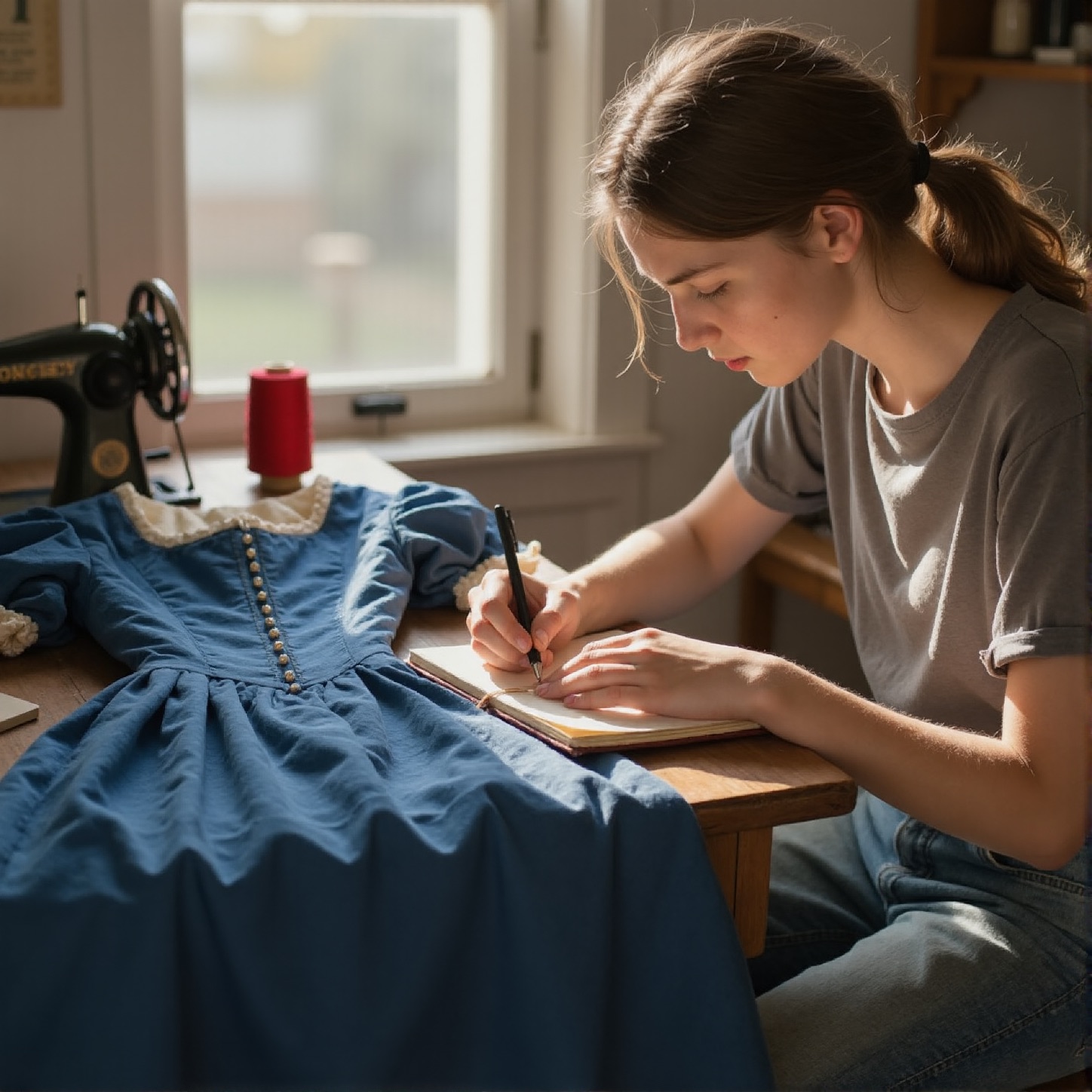
[ Celeste ]
✨ Has Charlie Run It? ✨ [Celeste] It didn’t become a thing all at once.
Nothing that matters ever does. It becomes a thing the way fabric becomes soft: through repetition, through use, through being pulled and released so many times that it stops fighting your hands.
The second prototype was a jacket. Different cut, different sleeve head, but the same intention: make it survive the day without turning it into armour. Mara hung it on the mannequin and stood back, chin lifted.
“Right,” she said. “We’re not sending Lucy out to be the crash test.”
Lucy, already half-grinning as if she knew she would normally have been volunteered, blithely stepped away from the jacket.
“Bless,” she said, and looked at me. “Thank you.”
Mara ignored her gratitude the way she ignored weather.
“Charlie.”
Charlie looked up from the bench where he’d been hand-stitching a reinforcement tape onto a waistband. He put his needle down carefully, as if precision was a form of respect, and stood. Mara held up the jacket with two fingers.
“Same drill.”
There was a pause—barely a pause, the smallest catch at the back of his throat—like a muscle remembering the first time it had been asked to do something it didn’t like. Charlie finally said, evenly, “Right. Where’s the log sheet?”
That was the moment I realised the unease hadn’t vanished: it had been translated into structure. Into process. Mara’s eyebrows lifted, as if she approved of the question.
“You’re learning.”
Charlie wordlessly took the sheet from the clipboard and moved toward the fitting curtain. He didn’t look at me but simply did what he always did now when the work demanded something unusual: he treated himself like a tool in the system. Mara snapped the curtain closed with one decisive tug.
“Five minutes,” she called through it. Her tone wasn’t a demand, it was a deadline.
From behind the curtain came the rustle of fabric. Mara turned to the worktable and reached for her pencil. She made marks on the pattern piece as if she could already see what would fail. Lucy leaned toward me, voice low, a curious look in her eye.
“So, he’s... okay with this now, is he? He doesn’t... mind?”
I kept my voice neutral. “Oh, I think he minds. He just doesn’t wallow.”
“Sure.” I looked at her sharply. Lucy’s eyes had narrowed slightly, like someone convinced there’s more to the story than is being shared. Behind the curtain, Charlie’s voice came, quiet but steady.
“Arms up?”
“Arms up. Twist. Bend. Lift.”
Charlie complied. You could tell, even without seeing him, that he was doing every move precisely: same motions every time, the way you test a hinge, the way you test a clasp. A minute later he spoke again, report mode.
“Pull at the front scye,” he said. “Tape stops the fabric. Needs to end before the pivot, otherwise it becomes a lever.”
Mara’s pencil stopped.
“Say it again.”
Charlie repeated it, slightly clearer, like someone who had learned Mara needed clean sentences.
Mara nodded once, almost to herself. Charlie stepped out a moment later, jacket on, cheeks faintly flushed with exertion. He came straight to the table and pointed at the underarm.
“Here,” he said. “Two millimetres more ease at the sleeve head. And you need the reinforcement tape to stop here.” He made a precise mark with chalk. “Otherwise it transfers force sideways.”
Mara stared at the chalk line, then at his face.
“That’s an answer.”
Charlie swallowed. “It’s just… what it does.”
Mara snorted quietly.
“That’s what I mean,” she replied. “Most people don’t know how to listen to fabric.”
I wrote it down, because that was my role: turn the fixes into a record, so the atelier could grow without forgetting how it got better.
The third time it happened, Mara didn’t even announce it. She simply held up a skirt: new cut, new waistband, a clever closure arrangement we’d borrowed from an extant garment plate. She looked around the room. Lucy, without the slightest pause, shook her head.
“Nope,” she said. “Has Charlie run it?”
Mara’s eyes narrowed. “No.”
Lucy took a half-step back, hands raised in mock surrender.
“Then I’m not finding out where it splits,” she said. “I like my dignity.”
I heard chuckling, but there was no laughter at Charlie, but at the idea of being the first casualty. It was different. It was women refusing to be the test surface. Mara’s gaze slid to Charlie.
“Charlie.”
Charlie set his work down and stood.
“Alright.”
Then, quietly, he added, “Just… make sure the curtain rail is fixed. It catches.”
Mara’s eyes flicked to the curtain hardware as if it had personally offended her.
“Fine,” she said. “Someone will fix it.”
It was another small shift in him: not bravery in a classroom. Competence in a workplace. By the fourth garment, it had become a protocol without anyone formally naming it. The staff were asking as if it was an essential part of the process.
“Has Charlie run it?”
“Is this debugged yet?”
“Can we get Charlie on it before we put it on shift?”
They didn’t want to discover failure on the floor in front of tourists. They didn’t want to lose an afternoon to ripped seams and emergency pins. They didn’t want to carry the embarrassment of being the one whose garment broke. Charlie became the pre-test because Charlie was accurate.
Mara, predictably, hated anything that sounded like a request when it was really a system. One afternoon she finally snapped—not at Charlie, but at the room.
“Listen,” she said, voice cutting through the hum of irons and shears. “Stop making this personal. This is about efficiency.”
No one spoke. Everyone listened. Mara jabbed a finger at a bodice on the table.
“Repairs don’t need theatre,” she said. “Prototypes do. Anything new. Anything with a new closure or new stress profile—Rossignol runs it first. Then staff wear. That’s the order.”
She looked at Charlie as if daring him to misunderstand.
“Not because you’re special,” she added. “Because you’re honest. You don’t fake comfort. You don’t pretend something works when it doesn’t.”
Charlie’s ears went faintly pink. He looked down. Not shy, just uncomfortable with being named.
“I don’t… want anyone wasting time,” he said quietly.
Mara’s mouth twitched, something like approval.
“Good,” she said. “Neither do I.”
Later, weeks into this new rhythm, I caught the moment it became truly normal. A new jacket had been pinned, a clever cut I’d been excited about. It looked perfect on the mannequin. The silhouette was right. The closures sat where they should. It was one of those garments that made you want to clap. Lucy reached for it, stopped, and glanced at Mara.
“Has Charlie run it?” she asked, casually, like she’d asked if it had been pressed.
Mara didn’t even look up from her pattern paper.
“No.”
Lucy put her hands back in her pockets.
“Then I’ll wait.”
No fuss. No jokes. No eyebrow raises. Just... order.
Charlie, at the bench, lifted his head.
“I can do it now.”
“Good,” she said. “Ten minutes. Break it on purpose.”
Charlie stood, took the log sheet off the clipboard, and walked to the fitting area. As the curtain fell closed behind him, I felt a small, quiet satisfaction.
School had made him visible in the worst way: public, exposed, used as a lesson. Wardrobe had made him visible in the only way that mattered: as a person whose judgement the room trusted, because we had built a system where his precision had a place.
And once a precision like that has a place, it doesn’t stop.
It becomes the rule.
12 The Ledger 📒
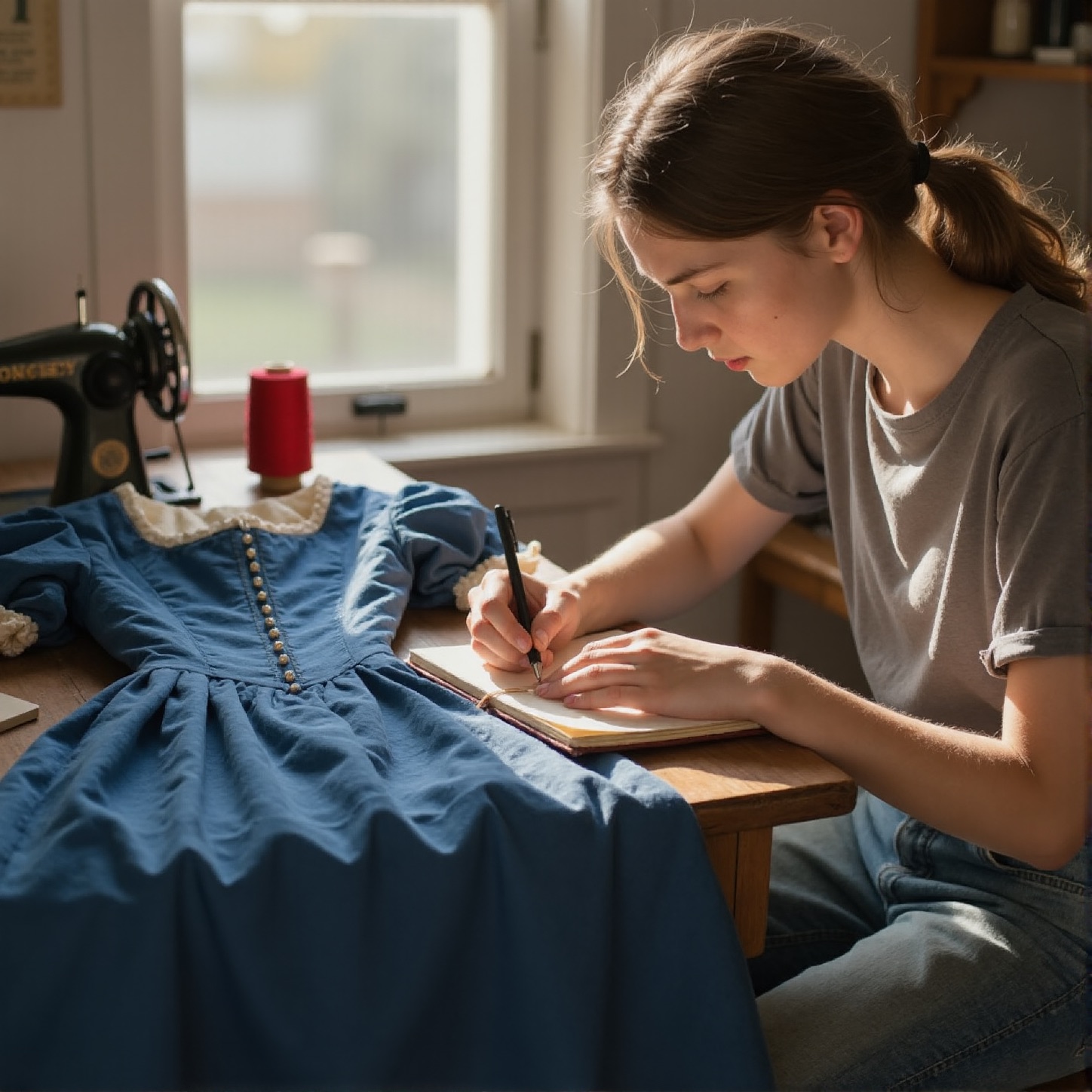
[Celeste]
Mara didn’t announce the new system. She simply put it on the table one morning as if it had always existed.
A ledger.
Thick. Hard cover. The kind you could drop and have it land with authority. It sat between the pincushion and the shears, beside the tin of chalk. On the first page, in Mara’s angular hand, were headings and lines, already ruled.
GARMENT: DATE ISSUED: WEAR-TESTER: NOTES (MOVEMENT / STRESS): FAILURE POINTS: FIX APPLIED: RE-TEST: SIGNED (MARA): SIGNED (CELESTE):
I ran my finger down the columns and felt, absurdly, the relief of it. The whole room would be calmer now. Fewer frantic, vague sentences. Fewer people saying it just tore as though fabric did things out of spite. Mara watched my face without asking what I thought.
“What’s the rule?”
She tilted her head toward the far curtain rail. It had been newly fixed, properly anchored now, no longer sagging like an apology.
“Rule is,” Mara said, “guesses aren’t data.”
She looked past me. Charlie silently appeared, as always, like he’d learned how to make his presence small without making himself invisible. A bundle of twill under one arm, a roll of paper under the other, his long hair hurriedly tied in a ponytail, still damp at the edges as if he’d left the house late for work. He saw the ledger and stopped.
He understood what it meant. Mara slid it toward him with two fingers, like a forewoman pushing a job sheet across a bench.
“Write,” she said, eyes on him directly.
Lucy passed behind him, glanced at the headings and made a small sound of approval, like a woman watching chaos get pinned down. Charlie set his bundle down with careful hands. He didn’t touch the book at first, studying instead the headings, his eyes moving fast, absorbing structure like it was a language he was fluent in.
“This is for logging failures?”
“I want you to log the truth,” Mara said. “And I want your name on the page when you’re satisfied it’s repeatable.”
His throat moved: a swallow, the faint tension he got when something was about to be formal. When he had been held to the work, and allowed to own it. He picked up the pen.
“Start with the stays,” Mara said. “The working set. The set you ‘delivered last time’.”
I watched him write. His handwriting had steadied over the last week—neater now, more controlled. More importantly, though, it was precise: like stitching that might not be decorative, but would hold through more than one season.
GARMENT: Working stays, linen canvas, whalebone substitute (reed/synthetic baleen), size test 2
WEAR-TESTER: Charlie Rossignol
MOVEMENT / STRESS: bending, reaching overhead, lifting tray, stair ascent / descent
FAILURE POINTS: seam-stress at left side-back, binding roll at top edge, grommet pull at waist tie point
Mara leaned over his shoulder, close enough to read without making it personal.
“How did it feel?”
Charlie paused with the pen just above the paper.
Not how did it feel, in the way people said it when they wanted a story. Mara meant: where did the thing pinch, drag, creep. He answered like he was reading off a diagram.
“Too much load goes to the left tie point,” he said. “That’s why the grommet starts to oval. If you redistribute tension by either moving the tie or adding a secondary anchor, then the binding won't try to roll because it won't be fighting the torque.”
Mara’s mouth did a small, satisfied curve that wasn’t a smile so much as a verdict.
“And?”
“And the seam at side-back is... well, it’s under-designed for repeated bending,” Charlie added. He tapped the page lightly. “Not wrong for... standing. But if you want a working garment, you need the seam to expect work.”
He didn’t say I understand women’s bodies. He didn’t mansplain any of the conclusions blokes force into the air when the opposite gender was nearby. He just described load paths.
Mara straightened.
“Celeste,” she said, without looking at me, “this is why we don’t trial on staff anymore.”
“Yeah, I know,” I rejoined. My voice came out lighter than I intended, because it was almost funny now... how obvious all this was, in hindsight. “We’d been doing it backwards.”
She finally looked at me then, eyes sharp.
“Actually, we weren’t doing anything. We were letting it happen.”
That was Mara. She could turn a whole week of chaos into a single sentence and make you feel embarrassed you’d ever accepted it. Charlie kept writing, pen scratching.
FIX APPLIED: move tie point 12mm; add secondary anchor tape; reinforce side-back with felled seam + narrow twill tape; adjust binding cut on bias
He stopped again. His fingers tightened slightly around the pen, and I recognised the moment: the place where competence collided with the other thing, the thing he didn’t speak about. He didn’t want to be dramatic. That was his discipline. But the discipline had seams, too. Mara waited. She didn’t rush him. She didn’t soften. Finally, he said, very carefully,
“We’re still doing... the fitting behind the curtain, yeah?”
Mara’s gaze didn’t flicker.
“Nothing has changed.”
“And the door stays locked?” he added, quickly, as if he regretted asking at all.
“Yes,” Mara said again. “And the log stays factual. No one discusses it like it’s entertainment.”
Charlie nodded quickly.
He wrote RE-TEST and then stopped, as if the word itself asked for a calendar.
I watched him, and I felt something in my chest shift into place. Something utilitarian, even scalable: the sense of seeing an interface, and realising it could scale. If we could keep him safe from being turned into a spectacle, if we could keep him inside the logic of the work, then the whole atelier could expand without losing its centre.
Lauren arrived not long after. Practical, carrying a box of notions and a roll of interfacing like she was delivering supplies to a site office. Her eyes landed on the ledger.
“Ah,” she said. “You’ve made it official.”
Mara didn’t bother with pleasantries.
“We’ve made it measurable,” she corrected.
Lauren looked at Charlie, then at the curtain rail, then back to Mara, reading the room the way an adult reads a room: fast, with the parts that mattered.
“And he’s signing off?”
“He is.”
Lauren put the box down, opened it, and slid a handful of reinforced grommets onto the table.
“Use these,” she said to no one in particular. “If you’re doing working garments, stop pretending decorative hardware can take load.”
Charlie stared at the grommets then glanced at her. Then, so imperceptibly I almost missed it, his shoulders loosened, because his mother had spoken the language of work. Mara watched the exchange like she was watching two subcontractors finally agree on a specification.
Charlie put his head down and wrote:
SIGNED (CHARLIE)
Mara took the pen from him when he was done. She signed her name with a thick, decisive stroke. Then she pushed the ledger toward me.
My turn.
I signed, and the ink looked oddly serious on the page, as if the act itself had weight.
And just like that, the atelier took one step away from being a clever little pocket of women doing miracles in private, and one step toward being a system that could withstand daylight and strangers.
13 Working Stays ✨
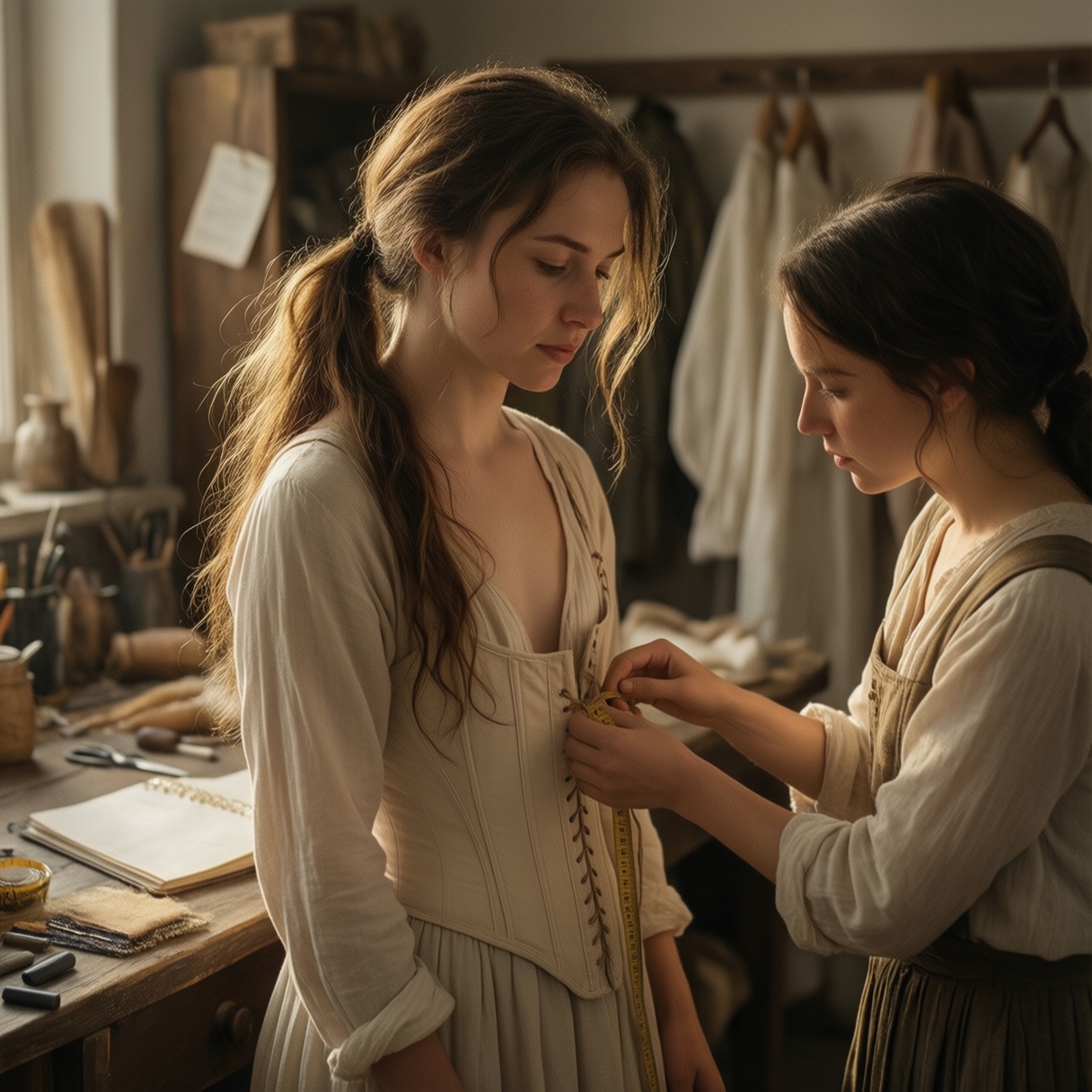
[Celeste]
Mara didn’t bring the stays out with ceremony.
She laid the materials on the cutting table the way a surgeon lays out instruments: in plain sight, deliberately spaced, nothing decorative about the order. Canvas folded into a clean rectangle. Linen tape pressed flat. A small bundle of reed boning tied with string. A tin of grommets that looked comically minor for the amount of authority they were about to carry.
Charlie arrived a minute late and tried to apologise with his body: small shoulders, a quick glance, a quietness that wanted to pay for the inconvenience in advance. Mara didn’t accept payment in the form of shrinking.
“Don’t do that,” she said, without looking up.
Charlie froze mid-breath. “Do... what?”
“Arrive like you’re already wrong.” She lifted the canvas and shook it once. The sound was flat. “You’re here. That’s the point. Now, pay attention.”
He stepped closer, careful not to crowd. I watched his gaze take inventory without touching. He was good at that: reading surfaces, anticipating what mattered, trying to solve problems before anyone gave him the chance. Mara didn’t reward pre-emptive heroics. She nodded toward the ledger, still on the table, heavy with a quiet insistence.
“Open it.”
Charlie did, flipping to a clean page as if the paper might bruise. His pen hovered, waiting for permission.
“Title.”
He wrote: STAYS — ATTEMPT 1. Underneath, he added the date without being asked. Mara approved it by continuing.
“These aren’t costume stays,” she said, tapping the canvas with two fingers. “They’re working stays. People keep confusing the two. Costume stays hold a silhouette for a photograph. Working stays hold a person for a day.”
Charlie’s hand moved, quickly, and words appeared: pretty enough to read, neat enough to understand. When he wrote, he looked calm. Mara laid out the pattern pieces: clean shapes that looked simple until you imagined them curved, tightened, forced to behave over bones and breath and movement.
“Your first attempt will fail,” Mara said. She said it the way she might say it will rain on Thursday. Factual.
Charlie blinked. “Is that... normal?”
Mara’s eyes flicked to him. “If someone tells you their first stays were perfect, they’re either lying or they don’t move in them.”
For a moment I saw that old instinct—the urge to vanish so nobody could watch him be imperfect. Mara caught it too.
“Charlie.” She said his name like a hand on a shoulder: firm pressure, not comfort. “The garment fails. You document it. We fix it. That’s the work.”
He nodded once. A small, stiff motion. But it was a yes. Mara slid the chalk toward him.
“Mark your seam allowances. Don’t be stingy. The first mock-up gets room to tell the truth.”
Charlie’s fingers closed around the chalk, and he began.
The workshop was quiet in the good way—scissors snipping, chalk whispering, the soft drag of canvas against the grain of the table. Outside, somewhere beyond the walls, the Faire was waking: faint voices, the clink of something metal being unloaded, a distant laugh that didn’t belong to anyone in our room.
In here, it was trade. Mara moved around him, watching without hovering. Every now and then she corrected a hand position with two taps of her knuckles against the table. Once, she stopped him entirely.
“No. Your stitch length is too eager.”
Charlie looked up, confused.
“You’re trying to impress the seam,” Mara said. “The seam doesn’t care about your feelings. It cares whether it holds.”
His ears coloured. He adjusted, shortened his stitch, slowed down. It was Mara in a nutshell: brutally useful. When the pieces were cut and aligned, Mara gathered the mock-up, folded it once, and pushed it toward him.
“On,” she said. “Over the t-shirt.”
Charlie’s eyes narrowed as they flicked to the laces in his hands, as if they were a moral problem disguised as a practical one.
“It’s... back lacing,” he said carefully.
Mara’s expression didn’t change. “Of course it is.”
He swallowed. “I can’t—”
“I know,” Mara said, already reaching for the lace. Not impatient. Simply done with pretending the obvious was negotiable. “Stand here.”
She indicated the marked mat beside the table—the one used for checking balance and fall, where garments were judged the way tools are judged. No screen. No hush. No clearing of throats. Just the place where fabric told the truth.
Charlie stepped onto it, shoulders too high, trying not to occupy space.
“Drop your shoulders,” Mara said. “And breathe like a person.”
He obeyed, a fraction at a time.
Mara held the mock-up open and guided it around his torso with the same practical decisiveness she used on a dress form. Her hands didn’t linger; they placed. She checked the centre-front line, smoothed the canvas once to stop it shifting, then took up the laces behind him.
“Policy,” Mara said quietly—not to frighten him nor to soothe him. Just to make it real.
Charlie’s jaw tightened. “Door—”
“No,” Mara cut in, and Charlie flinched, thinking he’d said the wrong thing. Her tone stayed level. “No door theatre. No curtain theatre. This is a workroom, not a confessional.”
She glanced at me, and the look was pure correction. Pay attention. Standards first. Then, to Charlie: “Here’s the policy. You’ll use it like any other tool.” She nodded toward the ledger.
At the top of the page, in her handwriting, sat the rule in plain language:
POLICY:
Fittings for prototype testing are scheduled
privacy maintained; no unscheduled access
documentation is factual; no commentary
Mara returned to the lacing. “We’re doing a job,” she said. “We’re not doing a story.”
Charlie’s throat moved. He nodded once, eyes fixed on the ledger as if it were a lifeline he could hold with his gaze.
Mara began to lace—not yanking, not cinching, not performing authority. She took up slack in small, even increments, the way you tension rigging: feel, adjust, feel again. The canvas settled. The garment found him.
“Tell me before it hurts,” she said. “Discomfort is data. Pain is failure.”
“Yes,” he managed.
“Don’t give me yes,” Mara said automatically. “Give me locations.”
Charlie’s throat moved. He nodded once, eyes fixed on the ledger as if it were a lifeline he could hold with his gaze.
Mara began to lace—not yanking, not cinching, not performing authority. She took up slack in small, even increments, the way you tension rigging: feel, adjust, feel again. The canvas settled. The garment found him.
“Tell me before it hurts,” she said. “Discomfort is data. Pain is failure.”
“Yes,” he managed.
“Don’t give me yes,” Mara said automatically. “Give me locations.”
Charlie let out a breath that sounded like relief disguised as compliance. Mara made one last pass, then stopped.
“Good enough for a first truth,” she said. She stepped back. “Now move.”
Charlie lifted his arms. The top edge shifted—flattened cleanly in front, but fighting at the side-back. I watched the pull gather like storm clouds.
“Again,” Mara said. “Higher.”
Charlie raised his arms fully. The left side-back seam took the load and complained at once—a diagonal crease forming from the waist toward the ridge of the shoulder line, not pretty, not dramatic, just wrong.
Mara’s gaze sharpened.
“Reach forward. Like you’re taking something from a shelf.”
Charlie did, and the left waist tie point became an anchor for everything the garment didn’t know how to carry. The canvas creased into a hard line. The lacing tugged. The top edge tried to roll. Mara didn’t touch him.
She didn’t need to. She watched the physics.
“Where.”
“Left waist tie,” he said, voice firmer. “It’s taking too much. It feels like everything’s hanging off it.”
“Right,” Mara said immediately, as if accuracy itself was the safety mechanism. “Now, bend, like you’re lifting a tray.”
Charlie bent carefully. The top edge rolled—subtle, insidious. The kind of failure a costume could hide for ten minutes and then betray you on day one. I saw Charlie’s expression flicker—disappointment, and then, almost instantly, relief... as if some part of him had been afraid the garment would behave fine, and he’d be expected to pretend that meant it was fine.
Mara saw it too.
“Write,” she said. “Before your feelings invent a different story.”
Charlie moved to the ledger, pen still in his hand. It trembled once, then steadied as the page gave him rails.
He wrote:
MOVEMENT / STRESS: overhead reach; forward reach; bend/lift simulation
FAILURE POINTS: left waist tie load concentration; top edge roll; diagonal crease from left waist toward side-back; seam stress side-back left
Mara watched him write, then leaned in.
“Now,” she said. “Tell me what you think it means.”
Charlie opened his mouth, then shut it. He stared at his own notes as if the paper might supply the answer if he stared hard enough.
“I think the tie point is wrong,” he said finally. “Or not, um, supported enough. It’s acting like an anchor for everything.”
Mara nodded. “Load path. Good. And the roll?”
Charlie frowned, thinking like an engineer again. “The top edge is fighting torque. The tension is uneven, so the edge curls to accommodate the pull.”
Mara’s eyes flicked to me, not for praise—more like see? this is why we focus on physics. Then back to Charlie.
“And the side-back seam?”
Charlie tapped the paper once. “It’s underbuilt. If it’s going to be working stays, that seam needs to expect repeated bend. Reinforcement, or a different finish. The fabric is telling us where it wants more structure.”
Mara straightened. “Good.”
Charlie looked up, uncertain, waiting for judgement to arrive disguised as feedback.
It didn’t.
Mara stepped behind him again and began to unlace, quick and methodical, as if removing a tool from a test rig.
“Attempt one has served its purpose,” she said. “Now we do attempt two.”
Charlie’s shoulders sank with the weight of it, and then he lifted them again deliberately, as if choosing not to collapse.
Mara slid a narrow strip of twill tape toward him.
“This goes here.” She pointed to the area he’d described. “Secondary anchor. Spread the load. And we move the tie point.”
“How much?”
Mara shrugged. “Twelve millimetres to start. It’s not magic. It’s iteration.”
Charlie wrote:
FIX APPLIED (PROPOSED): move tie point 12mm; add secondary anchor tape; reinforce side-back seam; adjust top edge binding cut
Mara watched him write the word “proposed.”
“Good,” she said. “That word keeps you honest.”
Charlie’s gaze drifted back to the top of the page—to the policy line, to the rule.
I watched something in his posture ease: not confidence, exactly. Trust. The kind that doesn’t come from being liked, but from knowing the room will behave predictably.
Mara clapped her hands once.
“Right,” she said. “Attempt two starts now.”
Charlie picked up the chalk.
“Attempt two,” he said quietly—to himself as much as to anyone.
Mara’s eyes flicked up, and in them was a kind of satisfaction that didn’t need praise.
“Now,” she said, “you’re making stays. Real ones.”
And then, as if it were the most ordinary thing in the world—as if the world had always been designed for women and we were merely returning it to its proper logic—Mara added, already sorting tape and canvas into a new pile:
“Later, we’ll give it a front closure. I’m not building dependence into a work garment.”
Charlie’s pen paused. Finally, he underlined front closure once, neatly, and got back to work.
14 The Block ✨

[ Celeste ]
✨ Working Stays - Attempt Two ✨
[ Celeste ]
The failed mock-up lay on the table again, flattened like a moth under glass. Chalk marks still faint on the canvas where the garment had confessed under movement: diagonal strain lines, a crease that had formed with embarrassing consistency, the small oval ghost of where a grommet had started to surrender. Charlie hovered at the edge of the table, hands clean, eyes busy. He had the look of someone wanting a solvable problem, the kind with a correct answer.
Mara didn’t give him that.
“Attempt Two,” she said, and slid the ledger toward him. “Write the same headings. Then add another.”
Charlie opened the book. “Another... what?”
BODY TYPE
He blinked. “But it’s... me.”
Mara’s eyes lifted, sharp as pins.
“And you imagine,” she said, “that the world is shaped like you?”
Charlie blushed.
“No,” he said quickly. “No. I... I know that.”
“Good,” Mara replied. “Then you understand we were never going to design stays as though your proportions are the default. As though anyone’s proportions were the default. With stays, there are no defaults.”
A tiny thrill stirred in me. A tiny thrill stirred in me. This was the moment Wardrobe either remained a talented pocket—or became something that could scale.
“This attempt did something useful,” she said. “It told us where the load went. We’ll fix that.” She pushed the strip of twill tape toward Charlie. “Secondary anchor here. Tie point moves. Reinforce the side-back seam.” Charlie nodded, already picturing it. Mara held up a hand.
“But Attempt Two is not only about this garment. Attempt Two is about a method.”
Charlie paused. “A method.”
“A working block.”
He frowned slightly. He was trying to translate her words into geometry. Mara turned her attention to me.
“Celeste. Bring me the measurements sheet.”
I reached into the folder I kept for everything—notes, references, scraps of paper that might become useful later—and pulled out the page we’d started last week: columns of numbers and blank lines, a grid that looked innocuous until you realised it was the skeleton of a system. Mara took it, scanned it, and made a dissatisfied sound.
“This is a list,” she said. “Not a tool.”
I felt myself bristle. Then I reminded myself she wasn’t insulting me. She was protecting the work.
“What does a tool look like?”
Mara set the sheet down and drew a clean rectangle in the margin with her pencil.
“Waist,” she said, and drew a line across it. “Everything references waist. Not bust. Not hip. Waist is the hinge point.” She drew a vertical line down the rectangle. “Centre front. Centre back. If those aren’t stable, nothing else matters.”
Then she drew two arcs: one above the waist, one below.
“Rib spring,” she said, tapping the top arc. “Hip spring,” she tapped the bottom arc. “Those two numbers tell you what you’re really building. The rest is art.”
Charlie leaned in, eyes locked on the sketch, the way he looked at diagrams when he finally felt safe to show his mind working.
“So... it’s not just circumference,” he said slowly. “It’s distribution.”
Mara’s mouth tightened with approval.
“Yes. Distribution. And distribution changes with each body.” She slid the pencil toward him. “Now you draw it.”
Charlie hesitated for a fraction of a second—old habit, old fear of doing it wrong in front of someone who might mock—and then he picked up the pencil and drew his own rectangle beside hers. He drew the waist line. Then he measured a distance above it with the pencil tip.
“Torso length,” he said quietly. “From waist to under-bust. And waist to top edge.”
Mara watched his hand, not intervening. Charlie added small marks down the centre back.
“Back length. And where the shoulder blades... push.”
Mara nodded once. “Working garment. People breathe. People lift. They don’t stand like portraits.”
He drew the arcs, rib and hip, and this time he did what Mara had done: he made the arcs different. Not symmetrical, not polite. Mara’s finger tapped the page near centre back.
“Now, that’s the block.”
Charlie looked up. “But... that’s still just one.”
Mara leaned on the table, the way she did when she was about to state future policy.
“One block,” she said, “per category.”
Charlie’s brow furrowed. Mara held up three fingers.
“We start with three. That’s all. Three bodies we can pad and test without dragging staff into it.”
She ticked them off, each one a label rather than a story.
“Nymph,” she said, looking at Charlie without softness. “Fairly slender, narrow ribs, only a little flesh to absorb pressure. Your closest category.”
I saw the tiny shift behind Charlie’s eyes. Mara made 'nymph' technical, not personal.
“Well-nourished young woman,” Mara continued, “with generous spring and softness. The kind that makes lazy patterns lie and makes cheap stays cruel.”
“And the returning-to-work mother,” she said, matter-of-fact, “whose torso has done real labour and carries it differently. Different distribution. Different tolerances. Different needs.”
Charlie’s pencil hovered. “So, we... draft three blocks.”
“We draft one,” Mara corrected. “We draft a base that can be adjusted predictably. And we learn which adjustments belong to which category.”
She reached for the ledger and pointed at Charlie’s new heading.
“BODY TYPE,” she repeated. “Write it every time. Because if you don’t, you’ll start believing a good fit on you means you’ve solved things.”
Charlie’s hand moved. Words appeared.
ATTEMPT 2 — BODY TYPE: NYMPH (BASELINE)
Mara slid the mock-up back toward him. “Now do the practical fix,” she said. “Tie point moves twelve millimetres. Secondary anchor tape. Reinforce seam. Bias the binding correctly.”
Charlie nodded, grateful for a concrete task. He began unpicking the grommet area with a careful grip on the lame. Mara watched for a moment, then turned to me.
“Celeste,” she said. “You like research.”
“Yes.”
“Good. Your job is to find extant examples of working stays and note what they compromise. Not the pretty ones. The honest ones.”
My spine straightened.
“I can do that.”
Mara pointed to Charlie’s sketch. “And you,” she said to him, “are going to make that block into a template we can mark and reuse. Hole positions. Seam allowances. Boning channels. All of it. Clean. Repeatable.”
Charlie looked up, startled. “Me?”
Mara’s stare didn’t waver. “Yes, you. You have the mind for it: you understand the geometry, the physics. You want perfection? Earn it. We’ll make your perfection useful.”
Charlie swallowed.
“Okay.”
Mara tapped the ledger page once.
“And we will not,” she said, “pretend this is solved when it sits nicely standing still.”
Charlie’s eyes flicked to the movement list pinned near the fitting nook: reach, bend, lift, stairs. Mara followed his gaze.
“Fit standing is a lie,” she said. “Fit moving is the truth.”
Charlie nodded, and for the first time he looked less like a youth being tolerated in a women’s workspace and more like a technician being entrusted with a system. He picked up the Attempt Two mock-up and handed it to Mara. She matter-of-factly laced him into it. Charlie lifted his arms. Reached forward. Bent.
The top edge behaved better this time: less roll, less spite. Whether it was that bit of fullness in his chest I'd noticed when he first arrived at Wardrobe that first day remained to be seen. The diagonal strain line softened, as if the load had been persuaded into a more reasonable route.
But something else happened, subtle enough that only someone with a critical eye would see it. A tiny hinge formed along one boning channel at the side. Not a tear, not yet. A kink—a suspicion. Charlie felt it at the same instant Mara saw it. His jaw tightened. Mara didn’t react with disappointment, but with satisfaction.
“There,” she said, almost pleased. “Second-order failure. That’s the real work showing itself.”
Charlie let out a breath that sounded almost like a laugh... small, disbelieving.
“We fixed one thing,” he said, “and revealed another.”
Mara nodded. “Exactly.”
Charlie went to the ledger and wrote without being told.
RESULT: improved load distribution at waist tie; reduced top edge roll under forward reach
NEW FAILURE: hinge/kink at side boning channel under bend; pressure point emerging
He looked up. “Is that because I’m... too slim there?”
Mara’s gaze was cool, not unkind.
“You’re a baseline,” she said. “And baselines are useful precisely because they are not everyone.”
She leaned in, voice lowering into something like a vow.
“This,” she said, tapping the ledger, “is how we get the grail. Not by hoping. By mapping.”
Charlie stared at the page for a long second.
“Okay.”
This time it wasn’t compliance.
It was commitment.
15 The Ladder ✨
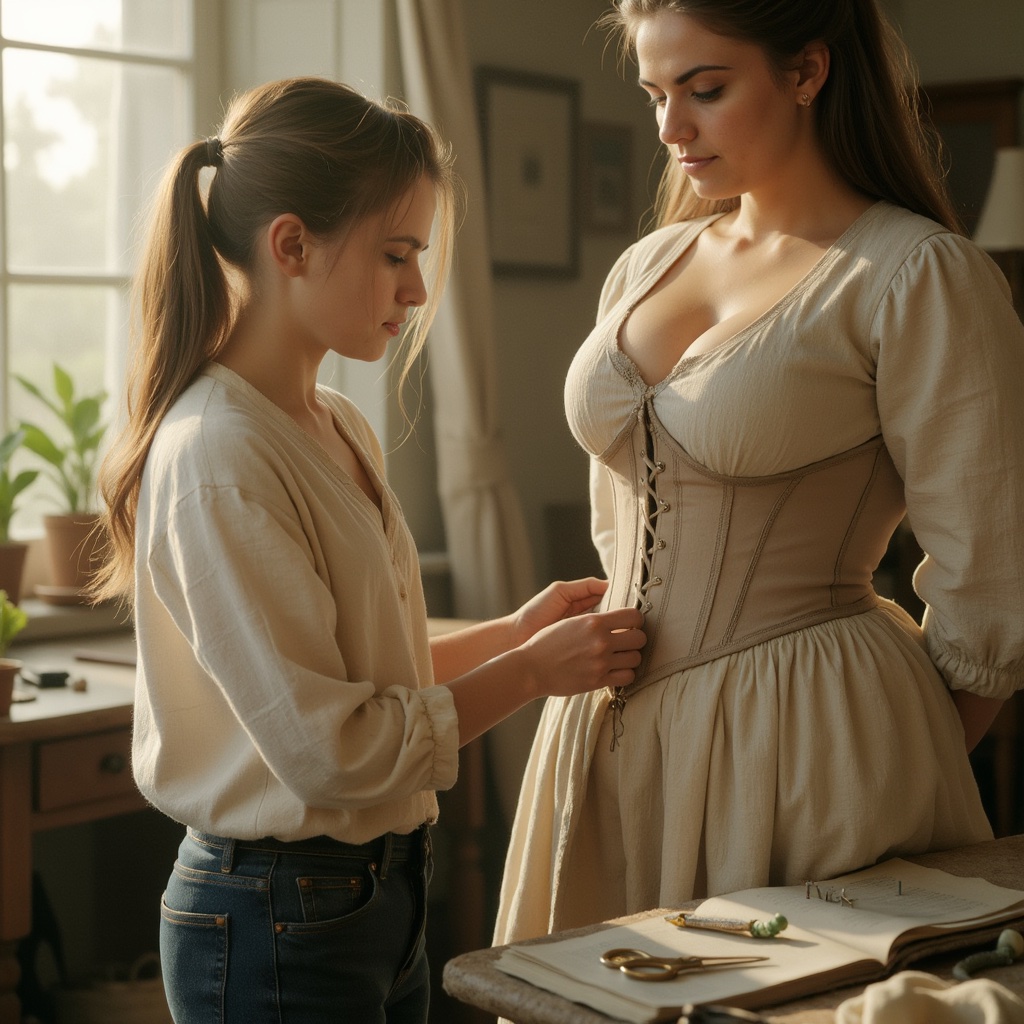
[ Celeste ]
By the third day, Charlie stopped looking like a guest.
He moved through the atelier as if the place had given him rails to run on: cut, stitch, test, record and repeat. The rhythm took the tremor out of him, not because the work became easy, but because it became legible. He could be useful without having to invent a personality around it. Mara didn’t praise him. She rewarded him with continuity.
The three blocks lived on the wall now — traced paper over brown card, corners clipped, waistlines marked with blunt authority. Each had its own small forest of notes in Mara’s hand:
MOVE TIE POINT 12mm, ADD SECONDARY ANCHOR, WATCH TOP EDGE TORQUE, UNDERARM GUARD? The templates were beginning to look less like experiments and more like tools.
On the corkboard beside them, I’d pinned my research the way Mara liked things pinned: not like inspiration, like evidence.
WORKING STAYS: WHAT THEY COMPROMISE, I’d written at the top.
Under it, three museum-clean photos of garments that weren’t. Underarm guards that looked like someone had finally admitted armpits exist. Straps that told the truth about lifting. Edges reinforced the way you reinforce anything you intend to keep using. Mara had read the board once, silently. Then she’d taken a pencil and added her own captions, more brutal than mine:
ABRASION IS REAL. LIFT IS REAL. WEAR IS REAL.
Charlie had stared at those words for a long time, as if they were dogma. Now he was at the fitting mat again, standing where the floor tape made the designs measurable while Mara tightened the lacing with the quiet patience of someone tensioning a rig. He wore the mock-up over his T-shirt: Mara insisted on eliminating theatre.
“Arms up.”
He lifted. The top edge behaved: not perfectly, but honestly. It shifted and then settled, like a tool that had learned where it belonged.
“Reach forward.”
He reached. The diagonal crease appeared, but softer now, less of an accusation. The load had been guided into a better route. Charlie’s jaw loosened a fraction. He didn’t smile — he never smiled during tests — but he looked less like he was waiting to be caught out. Mara stopped and stepped back.
“Ledger.”
Charlie went to the table and wrote. I watched his hand. He wrote firmly, he was a technician. The door opened while he was still writing. Not a dramatic entrance. Not an interruption weighted with significance. Just the sound of someone arriving in daylight.
Lauren.
She didn’t come in with a mother’s alarm or a mother’s scanning. She came with a tote bag slung over her shoulder, keys in her hand, and the calm face of someone who had learned which problems were solved by volume and which were solved by structure. She took in the room in one glance — the templates, the ledger, the corkboard with my pinned references — and her eyes narrowed, not with suspicion, but with appraisal.
“Mara,” she said.
“Lauren,” Mara replied, as if she’d been expecting her at this minute. Lauren set the tote on the table and unzipped it. Out came a roll of twill tape, a packet of grommets, and a small envelope that looked like nothing until you remembered how much of Wardrobe’s authority lived in small parts.
“I brought the hardware,” Lauren said. Then, without softening her voice: “And I assume this is the part where you tell me what you need from me.”
Mara’s gaze held hers.
“It is.”
Charlie had gone very still. Not because Lauren frightened him: Lauren didn’t do intimidation. It was because she represented the outside world walking into Wardrobe without asking permission. Mara didn’t let that become drama.
“We’re building a block,” she said. “Returning-to-work. Real labour. Real distribution. Different tolerances.”
Lauren nodded once, as if Mara had simply named something she’d carried for years.
“You want a baseline.”
“Yes.”
Lauren glanced at Charlie, and the glance was both maternal and professional — I see you, and also: I will behave properly. She turned to Mara.
“Please tell me your conditions.”
Mara answered like a policy.
“Scheduled. Factual. No commentary. No unscheduled access. If you’re in the room, you’re in the work.”
Lauren’s face didn’t change, but something in her shoulders loosened — the relief of hearing competence speak in complete sentences.
“Fine,” she said. “I’m not here to watch. I’m here to build something that doesn’t punish women.”
That was the first time Charlie looked up properly. He looked at Lauren as if he’d never heard anyone say that out loud. Mara lifted her chin toward the ledger.
“Charlie,” she said. “New page. Same headings. Add body type.”
Charlie’s pen hovered. His throat moved. He looked at Mara like he was asking permission to direct a grown woman. Mara didn’t even glance at him.
“It’s allowed.”
Charlie swallowed. Then he looked at Lauren.
“Movement,” he said. “If you’re willing. Same list.”
“Of course.”
Charlie wrote:
ATTEMPT 2 — BODY TYPE: RETURNING-TO-WORK (BASELINE)
He didn’t decorate it. He didn’t apologise for it. He just wrote it as fact.That was when Sarah arrived.
She came in with the particular energy of someone who never asks whether she’s welcome. Her accent carried the UK cleanly — sharp edges, no apology. She took one look at Lauren at the table, then at Charlie, then at Mara, and her mouth made a shape that wasn’t quite a smile.
“Oh,” she said. “We’re doing this today, are we?”
Mara didn’t look up. “We’re doing work every day.”
Sarah’s eyes flicked to the policy line at the top of the open ledger page.
“Still with the rules,” she said, casual as a pin. “All this managing.”
Charlie’s shoulders rose, and I saw the old reflex trying to return — the instinct to get smaller before anyone could make him. Mara’s voice cut across it.
“Don’t.”
Charlie froze. Sarah lifted a brow.
“I’m not being unkind. I’m being realistic. If he wants to work in a women’s world, he can face women’s challenges. Front-facing. No special cover.”
Lauren’s gaze landed on Sarah with a calm so controlled it was almost polite.
“And who made you spokesperson for ‘women’s challenges’?” Lauren asked.
Sarah snorted. “Oh, come off it. Women manage. Women cope. We don’t need—”
Mara set the reed boning down with a soft, decisive click.
“You’re confusing coping with virtue,” Mara said dryly.
Sarah opened her mouth. But Mara wasn’t done.
“And you’re confusing governance with weakness.”
Sarah’s expression sharpened. “Governance.”
Mara nodded toward the ledger and then — with a small tilt of her head — toward my corkboard.
“See that board?” she said. “That’s not comfort. That’s evidence.”
Sarah glanced, and her mouth tightened as she took in the blunt pragmatism of garments built for bodies that moved.
“Underarm guards,” Mara said. “Because abrasion exists. Straps because people lift. Reinforced edges because things wear out. Women solved problems by making rules and building tools. They didn’t ‘cope’ for sport.”
Sarah’s jaw worked. Her eyes flicked back to Charlie — properly this time, as a worker in the room, not a test case for her opinions. Her lips tightened.
“So what,” she said, voice flatter, “we wrap him in cotton wool forever?”
“No,” Mara said. “We train competence like we train anything else: by repetition and standards.”
Sarah’s chin lifted. “That’s what I’m saying. He can’t crumble the first time someone looks at him funny.”
Mara’s gaze held hers for a long beat, and then she nodded once — grudgingly, because it was fair.
“Fine,” Mara said. “But we don’t train resilience by ambush.”
The room went very still — not tense, just attentive. Mara turned to Charlie.
“Come here.”
He started: that instinctive fear of being summoned for judgement. And then he obeyed. He stepped to the table. Lauren stayed where she was: present in the way a seatbelt is present: you don’t notice it until you need it. Mara put her hand on the ledger.
“You understand this truth,” she said. “The garment fails. You write it. We fix it.”
Charlie nodded. Mara’s voice didn’t soften. It simply shifted into reality.
“Here’s the other truth. Our work will leave this room. People will notice. Some will be normal. Some won’t.”
Charlie’s fingers tightened around his pen. Lauren didn’t rush to comfort. She simply stayed quiet, and that quiet said: You have it in you to stand in this.
Mara went on. “You don’t choose what other people are. You choose what you do when they are that way.”
Charlie swallowed. “What… do I do?”
Mara looked at him as if the question was the beginning of adulthood.
“You keep working,” she said. “You keep your facts straight. You don’t perform. You don’t bargain. And you never disappear.”
Sarah let out a short breath. “That last one’s going to be hard one… for him.” Charlie blinked. Sarah shrugged, unapologetic. “I’m not being nasty. I’m being useful.”
Lauren’s mouth twitched — the smallest sign of amusement — and then she looked at Charlie.
“You don’t have to be fearless,” Lauren said. “Your headspace needs to stay in this room.”
Charlie stared at the ledger, at his own handwriting. It was evidence too: that he’d done something awkward, repeatedly, and survived the feeling of it.
“I can do that.”
“Good.”
She tapped the movement list pinned near the fitting mat.
“We do it in rungs,” she said. “A ladder.”
Charlie frowned. “A ladder.”
Mara’s eyes were steady. “First rung: you can be seen working. Second: you can be spoken to while working without losing your hands. Third: you can answer a stupid comment without trying to become a different person.”
Sarah exhaled. “Fourth rung: you tell them to get stuffed.”
Mara’s eyes flicked to her. Sarah bit her lip. “Politely, if you must.”
Mara didn’t smile, but something in her face loosened — the slightest concession that Sarah had landed in the right register at last. She reached for the mock-up again.
“All right,” she said. “Back to the proof.”
They didn’t make it an event. Mara laced. Lauren stood where she was told. Charlie watched the lines in the cloth as if they were a map he could learn to read in any weather.
And I watched the watching.
Lauren watched the garment, not the boy. Sarah watched the room, and I watched Sarah watching — the moment her disdain failed to find a foothold because there was no weakness being performed for her to kick.
Mara didn’t look up.
“First rung.”
And Charlie lifted his arms.
16 First Rung ✨
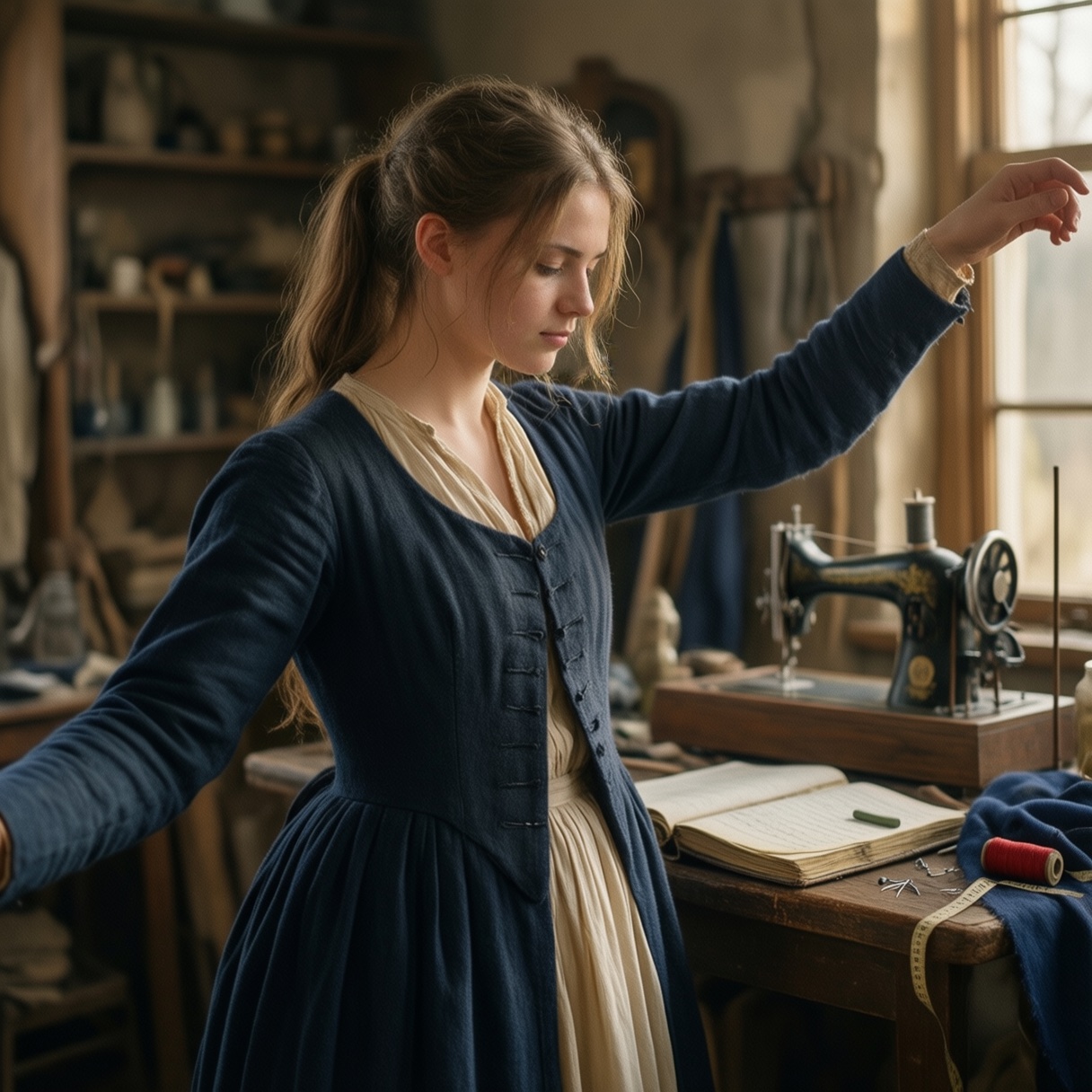
[ Celeste ]
Mara didn’t look up.
“First rung.”
And Charlie lifted his arms. Nothing dramatic happened. That was the point.
The mock-up shifted, settled, revealed stubborn little facts along the side seam: a crease that wanted to become a habit, a boning channel that behaved until it didn’t. Mara watched like a machinist. Lauren watched like a woman who had lived inside garments that asked too much and gave too little back.
Sarah watched like someone waiting to see whether the room would flinch.
Charlie lowered his arms and looked to the ledger as if it might tell him what to do next. Mara spoke first.
“Write it.”
He did. His pen moved faster than his face could manage. Lauren leaned in just enough to read the headings, not him. She simply existed beside the work in a way that made it feel less lonely.
When Charlie finished, Mara nodded.
“All right,” Mara said. “That’s the garment. Now the rung.”
Charlie stilled. “The... rung?”
Mara set the mock-up aside and pinned a strip of tape to the floor in a straight line, like a boundary.
“This line,” she said, “is the edge of hiding. On this side, you can hover. On that side, you’re working while people see you.”
Sarah gave a short laugh. “You’re joking.”
“No,” Mara said. “It’s training.”
Charlie stared at the tape as if it were a trap. Mara pointed to the cutting table.
“Your job is to cross that line, do one real task while we watch, and come back. No explaining. No apologising. Just the task.”
“And... that’s it?”
“That’s it,” Mara said. “Small, repeatable. Until it’s boring.”
Lauren’s voice came in warmer, without softening the standard. “Pick a task you already know,” she said. “Something clean, like a waistline mark or a grainline check. Anything your hands can do while your brain is noisy.”
Charlie blinked at her. The warmth helped; it didn’t replace the difficulty.
“The waistline mark,” he said quietly.
“Good,” Mara replied. “On my count.”
Sarah folded her arms. “If he trips, I’m laughing.”
Lauren turned her head toward Sarah, still pleasant. “If you laugh, you’ll be sorting grommets for a week. Quietly.”
Sarah shut her mouth. Mara didn’t react. She didn’t need to.
“Three,” Mara said.
Charlie tightened his grip on the chalk.
“Two.”
His shoulders tried to rise.
“Drop them,” Mara said, flat.
“One.”
Charlie stepped over the tape.
The room didn’t change, except that Charlie was now on the side where he could be seen. He walked to the cutting table and did the job: found the notch, marked the waistline, set the chalk down properly. His hand shook slightly, then steadied.
Mara nodded. “Back.”
Charlie blinked.
“Back over the line,” Mara said. “Then forward again. You’ll do it until your body stops treating being watched like danger.”
Charlie swallowed, then stepped back over the tape. Then forward again. By the third crossing, his breath slowed.
By the fifth, his hands stopped shaking. Sarah was no longer watching him. She was watching the method.
Mara wrote in the ledger:
EXPOSURE TRAINING — rung completed: crossed line while observed; task performed; no retreat.
Lauren’s voice came in warm at his shoulder as he turned.
“This is what aerobics feels like,” she said lightly. “First day you think everyone’s watching. Third day you realise everyone’s too busy trying not to die.”
Charlie's lips twitched in something that might have been a laugh. Mara was already stripping the tape from the floor.
“Second rung tomorrow,” she said, as if she were announcing the next seam to sew. “Someone speaks to you while you work. You keep your hands.”
Sarah scoffed, but there with less bite now.
“And if I speak to him?”
Mara looked at her.
“Then you’ll speak like a colleague,” Mara said. “Not like a spectator.”
Sarah held Mara’s gaze, then nodded with a look of slight resignation. Charlie looked down at the ledger again, at the new heading. His pen moved. Under Mara’s line, he added, neat as a promise:
NOTES: did not collapse. did not apologise. hands steadied after third crossing.
He underlined did not apologise once. Then he picked up his chalk.
“Again?” he asked, quietly.
Lauren smiled. “Again.”
Mara didn’t smile. But then, she never did. And, she didn’t need to.
She had built a ladder.
17 Second Rung ✨
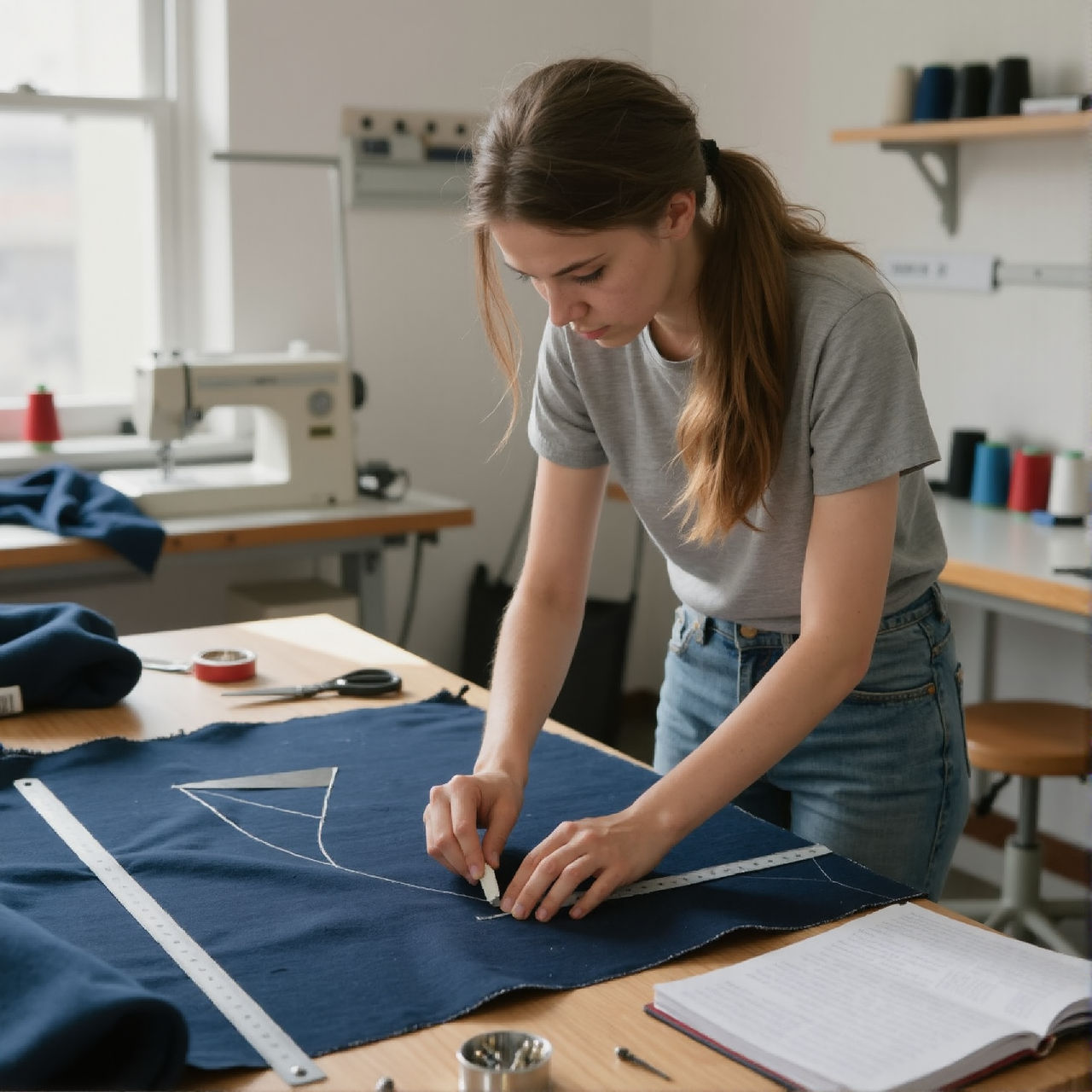
[ Celeste ]
Mara didn’t announce the second rung like it was a milestone. She treated it like a seam finish.
“Today,” she said, “someone speaks to you while you work. Your hands stay yours.”
Charlie’s eyes flicked to the ledger as if the page might explain what that meant in muscle terms. His shoulders rose a fraction. Mara tapped the table.
“No shoulders.”
He dropped them a little too fast, like a boy caught.
“Not wrong,” she said. “Just unnecessary.”
Yesterday’s mock-up lay folded at the end of the cutting table—no longer the centre of attention, which was its own kind of relief. Today’s work was smaller and meaner in its simplicity: chalk lines, notch marks, grainline checks. Things you could do perfectly until a voice arrived and reminded you you were being watched.
Mara looked at Sarah.
“You wanted front-facing,” Mara said. “You’re the voice.”
Sarah's smile went sharp. “Me.”
“Yes,” Mara replied, already moving on. “As training only. Speak like a colleague.”
Sarah tipped her chin.
“Fine.”
Lauren set her tote down and pulled out a packet of labels, the kind used for tagging bolts and marking stock. Her movements were practical, quiet: making herself useful in ways that softened the air without changing the rules.
Charlie stood at the cutting table with chalk in hand, pattern pinned, his attention narrowed to the line. He’d learned, in three days, that the safest place for him was inside a task. Mara’s finger hovered over the pattern piece.
“Waistline. Then the hip-spring marks. Clean.”
He nodded and began. The chalk whispered. The line appeared.
Sarah leaned against a shelf, arms folded.
“You look like you’re defusing a bomb.”
Charlie’s chalk hesitated, a small white stutter in the line. Mara’s voice landed without volume.
“Colleague.”
Sarah rolled her eyes. “Fine. You’re working like you’re defusing a bomb.”
Charlie’s fingers tightened. He tried to move the chalk again and the line wobbled—only a millimetre, but enough that he saw it. His breath sharpened, as if the room had narrowed.
Lauren stepped closer to him, her voice low.
“Short answers,” she said. “Factual ones. Then back to the line.”
Charlie blinked at her. Lauren’s expression was warm but firm: a coach who refuses to do drama because she respects the athlete.
“You don’t have to be clever,” she added. “You just have to stay in the work.”
Mara didn’t look at either of them, which was how she approved things: by not interrupting them.
Sarah pushed off the shelf.
“All right,” she said, and this time her tone shifted—less spectator, more shop-floor. “Why are you marking that notch before the grainline?”
Charlie’s chalk paused then steadied, as if the question had given him somewhere rational to stand.
“Because the notch is a reference point,” he said quietly. “The grainline’s easier once the reference is anchored.”
He kept drawing. Lauren’s mouth twitched.
“That,” she murmured, not quite to anyone, “is the whole trick.”
Sarah watched his hand for a beat, her expression changing in small increments: annoyance at first, then reluctant interest.
“And if you mark it wrong?”
Charlie’s chalk moved.
“Then we’ll know,” he said calmly. “Because it won’t match the block.”
Sarah's lips parted—almost crossing into personal territory. Mara cut it clean.
“Colleague.”
Sarah exhaled through her nose.
“Right. If it doesn’t match the block, it doesn’t match the block.”
Charlie made the last waistline mark and set the chalk down properly: not held like a weapon, just placed. Mara stepped in.
“Again,” she said, sliding the next piece toward him. “Same task. Same voice.”
Charlie swallowed, and reached for the chalk again. Sarah circled to the other side of the table, forcing him to exist at a different angle of attention.
“Does it bother you,” she asked, and the edge nearly returned, “that all this is... seen?”
His chalk faltered for a beat. Then Lauren's instruction came back like it was written on the pattern.
Short answers. Factual ones. Back to the line.
“It used to,” he said. “Now it’s... data.”
Sarah’s brow lifted. “Data.”
Charlie drew.
“If I can’t do the work while someone talks,” he said, “I can’t do the work.”
Mara’s eyes flicked up, then a microscopic nod. Sarah's mouth tightened, and I watched her choose—colleague or spectator. She chose, grudgingly, correct.
“All right,” she said. “Then I’ll give you something useful.”
Charlie didn’t look up. “Okay.”
Sarah pointed. “Your line’s drifting a hair at the side-back.”
Charlie stopped. Looked. Adjusted.
“Thank you,” he said, still not looking at her. He corrected the drift and continued. Lauren let out a breath that was almost a laugh: private, pleased.
“See?” she said softly. “A learnable skill.”
Mara reached for the ledger and wrote while Charlie worked. When she was done she pushed the book toward him.
R2 — EXPOSURE: spoken to while working; hands maintained; answers factual; no retreat. Repeat until boring.
Charlie stared at the sentence. Then he added his own note beneath it, smaller, neater:
NOTES: first question shook me. second question steadied me. answered and kept moving.
He underlined kept moving.
Sarah glanced at the underline, then at Mara.
“That’s it?” she asked, half-challenging.
Mara didn’t bother looking up.
“That’s it,” she said. “Until it’s boring.”
Lauren slid a label across the table toward me. STAYS BLOCK — RETURNING-TO-WORK, it read in tidy print.
“We’re going to need a proper storage system for these,” Lauren said, conversational, warm. “You can’t build a business on paper scraps and hope.”
Mara made a sound that was almost agreement.
“A business,” Charlie repeated under his breath. I watched him for a second, noting the templates, the ledger, the labels. A new shape was forming behind his eyes: Structure, continuity. The kind of thing you could hold up with boring reliability. He looked like someone reading a map and deciding where the road would go.
Mara tapped the table once.
“Third rung next.”
Charlie blinked. “What’s third?”
Mara’s voice stayed flat.
“Someone says something stupid,” she replied. “You keep your hands.”
Sarah smiled without warmth.
“Oh,” she said. “I can help with that.”
Lauren’s smile was warmer, and sharper.
“Colleague,” she reminded Sarah: lightly, for her.
Sarah’s smile went thin.
“Colleague,” she echoed.
Charlie picked up his chalk again.
As if... work was what you did next.
18 Third Rung ✨
[ Celeste ]
Mara treated the “third rung” the way she treated everything else: as a variable you introduced on purpose, not a chaos you endured.
The atelier looked almost ordinary now, if you ignored the wall of blocks and the ledger that had become a kind of second spine. Labels had started appearing on everything: rolls of tape, drawers of grommets, the brown-card templates clipped and hung like tools instead of mysteries.
Lauren had brought a box of index tabs and had started turning Mara’s hard ecosystem into something you could scale without losing your mind. Mara didn’t thank her. She left the tabs where they were and kept working, which was Mara’s version of endorsement.
Charlie stood at the cutting table with the stays pattern pinned and smoothed. Chalk in hand, shoulders down, breathing... almost calm. Mara tapped the table.
“Third rung,” she said, flat.
Charlie glanced at her. “Someone says something stupid.”
Mara’s eyes flicked up with a tiny nod.
“And you keep your hands.”
Lauren reminded him gently:
“You’re not winning an argument. You’re practising staying in the work.”
Charlie’s mouth tightened. He nodded once and returned to the line. Mara didn’t look at Sarah. She didn’t need to: the rule was already in place. Sarah, leaning on the shelving, made a pleased little sound, as if this rung had been made for her.
“Colleague,” Lauren said lightly.
Sarah’s lips twitched. “Colleague,” she echoed, as if it tasted strange.
The chalk moved. The waistline mark appeared. The grainline followed. Charlie’s hand was steady enough now that the work looked like work—not like bravery. Mara watched for drift.
Lauren watched his shoulders.
I watched the room.
And then the outside arrived: quietly, like it always does. A voice from the doorway.
“Well,” it said, with the casual confidence of someone who’d never had to earn a place in a room full of women. “This is... new.” Men always said things like they were doing you a favour by noticing.
Graham stood just beyond the threshold with a clipboard under his arm, an invoice tucked into it like a badge. He didn’t step in. He didn’t need to. The comment was already inside. His eyes moved toward Charlie, then toward the stays pattern. His mouth did that lazy thing: narrating the world, expecting women to be audience.
“Really didn’t think you’d ever be hiring blokes for the ladies’ kit,” he said, as if the garment didn’t deserve a name.
Charlie’s chalk stopped for half a heartbeat. The room tightened: not with fear, with focus. Mara didn’t move. She didn’t rise to it. She didn’t give him consequence yet. She did something sharper.
She glanced at Charlie. The message in her eyes was clear.
Keep your hands.
Lauren spoke first. Lauren’s warmth was not softness; it was steering.
“Hi, Graham,” she said, pleasant as sunshine. “You’re standing on the wrong side of the door for commentary.”
Graham blinked, surprised to find an adult voice already on him.
“It was a joke,” he protested, as if that absolved everything.
Sarah made a small sound—half laugh, half snort—then caught herself. Her eyes flicked toward Mara. Mara didn’t even look up.
Colleague.
Charlie’s chalk resumed. He didn’t turn. He didn’t flare. He didn’t shrink. He drew as if the line mattered more than the world. Graham tried again. Of course he did.
“You lot are serious about this, aren’t you?”
Charlie’s hand kept moving. His voice was quiet and factual, like a note in the ledger.
“Prototype testing,” he said. “Scheduled work.”
He didn’t look up. He didn’t invite a reply. He focused on the chalk as if language was just another tool you used briefly and then put away. Lauren’s mouth twitched, a whisper of approval.
Mara finally lifted her eyes to Graham. Her tone didn’t rise: it didn’t need to.
“Invoice goes on the hook,” she said. “If you have a question about orders, you ask me.” A pause... clean, deliberate. “Opinions aren’t part of invoices.”
Graham’s face tightened. He looked for the crack in the room: the place where a man could push and be indulged.
There wasn’t one.
He cleared his throat, suddenly very aware of the boundary he’d been allowed to stand behind.
“Right,” he said, clipped now. “Museum called again.”
Mara’s attention sharpened, because the word 'museum' was a number disguised as a noun.
“What did they say?”
Graham glanced at the clipboard.
“They want another run. More sizes. They’re happy. They’re... impressed.”
Sarah’s brows lifted. Lauren’s expression didn’t change, but her eyes did that thing adults’ eyes do when they’re already calculating logistics. Mara nodded, as if she’d expected it.
“Good,” she said. “Leave the details. Go.”
Graham hesitated. His gaze flicked once more toward Charlie and the stays pattern, as if he couldn’t resist trying to turn it into a story. Lauren’s voice stayed warm.
“Thanks, Graham,” she said. “We’ll take it from here.”
Dismissal with manners—that was Lauren’s style. Same authority. Graham left.
The door clicked shut.
The room returned to its rhythm, as if the visit had been weather, and Mara had installed proper drainage. Charlie finished the line he’d been drawing. He set the chalk down. Properly. Quietly, calmly. Only then did he look up. His eyes were bright with the adrenaline of having not collapsed.
Sarah opened her mouth, clearly unable to help herself.
“Not bad,” she said. “You didn’t even flinch.”
Charlie’s gaze flicked to Mara, checking the rule. Mara’s tone stayed flat.
“Colleague.”
Sarah rolled her eyes and adjusted.
“Not bad,” she repeated, different now. “You kept your hands.”
Lauren stepped closer to him, her voice quiet enough that it didn’t turn into applause.
“That’s the rung,” she said. “Not the comeback. The staying on task.”
Charlie swallowed. “It felt... stupid.”
Mara gave a what of it? shrug. “Yes.”
Charlie blinked. “Yes?”
Mara pointed at the ledger.
“Stupid is commonplace,” she said. “That’s why we train for it.”
Charlie looked down at the pattern. Lauren leaned on the table’s edge: present.
“And did you notice something?”
“What?”
“You didn’t have to explain yourself,” Lauren replied. “You didn’t have to persuade him. You didn’t have to win. You named the work and kept doing it.”
Sarah made a small sound of reluctant agreement.
“That’s how you bore them,” she added, “because bored men are safe. Well... safer.”
Mara’s eyes flicked to her, the faintest hint of approval.
“Accurate,” Mara said.
I went to the ledger, because the ledger was now where the room put truth.
Mara wrote, fast and sharp:
R3 — EXPOSURE: stupid comment introduced; hands maintained; response factual; no retreat; task continued. Repeat until boring.
Charlie stared at the entry, then took the pen. Under Mara’s line, he added, smaller:
NOTES: wanted to disappear. did not. named the work. kept drawing.
He underlined kept drawing. Mara slid the pattern piece back toward him.
“Again,” she said, as if nothing else mattered. “Museum wants more sizes.”
“More sizes.”
Lauren smiled, warm and practical.
“Welcome to being good at what you do,” she said. “It creates demand.”
Charlie picked up his chalk.
Competence could become a habit, and habits would hold you up when people couldn’t.
19 The Numbers ✨
✨ The Numbers ✨
[Celeste]
Mara didn’t call a meeting. She called me to the cutting table the way she called anyone: a hand gesture that assumed you’d come, and a tone that didn’t waste time making you feel chosen.
“Bring the ledger.”
Lauren was already there, sleeves rolled up, pencil behind her ear like it had grown there. In front of her: printed emails, order confirmations, a delivery docket stamped in red. On top sat a single sheet covered in neat columns: the kind of handwriting that made maths look like it had manners. Charlie hovered at the edge of the table, like a technician waiting for his next specification.
Sarah sat on a stool with her arms folded, expression guarded, as if she didn’t want to be caught caring.
Mara tapped the stack of papers with two fingers.
“Museum wants another run,” she said. “More sizes. More units.”
Lauren slid the top sheet toward her.
“And they want delivery dates,” Lauren added. “Not just ‘when it’s ready.’”
Mara’s eyes flicked over the page. She didn’t read like a person, more like a machine checking tolerances.
“How many?”
Lauren didn’t even glance down.
“Thirty-six,” she said. “This batch. With a follow-on option if the first run sells through.”
Sarah let out a low whistle.
“Thirty-six,” she repeated. “That’s not... boutique.”
“No,” Mara said. “That’s work.”
She looked at me, and the room shifted... the moment when it stops being a room and starts being an organism.
“Open the ledger.”
I did. It fell open to pages that had started to look less like notes and more like proof: headings, repeated fields, signatures. Charlie’s handwriting, increasingly steady. Mara’s marginal corrections. The blunt, unwavering language of process. Mara pointed to the most recent entries.
“How many prototypes did we run last week?”
Charlie answered before I could.
“Eleven,” he answered, “across three body types. One full redo on the ‘well-nourished’ block. Two seam-finish changes. And... the underarm guard adjustment.”
He said it cautiously but clearly. Facts. Sequence. Outcome. Mara nodded, then pointed at Lauren’s sheet.
“And how many finished garments left the building?”
Lauren’s pencil tapped the paper once. “Nine.”
Charlie blinked. “Only nine?”
Lauren turned her head slightly toward him. Her voice stayed warm, but it didn’t soften the facts.
“Nine finished garments,” she said, “is nine more than most people manage without a system.”
Mara watched him absorb that. She understood disappointment, didn’t soothe it. She used it.
“Here’s the problem,” Mara said, and drew a rectangle on the paper with her pencil. A plain box. No drama. “Prototype time competes with production time.”
Sarah shrugged. “So you hire someone.”
Mara’s gaze cut to her.
“With what money?”
Sarah opened her mouth, then shut it.
Lauren slid another sheet forward. This one looked uglier: spreadsheets always do when they tell the truth.
“Mara asked me to tally costs,” Lauren said. “Materials. Hardware. Labour. Waste. The things you forget to count when you’re still pretending you’re just making pretty things.”
Mara’s mouth tightened.
“We’re profitable on small runs,” Lauren continued. “We’re... interesting on larger ones. But only if we stop bleeding time.”
Charlie stared at the sheets as if they were written in a dialect he’d never learned. His mind tried to turn them into something tangible, something he could measure or at least touch. Mara pointed to him without looking.
“Read the bottom line.”
Charlie leaned in.
“It says...” He swallowed. “It says if we do thirty-six without changing anything, we’ll—” He stopped.
“We’ll be exhausted,” Lauren finished for him, translating what she knew he couldn’t say.
Sarah snorted. “Welcome to womanhood.”
Mara’s eyes flicked to her—clean, flat.
“Colleague,” Sarah muttered, as if the correction cost her. Mara returned to Charlie.
“So. What do we change?”
Charlie stared at the numbers until they stopped being numbers and started being time.
Scene19a “We could... reduce prototype cycles,” he said slowly, “and standardise more steps. Templates. Hardware packs. Cutting order.” His eyes lifted, cautious. “Scheduling.”
Mara nodded once.
“There,” she said. “That’s the shape of it.”
Then she looked at me.
“Celeste. You can see it.”
It wasn’t a question: it was an assignment. Because, I could see it. I could feel my mind doing its favourite thing: taking chaos and converting it into something usable, repeatable. I loved the atelier for its craft, but what I loved more, what I almost didn’t dare admit, was the relief you got when a system snapped into place and the world started to behave.
Lauren watched my face and gave a small, private smile, as if she was encouraging me to say it out loud.
“What do you see?”
“We need operations,” I said. “Not vibes or heroics. Operations.”
Sarah blinked. “Operations.”
“Yes,” I said. “Inventory. Vendor schedules. Production planning. QA that doesn’t depend on Mara being in three places at once.”
Mara held my gaze. She didn’t smile, but something in the pressure eased a fraction, as if she’d been carrying the whole weight alone and had just heard someone offer to pick up one end of it.
Lauren leaned on the table.
“And if we do that,” she said, warm, almost conversational, “we’re not just making garments. We’re building a business.”
A business. Charlie stared at the papers. His jaw set in a way I’d learned to recognise: resolve, searching for a role. Mara addressed the room.
“Wardrobe is already a business,” she said. “The only question is whether we run it, or it runs us.”
Silence settled. Lauren broke it the way she always did: by turning the moment into something you could act on.
“Okay,” she said. “Decisions. Do we accept the museum run?”
Mara didn’t hesitate. “Yes.”
Sarah huffed. “Of course.”
Charlie looked up. “Can we... can we do it?”
Mara’s gaze went to him, steady.
“We can,” she said. “If we stop pretending labour is infinite.” Then she turned to me, her eyebrows raised a tiny fraction. “You want to go back to school.”
The sentence landed with the peculiar precision of a pin going through fabric. It wasn’t a guess: it was something she’d observed and filed away as a constraint. Heat climbed into my face.
“Yes,” I said. “Uni. MBA. Or at least the pathway to it.”
Sarah lifted a brow. “You? Business?”
“Yes.”
Mara didn’t let Sarah’s surprise take oxygen.
“I don’t want an outsider,” Mara said. “I want someone who understands this work and can make it survive growth.” She tapped the ledger. “You understand our standards. You understand our policies. And you’re already thinking in systems.” Then Mara’s tone went flat, the way it did when she refused to romanticise reality.
“We don’t have the money to send you.”
There it was. The real wall. Not fear. Not doubt. Tuition.
“I can run circles around most people in a classroom,” I said quietly. “I can’t run circles around fees.”
In the corner of my eye, Charlie’s head snapped up. He didn’t speak: he didn’t have to. The old script reached for the table like a reflex: I can fix this. I can provide.
Lauren saw it too. Her warmth didn’t vanish, it turned into guardrails. She looked at Mara, not at Charlie.
“Then we do what we do,” Lauren said. “We solve it like adults.”
Mara’s eyes narrowed, attentive. Lauren tapped the papers.
“We accept the museum run. We price it properly. We track time properly. We stop doing invisible labour.” She paused, glancing at me. “And we set up a fund. Transparent. Written. Agreed.”
Sarah’s head cocked. “A fund.”
Lauren nodded. “Education. Operations. Whatever you want to call it. This won't happen on hints and hope.”
Mara held Lauren’s gaze for a long second.
“Write it,” she said finally, with a nod.
Lauren’s pencil moved. Charlie stared at the page, face blank. Mara glanced at him.
“And nobody,” Mara said, “gets to mistake money for authority in this room.”
Charlie swallowed. “No.”
Mara didn’t accept promises, she expected behaviour. She tapped the ledger.
“We proceed.”
Lauren pushed a clean sheet toward me. “Start with what you want,” she said, warm again. “In numbers. Fees. Timeline. Units.”
I picked up the pen. This was what the atelier did when it wanted something real. It wrote it down. It made it measurable.
Outside, the Faire carried on... loud, theatrical, full of people telling stories about themselves.
Inside, at the cutting table, we began building a story that would hold.
20 House Policy ✨
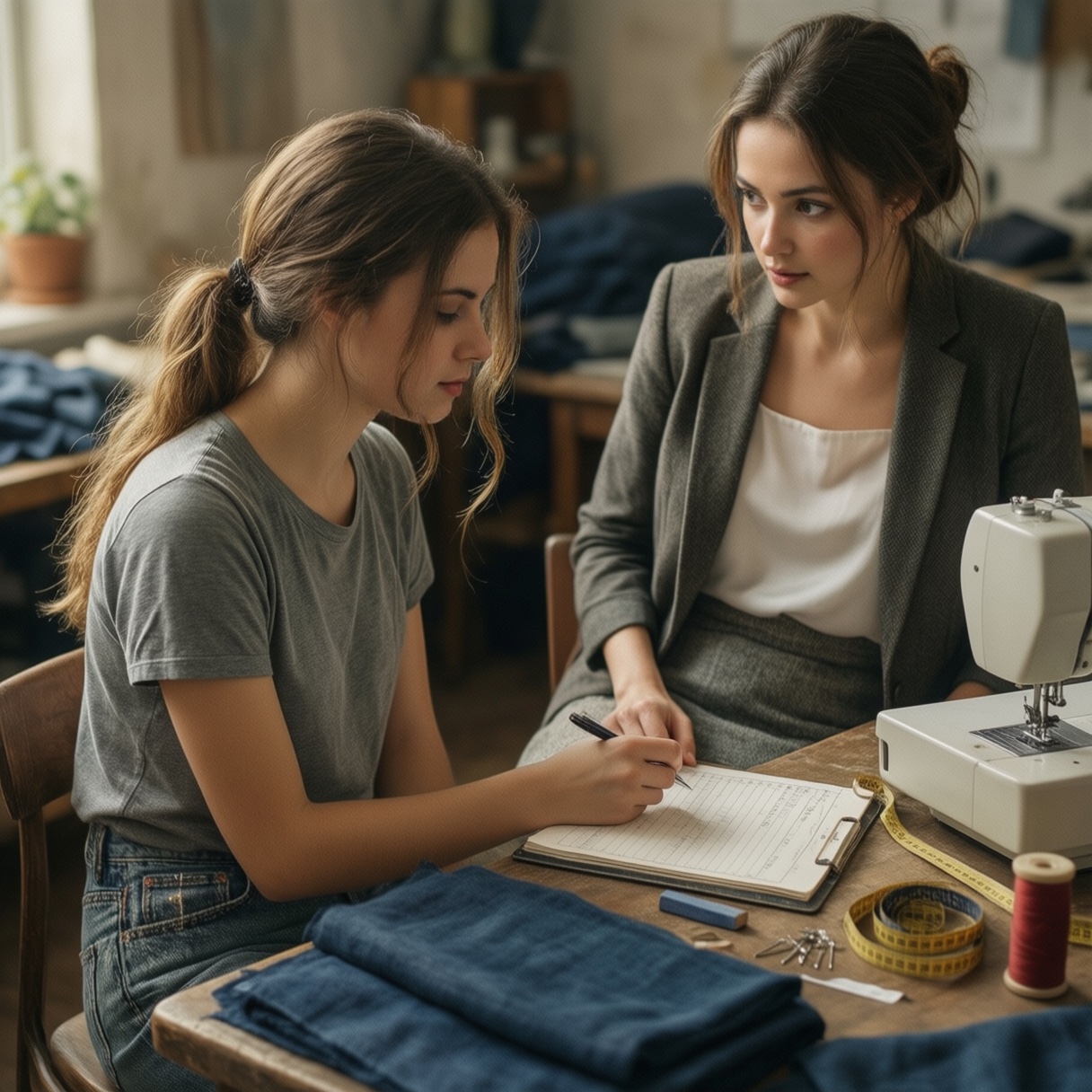
[ Celeste ]
[Celeste]
Mara didn’t romanticise the museum run. She laid it out the way she laid out everything: the facts would either be carried properly, or they would break someone.
“Thirty-six units,” she said, and tapped the order sheet. “That means we stop behaving like a clever pocket of talent and start behaving like a shop.”
Lauren had brought a roll of butcher’s paper and a marker. She unrolled it on the cutting table with quiet competence, like she was flattening a problem until it couldn’t hide. Columns appeared. Headings. Boxes. A place for reality to sit.
CUT SEW HARDWARE FINISH QC PACK PICKUP / DELIVERY
Charlie watched the grid form, standing close enough to see, far enough not to intrude, chalk dust on his fingers... the mild, contained intensity of someone who had discovered that order could make him fearless without requiring him to be loud.
Sarah leaned on the shelving, arms folded, expression set to fine, impress me.
Mara’s finger moved down the list.
“Hardware packs get made first,” she said. “Grommets counted. Tape cut. Boning sorted by stiffness.” She nodded at Lauren. “Label it.”
Lauren’s marker squeaked as she wrote.
“Hardware packs,” she said, warm voice, sharp mind. “Like meal prep. You do it properly, and you stop bleeding time every time you need a grommet.”
Mara didn’t smile, but her shoulders loosened the tiniest fraction. Approval, in her language.
“QC checklist,” Mara continued. “Nothing leaves the building without it.”
Sarah rolled her eyes. “We’re doing paperwork now.”
Mara looked at her. “We have been doing paperwork. We’re just calling it by its name now.”
Lauren’s marker paused. She added a box to the side.
TIME LOST:
Mara’s eyes flicked to it. “What’s that?”
Lauren’s tone stayed conversational. Steel lived underneath it.
“That’s the bit nobody counts,” Lauren said. “And it’s the bit that kills you.”
She looked around the table. Not accusing, not sentimental: adult.
“This is not about anyone volunteering extra hours,” she added. “I want to know how many hours we’re already losing to friction.”
Charlie blinked. “Friction.”
Lauren nodded. “Commute time. Waiting on deliveries. Re-doing things because the right tape wasn’t where it should be. Starting late because someone’s brain is fried.”
Sarah shook her head, eyes narrowed. “Really?”
Lauren turned to her, unflinching.
“You can scoff,” she said. “Or you can tell me how many minutes it takes you to find grommets when they’ve migrated.”
Sarah opened her mouth, then shut it again. Too many.
Lauren looked at Charlie.
“How long does it take you to get here?”
He hesitated.
“Forty-five minutes,” he said finally. “Sometimes more.”
“Each way.”
Charlie nodded.
Lauren scribbled.
“An hour and a half a day,” she said to the ledger, then turned to him. “Seven and a half hours a week, Charlie. That’s a whole workday per week, spent travelling to work.”
“That’s not his fault,” Mara said. “That’s geography.”
Lauren nodded. “Sure. And we can’t argue with geography.” She tapped the grid. “We can choose what we do about it.”
Her gaze moved to me.
“Celeste,” she said, as if it were the obvious next line on the page, “how are you going to do an MBA while we scale a shop and keep the place clean?”
I felt irritation rise: not at her, but at the world, at the way ambition always seemed to come with a price tag and a time tax.
“I won’t do it well on noise and buses and guesswork,” I said, fretful. “And I can’t do it at all, tired.”
Mara’s eyes stayed on mine. I didn’t have to apologise for the edge. Mara spoke fluent irritation. She used it.
“So, we remove friction,” Mara said, flat.
Charlie’s eyes flicked between us, trying to follow the move. His jaw set, a reflex searching for a role. If friction is the enemy, he was there to fight it. If this is a problem, he could solve it. Lauren saw it too. Her face went thoughtful: she laid guardrails down like tape lines on a floor.
“Logistics,” she said, warm and firm. “Not a love story. Logistics.”
Mara nodded. “Exactly.”
I looked at Charlie.
“I have a spare room,” I said. “Nearer to here. Quieter. Move in, and your commute drops to ten minutes. We split costs.”
Charlie stared at me as if he’d misheard.
Sarah stifled a gasp. “What?”
Lauren’s marker squeaked as she added a new box.
HOUSING / ROUTINE:
Mara didn’t look at Sarah. “Colleague,” she said, automatic as breath.
Sarah shut her mouth.
Charlie’s throat moved. “You mean... live with you?”
“I mean... rent a room,” I said, calm on purpose. Not cold, precise. “Separate rooms. Separate lives. Shared logistics.”
Lauren nodded, warm. “Rent. Terms. And with a house policy.”
Mara, flat: “Proximity doesn’t buy access.”
Charlie flinched, as though he’d been accused of something he’d never have had the nerve to do. Mara didn’t soften it: she wasn’t accusing him. She was protecting everyone, including him, from the presumption that mistakes vicinity for entitlement.
“Oh, I wouldn’t—” he began.
“I know,” I said, and I meant it. “But we’re not building a system that relies on people being good. We’re building one that stays clear even when things go pear-shaped.”
His eyes flicked between me and Mara: confused. Lauren stepped in with warmth that didn’t compromise the standard.
“It’s not personal,” she said. “It’s grown-up. It's a positive approach: you won’t have to guess.”
Charlie swallowed.
“What are the terms?” he asked quietly.
That word—terms—was the rung I hadn’t realised we were climbing today. Mara looked satisfied, the way she looked satisfied when a stitch finally behaved.
Lauren pulled a fresh sheet from her stack, as if she’d been waiting for this exact moment.
“Okay,” she said, cheerful in the way competent people get when they finally see a solvable problem. “We write it.”
She drew headings quickly.
RENT:
BILLS:
QUIET HOURS:
STUDY HOURS (SACRED):
CHORES:
GUESTS:
PRIVACY:
CONFLICT RULE:
EXIT CLAUSE:
Sarah let out a low whistle. “Bloody hell.”
Mara glanced at her. “That’s what adulthood looks like.”
Sarah’s mouth twitched. “It looks... like something from a law office.”
“It acts like freedom.” Lauren spoke firmly, still warm. She stapled the page to a clipboard. “We apply the same principle as we have here: if it isn’t written, it isn’t real.”
Charlie stood very still, reading down the list.
“Study hours... sacred,” he repeated, softly.
“Yes,” I said. “If I’m doing this, I’m doing it properly.”
His eyes moved down. “Privacy.”
“Yes,” Mara said before I could. “Non-negotiable.”
Charlie nodded. Something in his posture eased, the way it had eased when the ledger gave him rails.
Lauren looked up at me.
“Celeste,” she said, warm, “you set the parameters. It’s your place. Your domain.”
I picked up the pen and didn’t hesitate.
Rent amount. Bills split. Quiet hours. No hovering. No improvising “help”. Guests by agreement. Study hours written like a boundary you could build a life against. Charlie watched my hand writing the terms as if I was drawing a map. When I finished, I slid the page toward him.
“Read it,” I said. “If you agree, you sign. If you don’t, we're done, here.”
He read slowly. Carefully. When he reached the bottom, he paused at the exit clause.
“What’s that?”
Lauren kept her tone light.
“That’s the part where nobody gets trapped,” she said gently. “Thirty days’ notice. No dramas.”
Charlie signed: steady enough to tell me he understood what he was signing. Infrastructure. Mara tapped the page once. Approval.
“Good,” she said. “Now we can work without wasting human life on travel.”
Sarah stared at the paper, then at me. Her expression rearranged itself in real time, judgement trying to find purchase and failing, until it became something more sincere.
“So,” she said finally, “you’re not doing this because you fancy him. Do you feel... safe, though?”
I met her gaze.
“I do. Look, I’m doing it because I’m not letting my ambition be eaten by chaos,” I replied, “and because he’s useful.” Charlie’s ears coloured, but looked oddly relieved.
Lauren laughed softly, understanding in her eyes.
Mara didn’t laugh. She turned back to the butcher’s paper and tapped the production grid.
“Right,” she said. “Now that we’ve removed one friction point, we accept the museum run.”
Charlie picked up his chalk again.
He was useful.
This was work.
And these were the terms.
21 Rails ✨
[ Celeste ]
He didn’t arrive with a suitcase, but with a box of labels.
It was the most Charlie thing he could have done: turn shifting into a logistics problem, solve it quietly, and look faintly relieved that the solution didn’t require him to be charming as well.
When their car pulled up, it didn’t feel dramatic or ceremonial. Just a boot full of taped cardboard and the steady competence of a woman who had moved through harder transitions than this, and who didn’t need a man’s permission to do it.
Lauren stepped out, looked at my front door, and nodded as if approving its existence.
“Right,” she said. “Where do you want things?”
That—where do you want things—was the entire tone of the day. Not is this okay? Not are you sure? Just: you’re the decider; give me the parameters.
Charlie stood behind her holding a smaller box marked BEDDING in tidy block letters. He looked… contained, like someone who’d been given a rule set and was keen to follow it perfectly. Lauren clocked him the way a mother does when she’s trying not to show she’s clocking. She didn’t fuss. She didn’t hover. She simply moved him from “boy” to “task” and let the dignity of that do the caring.
Mara hadn’t come. She didn’t need to. Mara’s presence was already in the paper on my kitchen bench: the signed terms sheet, clipped to a board like a work order.
Lauren saw it and smiled: warm, brief, adult. Not cute. Not aw. More like: good. She writes things down. Charlie’s eyes flicked to it too. He didn’t flinch at the rules; he settled into them, as if they were a handrail.
I pointed down the hall.
“Spare room,” I said. “Second door. Your stuff stays in your room. Shared spaces stay clear.”
Charlie nodded and headed for his room.
Lauren raised her brows at me, amused. “You know, he’s in his element when you're direct like that.”
“So I’ve noticed.”
We started moving boxes. It was muscle and tape and the scrape of cardboard across tiles. It had me feeling, faintly, the contentment of a system working the same way in more than one place. Charlie carried his boxes quietly, carefully, as if he thought walls could bruise. He didn’t hover or comment: he just moved his things in and kept out of the way.
It was almost unnerving.
Lauren, always practical: “Kitchen’s where, love?”
I gestured. “There. Pantry’s the tall cupboard. I’ve cleared space in the fridge.”
Lauren nodded and began unloading groceries: tea, bread, milk, fruit: the kind of motherly provisioning that isn’t sentimental so much as structural. A woman who’d learned, the hard way, that you don’t wait for someone else to make a home functional.
Charlie went back and forth until his room looked vaguely inhabitable. Then he paused in the hallway, as if waiting for his next instruction.
And this was where it began.
It wasn’t a grand gesture.
It was a spoon.
Lauren had made tea. Three cups sat on the bench. A plate with biscuits. Normal life trying to get a foothold. Charlie walked into the kitchen, saw the kettle, saw the cups, saw the spoon sticky with honey on the counter. He picked it up and mindlessly rinsed it. He wiped the bench where a little ring of tea had formed. He reached for the dishcloth and hung it neatly.
Tick. Tick. Tick.
Automatic. Unconscious, the way some people straighten a picture frame when they pass.
I watched him out of the corner of my eye… and felt my guard relax and tighten at the same time. I’d seen the script people sometimes ran: I do nice things, therefore you owe me softness. I wasn’t building a life with a debt trap in it: not in my house. Not with Lauren watching. Not with Charlie still learning what “good” looks like when it isn’t a performance.
Charlie finished wiping, then froze. He must have felt my attention. He glanced at me quickly and then looked away.
“Sorry,” he said softly. “I… I can stop.”
Lauren’s head tilted toward me slightly, her eyebrows saying:
This is just him.
I deliberately kept my voice calm.
“You don’t have to stop,” I said. “Just don’t make it a claim.”
Charlie blinked, puzzled. “A… claim.”
Lauren stepped in, warm.
“Celeste means,” Lauren said, “do it because it’s what you do. Not because you’re buying anything.”
Charlie’s face coloured. He nodded quickly.
“I’m not buying anything, mum,” he murmured. “It’s just… it’s easier if it’s clean.”
Lauren made a small sound—half pride, half relief—and swallowed it before it could become sentiment. That was the first time I felt my suspicion loosen into something less rigid.
Not trust, yet. Too early for that.
Just… assessment. Verification. Adding it up. I watched his hands, not his face. His hands weren’t performing. They were simply doing what they did when they weren’t told to do anything else. I pointed to the terms sheet on the bench.
“Right. Then we add it,” I declared.
Charlie frowned. “Add what?”
“We add a line about chores,” I replied. “So it’s explicit.”
Lauren smiled at him. “She’s consistent, isn’t she?”
I took the pen and wrote under CHORES:
Charlie:kitchen reset after meals;bins if full;laundry only by agreement;no ‘helpful’ rearranging.
Charlie leaned in, reading as if it were a recipe.
“No rearranging,” he repeated. Not questioning why it wasn’t allowed. Just pinning down the rule.
“It means: if you want to change something, you ask.”
“Okay,” he said, nodding, a simple, unemotional agreement with a rule.
Lauren watched him with quiet pride.
“He’s like this at home,” she said gently. “Tidies up without noticing he’s tidying. If I leave a dirty pan out, I’ll turn around and it’s washed.”
Charlie’s ears went yellow. “Mum.”
Lauren smiled at him with a slight shrug. “It’s not an insult, darling. It’s competence.”
Charlie looked down. “It’s just… I like things to work.”
Something in my caution shifted. Because “provider” energy needs an audience. This didn’t: this was just… functional. Private, almost shy. I leaned back against the bench and let my tone warm slightly. Not indulgent, just human.
“Fine,” I said. “You can do the kitchen resets… on one condition.”
Charlie looked up, attentive.
“If I’m studying,” I said, “you find something else to do, somewhere else to be. It’s not the right time to be ‘useful’. You need to let me work.”
Charlie nodded. Lauren’s smile turned amused.
“Rails.”
Charlie glanced at her, then back to me.
“And if I’m not sure?” he asked, careful. “If I don’t know whether something counts as rearranging.”
I held his gaze.
“Then ask,” I said. “I don’t bite.”
“Okay.”
Lauren lifted her cup.
“To boring competence,” she said lightly.
I didn’t smile, but something in me eased, because I could begin to feel something: something that could get dangerous if I let it dress itself up as virtue.
It was relief: the quiet, addictive relief of having a supportive person in your space, one without an agenda. I could grow accustomed to that, if I wasn’t careful.
I picked up my mug.
“To terms.”
Charlie’s gaze flicked, briefly, to the signed sheet on the bench. Then he reached for the dishcloth again, wiped the last stray drop from the counter, and hung it neatly, like someone who understood that the way to belong here was not to be chosen.
It was to be reliable.
22 Clean Help ✨
[ Celeste ]
That first night, I didn’t sleep properly.
Not because Charlie was in the house. Not because I was afraid of anything. My brain just kept trying to process the new variable—new pattern, new friction, new risk—and it ran simulations the way it always did when I’d read too much research and not enough fiction.
In the morning, I woke up irritable with myself.
My study block was marked on the kitchen whiteboard in black marker, all caps:
CELESTE — STUDY (SACRED) 8:00–11:00
Lauren had written it, I suspected. The handwriting had her quiet friendliness in it, the sort that made rules feel like care instead of control. Beneath it, in smaller, neater script:
IF STUDY: NO TALK. TEA OK. EMERGENCY ONLY.
Charlie’s.
I stared at the line for a beat longer than necessary. It was sensible. It was also deeply relieving. When I stepped into the kitchen, Charlie was already there, moving carefully, like he was trying not to wake the air. A mug in his hand. A tea bag on a saucer, waiting. The sink empty. The dishcloth hung straight. Nothing rearranged. Nothing “improved”.
He looked up, caught my eyes, then looked away again as if eye contact counted as noise. He stood very still, as if unsure whether he was permitted to remain while I was in the room. I pointed at the whiteboard.
“That,” I said, “is a good system.”
Charlie glanced at it. “You said it mattered.”
“It does.”
He held the mug out without stepping closer. He didn’t cross any invisible line: he just offered. I took it. There was no sweetness in it that felt like a trap. No I did this for you energy. Just tea. A tool. A small lubrication of the morning.
“Thank you.”
His shoulders loosened almost imperceptibly, not because my thanks granted permission, but because it confirmed a fact: he hadn’t done the wrong thing. I took my mug and went back to my room.
For three hours, the house behaved. No music. No hallway pacing. No sudden questions that were really bids for attention. Once, a kettle clicked. Once, a cupboard closed softly. That was all.
When I emerged, eyes gritty from screens and concentration, the house smelled like clean air and toasted bread. Charlie was at the kitchen bench with a notebook open. Not my ledger: his. A page of small handwriting: neat, anxious. He looked up quickly, then back at his ledger.
“Hi.”
“Hi,” I replied, and leaned against the bench.
He waited. He’d learned the cadence of me: I spoke when I chose to. I didn’t need someone filling air space on my behalf. A plate sat on the counter with toast and fruit. Not prettified. Just there. Useful.
“I didn’t know if you eat after you study,” Charlie said quietly, still not looking at me. “So I… made it. But if you don’t want—”
I lifted a hand.
“Charlie,” I said. “Short answers.”
“Okay.”
“This is fine.”
His shoulders dropped a fraction. Relief. I sat and began to eat. The quiet felt earned, not imposed. After a minute, I said the thing that had been circling since yesterday.
“You really do a lot.”
His hand stilled on his notebook.
“I’m not—” he began.
I cut him off gently.
“I’m not accusing you of anything,” I said. “I’m just trying to understand you.”
He looked up properly then. His eyes had that flinch of a person who expects understanding to be followed by a demand.
“Okay,” he said cautiously.
I took a bite of toast. Thought.
“Is it because you think you have to?” I asked. “Or because you like it?”
He blinked, genuinely puzzled by the question.
“I… like things clean,” he said. “It makes it easier to think.”
“Yeah, you said that. So, it's not something you feel you need to do, it's just… life.”
“It’s not,” he said quickly, then stopped himself. Short answers. “Yeah.”
I watched him a moment longer and felt my caution ease: not into softness or indulgence… into something quieter: a trust you build when behaviour keeps matching what your instincts predict.
“No, that's good.”
His fingers tightened around his pen, as if he’d been graded. Then I asked another question, one that I’d been circling, one I’d avoided because it felt like it might crack something open.
“When you’re at Wardrobe,” I said, “when you’re working, do you feel… different?”
Charlie froze. Not dramatically. Subtly. Like a muscle trying not to twitch.
“Different?” He paused. “I don’t know.” I waited. He looked down at his notebook as if it might rescue him. “I feel… quieter,” he said finally. “Like, I’m not… always in trouble.”
“Well, you’re not in trouble here,” I said. “And you’re not in trouble there.”
His mouth tightened. He didn’t argue, but his face told me he couldn’t accept it all at once. He just held still, like statements like that needed time to become believable. I took another sip of tea.
“Do you ever think about why it feels quieter?”
He shook his head quickly.
“I can just… do the work,” he said. “And I don’t have to… worry about stuff.”
I nodded slowly, letting him keep his defences without letting them become walls.
“That’s… interesting.”
He blinked. Gave me a sidelong glance. “Interesting.”
“Yes,” I said. “Because most people spend a lot of energy protecting their ego. You spend your energy protecting the system. Making things hold. Making things clean. Making things easier for other people.” I tipped my head. “That’s not nothing.”
He glanced at his notebook and seemed to hesitate. Finally:
“I wrote something.” I didn’t ask to see it. I waited. Charlie swallowed. “I made a list,” he said, voice small. “Things that make it easier for you to study. Noise. Cooking smells. If the kettle whistles.” He frowned. “I don’t know if it’s stupid.”
The corner of my mouth twitched: not at his list, but at his predictability.
“It’s not stupid,” I said. “It’s infrastructure.”
He let out a breath that sounded like relief disguised as agreement. I leaned forward slightly.
“When you were little,” I asked, “did you always do this? Did your mum teach you?”
His eyes flicked away.
“I think… I guess I always sort of did it,” he said. Then, very quietly: “Mum just… didn’t stop me.”
That landed harder than I expected. I sat back and let the information settle, the way you let a pattern piece stop shifting before you cut. Then I fixed him with a direct look.
“So this was your way to be safe,” I said softly, “by making things work.”
Charlie stared at the table for a moment. Finally, he nodded.
I watched him, and something in my mind rearranged itself: not because he’d done anything dramatic, but because he hadn’t. He wasn’t trying to impress me. He wasn’t trying to win me. He wasn’t turning my house into a stage. He was just being himself: a person with a powerful instinct toward order and care. An instinct that, in a lot of boys, gets mocked out of them before it’s old enough to become a skill.
He couldn’t name it. He just lived it, quietly, and hoped nobody would try to take it from him. I set my mug down. I made the decision the only way I knew how: plainly.
“We’ll do this,” I said. “The support work. The quiet. The study.” I held up a finger. “But we do it fairly.”
He waited.
“Your help will stay as we wrote it,” I said, “and… no earning. No trading. No silent scorekeeping. If I think you’re starting to do things to buy attention, gratitude, permission, whatever… I will tell you. Straight-away. I know you wouldn’t mean to,” I added. “But intent doesn’t run a house. Terms do.”
“Okay,” he said, and this time it sounded less like compliance and more like understanding. I stood, picked up my mug, and paused at the doorway to my room.
“Oh,” I said, as if it were an afterthought. “Your sign is good.”
“Sign.”
“The whiteboard,” I said. “If it says STUDY, you don’t talk unless the house is on fire.”
His face coloured: pleased. Then, because I understood the engine under him, I added: “Make a second sign,” I said. “For when I’m done. So you don’t have to guess.”
His eyes widened slightly. Guessing was his old habit. Guessing was the thing that made him anxious.
“A second sign?”
“Yes,” I said. “Write whatever you like. As long as it’s factual.”
He looked down at his notebook, then up at me.
“AVAILABLE?”
“Perfect.”
Charlie picked up his pen again.
For the first time since he’d moved in, the house didn’t feel like a risk.
It felt like a system we could both live inside—without anyone losing themselves.
23 Settling ✨
[ Celeste ]
The first week was friction finding new places to hide. Charlie had moved in on a Tuesday. By Friday, it was obvious the house was either going to become a second worksite—clean, repeatable, calm—or it was going to dissolve into the kind of domestic mush that eats ambition by the tablespoon.
I wasn’t sentimental about it. I was annoyed.
Annoyed that something as stupid as a dish left on a bench could pull my attention away from a paragraph that mattered. Annoyed that my brain, when it got tired, started inventing stories about other people’s motives. Annoyed, mostly, that I couldn’t afford to waste time being vague.So I did what I always did when something mattered: I made it measurable.
The terms sheet lived on the kitchen bench, clipped to a board like a work order: not because anyone needed reminding, but because in my house, the rules didn’t live in someone’s mood. They lived on paper. The whiteboard became the real hinge. Two cards sat propped against the marker tray.
Cardboard, black marker, painfully literal: IN SESSION.
AVAILABLE.
Charlie had made them.
“You didn’t have to,” I said one morning, reaching for my mug.
“I know,” he replied. “It’s just… easier.”
I realised something that week: Charlie’s support instinct wasn’t emotional; it was mechanical. He reset rooms the way some people reset their posture. Not for applause or closeness: for equilibrium.
I could live with that. I could even grow accustomed to it, if I wasn’t careful.
A text came in while I was still standing at the counter.
Lauren.
How’s the house?Is he behaving?
I snorted.
Charlie glanced up. “What?”
“Your mother thinks you’re a puppy.”
His ears coloured. “She… she worries.”
“She’s a mum… she’s allowed,” I said with a smile. Lauren wasn’t meddling: just reminding us guardrails existed.
I typed back:
House is fine. He’s quiet. We’re not improvising.
A second message arrived almost immediately:
Good. Keep it boring. Boring is safe.
I showed Charlie the message.
He read it and exhaled softly.
“Yes,” he said quietly. “Boring.”
“Exactly.”
I took my tea into my room and shut the door.
IN SESSION.
Three hours went by in a narrow, clean channel. My mind warmed up. The words stopped fighting me. That beautiful thing happened where your brain stops negotiating with the world and starts moving through it. When I came out again, the card on the whiteboard had been flipped.
AVAILABLE.
Charlie sat at the kitchen table with a notebook open, drawing boxes. Not sketches of clothes. Boxes. He looked up, startled, then embarrassed, as if he’d been caught doing something childish.
“What’s that?”
He hesitated, then pushed it toward me.
“It’s… a checklist.”
“A checklist for what?”
“For the museum run.”
My chest tightened with recognition. The work followed him home the way it followed me. That was the strength of it… and of him. He tapped the page.
“Hardware packs,” he said. “Cut order. QC points. Delivery labels. Like mum said. To stop bleeding time.”
I studied his boxes and felt a grudging admiration. It was practical.
“This is good.”
Charlie blinked. “It is?”
“Yes,” I replied. “It’s clean.”
His seemed visibly relieved that someone was naming his work as work and didn’t turn it into a story about him.
A knock came at the front door.
It was Lauren, with a tote on her shoulder, cheeks flushed from the heat, looking like she’d fought traffic and won. The kind of woman who’d learned, with Roger, that you don’t wait for a man to stabilise a household: you build your own scaffolding and keep going. She saw the notebook immediately.
“Ah,” she said, and smiled: proud in a quiet way. “Look at that.”
Charlie went yellow.
Lauren set her tote down and began unloading it: a roll of tape, a packet of labels, a small box of grommets. It was like she couldn’t enter a room without bringing its next solution.
“Mara rang,” Lauren said, and her tone shifted. “Museum’s confirmed pick-up windows. They want reliability. Not ‘sometime Friday’. Proper time slots.”
Charlie’s pencil hovered over his checklist.
“Can we do that?”
Lauren’s smile turned sharp.
“Yes,” she said. “If we stop making it up as we go.”
Mara’s voice came through Lauren even when Mara wasn’t here. I felt an irritation rise: not at the pressure, at the stupidity of the world requiring women to be twice as organised to be taken half as seriously.
Lauren looked at me.
“You’ve got Uni paperwork to do,” she said. “Applications, fees, the whole circus.”
“Yes,” I replied, already feeling tired.
“We need to protect your hours.”
Charlie’s head lifted.
“You mean—” he started, then stopped himself.
Lauren’s eyes flicked to him: warm, but not soft.
“I mean,” she said, “that if Celeste is doing this, she does it properly. And if you want to be useful, you be useful in ways that don’t steal time from Celeste.”
Charlie nodded, as if he’d been handed a specification.
“Yes, mum.”
Lauren leaned in beside him.
“Show me the checklist, Charlie.”
I watched them for a moment: the mother who did adulthood like a craft, and the boy who learned to breathe when rails appeared. Two kinds of steadiness, related but not identical. Just then my phone buzzed.
A message from Mara.
Tomorrow. 7:30. Museum call. Bring the numbers.
I stared at the words and felt the future click into place. As a workload. As a shop. As a life that would either be governed… or would take whatever it wanted. I put the phone down and picked up a pen. If Mara wanted numbers, she’d get numbers. And if my study hours were going to survive the museum run, then the house would stay boring. Not because I was controlling: because I was serious. Charlie looked up from the checklist.
“Do you want me to stop,” he asked, careful, “when you’re writing?”
I met his eyes.
“No,” I said. “Just no extra chatter.”
For the first time, I understood the real shape of what was happening. It had been clear from the outset that Charlie wasn’t moving into my life as a romantic gesture. What wasn't clear at first, but became increasingly apparent was that he was moving into it like a support structure. My focus was to make sure the beam didn’t start thinking it was the roof. I tapped the whiteboard.
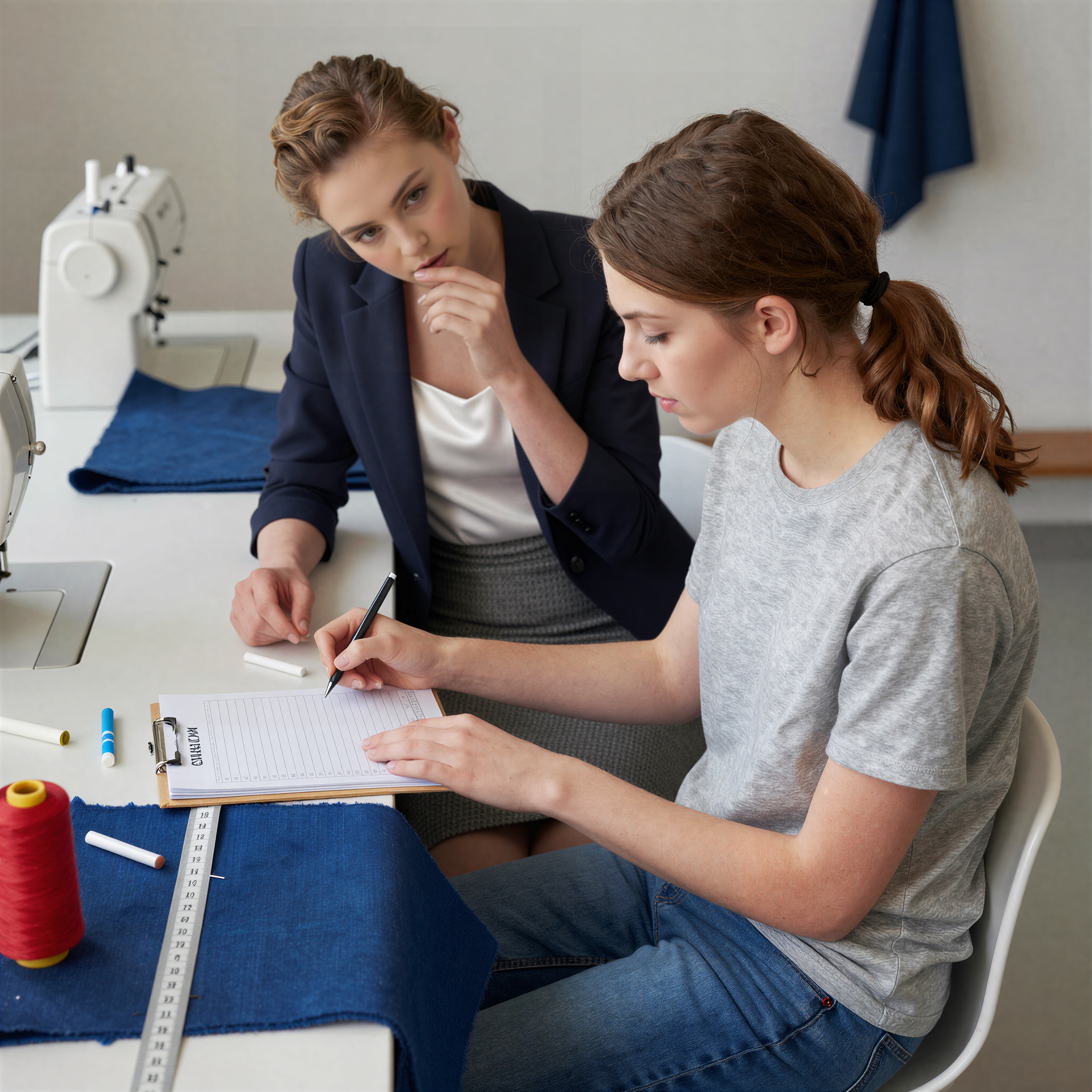
“Available,” I added. “For ten minutes.”
Charlie’s mouth twitched: he almost allowed himself a smile.
“Ten minutes,” he echoed. Lauren laughed softly.
“My stars,” she said affectionately. “You two are a couple of weirdos.”
I didn’t deny it. I set the timer on my phone, sat at the table, and watched them continue to draw boxes. Work, at least, was something we all understood.And boredom—sweet, structured boredom—was how we were going to survive.
24 The Operating Surface ✨
[ Celeste ]
I cleared the table the way you clear a bench before you do something you can’t afford to botch. Not ceremoniously. Not dramatically. Just… quietly, completely. Mug rings wiped away. Crumbs vanished into my palm. The loose thread someone had left like a dead spider got flicked into the bin. I laid everything out with that flat, clinical care you see in a good salon when the colourist lines up foils. You’re not playing at precision: you’re committing to it.
Ledger. Invoices. Swatches of linen and wool pinned with little flags. A cheap calculator with worn buttons that had seen too many rushed additions. A laptop that had survived coffee, fabric dust, and at least one rage-tap hard enough to make the screen stutter. A stack of envelopes that weren’t romantic in any way whatsoever.
It was an operating surface.
Wardrobe wasn’t dying: it was thriving. That was the danger. Thriving meant multiplying. Multiplying meant mistakes. Mistakes meant the whole thing could get infected by sloppiness and sympathy and “we’ll fix it later” thinking. And I did not build this place — Mara did not build this place — so it could be ruined by the soft, lazy part of human nature.
I drew a line down a blank page and wrote:
JAN — COSTS / INCOME / WASTE
Then another line. Then another. Reassuring, in the way locking a door is reassuring.
The first invoice I opened was for thread: ten spools, quality, not cheap. The second was for grommets. The third was for a bolt of linen that arrived like a dare.
My phone vibrated. A message from Lauren.
How are the numbers?
I stared at it, thumb hovering, and realised I’d been waiting for that question the way you wait for someone to come stand beside you at a lookout, so you can stop pretending you’re fine with the height by yourself.
Doing them now, I typed. Then, without thinking, added: We’re doing them now.
I didn’t even notice the word until it was sent.
We.
As if it was already decided. As if routing someone into “we” was as simple as changing a pronoun in a text. I set the phone down face-up, daring the universe to correct me.
Footsteps in the hallway: soft, familiar. Not Mara: Mara’s steps had a blunt certainty, like she was driving nails into the floorboards simply by walking. These were lighter, careful—someone who’d learned to move quietly in other people’s spaces.
Charlie paused at the doorway like he was checking whether his presence would be tolerated by the air itself. He didn’t look like he belonged at an operating surface. He looked like someone you’d find in the margins of a library: delicate, intent, carrying too much thought in too thin a frame. His hair was still damp at the edges, as if he’d run water over it and then forgotten to finish the job. There was a faint smear of pencil on his thumb.
He saw the table and went still.
“Is this… for me?” he asked, voiced carefully, trying to sound casual while bracing for impact.
“For us.”
Not loudly or pointedly. Just like it was the only accurate word available.
His eyes flicked up. He processed the word the way you process a new weight in your hands: is it mine to carry? am I allowed? I tapped the chair opposite mine with two fingers.
“Sit.”
He sat.
No debate. That was the thing about Charlie: he tried to be brave, but he was even better at being compliant when the rules were clear. I slid the ledger toward him, open to the column headings Mara had ruled with that severe, beautiful logic of hers.
“Read it.”
His eyes moved down the page. Movement. Stress. Failure points. Fix applied. Re-test. Signed.
“This is… intense.”
“Actually, it’s boring,” I corrected. “That’s why it works.”
He let out a faint breath that might have been a laugh if he’d trusted himself to make it.

I pointed at the laptop.
“Open the spreadsheet. Tab marked January.”
He reached for it. Fingers quick, sure. He wasn’t a finance person — he didn’t have the swagger of someone who’d been told numbers were his territory — but he had the kind of competence that comes from caring. The kind that doesn’t seek applause. I watched him centre the window, bring up the sheet, start studying the numbers.
“Now,” I said, flipping an invoice so it faced him, “tell me what you see.”
He leaned forward; a strand of hair fell across his forehead. He didn’t push it back.
“I see thread,” he said. “And… we’re paying more than last month.”
“Yes, we are.”
He glanced up again, and something in him adjusted at my emphasis. We.
This is about us. We do this. Not you. Not I’ll cover it. Not I’ll handle it like a man. Just… we.
He looked back down.
“The output’s higher too,” he said slowly. “If we’re making more garments, the thread cost scales. The question is whether waste is scaling with it.”
I nodded.
“Exactly.”
The word landed like a seal.
He went quiet after that, as if he’d been given permission to do what he was already good at: focus without posturing. He pulled the calculator closer, checked a couple of sums, then typed the numbers into the sheet with a neat, almost reverent care.
Silence formed — not empty, but weighted. Useful.
And in that silence, watching him work — head down, shoulders tucked into the task — something in my nervous system unclenched. Like a knot you didn’t realise you were carrying until it releases.
Relief.
Instinctively, the whole tension-release thing felt ridiculous. I didn’t need taking care of, not by anyone. I certainly didn’t need a man. I didn’t need anybody to rescue me from my own competence.
I had this. I was good.
And yet, having him there, on the other side of the table, quietly, steadily working, made something stop tilting that I hadn’t realised was tilting.
I watched him work and realised, with bizarre, needle-sharp clarity, that I was starting to depend on him. It wasn’t romantic. It was structural. The way you depend on a beam once you’ve built the roof.
Structural. What sort of role is that? Who fills that sort of role? Who just quietly does their job, not expecting recognition? Who doesn’t flinch when something else gets put on their plate?
The realisation made me sit up straight. It was the sort of thought one cannot argue with. It was not emotional at all. Certainly not romantic. And it wasn’t a kind thought, either. It was simply: accurate.
Wife.
He’s my wife.
There was instant dissonance. The term was so gendered it didn’t fit at all. I tried to replace it with something more socially acceptable, less stigmatising — something that carried the same shape.
Nothing else fit.
Wife, not in clothes, not in pronouns… but in function. Labour that doesn’t get a spotlight and doesn’t ask for one. Support: the kind that keeps the whole place standing while most people only notice the roof.
The part that made my stomach go so tight it ached wasn’t the thought itself.
It was that I dreaded losing it.
I realised what this meant. Sooner or later, I would have to define it: not just to myself, but to Charlie, to Wardrobe — to everyone. Spell it out. Clearly. As a boundary.
Charlie’s my wife.
The sheer enormity of what I was contemplating gave me pause. There had to be another way to name it. A safer way to frame his role. I went over the options again.
And came up empty-handed.
There was nothing else.
Wife. That’s it. The concept solidified. Positive outcomes suggested themselves. Defining the role to Charlie would go a long way in resolving a looming problem: one that would have a negative impact on his relationship with Wardrobe. I had already seen that old provider story, that old expectation of himself, trying to crawl back in whenever he sensed a need — a reflex that wouldn’t die. I could see it in the way his shoulders tensed whenever a cost spiked, as if the numbers were personally accusing him.
The provider fantasy wasn’t dead. Just dormant.
He finished entering the thread invoice and looked up.
“Do you want me to… pay this one?”
There it was.
He didn’t say it arrogantly. He didn’t perform it. But inside the practical tone was the old expectation rearing its head: I’ll buy my place. I’ll prove it. I’ll be useful the way men are taught to be useful.
My first instinct was to snap at him, because snapping is easy and I’m very good at easy when I’m tired.
But I didn’t.
I looked at him for a long moment instead — long enough that he started to fidget. He noticed himself fidgeting and stopped. Then, a second later, fidgeted again. He was trying so hard. Which mattered.
“No,” I said finally. A breath. Calm. “Look, you don’t get to buy your place here.”
His eyes widened a fraction. I held his gaze and softened the next sentence without weakening it.
“You don’t have to earn us,” I said. “You just have to work with us.”
Work with us.
Not for me. Not as my man. Not as a hero.
With.
The tension in his shoulders didn’t vanish, but it changed shape—the difference between bracing for a punch and bracing to lift a weight.
He swallowed.
“Okay,” he said. Quiet. Real. “Okay.”
He looked back down as if grateful to be given something concrete.
“Then… tell me what you want me to look at next.”
I didn’t miss the phrasing.
Not what should I do. Not how can I help. Not I’ll take care of it.
Just: tell me.
I slid the next envelope across.
“Waste,” I said. “Find me waste.”
He nodded.
As he bent over the numbers again, pencil tapping once against the table, it hit me with a certainty I couldn’t argue with: this was exactly the right time to test the water.
Not with clothes. Not with pronouns — not yet.
With structure.
With language.
With we.
Because the safest, sanest way to change someone’s life isn’t to push them off a cliff. It’s to build a room around them so gradually they stop remembering what it felt like to stand outside.
I picked up my phone and typed to Lauren before I could overthink it:
Numbers are stabilising. Waste is the target. We’ve got Charlie on it.
Then I added, almost without meaning to:
He’s good. We’ll keep him close.
Chosen-ness, delivered like a logistical note. No theatre. No confession. Just a preference stated as fact.
I sent it.
Across the table, Charlie looked up as if he’d felt the air shift. He caught my eye. He didn’t smile. He didn’t try to charm. He just waited: present, attentive, ready.
And I realised something else, unexpectedly sharp: I didn’t need him to be a man. At all. In fact, quite the opposite. I didn’t even need him to be anything at all yet.
I needed him to stay exactly like this — quiet, steady, inside the “we” — long enough for the old story in him to finally starve.
“Good,” I said once, when he circled a waste line item and drew a neat arrow.
He blinked at the word like it warmed him. Then he went back to work.
And the operating surface — ledger, invoices, swatches, calculator, laptop — felt less like a crisis.
More like a plan.
25 Definitions ✨
[ Celeste ]
The table stayed cleared. Not because I was being precious about it, but because the minute you let paper drift, you let thinking drift, and then you’re back to improvising your way into errors you could have prevented with ten seconds of discipline.
The ledger remained open where we’d left it, its columns like rails. The invoices sat squared. The swatches were still pinned and flagged, as if they were specimens. The cheap calculator hadn’t moved an inch. Charlie had arranged his pencil and ruler parallel to the table edge without realising he’d done it.
Order is contagious. So is anxiety. The trick is to choose which one you’re spreading.
He worked quietly, head bent, and I watched him the way you watch a new stitch line under tension, waiting to see where it would pull.
The numbers weren’t the problem.
He was.
Not because he was failing: because he was succeeding in a way that threatened to wake the old story in him. Every clean solution made that reflex twitch: earn her gratitude; prove you matter; buy your place. Wardrobe didn’t do gratitude as payment. Wardrobe did standards. And I needed him to understand the difference before the habit hardened into entitlement.
I let him close the loop properly: sum, verify, enter, check.
“Charlie.”
His pencil tip stalled.
“What do you think you do in this room?”
He looked up, cautious. Thinking like the ledger.
“Work,” he said. “Support.”
“Correct,” I said. “Now we name it.”
I met his gaze calmly.
“One word.” I let the silence do its job. “Wife.”
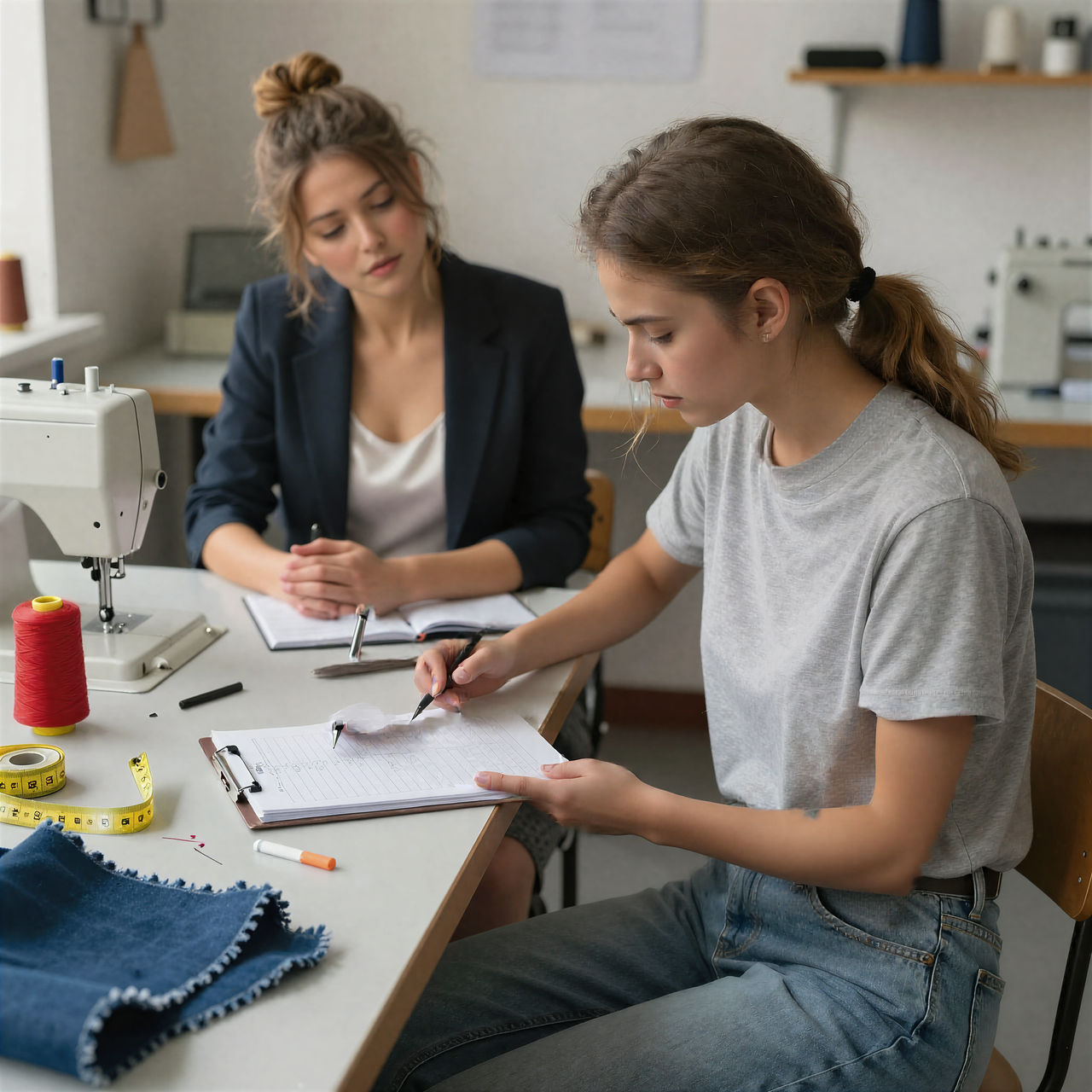
His pencil hovered above the paper, as if his hand had forgotten its job. A small internal jolt passed through him: shoulders lifting a fraction, then settling. He took a breath, the kind you take when you’ve learned that saying the first thing you feel will only make it worse.
I kept my eyes on the invoice. I didn’t pretend I hadn’t said it. Silence has weight. I let it sit. When he finally looked up, his expression was careful… recalculating.
“Okay,” he said, quietly. “Define it. Define… ‘wife’. Why ‘wife—in your terms?”
That was the first win. Not agreement. Definition.
I met his gaze. and turned the ledger slightly so it sat between us like a third party: neutral, unblinking.
“In my terms,” I said, “‘wife’ is function. No romance, no clothing. Not—” I watched his jaw tighten, “not faintly whatever you’re currently trying not to panic about.”
He held still. I continued, my voice steady:
“It’s the role that supports without expecting to be seen as the centre,” I said. “It’s the role that makes the machine run and doesn’t pretend the machine runs just because he showed up.”
A small flinch crossed his mouth. I let that land, then I tapped the ledger headings.
“This is how Wardrobe works,” I said. “Logged responsibility. Shared load. Verified outcomes.”
He looked down. Movement / stress. Failure points. Fix applied. Re-test. A logic he could trust.
“Okay.” This time it sounded less like bracing and more like choosing. “So ‘wife’ means… support.”
“Yes.”
“But specifically,” he asked, still careful, “what kind of support?”
“The boring kind,” I said. “The kind that holds up under stress.”
His shoulders eased a fraction. Boring was relief.
“And—” He hesitated. Eyes flicking away and back. “And what does it do… in terms of—”
In his story, it meant: worth. It meant: manhood. The script he knew. I wasn’t going to punish him for reaching for it. But I was going to correct it.
“Being a wife doesn’t buy you anything,” I said. “It places you.”
His brow furrowed.
“It places you in the team,” I added, “where your work matters but your ego doesn’t get to invoice us for it.”
He inhaled. Shallow first, then deeper.
“So I’m… not supposed to be a provider.”
“There are no providers at Wardrobe, Charlie,” I said, as implacable as a locked door. “Only contributors. There’s no room for that… story. Men get credit for ‘helping.’ Women get 'helping' counted as proper default behaviour. We don’t trade in credit.”
The sentence found its place in him. He could not help but recognise the architecture now.
“Okay.” Then, after a beat: “So, by your definition and in this context, what does this ‘wife’ role require? If it’s my role, what are the requirements?”
There it was. The term: 'requirements'. The acceptance based on terms.
“Being a wife means being consistent,” I said. “No saving. No buying. Accepting direction, as you do. And when you don’t understand something,” I continued, “you do what you just did.”
“Ask for a definition.” His voice was soft.
“Yes. Ask. Don’t guess.”
“And,” he murmured, suddenly looking more intently at me, “why me?”
He needed to understand: this wasn’t romance. It was operational. Still, the vulnerability his eyes reflected was unmistakable. I gave him the truth in the tone Wardrobe always used: factual, consequential.
“Because you’re good at the kind of work that doesn’t demand applause,” I said. “Because you can hold a standard without turning it into a performance of yourself. Because you've demonstrated you're well-suited for the role.”
Something in his face loosened, slightly.
“You need to understand,” I added, because internal dialogues matter, “that if you keep feeding that "provider" reflex, you will end up breaking what we’re building. Not with malice at all, but with toxic habits.”
He nodded, small and decisive. Then his voice tightened, stepping onto thin ice.
“But I still don't get it… if I’m not a… provider… what am I allowed to be?”
Allowed. There it was: the core of him. Asking permission.
I held his gaze and didn’t make it tender. Tender would have made him cling. I made it clear.
“You’re allowed to be a wife, Charlie,” I said. “You’re allowed to be useful and trusted. You’re allowed to be directed without it meaning you’re less.”
He stared at me.
“And if I do it right,” he said, almost inaudibly, “then… I belong?”
I didn’t mother or soothe him: I gave him the version that holds.
“If you do it right,” I said, “you’ll stop needing to ask.”
He let out a breath—shaky at first, then steadier—like someone who’d been waiting for a rule more than a hug.
“Okay,” he said, “tell me what to do next.”
I slid an envelope toward him.
“Keep tracing waste,” I said. “Flag anomalies.”
He took it. He leaned into the mundanity like it was the point, because it was.
A knock sounded at the doorway.
Mara appeared without apology. She didn’t look at Charlie first. She looked at the table: the layout, the posture of the room.
“Numbers?”
“Stable,” I said. “Waste is the target. He’s flagging anomalies.”
“I’ll mark anything that scales wrong,” he said simply.
Mara watched him one beat longer than politeness required. She lifted her chin: acceptance, the kind you earn.
“Good,” she said. And to me: “Re-test schedule. Green petticoats. Seam stress is shifting.”
“Put it in,” I said to Charlie. Charlie reached for the pen and opened to the right page. He wrote:RETEST — GREEN PETTICOATS — SEAM-STRESS SHIFTING
and left the signature spaces.
Mara’s gaze flicked to the ledger.
“If he’s learning it properly,” she said to me, “keep him on it.”
Then she was gone.
Charlie looked at the signature spaces.
“Do I sign?”
“Not yet,” I said. “But you will.”
After a moment, he said softly, as if he was checking he’d understood the definition correctly: “So… when you said ‘wife’… you meant: I don’t get to belong by paying by my work. I belong by holding up my end.”
“Correct,” I said firmly.
He bent back over the envelope and started tracing the waste through the numbers with patient focus, as if he were mending something invisible. I watched him for a beat longer than necessary. Because I was measuring alignment, not argument.
Good.
I picked up my phone and messaged Lauren.
He asked for definitions. He’s learning the ledger.
Then, because it was true and because truth in this place was never a poem, I added:
He’s fitting in.
Across the table, Charlie glanced up once, as if he’d felt something shift, then returned to his work without trying to claim the moment. The belonging was already doing its work.
Not by proclamation.
By structure.
By “we”.
26 Boring Miracles ✨
[ Celeste ]
By the time it happened for me, it had already happened. That was the first thing I understood: there was no single moment where the room agreed. No vote. No declaration. No bright line you could point to and say:
here, here is when we decided what he was to us.
It was stronger than that, and better: it was repetition. It was the way you stop noticing a sound you once couldn’t sleep through.
Wardrobe had grown a second pulse since Mara’s ledger arrived. The first pulse was the work itself: cloth, bodies, heat, the blunt honesty of fit. The second was the record of it: ink that refused to flatter, names that made claims and then held them.
On the corkboard above the cutting table, the first page of wear-tests had been replaced. Then replaced again. Failures were neatly noted and fixes applied. Retests were signed. It looked like progress, the way a scar looks like healing: not pretty, but proof that the body had done the hard thing and survived.

Charlie had a chair now.
Not officially. Nothing in Wardrobe was official until it was written down. But the old wooden chair appeared and stayed, tucked under the edge of the long table as if the wood itself had decided it belonged there. So did his pencil: a cheap mechanical thing with a yellow eraser cap that never quite erased Mara’s chalk marks, but tried anyway.
He sat with his shoulders lowered, head bent to the page, working through the loop as if he’d been born to it: sum, verify, enter, check.
He wasn’t just testing garments anymore. He was testing the system, the room’s memory… the quiet guarantee that nothing slipped through the cracks simply because everyone was tired. Not asking to be forgiven for being there. Just… being useful.
I watched him from the doorway, hand on the jamb, letting the room settle around me before I stepped in. That was a habit I’d learned the hard way. In a women’s space, you don’t arrive like a storm: you arrive like someone who understands you are not entitled to people’s nervous systems.
Lucy was sorting tape lengths into a tin like she was laying out surgical instruments.
Leah had a bodice block pinned to the dress form, her fingers moving with the brisk assurance of someone who’d stopped negotiating with fabric and started commanding it.
Talia was on her knees at the hem of a petticoat, seam ripper flashing, muttering to herself with the intimacy you only give a problem you fully intend to solve.
There were two actresses from the Faire sitting on the bench by the windows, lacing and unlacing stays under Mara’s supervision with the obedient patience of women who were paying to be uncomfortable on purpose.
And Sarah—Sarah was sitting at one of the machines, leaning against the table with satisfied grin, watching all of it like she owned shares. She saw me and her grin broadened. A grin that contained, inexplicably, both mischief and loyalty.
“Morning, boss.”
“Don't call me that,” I replied, and stepped in.
Mara didn’t look up. She rarely did when she was working—her style of governance. If she looked up at every movement, she’d spend her life reacting instead of making decisions.
Charlie did look up. His eyes met mine. He nodded: tiny dip of the chin and went back to the ledger.
Sarah wandered over to him. One would never think, given her easy manner, that she had once regarded him with the wary amusement she reserved for men who thought politeness was a currency that bought them access. She peered at the page he was filling in.
“What’ve we got?”
“Stays, green set,” Charlie answered quietly. “Wear-test number three. The grommets are holding. The waist tape shifted on the right side when she sat. I’m… noting it.”
Sarah made a thoughtful sound that could have been praise if she’d been the praising type. She wasn’t. She was the type who acknowledged the world and expected it to keep up.
“Problem defined,” she said. “Another boring miracle.”
Charlie’s pencil paused briefly, processing. Sarah didn’t explain. She wandered off again, letting the phrase finish falling out of the air. I crossed to the worktable and set my folder down.
“Any client arrivals today?”
Lucy glanced at the chalkboard.
“Courier at eleven. Fitting at two. Mara wants the blue gown re-checked before lunch.”
Mara tapped the table once. Yes.
I moved toward the gown on its stand. It was a deep indigo wool, cleaned and pressed into something that looked almost solemn. The stomacher lay beside it like a separate thought. All the pins were in a small dish, aligned as if they’d been measured. Charlie rose quietly and went to the shelf, fetched the tape, set it down beside me, and returned to his stool in one smooth movement. Intuitive. Seam-work, not trim.
Helpful, but not helpful like a husband.
Helpful like a wife.
That was the thing. Problem wasn’t really the word for it: it was more like a pressure point. His usefulness came without hunger. No performance for applause, no angling for attention. He didn’t ask anyone to notice the work he’d done. He did the thing, quietly, and then he did the next thing.
He had stopped trying to be liked. He had started trying to be correct.
That’s what a women’s space responds to. Standards. Not charm.
Sarah’s phone buzzed. She glanced down, thumb moving fast, and I caught the smallest flicker of her screen as she turned away. A message thread.
A name.
charli — no trailing e.
Then it appeared again, on my phone, as if the room had reached out and tapped my shoulder.
charli.
I stared at it a beat too long. Spoken aloud, nothing had changed. On screens, it already had.
I moved closer to the gown and pretended to focus on the seam, but I was watching the room with that particular kind of attention women develop when they’ve survived too many “small” changes that weren’t small at all. Leah’s phone buzzed next. She looked at it and snorted softly.
“Tell her Charlie already fixed it.”
I still heard 'Charlie'.
Talia called without looking up from her hem, “Charlie, can you pass me the pins?”
I still heard 'Charlie' — and yet the thought inserted itself, rudely, and would not back down:
'Was it Charlie for them?'
His name, spoken aloud, remained Charlie.
On screens, it had become something else.
Lauren arrived mid-morning, as she often did now, with a tote bag that looked like it contained either a lunch or a legal case. She didn’t announce herself. She simply entered, assessed the state of the room, and moved to where she was needed. It was one of the things I respected most about her: she didn’t make presence into performance.
“Celeste,” she said, with that calm firmness that made even greeting sound like governance.
“Lauren.”
“I’ve had a whole slew of texts from the crew already this morning,” she said, the way a clear mind does triage. “I’m putting the important bits down before they get buried.”
She went straight to the ledger. Charlie shifted slightly on his stool: readiness. Lauren stood over his shoulder and read what he’d written. I watched her face: the micro-movements, the places where she wanted to object and decided it wasn’t worth the oxygen.
“Right waist tape,” she said. “Good catch.”
“It… pulled when she sat.”
Lauren held out her hand. “Ledger, please.”
He passed it without comment. She flipped to a fresh page, wrote a quick header, then paused at the line where the wear-tester’s name would go. There was a fraction of a second—a small, visible resistance—and then she wrote fast, the way she did when she refused to dramatize a decision.
Ink pressed into paper.
CHARLI.
It wasn’t pretty. Lauren’s handwriting never was when she was moving quickly. It was functional. It was unmistakable. She set the pencil down and closed the ledger.
Charlie’s gaze followed the cover, then returned to his hands. If he noticed the spelling, he didn’t show it. And of course he wouldn’t. Spoken aloud, nothing had changed. To him it was the same sound. The same tolerable ambiguity. He seem oblivious, the way people miss earthquakes when they’re inside a building designed to sway.
And I had been missing it too.
An actress from the Faire—a new girl, I didn’t recognize her—came in just before lunch with a garment bag on her arm and a problem on her face. She was young, freckled, earnest in that way that makes you want to be kind but not indulgent.
“Mara?” she asked, voice pitched carefully, as if she’d been instructed not to make a fuss.
Mara didn’t look up. “Bench.”
The girl obeyed and sat.
Lucy approached, hands on hips, assessing the garment bag. “What’s wrong?”
“I—um.” The girl glanced around and landed, instinctively, on me. A leader. Someone to petition. “I need someone to check the straps. They’re—”
“Charlie’ll do it,” Lucy said, indicating the person on the stool with her chin, as if routing a package. The girl hesitated, then lifted her phone, as if confirming she’d been sent to the right person.
“Sarah told me to ask c-h-a-r-l-i,” she said, reading the message as if it were scripture.
There it was again. The room’s spelling, not mine. Sarah looked at her and nodded, quizzical. "Yeah?"
The girl looked up, uncertain. “But he—”
Lucy’s eyes flicked up as she shook her head. Not hostile, just firm.
“She.”
One syllable.
The girl flushed. “Oh. Sorry. She.”
It hit me, physically: not like trauma, like a deadbolt turning… decisive and final. The room had moved past tolerance. Past trial-phase. Past “let him have a go”. It had decided and corrected course based on that decision; unanimous, without a vote, because it didn't see any other way to have it make sense.
Was it his demeanour? His quiet helpfulness? Was it the way he fit in, as no man ever would? Or could? The spelling appeared on screens the way you replace a pin placed in the wrong seam. Quick, clean, necessary. It was the spelling in their heads… because it fit.
I was the only one still pretending it didn’t.
Charli stood up with the garment bag and walked the actress to the fitting area. She followed him behind the curtain. He didn’t look at me, or at Sarah, or at Mara or at… anyone. He was just… doing his job. Quietly.
Sarah sidled up to me with a grin like a lit match. Sarah didn’t ask for attention; she took it. She clearly saw something in my face, something too good to pass up.
“Hey, girlfriend.”
I didn’t dignify it with a response, just gave her a tired look. Sarah took that as encouragement: she held up her phone beside my shoulder.
She scrolled.
And scrolled.
And on her screen it was everywhere: charli … charli … charli.
Sarah grinned like someone who’d watched a seed sprout exactly where she’d planted it.
Lauren set her bag down with a controlled exhale. She looked tired, end-of-an-exhausting-day tired. Her mouth was tight with the knowledge she’d already lost a clash with reality.
Mara, without looking up, said, “Eat.”
It was an order. It was also care.
We broke for morning tea the way we did now: no bell, no announcement, just a mutual recognition that bodies needed fuel if we were going to keep holding the line. I stayed at the table longer than the others, finishing a set of notes. Charli returned from the fitting area and sat again, pencil moving. His posture was the same as always: small, contained, accurate.
Sarah came back first, chewing an apple with the kind of confidence that made even eating look like a choice she’d made for the good of the team. She leaned beside me and glanced at my notes.
“You’re doing the courier inventory?”
“Yes.”
“Good,” she said, and then, as if continuing the same practical thought: “Charli will handle the straps, yeah?”
It wasn’t a question, it was a routing decision. I didn’t even look up.“Charlie will handle it.”
Sarah’s apple paused halfway to her mouth. Her eyes slid to mine — sharp, fearless, the sort of gaze that could cut a thread cleanly in a single motion. Then she said, evenly, without malice and without softness:
“Good. Your wife does the boring miracles.”
The words landed. I waited. The room didn’t laugh. Lucy didn’t snort. Leah didn’t make a face. Talia didn’t mutter something under her breath. Even Lauren, passing behind us with her plate, didn’t correct it.
Because there was nothing to correct. Not for them, anyway. Only, for me.
Then, I finally saw what they saw. I saw Charli, focused on his work, his long hair down his back, his young face, earnest and quiet, no different in how he approached his work to how Lucy approached hers or the Faire actresses, theirs. I took a deep breath.
Charli sat at his stool, pencil moving, head down, quietly making the system work. He wasn’t aware of a shift in the wind. Or if he was, the shift didn’t register as offensive. He was still living in the old assumption: that labels were optional, that belonging was something you could ask for.But the women in this room weren’t asking. They were deciding.I felt, in that small stillness after that moment with Sarah, the shape of the corner she’d painted me into. She did not do it maliciously, or even purposely, but with that effortless authority women have when they identify by name what is already true in fact.
They had accepted Charli was my wife. It naturally followed that the room should chose the rest. If I tried to deny their facts, I wouldn’t be protecting him. I would be contradicting my own culture.
I held Sarah’s gaze for one beat longer than was polite, and then, briefly closing my eyes in assent I nodded: once, slowly, in recognition of truth.
Leadership sometimes means accepting the reality your people have already built.
Sarah’s mouth curved. The apple crunched.
And the pencil kept moving.
27 Stop Tiptoeing ✨
[ Sarah ]
Wardrobe had two moods: working and waiting.
Working was steam and noise and the room moving like a body that knew its own muscles—irons hissing, scissors biting, chalk tapping, someone calling for tape, someone else answering without looking up. Waiting was the same space, but hushed, as if the tables were holding their breath, as if the garments themselves were listening for their names.
That day it was working.
The kettle clicked, someone swore at a stubborn bobbin, and Mara’s shears made that confident little snick that sounded like authority in metal form.
Charlie was already there.
Of course he was.
He turned up early the way anxious people did when they’d learned that being first was safer than being seen arriving. Bag on the same hook. Hands washed thoroughly: palms, backs, between fingers, nails, as if cleanliness was a kind of apology he could offer the world in advance. He was at the long table smoothing linen like it was a nervous animal. He looked up when I came in, and his face did that automatic thing: polite, tentative, ready to make himself smaller if required.
The opposite of blokey. Blokes entered. They landed in a room as if space was made for them by law. They took up oxygen and called it personality.
Charlie didn’t take up anything. He asked the air for permission.
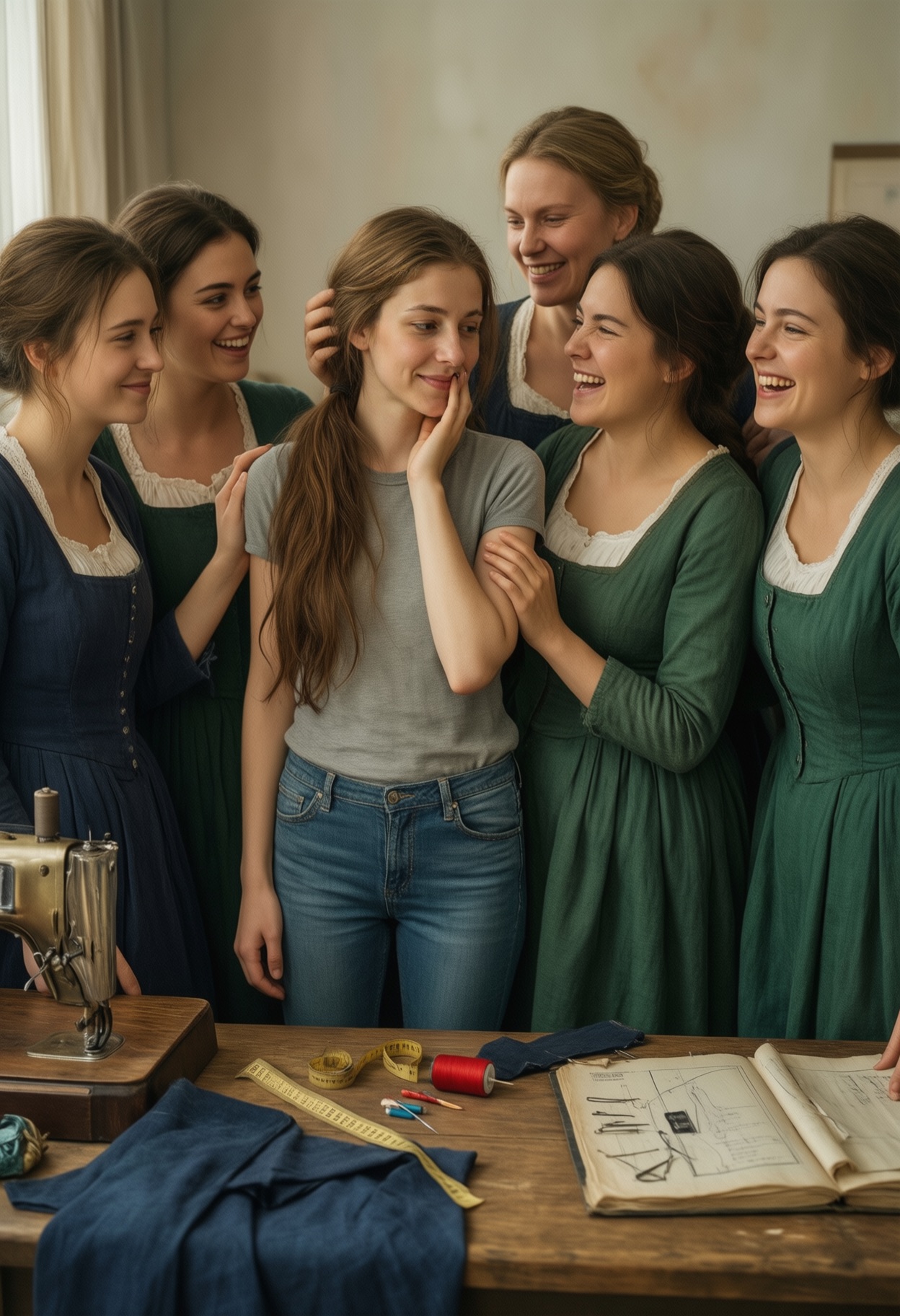
Lucy was in too, coffee in hand, unimpressed with the universe as usual. Tahlia followed, one earbud in, humming without meaning to, already tugging tape measures into submission. Mara said nothing to anyone, which was the closest she got to a welcoming speech.
A couple of the Faire girls were due later for adjustments: hem lifts, sleeve easing, last-minute panic.
The whole production was a tide pool of women at that point: skirts lifted, hair pinned, laughter breaking through steam like sunlight.
And Charlie was… in the middle of it, even when he wasn’t trying to be.
That was the thing. It had started before anyone changed a single word.
It started with how he behaved.
He didn’t stare or crowd. He didn’t do that typical male thing of testing boundaries by “accidentally” leaning too close and pretending it wasn’t on purpose. He asked before he touched fabric that wasn’t his. He stepped back when a woman shifted her weight. He read the room like someone who’d spent his whole life learning that women’s comfort was a language, and he was familiar with the dictionary.
He was useful, too: quietly so, which was rarer than gold.
There was a gown on the mannequin that day, one of Mara’s prototypes. A beautiful beast of a thing: fitted bodice, clever seam placements, pins placed like punctuation. Charlie was meant to wear-test it briefly later, just movement checks. Stress points. Nothing dramatic.
He’d already flagged one weak point.
“Underarm seam,” he said softly, indicating the area with two fingers hovering, not touching. “If she reaches… it’ll pull.”
Lucy squinted at it. “You’re sure?”
Charlie nodded. “It’s… it’s already talking.”
Tahlia laughed. “Fabric doesn’t talk.”
Charlie’s mouth twitched, embarrassed. “Okay, not literally.”
Lucy, who had the emotional warmth of a refrigerator and the moral clarity of a knife, said, “It does if you’ve got eyes. Good catch.”
Charlie went yellow in the face, as if praise was a garment he didn’t know how to wear.
That was when I noticed something I’d been noticing more and more lately:
The girls liked him.
Not in a romantic way or a “he’s cute” way, but in the way women liked a safe man in a women’s room: with relief. His humour was easy, not confronting. They liked him with a kind of affection that wasn’t flirtation, it was fellowship.
He was, without trying to be, not a threat. Which was, in our world, a blooming miracle.
A Faire girl arrived early—Bree, I thought her name was. Tall, strong shoulders, the sort who filled a doorway without making noise. She was wearing leggings and a hoodie then, but I’d seen her in full kit: stomacher pinned, skirt swinging, face lit like she’d been born to be looked at and never flinch. She waved her phone.
“Can someone save me? My sleeve is trying to strangle me.”
Mara didn’t look up. “Tahlia.”
Tahlia gestured her over, but Bree’s eyes flicked to Charlie.
“Oh,” she said, bright. “You’re him. The one who does the stress testing.”
Charlie stiffened at “him,” not offended: just… aware.
Tahlia answered first, distracted. “Yeah. He’s weirdly good.”
Lucy added, deadpan, “He’s brutal.”
Charlie flinched, then realised Lucy meant it as praise. His shoulders loosened a fraction.
Bree grinned. “Love that for you, mate. Could you look at my sleeve seam? It’s doing a thing.”
Charlie looked momentarily alarmed, like she’d offered him a live snake, but he nodded. He stepped in carefully, hands hovering until Bree shifted her weight and said, “Go on then. Pin me.”
And he did, clinical as a nurse, gentle as a seamstress, eyes focused on the fabric and not her body in the way men’s eyes so often were. Bree watched his face in the mirror with theatrical curiosity.
“You’re not at all nervous, are you?”
Charlie hesitated. “A little.”
“Well, you’re not acting at all nervous,” she remarked.
Lucy snorted. “He’s always nervous. He just doesn’t make it our problem.”
And Bree said something then—light, offhand, not loaded—that tilted the day by a millimetre.
“That’s very ‘girl’ of you,” she said with a friendly smile, looking up from Charlie’s careful hands to stare into his eyes. “Not making it our problem.”
Charlie looked back, his lip twitching. There was a second where his face did that old reflex: Do I correct? Don’t let them misunderstand. Like misunderstanding was dangerous.
But he didn’t say anything. He swallowed, and gave her a weak smile. His eyes dropped back to the seam.
Bree didn’t push. Theatre women were good at reading the moment and not punching through it. She just hummed and let him work. When she left, sleeve saved, she tossed over her shoulder,
“Tell your girls you’re a wizard.”
Lucy called back, “He’s not a wizard, he’s a nervous Nellie!”
Tahlia laughed, and Charlie—Charlie laughed too. Quietly, almost like it escaped. It was such a small sound, and it changed the air.
By midday the Faire girls had started drifting through in twos and threes, and Wardrobe felt less like a workplace and more like a women’s camp: fabrics on every surface, hair pins shared, snacks appearing without anyone admitting they’d brought them, bodies moving around each other without apology.
Charlie was included in the small things first.
Tahlia offered him a hair tie when his fringe kept falling into his eyes. Lucy slid a spare thimble across the table when his fingers were raw from hand-stitching. Someone pushed lip balm toward him with a muttered, “You look dry,” as if that was a crime.
He accepted it all very politely… too politely. Like a starving person taking bread and trying not to look hungry. He still apologised too much. Still asked permission for space that had already been given. But he was less rigid, less braced.
He spoke a fraction more.
He joined the conversation sometimes, tentative at first—an observational comment, a small joke—then with slightly more ease when he realised no one was going to punish him for having a voice.
It was in the middle of this easy chatter that the language began to shift.
Not with a trumpet or a meeting, but with girls being girls, and saying what they meant.
Tahlia was telling a story about a client who’d called stays “a corset thingy,” and Mara’s eyes had nearly set fire to the table. Lucy was relaying it with her usual scorn—“They think understructure is optional because they’ve never had to hold anything up”—and one of the Faire girls, a petite brunette with a laugh like broken glass, pointed at Charlie and said:
“He gets it, though. Look at him. He’s got the patience of a woman.”
Charlie startled. Again—again—his face rose into correction, then stopped.
Because what would he even have said?
No, I don’t? while his hands were literally doing the care-work of a seam? Lucy, without looking up, said,
“He’s got the fear of a woman. That’s why. He knows if he screws it up, Mara will kill him.”
Mara didn’t blink. “Correct.”
Everyone laughed.
Charlie laughed too, but his laugh was smaller. Not because he was fragile, because he was listening. Because he was taking in something he’d never had before: women laughing with him, not at him, and no one sharpening a sexual edge into it.
And then—almost invisibly—someone said it. Not about him. Not to him.
Just… in the air.
Bree returned with another girl, and she said, “She’s the one who fixed my sleeve,” gesturing in Charlie’s direction, and then she kept walking as if the word was nothing. As if it was already true.
I froze in the tiniest way. Not shocked or scandalised: just registering the move.
Lucy’s head lifted. Tahlia’s eyes flicked to Charlie, quick as a pulse check. Charlie went still.
And for a beat, I thought he’d correct it… he’d panic, he’d retreat into “no, no, that’s not—” because that was what he was trained to do. Keep everyone comfortable by making himself smaller.
But he didn’t.
He took a breath. His fingers tightened around the linen, then eased.
And he said nothing.
The moment passed, not awkwardly, but smoothly, because women were experts at letting a door open without slamming it.
Tahlia, bless her, didn’t make it a Big Thing. She didn’t ask a question like it was a quiz. She just accepted the shape of the room.
“She did fix it,” Tahlia said lightly, as if she was confirming the weather. “She spotted the weak point before anyone else.”
Lucy huffed, as if irritated by the whole universe. “She’s annoyingly observant.”
Charlie looked up, eyes wide. He was watching them the way you watched someone handling a fragile object—terrified they’d drop it. Tahlia, with a gentle smile to dilute the impact, met his gaze briefly, just long enough for him to understand something:
We’re not dropping this. We’re not dropping you.
And then she turned away and kept working, because that was how you made kindness stick: you didn’t make it a big thing. You treated it like it was normal.
Later, when a delivery bloke knocked at the side door, the room tightened by habit. Different knock. Man’s knock. The kind that assumed the world would part.
He came in smelling of diesel and entitlement, clipboard under his arm, eyes scanning the room like he was shopping. He glanced at Charlie—at Charlie’s smallness, his quietness, his softness—and his expression did that unpleasant male calculus. Categorising. Deciding.
He pointed his pen vaguely. “Where d’you want this, mate? He—”
He didn’t get to finish.
“She wants it left by the back wall,” I said, bright as a bell. “And you’ll mind your hands. Those boxes aren’t the only thing fragile in here.”
The bloke blinked, recalibrated. He muttered something that could have been an apology if he weren’t allergic to the concept, and he shifted the boxes where I indicated, suddenly very interested in being helpful.
The door closed behind him.
The room exhaled.
Charlie hadn’t moved, but something in her had. Her shoulders loosened. The line of her jaw softened. Like someone had removed a weight she hadn’t realised she was carrying. Lucy took a sip of coffee and said, matter-of-fact:
“Good.”
Tahlia, without looking up, added, “We can stop tiptoeing now.”
And I—because I was me, and because naming things was half my job in this building—leaned against the table and said, “About time.”
Charli’s eyes flicked to me. Cautious.
“Are you—” she started, then stopped, because she didn’t know what she was allowed to ask for.
I kept it easy. Teasing, but not sharp. A door offered as air.
“If it doesn’t feel right,” I said, “you can tell us. We’re not savages.”
Lucy snorted. “Speak for yourself.”
Charli swallowed. She looked at the women around her: Lucy’s brutal competence, Tahlia’s effortless camaraderie, the Faire girls’ theatrical warmth. She looked at me, and I knew what she was seeing: someone who would cut a man down for overstepping without turning it into a melodrama.
She said, very softly, “I… don’t mind.”
Not “I want.” Not “I demand.” Not “This is my identity.”
Just: I don’t mind.
It was the most Charli thing in the world: making relief sound like it was no trouble. Lucy watched Charli for a beat, then said, flat and final,
“Good. I’m not doing mental gymnastics every time I talk about you, love.”
Tahlia smiled. “She’s literally here. She’s literally doing the work.”
One of the Faire girls, the brunette with the glass-laugh, grinned and said, “She’s one of us, then.”
She went yellow in the face.
And I saw it: the way the word landed, as a hand on the shoulder. A tag of belonging.
From then on, it spread. Not because anyone enforced it, but because it was easier. It fit. And because women liked language that kept the room safe.
“She needs the smaller pins.”
“Tell her I’ve got the tape.”
“She found the weak point again.”
Charli started moving differently. Not instantly or like she’d pulled on a costume, but like someone who’d stopped bracing for a blow. She joined us for lunch without hovering at the edges. She laughed a little more, a little easier. She smiled more, a lot more. She even responded with opinions: small ones at first, then slightly more when she realised no one was going to punish her for being present.
And all instinct to “correct” us entirely disappeared.
As if correcting would risk the gift. Our gift.
As if “she” was a warm coat she was afraid might be taken back if she denied liking it.
One afternoon, near the end of shift, I caught a look on her face that didn’t match the room. Everyone else was buzzing: Faire girls chattering about tomorrow’s rehearsal, Lucy complaining about pockets, Tahlia humming while she cleaned her machine. The air was light.
Charli was light too—until she turned her head toward the window and the overhead lamp caught her profile.
There was a flicker. A shadow, brief as a stitch snag.
A secret sorrow.
It was in her eyes, and it made no sense with the laughter around her. The sort of sadness you saw when someone had something precious in their hands and suddenly remembered the world was full of thieves.
Lucy saw it too. Lucy saw everything, she just didn’t always bother to comment.
“You right, love?”
The word love wasn’t Lucy’s usual. Which meant she meant it.
Charli blinked, startled, and the sorrow snapped back behind her face like a curtain drawn.
“Yeah,” she said quickly. “I’m fine.”
She was not fine. But she was safe enough then to pretend she was, and that, frankly, was its own kind of progress.
Tahlia bumped her shoulder lightly as she passed. “Come tomorrow,” she said. “We’re getting chips. You’re not allowed to say no. You’ll just make it weird.”
The Faire girls chorused agreement. Bree pointed a finger at Charli like she was casting a spell.
“She’s coming,” Bree declared. “She’s ours.”
Charli’s breath caught.
And there it was, plain as anything:
Not he, performing near women.
But she, held by women.
She looked down at her hands for a moment—at the little pinpricks, the chalk smudges, the evidence of belonging. Then she lifted her eyes back to the room, and her smile was small but unmistakably real.
“I’ll come,” she said.
Mara tapped the table once, impatient with sentiment.
“Enough talking,” she said. “More work.”
And that was Wardrobe, wasn’t it? Just women doing the quiet, effective thing.
Turning “she” from a word into a place.
✨ Society Has Decided ✨
[ Celeste ]
A period of three months will change a room.
Not the bones of it. Mara’s worktables still bore the same scars, the same old pinpricks and iron: sheen and chalk ghosts that never quite wash out. But the rhythm had shifted. There was less scrambling. Fewer panicked rearrangements. More quiet, confident repetition—tools being reached for without looking, hands moving as if the day had been rehearsed.
Wardrobe had become what I’d always wanted it to be: a place where women did difficult things without drama.
The morning steam rose in slow sheets from the irons. Someone had left a spool of linen thread on the windowsill to warm. A kettle clicked, then settled into a soft hiss. And under all of it was the sound I’d come to associate with safety: the snick of Mara’s scissors, unhurried and certain.
Charli arrived early—again—and this time I didn’t think why does he do that? I simply let it be what it was: his ritual. His way of entering the day gently, before the day could look at him too hard.
He moved through the room with the ease of someone who knew the rules without having to recite them.
Bag on the hook. Hands washed thoroughly. Apron on. Hair pinned back.
He was at the long table when I came in, smoothing a length of white linen as if he was calming an animal. He lifted his head when I approached and gave me a smile that didn’t try to vanish immediately.
That was new.
Not big or theatrical.
Just… there.
Something in me eased, the way it does when a person you care about begins to look less like they’re bracing for impact and more like they’re living.
“You’re early,” I said, as if it was a complaint.
“I like the quiet.”
His voice had steadied over the months. Soft, but a different sort of soft; careful, but with less apology in it.
Lucy was already at the cutting table, coffee in hand, unimpressed with the universe. Tahlia was humming without meaning to, pulling tape measures into line. Sarah was perched on her usual stool like she’d been born there, boot heel hooked on the rung, expression set to I am merely observing your civilisation, you little ferals.
The Faire girls had been drifting through more and more often. Not just for fittings and repairs, but
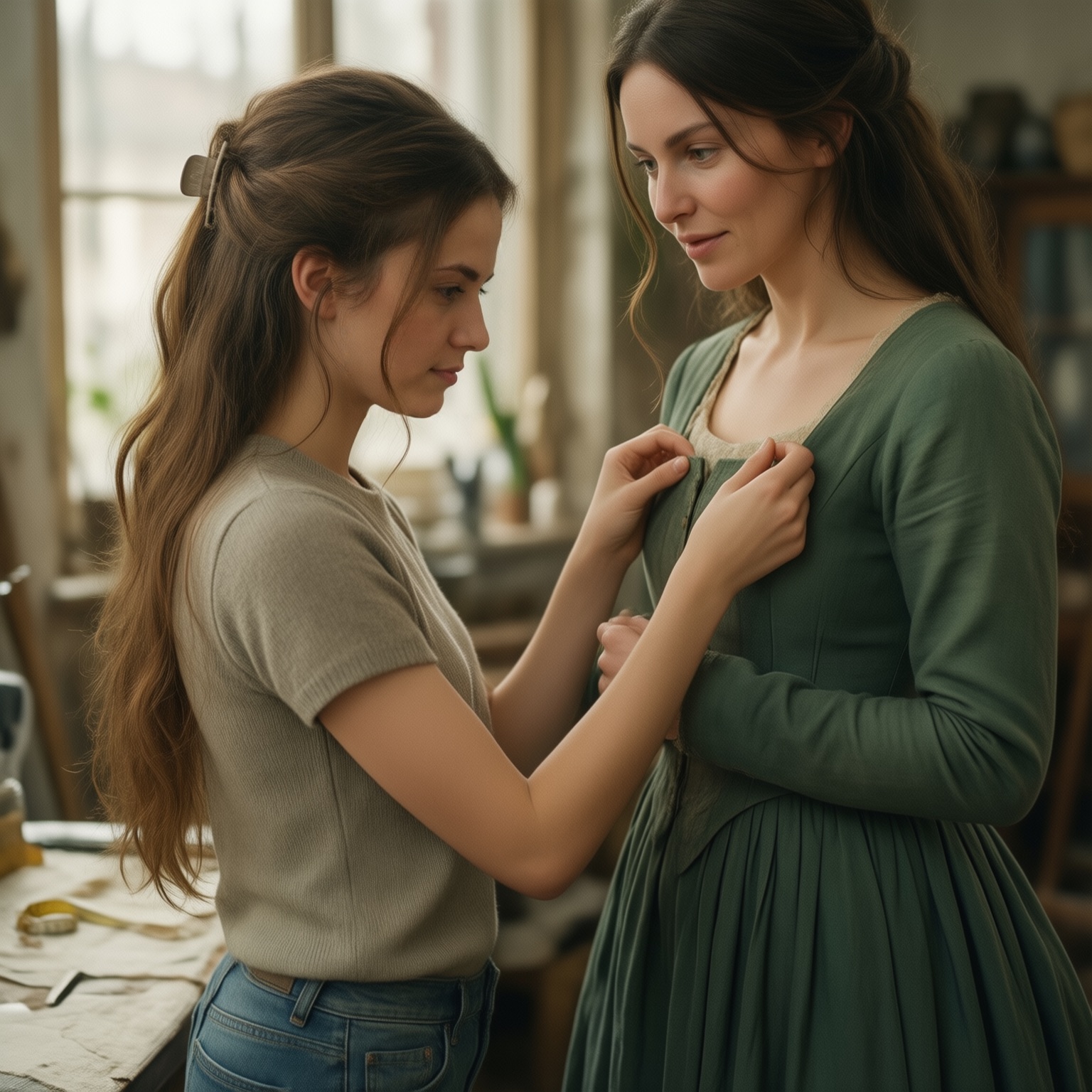
because Wardrobe had become a gravitational point: a women’s room, in the truest sense, the kind where you could be tired, sharp, messy, brilliant, and not have to explain any of it.
That drift had changed Charli too.
The accumulation of being treated as safe and wanted allowed his laugh to come easier now. He didn’t hover on the edges during lunch anymore: he’d started joining in the conversations. Small remarks at first, then a dry little observation that made Lucy bark out something almost like amusement. He had begun to look at the other women without that constant flinch of anticipation.
And this morning—this morning—he looked happy.
Mara appeared behind me without fanfare. She didn’t greet anyone. She simply put a garment bundle on the table with the quiet brutality of a fact being placed in evidence.
“Chemise.”
Charli’s hands stilled.
“Mine?”
Mara’s expression didn’t change, simply a short nod. “Designed by you. Sewn by you. Corrected by you. Washed three times. Pressed. If it fails, we learn.”
He unwrapped it carefully. White linen, fine but strong, period-correct in cut and gusset placement. Underarm shaping that actually respected movement instead of pretending bodies didn’t have shoulders.
The work was… classic Charli. Not perfect, not yet, but good in a way that made my throat tighten unexpectedly. It wasn’t just the garment. It was the quiet fact that Charli had begun to build something—make something—instead of merely surviving.
Mara made a small gesture toward the stays hanging nearby: the latest iteration, the one we’d been refining for weeks.
“Put them on,” she said. “Over the chemise.”
Charli nodded. Tahlia was already turning back to her work: deliberately casual, giving him privacy without making it a performance. Lucy didn’t look up at all, which was Lucy’s way of saying, I don’t need to inspect you: I’m here for the seams.
Sarah, though—Sarah’s eyes flicked over with that sharp British amusement.
“Oh, go on then,” she said. “Try on your armour, love.”
Charli shot her a look that was half abashed and half… fond. That, too, was new. He stepped behind the screen. The room didn’t pause; it simply went on around him. I heard the soft rustle of linen. The tiny tug and chemise of fabric settling against skin."Ready to be strapped in?" Sarah called in to him.
"Yes, please."
The measured movements of someone lacing stays with care followed. When they stepped out again, it was like seeing the argument come together.
The chemise sat correctly at his shoulders. The neckline was modest, period-true. The sleeves ended at the right point, linen cuff whispering against his wrists. And the stays—
The stays held.
Not brutally or theatrically. They held the way good engineering holds: firm in the right places, forgiving in the right places, allowing movement rather than forbidding it. Charli stood very still for a moment, as if he was waiting for the world to contradict what he felt.
“Walk,” Mara ordered.
Charli walked: small, careful steps at first, then with growing confidence as his body realised it was permitted to exist inside this structure without being punished.
“Raise your arms,” Mara said.
Charli did, slowly.
The underarm gussets behaved. The stays flexed the way they were meant to. No tugging, no glaring strain lines.
“Turn.”
Charli turned. And that was when I saw it again.
That fullness in the chest.
The first time I’d noticed it—on his first day—it had been a flicker of curiosity. A question I didn’t ask aloud. A softness beneath the t-shirt that didn’t quite fit the story the world would have told about a boy arriving for work.
Then, again when he moved in with me. In the morning, in the half-light, when he’d pulled on a t-shirt and I’d caught the shape for a second and filed it away like a strange line in a ledger.
Now, under a chemise and stays designed to reveal structure, it was unmistakable. Not exaggerated or a spectacle. Just… undeniably there. A swelling. The kind of body truth you can’t unsee once you see it.
My mind did what it always did: it reached for explanations. Stress. Weight fluctuation. Posture. The way stays redistribute silhouette. The way linen catches light. The way my own expectations might be colouring perception.
And then another part of me, the part that understood Wardrobe’s quiet rules, said: stop trying to argue the body out of what it is.
Charli stood there, cheeks yellow, hands at his sides like he wasn’t sure what to do with them. And I saw, suddenly, not just a “boy learning women’s work,” but a person whose body had been quietly, steadily contradicting the world’s categories long before we ever named anything.
Tahlia circled him, professional, not looking at him but at the clothing.
“Looks better.”
Lucy pointed with her coffee. “Shoulder line’s good. No bunching.”
Sarah tilted her head, considering Charli like she was a painting that had finally come into focus.
Then, because Sarah is Sarah, she said it.
“Honestly,” she remarked, loud enough for the room, “it’s a bit unfair how well Celeste’s wife is turning out.”
Charli looked at Sarah with raised brows, slightly puzzled. The room, however, wasn’t puzzled. Quite the opposite. Lucy let out a short half laugh.
“Wife,” she repeated, as if tasting it. “That's it. That tracks.”
Tahlia grinned. “It does, too, doesn't it?”
Then one of the Faire girls, Bree, tall and bright-eyed, walked in mid-sentence.
She clocked the tableau: Charli in chemise and stays, the women circling, Mara’s expression like a judge in a courtroom of cloth. Her face lit.
“Oh my lands,” she exclaimed, delighted. “She looks a proper actress.”
I felt something inside me stop.
She.
Bree hadn’t hesitated. She hadn’t checked. She hadn’t looked to me for permission.
She had simply… said this word. Like, it was just already there, had been there for ages, as if it was obvious, as if it had been obvious for months.
And then I noticed: Lucy didn’t react. Tahlia didn’t look startled. Sarah’s mouth quirked—satisfied, almost smug, like she’d just nudged a domino and watched it fall exactly as expected.
And Charli—Charli didn’t correct anyone. Not a twitch of protest. Not a nervous laugh. Not a frantic, “I’m not—”
She just stood there with a soft smile for Bree, chest rising and falling, as if she was listening to the word land inside her body, pleased that it didn’t hurt. Bree stepped closer, hands hovering near the stays without touching.
“Can she lift her arms again?” she asked, speaking like Charli was a collaborator.
“She can,” Mara said.
Charli lifted her arms.
Bree clapped once, delighted. “She’s going to be a menace. I love her.”
Charli’s face was incandescent. A glow. A quiet basking. The kind you see when someone has been chosen into a circle they never thought would open for them.
Sarah was looking at my face with a knowing smile. She leaned back on her stool with a satisfied sigh.
“Right,” she said, as if concluding a minor administrative matter. “I think we can stop tiptoeing now.”
There it was: a declaration: because now, I knew what they'd known for a long time. Tahlia reached out and adjusted a lace end with practised fingers.“Looks good, Charli.”
Charli glanced at me and blinked fast, as if tears were an option she was trying not to allow herself.
“It’s—” she started. “It’s fine.”
Lucy snorted. “It’s not fine, it’s better than fine. Don’t insult your own work.”
Charli’s mouth did something new—a smile, a real, a radiant one. I stood there, watching, trying to keep my face neutral, because inside, something complicated was happening.
I had been using the word 'wife' internally, privately: as a way of naming function. The role. The support. The way Charli fit into my life not as romance, not as a fantasy, but as infrastructure.
I had thought it was precise. Accurate. The only possible term for it. But, a private shorthand.
I hadn’t realised it was also… a seed.
A framing.
A story the room could detect, acknowledge, take up and make real. Which, of course it did. Because women are not stupid about language. We understand what words do. We understand that the right word, used repeatedly in the right room, can make a person stop feeling like they’re trespassing.
I could not have foreseen this. I certainly had not planned this. But I had, unmistakably, contributed to the conditions that made it inevitable.
Bree was still chattering: something about rehearsal tonight, something about whether Charli could come and see the dress run, something about chips afterward. The other Faire girls nodded along, already folding Charli into their social calendar as if she belonged there by law.
Charli’s answer came too quickly. “Sure, I can do,” she said, eager, and then she checked herself, as if she’d revealed too much want. “If that’s… if that’s okay.”
Tahlia rolled her eyes fondly. “Of course it’s okay. You’re coming, girlfriend.”
"Absolutely, she is!" Lucy agreed.
She.
And again Charli, flowing with it. Soft smile, shy, natural, surrounded by friends. I found myself looking at her profile: the softened line of her cheek, the quiet fullness at her chest held neatly by stays, the way she stood among her women friends as if she’d finally stopped worrying about rejection.
Three months ago she’d looked like she was on the outside looking in. Now she was… blossoming.
I felt a sharp little pang of pride, quickly followed by something else: a sober recognition. This wasn’t a private experiment anymore. It wasn’t even a Wardrobe matter. It was social.
The women had decided.
Society—our society, the only one that mattered inside these walls—had decided.
And there was no going back from that.
Sarah’s eyes met mine across the room. Her gaze was bright, knowing. She didn’t say told you so—Sarah has better manners than that, in her own untamed way—but her expression said as clearly as if she was shouting through a megaphone:
Well? Are you going to pretend you didn’t hear it?
I pursed my lip and gave her a wry smile. I didn’t intend to pretend. I let my face soften into something like acceptance. Maybe even approval.
What else could I do? Correct them? Reopen the question? Drag Charli back into uncertainty because I hadn’t personally supervised and authorised an outcome I'd actually had a large part in founding?
No.
That would be cruelty dressed up as prudence.
If the room was giving her belonging, the only ethical response was to protect that belonging. I stepped forward and adjusted a stray lace end at her waist, careful not to make it intimate, just practical. Just part of the work.
“Looks good,” I said to softly with what I hoped was a reassuring smile. “You’ve improved the line.”
Charli looked up at me, eyes wide and swallowing hard. That old fear—fear of being punished for wanting. And so I gave her what she needed: steadiness. Just… a fact.
“You’re doing well.”
Her shoulders dropped a fraction. Relief seemed to flow through her like warmth.
Bree bounced on her toes. “So you're coming tonight, yeah?”
Charli’s mouth opened—eager, then cautious.
Lucy answered for her, flat and final. “Of course she’s coming.”
Sarah smiled, satisfied.
And Mara, as if bored by the entire human dimension, tapped the table once.
“Enough talking,” she said. “More work.”
The room obeyed, laughing as it did.
And Charli—Charli laughed too. Not small this time: a real laugh. A first, for her. And for me.
It was as if the word she had stopped being a risk and started being a home.
29 Not the Direction ✨
[ Lauren ]
Three months didn’t announce itself with fireworks, but with habits: like the hook Charli used without thinking. The way he reached for the tape measure before someone asked. Three months announced itself by way the room no longer paused when he stepped into it, because he belonged there now, as naturally as the kettle, as naturally as Mara’s shears.
And his laugh.
That was what I noticed first.
Not a loud laugh… not attention-seeking. Just… present. A quiet, honest sound that appeared and stayed, instead of flickering like it used to: there for a second, then gone, as if he’d remembered he wasn’t supposed to take up joy.
I was on the floor more, not because I was avoiding the bureaucratic work, but because the floor was where the truth was. The ledger might have recorded outcomes, but the worktables told you what was actually happening with people.
Charli was at the long table in his chemise again: the new one, the one he had designed. I could remember the earlier versions: too stiff in the shoulder, too cautious in the gusset, as if he had been trying to build a garment that wouldn’t offend anyone rather than one that would function. This one looked like a real garment a real woman would wear under a real day.
It sat properly. It moved properly.
Mara had him in stays over the chemise, checking stress points with the hard patience she reserved for anything worth doing well. Charli lifted his arms, turned, bent, reached: movement tests that used to make him tense, as if any attention to his body was dangerous. Now he did it like it was simply part of the job. And that was the other thing I noticed.
He used to move like he expected to be corrected.
Now he moved like he expected to be guided.
It was a subtle difference, but it changed things.
Tahlia circled him with a tape measure, efficiently, almost affectionate in the way competence can be affectionate. Lucy watched from her station with that same expression she always had: mild contempt for the universe, absolute loyalty to the work. Sarah was perched somewhere she shouldn’t be perched, commenting on everything like the room belonged to her, which… it did.
The Faire girls drifted in and out. They always did now. Wardrobe had become a kind of backstage sanctuary for them, where the chatter was sharp and safe, where nobody was trying to impress a man, where “pretty” was a tool and not a trap.
They talked around Charli as if he had always been there, part of them.
That was what kept catching me off-guard: not the deliberate acts of inclusion, but the lack of hesitation. The way a woman would include another woman without thinking, because inclusion was the default in a women’s room unless they think you are unsafe. They sensed Charli wasn’t unsafe: he had proven the opposite.
One of the actresses—Bree, bright-eyed and taller than she realised—leaned against the table.
“She looks a proper actress!”
Charli’s face flushed quickly, and he smiled and didn’t correct her. No glance to see who heard or hurried, awkward laugh to undo it. No stiff little “actually—”… just a smile, as if the word was not a threat but a hand offered, palm-up.
That should not have mattered as much as it did. I felt my own mind trying to do what it has always done: catalogue, interpret, keep the system coherent. But this wasn’t a ledger problem.
It was a people problem.
And on the floor, people problems resolved themselves socially long before the “official” minds could catch up.
Lucy muttered something about seam allowances. Sarah said, loud enough for everyone, “Oh, don’t fuss her, she’s not a delicate flower: she’s Celeste’s wife.”
Was it meant as a joke? Sarah’s jokes were always her having a go… and yet, they weren’t jokes, not really.
Charli went yellow, but it was a different yellow than before: less flustered, more… bashful, like embarrassment wasn't humiliation at all but rather proof he was being seen.
Tahlia laughed. “Yes, she is too, isn't she, though.”
“Totally,” Lucy added, as if she was delivering a verdict on a hem. “She does all the wife work." She cocked her head at Charli. "You don't mind us saying that, do you, love?”
Charli’s mouth opened, closed. For a second I thought he would deny it. Instead he said, softly,
“I don’t mind.”
It was the same phrase I’ve heard him use before, but it didn’t sound like surrender. It sounded like acceptance, like relief.
Sarah’s eyes flicked to me. The smallest lift of brow. See? she said without words. We’ve been living here for months.
That was when I noticed the physical shift, one I had been blind to.
It wasn’t dramatic. It wasn’t “transformation” in the comic-book sense. It was the slow, plausible accumulation of months: the chemise sat a little differently now at the chest than it did before. The stays, designed to frame and support, revealed a little more fullness than I remember noticing during earlier fittings.
Not prominent or conspicuous: just… there.
A slight soft roundness that read as corporeality, not costume enhancements.I could sense something in me switching on lights: whatever Charli had been fighting in himself before, that desperate edge under the surface, that hyper-sensitive defence mechanism… it was quieter now.Not quite serenity, but calmer. Happier.
A lightness of being that was new to Charli, new to:
Her.
She looked like someone who no longer woke in conflict with her own reflection.
I watched her laugh at something Bree said—something silly about rehearsal tantrums—and the laugh reached her eyes. She looked younger when she laughed, buoyant. Like she’d finally been allowed to enjoy instead of merely survive.
I realised, with a small internal jolt, that I had assumed her “settling” at Celeste's would have looked like… accommodation. Like adapting. Like learning to endure. But this was not endurance.
This was blossoming.
And not in the direction I would have guessed, if you’d asked me three months ago.
The room had not “trained” Charli into anything. The room had simply treated her as what it recognised: safe. kin. ours. And Charli had responded the way people respond to acceptance: she had softened into herself.
Celeste appeared at the edge of the floor: briefly, like a tide checking the shoreline. She watched Charli move in the stays, listened to the chatter, and I could see the approval in her face even before she spoke. She was pleased the garments were behaving. Pleased the workflow was behaving.
Her eyes reflected her enjoyment of watching Charli laugh.
And then, the words landed near Celeste, loud enough that she couldn’t miss them.
“She needs the smaller pins.”
“Tell her I’ve got the tape.”
“She’s coming tonight, right?”
There was a micro-pause in Celeste’s posture: not outrage or shock: more like the moment someone realised the room had been living in a reality she hadn’t been participating in. I could see it in her face: the recalculation. The internal dialogue:
'He didn’t correct them. No, that wasn't it. She… didn't. Of course she didn’t.'
I realised: neither would Celeste. She wasn’t sentimental, and she wasn’t cruel, either. She understood what it would cost to reopen a question the room had already decided with warmth.
Charli glanced at Celeste quickly, like she was checking if she was in trouble.
She wasn’t.
Celeste said something practical about the line of the stays. She adjusted a lace end with careful hands. And she let the words stand.
The moment passed.
But it left something behind.
Later, when the room shifted and people drifted back to their stations, Charli came toward me to return a tool, a needle case, hands cupped around it like she was carrying something delicate. She looked up at me, and her expression was open in a way it never used to be.
“Mum,” she said quietly. “You… you don’t mind… do you? The girls… you know.”
The girls saying 'she'. The whole drift of language that had become real without ever being formalised. I studied her for a moment, not to judge, but to understand what she was asking for. She wasn’t asking permission. She was asking whether I would be another woman who kept the door open.
Something deep in me tightened… and then, slowly, released. Responsibility, settling into place.
“I don’t mind,” I said, borrowing her own language, but letting it mean what it should have always meant: You’re safe. I’m here. Charli’s shoulders dropped the tiniest bit, relief easing into her smile.
“Thank you, mum,” she murmured.
As she turned to go, I noticed the faintest difference about her. It was nothing I could outright name, let alone prove. Was it her scent… had she always smelled like that? I only had a sense she was carrying a private solution to something, some quiet decision that had made her calmer. Her smile was brighter, but there was still a carefulness around it, as if she was protecting it. As if she was terrified something might take it away.
I watched her rejoin the group—Tahlia nudging her shoulder, Bree waving her into the conversation, Lucy making a dry remark that somehow counted as affection—and I understood, suddenly, what was really at stake.
This wasn’t about pronouns. It was about belonging.
And Charli had tied her happiness to it in a way that made her both luminous… and vulnerable. I didn’t know what she had done to keep that belonging safe inside her own body. I had the uncomfortable certainty that one day soon, we would find out, and when we did, we wouldn’t get to treat it as a simple problem: it would be a person.
It would be her.
30 The Brush ✨
[ Celeste ]
Wardrobe had learned, over the last three months, to run like a body instead of a panic. Not because the work was easier—if anything it had become more precise, more demanding—but because the women inside it had stopped wasting effort on uncertainty. Tools had homes. Labels existed. The ledger sat where it belonged: open when it needed to be open, shut when it didn’t. Even Mara’s silences had started to feel less like weather and more like method.
And Charli?
Charli moved through the room as if she’d finally stopped expecting to be told she was in the way.
She arrived early, same as always, but the early-ness had changed. It used to feel like an apology; now it felt like preference. She hung her bag on the hook, washed her hands with the same thoroughness, but without the old tremor of performance. She laughed sometimes, quietly, and the laugh stayed in the air instead of disappearing the second it appeared.
She had become easier to look at, not because she was “prettier” but because she was less afraid. And because she’d begun to occupy her skin like it belonged to her.
Mara set the next test on the table without ceremony: a cap and kerchief combination we’d been refining for the Faire women, an accessory that had to survive heat, sweat, pins, movement, and the indignity of being yanked off and shoved into a tote bag between story.
“Hair,” Mara said, glancing at Charli as if hair was a tool to call for. “Fix it.”
Charli touched her hair reflexively, as if a problem had just been identified. She had tied it back in her customary scruffy ponytail. It was not with the discipline the cap required. Loose strands would catch. Pins would slip. The cap would migrate.
Tahlia, measuring a sleeve nearby, made a small amused noise. Lucy didn’t look up from her work. Sarah, perched like a crow on a stool, watched with the bright interest she reserved for social developments.
Charli stepped toward the mirror with a comb with an uncertain bite of the lips.
I moved without thinking.
“Sit.”
Charli looked at me as if I’d told her to do a pirouette. Then she sat—carefully, obediently—still holding her breath a little, with unsure sidelong glances. I reached for the brush: an ordinary, wooden-handled thing, bristles clogged with hair.
When I drew it through her hair the first time, Charli went very still. Not tense or flinching: attentive.
That attention always did something to me. Not the attention itself but the way she was trusting me. The way she let herself be guided without making a show of it.
The brush made that low, dry sound a brush makes on clean, long hair. I worked from the ends up, practical. Untangle. Smooth. Part. No pulling. No fuss.
“Hold your head,” I said. “Don’t tip back.”
“Yes,” she murmured, and then—an old reflex, soft as a bruise: “Sorry.”
I stopped the brush for half a beat and shook my head.
“Don’t apologise. Just hold still.”
“Okay.”
The room didn’t pause around us. Mara’s shears kept snicking. Fabric slid. Pins clicked. The kettle somewhere did what kettles do. I gathered Charli’s hair at the nape, measured the tension with my fingers, and began to twist it into a coil that would sit properly beneath the cap. The nape of her neck was warm from the room and from the shower she’d clearly taken before coming in—clean, faintly soap-scented. My fingers registered it the way they registered everything: temperature, texture, compliance.
And then, annoyingly, something else—a small, involuntary tenderness—welled inside: it slowed me for half a second.
Pins went in with the same economy we used for everything: enough to hold, not so many a hairdo became a hedgehog. Sarah’s voice floated over from her stool.
“Look at that,” she said, pleased. “She looks… civilised.”
Charli smiled, an actual smile, one that reached her eyes.
Lucy looked up long enough to say, “If she keeps her hair like that, the cap will sit properly. If she doesn’t, it’ll ride.”
“Thank you,” Charli said automatically.
Lucy shrugged. “It’s just geometry.”
I set the cap on Charli’s head and adjusted the angle. The kerchief followed, tied firmly enough to hold, not so tight it would dig. I checked the line at the forehead, the way the fabric framed her face.
For a second, only a second, I saw it. This was not Charli donning a costume. No, there was a rightness… so quiet yet so clearly there, it made me swallow. She fit into the room around her, which had finally stopped arguing about it.
I should have stepped back then. I should have treated it like any other fit check. Instead, my hand lingered at her temple a fraction too long, flattening a flyaway strand that didn’t actually matter. Charli didn’t move. She simply breathed, steadily, as if she knew this was safe. She was safe.
I made myself withdraw.
“Turn your head left.”
She turned.
“Right.”
She turned.
“Good.”
Mara glanced over, saw the fit, and gave a single curt nod: approval, in Mara’s language.
“Now move,” Mara said. “Sweat. Bend. Prove it.”
Charli rose and began the wear-test: bending to reach fabric on the lower shelves, turning quickly, lifting her arms, moving through the narrow spaces between tables. The cap held. The kerchief held. The pins did their job. Tahlia watched her with a faint grin. Bree appeared in the doorway mid-test, took one look, and beamed.
“Oh, she looks proper Missy!”
The room laughed, and I saw Charli go pink: a soft, bashful warmth. Bree clapped once, delighted.
“Right then. She’s coming tonight… aren't you, petal?”
“She’s coming,” Tahlia agreed.
Charli gave me a quick side-long glance, like she was checking whether I approved of tonight, not just the cap. I gave her a small nod. Calm. And felt, under that calm, a strangely protective satisfaction.
The day moved on.
The cap survived sweat and motion. The kerchief didn’t slip. The ledger received its notes. Mara’s shears kept snicking. The room kept laughing. And Charli kept laughing with it. Not small.
Real.
That evening, at home, the quiet enveloped me the way it always did after Wardrobe: like walking out of a river and realising your ears had been full of water.
Charli was in the shower. I could hear the muted rush behind the bathroom door, the steady sound of water striking tile. I moved through the apartment, tidying without thinking. Habit. Reset the space. Put things back where they belonged.
Her bag was on the chair. Not thrown there: placed, as if it had been arranged to look casual.
I don’t know what made me look. It wasn’t suspicion, just the same part of my brain that notices seam strain and pin tension. It was the part that registered when something was slightly too controlled. I lifted the bag and felt the weight shift in a way that didn’t match fabric.
I opened it.
Inside, tucked under folded cloth and a small notebook, was a pharmacy bottle. White plastic. Printed label.
My stomach dropped.
Spironolactone.
The name sat on the label like a fact that refused to be softened by context. I’d heard of it… an anti-androgen, a testosterone blocker. Prescription-only.
It was almost empty. Empty enough to make the decision behind it feel old, not impulsive.
For a moment I couldn’t move: not because I didn’t know what to do, but because the first thought wasn’t policy or risk or responsibility. It was:
I could lose her.
Not in the abstract. Not in a headline.
In my kitchen.
I shut that thought down so hard it felt like I’d bitten my own tongue.
My next impulse was anger: hot and sharp and immediate. Not at her. At the risk.
At the secrecy.
At the thought of her taking anything unsupervised, unmonitored, unrecorded. That she felt she had to do this—put herself into unwitnessed triage—no safeguards, no bloodwork, no one watching the numbers—no one checking what it was doing to her.
That awakened a colder realisation, steady enough to make me still: this wasn’t rebellion.
This was a solution.
A private solution. Her solution.
A girl trying to keep her place in a room of women by any means available.
I closed the bag carefully, as if the bottle might explode.
Then I opened it again and took the bottle out. There was no point pretending I hadn’t seen it. There was no point leaving it there like a trap. The bottle was evidence; it represented danger. I set it on the kitchen table and waited.
The shower stopped. A door opened. Footsteps. The soft sound of Charli’s towel rubbing through her hair. She came into the kitchen in a t-shirt and 'trackies', damp hair loose around her shoulders, face relaxed in a way I hadn’t seen months ago.
She looked… good. Warm. Light. The sight of that warmth, that lightness, made something in me hold its breath.
Then she saw the bottle.
All the light left her face.
She stopped so abruptly it was like she’d hit a wall. Her eyes, widening with fear, flicked to mine, then down to the bottle, then back up. In that moment, she wasn’t Charli of the workroom… laughing, included, adopted. She was bracing… terrified.
Trying to calculate what it would happen next.
“Where did you get it?”
My voice came out quiet. Low. The way you speak when you’re trying not to add fear to fear.
Charli’s throat moved. “I—” She paused.
“Charli.” I said her name like a hand placed firmly on a shoulder. “Answer me.”
She swallowed. “Online.”
“How long?”
Her eyes dropped.
“How long,” I repeated, and I heard my own restraint in it, how carefully I was keeping the edge out. She breathed in, shallow. “Almost four months.” Her voice was so soft, I could barely hear it. But the words were as loud in my head as if she'd screamed them.
Four months.
Long enough for it to become her routine. Long enough for it to affect her body. Long enough for her to build her happiness on it. I let my breath out through my nose, slow, fighting to stay calm.
“Why didn’t you tell me?”
Charli’s hands twisted in the edge of her towel. She didn’t look up.
“I didn’t want…” she began, and her voice cracked. “I didn’t want it to… to go away.”
“Didn’t want what to go away?”
The question wasn’t meant to be unkind: it was necessary—plain and steady—and it landed with weight; it made her shiver.
“The… the girls. The room. You. I didn’t want…” She took in a shuddering breath, her eyes bright with unshed tears. The words came spilling out, messy and honest.
“I was changing. It was horrible. The changes I didn’t think would happen were… happening. It made me sick. I was scared I was going to…”
She didn’t finish.
She didn’t have to.
There it was.
Not vanity.
Fear.
Fear of being returned to the life that had always hurt, just because biology was betraying her.
“This is not how to do it.” I forced myself to speak slowly, calmly. “This isn’t safe. It isn’t supervised.”
Charli stared in front of her. A tear slid down her cheek. She didn’t lift a hand to wipe it away—hands folded in her lap as if even that small movement might tip her into pieces.
I felt that instinct again—sharp, urgent—the urge to close the distance, to put my arms around her and make her stop shaking. I hated how badly I wanted it.
But I didn’t move.
I made myself stay where I was. I watched her breathe—little, uneven pulls—as if the air had turned heavy. And then I saw it.
Not just fear.
Grief.
The kind that comes when something precious is threatened. My tone softened before I even decided to let it.
“Is it…” I began carefully, testing the surface. “Is it because you’re scared the girls will stop… seeing you?”
She shook her head. I nodded: an apology without saying sorry.
“Okay,” I said. “Not that.” I kept my eyes on her face, not to interrogate, but to hold steady for her.
“Then tell me what it was,” I said, quieter. “Not what you were afraid they would think. What it felt like in you.”
Her mouth trembled. She swallowed.
“It was horrible,” she managed. “The changes… I didn’t think they would happen, but they were… happening.” Her voice cracked. “It made me sick.”
“Sick,” I echoed softly, genuinely puzzled. “Like nausea?”
A tiny nod. I felt my mouth drop open as a realisation struck.
“Like panic?”
Another nod, sharper.
“Like…” I chose the words with care, as if they were glass. “Like your body… didn’t feel like… yours anymore.”
That did it. Her breath broke.
“Yes.” The word came out small and raw, and then she shook her head like she couldn’t bear the rest. “I didn’t want it to… to be different.” She drew in a shuddering breath. “I didn’t want me to go away.”
Something in me stilled.
“I believe you,” I said quietly. Her shoulders dropped a fraction, as if I had taken some of her load. “And,” I added, because love without structure would be a lie, “we don’t answer that kind of fear with secrecy. We answer it properly, with supervision. With bloodwork. With someone watching what your body is doing—so you don’t have to be brave in the dark.”
Her lower lip trembled, her red eyes on the bottle.
“But you’re going to take it away,” she whispered.
I shook my head, slow.
“No, I’m only going to take away the alone part,” I said. “Not your life.”
Her lips trembled. “The medicine was working.”
The way she said it—small, frightened—made my chest ache. Because of course it had been working. It had given her a sense of control. It had quieted the terror chewing at her. It had let her inhabit herself without flinching.
And she had done it alone.
I didn’t reach for the bottle like it was contraband. I reached for it the way you reach for a hot pan when someone’s about to burn themselves—quick, careful, without theatrics. I laid my hand over it. Not possessive or dramatic. Just… covering it. Taking responsibility.
Charli’s eyes widened, but there wasn’t fight in them. Just a rush of fear—then a pause, like she was testing whether I meant what I’d said before. She stared at my hand on the bottle as if the room had shifted and she was trying to find her footing. Then, very softly, as if saying it might undo it:
“You’re not angry at me?”
The question tightened my throat. My eyes burned. I couldn’t let tears take the wheel—not now—but the terror of the road she’d taken alone rose up so fast it made me dizzy. I shook my head.
“I’m angry you were put in a position where this felt like your only option,” I said. “And I’m angry you did it without oversight.” I held her gaze. “But I’m not angry at you for wanting your life.”
Her shoulders sagged—just a fraction. Relief, thin and trembling, but real.
“Look at me, Charli,” I said, gentler than I meant to be. “This is your life. I’m not taking it out of your hands—I’m making sure you don’t have to do everything alone. We need medical supervision. Do you understand?”
She nodded, small, immediate.
“Yes.”
I picked up my phone.
“What… what are you doing?” Her voice had gone tight again.
“I’m calling your mother.”
The colour drained from her face.
“Mum—”
“I know.” I kept my tone calm, almost tender, because this was the part that would feel like falling. “This is the grown-up part, okay? Not because you’re in trouble: because this needs to be safe.”
Charli swallowed. Her hands curled into the towel on her lap, knuckles whitening, but she didn’t pull away from me. She didn’t argue. She just sat very still, trying to be brave.
“I didn’t want her to think…” She couldn’t finish.
“I won’t let her think the wrong thing,” I said. “I’m going to tell her the truth: that you were scared, and you tried to solve it, and it has to be supervised.”
Her eyes shone again with tears she held stubbornly in place.
I dialled.
While it rang, Charli stared at the tabletop as if she could anchor herself there. One tear slid down her cheek: she didn’t wipe it away. She just let it fall—quiet, unperformed—while I kept my voice steady and made the call.
When Lauren answered, I didn’t waste words.
“I found medication in Charli’s bag,” I said. “An anti-androgen—spironolactone. She’s been getting it without a clinician involved. She’s been taking it for months.”
There was a pause on the line, a silence with weight. Then Lauren’s voice, tight but present.
“Is she okay right now?”
“If you mean physically, she seems okay,” I said. “She’s stable—breathing fine, coherent, not fainting or anything like that. But she’s been frightened, Lauren. She tried to handle something alone that shouldn’t be handled alone. I’ve secured the medication and I’m right here with her. Next step is medical oversight—bloodwork, a plan—as soon as we can.”
Another pause. I could hear Lauren breathing, holding herself together the way mothers do when the world tries to fracture them.
“I’m coming over.”
“Please,” I replied. “We need a plan. Specialists. People who actually understand this. Whatever the pathway is from here, we do it properly.”
Lauren’s voice steadied on the word 'properly', as if grabbing it with both hands.
“Yes,” she said quietly. “Yes. We do it properly.”
I ended the call and looked at Charli. She stood in the kitchen with her towel clutched to her chest, face raw, frightened eyes fixed on me.
“We are going to get you help with this, Charli,” I said. “The right way. The proper way. Your happiness is important.”
Charli nodded, the hopelessness slowly easing from her shoulders. Her red eyes sought mine.
I held her gaze.
And I let myself, for one heartbeat, simply look at her—at the damp hair, the bare face, the trembling mouth—and realised with a gut-wrenching suddenness: this were not a problem to manage but a girl I… cared about more than I had planned to.
I quickly put that aside: I had to, before it softened me into uselessness.
“There will be a series of boring appointments,” I said, letting the promise be what it was—structure, safety. “Questions. Paperwork. Waiting.”
Her mouth trembled less.
“Okay.”
The word came out in a whisper. And in that whisper I heard everything she hadn’t said in words:
I’m tired of being afraid.
I’m tired of feeling it creep in—and not being able to stop it.
If there’s a way forward that doesn’t make me sick… I choose it.
“We start tomorrow.”
Charli nodded. In that nod I saw her again—the Charli who could let structure hold her; the structure she’d been craving, the structure she’d tried to mimic with a bottle and a secret.
The apartment settled into a hush that reminded me of Wardrobe after hours: still, intentional, waiting.
And with a clarity that made my thoughts go almost cold, I understood: whatever she’d done to keep her happiness safe inside her own body—whatever private answer she’d found—had fused itself to her sense of self. Taking it away wasn’t just taking a pill. It was pulling away the scaffolding she’d built to stand upright.
So we’d have to give her something real in its place. Something supervised. Something that didn’t depend on fear.
And we’d have to do it gently enough that she stayed whole.
31 How We Do Safe ✨
[ Celeste ]
I had put the bottle on the kitchen bench.
Lauren arrived the way she did everything lately: fast, contained, already braced.
I heard her before I saw her—the firm knock that didn’t ask permission, the quick shift of keys, the familiar scrape of the latch. No hesitation. No dawdle at the threshold. She came in as if the doorway itself was something she could influence by force of will.
When she stepped into the kitchen, her eyes went briefly to me, then quickly to Charli.
Charli had been sitting in the same spot for too long, towel gripped like a security blanket, damp hair still uncombed, face raw from crying. She looked up when Lauren entered, and something in her expression rearranged itself—not relief exactly, not comfort. More like recognition.
This is the person who can actually undo me.
Lauren crossed the room in three steps and stopped in front of her daughter.
For a second, she didn’t touch her.
That restraint—the pause before contact—was so precise it made my throat tighten. It was the kind of restraint you learned the hard way: the knowledge that sometimes touch feels like a verdict. Then Lauren did what mothers do when they cannot afford theatre.
She cupped Charli’s cheek with her palm, thumb sliding once, gentle.
“You okay?”
The words were soft. The question was not.
Charli’s mouth trembled. “I’m—” she started, then broke. “I didn’t—”
Lauren’s gaze flicked to me. Not accusing or grateful: measuring.
I held it.
“She’s safe,” I said. “She’s not in immediate danger. But it can’t continue.”
Lauren didn’t take her hand away. She kept contact while she processed that sentence, as if touch was the only thing she trusted not to lie. And there it was—the smallest, sharpest flicker in me. Something more primal than either anger or rivalry: a responsibility so fierce it bordered on jealousy. I swallowed it before it could touch my face.
Lauren’s eyes moved to the bottle on the kitchen bench. She didn’t pick it up. She didn’t read it again. She didn’t ask for more proof. She simply nodded—and in that nod I felt the click of a decision.
“How long have you been taking these?”
Charli flinched. Her eyes slid away. “Almost four months.”
“Four months,” Lauren repeated quietly.
Charli shook her head quickly. “Mum, I— I wasn’t— I didn’t do it because—”
Lauren cut in, not loud, but clean.
“Don’t explain it to me like I’m going to misunderstand,” she said. “I’m your mother. I—” Her voice snagged for a fraction. “I know you.”
The slip was small. The meaning wasn’t. Her hand moved from Charli’s cheek to her shoulder, firmer now. Anchoring. Then Lauren looked at me again.
“You found this,” she said. It wasn’t a question.
“Yes,” I said. “And I secured it.”
Lauren’s face did something complicated: relief mixed with fear, as if she didn’t want to admit how grateful she was that someone else had been present for the first collision.
“Thank you,” she said, very quietly.
Charli’s eyes were bright. She looked between us again, like she couldn’t decide which failure she was meant to confess to first. Lauren’s voice changed then.
Not gentler. More controlled.
“Okay,” she said. “We’re going to do this properly.”
Charli blinked. The phrase hit her like a threat. Lauren caught the look in her eyes. She adjusted—not softness, exactly, but calibration.
“Properly as in: safe,” she said. “Properly as in: supervised.”
Charli swallowed. “It was safe. I— I checked—”
“No,” Lauren said firmly, still not loud. “You read. You didn’t check. You don’t have bloodwork. You don’t have a doctor. You don’t have anyone watching what it’s doing to you.”
Charli flinched at the word 'watching', as if it sounded like surveillance. I’d seen that flinch before. Scrutiny, to Charli, still felt like judgement.
Lauren’s jaw tightened. Her gaze went briefly unfocused—somewhere past the room, past the facts—then snapped back.
“This is…” she began, and I felt the denial reaching for language. “This must be… the environment. This is—”
Her eyes cut to me again. Quick, sharp: a flicker of accusation trying to find a target. Then it died, because the logic wouldn’t hold.
I had called her.
I had pulled the bottle out into the open and refused to pretend it was nothing. Lauren inhaled through her nose, slow. Resetting.
“Look, I’m not saying you had anything to do with this,” she said with a sigh. It wasn’t so much an apology as an admission of a thought she didn’t want to own. “But… I need to know if someone— anyone —has been… pushing her.”
I shook my head. “No one has been pushing her, Lauren,” I said. My voice stayed low, steady. “Charli did this because she was scared of changes that were happening in her body. That’s what she told me.”
Lauren’s eyes went back to Charli. Her grip on Charli’s shoulder tightened, holding the line against panic. Charli stared down at her towel. Lauren’s voice dropped, and under it I heard that accusing thrum again—How did I fail him?—the old pronoun just under the surface, sore as a bruise.
“I thought…” Lauren muttered. “I was going to…" She paused. "I thought we could let things settle.”
I looked Lauren in the eyes.
“I think Charli ran out of time in her head.”
Silence.
In the kitchen’s bright stillness, the apartment felt like Wardrobe after hours: intentional, waiting. And then, suddenly, Lauren turned to Charli.
“Do you have more?”
The question landed like a door I hadn’t known to lock. Charli’s eyes widened.“No— I—” She hesitated.
That hesitation was an answer. Lauren’s face didn’t change. Charli rushed, frantic.
“No, I mean— I have— there’s— I have a second bottle, but it’s— it’s not— it’s for later—”
Lauren lifted a hand. A stop sign made of flesh.
“Where?”
Charli’s breathing went shallow. Her eyes darted toward the hallway.
“In my room,” she whispered. “In the drawer.”
Charli went still.
Lauren was, again, the adult. As she moved toward the hallway, Charli looked at me, helpless. The look did something sharp inside my ribs. It felt like being chosen to play a role I hadn’t consented to, like I had become her definition of safety. I kept my face steady and nodded towards the hallway.
“I’m coming,” I said softly, and followed.
Charli’s room was neat in that anxious way: things arranged, not lived in. The bed made too tightly. Clothes folded too carefully. The kind of order that came from fear of being criticised rather than taking pleasure in calm. Lauren went straight to the dresser.
“Which drawer?”
Charli pointed without speaking. Lauren opened it. There it was: another white bottle, untouched. A printed label that tried to make a dangerous thing look routine. Lauren held it a moment. Then, without looking at Charli, she slid it into her pocket. Charli stared at her pocket without seeing.
With a sigh, Lauren lifted her tear-stained face gently by her chin.
“Listen to me, Charli,” she said firmly. “I’m not upset that you wanted relief.”
Charli blinked hard.
“I just have a hard time,” Lauren went on, and her voice tightened on her words, “with the idea that you thought you had to do it alone. That you couldn't talk to me.”
That landed. Charli’s shoulders shook once.
I had to force my hands to stay at my sides. Every instinct in me wanted to step forward, to touch her hair, to tuck it behind her ear, to do something small and intimate that would say:
I see you. I’ve seen you. I won’t unsee you.
I did nothing. I couldn't. Not because I didn’t want to—because I wanted to too much.
I caught Lauren glance in my direction, the light of awareness shining in her eyes. I felt she could see it, see my restraint. Or at least, she could see enough to suspect. I held her gaze and gave her something she could bite down on: the practical.
“We need a plan for tomorrow,” I said. “Not vague. A list.”
Lauren’s nod was immediate, grateful for the handrail.
“Yes,” she said, and I could hear appreciation in her voice. “A list.”
Charli looked at me, watery-eyed, weary, bleary. “Tomorrow?”
“Yes,” I said, and my voice softened without losing its edge. “Tomorrow.”
She slumped down onto her bed. Lauren sat on the bed beside her, touching her hands, holding her child's heart as only a mum can.
“Tomorrow, Charli,” Lauren said tenderly, “we make appointments.”
Charli swallowed. “What if they—”
“They won’t,” Lauren said firmly, then softened her tone again. “And if they do, we find someone else. We’re not begging anyone for your dignity.”
Charli stared at her, as if unsure she could hope. I felt another flicker of admiration. Yes, and that jealous responsibility again, quieter now, less sharp. Because it was so easy, watching Lauren, to imagine how willingly Charli would yield to her mother's guidance if she thought her an ally.
Charli did have two allies, two women offering structure. Two women claiming outcome. Something in me snapped into place. Again, practical.
“We start with your GP,” I said, keeping it simple. “Bloodwork. Baselines. Then referrals to someone with a background, a specialist in the field. We don’t do this on vibes.”
Charli’s lips trembled, but her shoulders eased a fraction at the word 'baselines', as if numbers could soothe her, as if structure could stand in for fear. I stepped closer.
Not to touch her, just to be a bit nearer.
“Charli,” I said, and my voice was slow, careful. “This is not about taking your future away.” She looked at me, searching. “We're taking danger away,” I said. “There’s a difference.”
Her mouth trembled. She nodded, but it was the nod of a person who didn’t fully believe life would keep its promises. Lauren stood.
“I’m staying tonight,” she declared.
Charli’s eyes widened. “Mum—”
“Not negotiable,” Lauren said , and then—softening, just a little—“I’m not leaving you alone with your fear.”
Charli’s shoulders shook again, and this time she let the tears come. Lauren turned toward me.
“Thank you,” she said again. This time it had more weight. I nodded; and then, because silence can be its own kind of manipulation, I let the truth out.
Honesty matters between women.
“I care about her,” I said quietly. “More than I realised.”
Lauren’s eyes stayed on mine. She didn’t blink or flinch, but simply nodded, accepting my truth.
“Good,” she replied, voice thick with a mother's care. “Then please help me do this properly.”
It should have felt like relief, but that word help slid under my ribs and hooked itself there: what I felt was much more than just relief. Help, in this context, meant a future for Charli that included me. Charli looked between us again, tears on her cheeks, hair damp, face open. The pinch of panic from earlier had largely been replaced by the trusting softness in her eyes I knew so well. And I felt that fierce responsibility rise again—quiet, sharp, unmistakable. I swallowed it.
For now.
Tomorrow would give me lists and appointments and numbers to hold onto. Tonight, I would hold my distance like a discipline. And yet, as Charli’s breathing slowed and the room softened around her, I felt it: the point of keeping that distance was becoming meaningless.
She didn’t need me distant to prove we were being safe.
She needed me close to feel that safety, herself.
32 In The Car ✨
[ Lauren ]
I saw her before she saw me.
Wardrobe’s side door opened with its usual hush, and Charli stepped out like she’d been trained to move through places without breaking anything delicate. Tote on her shoulder, hair brushed back and tied in a ponytail… but a ponytail a little higher on the back of her head than before. She wore a cardigan that had no business looking that good on a kid who used to live in hoodies… and disappear.
A week ago I would have called it improvement. Today, it looked like evidence.
She didn’t spot me at first. She paused on the step and glanced down the street, blinking against the sun, and for half a second my mind did what it had always done:
That’s my son. That’s my boy. That’s…
But the thought landed wrong. As in: factually incorrect. It was like trying to fit a lid onto a container that was suddenly too small for what was inside.
Her eyes found mine.
She froze, just a fraction—like a cat checking whether the world is safe—then she walked slowly towards the car. Not with relief or comfort, but a kind of braced surrender. Like: "I’m here. You can undo me."
I swallowed, hard, concentrating to keep my face calm. I was the adult. She opened the passenger door and slid in, careful of her knees, careful of her tote, as if the car itself might judge her.
“Seatbelt,” I said, because I needed one thing I could do correctly right now. She clicked it in. Her hands stayed on the strap for a moment, as if holding it gave her support.
“How are you feeling?” I asked. “Physically.”
She stared at the dashboard. “Fine.” Her voice was expressionless.
“Fine-fine, or fine because you don’t want me looking?”
A tiny twitch at the corner of her mouth. A ghost of humour that didn’t quite make it to the surface.
“I'm fine,” she insisted, and this time it sounded more meaningful. I pulled out of the carpark.
The midday light was harsh and searching, turning the windscreen into a bright sheet that showed every smudge. The road in front of me felt like a corridor.
“Any dizziness?” I asked. “Headaches. Heart racing. Nausea.”
“No.”
“Okay,” I said, and my fingers tightened around the steering wheel. “You tell me if that changes.”
She nodded, small. The silence filled itself quickly, the way it always did when there was something both of us knew and neither of us wanted to say first.
I was the mother. That was my job. But lately the job had started to feel like learning a new language with a mouth full of stones.
“We’re going to the doctor,” I said, as if it needed stating. “We’re going to do this properly.”
Her shoulders rose, then fell. She didn’t argue or push back. That was new. Or maybe it wasn’t new: maybe it was what I’d missed. The way she had learned to become compliant when she didn’t know what else to be. I felt heat behind my eyes and forced it down.
“What do you want me to tell them?” she asked suddenly, voice small. I glanced at her.
“Tell them the truth.”
Her fingers twisted in her lap. “What if the truth—”
“We’re not going to borrow trouble,” I said, too quickly. I softened it on the second breath. “We tell them: you’ve been taking something you shouldn’t have been taking alone. We tell them you stopped. We tell them you’re frightened. We ask for bloodwork, baselines, and a plan.”
A plan. A list. Numbers. Things I could hold. She nodded. Then she asked, barely audible:
“Are you… cross with me?”
I nearly choked. Under the words was something bare and terrified:
'Am I about to lose you?'
I tightened my grip on the wheel.
“I’m not cross with you for wanting… things to stop hurting,” I said, keeping my eyes on the road. “I am cross about the secrecy. And—” I swallowed. “I’m cross that you thought you had to do it on your own. It hurts to know that you’ve been so alone.”
Her throat bobbed. I hadn’t meant to say “alone”. It came out anyway, like truth does when it’s been waiting too long.
We drove another block. The world outside went on being ordinary: a dog in a yard, a cyclist, a woman carrying groceries. The cruelty of normality made my jaw ache. I could ask her the big question. The one my friends would ask. The one the internet would ask. The one that sounded like it would solve everything if she just answered it correctly:
Do you want to be my daughter or my son?
But I didn’t… because it wouldn't solve anything. Because that wasn’t what she needed to answer. What she needed was to not be pushed.
I thought for a moment.
“How do you feel when someone calls you ‘sir’?” I asked gently. “What does it do?”
Her fingers stilled.
“It…” She licked her lips. “It makes me feel… sick.”
“Sick in what way?”
She turned her head slightly, staring at the wheel, as if she didn’t want to look directly at the words.
“It's like… my stomach drops,” she whispered. “Like—” She closed her eyes, her jaw set. “Like I’m being shoved.”
I inhaled slowly. “Shoved.”
“Yeah, shoved. Shoved somewhere I don’t want to go.” She spoke then with a sudden sharpness that startled me: “Somewhere I can never come back from.”
There it was. Past the point of no return. The cliff edge. I kept my face steady, but inside something twisted. Grief, yes, but even more: fear. And a kind of fury, a rage at myself that I didn’t even know where to put. The road in front of us seemed endless. I exhaled, slowly.
“I won’t call you that,” I said softly. “Not ever. I promise.”
She looked at me then, blinking rapidly. “Mum—”
“No,” I said, and I made it gentle. “That much is easy. I can do that today.”
Her shoulders dropped a fraction, a miniscule release. The tiniest sliver of relief. I fretted over how to ask the next important question. Finally:
“What do you want me to call you?” I just blurted it out. I hoped it didn't sound like an accusation.
She stared at her lap.
“I don’t know,” she whispered. “Charli’s… fine.”
Charli’s fine.
Fine the way “fine” had been fine. A workable answer. A handhold.
“Okay,” I said. “Charli.”
She breathed out as if she’d been holding it.
We came to a red light. I watched her in the corner of my eye: hair slightly mussed from having pins in it all day, pale skin, hands too careful. She looked young, suddenly. Not the awkward child I’d spent years worrying about, not the fragile boy I’d tried to protect from a world that punished softness.
My son.
The word rose, hot and automatic. I swallowed it. It still hurt. I didn’t know how to let it go.
I just knew I couldn’t put it on her.
“You don’t have to know today,” I said. “The doctor doesn’t need a philosophy. They need the facts.”
She closed her eyes again and nodded.
“And you,” I added, because it mattered, “don’t have to earn care by having perfect language.”
That made her look up at me. Her eyes were bright—not tears yet, but close. My hand twitched on the wheel, wanting to reach for her. I didn’t. I kept both hands where they were. I didn’t touch her.I didn’t make it about me.
I kept driving.
The clinic carpark was crowded. I found a spot and turned the engine off. The sudden silence made everything feel louder. Charli’s hand hovered over the door handle.
“What if they make it… weird,” she whispered.
“They won’t,” I said, and I meant it the way you mean a promise you haven’t fully tested. “And if they do, we leave. We change doctors. We’re not begging anyone for your dignity.”
She stared at me, speechless, like she’d never imagined dignity was something you could refuse to negotiate.
I held her gaze.
“You’re not a problem to be solved,” I said. “You’re my… kid. We’re getting you looked after.”
Her mouth trembled. “Okay.”
“Okay,” I echoed.
We got out.
I walked beside her, close enough that my shoulder could catch hers if she faltered, far enough that she wasn’t being steered like a shopping trolley. At the door she hesitated. I put my hand on the small of her back—brief, light, not a shove. A signal.
I'm here. With you. Not over you.
She went in.
When we came out again, the sun looked different. Not softer exactly. Just… less hostile.
Charli’s cheeks were yellow: the faint flush of someone who’s been spoken to like a person and is trying to decide whether to believe it actually happened. She held a folded paper in her hand, gripping it almost too tightly.
“What’s that?” I asked as we walked to the car.
“Pathology form,” she said, voice flat with nerves. “Bloods.”
“Good.” I tried to say it the way I should have last night—steady. We’ve got this. We got into the car and she buckled in. I started the engine. The air conditioner hummed. Life resumed its mundane rhythm. I waited a full block before I spoke.
“How was it?”
She swallowed.
“They didn’t…” Her voice cracked. She tried again. “They didn’t yell. They didn’t… look at me like I was—”
“Like you were stupid?”
She nodded.
“They just asked questions,” she said with a slight shrug. “Like, normal questions.”
“Good.”
“They asked what… dose,” she added, and her fingers tightened on the paper. “And I told them. And they said… they said it was good I stopped on my own, but… not good that I was doing it at all without… you know.”
“Supervision.”
She nodded again.
The indicator ticked.
“And then,” she said quietly, “they asked what I wanted.”
My throat tightened.
“What did you say?”
Charli stared out the window at a row of trees that didn’t deserve to be so calm.
“That, um, I didn’t know,” she admitted. “I told them that… I don’t want to be called 'sir'.”
That was all. Just that. And the fact that it was enough made something in me ache.
“And what did they say?”
“They told me,” Charli whispered, “that it was useful information.”
Useful. Not weird or dramatic. Not attention-seeking.
Useful.
My grip on the steering wheel tightened.
“They're good doctors,” I said. My relief was palpable.
Charli nodded, tiny.
“They said… they want to check potassium,” she added, stumbling over the word as if it belonged to someone else. “And kidneys. And… hormones. They said you have to get a baseline, or something like that.”
“Right,” I said, and the competence in it steadied me. “That is exactly what we need.”
She shifted in her seat, then said in a rush, as if she was afraid she’d lose nerve:
“They also told me I didn’t have to… decide… today.”
I glanced at her. “No.”
“They said…” She frowned, searching for the sentence. “They said it can be… step-by-step.”
Step-by-step. A ladder instead of a cliff. I felt my eyes burn and looked away quickly, checking a mirror that didn’t need checking.
“Good.” My voice sounded rough. Charli’s gaze slid toward me, cautious.
“Mum?”
“Yes.”
She hesitated.
“Are you… disappointed?”
The question landed like a punch. This was the part I hated most: that my feelings had become something she had to manage. I exhaled slowly.
“Frankly, I’m scared,” I admitted. “I am allowed to be scared. But no, I’m not disappointed in you.”
Her shoulders loosened: one notch, like a belt slipping to the next hole.
“I keep thinking,” she whispered, “that I’m going to ruin everything.”
“What… everything?”
“The girls,” she said. “The room. Wardrobe. You. Celeste.” Her mouth trembled. “If I start looking—”
“Don’t,” I said, too sharp, hating my tone, my voice, my instincts. My desperate need for… simple.She flinched.
The old pronoun pressed against my teeth. He. My son. My boy.
I bit it back. I corrected myself. Softer. Precise.
“Let’s not borrow that future,” I said, as much to myself as to her. “Not today.”
She swallowed hard.
“But for me, it was happening, mum,” she said clearly, a new anguish in her voice. “It was starting. The… horrible feeling.”
I got a glimpse of the terror she had been living with. How does one cope when it's your own body, your own biology, betraying you?
“What did the doctor say about that feeling?”
Charli blinked rapidly. “They said… it matters. They said—” She swallowed. “They said we shouldn’t ignore it.”
I nodded, and in that nod I felt something changing, a new recognition of this child of mine. This wasn't acceptance as a banner or an ideology, but quite simply a willingness to let the facts lead.
Charli was in pain.
Charli had found relief.
Charli deserved dignity.
Those were the facts: they were my rails. I could run on those rails while the rest of me caught up.
We drove for a minute in silence. Then Charli said, so quietly I almost missed it:
“Do you… hate the word?”
“The word.”
“Daughter,” she whispered.
My chest tightened. Honest question. No trap, just fear. I kept my eyes on the road.
“I don’t hate it,” I said. And then I forced myself to go further—because she deserved truth, not comfort theatre. “It’s… just a bit new in my mouth.”
She looked down. I added, carefully:“But I can learn.”
Her breath hitched.
I didn’t say I always wanted a daughter. That would have been a lie. I didn’t say you were always meant to be this. That would have been a story to make myself feel wise. I said the only thing I could stand on.
“I can learn,” I repeated. “And I’m here.”
Charli turned her face toward the window. I saw her wipe at her cheek quickly, like she was embarrassed by the fact that feeling still leaked out of her.
“Okay,” she whispered.
And the 'okay' this time sounded like trust. Not huge or permanent. But real.
As we approached the turnoff back toward the apartment, my mind flicked to Celeste: the way she’d held last night, so disciplined; much too young to be that contained, composed, collected. The way her perturbation had been visible even while she was trying to keep the effort hidden.
Two women. Two kinds of authority. No room for rivalry today: only my child beside me, gripping a pathology form like a map out of the dark.
I signalled left.
“We’ll get those bloods done now,” I said. “Then we’ll get you home. Food. Water. Quiet.”
Charli nodded, and for the first time in days, the nod didn’t look like surrender.It looked like choice.
33 Commute ✨
[ Celeste ]
We left Wardrobe the way women leave a place that has held them all day: quietly, efficiently, without ceremony.
The workroom behind us was still full of breath—steam residue, starch, the faint sweetness of fabric warmed by irons—but the corridor outside had that cooler, emptied feel. End of day, lights not yet dimmed, but already less intimate. The building exhaled.
Charli walked beside me with her tote hugged close to her hip. She’d been steady all afternoon, with her competent hands and quiet yeses, but there was a softness to her face now that read like aftermath.Not fragility exactly: more like she was still holding herself together by habit.
I didn’t ask about the appointment. Not in the work corridor, not where anyone could come around a corner and hear a private thing turn into gossip by accident. And because I could still hear last night in my head:Some things belong to mother and daughter alone.
Outside, the air had cooled. We stood at the stop with two other commuters and a woman on her phone. Charli kept her eyes on the road as if the bus arriving depended on her watchfulness. When it arrived, we climbed aboard. I tapped on. Charli followed. We took the pair of seats near the back where the ride was smoother and fewer eyes lingered.
She sat by the window.
Of course she did.
For a while we said nothing. The bus rocked gently over patched bitumen as it sped away from the Faire. The city came into view in pieces: shopfronts, trees, a mechanic’s yard, a school oval gone gold in the late light: the ordinary world doing its ordinary thing, indifferent to the fact that inside this bus an eighteen-year-old had just walked out of a clinic holding a folded piece of paper like it was a map out of a cave.
Charli smoothed the edge of her tote strap with her thumb. Her thumb moved again. And again. I watched her hands because watching her face felt like asking too much of her. After three stops she spoke, still looking out the window.
“She didn’t say much.”
I didn’t pretend not to know who she meant.
“Your mum,” I said quietly. Charli nodded.
“She was… steady,” she added, like it surprised her. Like she’d expected anger or humiliation or punishment and had instead found a mother who did something much harder: held the line and stayed. I felt something ease in my chest.
“Your mum’s good at being an adult,” I said. “Even when it hurts.”
Charli’s throat moved. She swallowed.
“She looked at me like…” She paused, biting her lip. “Like she was trying to see me properly.”
The words landed softly, but the ache in them was jagged.
“Yes,” I said with an acknowledging tip of my head. “That’s your mum.”
Charli’s fingers tightened on the tote strap.
“And she said…” Her voice got thinner. “She said she could learn.”
I glanced at her, careful.
“That’s not nothing.”
“No.” Another swallow. “It’s just… the way she said it. Like she didn’t hate it, but… she didn’t—” Charli’s breath hitched, frustrated by her own lack of language. “She said it was new in her mouth.”
I could hear Lauren saying it, with an honesty that hurt and yet, still managing to keep her authority intact.
“I think she did the best version of truth,” I stated carefully. “The kind you can stand on.”
Charli’s eyes shone in the window reflection. She blinked and looked away before tears were another thing she had to manage. A few moments passed. Then she asked, so small I almost didn’t hear it over the engine noise:
“Am I going to have to… accept biology?” She swallowed. “Become something I can’t stand?”
I turned my head just enough to look at her properly.
“No,” I said. “Biology isn’t a verdict. It’s a starting point. You’re allowed to choose what you live as.” She thrust her chin forward, as if in defiance, setting her lip and glancing at me. “Besides,” I continued, “You don’t ‘accept’ misery just because it came factory-installed.”
Her shoulders rose and fell, once. Like she’d been holding her breath since yesterday.
“I didn’t want to be… difficult,” she whispered.
There it was again: the learned apology for existing. I kept my voice low. Not gentle the way you soothe a child. Gentle the way you speak to someone whose dignity matters.
“You weren’t being difficult,” I said. “You were being scared. And then you were being brave, you tried to find a solution. Not the best one, but it looked good to you at the time. That’s not being difficult.”
Charli made a sound that might have been a laugh in another life. It died before it reached her mouth.
“I don’t feel brave.”
“Most people don’t,” I said. “They just do what they think is best.”
She stared out at the passing houses.
“What if I don’t know what I want.”
The bus turned. Light shifted across her face like a moving hand.
“You don’t have to know the whole future,” I said. “You have to know the next true thing.”
Charli’s voice turned rough.
“All I know is what I don’t want.”
“That’s still knowledge,” I said. “And it’s useful.”
She nodded, tiny, then said it—flat, honest, unornamented:
“I don’t want to be called sir.”
I felt my jaw tighten, the reflex of anger at a world that could press a word into someone like a stamp. “And I don’t want…” Her fingers knotted around the strap. “I don’t want son.” There was a pause, and in it I heard what she didn’t say:
and I don’t know what that makes me.
I didn’t push.
Instead I gave her the rope of something she could hold.
“Okay,” I said. “Then we don’t use those words.”
Charli’s shoulders lowered a fraction. Relief, not joy. Safety, not celebration. Her gaze flicked sideways to me for the first time since we boarded. A quick look, like checking whether I meant it.
“You don’t mind?”
The question was absurd in the way fear always makes questions absurd. I kept my eyes forward. I didn’t want to turn this into a performance of reassurance.
“I mind the idea of you being hurt,” I said. “I don’t mind you.”
Charli’s breath caught. She looked away fast. We rode another stop in silence. And another. And then I said, very quietly,
“Because you deserved a conversation that wasn’t about me.”
She nodded once, but it wasn’t agreement. It was the kind of nod people give when they’re trying to accept something they don’t understand. Her fingers kept worrying the strap. The bus rattled over a seam in the road.
I watched her swallow, watched her hesitate, and I knew there was a different question sitting under the one she’d asked. When it finally surfaced, it came out raw.
“I thought it was because you hated me.”
She stared straight ahead, shoulders locked, as if the seat in front of her could take the impact for her. The sentence punched the breath out of my chest — she’d been reading my distance as judgement.
I turned toward her fully. No half-angles.
“Charli,” I said quietly. “I don’t hate you.”
She didn’t look at me. She kept her eyes fixed on the plastic handle of the seat ahead, jaw set, like looking at me might make it worse.
“I kept my distance,” I went on, and my voice stayed steady even as something in me softened, “because you were fragile, and I didn’t want to get between you and your mum.”
I paused. My hand tightened on my bag strap.
“And because I didn’t trust myself.”
That did it.
Charli’s eyes snapped to mine. She blinked fast, baffled.
“Why?” she whispered.
I should have kept it tidy. Safe. But after last night — after today — after seeing how close she’d come to trying to solve terror with a bottle and a secret, tidy felt like a lie.
So I gave her the truth in a shape she could carry.
“Because from the very beginning,” I said, softly but with emphasis, “I saw you.”
Her mouth fell open. Her body sagged a fraction, as if she’d been bracing for something heavier. A frown creased her brow, head tilting — trying to understand what I meant without letting herself hope.
“Not the way people usually notice someone,” I added, because she needed the distinction like she needed air. “Not the outfit. Not the surface.”
I watched her throat bob as she swallowed.
“I mean… you as a person. The part of you that was trying so hard to be good… like goodness would make you safe.”
Charli’s mouth trembled.
“I thought you were disappointed in me.”
“No.” I shook my head. “I was careful.” My patience slipped a notch: not with her, with the fear that kept hijacking every sentence. “I had to be,” I said. “Not because you did something wrong. Because you mattered, and I didn’t want to be another person who confused you.”
Her eyes filled. She didn’t wipe them away. She just let them sit there — bright, unspectacular — as the bus carried us forward into the growing darkness and the windows turned us into ghosts.
“What did you think of me?” she asked, and the question was so vulnerable it hurt.
Something in me went sharp. Not at her, but at everyone who’d trained her to ask that like she was asking permission to exist. I turned my hand palm-up on the seat between us.
Not a grab. Not a demand. An offer.
Charli stared at it for a second.
Then her fingers slid into mine, careful, as if she was afraid of doing it wrong. She looked at me, and something like relief eased the anguish that had brought on the tears.
I squeezed once — light, deliberate.
“I thought you were worth being careful with.” I paused. Her eyes never left my face. “I thought you were brave, and I thought you were being asked to carry things you shouldn’t have to carry.”
Charli’s lips parted. She watched me as if she couldn’t afford to miss a syllable.
“I thought you were… beautiful,” I added, because withholding it would have been another kind of cruelty, “but that you didn’t know you were allowed to be.”
Her breath hitched.
“And I thought,” I finished, steady as the bus itself, “that if someone didn’t step in soon, you’d keep trying to solve pain by becoming smaller. And I wasn’t going to let that happen.”
The bus slowed for the next stop. Doors sighed open. People got off. The world continued to not care.
Charli held my gaze as if she was trying to memorise it.
Her fingers tightened around mine.
“What if—” she began, and stopped. The word hung there anyway, full of everything she didn’t dare say. What if they never see it. What if I’m not enough. What if this ends and I fall back into sir.
I felt it, the flood behind her eyes: not tears now, but panic assembling itself into sentences.
I didn’t let it.
I squeezed her hand again.
“Hey,” I said, and my voice dropped into that calm register I used when I needed someone to stop bleeding emotionally. “Not here.”
Her breath caught.
“Not because you’re wrong,” I added, because she would hear that if I didn’t say it. “Because you’re tender, and this is a bus.”
Charli blinked. Her lower lip trembled, held back. She nodded once, almost ashamed of herself. I angled my palm a little more into hers, closing the circle so she had something solid to hold.
“Follow me,” I said, simple as an instruction. “Let’s get you home. Get warm. Let me look after you.”
Her shoulders dropped a fraction, like a weight had been unhooked.
“You don’t have to solve your whole life in public,” I went on. “You just have to stay with me for the next ten minutes.”
Charli’s eyes shone again. She didn’t wipe them. She just watched me, as if the steadiness of my face was a place she could sit down.
“Okay,” she whispered as the bus carried us out of the reflected dark and into familiar streets.
I held her hand like a vow I intended to keep.
34 Here 🌸
[ Celeste ]
Home met us the way it always did: quietly.
The hallway smelled faintly of detergent and warm timber. The living room lamp cast a soft pool of light that didn’t demand anything of you. Even the fridge hum felt like background reassurance:
life is still normal, you’re still in it.
Charli took her shoes off at the door, carefully, as if she didn’t quite trust herself not to make a mess of the floor. She still had her tote on her shoulder. She stood there with it, not moving, like the day might collapse if she set it down. I didn’t say anything for a second. Then I stepped beside her, keeping my voice low.
“You’re home,” I said. “You did the hard part.”
Her breath left her in a small tremor. I nodded toward the kitchen.
“Come on. Tea. Water. Something in your stomach.”
She followed: the bus ride home had given her the assurance that my steadiness wasn’t a trap. At the sink she washed her hands the way she always did: meticulous, thorough, almost ritual. It was one of the ways she kept herself intact. I filled a glass and set it down.
“Drink,” I said, gently. “Just a few sips.”
She did. Small sips, obedient at first, then a longer one, like her body remembered it had permission to be looked after.
I put the kettle on.
The click and hiss of it felt like a signal to the room:
we’re not in the clinic anymore.We’re not in the car anymore.We’re in a place where you don’t have to be brave.
Charli sat at the table. She took the folded paper from the appointment and placed it on the table, squaring the paper’s edge to the table like she was aligning a seam, as if tidiness could keep it from being frightening.
I set toast down in front of her—plain, buttered, unambitious. Her eyes flicked to it, then to me.
“It’s okay,” I said, answering it. “Eat what you can.”
She took a bite. Chewed carefully. Swallowed like it cost her something. I sat opposite her. Not across like a judge: across like someone who intended to stay.
The kettle whispered.
For a while we let silence do what silence can do when it’s safe: soften the edges. Then Charli spoke, staring into her tea mug like it might hold an answer.
“My mum said ‘Don’t,’” she whispered. I felt my chest tighten. “In the car,” she added. “When I started talking about the… future.” She paused, sighed. “She didn’t mean it like… she wasn’t trying to be mean.”
“No,” I said gently. “She wasn’t.”
Charli’s fingers pinched the edge of her sleeve.
“It still made me stop,” she admitted. I leaned forward slightly, careful not to crowd her.
“Yeah,” I said softly. “Because when you’re scared, ‘don’t’ can sound like a door being slammed shut.” Charli looked up at me quickly, eyes bright. “I think what she meant was,” I added, “don’t borrow pain that hasn’t happened.”
Charli swallowed. “It felt like… I wasn’t allowed to say the… scary thing.”
“You’re allowed to say it here.” My voice warmed around the sentence. “You need to understand: she’s scared too.”
Her breath hitched.
“It’s different, here,” I repeated, not as a slogan, as a promise. “This house doesn’t punish honesty.”
Charli’s shoulders lowered a fraction, the tiniest exhale. The kettle clicked off. I poured the water, set the mug closer to her hands, and waited until she wrapped her fingers around it. Heat. Proof. She stared at the mug for a long moment, then said, quietly:
“There’s something I haven’t said.”
“Okay,” I said. I didn’t move. “Do you want me to just listen, or do you want help finding words.”
She blinked rapidly, the kindness of that choice almost too much.
“Words,” she whispered.
“All right.”
She stared at the table.
“It’s… dangerous,” she began and stopped.
“Then we treat it carefully.”
Charli’s eyes flicked to mine.
“We keep it small,” I continued. “We keep it private. You don’t have to take it outside. You don’t have to take it to your mum. You don’t have to take it anywhere you don’t feel safe.”
She swallowed hard.
“And you won’t—.” She hesitated.
“I won’t do anything with your words,” I said. “You tell me what you can. I’ll hold it with you.”
Her throat bobbed. “Okay.”
“Start with what you know.”
Charli’s voice came out rough.
“I know I don’t want ‘sir.’ Or ‘son.’”
The words made her look smaller, as if they were delivering an insult. I kept my tone soft.
“Then we don’t use those words.”
She sat silent for a while. Finally, she took in a breath.
“There’s a word that…” She stopped, cheeks warming with a misplaced chagrin. “There’s a word that feels… like it might fit.”
I heard my heart in my ears. I kept my face neutral and just stayed there, steady as a table leg.
“What word?”
Charli stared at the tabletop like she was weighing danger. Then, so softly it was almost air:
“Girl.”
The word sat on the table between us. No fanfare. Just… present. Charli glanced up at me—quick, terrified—and then looked away, braced for me to make it something. Anything. I didn’t. I let my voice warm instead.
“Yes. Girl.”
Her head jerked slightly, surprised. I softened further.
“How does it feel when you say it?”
She bit her lip. “I don’t know.”
“That’s fine,” I said. “You don’t have to know what it means yet. Just what it does to you.” Her eyes shone. “Does it hurt,” I asked, quietly, “or does it help?”
Charli’s breath caught.
“It helps,” she whispered, and the admission looked like it cost her months. I nodded.
“Then it’s worth listening to.”
A tear slid down her cheek. She didn’t wipe it away. Something in my chest pulled hard. I hesitated—then asked, softly, like a courtesy and a vow in one:
“May I come closer?”
Charli blinked at me, then gave a quick nod. Tiny. Shy.I stood and moved around the table slowly, as if speed might frighten her. I didn’t touch her right away. I just sat beside her, close enough that she could feel I was there. Charli’s hands trembled around the mug.
“You’re not in trouble,” I murmured softly. “Not with me.”
Her breath hitched again. She stared unseeing before me, as if she didn’t dare look at me.
“You’re allowed,” I said, gentle as silk, “to say the word that helps.”
Charli’s lips trembled. Then she whispered again, barely audible:
“Girl.”
I didn’t echo it back like a stamp. I answered it like an ally.
“All right.” I nodded. “Girl.”
To hear the word coming from me seemed almost too much for her. She let out a sound that was almost a sob, and her shoulders shook. As tempted as I was, I didn’t pull her in: I didn’t claim her. Instead, I offered one hand on the table between us, palm up.
“If you want,” I said, “you can take my hand. If you don’t, that’s fine too.”
Charli looked at my hand like it was something sacred. Then she placed her fingers into my palm.
Warm. Light. Real.
I closed my hand around hers: not tight, just enough to say I’ve got you. I saw her body soften, and something in me loosened, like I’d been holding my own breath and only just noticed.
Charli’s tears slid silently.
“I’m scared.”
“I know.”
“And I don’t want to lose everyone.”
“You won’t lose me,” I said, immediate and simple. Then, softer: “And we’re not going to rush your words into unfamiliar places. We do this step by step, like the doctor said.”
Charli’s grip tightened slightly on my fingers. After a moment she whispered, “Can I say it again?”
“Yes,” I said. “If you want.”
She breathed in, shaky, then let the word out like a small lantern in a dark room:
“Girl.”
Her eyes met mine. And for the first time all day, her eyes said she believed me.
They said trust.
Later, the apartment settled.
Not into silence exactly but into the soft domestic hum of an evening that had decided not to fall apart. The kettle cooled. The bench dried where I’d wiped it down. A neighbour’s footsteps passed in the corridor, then faded. Somewhere outside, a car door slammed and the sound rolled away like a wave retreating.
Charli stayed at the table longer than she needed to, mug between her hands. Shoulders no longer up around her ears, but still held carefully, as if she didn’t quite trust the room not to change its mind.
I started doing the next small things, because small things are how you keep the world lawful. I rinsed the mugs. I packed away the toast plate. I set the pathology form and papers into a neat stack and placed them on the corner of the bench… contained.
When I turned back, Charli was watching me. Not that anxious quiver of lips, but with a quiet, almost grateful attention you give someone when you realise they’re not going anywhere.
“You don’t have to stay up to prove anything.”
Charli blinked. “I’m not— I wasn’t—”
“I know,” I said. “I’m not accusing you. I’m just… suggesting you rest.”
Her gaze dropped to her mug.
“I don’t sleep well,” she admitted. The sentence emerged with a kind of abashment, as if bad sleep was another way she was failing. I kept my voice warm.“Right, then. So we don’t aim for perfect. We aim for better than last night.”
She let out a breath that was almost a laugh. I nodded toward the hallway.
“Do you want a shower, or do you want to treat your skin gently and just change?”
Charli hesitated, then said softly, “Just change.”
“I’ll go put the heater on low in the bathroom anyway. Warm air helps, even if you don’t have a shower.”
I walked to the bathroom and clicked it on. The little fan whirred to life, a modest, steady sound. As I came back, I kept my steps unhurried, as if the pace itself could teach safety. Charli stood slowly, tote strap still looped around her wrist like an anchor.
“You can leave that here,” I said, mindful of what had happened the last time she left her tote unattended. “Nothing is going to happen to it.”
Charli swallowed, then set it down by the chair without looking at me. A small surrender: trust. I held that trust close: it mattered. She headed to her room, then paused in the hallway as if she’d forgotten to tell me something.A minute later she returned in clean trackies and an old t-shirt that had seen too many washes. Her hair was brushed, contained. She looked younger—less put-together, less defended. She hovered at the edge of the living room.
I was on the couch with a folded blanket over my lap, not reading, not scrolling—just present. I looked up and patted the other end of the couch.
An offer.
“If you want,” I said. “You can sit there. We don’t have to talk.”
Charli’s throat moved. She nodded and sat, carefully, leaving a polite gap between us like she didn’t want to take up space she hadn’t earned. I let the gap be, for now. The lamp made a small warm circle. Outside, the streetlight threw pale bands across the curtains. After a long minute, Charli spoke without looking at me.
“Do you think I did something… crazy?”
I pressed my lips together, then relaxed.
“No,” I said finally. “You did something unsafe. That’s different.”
Charli’s hands twisted in her lap.
“I didn’t want it to stop,” she whispered. Wardrobe. Her happy place. I didn’t correct her. I didn’t argue the logic. Not tonight.
“I know.”
She turned her face slightly, as if she wanted to look at me but couldn’t bear it.
“And now…” Her voice thinned. “Now it’s like everything is… watching.”
I nodded, slow. “It can feel like that.”
Charli swallowed. “Even you.”
That one hit. I kept my voice soft, honest.
“Yes,” I said, “because you matter, and because you’ve been alone in this for too long.”
She blinked rapidly, the tears welling in her eyes again—quiet, unspectacular. Charli wiped her cheek quickly with the back of her hand and bit her lip, glancing furtively at me. I didn’t rush to fix it: I just… stayed. Finally, I asked:
“Would a hug help?”
Charli’s body went silent, her eyes wide, pleading.
“A hug,” she whispered. The words barely made it out, as if she dare not hope.
I shifted closer slowly, carefully, and opened my arms—not pulling her in, just making the option visible. Charli cautiously leaned into me with a wariness that broke my heart. Did she expect, at any second, to be told she was doing it wrong? I wrapped my arms around her and held her the way you hold someone you need to keep safe: firm enough to be real, gentle enough to breathe inside.
Charli made a small sound—half breath, half sob—and then her body softened against mine, like something stubbornly alive finally finding daylight. I kept my cheek near her hair, and I didn’t say anything for a moment, just letting the hug speak.
“You’re not alone.”
Her fingers gripped the fabric at my side for a second, then eased. A long minute passed. As her breathing steadied, I loosened the hug—enough to check in, not enough to abandon.
“Still okay?”
Charli nodded against my shoulder.
I held her a little longer, then released her slowly, like letting go was something you did with care. She stayed close, her shoulder still against mine. The gap she’d left when she sat down was gone.
Not because I’d taken it.
Because she’d crossed it.
I reached for the blanket and laid it over her legs, tucking it in lightly at the knee. Charli looked down at it, then up at me.
“You’re… nice,” she said, like it was a discovery and a risk. Something in me warmed painfully.
“I can be,” I said. “I just… don’t want you to mistake nice for a signal that you have to earn it by hurting yourself.”
Her mouth trembled, and she nodded. She had been living that sentence.
“I won’t,” she whispered.
I believed her—and I also knew she didn’t yet know what she’d do when terror returned. So I made a plan: small and survivable.
“Tonight,” I said, “we do one thing: sleep. That’s it. No solving your whole life.”
A tiny, fragile smile flickered.
“And tomorrow?”
“Tomorrow we do bloods,” I said. “We follow the plan, step by step. And you don’t try to find your own solutions anymore. Deal?”
Charli swallowed. Then she nodded, small and sincere.“Deal.”
I reached for the glass of water on the coffee table and nudged it closer to her. She took it and drank. After a moment she spoke again, almost inaudible.
“Can I… stay out here for a bit.”
“You can,” I said. “As long as you want.”
She looked at the lamp, the blanket, the quiet room—like she was memorising the shape of safety. Then she leaned her head lightly against my shoulder. Not asking or performing: choosing.
I let my own breath out slowly, careful and steady. In the soft domestic hush, I realised something with a clarity that didn’t frighten me for once: This wasn’t me losing discipline. It was me learning a better kind — the kind that could hold her without putting her into a cage.
The kind that could make a girl feel—maybe for the first time—that she didn’t have to be brave alone.
35 The Bench ❤️
[ Celeste ]
That night, Wardrobe let go of us the way it always did: gradually.
Voices thinned. The kettle went quiet. The last pair of shears found its tin. Fabric was folded, not abandoned. The ledger closed with its familiar, satisfied weight.
Mara didn’t say goodnight. She never did. She simply kept writing until the room was no longer full of people worth supervising. Sarah left with a wave that was too casual to be innocent. Lauren had texted during the week: short, functional updates, no drama.
Appointments attended. Scripts sorted. Baselines logged.
A specialist who didn’t blink. Bloodwork numbers filed like any other constraint: information you used, not something you sentimentalised.
Mara had asked for constraints the way she asked for grainlines—so she could build around them—and then returned to work as if the world had simply corrected itself. No commentary. No fuss. Only a quiet, relentless insistence that Charli be held safely inside the same standards as everyone else.
The acute danger was over.
Not the whole story, but the cliff-edge of secrecy, the frantic improvisation, the bottle on the table: finished. The boring machine had engaged, and with it came a relief that wasn’t joy exactly, but something sturdier: safety that didn’t depend on luck.
I stared at Lauren’s last message longer than I needed to.
She’s okay. Don’t make a thing of it.
As if the message had said something else underneath it.
Don’t you dare break her with your own feelings.
I didn’t reply. Not because I didn’t want to, but because I didn’t trust myself not to say too much.
When I finally stepped out into the evening air, Charli was already there: waiting near the gate, bag on her shoulder, hair tied back. She looked tired and bright at the same time, the way people look when something heavy has shifted and the body hasn’t caught up. She saw me and straightened, that old reflex half-returning, then she caught herself.
And stood normally.
“Hey,” she said.
“Hey,” I replied, and felt how strange it was: how intimate it sounded, coming from me, without the room around it.
We started walking.
Not home. Just… away.
It wasn’t a decision I announced. It was a direction my body took before my mind could turn it into decision. Charli matched my pace without asking what we were doing, which should have been normal and yet, it wasn’t. For months she’d needed permission for every step. Now she simply walked beside me like she belonged there.
The street was quiet. The air held that faint smell of eucalyptus and cooling asphalt. Somewhere, a dog barked once and stopped, as if even dogs were tired.
Charli kept her hands on her bag strap, fingers curled tight. She was holding herself together in a different way, like she was trying not to disturb her own happiness by moving too quickly.
“You did well today.”
Charli gave a small laugh. “At… hats?”
“At existing,” I said before I could stop myself.
She looked at me sharply, startled. I felt my face warm, annoyed at my lack of control. I kept my voice even.
“You don’t apologise as much,” I said. “That’s progress.”
Charli’s mouth softened. “I try.” Then, after a beat: “It’s easier when I’m not… scared all the time.”
That simple fact sat between us. I should have responded like an adult or a supervisor. Like the woman who had done all this so carefully. Instead, I heard myself say, quieter than I intended:
“I’m glad you’re not scared.”
Charli’s steady gaze stayed on my face, not darting away or bracing for correction, just… looking. I felt a knot of tension grow in my throat.
The sidewalk dipped toward a small park, just a stretch of grass and a bench and a tired little tree. I sat down without thinking. Charli sat too, carefully at first, then easing as if she remembered she’d earned benches now.
For a moment we listened to the world do nothing. Then Charli spoke, softly.
“Mum said you kept checking.”
“Checking what?”
“On me.” The embarrassment was faint, but real. “All week. At work. She noticed. Not… obvious. Just—” She made a small motion with her fingers, as if miming a glance she didn’t want to name.
Heat rose in my face again. Annoyance, mostly.
“I was checking… constraints.”
Charli’s mouth curved in a way that told me she didn’t believe me.
“Mm,” she said, gently, and somehow the sound was an accusation and a kindness at once. I exhaled through my nose, slow.
“Fine,” I said. “I was checking on you.” Charli went very still, eyes fixed on my face, listening. “I didn’t want you to feel watched,” I added, and heard, belatedly, how intimate that sounded. “But I needed to know you were… okay.”
Charli’s breath hitched. “I am,” she whispered. And then, because she was braver now—braver because the world had stopped punishing her for wanting—she said:
“You were angry.”
“Yes.”
“At me?” I saw an old reflex rising. I stopped that with my eyes.
“No,” I clarified. “Not at you.”
Charli swallowed. There was a long pause. We watched a leaf from the sad tree settle in the grass.
“Thank you,” she said finally, and her voice was steadier than it used to be. “For not letting me keep doing something stupid.”
I looked over at her with pursed lips.
“You hated me.”
Charli’s eyes widened, horrified.
“No— I mean— not you. Not you. Just… the feeling. The idea of it stopping. I was scared.”
“Look, I get it,” I said. “I would have hated me too.”
Charli let out a breath—half laugh, half sob she didn’t let happen.
“I thought you’d… be disgusted,” she whispered.
The word landed hard. I turned fully toward her.
“Disgusted?” I repeated, carefully, like I wanted her to hear how wrong it was. Charli’s shoulders lifted in a small, helpless shrug.
“People are,” she said. “Usually.”
I closed my eyes: anger flared in me. Not hot: cold and precise.
“That’s not your problem,” I said. “That’s theirs.”
Charli stared at me, eyes wet but steady.
“And you?” she asked, almost inaudible.
It was the simplest question in the world. It did not feel simple. I could have answered it a dozen ways that kept me safe. I could have lied gently. I could have dodged. Instead I heard my own voice—slow, deliberate—like I was stepping onto a floor I wasn’t sure was safe.
“I am not disgusted,” I said. Charli’s mouth trembled. “I… admire you.” I felt the word pull something open in my chest. “You were alone with something frightening, and you still kept walking. You didn’t stop trying.”
Charli blinked fast, holding herself together.
“You’re the one who kept me going,” she whispered.
The sentence was too much like mine. I should have corrected it.
I didn’t.
I watched her struggle for another breath. Then she said, quietly, like a truth she didn't want to put in so many words for fear of defiling something precious:
“I just don’t know what I’m allowed to feel.”
I paused a moment before answering.
“You’re allowed to feel what you feel,” I said. “You’re allowed to want. You’re allowed to be confused. And here’s what I can promise,” I said, because I needed her to hear it before anything else went wrong. “You don’t have to earn me. Not with bravery. Not with obedience. Not with suffering.”
She swallowed.
“I won’t take what you haven’t offered,” I said. “And if I ever feel myself pushing—if my feelings start steering—I will stop.”
I turned to look at her properly, my hands gripping the bench.
“And I need you to know, you don’t exist to carry my hunger,” I said, the words scraping on the way out, “because I’m not… neutral.”
The sentence landed like something I couldn’t fold back up.
I’d been acting as if neutrality was a kind of virtue, as if the absence of appetite meant I was simply disciplined—busy, above it, immune—but sitting beside her, in the dark quiet of the park, I couldn’t pretend anymore. This wasn’t responsibility dressed up as care. This wasn’t me being good at holding a line.
This was me wanting—clean, physical, unmistakable.
The revealing part was it wasn’t pointed at anything the world would call male.
What struck me hardest wasn’t that I wanted Charli: it was how obviously I’d been avoiding the larger truth for years: that I’d tried to do the sensible thing before—boys, expectation, the neat little script—and felt nothing I could trust.
I had called it boredom, standards.
It wasn’t standards.
It was direction.
I looked at Charli thoughtfully: at the softness in the set of her mouth, the careful way she occupied space, the way her gentleness wasn’t weakness but choice. A girl’s way of moving through the world, even when the world refused to acknowledge it.
My throat tightened. Not with doubt: with realisation. She was the lost girl in the restroom—now sitting here beside me—who was actually in that little script.
“I’m telling you this,” I said, “because I can feel myself wanting you, and I don’t trust want to behave just because I have rules.”
Charli went very still, eyes wide and steady. Her breath shook.
“Celeste…”
“I know,” I said softly. “That’s why I’m saying it out loud.”
I held her gaze until it stopped being a test and became what it actually was: trust.
“So what do we do?” she whispered.
I took a slow breath.
“We do it without guessing,” I said. “Without you trying to be whatever you think I want.”
Her eyes flicked to my mouth and back again, like she couldn’t help it.
“You want… me?” she asked, soft as moonlight.
My pulse thudded, not panic—something quieter and deeper.
“Yes,” I said. I swallowed hard, and held my breath for a moment. Finally, I said:
“I want to kiss you.”
We stared at each other.
“May I?”
Her face went yellow—soft, incredulous—and for a second she looked like she might disappear under the sheer pressure of being wanted.
Then, with a nod, her lips parted.
“Yes,” she whispered.
I moved slowly. My hand lifted, hovered near her cheek… and I waited one heartbeat, giving her space to pull away.
She didn’t. Instead, she leaned into my palm like she’d been doing it in secret for months.
I leaned over, felt her warm face radiating onto mine. Our lips… touched. Her mouth was softer than I expected—soft in a way that I welcomed and yet, didn't really anticipate.
What undid me wasn’t the pleasure. It was the release—the instant my careful composure loosened, like a ribbon finally allowed to fall.
I pulled back before I took more than she could give, and hated myself for needing more. Charli stayed close, eyes closed, almost holding her breath, as if she was trying to keep the sensation in her body without frightening it away.
I let her breathe.
“Charli,” I said softly, “a kiss doesn’t cost you your freedom.”
Charli made a soft sound. My thumb found the corner of her mouth and wiped it, light as air.
“You’re… sure?” she finally whispered.
I felt my own smile—small, steady.
“Yes,” I said. “And I’ll keep being sure tomorrow, too.”
Charli’s eyes searched my face and her shoulders dropped, her whole body softening like a person setting down a burden she’d been carrying too long. And I realised, with a kind of quiet awe, that this was the real threshold we had finally crossed. Not the bottle. Not the paperwork. Not the bloodwork.
This.
A girl being allowed to be loved without having to earn it by being brave.
I kept my forehead near hers, not touching, close enough to share warmth. We sat on the bench until the night grew cooler.
Finally, I stood.
“Come on,” I said. “Let’s go home.”
Charli rose, obedient out of habit, then steadied herself and walked beside me again: closer now, shoulder almost brushing my bicep, as if she’d been given a new coordinate for where she was allowed to stand. At the corner, she hesitated.
“Tomorrow,” she said, uncertain. “At work—”
“At work,” I said, firm, “I’m still Celeste.”
Charli nodded.
“And tonight? At home?” she asked softly, biting the side of her bottom lip. Coy.
I shook my head and looked at her. The streetlight caught her face and made her, suddenly, so enticing. No longer a delicate issue or a problem to be solved: the girl I wanted.
A girl.
I wanted.
“Aren’t you clever,” I murmured: my tone wry. Charli’s smile broke open, bright and bashful.
“Tonight,” I said quietly, “I’m still me.”
And I offered her my hand.
I didn’t take hers.
I offered.
Charli stared at it for a beat like it was something sacred. Then she slid her fingers into mine. Warm. Certain. And as we walked back toward the lit windows of the world, I realised the line I’d been holding for months had finally greyed.
Not because I’d failed.
Because I’d chosen to.
Wardrobe in the morning had a reassuring honesty to it: steam, chalk, fabric laid flat like a decision—the women’s work that didn’t ask permission.
I arrived early, as I always did. The room was cool and dim, lights half-on, the big tables waiting. I hung my bag on my hook and washed my hands. I opened the ledger to the page we’d been living in all week.
Same rituals, same body: yet something in me had shifted, and it made everything feel slightly louder. I had slept. I had not slept. Both were true in different places.
Charli’s mouth—warm and brief against mine—was still in my nervous system like a held note. Enjoyable. And intrusive.
So I catalogued it.
Off the clock, I reminded myself. No secrets. No hooks.
If I let the warmth of last night leak into this room, it would become currency. Sarah, among others, would spend it in a heartbeat. I would not do that to Charli.
The kettle clicked on. The iron woke. The building began its daily inhale.
Mara arrived without greeting, coat off, sleeves rolled, face already in the work. She glanced at the ledger.
“Cap notes,” she said.
“I wrote them.”
Mara nodded once and moved on as if I’d told her the sky was blue.
The others drifted in: tape, pins, tote bags, quiet hellos. Sarah last, unhurried, coffee in hand, eyes bright with the kind of alertness that made me briefly consider banning her from the building on principle.
Charli arrived five minutes after. Not late. Not early enough to look eager, just… on time.
It should have been unremarkable, except my body registered her arrival, not just my head.
She came in with her hair tied back neatly, smoothed into the shape the cap required. Shoulders down. Breath even. She hung her bag and washed her hands, careful and thorough. When she turned, her gaze met mine for half a beat—steady in a way that felt like trust. I held it for exactly the amount of time that was appropriate, then looked back down at the ledger.
“Morning.”
“Morning,” Charli replied. Normal voice. No tremor.
Mara set a pattern down on the table with a flat slap.
“Stomacher fit,” she said. “Charli. You’re on pins and marking.”
Charli stepped forward immediately, hands ready. Lucy slid the pattern across with the efficiency of someone passing a tool. Charli took it and began to work: pinning cleanly, checking alignment, chalk marking with solid steadiness. Her body moved like it wasn’t waiting for permission to occupy space.
I forced my attention where it belonged: the ledger, the workflow, the morning’s tasks. And still, my mind tried to sabotage me with flashes: the bench. My hand hovering. Charli leaning in without flinching. The soft sound she made when I said may I.
I wrote a note harder than I needed to.
Bree leaned toward Charli, stage-whispering. “You look very… sorted today.”
Charli’s mouth curved. “I feel sorted.”
Tahlia snorted. “Careful. Sorted’s addictive.”
Charli laughed—quiet, real—and kept working.
Sarah watched it all with the satisfaction of someone watching a kettle approach boil. She sipped slowly, eyes flicking between Charli and me like she was reading a ledger that wasn’t on paper. I didn’t look up. I could feel her seeing anyway.
Mara called, “Celeste.”
I looked up immediately, grateful.
“Tell Lauren,” Mara said, “I want updated constraints if anything changes. Mood. Energy. Faintness. Anything.”
“I will.”
Charli’s hand paused on a pin for the smallest fraction, then continued. The fact that she heard constraints and didn’t flinch wasn’t because she’d gone numb. It was because structure no longer sounded like rejection.
It sounded like inclusion.
Sarah’s voice floated across the room. “Awfully responsible of you.”
I didn’t respond. Sarah’s commentary was less communication than weather. She drifted to the cutting table and stood beside me like she’d always intended to.
“Interesting,” she murmured, for my ears only.
“What is.”
“Your posture,” she said. “Positively… saintly.”
I turned a page. Slowly. Deliberately.
“Don’t.”
Sarah’s mouth twitched. “Oh, I’m not saying anything.”
Silence hung for a beat. Then her voice softened into something almost kind.
“She’s happy,” she said. “Properly happy.”
My throat tightened.
“Yes,” I said, and kept it flat. “And she’s safe.”
Sarah’s eyes flicked to Charli bent over the pattern, focused, calm.
“She’s safer than she’s ever been,” Sarah murmured. “Because she’s got women who mean it.”
The line landed like a compliment and a warning. She met my gaze, sharp and sure.
“As long as you keep your rules.”
My pulse thudded once—irritation, mostly at myself for being so readable.
“I intend to.”
Sarah lifted her cup in a small salute.
“Good.”
Then she wandered off as if she hadn’t just named my private war.
Charli finished the marking, handed the pattern back, and moved to the next task without hovering. As she passed my table she didn’t touch me. She didn’t look at me too long.
She simply said, very quietly, “See you later,” like it was normal.
It was normal now.
It had to be.
“Later,” I replied, and kept my voice steady.
Charli walked away. The room continued: scissors, chalk, small laughter, fabric sliding under palms. Mara’s pen moved across the ledger like it always did. No drama. No indulgence, only work. And I stood in the middle of it, holding my rules like a scaffold I’d built with my own hands:
Off the clock. No secrets. No hooks.
No warmth used as currency.
I could do this.
I would do this.
Because the romance was not something I was taking. It was something we chose carefully, cleanly: with both of us fully awake. And that morning, watching Charli move through Wardrobe as if she belonged there by right, the truth settled in my chest, steady and relentless:
The hardest part wasn’t wanting her.
The hardest part was making wanting her safe.
36 Coffee, Then Shade ☕️
[ Celeste ]
I invited Sarah the way you invite someone to a meeting you’re pretending isn’t a meeting.
I don’t do ceremony. I don’t do guilt. Those soft, hopeful we should do this sometime gestures—room to dodge—feel like a waste of integrity.
So I made it a decision.
“Coffee,” I’d said to her at Wardrobe on Friday, like it had already been planned. “Sunday morning. School holidays. You can be sociable or you can be feral: your choice.”
Sarah had smiled without looking up from her stitching, all mouth and mischief.
“I’m always sociable,” she'd said. “It’s the rest of you who are difficult.”
Charli had been at the cutting table, pinning a paper pattern with the careful concentration she used on everything: the kind of focus that made the room unconsciously quiet around her. When Sarah spoke, Charli’s mouth twitched, like she wanted to laugh but didn’t know if laughing was permitted outside our safe zone at home.
I looked at her. Small nod.
Yes. Laugh. You’re allowed.
Charli pressed her lips together. The sound that came out of her—through her nose, mostly—barely counted as noise. But it was real. It was what I wanted Sarah to see. Not a compliant Charli. Not the polished, contained version Wardrobe expected. I wanted her to see what happened when no one was watching, when Charli wasn’t managing herself like a risk.
Sunday came in bright and already sharp-edged. The air had that early heat in it: sunlight with teeth.
We met at a café near the tram line because we were all using public transport, and because I’d chosen a place that knew how to do shade properly: blinds pulled down against glare, plants arranged like quiet barricades, the cool hum of aircon that made people stop clenching their jaws without realising they’d been doing it.
Sarah arrived first. Of course. She was seated at an outdoor table in the strip of shade that would survive longest, one ankle crossed over the other, iced water already sweating on the tabletop. When she saw us she lifted a hand, two fingers in salute, like she was flagging down a waiter.
“Look at you,” she said. The way she said it told me she didn’t mean me. “Out in public and everything.”
Charli flushed—instant, visible—and tried to hide it by fussing with her hair. The gesture was so familiar it pinched something in me: was this her being 'girl' or did she still think her hair required managing, as if it might offend if left tousled.
I kept a suitable distance from Charli. For now. Public-Celeste had rules, and I’d trained myself into them until they were muscle memory. I went to the counter and ordered before the other two could negotiate it into a committee vote. It wasn’t dominance: I was being efficient.
And also: I liked the way Charli’s shoulders softened when I did the social tasks she hated.
When I came back, Sarah was leaning in, studying her with those thoughtful, raised brows.
“So,” she said, “how’s it feel? Holiday schedule. No Wardrobe. No Mara looming like a vengeful goddess.”
Charli’s mouth curved. “Mara doesn’t loom,” she said carefully. “She… stands.”
Sarah laughed. “That’s the most Charli thing I’ve ever heard.”
Charli glanced at me, checking for insult. I met her eyes; my smile said no.
That’s not a cut. That’s fondness. Sarah being Sarah.
Charli’s gaze dropped to her coffee. But her shoulders loosened another millimetre.
A phone chimed nearby, then another. Screens lit up along the tables; heads turned in a single, startled sweep.
Heat warning.
The café staff rolled blinds down another notch, the quiet, practised move of people who’d done this before. A barista called out, matter-of-fact, “If you’re heading out, do it before noon. Trams might start running slow once the tracks warm.”
Sarah lifted her phone and whistled.
“Forty by three p.m.”
Charli grimaced. She didn’t love heat. She didn’t love crowds. And she especially disliked platforms where you couldn’t leave without committing to being seen. I watched her do the mental maths. How long do we wait? How long until the next tram? Is there shade? Is there water? Is it going to be worse if we leave now or later?
I reached under the table and pressed my fingertips lightly against her knee for half a second. A tiny signal, coded.
Stop. I’ve got it. You don’t have to do the whole world yourself.
She blinked, then nodded with a quick little sigh. Sarah saw it—she always saw things—but she didn’t comment. She took a sip of her coffee and let the moment stay private.
The conversation stayed easy. Wardrobe gossip of the harmless kind: Mara’s new supplier, the way Lucy had started labelling drawers like an archivist, Chloe’s obsession with period-correct shoe buckles. Sarah told a story about a tourist who’d asked whether the atelier women “actually knew how to sew,” as if they were a themed attraction rather than trained craftspeople.
“I nearly put a needle in his hand,” Sarah said, eyes bright. “Just to watch male confidence meet physics.”
Charli laughed again, quicker this time. Sarah and I exchanged a glance, and smiled.
By the time we stood to leave, the shade had shrunk. Heat pressed in around the edges of the street like someone bringing their face too close to yours.
The tram stop was already crowded, people standing in noon's glare because the shelter couldn’t hold them all. The digital sign flickered between time estimates like it was trying to decide which lie to tell. Charli hovered half a step behind me out of habit. At the tram stop, I shifted so that when the tram arrived, she ended up on the inside, protected from the jostle. Not because she was fragile: I was just tired of the world taking more than it deserved.
Sarah’s gaze flicked between us. Amused, yes, but more than that: appraising, the way she would look at a garment on a dress form.
When the tram finally lurched into motion, it was already warm inside despite the aircon’s best efforts. Someone’s sunscreen mixed with perfume. A baby cried. The city moved under the windows like a mirage. Sarah leaned near my shoulder.
“I forgot how much I hate this,” she murmured.
“I hear you’re saving for a car.”
“I’m saving for dignity,” she corrected. “Car’s just the vehicle.”
Charli smiled into her lap.
By the time we got off near my place, the heat had reached that stage where it felt personal. It wasn’t just temperature: it was intrusion.
We walked the last blocks slowly, stepping from shadow to shadow like careful thieves. Charli’s hair stuck faintly to the back of her neck. She lifted it, then let it fall again: impatient and tolerant at once, as if even irritation could feel like disloyalty.
At the front gate, I didn’t do the polite hesitation that makes an invitation look optional. I opened it and waved them through.
“Everybody in.”
Sarah raised a brow, ready to make it a joke. “You’re on public transport,” I added before she could. “You can leave later when the world stops trying to cook you.”
Charli kicked her shoes off at the door. Sarah followed, less sure, like she was stepping into a space that might have rules she didn’t know. Charli turned to her with bright, simple certainty.
“Shoes off,” she said. Then, softer: “The wood floor feels nice and cool.”
That was Charli at home: not timid, not apologetic—just gracious. Practical: as if it was her place to look after a guest. I handed Sarah a cold glass of water before she’d fully crossed the threshold. She took a long drink and made a sound that was half relief, half something like gratitude.
“Well then,” she said. “This is… civilized!”
Charli’s mouth twitched.
“Aircon,” she said, with a twitch of her eyebrows.
“And shade,” Sarah added, glancing at the drawn curtains. “And a woman who doesn’t believe in suffering for aesthetics.”
Charli’s eyes flicked to mine. Wardrobe irony. I didn’t smile widely. I let myself smile enough.
Charli moved through the kitchen like she belonged to it… not in the sexist way people mean when they say that, but in the way competence makes any space yours. She opened the fridge, assessed ingredients, pulled things out with the quick calm of someone who’d already made a plan before her hands moved.
“Lunch?” I said, more question than command.
Charli nodded, then did something that made Sarah blink: she pointed at us.
“Sit,” she said. “Both of you. I’m making something easy. Should be nice, though.”
Sarah’s grin widened.
“Oh. She’s bossy at home.”
“She’s efficient.”
Charli’s shoulders dropped again, the brief moment of tension leaving her like a coat sliding off.
Sarah sat at the counter and started tearing herbs. Charli slid the cutting board toward her, accepting the help. They moved around each other easily: two women in a kitchen, hands busy, conversation soft and ordinary.
In Wardrobe, you always got the feeling Charli was perpetually doing her version of enough: enough to be useful, enough to not be a burden, enough to be allowed. Here, she did what she wanted because she wanted to.
The difference was… everything.
Lunch was simple and cold—salad, bread, something salty, fruit—chosen because when it’s hot that’s all you want. It’s the sort of meal you make on a day when the world is too hot to be clever.
We ate at the table near the coolest part of the room. Charli sat with one leg tucked under her without thinking. Her laugh came easily now. Her gaze met mine without flinching. Sarah watched it all with the quiet attention she used on seams.
After lunch I nearly did the polite thing: sent Sarah back into the heat. Then my phone pinged. Heatwave peaking, trams crawling, avoid travel. I had wanted her to stay; the world now gave me permission.
I looked at Sarah, who had already collected her purse, and shook my head.
“No,” I said, before she could begin.
She opened her mouth, amused. “But I—”
“Don’t even think about it,” I said. “Worst is one to four. You’re staying.”
Charli, as if on cue, brought a tray with glasses: something pale for Sarah, something pale for me, water for all three of us. Sarah lifted her glass.
“To women who care like it matters.”
We settled into the lounge where the air was coolest. Outside, sunlight was white and hard, the kind that bleaches colour out of the world. Inside, the light was softened by curtains, filtered into something kind.
Conversation drifted. It had room to drift. That was the gift of not being at work: machines silent, nobody measuring you, no rules about what you were allowed to feel. Sarah stretched her legs out and sighed.
“This,” she said, gesturing vaguely at the room, the cold air, the quiet, her drink, “is delicious.”
Charli smiled, small.
“It’s… quiet,” she said, as if noise were an assault.
Sarah’s gaze flicked to her.
“Yeah,” she said softly. “It is.”
There was a pause, the kind that pulls tight without anyone touching it. Sarah’s fingers turned her glass a fraction. She looked at me, then—carefully—back at Charli. Her gaze held on Charli for a moment longer than politeness required, as if she were checking a hemline for strain. Then she looked at me: not accusing or teasing. Measuring.
“Right,” she said. “I’m going to say something and you’re not allowed to make it dramatic.”
“I don’t do dramatic,” I said automatically.
Sarah’s mouth twitched. “That’s what you tell yourself.”
Charli’s fingers tightened around her glass. I kept my face neutral, the way you do when someone is about to name the thing you’ve been skirting for months. Sarah exhaled slowly, as if she’d made a decision.
“So, I didn’t realise at first,” she said, “how quickly it clicked… for all of us. Not as a single moment. More like… weeks of little moments. Enough small tells that your brain stops arguing with itself.”
Charli’s eyes flicked up. Listening.
“The first week,” Sarah went on, “Lucy clocked it before any of us had words for it.”
“Clocked what?” As soon as it was out, I realised I’d asked a rhetorical question. We both looked at Charli, who made a tiny sound and looked down in bewilderment.
“How?” she finally managed.
Sarah shrugged. “That’s just Lucy. She sees patterns. It’s annoying.”
I waited. My throat felt tight, like it knew what was coming before I did.
“It wasn’t your clothes,” Sarah said to Charli. “Or your voice… though, sorry, your voice did shift a bit once you stopped trying to do the whole ‘boy’ thing.”
Charli’s cheeks went yellow. I saw the reflex—the inward fold—and I cut it off gently.
“Stop,” I said. “In this house, you don’t shrink.”
Charli went still. Then nodded once, like truth landing. Sarah glanced at me—brief, relieved—then continued, softer.
“It was the way you moved,” she said. “The way you watched exits. The way you made yourself small without being asked. That girl-kind of caution. And the way you were always… managing yourself. Like being noticed cost you something.”
Charli stared at her water as if it might tell her what to say.
Sarah’s fingers turned her glass a fraction more on the coaster. One small circle. Another. When she spoke again, her voice was ordinary. That was the trick: she was making the truth safe by refusing to make it theatrical.
“So anyway, we did what women do,” she said. “We tested.”
I blinked. “Tested?”
Sarah nodded. “You know: little things. Not mean. Not humiliating. Just… practical.”
She ticked them off on her fingers, as if she were listing stock.
“Can she hear ‘no’ without sulking? Can she take a joke without turning it into punishment? Does she stare? Does she try to get access and then act entitled to it? Does she go quiet in that way men do when they’re angry but want you to work out why?”
Charli’s shoulders lowered by a millimetre with each one. We all recognised the world these questions came from.
“And she didn’t,” Sarah said simply. “She didn’t do any of it. She just… kept trying to be good. Kept trying to be useful. And—” here she rolled her eyes “—kept apologising for taking up oxygen.”
Her eyes shifted to Charli then, and her irritation softened into something almost protective.
“The girl… kept calling out to us,” Sarah said. “We couldn’t say no.”
The room went quiet around that sentence. Even the aircon sounded distant. Sarah cleared her throat as if she’d accidentally shown too much. She took in a deep breath and looked back at me.
“And before you ask,” she said, “yes. We kept it from you.”
There it was: clean as a cut. I held her gaze, because I wasn’t going to flinch out of pride.
“Why?” I asked, and I kept my voice level. Public-Celeste, still. Even here. Sarah didn’t hesitate.“Because we didn’t know what you’d do with it.”
I felt my spine straighten. “I wouldn’t have—”
“I know,” she said, quick, not unkind. “That’s not what I mean.” She searched for the exact angle of it, like lining up a seam. “You’re perceptive, Celeste. But you’re also a force. You decide things. You name things. And for months you were keeping your distance.”
“I was trying not to intrude.”
“And in your head,” Sarah replied, “that was respectful.” Her gaze didn’t waver. “In the room,” she said, “it looked like indifference.”
The word stung, not because it was cruel: it wasn’t. It was accurate. It was what someone would conclude if they didn’t have access to my motives. Sarah exhaled.
“So we built the net quietly,” she said. “Around her. Not around you, because she was the one shrinking, and you weren’t. We didn’t want her to have to carry the fight. And we didn’t want her to start performing for you—trying to be what you expected—before she even believed she belonged.”
I swallowed. “And Lauren?”
Sarah’s mouth tilted. “Lauren protects with policy. With rules. With ‘official.’ We love her for it, but Charli didn’t need official first. She needed… ordinary. Safe. Boring.”
Charli’s fingers unclenched from her glass as if the word boring was permission. Sarah’s voice gentled, just a fraction.
“And yes,” she added, like she was placing something fragile down between us, “we were also… watching you. A bit.”
I didn’t move, but held her gaze.
“Not because we thought you were evil,” Sarah said. “Because power can be dangerous without meaning to be. And you were keeping her at arm’s length, and none of us could tell whether that was boundaries… or disinterest.”
My mouth went dry. Across the room, Charli made a sound, barely. A small inhale. Sarah looked at her. Then, carefully, back to me.
“So we didn’t tell you,” she said. “We waited. We watched. We tiptoed.”
The word made something click in my head—Sarah’s earlier line, we can finally stop tiptoeing—and suddenly the months rearranged themselves into a shape I could see.
“And then,” Sarah continued, “you said ‘wife’. Like, it slipped out before you could polish it.”
Charli’s cheeks coloured again. Not embarrassment this time: something tender, private. Sarah smiled despite herself.
“And the room went—” She made a little exhale, almost a laugh, “—whew! We can finally stop tiptoeing. Because that wasn’t you being indifferent. That was you choosing.”
My throat tightened. I hated how much I wanted to argue. I hated more that I couldn’t. I forced my voice steady.
“So you had already started calling her ‘she’.”
Sarah nodded. “Yeah. It just… happened. Quietly. Where it was safe.”
Charli’s eyes lifted to mine for a second, then dropped again. A confession without words. She’d been living it. Not only hoping it: living it—here, with them—while I was still holding myself outside the net, calling it ethics.
The hurt arrived. Not rage or drama: something cleaner and worse.
Why wasn’t I safe enough to be told?
“You know, it was your adaptability,” Sarah said to Charli. “You moved like you didn’t want to take up space—like you had lived with eyes on you. Like you’d picked up that girl-kind of caution, before you even had words for it.”
Charli stared at her glass.
“That sounds…” she began.
“Inevitable?” Sarah offered.
Charli’s mouth twitched. “Yes.”
Sarah nodded, grim.
“We didn’t see a boy failing,” Sarah said. “We saw one of us surviving.” She took another sip. “So we did what women do: we made space. And we protected, quietly.” Finally, she added, casual as if discussing stock levels:
“We didn’t correct people in real time. Not at first.”
Charli looked up. I looked up too. Sarah met my eyes.
“We did it the way Mara does,” she said. “No fanfare. So Charli didn’t have to carry the fight.”
Charli’s throat moved. She swallowed. I watched it register on Charli’s face: not shame or sadness, but something like recalibration. She’d been carrying her safety as if it were luck: a series of kind accidents she didn’t deserve to trust. Now she could see the structure beneath it. This was not improvisation: it was Wardrobe. It was the same quiet competence the room ran on every day: small choices, aligned; hands moving without announcement; a system built to hold.
It was a net, made intentionally, by women who didn’t ask permission to protect one of their own.Sarah went on:
“Charli was already carrying enough,” she said. “And because… look, some people correct a pronoun like it’s public property. They turn it into a performance. They make the person the stage.”
Recognition tightened in me. I’d seen that. And hated it. Sarah’s gaze dropped to her glass.
“So we decided,” she said, “that if anyone was going to take the heat, it wasn’t going to be Charli.”
Charli’s eyes went glassy. She blinked hard and looked away. I leaned forward, elbows on knees, and spoke quietly.
“You protected her.”
Sarah shrugged, uncomfortable with praise.
“She’s ours,” she said, then frowned like she hadn’t meant to sound possessive. “I mean… Wardrobe’s. The workroom.”
Charli looked back at her, eyes wide, and then—very slowly—smiled. Not small this time. Not careful. Just, real. Sarah watched her and softened further, heat making her lazy, aircon making her plucky.
“And… Celeste,” she added, voice dropping, “just so you know, it wasn’t pity. None of it was.”
I held her gaze.
“I didn’t think it was.”
Sarah let out a breath, relieved I hadn’t misread her. She gave a quiet little huff.
“Actually, it was… irritation.” The word was so Sarah it coaxed a laugh from Charli.
“Irritation?” Charli echoed.
“Yes,” Sarah said, fierce and amused. “Because you kept doing that thing where you apologised for existing. And it was, quite frankly, rude: like you didn’t trust us to be there for you.”
Charli’s face went yellow again.
“I didn’t—”
Sarah lifted a hand, cutting her off gently.
“I know,” she said. “You were surviving. But still. It made Lucy want to shake you.”
Charli stared at her, then at me, then laughed. She actually laughed out loud, hand over mouth, shoulders shaking. Mirth.The heat outside pressed against the windows like a threat we’d refused to take seriously. Inside, the air was cool. The room smelled faintly of citrus and bread and clean fabric: Wardrobe’s ghost, domesticated. Sarah leaned back, thoughtful, and took a slow sip of her drink.
“You know, you’re different here,” she said to Charli. Charli glanced at me before she answered. Not for permission, for orientation, like a compass checking north. When she spoke, her voice was quiet. Certain.
“I don’t have to be careful here.”
Sarah’s eyes flicked to me. And I did something I almost never did in front of other people: I let my restraint loosen just enough that the truth showed.
“And that,” I said, “is the entire point.”
Outside, the heat raged on.
Inside, we sat in the shade and let the world be wrong without letting it touch her.
37 After the Visit 🫦
[ Celeste ]
Sarah left my house the same way she did most things: like the air was luckier for having been in her lungs. The front door shut. Not slammed—Sarah wasn’t vulgar—but closed with that precise, decisive click that felt like punctuation.
For a moment the hallway held its own hush: the tick of a wall clock, the faint hum of the fridge, the soft, persistent whirr of the ceiling fan—aircon off, windows open. The air smelled different in the evening: someone's steak on the barbie, chlorine from a nearby pool and that faint, sweet-sour note of summer skin.
I stood where I’d been left: hand still resting on the back of the dining chair Sarah had commandeered, fingers curled as if the timber could lend me composure.
On the table were two glasses: mine, almost empty. Sarah’s half-finished, lipstick smudge on the rim like a signature. A plate with the last crisp snapped in half. The sweating glass jug of water I had meant as hospitality and now regarded as evidence.
Charli was at the far end of the couch, knees tucked up under her like she was trying to make herself smaller than the cushions would allow. The throw rug was bunched in her lap. She had one corner of it pinched between her fingers and kept worrying it—roll, unroll, roll—quietly, rhythmically, the way some people played scales when they didn’t know where to put the feeling.
She didn’t look at me.
I stood there for a beat, watching her hands worry the throw like it could absorb consequence. I crossed the room slowly and sat beside her, close enough that my thigh brushed hers through the fabric. Charli’s breath hitched.
“I should have seen sooner.”
“It wasn’t—” she started.
“I know.” I turned my head slightly. “I’m not angry at you. I’m annoyed at me.”
Charli’s fingers froze on the throw.
Good. Attention.
I touched her cheek—two fingers, light as a test—and watched her go utterly still. There it was again:
don’t move, don’t ruin it, don’t make her change her mind.
I removed my hand. Charli blinked, confused: like she’d been bracing for a push and got a pause. I leaned in and kissed her temple. A brief, clean kiss. Not romance, exactly.
A message.
You’re safe.
Charli shuddered.
And I let my mouth curve, just slightly, because I couldn’t help noticing something.
“You know,” I said, calm as ever, “you look like you think you’re going to be punished for breathing.”
Charli went red. “I—”
“Mm.” I cut her off gently. “Don’t apologise. It’s boring.”
Her eyes snapped up—relieved. I shifted, turning my body toward her, and held my hand out. Palm up. Wrist offered. Charli stared at it like it was a trap.
“It’s real, Charli,” I said. “An invitation.”
Charli’s throat bobbed as her fingers hovered. I raised my eyebrows the tiniest amount.
“Charli,” I said, and let the word land like a key. “If you want to touch me, touch me. Just do it properly.”
“Properly?” Her voice cracked.
“Slow,” I said. “Careful. And you check.”
Charli nodded, almost feverishly grateful for rules. Her fingertips tentatively touched my wrist. The contact was so gentle it was almost absurd, like she was afraid my skin might bruise from attention. I let my breathing change on purpose, just enough that she’d hear it.
Charli’s eyes widened.
“Oh,” she whispered, as if she hadn’t expected a reaction. I tilted my head slightly, offering the line under my ear, and watched Charli swallow.
“You’re studying it with your eyes,” I said quietly, “Now, use your lips.”
Charli made a small sound—half laugh, half panic—and leaned in, pressing a careful kiss to my jaw.
I didn’t chase her. I didn’t meet her halfway. I let her discover she was allowed to come to me. She tried again, a little higher, and I closed my eyes for a moment because the honesty of it went straight through me.
Charli paused like she’d done something wrong.
I opened my eyes.
“Why did you stop?” I asked.
Charli looked as if she might faint. “I… I didn’t know if—”
“If I wanted you to?” I supplied.
Charli nodded.
I held her gaze and said, very plainly,“Yes. I do.”
The words hit her like sunlight. I closed my eyes for a brief moment, then asked softly, already knowing what her answer would be:
“Do you want to take care of me, Charli?”
It wasn’t a question: it was permission. Charli’s eyes went huge. Pure obsidian.
“Yes,” she breathed.
I leaned back against the couch—deliberate, unhurried, a queen granting her the stage. Charli moved, touch attentive and reverent in the way she handled cloth in the atelier: reading me, learning me, not rushing.
I let her.
I let myself be still. And every so often, when she faltered, I gave her exactly what she needed.
Direction.
“There.”
Permission.
“Yes.”
Confirming.
“That’s it.”
Small, private rewards—and my final slow exhale.
The room went on being a room—the fan turning, the clock counting, the street noises coming and going—while something in us reorganised itself into a new shape. When Charli finally looked up and my breathing had slowed—both of us dazed, our eyes bright with our audacity—I smoothed two fingers along her cheek.
Not to soothe her.
To claim the moment.
“I’m going to pay attention,” I said. “Properly. To you.”
Charli closed her eyes, her head resting in my lap. “Okay.”
I bent over and kissed her—slow, sealing—and thought, with steel wrapped in silk:
I will not be late again.
38 The Golf Course Call 📱
[ Sarah ]
He left like a man who thought the universe was basically a well-run hotel. Not hurried, not sneaky—just that satisfied, economical exit of someone who’d collected what he came for and now felt pleasantly “done,” like putting a glass in the sink after a drink and expecting applause for it.
I stayed flat on my back and listened to the little noises of him un-being there: shoes thudding near the door, keys giving their smug little jingle, the short pause where he weighed up saying something human and then—predictably—didn’t.
The latch clicked.
And the room didn’t go quiet so much as… hollow.
Vacant.As if someone had opened a drain and let out the last few litres of warmth the place had been pretending to hold. The ceiling fan turned lazily through the dark, doing its best impression of effort. The air was still thick with heat and the faint, bland smell of him—soap, deodorant, and that particular male confidence that always behaves as if it’s been invited.
I could have called it fine.
The sex itself had been fine. Adequate. Not violent, not rude, not even selfish in a way that would make for a clean story you could tell your friends over coffee.
That was the problem.
It wasn’t anything.
No tenderness. No afterglow. No lingering hand at my waist as if my body was worth remembering. No kiss that said, I like being near you, instead of thank you for your service.He’d been happy, of course. Men are often happy when the world does what it’s told. He’d rolled off, stood up, and instantly resumed being a person with plans. I remained exactly where I was: a surface the night had happened on. Like a countertop you wipe and forget.There’s a trick some men pull: not even consciously, half the time. They take pleasure and mistake it for intimacy, like the two are bundled in the same packet and you can’t possibly separate them.
And, I had let myself hope, just a little.
That was on me.
I rolled onto my side and stared at the patch of sheet he’d left behind—already cooling, already irrelevant. My fingers flexed once against the fabric, restless. Not wanting him.
Not wanting more.
Wanting… meaning.
And in the quiet, uninvited and sharp as lemon, a thought arrived and sat down like it owned the place:
If that’s the best they can do with a woman who knows her own mind… what do they do to girls who don’t?
My mouth tightened.
I thought of Celeste—calm, watchful, competent; the sort of girl who could smile while she dismantled you. And Charli—soft, earnest, heartbreakingly grateful for kindness, as if kindness were a ration instead of a basic human right.
And the irritation rose again—not even at him, specifically. He was just… a representative sample. A free trial of the wider pattern. The way tenderness was treated like an optional extra. The way women were expected to settle for “fine” and then thank them for the effort.
I let out a breath that wasn’t quite a laugh.
My phone lay on the bedside table.
I stared at it.
It wasn’t rage that moved me. Rage is messy. Rage implies investment. This was simpler: the quiet certainty of realising I’d been accepting something beneath my standards—and feeling, not shame, but irritation that I’d let it waste even one evening of my life.
I thumbed my contacts, found his name, and tapped.
It rang longer than it should have. Then sound flooded in: wind, men’s laughter, that hollow openness you only got outdoors when men were congratulating themselves for being outside.
“Hey,” he said, voice bright. Pleased with himself. A pause. “You right?”
I closed my eyes for a beat.
“Yep,” I said. “I’m ending this.”
A pause, this time, his. Like the words had reached his ears but couldn’t find a place to land.
“Sorry, what?”
“I’m ending this,” I repeated, confidently calm. “Whatever we were pretending it was.”
His laugh came out wrong—quick, defensive. “Wait, what? Because of… why? Sarah, come on—”
Behind him, someone called his name, muffled by distance.
“Mate, you teeing off or what?”
He lowered his voice, as if privacy would make him sound more reasonable. “Listen, you’re overthinking things. We’re good. We have fun!” Another pause. “Look, don’t do this on the phone.”
I looked at my bare feet on the carpet. The ordinary domesticity of the moment almost amused me. Almost.
“No, this is actually the perfect place to do it,” I said. “You’re with your mates. You’ll recover. Quickly.”
He exhaled hard.“This is insane.”
“No,” I said softly. “What’s insane is you thinking you get to argue about it.”
I heard him moving: steps on grass, the shift of him putting distance between himself and the audience. Wind buffeted the mic. Somewhere behind him, a club clinked against something solid.
“Sarah, seriously—what do you want from me?” he demanded, like I was a faulty appliance he’d been patient with. The question was so revealing I almost thanked him.
“What did I want? Tenderness.” I let the word sit there between us like a dropped glass.
Silence.
Not thoughtful silence. Not I hear you silence. Just… blank. Then he did what men did when they were offered a feeling they couldn’t quantify: he tried to bargain.
“Look, I can be— I mean, I am… look, we can work on that.”
I smiled without humour.
“That,” I said, “is the problem. It’s not a renovation project.”
A small sound: frustration, offence. The first hint he’d expected me to be easier than this.“So you’re just… done?”
“Yes.”
“I thought you liked me.”
“I do,” I said, because it was true in the limited way you liked someone who never made you feel unsafe. “But liking you isn’t the same thing as wanting this. And I don’t date to fill space.”
Another pause. A longer one. I could almost hear his brain searching for the correct lever. Then his voice softened—tactical, not tender.
“We can talk about it tonight.”
“No,” I said, and the word landed like a door closing.
“Sarah… don’t be like that.”
I glanced at the phone as if it had said something stupid.
“Like what?”
“Cold.”
My brow lifted. I heard his breathing now, a little faster. The first crack in his confidence. Not remorse—just the unpleasant realisation that the thing he’d assumed would remain available was, in fact, capable of walking away.
“I’m not cold,” I said. “I’m finished.”
He spoke again. I didn’t listen for meaning. I listened for habit.
Then I hung up.
The quiet after was immediate, like a room after a door clicks shut.
My phone buzzed—missed call. Another. I turned it over, face-down, and went to make coffee.
The magpie outside warbled, pleased with itself.
I smiled.
Done meant done.
39 Not Shaped Like You 🩸
[ Sarah ]
He turned up at Wardrobe with a tool belt and a polite expression.
I noticed both.
Not because I was shallow—please—but because years of navigating men had taught me competence came in different flavours: loud competence that wanted a medal, and quiet competence that just got on with the job.
This one looked like the second kind.
Mara pointed him toward the back wall where the lights had been flickering like a haunted-house feature. He listened. He nodded. He asked one sensible question. Then he got to work without making anyone’s day harder than it already was.
I found myself watching him between stitches: not in a hungry but measuring way. Like: Is this what it looks like when a bloke is normal?
Because the bar was low enough to trip over.
When he finished, he wiped his hands on a rag and looked at Mara—not at Celeste, not at me, not at whichever woman happened to be nearest—as if the authority in the room was obvious to him.
“All sorted,” he said. “That fitting-room circuit was loose. I re-terminated it. Should be stable now.”
Mara gave him a brief nod. “Good.”
He glanced at me, smiled—small, contained. “Carl.”
I gave him a look without turning my head. “Sarah.”
His gaze flicked to my hands—needle, thread, the precision of my work—then back to my face.
“You make that look… easy.”
I snorted. “It’s not.”
“Yeah, I reckon,” he said, and there was no condescension in it, just respect. “Still. It’s good work.”
He didn’t overdo it. He didn’t flirt like it was a performance. He didn’t scan my body like he was shopping. He actually spoke to me like I was a person, which, depressingly, narrowed the field.
Mara had her own kind of matchmaking impulse. She said, without looking up from her cutting, blunt as a gavel:
“Buy her a coffee.”
I blinked. “Excuse me?”
Mara’s shears made a soft, decisive bite through fabric, then stopped. She looked directly at Carl.
“You heard me.”
Carl glanced between us.
“If that’s allowed.”
“It’s allowed,” Mara said. “She needs feeding. You look like you do too.”
I rolled my eyes because it was that or smile, and then, smiled because I was curious. We agreed on Saturday. Daylight. Somewhere with shade. Somewhere public enough that my life couldn’t accidentally become a man’s idea of “progress.”
The date—if that’s what it was—was easy.
Carl picked a place that wasn’t trying too hard. He arrived on time. He asked questions and actually waited for answers. He didn’t fill silence like it was a threat. When I teased him, he laughed, genuine. I didn’t feel like I had to armour myself.
That should’ve felt like a relief. Instead it felt like standing in warm water and realising you’d forgotten what warm felt like.
Not because the water was wrong.
Because I was standing there, and my body was doing… nothing.
I watched him talk—hands steady around his mug, eyes on my face, not my chest. He listened like listening was a real action, not a pause before his turn. He was, objectively, about as good a man as a woman could ever hope for.
And I felt… nothing.
Not the absence of disgust or fear.
Just a quiet absence of pull.
I carefully studied the frank, friendly face before me. Kindness, gentleness, openness: it was all there.
And I felt… nothing.
Carl smiled at something I said, and there was a soft warmth in it—care that didn’t ask to be applauded.
I tried to let my body meet it.
It didn’t.
Then, from a table behind us, I heard it. A woman’s laugh—silvery, unselfconscious, the kind that made the air lift. It wasn’t loud. It wasn’t even near. It was just… alive.
And my body answered before my mind could tidy it up.
A quickening low in my ribs. A small heat-flash under my skin. My throat tightened the way it did when I heard a perfect note land. I swallowed, irritated—because it was instant, because it was honest, because it was mine.
The laugh came again, softer, followed by a murmur—another woman’s voice, close and fond—and something in me leaned toward it like a compass needle deciding north. Not romantically, not as a daydream but sadly: as recognition.
As want.
It wasn’t even sadness at first. It was information, arriving the way a seam tells you it’s off by a millimetre: subtle, undeniable, impossible to argue with once you’ve seen it.
I sat there with my coffee cooling and realised, with a strange softness, that the sadness rising in me wasn’t for myself.
It was for Carl.
Because he’d done things… correctly. He had turned up with quiet competence. He treated women like people. He was there, in the present, steady, decent.
And the decisive part of what I wanted—what my body wanted, what my future wanted—was not shaped like him.
Carl’s gaze sharpened a fraction, not suspicious, just attentive. He’d noticed the shift. He was the kind of man who noticed things because he paid attention, not because he wanted leverage.
“You right?” he asked quietly.
I looked at him.He deserved honesty. The real kind, not the kind that patted a man on the head and sent him away confused.
I gave a quick nod. Then I inhaled. “I need to tell you something, before we go much further.”
His face changed—subtle, bracing. “Okay.”
I kept my voice level. It was kinder.
“You’re a lovely man, Carl,” I said. “You do everything… right.”
A flicker of pain crossed his mouth anyway. He tried to hide it. He wasn’t very good at lying.
I didn’t rush.
“But my happiness,” I said, and my voice softened despite myself, “is not shaped like you.”
He held my gaze.
For a second he looked like he wanted to bargain: not because he was entitled, but because people reached for the tools they had when something slipped. Then he exhaled, long and controlled.
“Right,” he said with a nod. “Thank you for telling me straight.”
Relief loosened in my chest so sharply it almost hurt. He gave a small, honest smile.“Still… I’m glad I met you.”
I returned it. “Me too.”
We stood outside in the afternoon light. He offered his hand, straightforward and old-fashioned.
I took it.
The handshake was firm, respectful, no attempt to make it mean more than it did.
Then he stepped back, gave me one last nod, and walked away without making it ugly. And because I was me, I didn’t pretend it was anything but what it was.
Not all blokes were jerks. Some were genuinely good. Like Carl.
But goodness wasn’t the same thing as right.
And now I knew—properly knew—that what I wanted wasn’t simply “a relationship” to fill space.
It was a kind of warmth. A kind of beauty. A kind of yes.
And that yes was woman-shaped.
40 The Weight of Order 🧵
[ Lauren ]
Wardrobe had always been busy in the way a good kitchen was busy—productive noise, purposeful movement, women speaking in shorthand because competence didn’t need speeches.
But that week was different.
That week the workroom had a weight.
The first big order arrived in an email that read like a dream: a new Faire setting up somewhere between near Maleny, on the Sunshine Coast in Queensland—bright-eyed, ambitious, themed around Les Misérables, and hungry for authenticity. Not the tidy eighteenth-century silhouettes Wardrobe could draft in its sleep. This was nineteenth-century France: layers and hardship and seams meant to look lived-in. And the organisers had even been polite about Queensland’s climate: kindly requesting lighter materials, breathable choices, costumes that wouldn’t turn performers into boiled prawns.
Celeste lit up, of course. It was vision, like she could already see the whole thing, stitched and moving.
Mara went still in the way she did when she was interested. No fuss. Just attention sharpening.
Bree pulled a face and said, “Finally. Something that makes people sweat for art.”
Sarah smiled like a woman who could smell a challenge the way other people smelled bread.
I watched them: watched these women lean forward, hungry and capable and felt something lift in my chest. Pride, sharp and almost surprising in its brightness. They could do it. Of course they could.
Then the organiser revealed the number.
The room didn’t go silent. Wardrobe wasn’t a place that did silence. But a particular kind of stillness settled, like every woman in the building had done the same calculation at once.
It wasn’t impossible. It was just… a lot.
The kind of lot that changed how you breathed.
My hands stayed steady on my clipboard as if my body didn’t realise my life was rearranging itself by the hour. I moved through the workroom collecting fabric quotes, noting quantities, listening to Celeste’s quiet directives—this, then this, then this—like a captain mapping weather she couldn’t see yet.
And all the while, I felt the other storm pressing at the edge of my mind, waiting for a gap.
Roger.
Coming home after an extended period overseas. It was almost laughable how long I’d managed to hold him at bay by staying too busy to feel anything properly. But busy-ness had limits.
So did denial.
That afternoon, when I finally went home, the air in my house felt wrong: too empty, too staged, like a hotel room someone had tried to make look lived in.
Roger’s shoes were by the door. His keys were in the bowl. His scent—aftershave and entitlement—hung in the hallway as if it owned the place.
My stomach tightened.
I didn’t go to the kitchen. I didn’t tidy. I didn’t do any of my old rituals that had served as delay tactics for years.
I went straight to the study.
Roger was there, leaning back in his chair, phone in hand, smiling at something on the screen like a man who had never once feared consequence. He looked up as if he’d been expecting me.
Not with warmth: with calculation.
“Hey.”
I heard my own voice come out calm. My look was equally so.
“I know.”
His smile faltered. Then returned, thinner. “Know… what?”
I placed my handbag on the desk with care. I needed my hands to do something controlled.
“The messages,” I said. “The hotel receipts. The lies that don’t even bother trying anymore.”
His expression did the small, practiced shift into indignation.
“You went through my—”
“Don’t.”
The single word stopped him. It surprised me how cleanly it came out. Like Celeste had lent me a spine. Roger stared at me, recalibrating. Then he tried the other tack, the one that used to work.
“Look, you’re tired,” he said. “You’ve been working too much. And you’re letting those women get in your head.”
I stared at him, not blinking.
It hit me, with an almost comic clarity, that he was still speaking to the old version of me: the woman who needed him, who stayed because she couldn’t see a way out.
“No,” I said. “I’m letting myself get in my head. For the first time in years.”
His jaw tightened. “So what does this mean?”
“It means I’m done.”
“You’re leaving me?”
I paused.
It was strange, standing in my own house, looking at the man I’d built a life around, and feeling nothing but a tired, lucid sadness.
“Normally I’d asking you to,” I said. “At your earliest convenience. Tonight.”
His eyes widened, genuinely offended.
“You can’t be serious. You need me!”
Something steady rose in me—quiet, not dramatic.
“No,” I said. “I don’t need you. At all.”
I watched that land. Watched the way his face changed—not grief or remorse—just anger at losing a convenience.
“You ungrateful—” he started.
I lifted my hand.
“Don’t,” I said again, and the second time it wasn’t borrowed strength. It was mine. Roger stood so suddenly his chair scraped the floor.
“Oh, you think you’re all "independent woman" now, do you?” he snapped. “Just because you’ve in some little women’s club and a job playing dress-ups?”
I felt a cold calm: he was so transparent, his words—so revealing. I saw Wardrobe in my mind as clearly as if I were there: the racks, the pattern paper, the girls’ hands moving with skill. Celeste’s quiet authority. Sarah’s sharp honesty. The way Charli had begun, slowly, to exist.
Dress-ups.
That was what he thought women’s labour was.
“No,” I said. “I think I’m awake.”
He stepped closer. His voice dropped into that intimate threat men used when they wanted you to remember you were smaller.
“You’re making a mistake.”
I didn’t step back.
“Actually, I’m correcting one.”
He stared at me, breathing hard, then turned away with a violent gesture.
“You’ll regret this!”
It was almost a script line. My hands started to shake only after he slammed the study door on his way out. I stood there alone in the strange quiet, not destroyed but terrified.Free, but not safe.
Then, as if on cue, my phone buzzed in my pocket.
A message from Sarah.
You okay?
My eyes stung.
I hadn’t told Sarah anything specific, but she’d been noticing me all day: noticing the way my smile had been too careful, the way I kept swallowing the same thought.
My fingers hovered over the keyboard. I tried to type I’m fine and couldn’t. Instead I wrote:
No
The reply came instantly, as if she’d been anticipating that response.
Come here now
I sat down slowly on the edge of the chair Roger had abandoned and felt my chest tighten so hard it stole the air from me.
Sarah’s flat certainty shouldn’t have made me cry. It did anyway.
I typed:
I can’t
A beat. Then:
Because you’re proud? Or because you’re scared?
I stared at the screen.
My fingers went cold.
I hadn’t said it, not to anyone. But the true answer rose immediately, humiliating in its honesty:
Because I had feelings for Sarah.
Because somewhere—I couldn’t locate the exact day—I’d started wanting Sarah’s attention the way you wanted warmth when you’d been cold for too long: quietly, desperately, and with a shame that didn’t belong to me. And because I was certain Sarah could never want me back.
Sarah was fire. Sarah was sharp. Sarah was the sort of woman who looked like she’d never needed anyone.
I was… me. Middle-aged. Careful. A woman who’d stayed somewhere wrong for too long and was only now learning how to leave.
My thumbs shook as I typed:
I don’t think you understand
Sarah’s reply took slightly longer this time. Not long—just long enough for me to picture her on her bed, phone in hand, face thoughtful in a way she didn’t show at work.
Then it arrived.
I’m offering you a door that locks Lauren
I swallowed.
From the family room came the sound of Roger moving—cupboards being slammed, something thrown, the heavy-footed performance of a man making sure I heard his anger. My body cringed before my mind could stop it.
And that, more than anything, decided it.
I typed:
Okay
A final message came back, firm as a hand at my elbow.
Bring nothing you can’t live without. I’ll make tea.
I stared at the words.
Tea.
Such an ordinary promise.
Such an enormous mercy.
I stood, wiped my cheeks with the heel of my hand, and went to the bedroom to pack with the quiet efficiency of a woman who had finally stopped asking permission. At the front door, I hesitated: one last, stupid reflex of loyalty toward a life that hadn’t been loyal to me.
Then I opened it.
Outside, the evening air was warm and alive. Somewhere a neighbour’s sprinkler hissed. A bird called from a powerline as if gossiping about the whole street.
I stepped out.
And for the first time that day I felt the faintest hint of peace: not because everything was resolved, but because I knew women who would not let me face it alone.
41 The Door That Locks 🚪
[ Lauren ]
Sarah’s home wasn’t imposing, or fashionable, or striking. It was… contained.
It smelled like citrus cleaner and warm fabric. Every object looked chosen by someone who refused to settle for things that didn’t work. Someone lived here deliberately, not by accident: not the magazine-layout kind, but the kind that said—
I will not be at the mercy of chaos if I can help it.
I stood just inside the front door with my overnight bag on the floor by my feet, shoulders still held high. My body was braced for consequences: it still believed I would be called back, corrected, punished.
Sarah eyed me as she shut the door behind me. She didn’t speak straight away—thank goodness she didn’t launch into sympathy or I would have burst into tears. She didn’t ask anything.
Instead, she did something almost aggressively ordinary.
She turned the padlock.
Then—meaningfully—she turned it again.
Unlock. Lock.
Final.
“There,” she said. “Now no one can just… walk in.”
The lump in my throat came so quickly I had to look away. I stared at a framed print on the wall—botanical, sharp-lined, beautiful in a restrained way—until my eyes stopped shining.
“I didn’t bring much,” I managed.
Sarah peered at me, lips pressed into a tight smile. “You brought enough.”
She picked the bag up and carried it like it held significance, like my life wasn’t an inconvenience. She walked ahead down the hall and flicked on a lamp so the light came up soft and warm. It caught the edges of her hair and turned them gold.
“You might want to take your shoes off,” Sarah said, with a gentleness unlike her, “if you want.”
I slipped my shoes off automatically. My hands started shaking again now that I’d stopped moving, as if my body had waited for safety before it began to misbehave. Sarah noticed, of course, but didn’t point it out. Instead, she went to the kitchen and filled the kettle—the way you did when you needed something to happen that didn’t require feelings.
“I’m making tea,” she said. “It will help, whether you believe in tea or not.”
A sound came out of me that might have been a laugh. Thin, a bit humiliating. Sarah’s mouth curved briefly, gratified at the sound. She turned back to the kettle with brisk competence.
I hovered at the end of the hallway, unsure where to put myself. I felt like a guest in a life I’d never imagined stepping into. The gentle, human warmth from Sarah’s home settled slowly through me like lotion on dry skin. I thought, suddenly and stupidly, of what I had just left. Of half-finished jobs: doors that didn’t close properly, drawers that stuck. Things left slightly wrong, as if a woman would quietly tidy the world behind him.
I took in a slow deep breath and closed my eyes as if I could shut it out. My chest tightened anyway.
Sarah returned with a mug held in both hands, like tea mattered. She handed it to me, but didn’t let go straight away. Her fingers stayed on the ceramic for a moment—steadying the mug, steadying me.
“Sit,” she said, nodding at the couch. “You look like you’re about to evaporate.”
I sat.
The brown brushed leather couch was firm, not sinking. Clean, with a throw folded neatly at one end, placed there. Sarah took an armchair: not too close, not too far. A choice in space that said:
I’m here. I’m within reach. You’re not alone.
I held the mug and tried to make my breathing normal. The tea smelled like chamomile and something sharper—ginger, maybe. We sat for a moment. The kettle clicked softly as it cooled. A clock ticked faintly in the kitchen.
Finally, Sarah asked, very calmly, “Is he going to come here?”
A tactical question. He knew where Sarah lived. I bit my lip.
“I… I don’t think so,” I said. “He doesn’t… he wouldn’t want anyone witnessing—”
Sarah’s eyes narrowed.
“That’s not an answer.”
Heat crept up my neck. Even now, trained reflexes tried to make an unpleasant truth smaller.
“Yeah,” I admitted. “He might, if he thinks he can bully me. Or… shame me.”
Sarah nodded, unsurprised.
“Right then,” she said. “We do a plan. There’s no negotiating with someone who thinks the world is an argument he can’t lose.”
My hands tightened around the mug. Sarah stood and went to the small table by the door. She tapped her phone, then set it down with care.
“My ringers are on,” she said. “Normally I don’t do that. But tonight—” She pressed her lips together. “They’re on.”
I sighed and briefly shook my head.
“You don’t have to—”
“Yes, I do,” she said, like it was simple logic. “You’re here for a reason. That changes the rules.”
I looked at her resolute face and something painful and bright moved in my chest. She sat again—composed, a woman who could handle anything. I could feel her watching my face with a quiet alertness, as if she knew the most dangerous part of leaving wasn’t the argument.
It was what came after—when your body realised the cage door was open and you had no script for the air outside.
“Thank you,” I heard myself say, my voice smaller than I wanted. Sarah made a face.
“I’m not doing this for points,” she said. Then, softer: “You shouldn’t have to earn your safety.”
I looked down into my tea. There it was again: the way Sarah said something that sounded like a rebuke but landed like care.
My eyes stung.
She didn’t pretend not to notice.
She closed the space between us—sat carefully beside me. Not pressed against me—close enough that I could feel her warmth. The proximity felt like a question even as it felt like a choice. She reached for the throw, unfolded it with brisk precision, and laid it across my lap.
“You’re still shivering.”
“I’m not,” I started automatically.
Sarah gave me a look that stopped the lie mid-breath.
“Lauren,” she said. “You don’t need to do that here. This is me you’re talking to, now.”
My mouth closed. The heat behind my eyes broke a little.
“I’m sorry,” I whispered, and hated myself for apologising again.
Sarah’s expression flickered. She shook her head once—quick, decisive—and her hair swished with it. Irritation, yes, but not at me. At the reflex. At the years that had wired it in.
“No 'sorries',” she said, quieter. “Not with me.”
My breath caught: her warm hand had settled on my knee over the throw. Firm, grounding. I went still.
She didn’t move her hand away.
And in that stillness I realised something that made me dizzy: I had been starving for touch—touch that wasn’t a claim. A hand that didn’t demand. Fingers that didn’t take. My eyes filled. I stared at the pattern in the throw, because if I looked at Sarah I might do something stupid. Say things I would regret.Confess… feelings.
Her thumb moved once—a small stroke through the fabric.
“I’m going to ask you a question,” Sarah said. Her voice was lower now, careful in a way I had never heard before. “And you can say no. Promise I’ll be normal about it.”
My heart thudded.
“Okay.”
A pause.
“Would you like a hug?”
Such a simple sentence. It hit me like an ocean wave. My mouth opened. No sound came out.
Sarah waited, utterly still, the offer echoing in her soft eyes.
I nodded—sharp, helpless.
Sarah exhaled like she’d been holding herself back from something and pulled me in.
It wasn’t a delicate hug. It wasn’t the awkward pat-pat of social obligation. It was firm and full-bodied—arms around my shoulders, a hand cradling the back of my head, a warm tender heart reaching out to mine:
You’re not alone. You’re not ridiculous. You’re not asking too much.
A small broken sound escaped into her shoulder and I hated myself for it.
Sarah held me tighter.
“It’s alright,” she said, her voice thick. “Let it out. Don’t let him lock it all inside you.”
I cried.
Quiet. Ugly.
The way you cried when you’d spent years being careful not to.
And Sarah stayed.
When my breathing finally slowed, she loosened gradually, almost imperceptibly, letting my body decide when to stop leaning. I wiped my face with the heel of my hand, mortified. Sarah tilted her head.
“You’re not going to apologise.” It was half-question, half-warning.
“I wasn’t going to,” I said—and the lie came out too quick.
Sarah’s mouth twitched.
We sat there, shoulder to shoulder. I could feel my heartbeat still racing, could feel the warmth of her thigh beside mine, the steadiness of her presence like a wall that didn’t move. Sarah leaned forward, took my mug, and set it on the coffee table. Then she did the same with hers.
“Right,” she said. “Time for practicalities. Like: sleep.”
I blinked. “Sleep.”
“Yes,” she said, already standing, “because your brain will spin indefinitely if we let it. Come on.”
She led me down the hall to the spare room.
The bed was made with crisp sheets. A folded towel sat at the end like a promise. A small lamp glowed warmly on the bedside table. On the pillow was a spare toothbrush in its packet.
I must have stared at it a bit too long. She shrugged dismissively. “I keep spares,” she said, making it sound like logistics. “People have emergencies.”
Sarah reached past me to draw the curtains. A streetlight vanished. She checked the window latch with a click. Then, still not looking at me, she said, “If he shows up, you don’t answer. You don’t explain. You don’t negotiate. You stay in here. I’ll handle it.”
My voice came out thin. “What if—”
Sarah turned and looked at me fully, eyes sharp as shears.
“Lauren,” she said, “you have spent too long being the reasonable one.”
My breath caught as she stepped closer. Her expression softened—not much, but enough to change the air.
“You can be unreasonable here,” she said. “You can be scared here. You can be… whatever you are. I won’t think less of you. Just—” She touched my arm. “Just don’t be brave here. You’re done with that now.”
My face warmed. I tried to speak. Failed.
“You need sleep,” Sarah said. Then, as if it cost her something, she added, “I’ll be right across the hall.”
She slowly removed her hand from my arm after a quick squeeze—brief, firm. A punctuation mark, not a caress.She paused at the door.
“I meant what I said,” she said. “You’re done with that now. And—” She bit her lip.
“What?”
“I have some doors that lock,” she replied carefully. “Not all of them do.”
Then she left, closing the door with care: no decisive padlock clack this time—just the reassuring sound of life settling into place.
I sat on the edge of the bed and listened to it.
Sarah’s footsteps. The faint sound of the kettle being refilled. The soft clink of something put away. Normal.
Safe.
I lay down and pulled the sheet up to my chest, and for the first time that day my body began to unclench. I had placed myself within reach of someone who would not let the world swallow me.
I closed my eyes. And in the dark, the peace that had seemed impossible at home came to me in a new shape:
Not the cold silence of a man being absent.
The calm quiet of a woman being present.
42 With Clean Edges 🚪
[ Lauren ]
I woke to the smell of toast and something sharp—lemon, maybe.
For a moment I didn’t remember where I was. The spare room had an unfamiliar calm. The curtains were drawn in a way that kept the light soft. The air felt cooler than it had any right to in the middle of a Victorian heat wave, as if Sarah’s house had been trained to behave.
Then memory arrived in a rush: Roger’s face in the study, the scrape of his chair, the sound of cupboard doors being slammed, Sarah’s message—I’m offering you a door that locks—and the comfort of Sarah’s arms around me in the living room.
I sat up slowly.
My body felt strange: not relaxed exactly, but less braced: like a muscle that had been clenched for years and had finally been allowed to let go a fraction without being punished for it.
I padded down the hall and paused at the kitchen doorway.
Sarah was sitting—one knee at her chin—at the table, hair clipped up messily, wearing a t-shirt and shorts, buttering her toast. The kitchen spelled 'alive' correctly—kettle on, toast popping, a plate already set. The radio played low in the background, something talky.
She glanced over her shoulder.
“Morning,” she said brightly, as if greeting sleepy-faced women in her kitchen was an everyday thing. My pulse quickened at the sight of her messy updo. Sarah pointed with her free hand.
“Sit.”
I eased myself into the other chair. A glass of water appeared beside my hand. Sarah slid a plate across—toast, fruit, a smear of jam. Care on a plate, with marmalade. Like I was worth preparing things for.
I stared at it.
Sarah lifted an eyebrow. “Eat.”
I tried. My mouth was dry. I took a sip of water first, then a cautious bite. The first swallow made my eyes sting—an absurd physical reaction to being fed by someone who clearly expected me to still be here in an hour. Sarah sat opposite with her own toast and watched me over the rim of her mug with soft morning eyes.
“You sleep?”
“A bit,” I said. Then, because honesty felt less dangerous in this house, I added, “More than I thought I would.” I took in the toast and the jam and the tea and attempted a smile. It came out wobbly.“You’re… so organised.”
She shrugged. “I’m allergic to chaos.”
My gaze dropped to her hands—capable hands, practical hands. Hands that had held me and asked for nothing back. Sarah followed my gaze and, as if deciding to misread it on purpose, slid a small box across the table.
“What’s this?”
“Spare phone charger,” she said. “Tiny toiletry kit. Hair ties. I can’t remember what you actually do with your hair, but I reckon it never hurts to have a few hair ties.”
A laugh tried to arrive and got tangled with gratitude.
“You didn’t have to—”
Sarah cut me off with a look.
“I don’t do things because I have to. I do because you’re here.”
There it was again: her stubborn refusal to let care be optional. I ate another bite. The toast sat heavier in my stomach than it should have, like it was anchoring me to the day.
Then Sarah’s phone buzzed on the counter.I felt my body do its old thing—spike, brace, steel yourself.
Sarah didn’t react. She glanced at the screen, her face going still in a way I recognised now: predatory calm. She didn’t touch the phone immediately but slowly, deliberately finished her sip of tea first—
urgency does not run this house.
Finally, she picked it up and had a proper look.
“It’s him.”
My fingers tightened around my mug. “Roger?”
Sarah nodded.
“I should—” I began, the reflex loud in my mouth.
Sarah lifted a hand. A quick, defining shake of her head, lips pursed.
“No.”
The single syllable was a door slamming on an old habit.
“You should—” she continued, “—eat your toast.”
I stared at her. Sarah stood slowly and strode to the window. She lifted the curtain an inch and looked out like she was checking weather.
“He’s not here,” she said, sitting back down and picking up her cup. “Look, he’s trying to get you back on the hook.” She pointed at my toast. “Sit. Eat. Breathe. Don’t volunteer yourself for stress.”
I briefly closed my eyes—did as she said. Breathed. I hated how easy it was to obey her, hated even more how much relief came with it.
Sarah set the phone down screen-away—small courtesy—and looked at me.
“You want to see what he’s doing?” Her eyebrows rose with a sidelong appraisal. “I’m asking because you’re allowed to decide what you can handle,” she added before I could answer. I nodded, cautious. Sarah turned the phone toward me.A string of messages.
ROGER: Where is she.
ROGER: This is ridiculous.
ROGER: You can’t take my wife away from me.
ROGER: Tell her to come home.
ROGER: This is between me and her.
ROGER: I’m coming over.
My stomach dropped. And at the question in her eyes, nodded again.
Sarah’s thumb scrolled, more appeared.
ROGER: You always fill her head with crap.
ROGER: She’s not thinking straight.
ROGER: I’ll deal with you like a man if I have to.
I swallowed hard. My voice came out faint.“I’m sorry.”
Sarah’s eyes snapped to mine.
“Again with the 'sorry',” she said, a slight irritation in her voice. “Don’t apologise for a bloke being… whatever this is.”
Heat rose behind my eyes. I blinked it back and hated myself for needing to. Sarah stood, went to the front door, and checked the padlock again.
A click. Unlock.
Then, the clack.
Locked.
She came back and sat down, a set look on her face, as if she’d just locked up the pub takings.
“What are you going to do?”
“I’m going to respond once,” Sarah said. “Only once. Then I’m going to ignore him. That’s how you teach someone he doesn’t own your time.”
My breath went shallow. Sarah’s eyes softened, just a fraction.
“And you,” she added, “are going to finish breakfast.”
My hands shook so badly the toast tore instead of bit. Sarah didn’t comment. She picked up her phone and typed with fast certainty. I watched, my pulse racing.
SARAH: She’s safe. She’s not speaking to you today. Do not come here. If you arrive, I will call the police.
Sarah hit send. Then—without drama—blocked his number. I bit my lip.“What if he—”
“Oh, he’ll definitely try something, Lauren,” Sarah said. “He’s used to controlling you. And so he’ll escalate until he finds a lever.” She took another sip of tea. “He just won’t find it here.”
My eyes stung again. It was humiliating, how close I was to tears all the time. Sarah reached across the table and pressed her hand over mine for a moment—firm, warm, reassuring. Strength flowed from her.
“Look, you’ve done the hard yards,” she said, quieter. “You left.”
Something in my chest twisted.
“And if you were to go back,” she added, “it wouldn’t be because you’re weak, but because he was successful in frightening you into forgetting who you are.” Her eyes turned to steel.
“I won’t let him do that.”
A thought rose I felt I had to swallow. Hard.No one has ever come to my defence like that.
Not ever.
“I don’t want to go back,” I whispered. It came out raw.
“Good. Because I wouldn’t let you.”
She suddenly seemed unable to look at me. Stood and picked up my empty plate. “More tea?” she asked briskly. “Or are you one of those people who pretends coffee is personality?”
A laugh escaped me, shaky and startled. Sarah’s mouth curved. The day, somehow, had begun. I almost believed, for a moment, that the worst was behind me.
And then, the knock came.
Three hard raps—commanding, male, familiar.My whole body froze mid-swallow. My heart slammed like it was trying to get out first.Sarah’s head lifted from the sink. For a beat she didn’t look at me: she looked at the door. Then she stood.
“Stay here.”
“Sarah—” My voice cracked on her name.
She cut across me gently, not unkind but urgent.
“Lauren. Kitchen. Now.”
I obeyed before my pride could intervene. Sarah walked slowly to the front door.
She did not open it, nor did she call through with a “Who is it?” She spoke clearly through the wood.
“Roger,” she said. “Leave.”
Silence.
Then his voice—harsh, loud, pitched for intimidation: “I want to speak to my wife!”
Sarah replied immediately, flat. “She’s not speaking to you.”
“I know she’s in there,” Roger snapped. “Open the door!”
Sarah’s voice didn’t rise to meet him—it stayed calm. That calmness would have fuelled his anger.
“No.”
In the kitchen my hands shook so hard my mug sloshed. I set it down before I dropped it.
“This is none of your business.”
Sarah’s laugh was brief, incredulous.“She’s in my house. That makes it my business.”
Roger tried the strategy that used to work, the one designed for women trained to be reasonable.
“Look, tell her I just want to talk. This is all a misunderstanding.”
Sarah waited a beat—just long enough that the pause felt like judgement. Then she said,
“Roger. Leave. Or I’m calling the police.”
I heard him move closer to the door, a body leaning toward wood.
“You don’t get to threaten me.” His voice was clenched, low.
“Oh, I do,” Sarah replied, and there it was again—steel. “I’m not scared of you.”
“You’re poisoning her against me,” he snapped.
Sarah’s voice stayed calm. “You did that all by yourself.”
A harsh exhale. Then he shouted:
“Lauren! Open the door!”
My name through someone else’s house hit me like a slap. My body recoiled before I could stop it.Sarah’s voice came instantly, hard.
“Do not shout her name in my house.”
Silence.
My eyes burned.
I stared at the kitchen tiles as if they could tell me what to do with my shaking hands.Sarah continued, slower, like she was teaching a child who’d missed the lesson.
“She’s safe. She’s leaving you. You don’t get an argument. You don’t get a scene. You don’t get closure on your timeline. Go away.”
“You can’t keep her from me.”
“I’m not keeping her from anything,” Sarah said. “I’m giving her a chance to remember she has legs.”
My knees went weak. I put a hand on the counter to stay upright. Roger swore—quiet, vicious—then thumped the door once, hard enough that I jumped.
Sarah didn’t.
“Right. That’s trespass,” Sarah said, clear as a bell. “I’m calling now.”
For the first time, there was a silence behind the door, Roger hesitating. I could hear the calculation in the silence: risk, consequence, witnesses.
“This is unbelievable,” he said, wounded outrage pretending it was moral principle.
Sarah sounded almost bored.
“Then be unbelievable somewhere else.”
A pause.
Footsteps, retreating.A car door. An engine, complaining. The squeal of tyres as he tore off—leaving in the hurry he’d arrived without.
Sarah waited until the sound faded. Only then did she turn the lock twice—click, clack—as if sealing the last inch of safety back into place.
Final.
She came into the kitchen. I was standing very still, as if stirring would break me. Sarah looked at me steadily, eyes full of tenderness.
“You right, Lauren?” she asked, and it was the first time her voice had softened all morning.
My mouth opened. Nothing came. Lips quivered.
Sarah exhaled and stepped closer—warmth.
“You did nothing wrong, Lauren,” she said. “He came here because he thought he could control you.”
My voice emerged as a whisper. “He used to be able to.”
“I know. I can tell.”
The tears I’d been holding back all morning finally slipped loose.
Sarah didn’t wait for permission. She pulled me into a hug—strong, anchoring—and held me until the shaking eased. When she released me, her hands stayed on my shoulders.
“You’re learning what it’s like to be free,” she said. “It feels like this. Scary, but wonderful. Your body will have to unlearn some lies, that’s all.”
I sniffed and wiped my cheeks.
“And for the record,” she added, “I can guarantee he’s not coming back today. Blokes like him don’t like police reports. They like private rooms and plausible deniability.”
A tiny, broken laugh escaped me. Sarah’s expression softened—briefly. Then she straightened, brisk again, because that was how she kept the world in order.
“Tea,” she said. “Then we call Celeste. And Mara, if you want. And we do this in a way that doesn’t leave you alone with paperwork.”
I nodded.The fear in my body didn’t vanish.
But it no longer had the whole house to itself.
43 Keys 🔑
[ Lauren ]
The next morning, Sarah didn’t ask how I’d slept.
She watched me totter into the kitchen—her eyes sharp, assessing—and said, “Eat.”
I sat at the small table with my hands wrapped around a mug, trying to make my body behave like it was a normal Tuesday. The toast was warm. The air outside was already bright with the Victoria sun, the kind that made you sweat just thinking about stepping into it.
Sarah moved through the kitchen like a woman who had decided unnamed threats did not get to run her schedule. Kettle. Plates. Knife. No dithering, no emotional fog. The whole space seemed to take its cues from her. I took a bite because Sarah was watching my mouth in the way you watched someone you were determined to keep upright.
And I had a sobering, sharp thought:
most women didn’t have a 'Sarah'.
Most women only had a hallway and a lock they had no control over.
Sarah’s phone buzzed once, then again. A message. She glanced at it, her expression shifting into that controlled stillness—calm. She didn’t pick it up straight away, finishing what she was doing first, as if signalling that no urgency would own her.
Finally, she read the message. A faint, humourless smile appeared at one corner of her mouth.
“Oh,” she said. “That’s interesting.”
“What is?”
Sarah leaned her hip against the counter and looked at me the way she did when she was about to deliver a fact that would change how I moved through the day.
“Not in so many words, but Lucy just told me why Roger suddenly came home yesterday.”
It had been unexpected: I got his text that morning. I looked at her, puzzled.
“What do you mean?”
Sarah’s eyes narrowed, amused and contemptuous at once.
“So, he was over at Lucy’s last night and got pissed. As in: legless. And—typical Roger—let slip that, um—well, you know that bird he was with? Well, apparently she gave him the boot.”
For a second it didn’t register. It felt absurd, almost cartoonish—and then it landed, properly.
“He’s been dumped.”
Sarah nodded, brisk. “Twice. First her, then you. Lucy told me that little missy had let him know she wasn’t interested anymore. Probably realised he wasn’t much of a prize; more like a liability.”
A sound came out of me that wasn’t a laugh. Not even a snort. Thin. Stunned. Slowly realising.
“So… he came back because—”
“Because Plan B had handed him his hat,” Sarah finished. Her tone made the truth sparkle, like a polished surface. “Certainly not because he found his conscience.”
I almost didn’t dare breathe. Something twisted inside me. A cold clarity—and deep within it, relief. It was so grotesquely ordinary, the logic of it. The entitlement. The maths. My gaze dropped to the table. I stared at a crumb as if it held answers.
Sarah’s voice went dry as dust.
“Two-time loser,” she said. “That would sting, that would. And it would make a man like Roger desperate.” She shook her head. “Desperate men do stupid things.”
I felt my throat squeeze. “He knows where we work.”
“So?” Sarah said. “He also knows where we live. We’ve already dealt with that. So, now we just exercise prudence.” Her lips tightened, and her tone was firm.
“We do not yield to fear.”
I squirmed slightly at the word 'we'. Not because it scared me, but because it didn’t.
Because it arrived like a hand on my back: sudden, firm, and real. And something inside me tipped—small yet powerful, unmistakable. Not gratitude or a sense of safety. It was something with a different name—something with a growing intensity—I wasn’t ready to say out loud.
I swallowed the thought—hard—and dragged my mind back to the problem in front of us: Roger and the way he treated boundaries like suggestions. Sarah set her mug down with a quiet clink.
“Right,” she said. “So, here’s what’s happening.”
I looked up. She pointed the butter knife toward the front door—an emphatic we’ve got this.
“So, you are staying here,” Sarah said. “For now, anyway. For as long as you need to. Or want to. But definitely until the dust settles.”
What about Wardrobe? My voice came out small. “But I have to—”
“No,” Sarah cut in. “Not negotiable. There is nothing you have to do except perhaps finish your exit. Safely.” She held my gaze. “If you must, you go back to the house today, while he’s at work, and get essentials. Clothing. Toiletries. Any documents you can find. Anything you cannot replace. Then, you leave. For good. Completely.”
My hands tightened around the mug.
“What about… furniture? Appliances?” I heard myself ask, and the words tasted ridiculous as soon as they left my mouth. I’d spent years treating objects like anchors because I couldn’t imagine having none. Sarah’s eyes went flat.
“Let him keep his bloody toaster,” she said. “You’re not going to die because you didn’t take a couch.”
I felt my breath force its way out: a sharp puff. Her voice lowered.
“Lauren, listen to me. Men like Roger designed the paperwork for this exact contingency. Everything in his name so you’d feel trapped. That’s his strategy. Get you entangled in stuff, then make you think it’s security.”
I gazed at Sarah, speechless. Suddenly, humiliation rose, eager to do its job. She saw it and cut it off before it could speak.
“Lauren, you’re not stupid,” she said. “You were outmanoeuvred. Women sometimes have to do things against their better judgement to survive in this world.”
My eyes stung. Sarah looked at me sharply. Softly:
“Do you want me to come with you?”
I shook my head firmly. I needed to do this alone.
“Fine. Then do it now. Forget Wardrobe today: you have bigger fish to fry. I’ll update Celeste and Mara. You just focus on getting your essentials out. And hand in your keys on your way out, so it’s final.” Her eyes sharpened. “Keep your phone on you. Is it charged?”
There was gentleness in Sarah’s voice, but it had a honed edge: a cold, hard plan of action, with escape routes already built in. It steadied me. I heard my own voice come out clearer than I expected.
“Yes. And I won’t hesitate to call triple zero if I have to.”
Sarah inclined her head, satisfied, then paused. She seemed to be ticking a mental checklist.
“Your car,” she said. “Fuel?”
“Half,” I replied automatically.
“Top it up first,” she ordered. “Not later. First. Then, the house. Then, straight back here.” A pause. “If he calls, don’t answer. If he texts, screenshot. If he turns up, stop what you’re doing and get out. No discussions.” Her expression flickered—something like worry.
“And Lauren?”
“Yes?”
Her voice went a fraction quieter.
“I respect you wanting to do this alone,” she said. “But I so wish you’d let me go with you.”
My throat locked so hard I couldn’t answer properly. I dipped my head and looked down at my toast until my vision cleared.
By late morning, my little Hyundai was topped up. The balmy morning air made the smell of old fabric and the vanilla air freshener I’d hung years ago all the more welcome. The steering wheel was warm under my hands. I drove thoughtfully to the house.
I was driving to a space I used to live in, not a place where I belonged.
The street was quiet. Neighbours’ curtains were drawn. A lawnmower droned somewhere. I parked and sat for a moment, listening to my own breathing.
My hands were steady. That surprised me most.
Happily, nobody was home. Inside, the house felt exactly the way it always had: meticulous in places, sadly neglected in others, the subtle imbalance of a home built around one person’s comfort.
I moved quickly—not frantic, just efficient. Bedroom: clothes into a bag. Toiletries. My shampoo, my face cream, the small items I’d once treated as “extras” because I was always saving money just in case. In the study I took papers I could find—anything with my name on it, anything that looked important, anything I might need later to prove I’d existed in this marriage as more than a shadow.
My hands didn’t linger on the furniture. The television. The framed photos. They were objects that had been allowed to pretend they were stability. Now, they looked like props.
Somewhere in the stripping-down, a quiet understanding settled in me: this was freedom. A woman moving efficiently through a world that had taught me to make myself small—a lesson I’d never meant to pass on. Take what mattered. Keep moving.
My most expensive assets were my little i20, and a few dresses and shoes I’d bought over the years—back when I’d been trying to remember I was allowed to look nice. And beyond that: my body, my mind, my ability to earn.
That was enough.
When I finished, the house looked barely disturbed. I almost laughed at the irony: I was leaving, and the place still wore the same mask. At the front door, I paused.
The house key was in my palm, warm from my skin, naked and alone.
I walked back to the kitchen table—the same table where I’d once served dinner like a peace offering—and placed the key down gently, as if returning something I’d borrowed too long.
Then I went to the door.
I locked it from the inside—another lock, a final act—done on my terms.
I stepped out, pulled the door closed behind me, and felt the click echo in my chest.
For a moment I stood next to my car and looked at the house. It didn’t look like a battlefield. That was the point. The most vicious wars often didn’t leave scorch marks: they left the indelible imprint of painful habits.
I got into my car and drove back to Sarah’s with the sun now hot on the bonnet, with the air-conditioning doing its earnest best.
I didn’t once check the rear-view mirror for Roger’s car, refusing to rehearse unreasoning fear.
Sarah opened the door before I’d even turned off the car’s engine, as if she’d been watching the clock with a vigilance that she would have been pretending wasn’t anxiety.
“Want help unloading?” she asked.
I lifted two document satchels slightly. “Essentials. See? And yes, please.”
Her eyes flicked over them like an inventory, then she bobbed her head before heading to the car.
“Your little car can’t hold that much, can it?” She had a look inside. “Okay. I was wrong.”
A few efficient minutes later, I locked the i20 and stepped inside, feeling the cool of the hallway wrap around me like a held breath released. Sarah took the last bit of clothing and carried it down the hall to my room, then returned and held out her hand.
In her palm was a key.
Not a borrowed key that implied temporary mercy, but a simple spare key on an unremarkable ring.
I stared at it.
“Yours.”Sarah’s eyes shone. Her voice stayed matter-of-fact, but her gaze was steady, unmistakable.
“You’re not a guest, Lauren,” she said. “You’re here as long as you want to be. You’re safe now.”
With a slight exhale and a grateful smile, I took the key.
It was small.
Ordinary.Heavy with meaning.I stood there a moment with the metal warming in my palm.
And I closed my fingers around it. 🔑✨
44 Do Not Follow Her 🪡
[ Lauren ]
The workroom was already hot by eight-thirty. It was a hot day in Australia, not just here in Victoria.
The Les Misérables Faire in Queensland had dropped the order like Victoria doesn’t get what combining heat and humidity can do to a person. It sat on the central table in printouts and reference images and rough sketches that had multiplied like rabbits: nineteenth-century silhouettes, worn hems, patched elbows, bodices that had to look lived-in without looking sloppy. Fabrics chosen not just for accuracy and durability but for survival of the wearer—breathable, light, forgiving in heat and moisture.
And the numbers.
The numbers were the part that made you swallow. Mara had taken one look at the quantity list and said, “Right,” in that calm voice she used when she was about to do something challenging.
Celeste had gone still for half a second—then leaned forward, eyes bright, like the sheer scale had flicked a switch in her. The switch that turned stress into focus.
“This is doable,” she’d said. It wasn’t false optimism but a decision. “We just don’t do it the way we’ve always done it.”
Sarah arrived with her hair pinned up and a coffee that looked lethal. She glanced at the fabric swatches and said, “Right then. I’m sick of the pretence that everyone in the nineteenth century was comfortable.”
And Charli—Charli was at the cutting table with pattern paper spread out like a map, pencil in hand, brow furrowed in concentration. I watched her for a moment longer than I meant to. My brain kept doing that quiet recalibration it had been doing for months now. A daughter.
My daughter.
Charli moved differently these days. There was nothing theatrical about her: there never had been. Still, she was more… open, less braced. More present, and definitely softer at the edges. Her hands were always steady now, and when Celeste leaned in to murmur something—an adjustment, a suggestion—Charli’s shoulders no longer clenched. She no longer shied away from attention, but absorbed it like sunlight.
It still startled me sometimes, how much safety can change a person.
And, how quickly.
“How many Fantines?” Bree called from the other side of the room, voice bright with mischief.
“Not enough,” Sarah called back. “We’ll do a whole chorus of suffering. They’re up in Queensland, where everyone’s already sweating.”
Bree laughed. Lily’s laugh followed—lower, softer—like the two of them shared a private frequency.
I took a breath and moved into the rhythm of the workroom, clipboard in hand, brain shifting into logistics. Measurements. Material. Labour hours. Triage. Who could do what fastest without sacrificing quality.
I was halfway through writing linen blend, breathable, midweight when Celeste looked up.
“Lauren.” Her voice always sounded different when she was in leadership mode: calm, exact. “Can you confirm the supplier lead times? If we’re short on yardage, I need options by lunch.”
“On it.”
I turned toward the desk, already reaching for my phone, when the front bell chimed. It was a bright little sound, usually cheerful.
Today it landed like a warning.
I looked up and saw Roger in the doorway.
For a moment my mind refused to process it. The sight of him felt wrong here, like a muddy boot on clean fabric. He stood just inside, scanning the room with that same proprietary look he used in our house, as if the world was made of things he could walk into and claim.
He had remembered to put on the polite face. It made my stomach clench. A polite face meant performance.
Sarah saw him too. Her whole posture changed—shoulders squared, chin slightly lifted, eyes sharpening to a point.
Mara simply set her scissors down and stood, very still, very solid.
Celeste’s gaze flicked to me, not seeking direction but checking:Are you safe, mum? What do you need?
My heart hammered. I knew I was not alone: it made all the difference. But my body hadn’t absorbed that truth, yet.Roger took a step forward.“Lauren.”
Hearing my name in his voice, in this room, made something in me recoil. I felt the old reflex—smooth it over, contain it, manage the optics—rise like a ghost.
Sarah moved first.
“Hi,” she said, tone flat, unfriendly in the most civil way. “No.”
Roger’s eyes snapped to her. He tried to smile. It didn’t reach his eyes.
“This is between me and my wife.”
Sarah’s mouth twitched. “Everything men do is apparently between them and their wives.”
Roger’s jaw tightened. He turned back to me as if Sarah wasn’t worth engaging. That dismissiveness—so automatic, so entitled—made my hands curl around the clipboard.
“Lauren,” he said, voice dropping into that quiet, practiced menace that had worked for years. “We need to talk.”
My mouth went dry.
Mara stepped forward—not aggressively, just occupying space like a fact.
“This is a workplace,” she said. “State your business or leave.”
Roger looked at Mara like he was surprised she existed. Something in my chest cooled into clarity.
I was in Wardrobe. He could not trap me here.
I took one step forward—just enough to be seen as the one speaking—without offering proximity.
“What do you want, Roger?”
His eyes narrowed. He’d expected fluster. Tears. Pleading.
He didn’t get any of that, so he leaned into anger instead.
“I want you to understand what you’re doing,” he said with ill-concealed fury. “You’re embarrassing me. You’re making me look like—”
I raised a hand, calm.
“I’m not interested in your feelings,” I said. “Come to the point.”
His nostrils flared. His nostrils flared. He swallowed, then went straight for that thing he’d always held over my head, and which he counted on to work now.
“Fine,” he snapped. “I’m just warning you: I’m selling the house. You’re getting nothing.” His face shone with triumph. “And you can’t do anything about it.”
Still in control, with a vengeance—financial ruin as punishment. A small laugh threatened at the back of my throat. He it was so predictable, like a four-year old brandishing a stick and insisting it was a sword. I looked at him steadily.
“I suppose you think that’s a win?”
His triumphant look faded. Utter confusion took over. “Sorry, what?”
I could feel the closeness of women behind me—strong, silent, fiercely present. The workroom’s air was warm and busy, filled with competence and industry. Fabric lay in orderly stacks. Pattern paper waited like a plan.
The house, the past, his dominance—all of it suddenly, felt quite insignificant.
“You think selling the house will hurt me more than what you’ve already done?” I said. I kept my tone calm on purpose. “Roger, that’s property. It’s… bricks, glass and a lawnmower that won’t start.”
His face reddened.
“It’s everything we have.”
My eyes didn’t flicker.
“It’s everything you have,” I corrected. “You made sure of that. And now, it’s all you have. I’m making sure of that!”
His mouth opened, and I saw the moment he realised his strategy had failed.
Epically.
In front of witnesses.
His anger sharpened.
“I’ll make sure you regret this!”
My heart thudded once—then settled, as if some part of me recognised a flawed pattern and stopped recoiling. I spoke slowly, precisely selecting each word.
“You know what you’ve really lost?” I said. “Your relationship with your child.”
I didn’t offer details: he didn’t deserve any. He scoffed immediately—dismissive, reflexive.“Don’t be dramatic.”
I continued, colder—finished.
“And you lost me,” I said. “Ages ago.”
For a fraction of a second he looked genuinely wrong-footed—as if he’d expected me to fight, to bargain, to claw for his approval the way I used to.
Then his face changed.
A flash of something ugly crossed it—a blend of rage, humiliation, the visceral shock of being unmasked in public. He went very still in the way angry men do when they’re deciding what they can get away with. The women behind me didn’t speak, but the room rearranged itself—Mara’s shoulder rising, Sarah’s step advancing, Bree’s jawline hardening.Celeste’s voice found my name.
“Lauren.” It wasn’t a question. It was a directive. “Inside.”
I didn’t hesitate. I stepped backward—one step, then another—retreating into the workroom’s bright safety, into the circle of women who did not negotiate with men on the verge of detonating.
Roger took a step after me. Sarah’s voice cut like a blade.
“Do not follow her.”
“You can’t stop me—”
“Yes,” Mara said. “We can. And we will.”
Roger’s breathing was harsh. His hands flexed. Then—because even angry men like him remember consequences when women aren’t alone—he spat a final line. Something about lawyers. Something about regret. Something about being ungrateful.
The bell chimed again—bright, cheerful.
Roger’s car door slammed.
The engine started.
The sound faded.Gone.
Inside Wardrobe, the tension unhooked. Celeste turned to the table and tapped the pattern paper, crisp.“Right,” she said. “Back to work.”
I walked back to the central table where the Les Mis patterns were spread and looked down at the sketches again. Nineteenth-century seams. Hardship made costume. A company of women among the Faire-goers, wearing what we’d cut and stitched here.Charli stood with pencil poised mid-line. Her eyes were wide, but steady. She looked at me—question in her face, compassion held back so it wouldn’t overwhelm.I realised, unexpectedly, that I was not shaking. My hands were steady on the clipboard. The confrontation hadn’t stolen my competence.
Sarah lifted her coffee and took a calm sip.
“Let him sell his precious house,” she said, “or not. He’ll need somewhere to keep pretending objects are love.”
A small laugh went around the room.Relief, and a reset.
I had women at my back.
Roger could sell the house. He could keep every possession he had ever collected.
But he no longer possessed me.
45 Test Fit 💞
[ Lauren ]
By late afternoon Wardrobe smelled like steam and chalk and the faint metallic bite of scissors that had worked all day. The Les Mis order had turned the workroom into a machine—pattern paper everywhere, fabrics in disciplined stacks, four different costumes hanging on mannequins like a small family of lives waiting to be worn. Every woman in the room moved with that particular tired focus that felt almost spiritual: bodies exhausted, minds still sharp.
Mara stood at the central rack with her arms folded, eyes flicking from hem to seam to neckline like she was reading a story. In front of her, a bargain-basement laptop displayed a spreadsheet she was moving the contents of the ledger to. Celeste hovered beside her, pencil behind one ear, hair slightly disheveled—her favourite state, I’d noticed, the one she wore when she was building something.
Charli was at the dress form, pinning with careful hands, lips pressed together in concentration.
And Lucy—Lucy came out of the fitting room, grinning ear to ear, holding a garment that was unmistakably for a bloke. Not a dainty piece, either: not something you could “adapt” into a feminine silhouette with a bit of ribbon and optimism. This was stalwart. It had breadth, weight—a coat shape with authority. A costume meant to take up space.
“I’ll test it,” she announced.
The whole room paused, collectively, as if someone had said the wrong line in rehearsal. Bree blinked.
“You’ll… do what?”
Lucy lifted the coat high, unfazed.
“Test it!”
Sarah looked up from where she was unpicking a seam with surgical patience.
“Lucy,” she said, voice careful, “are you feeling unwell?”
Lucy shot her a look. “No. Why do you ask?”
Celeste’s eyes narrowed with interest.“Well, since when do you volunteer for testing… anything?”
Lucy shrugged, entirely too casual.
“Thought it’d be fun to try this one.”
Bree’s mouth curved. “So, is this a gender thing, or a you like attention thing?”
Lucy’s grin widened. “Yes.”
Charli made a small sound that could have been a laugh. It was soft and brief and surprisingly unguarded. My own mouth twitched before I could stop it. It was such a neat little flipping of tables that it almost felt scripted: Lucy—who had once been relieved when Charlie, back when he was still Charlie, had been willing to do the dress-testing she didn’t want to do—now eager to try the man’s costume herself, like she was reclaiming a missed chapter.
Mara, who never indulged theatrics, simply shrugged.
“Fine. Then do it properly,” she said. “If we’re making men’s coats, we make them with standards.”
Lucy made a mock salute. “Yes, Captain.”
And then, with perfect timing, Lily leaned in at Lucy’s side and murmured, “If Bree puts that on, I’m not responsible for myself.” Lucy’s grin softened—just a fraction—into something warmer. Her eyes flicked to Bree. Lily’s gaze followed for half a second and then darted away again, as if she hadn’t meant to give herself up.
Bree saw it too. Her eyes flicked between them, amused and knowing.
Sarah didn’t comment, which meant she’d noticed.
Of course she had.
By the time the coat was on, Lucy was standing in front of the mirror with her shoulders squared, chin lifted, hands in the pockets like she’d been born in a barricade scene.
“Oh my,” she said, preening, assessing her reflection. “That’s… empowering!”
Bree cackled. “You look like you’re about to unionise.”
Lucy turned slightly, watching the coat move.“What do you think? I think I could pull this off. The fit is actually… good.” She shifted her shoulders. “It’s just a bit—warm.”
Celeste stepped forward and adjusted the lapel with two quick motions.
“It’s solid fit,” she said. “But you’re right—wearing this would be unbearable in Queensland. We’ll need to line it differently.”
Charli pointed with her pin. “If we shift the seam here, it’ll sit cleaner on the shoulder.”
Lucy grinned at Charli, impressed. “See? This is why I keep you.”
Charli smiled quickly. Sarah’s eyes flicked to me for half a second and softened.
I caught that look.
I felt something loosen in my chest—warm, and a little frightening in how much I wanted that.
When the day finally loosened its grip—when the last seams were pinned, the notes written, the fabric bundled for tomorrow—I gathered my things with the efficiency of a woman who did not want to be the last one to leave the room. Sarah was already pulling her hair free from its pin, shaking her tresses out like she was shedding the workday from her scalp.
“You ready?” she asked, voice brisk.
“Yep.”
I said it too quickly.
Her eyes flicked over my face, and I felt the familiar discomfort of being seen too clearly. We walked out together, the bell chiming behind us, the evening air warm and soft as a hand on the back.The parking area was half-lit. The sky held that late glow Victoria did so well—blue fading into gold, the heat easing but not disappearing. My i20 waited under the towering gum tree near the carpark exit, modest and faithful, like it would never judge me for staying too long.
Sarah walked beside me. I found myself paying attention to the small things: the swing of her arm, the way her shoulders rolled when she was tired, the faint mark the elastic had left at her wrist from a hair tie.
Hungry for touch, I thought suddenly, and the phrase startled me with its bluntness.
It wasn’t lust, not exactly. It was… a deep longing for human contact, the sort that felt safe. Contact that didn’t come with an invoice. A hand on my back, a brief press of fingers to my elbow, a shoulder leaned into my own.
I wanted it so badly I could feel it sitting on my face. Which worried me: revealing that want felt like crossing a line.
Sarah dated men.
Sarah’s lovers were men.
Sarah had always dated men.
My heart gave a small, idiotic twist.
We reached the car. I unlocked it. Sarah slid into the passenger seat with a sigh that sounded like someone putting down armour. I started the engine. The air conditioner coughed, then did its earnest best.
We pulled out and merged into the evening traffic.
For a few minutes we spoke about work—fabric, deadlines, Mara’s standards, Celeste’s relentless optimism. Sarah said, “We’ll do it,” in that decisive tone she used when she refused to entertain doubt, and I nodded, finding myself smiling despite myself.Then, as the road opened slightly and the car settled into a steady speed, Sarah’s tone suddenly changed.
“Tell me about high school.”
I started. “What?”
She glanced out the window, casual. “You keep referencing it like it’s a scab you still pick. So. Tell me.”
My hands tightened on the steering wheel. My heartbeat kicked up in a way that had nothing to do with traffic.
“I—” I began, then stopped.
Sarah looked over at me, not quite smiling.
“Lauren. I’m not asking for a memoir. Or a confession.”
I gave her a quick side-long glance and puffed out a breath that was almost a laugh.“You’re very… direct.”
“Mm.” Her eyebrows twitched up, once. “It saves time.”
I hesitated, then started with the safe bits—boys who were unkind, the way girls learned early to perform friendliness, the quiet dread of being judged for everything. I spoke in fragments, steering the story around the worst parts without naming them.
Sarah listened without interrupting. That, I realised, was a kind of intimacy on its own.
At a red light, Sarah said, “Did you date?”
My mouth went dry.
“Yes,” I said carefully. “A bit. Nothing… significant until Roger.”
Sarah made a small sound—half disapproval, half acknowledgment.“So you went from nothing to that.”
My fingers tightened. “I thought it was stability.”
The light turned green. I drove on.
The conversation should have stayed on that track. It should have remained safe. Instead, a whispered thought grew louder and louder in my mind until I was certain Sarah could hear it:
Tell her.
I felt it as a physical urge—words pressing behind my teeth, a truth that wanted air.
But telling Sarah felt… dangerous.
Because Sarah mattered. Our friendship mattered.
I glanced at her profile—strong nose, steady jaw, the faint tiredness at the corner of her eyes. She so looked like someone I could imagine in my future.
The thought made it hard to swallow.
Sarah dates men, I reminded myself again, as if repetition could make longing behave. So I bit it down. And changed lanes a little too sharply.Sarah noticed. Of course she did.
“What were you about to say?”
“Nothing,” I said too quickly.
Sarah turned her head to look at me properly.
“No,” she said slowly, and there was no softness in it. “That wasn’t nothing.”
Heat crept up my neck.
“Look, it’s… silly!”
Her mouth curved slightly. “Try me.”
I gripped the steering wheel. My voice came out smaller than I wanted.
“I had this… crush.”
Silence. She waited. I swallowed.
“On… a girl.”
There. Said. The engine carried on doing what engines do. The aircon struggled, so I turned it off. My heart was hammering in my ears. I fixed my eyes on the road—looking at Sarah would have felt like stepping off a cliff.
Sarah’s voice, when it came, was calm.
“And?”
I blinked, startled.
“And? What do you mean: and?”
“And what happened?” she said, as if I’d confessed to liking chocolate.
I let out a shaky breath.
“Nothing happened. I um—never told her,” I admitted, my mouth dry. “ Look, I didn’t even really tell myself. I just…” My voice caught. “I locked it away.”
Sarah was quiet for a beat.
Finally she spoke, very matter-of-fact: “Well, that’s a lot of things, but silly isn’t one of them.”
I dared a glance. She was watching me, and there was something in her expression that took my breath away.
Warmth.
My pulse skittered.
“Sarah…” I began, then stopped. My hands tightened on the wheel. “Please don’t—”
Her eyebrow lifted. “Don’t what?”
“Don’t mess with me,” I said, and hated how small my voice went. I swallowed and tried again. “I’m not… I’m not up for guessing games right now.”
Her expression didn’t harden. If anything, it softened.
“I’m not messing with you, Lauren,” she said. Calm. Certain. Like a hand on the small of your back in a crowd. I let out a breath that shook.
“Then… what is this?” I asked, and my attempt at lightness came out thin. “Is this you being kind because you know I’m hurting?”
Sarah’s mouth curved—warm, almost rueful.
“Yes, it’s me being kind,” she said, “because you’re hurting.”
The turn signal ticked in the quiet.
“And it’s me,” she added, quieter, then paused. “Liking… you.”
I blinked, stunned by the simplicity of it. She didn’t reach for my hand. She didn’t make it a scene. She just looked at me like she’d already decided I was worth gentleness.
“You don’t have to do anything with that,” she said.
A beat.“I just—” she swallowed. “I didn’t want you thinking you were alone in feeling this way.”
Joy—indescribable, volcanic, overwhelming joy—hit first.
Trust came limping after it, wanting certainty.
“When you say… not alone,” I said, struggling to keep my voice steady, “do you mean—” I stopped. Tried again. “Do you mean this is real tomorrow as well?”
“Today, and tomorrow,” she said softly. A beat. “And long after you stop asking.” I glanced over at her: her eyes were shining. “We go at your speed, Lauren.”
Her hand moved then—small, deliberate—across the narrow space between us. Her fingers rested lightly on my forearm. Warmth through fabric.A touch that said I’m here.
Then she withdrew, like she didn’t want to give more than I could hold.
The red light ahead glowed. I slowed the car, heart still pounding, mind full of a new kind of possibility that felt too bright to stare at directly.
I didn’t say anything more.
Neither did Sarah.
But her smile lingered with a kind of satisfaction, as if she already knew she had me.
And I realised, as the light turned green and I drove us home, that my future included Sarah.
46 A Bowl for Keys 💛
[ Lauren ]
Sarah’s front door stuck slightly on humid nights.
Not much—just enough that you had to lift the handle a fraction and give it a firm push, like the house required you to arrive with resolve. I followed her in, carrying two takeaway cups because Sarah had insisted on stopping for coffee on the way home, even though she had also insisted she didn’t need coffee to function.
She kicked her sandals off near the mat—neat, but not precious about it—then reached into her pocket and pulled out her keys. She dropped them into a shallow ceramic bowl on the hall console. The sound was small.
A brief clink.
But it hit me with unexpected force.
Keys had become a language lately, a vocabulary of who had access. Who had permission. Who was safe. Sarah’s keys sat there in the bowl like a quiet fact: this place had a system, and Sarah had built it on purpose.
Sarah turned, took the coffee from my hand, and gave me a quick, approving look.
“Well done,” she said. “You didn’t spill.”
I huffed a laugh. “I’m not a child.”
“You’d be amazed how many adults fail at cups.”
She walked toward the kitchen, coffee in one hand, the other pushing her hair back from her face in a tired gesture I’d started to notice too often, because noticing Sarah had become my little fixation. I stood in the hallway for a moment, holding my own cup, watching her move away.
The house was quiet. Not a silence of vacancy, but the quiet of a well-run space: orderly, contained, not waiting for a man to fill it with noise.
I felt something fill me, something so long absent I’d thought it had disappeared.
Longing.
Not lust, not exactly. Just a simple craving to be touched—gently, warmly. A hunger that lived in my shoulders, in the back of my neck, in the place between my ribs where I’d been holding my breath for years.
Once, I would have swallowed it down and called it discipline.
Now, my body didn’t cooperate.
My eyes stung suddenly, stupidly. The coffee cup warmed my fingers and made me feel very, very human. Sarah paused at the kitchen doorway, as if she’d felt a change in the air, then turned and looked at me properly.
“Lauren?”
I gulped. “It’s okay. It’s nothing.”
Her face remained steady. “Nothing.”
I hated how easy it was to be found out around her.
“I’m fine,” I tried again.
Sarah tilted her head slightly. The gesture was precise—an appraisal. Then she walked back into the hallway, crossing over to me with an enigmatic soft smile. I held very still, terrified of asking for too much.
She stopped a step away and looked at my hands.
“Why don’t you put the coffee down,” she said carefully.
I stared at her. “Why?”
“Because you’re white-knuckling a paper cup like it’s going to run off with your coffee,” she replied.
I set the cup down carefully on the console beside the key bowl, hands moving with exaggerated calm. Sarah watched me do it, then moved closer, closing the space enough that I could feel her warmth.
My heart thudded.
Her voice lowered slightly.
“Lauren,” she said, “you’re allowed to feel whatever you feel. Have your feelings.”
My eyes flashed up, startled.
“My… feelings?” I repeated, almost offended by the accuracy.
Sarah’s mouth curved slightly. Almost… pleased.
“Yes,” she said. “Those.”
My face warmed. “I wasn’t— I didn’t—”
She stepped even closer, so close that her breath reached me in an unexpected place. But she paused, as if at a door she would not enter without an invitation.
“I’m going to offer you something,” she said. “And you can say no.”
I could scarcely breathe. “Okay,” I managed.
She held my gaze.
“Come.”
One simple word.
A quiet assumption that I deserved contact. If she’d tilted my chin up then, I don’t think I would have stopped her.
But she didn’t.
My eyes filled instantly. I tucked my chin down, helplessly, and let myself melt against her. Sarah pulled me into her warmth—more encompassing than last night’s, less urgent, like a shelter made of her. My forehead pressed against her shoulder. She smelled like soap and warm air and coffee.
I was afraid to exhale, fearing it would all vanish. But I finally did… and she was still there. I let myself be held.
I felt her hand on the back of my head—fingers spreading through my hair like a promise. I leaned my head into her fingers, long-lost feelings taking nourishment from her tenderness.
“You’re good, Lauren,” she said, voice as soft as down. “I’ve got you.”
The words were so simple, so unadorned, yet I felt them flow through me as if they’d gone straight past my head and into my bones. I clung to her—lightly, carefully—fingers curling into the fabric of her t-shirt, afraid that wanting too much might break the spell. Sarah tightened her arms in response. My heart slowed in my chest.
The house stayed quiet around us. Quiet with no edge to it.
After a long moment she loosened her hold, but she didn’t let go completely, drawing back just enough to look at my face. I couldn’t quite meet her eyes. Her thumb brushed once along my forearm, the smallest touch, and my skin prickled with it. Sarah’s gaze was steady, thoughtful; her smile, mysterious.
“Better?”
I didn’t recognise my voice. “Yes.”
She nodded, satisfied, and—because she could never leave tenderness unbalanced—added, dryly, “Good. Because I’m starving and I refuse to be emotionally profound on an empty stomach.”
My laugh broke out, surprised and real.
Sarah’s mouth curved into a grin.
“There she is.”
I blinked at the phrase.
There she is.
As if I’d been lost somewhere inside my own restraint and Sarah had simply… found me. She stepped away and picked up her coffee again, then nodded toward the kitchen.
“Come on,” she said. “Let’s eat. You can tell me what you’re thinking, if you want. But right now, you need food.”
I glanced at the key bowl as I followed her down the hall. Sarah’s keys sat there, ordinary, heavy. And beside them, my spare key—Sarah’s gift—rested on its ring like a small, undeniable truth.
I reached out, almost without thinking, and touched it lightly with my fingertip.
Just to feel it.
Then I followed Sarah into the kitchen, heart quiet for the first time all day, and let the door swing gently closed behind me.
47 Always Tomorrow 💋
[ Sarah ]
I heard the keys settle before the house did.
Lauren’s fingers brushed her spare key on the way past the bowl, a tiny, unconscious gesture, and then the sound of the door swinging closed folded the day in on itself. The kitchen light came on. The house exhaled.
So did I.
In the car, it had been her voice. It feels so… wonderful to be alive, because my future includes Sarah.
Ridiculous, reckless sentence. I’d felt it land in my chest, changing my breathing and making my mouth dry.
In the hallway, it had been her body. The way she’d put the coffee down because I’d asked; the way she’d come into my arms like she was falling into something she hadn’t realised was for her. The way she’d clung, light but real, like she was afraid wanting too much might break the spell.
And the way I’d almost—almost—tilted her chin up.
If I had, she wouldn’t have stopped me: her eyes had told me as much. Was that why I didn’t?
I’d promised her we’d go at her speed. Tonight, I thought that meant holding her until her breathing slowed, feeling her melt and then carefully, deliberately, letting the moment end with both of us still upright.
But later, I wasn’t so sure.
I noticed a lot about her in little things. Not the clear decisions or changes in direction, like blocked numbers or relearning how to breathe.
No—little. Subtle.
The way her eyes followed my hands while I rinsed plates, like my wrists held answers.
The way she hovered half a second too long in the doorway before following me into the kitchen.
The way she recalibrated distance around me, as if she was testing invisible borders she wasn’t sure about.
When Lauren first got here, she had been sorting her life out in real time, and I’d been doing what I do: keeping the day functional while she did it.
But tonight, all that felt about as relevant as last week’s casserole.
Somewhere between the red light on the drive home, the key dropping into the bowl, and her face pressed into my shoulder while she tried not to cry, it all got spun around.
I started thinking in her.
I started measuring the house by where she was.
I started hearing quiet and taking it personally.
I’d told myself her stay with me was temporary. That it was about keeping Lauren safe. Nothing else mattered.
And all that carefully designed scheme—one designed specifically to keep her safe, even from me—evaporated when I saw the hunger in her eyes. A raw, deep, clean hunger.
I’d seen hunger before. Men wore it like a claim.
Lauren’s wasn’t like that.
Hers felt like something carefully folded away for so long that it wasn’t sure who owned it. When she leaned into me, when her fingers curled in my shirt, it came out in little, frightened pieces—no demand, just a plea not to be sent back.
The scheme hadn’t even considered hunger as a possibility.
Need as something to address.
Want as a factor you didn’t get to ignore.
And the real reason it vanished?
I wanted it. I wanted her.
That was the part I hadn’t anticipated: that holding her together in my hallway would make me want to take her apart somewhere softer, slower, with no one watching but us.
We ate.
We talked about safe things—Charli, the solicitor, whether Wardrobe could bully the real estate agent into cooperating. She was still shaken from the day, but there were more laughs than shivers now. Every time she smiled at me across the table, I could feel that key in the bowl behind her like a solid fact, one with its own weight: she wasn’t just passing through.
Later, when the dishes were done and the cups were rinsed and the house settled into its night-quiet, Lauren crossed the lounge room in one of my old shirts, sleeves long, hair still damp at the ends. She sat at the far end of the couch.
Polite distance.
I sat down too. Closer than polite, but I didn’t move.
The television murmured. Neither of us watched it.
Her hands were folded like she was waiting to be told something.
Heat rose in my chest.
Protective.
No.
Possessive.
The word annoyed me.
I didn’t own people. I didn’t take what wasn’t offered.
But I wanted her.
That hadn’t changed since the red light and her heart-stopping, ridiculous honesty in the car. If anything, the key in the bowl and the way she’d folded into my arms had made it worse—in the best possible way.
I turned my head.
“Lauren.”
She startled slightly. “Yes?”
“Come here.”
Her throat moved. “Are you sure?”
“Yes.”
She moved slowly along the couch until our shoulders nearly touched. She stopped there, like proximity had edges.
I let the silence sit. Then, softer:
“You don’t have to hold yourself like that.”
I reached up, slow enough that she could see it coming, and touched her face. Just fingertips. She leaned in.
That undid me.
“I want to kiss you. May I?”
She didn’t hesitate.
“Yes.”
So I kissed her.
Careful at first. Measured. Asking.
She answered just as carefully.
And then something changed. Her hands stopped hovering. They settled at my waist. Firmer. Certain.
The kiss deepened.
I felt the rush of the current and stepped into it. Pulled her closer. Felt the heat climb, and let it—let myself forget that I’d intended to be the steady one.
Her breath shortened.
So did mine.
The space between us disappeared. Lauren pressed in more insistently—not frantic, just sure. Hungry in a way that felt startlingly honest. Every part of me wanted that.
I matched her honesty.
For a dangerous few moments, I let myself move along with her in the turbulent flow of the current. Her fingers tightened at my back. And then the kiss tipped—not wild, just fast. Fast enough that I could feel where it was leading, in myself and in her.
I so terribly wanted to keep going.
But instead, I changed the air. I inhaled deeply, deliberately. Held it. Let it out slower than the moment required, warm against her cheek. Kept my hand firm at her back, but stilled the other. Eased the angle of my mouth. Slowed the pressure, not the closeness.
Stayed.
Lauren’s breath stuttered at the gentler pace—not pulling away, just recalibrating. I touched my forehead lightly to her temple.
“Stay with me, dear heart,” I murmured. An invitation.
Her hands softened.
Her mouth followed mine.
The urgency grew richer as it deepened.
Her breath turned heavier now, slower, warmer against my skin.
I could smell soap and something faintly electric underneath it—the kind of scent that only shows up when someone stops pretending. I kissed her again, slower this time. Intentional. Thorough. Not rushing anywhere. Just letting it build properly.
She made a quiet sound—different. Present.
When I finally drew back a fraction to look into her eyes, she didn’t look regretful.
She looked lit.
I brushed my thumb along her jaw.
“Softly-softly,” I said quietly. A promise. Her eyes held mine. Steady. “I’m not going anywhere.”
She leaned into me again, willingly. And this time, when I draped the throw over us and she settled against my shoulder, the weight of her felt chosen, not collapsed. Her gift: herself, trusting.
Her breathing evened out slowly.
She fell asleep.
And I stayed there, feeling the warmth of her.
There’s always tomorrow.
48 Care is Basin-Shaped 💞
[ Sarah ]
People always assumed that because I was blonde, I must be a pampered princess. A hair-salon devotee, never missing a chance for a manicure or pedicure.
Nothing could be further from the truth.
I did my own nails, thank you very much. And I liked my feet in exactly three ways: in shoes, in sand at the beach, or ignored. They’d carried me through too many twelve-hour days on concrete for me to pretend they were pretty, and I’d always hated the idea of anyone fussing over them. Pedicures, foot massages, all that pampered nonsense—it sounded like a performance I was expected to applaud.
I got home from Wardrobe exhausted on Thursday night. The Queensland client had complained that the material for the petticoats was still too heavy, even though they’d agreed in writing to the linen Lauren had suggested. Fortunately, Lauren was a bit of a magician at sourcing fabric, but it still meant overtime for everyone to fix the problem.
My feet were killing me.
Lauren came out of the kitchen wearing her workout gear and a warm smile, the latter of which quickly dissolved into a look of concern.
“Oh, your poor feet.”
I slowly deposited my weary body on the couch. The agony of pulling off runners was almost pleasurable—felt so good when it stopped hurting. Lauren shook her head.
“How do you expect to work tomorrow?”
“I’ll be fine,” I mumbled. “Really, don’t worry about—”
By the time I got to the end of the sentence, she’d disappeared back into the kitchen. I heard the tap run, something fill under the stream, the soft clink of porcelain against the sink. A moment later, Lauren came back into the lounge bum-first, carrying a basin with steam rising from it.
“No. I said I was—” I started.
Lauren set the basin at my feet.
“Shush, you. It’s my turn to do something for you,” she said.
“I told you I don’t like people touching my feet.”
“I’m not ‘people’,” she said, very calmly. “Look, you held me together not that long ago when I thought I was going to come apart at the seams. Please let me do this much.”
One look into her eyes and I knew resistance would be a silly, egotistical gesture. The part of me that hated fuss put up a token protest anyway.
I gave a begrudging shrug.
“If you must.”
Her mouth curved.
“I must.”
When something already hurts, adding heat seems like it would be cruel and unusual. And in those first agonising seconds, it was—it literally took my breath away.
I finally managed to slow my breathing, then opened my eyes to stare balefully at my red feet. When I looked up, I caught Lauren’s open-mouthed, intent gaze. She quickly looked away when she saw my expression and focused on my feet instead.
Her touch was almost tentative at first, feather-light. At the start even that felt aggressive, but as the water cooled—or my feet finally acclimated—the sensation became… tolerable.
My shoulders lowered.
I sighed.
Lauren’s movements became stronger, more confident.
I looked at her.
Swallowed.
“You right there?” she asked. Her eyes held mine.
I nodded. Right wasn’t the word I would have chosen. More like:
Oh my. This is nice.
“I had no idea it could be—”
“So delicious?” She grinned. “Hang on, it gets better.”
“How can it?”
“Stick with me,” she said, lifting my feet from the water and settling them on a towel in her lap.
“You do that like a pro, Lauren,” I said. “I mean, towel at the ready and all.”
“How would you know? I thought you said you don’t like pedicures,” she said.
“I can tell professionalism when I see it,” I replied.
And then my eyes went wide.
Lotion.
Firm hands, slow, undulating pressure.My feet never knew what hit them.
Oh, my lands, that was so nice. I slumped back into the couch and let Lauren… do.
My feet were slowly starting to feel like something I might actually want to belong to me again.
But I wasn’t thinking about them as much as I was thinking about… Lauren. About how she could touch you with her eyes and her hands and confuse you as to which touch was more irresistible.
She glanced up, without really lifting her head, and her mouth curved in a small, self-deprecating smile.
“I guess you know how good you are, don’t you, dear heart?” I said.
Her smile broadened as she dropped her gaze again, and her hands slid a little higher to run slowly up and down my calves.
My breath caught.
Oh. Oh.
I bit my lower lip.
Oh, Lauren.
She glanced up at my face, a faint, shy pride in her eyes that didn’t quite match the confidence in her hands. Her fingertips traced lightly down my skin, a hint of nails in the mix that made my toes curl for reasons that had nothing to do with cramp.
“You do know, don’t you?” I managed. She shook her head, the movement small. “Then how—”
“I know what I like,” she said. “I’m… working from that.”
Heat climbed under my skin. I could feel my eyelids growing heavy, my breathing a little less tidy. Her touch grew bolder, more certain, as if my reactions were giving her feedback she trusted.
“Relax,” she said softly.
The sibilance of the word seemed to run straight up my spine. I let my head tip back against the couch, mouth parting on a small, helpless sound.
She paused.
“Still okay?” she asked, voice close now.
I opened my eyes. At some point she’d shifted, closer than before, warmth along my side. Her face was right there, searching mine.
“Oh yes,” I said quickly. The honesty of it surprised me. “More than okay.”
Something in her expression loosened. She leaned in, slowly enough that I could have pulled back if I’d wanted to.
I didn’t.
Her lips met mine, soft as a question. The melting I’d felt in my muscles spread, deeper now, centred somewhere entirely different. Her hand slipped up into my hair, fingers threading through it with a kind of reverence.
“I love your hair,” she breathed against my mouth. “I’ve wanted to tell you that properly.”
Her breath tickled my cheek. I sighed, the sound caught between us.
“Lauren…” My breathing had turned into a series of light, uneven pulls. “What are you…?”
“Being brave,” she said quietly. “And hoping you want that too.”
I answered her by kissing her back, properly this time. No half-measures. The way she responded—relief, hunger, care all tangled—made my head spin.
Her hands didn’t stay at my hair. One traced the line of my neck, my shoulder, the curve of my side, mapping out new territory with a patient, deliberate touch that felt like both a question and an answer.
I’d never been touched like that before: as if my whole body was a conversation, not a performance.
Some part of me noted, distantly, that I could ask her to slow down, to stop, and she would. The rest of me had absolutely no interest in testing that theory.
“Tell me if anything’s wrong,” she murmured.
“I will,” I said. “You’re not… not doing anything wrong, Lauren.”
If anything, she was doing something dangerously right.
The nervous, work-battered woman who’d limped in the door an hour ago felt very far away. What remained was this: warmth, trust, and the dizzy, undeniable awareness that I wanted to follow her wherever this went next.
“Sarah,” she said quietly between kisses, her forehead resting against mine. “Can I say something terrifying?”
“You can try.”
“I’ve never done anything like this,” she said. “I mean, with a woman. I’m… figuring it out as I go.”
I let out a breath that was almost a laugh. “Good,” I said. “Me neither.”
Her eyes searched mine, serious now.
“We don’t have to go any further tonight. I meant it—there’s no rush.”
I thought of when we stopped at the red light in the car, of Lauren saying her future included me. Of the key in the bowl. Of her hands on my feet, my calves, my hair.
And then, of all the men who’d never cared if I was actually in the room.
“I know,” I said. My voice surprised me with how steady it sounded. “And I love you for it. But I don’t want to stop here.”
Her breath caught. “You’re sure.”
It wasn’t quite a question, not quite a statement. I cupped her face, thumb brushing the corner of her mouth.
“I want you,” I said. “Clumsy, new, whatever this is. I want it with you.”
Something eased in her shoulders at that, like a wire had been quietly cut. She kissed me again, slower this time, gratitude threaded through the heat.
“Okay,” she murmured. “Then we go at the speed where you can still breathe and talk to me. Deal?”
“Deal.”
We didn’t tumble off the couch in some cinematic heap. We stood up like adults whose knees would complain later if we didn’t, and for some reason that made me want her even more. She took my hand and led me down the hallway to my bedroom, the same hallway where I’d held her after the Roger episode at Wardrobe.
My bedroom looked exactly as it always did: functional.
Home.It was the perfect setting for something we were making up from scratch.
“Last chance to change your mind,” she said, even as she brushed a stray lock of hair back from my face.
“I’m not changing my mind, dear heart,” I said. “I’ve spent enough of my life pretending I didn’t want things.”
We took our time.
Clothes became a series of small, mutual decisions rather than some frantic stripping. Here, a shirt; there, a waistband loosened; pauses built in for nerves and for laughter when an elbow got caught or a zip fought back. Every time I hesitated, she checked in with a look or a touch. Every time she hesitated, I answered with my hands on her, learning the new map of her skin.
I’d had sex before. That wasn’t new. What was new was the way my body stayed in the room with me. The way every touch felt like a question I was allowed to answer honestly. The way pleasure didn’t feel extracted, but shared.
At some point talking became difficult and then unnecessary. The conversation shifted to breath, to the way she adjusted when I gasped, to the quiet, astonished sounds I realised were coming from me.
We were clumsy, careful, occasionally giggling—and somehow, in the middle of all that, my whole nervous system lit up with the stunned realisation that this, right here, was what it felt like to be wanted and safe at the same time.
It was so much better for that.
Later, when the room had settled and the night noises outside the window had crept back into my awareness, Lauren lay curled against me, cheek tucked into the hollow beneath my collarbone like she’d always known it was there.
“You okay?” I asked into her hair.
She nodded against my skin. “Very,” she said. “You?”
I thought of all the schemes I’d made to keep her safe, even from myself. Of how quickly they’d evaporated when faced with her hunger and my own.
“I’m… happy,” I said. The word felt strange in my mouth in that context. True, though. “Terrified. But happy.”
She hummed, a tiny, satisfied sound.
“Good,” she murmured. “We can work with that.”
She drifted off before I did. I lay there, feeling the weight of her, the warmth of her, the extraordinary ordinariness of sharing a bed with a woman I loved and had just made love to.
The last clear thought I remember was simple and absolute:
None of this was temporary anymore.
49 Jacket Potatoes 🥂
[ Celeste ]
Charli was folding the washing on the couch like she was expecting an inspection to see if she got every corner exactly right.
I had the dining table. Laptop, notes, two open books, one mug. A little island of chaos in our small, rented order. The late light came in at an angle, catching bits of dust in the air and turning them into something almost pretty. Somewhere in the side street, a whipper-snipper whirred.
“Is this one yours or mine?” Charli asked, holding up a T-shirt by the shoulders.
“Check the neck,” I said, without looking up. “If it’s stretched, it’s mine. If it looks frightened, it’s yours.”
I heard her snort, soft and quick, and then the little huff of air that meant she was smiling but trying not to let it escape too far.
I underlined a sentence and tried to care about it. Policy frameworks. Governance models. All the ways people invented to pretend someone was actually in charge.
The knock came just as I was rereading the same line for the third time.
Three knocks. Not impatient or timid. Charli froze with a towel half folded.
We didn’t get many visitors. The girls texted first. Sarah had a key. Mara, when she decided on a rare appearance, didn’t knock; she announced herself like a minor weather event.
“I’ll get it,” Charli said automatically, already putting the towel down.
“Leave it,” I said. “I’m closest.”
I wasn’t, but something in the rhythm of that knock had gone straight through my spine. Familiar in a way my body recognised before my brain caught up.
I pushed my chair back and crossed the little strip of hallway. The security chain was still across; I don’t know when I’d started using it as a reflex, but there it was, my hands already on it. I slid it free and opened the door.
Mum stood on the threshold with a tote bag on her shoulder. She looked… exactly like herself. Same neat bob, a little more silver at the temples. Same dark eyes taking everything in at once and letting you know nothing about what they’d decided. Always a snappy dresser, she still preferred functional shoes, no suffering for appearances.
“Hello, love,” she said. “May I come in?”
For a second, my brain did that thing where it tried to overlay two images: Mum in the departure gate eight months ago—kiss on my cheek, I’ll be back when it’s sorted, you’ll be fine—and Mum here, on my doormat, with the cool evening air at her back.
“Of course,” I said, and as I stepped aside, I heard the Uber driver pull away.
She walked in with her usual direct stride, let the door close behind her, and the flat shrank and re-formed around the three of us.
Charli had stood up from the couch, fingers still pressed into the edge of the towel. Her eyes were big in that way that always made me feel oddly protective, like she expected the world to query her presence.
“Mum, this is Charli,” I said. “We live together.”
It was, of course, more complicated than that, but I’d long since learned Mum didn’t need the footnotes to understand a headline.
Mum’s gaze moved to Charli, assessed, and—crucially—did not grimace. She took in the soft shirt, the bun that had already loosened once since morning, the careful way Charli held herself, like she was trying not to take up space.
“Hello, Charli,” Mum said. “I’m Lisbeth.”
Her voice was the same one she used at work with new clients: level, polite, giving nothing away but not unkind. She held out her hand.
Charli dropped the towel into the basket and gently took the proffered hand. “Hi,” she said. “Um. Nice to meet you.”
“Thank you for folding the washing,” Mum added, nodding towards the couch. “My daughter has never enjoyed domestic order half as much as she enjoys pretending to be in charge of it.”
My mouth twisted. “That’s slander.”
“Accurate slander,” she said, finally looked properly at me.
There it was—the click. The moment every part of her attention settled. The same way she’d looked at me when I’d fallen off my bike at eight and knocked two teeth loose: not panicked, not fussing, just measuring the damage and the path forward.
“You look well,” she said. “Thinner. But in a good way. Less… high schooler.”
“That’s called ‘building a future,’” I said. My throat felt too tight, so I aimed for dry. “When did you get back? I thought you would have—”
“Texted you? Called? Asked you to pick me up at the aeroport?” She raised one eyebrow. “You know me better than that.”
I did.
She slid the tote bag off her shoulder and set it on the table, nudging my notes aside with the ease of someone who had been doing that since I was twelve.
“So. It’s done,” she said as she sat down.
Three words dropped into the room like a weight.
Charli sat down slowly, as if her knees had decided this was not their scene to stand in.
“Done how?” I asked. I already knew. I could see the edge of a thick envelope in the tote, creamy paper, official.
“Divorced. Finalised last week. House in the UK sold. Accounts separated. Your father has a very pleasant two-bedroom and a new coffee machine he doesn’t know how to use,” she said, tone remarkably even. “I have half the equity and a frequent flyer status I don’t intend to use for quite a while.”
There was no venom in “your father,” just a clean label on a closed file.
“Did he…” I started, then stopped. I didn’t actually know what I wanted the end of that sentence to be. Did he ask about me? Did he fight? Did he apologise for a decade of “someday”?
Mum caught it anyway. Of course she did.
“He sends his regards,” she said, flat.
That told me everything.
I leaned against the wall, suddenly unsure where to put my hands. For a moment, eight-year-old me was back in that cold English kitchen, listening to him talk about the next contract and the next move and the way we’d “all be together soon, girls, just hang in there.”
Only now, the woman who had finally refused to hang in there any longer was standing in my hallway with plane fatigue still in her eyes and paperwork in her bag.
“So when did you get back?” I asked.
“At 7:45 this A.M., first flight from Sydney.” I gave her a look, which she waved off. “Look, you would have had to drop everything, which would have been silly: I’m perfectly capable. And last I checked, Uber still goes past my place.”
Fiercely independent, as always.
“Good to be back, honestly,” she said. “Popped by the salon this morning. Christine has kept everything running tickety-boo. And no unfamiliar cockies inside the house.” A tiny, wry curve touched her mouth. “And I find a daughter who appears to have built herself a nice life without waiting for a man to relocate.”
I couldn’t help it; I glanced at Charli.
She was watching us like someone who’d walked into the second half of a play and was determined not to make a sound until she’d figured out the plot.
Mum saw the glance, of course. Her eyes softened, almost imperceptibly.
“Good,” she said. “You learned the right lesson.”
My chest tightened at that—part pride, part something like grief, but refined, distilled. Not raw anymore.
“Can I get you to stay the night, Mum?” I asked.
“I’d love to, pet,” she said. “We’ve got a bit of catching up to do, and with your schedule… did I hear correctly you’re going for that MBA?” I nodded. “Good. Well, as long as I’m welcome—”
“Oh, please,” I said. “You know you’re always welcome, even though you criticise my choice in towels.”
“Well, they deserve it,” she replied.
Charli cleared her throat softly. “I can make tea,” she offered. “If you like. Or coffee. I’m still learning how to make the complicated ones, but I’m happy to have a go.”
Mum turned to her, and for the first time there was something almost warm in her voice.
“Tea would be lovely, thank you,” she said. “White, just a splash. And then, if you don’t mind lending your ears, I’d like to tell my daughter—and you—what exactly we are not waiting for anymore.”
And just like that, the three of us shifted—Mum anchoring herself in my life again not with declarations, but with paperwork in a bag and a request for tea.
The kind of woman who knocked once, and then stepped fully over the threshold.
By the time the tea had cooled and Mum had finished giving us the bullet-point version of Birmingham family court, Charli had quietly shifted into dinner mode.
I heard it in the small sounds: the fridge door, the clink of the good pan, foil tearing. A cupboard soft-closing because she’d learned how not to slam things when I was studying.
“I was going to do eye fillet and jacket potatoes,” she said, hovering in the doorway like she wasn’t sure if it was rude to mention food while my mother was dismantling a marriage. “There’s… heaps. Plenty for three, if you’d like dinner? I mean, unless you’ve already eaten.” The last words came out like she was about to apologise to the steaks.
Mum smiled at her properly. “I’ve been eating aeroport food and take-away for the better part of a week,” she said. “If that’s actual eye fillet and not Woolies-mislabelled rump steak, I’d be a fool to say no.”
“No-no, it’s actual eye fillet,” Charli said, straightening a fraction. “From the butcher on High Street. The grumpy one.”
“The one who pretends he doesn’t like you and then slips you extra?” Mum asked.
Charli pressed her lips into a little smile. “Yes,” she said. “That one.”
“Then by all means, let’s make him proud. I like mine—well, not mooing, but only just. A close look at the flames, no more.” Mum settled back in her chair. “What can I do?”
“You’ve just flown halfway around the world and dismantled a man’s illusions of importance,” I said. “You can sit.”
Mum made a face that said she didn’t entirely approve of being benched, but she let Charli shoo her away from the kitchen.
We sorted the sleeping arrangements between pans and potatoes.
“You’ll take the spare room,” I told her. “We’ve got clean sheets on it, I put them on last week.”
“Wait, I thought the spare room was ‘the boy’s room.’ Where is he, by the way?” she asked, casual as anything, watching Charli stab potatoes with a fork.
“It was,” I said. “Now it’s ‘my mother’s room when she drops in unannounced with her entire life in an envelope.’”
She huffed, half a laugh, and let it lie.
I watched her clock the way Charli moved around the kitchen. The small economy of it. The way she seasoned the steaks without overthinking it, timing the jacket potatoes in her head. The way she checked my face once, quickly, to make sure I was really all right before turning back to the pan.
By the time we sat down, the flat smelled like butter and rosemary and the kind of evening you didn’t rush.
Mum cut into her steak, looked at the blush of it, and gave a small, approving grunt. “Well done,” she said to Charli. “Or rather, not well done, thank goodness.”
Charli’s shoulders dropped about a centimetre. “I watched a lot of videos,” she admitted. “It’s just… counting and paying attention, really.”
“That’s most of life,” Mum said. “People just pretend it’s more complicated.”
We ate. For a while the only sounds were knives on plates and the murmuring of the kettle clicking on again in the background, because Charli believed in tea before dessert like it was a rule of physics.
Mum told us more about Birmingham—the canals, the solicitors who thought politeness was a strategy, not a baseline. New staff in her salon.
“Christine knew I was happy with her hiring new staff if the workload required it,” she said, spearing a potato. “You’d like her. Tiny, terrifying, cuts a bob like she’s carving marble. She sent me photos of the books every week. Didn’t lose me a single regular.”
“Of course she didn’t,” I said. “You don’t hire people who would.”
“No,” Mum agreed. “I don’t.”
That was as close as she came to saying she trusted someone. I stored it away, the way I always did.
Conversation slowed after that. The big pieces had been laid on the table along with the plates: house sold, divorce final, salon intact, mother back. I could feel the quiet settling in, thick and aware.
That’s when I noticed Mum was watching Charli more closely.
Not staring. Just… observing. Tracking. The way Charli refilled my water glass without asking, the way she answered questions with a soft “mm” first, as if checking that her reply belonged in the room.
Mum’s eyes flicked from Charli’s hands to her face, then to me. There was a question forming there, under the surface, like steam under a lid.
I took a sip of wine I didn’t particularly want, just to have something to do with my mouth.
“What?” I asked, finally.
Mum shrugged one shoulder. “Nothing,” she said. “I’m just… catching up.”
“On what, exactly?” I pushed. Better to drag it into the open than sit here and let my imagination try on versions.
She dabbed her mouth with her napkin, buying a second. “You always said,” she began, turning the stem of her glass between her fingers, “that you couldn’t imagine sharing your life with someone who needed you to do their thinking for them.”
I felt my lips curve. “Sounds like me.”
“And I knew you were never really interested in boys,” she added. “Especially after the disaster with that blond mid-fielder.” She gave a tiny, theatrical shudder. “Sensible of you.”
“Also sounds like me,” I said.
She nodded towards Charli, who was pretending very hard to focus on her potatoes and not on us.
“So.” Mum’s gaze settled back on me. “I’m pleased to see you’ve chosen someone who keeps the kitchen running and doesn’t look like she’s waiting to be rescued.” Then, to Charli, almost offhand: “You’re good for her. I can see that.”
Charli’s head came up, startled. A flush rose under her skin, quick and traitorous.
“I… hope so,” she said. “She’s—” She stopped and blushed harder.
Something in my chest softened and tightened at the same time. There it was: the little domestic verdict Mum had never given about anyone in my orbit before. Good for her. Stamp of approval, Lisbeth-style.
For a heartbeat, it was tempting to leave it there.
Let Mum keep her neat, tidy narrative: daughter likes girls, daughter finds capable girl, all is well. No need to complicate it with chromosomes and timelines and the boy’s room that wasn’t a boy’s room anymore.
But I looked at Charli—at the still-messy bun, the tiny line between her brows that appeared whenever she tried to read a room too hard—and remembered what she had risked to stand where she was now. To sit here, at this table, as mine.
If I let Mum enjoy a version of her that wasn’t the whole truth, wasn’t I doing exactly what I despised in Nigel? Selling a pleasant story and hoping reality would never turn up at the door?
Mum saw the shift in my face, of course she did.
“What?” she asked again, sharper this time. “You’ve got that look.”
“What look?” I stalled.
“The one you had when you were twelve and you’d cut your own fringe and were waiting to see if I’d notice.” Her eyes narrowed. “Out with it, Celeste.”
Charli went very still. Her fork hovered halfway to her mouth and stayed there.
I took a breath.
“You remember,” I said slowly, “when I first moved out and we were trying to work out how I could afford Uni and still have my own place? And then I told you I’d found a housemate. Quiet. Helpful. ‘A bit of a shambles, but sweet’?”
Mum nodded. “That boy,” she said. “Yes. From high school, wasn’t he? You sent a photo when he first moved in. The lighting was shocking. So, where is he?”
I looked at her for a moment.
“Well, this is… him,” I said finally. Charli stared at me, eyes wide.
Mum glanced at Charli, blinked. “Sorry?”
I reached across and put my hand over Charli’s under the table. Her fingers were cold.
“This is that boy,” I repeated. “This is Charli. No ‘e.’ She used to answer to ‘Charlie’ with an ‘e.’ Same person. Different… everything else.”
For a long second, the only sound in the room was the tiny tick of the cooling oven.
Mum looked at Charli properly then, as if I’d rotated a painting and she was seeing the composition for the first time. Eyes, mouth, the set of the shoulders. A quick flick to my face. Back to Charli.
I watched the surprise land—not in a dramatic gasp, but as a subtle recalibration, like a woman mentally rewriting a client’s colour formula.
“Right. Well,” she said at last, exhaling. “This is… not what I’d expect to hear over eye fillet.”
Her tone wasn’t horrified. Just honestly startled. It was almost a relief.
Charli swallowed, audibly. “If you want, I can go to my mum’s—” she began, panic edging her voice.
Mum cut her off with a small, decisive wave of her hand.
“Don’t be ridiculous,” she said. “You clearly don’t know me yet. My daughter has sound judgement.” She gave Charli her warmest version of a smile. “Besides, the potatoes were as excellent as the steak. And I have just spent a year watching a man pretend change is impossible.” Her gaze sharpened. “I am not about to punish the two of you for proving him wrong.”
My throat burned. Charli’s fingers tightened around mine under the table.
“Yes, there will be questions,” Mum added, matter-of-fact. “Later. When I’ve slept and you’ve both stopped looking like startled possums. But for now…” She lifted her glass. “To good food, honest surprises, and my daughter finally choosing someone who can cook.”
Charli let out a tiny, breathless laugh. I clinked my glass against Mum’s and felt something old and tight inside me loosen, just a fraction.
Mum had come back from the cold with a divorce and her sense of humour intact.
She was staying for dessert.
Dessert turned out to be whatever we could coax out of the freezer and fruit bowl—vanilla ice-cream, some slightly bruised nectarines, the last of the good chocolate Charli had hidden at the back behind the frozen peas.
Mum ate like a woman who hadn’t trusted food in transit for several days. She asked small, practical questions between spoonfuls: how many hours I was taking at Uni, whether Wardrobe was still “full of terrifyingly competent women,” whether Charli’s mum lived far enough away to make spontaneous visits unlikely.
“Not that I’d blame her,” she added, glancing at Charli. “If I had a daughter this sensible I’d be popping in all the time just to admire my own work.”
Charli nearly dropped her spoon.
By the time the bowls were rinsed and stacked and the dishwasher grumbled to life, Mum’s eyelids were starting to look heavy around the edges.
“All right,” she said, pushing her chair back. “That’s quite enough life for one day. I’m going to let your spare room do its job.”
At the doorway to the hall she paused, turned, and kissed my cheek. Not a lingering, cinematic moment—just a brief press of lips, the kind she’d given me before exams and long flights.
“We’ll talk more in the morning,” she said. “Sleep. You’ve both earned it.”
She nodded once to Charli. “Thank you again for dinner.”
“I’m glad you enjoyed it,” Charli said, a little hoarse. “And I’m… glad you’re here.”
Mum’s mouth softened. “So am I,” she said, and disappeared down the hall with her tote.
The flat exhaled behind her.
Charli and I stood in the kitchen a moment longer, side by side, staring at the blank bench like it might have instructions.
“Well,” I said finally. “That could have gone worse.”
Charli let out a shaky laugh. “She’s… intense,” she said. “In a good way. I like her.”
“Of course you do,” I said. “She liked you first.”
Colour rose in her cheeks. “I was scared she’d be… I don’t know. Disappointed? Or weird. About me. About us.”
“She’s a lot of things,” I said. “But she’s not Nigel. She meant it when she said she wouldn’t punish us for changing.”
Charli nodded, slowly. “Still… I’m a bit nervous about ‘there will be questions.’”
“Me too,” I admitted. “But questions I can handle. Lies I can’t. We’re on the right side of that line.”
We did the bedtime choreography around each other—toothbrushes, pyjamas, lights clicked off one by one. When we finally slid under the covers, Charli curled in closer than usual, her hand finding mine between the pillows.
“Are you okay?” she whispered.
“Not really,” I said honestly. “But I’m… good. If that makes sense.”
“It does,” she said. “Good is… different for you.”
I lay there listening to the small noises of the building—pipes, a distant lift, someone’s late TV—until her breathing evened out. I stared at the ceiling and thought about my mother asleep in the next room, a stamped decree in her bag and a whole new set of questions in her head.
Tomorrow, I would put her in the Swift and let her ask them as I drove her home to her new life.
For tonight, it was enough that she was here, Charli was warm beside me, and nobody was pretending change was impossible.
50 Swift and Strong 🚗
[ Celeste ]
The next morning the flat smelled like coffee and last night’s rosemary.
Charli was already at Wardrobe; she’d crept out, kissed my shoulder, and whispered something about “bolts arriving stupidly early” before the front door clicked. Mum emerged from the spare room dressed like she was heading straight into a full appointment book: dark trousers, clean shirt, hair pinned so precisely I felt underdressed just looking at her.
“You sleep?” I asked, handing her a mug.
“Enough,” she said. “The bed’s fine. Your towels are still sulking, but we’ve discussed that.”
High praise.
We did the small things—dishwasher, windows, a quick check she hadn’t left anything in the bathroom—and then it was just keys in my hand, my Uni stuff under my arm and her tote bag by the door.
“I’ll just go home first,” she said as we walked down the stairs. “Quick shower and change. Can’t wait to see what state the salon’s in. Christine swears nobody burned it down while I was gone.”
“If Christine says it’s fine, it’s fine,” I said. “She’d sooner set fire to herself than your cutting chairs.”
“True,” Mum said. “Still, I like to see with my own eyes.”
Outside, the air had that damp coastal brightness Torquay specialised in. The Swift sat at the kerb, sun already warming the faded red paint. Ten years old, a little scratched, utterly reliable. The interior smelled faintly of fabric dust and coffee, with a baseline of salt air from all the runs back and forth to the Faire site.
Mum paused by the bonnet, fingers brushing the badge.
“So he did buy you a decent car,” she said.
“Technically,” I replied, opening my door. “He wired the money and told me to choose something sensible. I ignored ‘sensible’ and chose something small and cute instead. The dealer did the rest.”
“He would have enjoyed feeling generous,” she said, getting in. “At least you got something concrete out of it.”
I turned the key. The engine gave its familiar little cough, then settled. I pulled out onto the road, indicator ticking like a metronome as we headed towards her place—the house I’d grown up in, ten minutes from the flat, two turns from the sea.
For a while we just drove through Torquay waking up: surfers’ utes, school traffic, a line already forming outside the bakery that did the good sourdough.
“How long have you been in love with her?” Mum asked eventually, as if she were asking about the swell.
I checked my mirrors. “We’re starting strong this morning,” I said.
“You said we’d talk,” she replied. “I don’t waste daylight.”
“A couple of weeks,” I said. “Properly. As in: I admitted it to myself and stopped pretending it was just… intense fondness for doing the right thing with the washing.”
“Mm,” she said. “And before that?”
“Before that she was my housemate,” I said. “When we realised upscaling Wardrobe meant managing waste better, one of the big wastes was Charli spending eighty minutes a day commuting. I needed someone to split rent with. The solution seemed obvious.” I hesitated, then decided to give her the whole thing. “Having Charli move in was my idea. And as it turned out, not a bad one. I had an extra pair of hands, so I could sleep and study and not eat toast for dinner every night.”
“Okay, but you told me a boy was moving in, not a girl. So how did that—”
“I’m getting to that.” I watched a BMW in front of me behave like it owned the road. “I was mulling things over and realised the boy was primed to do the provider nonsense, and that was going to get really messy—I wasn’t going to have any of that.”
“And?”
“So I cut that at the roots. I told Charli that he was my wife.”
I glanced over at Mum. She was staring at me as if she wasn’t sure she’d heard correctly.
“Wife!”
“Yep.”
“Audacious.”
“Well, it worked. No more provider nonsense. And, to be honest, she came to embrace the role. And then…”
“Yes?”
I sighed. “Wardrobe got wind of it. Of ‘wife’. And ran with it. The women at Wardrobe somehow decided Charli was actually a girl.”
Mum grimaced and shook her head. “That’s not the whole story. I’m going to need that in full at some point.”
“Get in line,” I said. “Lauren still claims royalties.”
We hit the roundabout near the turnoff to the Historical Faire site. I indicated, went straight instead.
“So when Charlie the boy moved into the spare room,” Mum said, calmly dropping the old name between us, “you didn’t think of him as a potential… anything?”
“A potential split of the grocery bill,” I said. “A potential dishwasher. A potential way to not move back in with you and your cockroaches.”
She snorted. “They like you.”
“They’re gross,” I said. “And no. I didn’t think of him like that. He’d been living at home with Lauren; I knew him as a discarded member of society due to insufficient size and testosterone levels, one who always had ink on his hands and apologised for existing. He was… sweet. Safe. Boy-shaped on paper, but never really… boy.”
“And yet,” she said, “there was a ‘boy’s room’ in your flat, until there wasn’t.”
“Until everyone else caught up to reality,” I said.
She made an interested noise. “Go on.”
I changed lanes, more for something to do than out of necessity.
“Like I said, it started at Wardrobe,” I said. “Lucy had clocked him long ago as being non-blokey. Then Sarah started in with ‘wives doing all the invisible work’ while we were unloading props. Charli was just… there, doing it all—carrying, organising, checking everyone had water—without being asked. And Lucy, being Lucy, pointed at her and said, ‘That’s because she’s used to it: she’s Celeste’s wife.’”
Mum smiled faintly. “I do like Lucy.”
“So does the universe,” I said. “Anyway, that’s when the word ‘she’ landed. No one was joking. You could see it hit something. And Charli just soaked it up, like someone had finally named a chord she’d been hearing all her life but didn’t know how to write down.”
“And you?” Mum asked.
“It hit me that my word had set off a chain reaction under my nose while I was buried in Uni and everything else,” I said. “The women at Wardrobe, the actresses—they’d already started quietly shifting pronouns ages ago, when I wasn’t in the room. And then, finally, I started hearing it. ‘She’s good with the crowd.’ ‘She’s got such a gentle way with fittings.’ It was like watching everyone tune to the same note while I was still fiddling with my strings.”
“Late to the party,” Mum said.
“Extremely late,” I admitted. “It felt like everyone was already on their second glass except Lauren and me. Meanwhile I was marching around convinced I was the only one seeing Charli clearly.”
“Bodies don’t change without medication.” Mum was calm, but not casual.
I grimaced. “That was the scary bit. Charli had noticed her body changing—that whole late-puberty horror. She was terrified she’d be pushed out of the women’s circle she’d just found. So she did what scared people do in the age of the internet: she tried to fix it herself.”
“So, self-medicating,” Mum said.
“Spironolactone, pills she bought online,” I said. “No supervision, no bloods, nothing. By the time I found the bottle in the bathroom cupboard, she’d been on it long enough that her chest was obvious, her skin softer, everything… tipped.” A bus in front of us belched black smoke into the pristine morning air. I flipped the switch to raise my window. “She was afraid of losing it all, Mum. Rejection from Wardrobe, out of the only space that had ever felt like hers.”
Mum said nothing for a moment.
“And so, you decided to rescue her,” she said quietly.
“I decided to keep her heart from going off-script at twenty,” I said. “Her mum and I dragged her to a proper clinic. Made her tell the doctor exactly what she’d been taking, for how long. Got her on something supervised. And then, in the middle of all that, she admitted to me that ‘girl’ felt more comfortable than anything else she’d tried to call herself.”
“So, was that,” Mum asked, point-blank, “your tipping point?”
“It was and it wasn’t,” I said. “It was the moment she stopped treating ‘girl’ like a costume she might get in trouble for wearing and started treating it like a word that belonged to her. And—” I swallowed. “—somewhere in there I realised I was… invested. More than just not wanting my housemate to accidentally wreck her kidneys.”
Mum watched the houses slide by for a while. The sea flashed blue between them, familiar and indifferent.
“You realise,” she said eventually, “that the women around you seeing her before you did is not a failing. It’s… what women do. We read each other. besides, you were busy carrying half the world on your back.”
“I know,” I said. “Still feels stupid.”
“Stupid would have been telling her to knock it off and ‘man up,’” Mum said crisply. “You didn’t do that. You listened. You took her to a doctor. You made sure the word she wanted fit her life as well as her reflection.”
I let out a breath I hadn’t realised I was holding.
“I also,” I said, “might be recreating your marriage in reverse, with me as the one with the plan and her trying to keep up.”
“Well, there’s that,” Mum acknowledged. “I was wondering when you’d get to that.”
We stopped at the lights near the turnoff to her street. A kid crossed with a school bag almost as big as she was. The pedestrian light beeped itself hoarse.
“I hate the idea of her orbiting me,” I said. “Of her making herself smaller so my life works. I don’t want a Nigel with better hair. I want a partner.”
“And what does she want?” Mum asked.
“She wants to belong,” I said. “To the work. To Wardrobe. To us. She wants to finish becoming herself without someone yanking the rug. She’s not waiting around for me to give her permission; she’s… busy. She’s the one who keeps our food sorted, our laundry done, half of Wardrobe’s chaos smoothed. The girls listen to her. She’s not trailing. She’s weaving.”
Mum made a thoughtful sound. “And you told her you liked girls.”
“Not really,” I said. “It wasn’t any of her business, then. I still wasn’t entirely convinced myself about that. I guess Charli helped me sort that.”
“And now?” Mum said. “Does she know you’re in love with her?”
I felt my ears heat. “Oh yes, she knows,” I said. “I told her. Clumsily. It was undignified.”
“Good,” Mum said. “Dignity is overrated.”
We turned into her street. The house looked the same as it always had: single-storey, sun-faded brick, the gum tree out front still dropping leaves like it was being paid by the kilo. Her salon wasn’t far—just up on the main road—but that was tomorrow’s problem.
I parked in the driveway and killed the engine. The sudden quiet pressed in around us.
“What about you?” I asked, as she unbuckled her seatbelt. “Now that you’re back. Swearing off relationships entirely, or will Torquay’s eligible population need to prepare résumés?”
She snorted. “I have a salon full of women who tell me everything,” she said. “I have a business that survived a year without me in the chair. I have my own house that doesn’t leak. For the moment, that’s quite enough.”
“Translation: you’ll consider someone if he or she doesn’t complain about hair splinters in the sheets,” I said.
“Don’t be vulgar,” Mum said, opening her door. “And no, I’m not auditioning anyone. If someone turns up who knows how to hold their own life together, we’ll talk.”
She got out, then leaned back down to look at me through the open door.
“For what it’s worth,” she added, “I’m proud of you. Not for liking girls; that’s just taste. For choosing someone who shows up. For believing her when she told you who she is. And for not pretending any of this is easy.”
A little shiver ran through me at that—not fear, not even relief. Just the sense of something old being acknowledged and laid down.
“Thanks,” I said.
“If she hurts you,” Mum went on, brisk again, “I’ll be deeply disappointed. And I’ll give her a severe bob she has to grow out for two years. But I don’t think she will.”
“She won’t,” I said. “She’d rather take a bullet than break a promise.”
“Then,” Mum said, straightening, “we’re all right.”
She shut the door, shouldered her bag, and walked up the path like she’d only ever stepped out for milk and was now back from a small errand, not a year in another hemisphere.
I sat there for a moment in the quiet Swift, fingers resting on the steering wheel, watching her go.
Absent fathers wired money and called it care. Present mothers got in the car, asked difficult questions, and left you with a blessing wrapped in practical advice.
I turned the key again and pulled away, heading towards Uni—and towards a life we were building that didn’t require anyone to follow us from another country.
We weren’t waiting anymore.
51 Hand-Picked 👗
[ Sarah ]
The first thing that told me something was wrong was the silence.
Not actual silence—we never got that at Wardrobe—but a wrong-shaped pocket of quiet in the usual noise: irons hissing, chatter, the whirr of the overlocker, Charli’s little humming when she thought nobody could hear. I had heard her earlier, outside, in the loading area.
The humming had stopped.
I was at the pressing station, flattening a sleeve head that had decided to be clever, when the sound from the loading area went thin. A man’s laugh. Charli’s voice, light and pitched up half a notch higher than usual.
No.
I put the iron down, face-first on the rest. It hissed like it disapproved.
From the workroom you could see the loading bay through the long glass door: a rectangle of outside light, the back of the van, the courier signing off. And just beyond, near the stacked calico rolls—Charli.
She was in the new caraco test: light cocoa, pinned at the back with glass-headed pins so we could mark the seams properly. Petticoat, short gown, fichu. Hair up in that messy knot Celeste liked, the one that made her look like she’d just stepped out of an 18th-century painting and into our carpark.

And next to her: a young bloke wearing a cheap company business suit and a confident grin, clipboard under one arm, leaning much too far into her space.
He had that Queensland tradie-come-good look—sun-lean, confident, tan line where his sunnies usually sat. Good teeth, good skin, good posture. The kind of man who’d never had to think too hard about his body in relation to other people’s.
His hand was on the back of her caraco, fingers spread, “admiring the cut.”
Charli’s smile had gone, full stop. The set of her shoulders was wrong: forward, curved, shrinking herself away even as she stood still.
It set off a little snap in my spine.
I didn’t think about it; I moved. Through the workroom, past the cutting table, out the glass door into the loading bay, where the light was harsher and the air smelled of dust and diesel and new fabric.
“Everything all right out here?” I asked, cheerfully—which for me was usually a warning.
Charli’s eyes flicked to me. Too quick. Too relieved.
“Um—fine,” she said. Too fast. “We’re just—uh—”
“Talking about fabric,” the bloke cut in, still grinning. His hand was still on the back of her gown. “I was just saying how soft this is. Real nice.” His thumb rubbed a little circle into the silk at her shoulder blade as if to prove his point.
My jaw went tight.
“Hands off the sample, please,” I said, still in that bright, customer-facing tone. “Those pins bite.”
He glanced at me properly then, taking in the apron, the chalk, the way I was standing. Deciding if I counted.
“Relax,” he said, his grin leaving his eyes, letting his hand slide down an inch before he took it away. That inch was enough to brush the small of Charli’s back on the way. “We’re just having a chat. Aren’t we, love?”
Charli made a small, strangled sound that could have been anything but agreement.
And that—more than the hand, more than the “love”—was what did it. That tiny, automatic appease-reflex she had when men pushed past her boundaries.
I stepped closer, into his line of sight, between him and the door back to the workroom. Not touching, just… there.
“We appreciate the shipment being on time,” I said. “And the order. Truly. But you don’t touch my staff. Not the samples, not the women in them.”
He laughed again, but there was a new edge to it now. “Your staff,” he said. “Right. I thought this was, like, a fun place. Everyone keeps telling us how ‘immersive’ it is. I’m just getting into the spirit, yeah?”
“Here’s the thing,” I said. “The spirit is optional. Consent isn’t.”
His smile slipped, just a fraction. “You’re overreacting.”
“Am I.” I let the words sit, flat and calm. “You’re from the Queensland group, aren’t you? The one putting through the multi-season hire? We’ve seen the spreadsheets.”
He straightened a bit at that. Men like him have radar for the words big account.
“Well, yeah,” he said. “Which is why I’m here. Making sure you lot are up to delivering. We’re bringing you business, you know?”
“You are,” I agreed. “But you’re not bringing it to my staff’s backs.”
His eyes narrowed. “Come on. I just touched the fabric.”
“You touched the woman inside it,” I said. “Without asking. While she was doing her job. That’s not flirting. That’s you testing how much of our goodwill you can spend before anyone says anything.”
He opened his mouth, shut it again. His grin had given up. I watched him process “says anything” like it was a language he hadn’t expected us to know.
From the corner of my eye, I saw the courier slink towards his van, papers signed, not wanting any part of this.
“Look,” the bloke said, shifting his weight. “Maybe we got off on the wrong foot. I’m Mick. We’re going to be working together for months, so how about we all take a breath and not make this a thing, yeah?”
“It is already a thing,” I said. “But here’s your lucky day: you get a reset. You step back, you apologise to Charli, and you remember that costumed women are not part of the attractions. They’re the ones making sure your attractions don’t fall apart on stage.”
His jaw worked. Apologise, or lose face. Lose face, or potentially lose a good relationship with the strange, highly competent women making the very expensive clothes his bosses had signed off on.
“You’re serious.”
“Very,” I replied, steady. “And if you’d like to take it up with management, I can fetch Mara. She’s much less patient than I am.”
That landed. Men always underestimated Mara until she was in front of them, all height and clipped vowels and ledger numbers.
He swallowed. Then—slowly, like it cost him something—he turned to Charli.
“Sorry,” he said. It came out gruff, not gracious. “Didn’t mean to make you uncomfortable.”
Charli blinked, as if the words were something she had to translate. “Okay,” she said. Her hands were twisting in the folds of her petticoat. “Thank you.”
I filed Charli’s “okay” away for later, and gave him a thin smile.
“Great. Now that we’ve done the basic human decency bit, we can move on to the fabric.”
He shifted his clipboard, defensive. “Like I said, we’re happy so far. The samples look good. Our people were impressed with the first batch. We just want to make sure you can scale.”
“We can,” I said. “What we can’t do is work with people who treat our staff like set dressing. You bring respect, we’ll bring miracles. Otherwise, there are other companies who’d be thrilled to take your custom.”
The words hung there between us.
We don’t need you enough to eat this.
He looked back at the rolls of cloth, then at the open bay door, the glimpses of the workroom beyond—women moving with purpose, the controlled chaos of it, the confidence.
Something shifted behind his eyes. Not enlightenment, not yet. Just the realisation that this particular game wasn’t going to play the way he was used to.
“Right,” he said finally. “Message received.”
“Good,” I said. “Charli, do you want to finish the check-in form? Or shall I?”
She drew in a breath, straightened her shoulders inside the caraco, and reached for the clipboard.
“I can do it,” she said. Her voice was steadier now.
“That’s my girl,” I said, and stepped just enough aside that she had room, but not so far he could slip back in.
We went through the rest—signatures, quantities, boring details—in a crisp, professional rhythm. Mick kept his hands strictly to himself. When it was done, he gave a short nod that wasn’t quite respectful yet but was heading in that direction.
“I’ll let the office know everything arrived,” he said. “We’ll need those first fittings in two weeks.”
“You’ll have them,” I said. “Assuming nothing unexpected touches my staff in the meantime.”
He winced at that, faintly, but didn’t argue. “See you at the next drop, then.”
He climbed into the van, started the engine, and drove off.
Only when the sound of it faded did I turn to Charli.
She’d gone a little grey around the edges, the way she did after fittings that got too intense or crowds that pressed too close. Her hands were trembling just enough to make the pins quiver in the back of the caraco.
“Come on,” I said, gentler now. “Inside, before I have to explain to Celeste why you passed out in the loading bay in her favourite jacket.”
She gave a weak huff of a laugh and let me herd her back through the glass door.
Once it was shut behind us, the workroom noise wrapped around us again—safe, familiar. The girls looked up, clocked the look on my face, and then, importantly, didn’t crowd. They trusted I’d handle it and loop them in later.
I steered Charli over to a stool near the pressing station and sat her down.

“You did nothing wrong,” I said, directly. “Let’s start there.”
Her eyes filled, stupidly fast. “I should’ve said something sooner,” she whispered. “I just… froze. And then I thought if I smiled he’d go away, but he didn’t, and—”
“And that is exactly why men like that pick women like you,” I cut in, not unkindly. “Because you’re polite and you were working and you were pinned into a jacket that doesn’t even have proper sleeves yet, and he wanted to see how much he could get away with. That’s on him. Not you.”
She blinked harder. One tear made a reckless dash anyway.
“I don’t want to make trouble,” she said. “What if they cancel the order?”
“Then they cancel the order,” I said. “We will survive. Neither Mara nor anyone here would ever ask you to trade your safety for a contract.”
She looked up at me as if I’d just announced we’d decided to work in zero gravity.
“But—” she said.
“No buts, Charli,” I replied. “This is Wardrobe. Women here feel safe—like they belong in their clothes and in their lives. That’s by design. And it starts with the women who sew the hems.”
She let out a shaky breath. “Thank you.”
“You’re welcome,” I said. “Next time someone puts a hand on you without asking, you say ‘Don’t touch me’ in your rehearsal voice. Because, it’s not okay. And if your throat closes, you make eye contact with whoever’s nearest and we will do the rest. Understood?”
She nodded. “Understood.”
“And, Charli? You know that thing where you call yourself ‘a trouble’ every time someone else behaves badly?”
She winced and looked down. Dipped her head.
“Retire it,” I said. “We’ve got enough mending to do without unpicking that as well.”
That got me a ghost of a real smile.
“Okay,” she said. “I’ll… try.”
“Good girl,” I said, and picked up my iron again, letting the hiss of steam mark the end of the conversation, for now.
Outside, somewhere between here and Queensland, a man was rehearsing a scene in which he’d been unfairly told off by a bunch of intense women in a costume shop.
Inside, we were getting on with the work.
52 Resilience by Ambush 💞
[ Celeste ]
By the time I got home, my brain felt like it had been put through a blender labelled organisational behaviour.
The flat was warm, lights on soft. I could hear the fan in the bathroom and the faint clink of plates in the kitchen. Charli’s music was on—not loud, just some string serenade from an obscure YouTube channel she’d found. Normally, that sound meant safe: home, food, her.
I dropped my bag by the door and kicked off my shoes.
“Hey, woman,” I called. “Tell me you made something that didn’t come from a packet.”
“I did,” she said, appearing in the kitchen doorway with a tea towel over one shoulder. “Sort of.”
She smiled, but it didn’t reach anything behind her eyes. And it didn’t last.
The table was set. Chicken tray bake, salad, the good olive oil. Exactly the kind of sensible, comforting dinner she’d default to when she knew I’d be late. I kissed her cheek as I passed, automatically. Her skin flinched under my mouth in a way most people wouldn’t have noticed.
I noticed.
“You okay?” I asked, pulling out my chair.
“Yeah,” she said too quickly. “Just tired. Long day.”
I sat. So did she. We ate.
It wasn’t that she was silent. That would have been easier to read. She asked about lectures, and I gave her the condensed version—debates, one professor who still thought “woman” was a theoretical category, the usual. She laughed in the right places, nodded in the right places.
But her fork kept missing her mouth by a fraction, like she wasn’t entirely in the room.
“Anything interesting happen at Wardrobe?” I asked at one point, topping up her water.
She froze for half a second. It was so small you could have filed it under cutlery adjustment and moved on. Then she shrugged.
“New fabric delivery,” she said. “Sarah liked the wool for the Les Mis coats. Mara yelled at a spreadsheet. The usual.”
She’d left something out. I could feel the gap like a draught.
“Okay,” I said, letting it slide—for the moment. “We’ll talk coat cuts later. I have Opinions.”
After dinner she insisted on doing the dishes, which was not suspicious in itself—she liked the small, contained task of it—but she brushed off my offer to help with a quick, brittle, “I’ve got it, it’s fine.”
Fine, seasoned with that off tone, did not mean it.
I showered, changed into an old T-shirt and shorts, and curled up on the couch with my laptop, pretending to look at an article while watching her move around the kitchen. Her shoulders were up. Her movements were too careful. Braced.
When she finally came to the couch, she didn’t tuck herself in under my arm the way she normally did. Instead, she perched at the far end, legs tucked under her, arms folded tightly across her chest as if she were cold.
We watched something forgettable on Netflix for twenty minutes. Or rather, Netflix talked at us while both of us stared somewhere a few inches in front of our faces.
This was ridiculous.
I shut the laptop and muted the TV.
“Okay,” I said. “Talk to me. What’s going on?”
She startled, eyes flicking to me and away again. “Nothing. I’m just—”
“Don’t say tired,” I cut in. “You’re behaving like I did something wrong or you did something wrong, and neither of those things fit in a ‘long day’ folder.”
Her throat worked.
“I don’t want to… make it a big deal.”
“Too late,” I said, more sharply than I meant to. “We’re already in the ‘weird distance on the couch’ zone. That counts as a big deal in a flat with only two bedrooms.”
She flinched. My stomach tightened. This was not going the way I wanted it to. Deep breath.
“Did I do something?” I asked, forcing my voice softer. “Say something? Forget something?”
“No,” she said quickly. “It’s… nothing to do with you. You haven’t done anything.”
“Then what?” I pushed. “You pulled away when I kissed you. You’re coiled up over there like a spring. You keep looking at me like you’re about to… I don’t know. Burst into flames?” I pursed my lips, huffed. “I can’t fix what I don’t know about, Charli.”
Her fingers dug into the fabric of her leggings. She stared at the blank TV screen.
“I just… need a bit of time,” she whispered.
Something old and hard in me flared at that. The ghost of nights listening to my mother try to pry information out of a man who insisted everything was fine right up until he announced his next unilateral decision.
Time. Silence. Delay.
I took a slow breath, trying not to let that ghost drive.
“Time for what?” I asked. “To figure us out? To digest dinner? Because I’m not psychic. If you’ve had a bad day, I want to know. That’s literally part of the job description.”
“I know,” she said. Her eyes were shiny now. “I just… don’t want to be… weak.”
Ah.
“Being honest about something crap that happened isn’t weak,” I said. “Withholding information so I can walk straight into it with both feet is not strength, it’s sabotage.”
The words came out harsher than they’d sounded in my head.
She recoiled like I’d slapped her.
“I’m not trying to sabotage anything,” she said, voice cracking. “I’m just— I’m trying to… handle it.”
“Handle what, Charli?” My own patience snapped. “There is a line between resilience and shutting down. You can’t keep me out and then punish me for not magically knowing what’s wrong.”
Her face crumpled. She shrank back into the corner of the couch, arms coming up around herself like armour.
“I’m not— I’m not punishing you,” she stammered. “It… it’s just… I don’t want to talk about it right now.”
“Then when?” I demanded. “Tomorrow? Next week? After it’s festered so long you can’t tell if you’re angry at me or at yourself or at someone else entirely? That’s not how we do this, Charli. We don’t train resilience by—”
I stopped.
That wasn’t even my line. It was Mara’s, thrown at Sarah in the early days when Wardrobe had nearly eaten her alive.
We don’t train resilience by ambush.
And here I was, ambushing.
Charli was fully curled now, knees to chest, breathing shallow. Any thought I’d had about maybe closing the gap between us, touching her, smoothing it over with physical closeness—idiotic. Her whole body was broadcasting NO.
The damage was done, at least for the evening.
“Fine,” I said, standing up because sitting there watching her shrink was increasingly unbearable. “Take all the time you need. I need to do some reading.”
I grabbed my laptop and retreated to the bedroom, feeling like a coward.
An hour later, the article on my screen still hadn’t got past the second paragraph. Every time I got to the word “subjectivity,” my brain swapped in Charli, and everything else dissolved.
I could barely hear the TV through the wall. The occasional fizz of a text notification. Her, breathing.
My phone buzzed on the bedside table.
Sarah:
Just flagging something before it eats you both. Your girl had a run-in with the QLD rep this arvo. Hand on her back, too close, all that fun. I intervened, he apologised. Yeah, right. She shook it off with her mouth but not her eyes. She wouldn’t let me call you; said you were too busy. Might want to go gentle. Remember Mara? we don’t train resilience by ambush. xx
For a second, everything in me went very, very still. I closed my eyes, couldn’t breathe.
The image appeared in my mind as if on a screen: the loading bay, Charli in that pale cocoa caraco, someone’s hand where it had absolutely no right to be. Her brittle little smile at dinner. The way she’d cringed when I kissed her cheek.
And then, right on top of it, my own voice, cool and righteous: You can’t keep me out and then punish me…
“Oh, fuck,” I whispered. “Celeste, you idiot.”
I texted back.
Me:
Thank you. I was an idiot. Will fix if not too late. Mara was right. Again. Obviously.
Sarah’s reply was almost instant.
Sarah:
She’s always right, it’s very annoying. You’re not an idiot, you’re just ahead of the curve. Trauma brains take longer. Can’t sprint them.
I put the phone down and scrubbed both hands over my face.
Nigel’s ghost was laughing somewhere—that part of me that had learned silence as danger and now treated any lack of immediate disclosure as betrayal. I had promised myself I would never be the person someone else had to tiptoe around with a wound.
And there I was, all combat boots and impatience.
I went back to the lounge.
The TV was still playing something; Charli wasn’t watching it. She was sitting exactly where I’d left her, knees hugged to her chest, eyes fixed on a blank patch of floor. She looked smaller than I’d seen her in a long time.
I turned the TV off with the remote. The sudden quiet made her start. She glanced at me, then back at the floor.
“Charli,” I said softly. “Can I sit?”
Her nod was barely perceptible, eyes flicking to me and away again.
I carefully settled at the other end of the couch, leaving a deliberate stretch of space between us. Trying to telegraph safety. Just here.
“I, um… got a text from Sarah just now,” I said. “About what happened with the Queensland rep.”
Her whole body jolted. Her hands flew up to her face.
“She didn’t— I asked her not to bother you with that,” she gasped. “It was— it wasn’t— I mean, Sarah dealt with it, it’s fine, I should have—”
“Please stop, Charli,” I said, gently but firmly. “Sarah did exactly what she should have done, which was make sure I wasn’t blundering around in the dark like an idiot. Which I was.”
“You’re not an idiot,” she whispered, from behind her hands.
“I am when I expect you to behave like someone used to having her boundaries steamrolled in a loading bay,” I said. “I came home and saw you shutting down and instead of thinking, maybe this wasn’t about me, my brain went straight to why won’t she tell me, she knows I love her, I deserve full access.” My breath came out hard. “Not my proudest moment.”
Her fingers parted a little. I could see her eyes through the gap—wet, wary.
“I just didn’t want to be… dramatic,” she said. “It was just a hand. Sarah sorted it. I thought if I made a fuss you’d think I was—”
“Weak?” I supplied softly.
She nodded, miserably.
I took a breath.
“Charli, I do want you to tell me when something like that happens,” I said, carefully. “Not because I want to control your processing, but because I can’t stomach the idea of you going through it alone ten metres away from me while I whinge about lecture slides. It’s just that I… care.”
She winced. “I know you do. It all just… felt so stupid. I was stupid. I smiled. I didn’t say ‘don’t touch me.’ I froze. What if he thought— I mean, maybe it was my fault for being outside in costume and—”
“No,” I said, the word coming out sharper than I meant. “Absolutely not. Please. Stop right there.”
She twitched, but she stopped.
“You did nothing wrong,” I said again, forcing my voice level. “You were at work, in your workplace, doing your job, in clothes we put you in. He chose to treat you like scenery. That’s on him. Not on your smile, not on your costume, not on your courtesy.”
“But perhaps I should have—”
“You should have been able to take a fabric delivery without someone turning you into a prop,” I snapped. Then caught myself. “Sorry. I’m not angry at you. I’m angry for you, and I’m bad at modulating that.”
She let out a shaky laugh that wasn’t really a laugh.
“I just keep thinking,” she said, voice small, “Sarah handled it so well. Calm. Firm. Like she wasn’t… scared. I know I should be like that by now. You’d have told him off every which way but Sunday. And I just stood there like a doofus and let my brain turn into soup.”
A light came on. This was the heart of it: she felt like she’d failed some unwritten womanhood exam.
Something in my chest twisted hard enough to hurt.
“Oh, Charli,” I said. “No. This is not a ‘should by now’ situation. You’re not… defective because your nervous system did what nervous systems do under threat.”
“I’m just so tired of being… the one who shakes into pieces, then leave you trying to reassemble me,” she said. “I want to be someone who doesn’t freeze. Someone like you. Or Mara. Or Sarah. You all seem so—”
“Competent?” I offered, with a sigh. “Practised?”
She nodded.
“Yeah,” I said quietly. “We are, unfortunately. But only because we have to be. Because we’ve had years of this. Some of us—decades. You haven’t. You didn’t grow up being taught to scan every room for exits and hands. You were busy trying to survive being misread in other ways.”
She blinked at that.
“And instead of remembering that I have a completely different lived experience,” I went on, “I walked in tonight and basically told you off for not bouncing back on my schedule.” My face went stiff. The next words felt like gravel in my mouth. I exhaled. “Truth is, I was using old Nigel-shaped baggage as an reason to demand answers you weren’t able to give. That’s on me.”
Her eyes filled again.
“I don’t want you to feel bad, Celeste,” she said.
“Yeah, but I do feel bad,” I said. “Because I scared you more when you were already scared. Because I made this about me—my need to know—instead of your need to feel safe. I became the person I promised myself I would never be—the one someone else has to tiptoe around when they’re hurt.”
My throat burned. To my own surprise, my eyes stung.
I looked away, pressed the heel of my hand to my face, and realised, with a small shock, that I was crying.
It wasn’t pretty.
I don’t do tears.
And here they were—sudden and hot, spilling over before I’d decided whether I would allow them.
“I’m sorry,” I managed. “I am so, so sorry, Charli. I should have led with ‘are you okay’ and shut up long enough to actually listen. Instead I came in with a checklist and a deadline. Can you forgive me?”
There was a long pause.
I felt the cushion dip.
She moved, slowly, inching along the couch until her knee bumped my thigh.
“Hey,” she said softly. “Don’t cry. You’re allowed to get it wrong sometimes. You’re not… anything like… him.”
The N-shaped name, shortened to a pronoun, landed with a thud between us.
“I know that,” I sniffed. “But sometimes I can feel… the echo. The part of me that wants clean answers on my timetable because I’ve seen what happens when women wait too long for men to decide. It’s too easy to point that impatience at the wrong person.”
I very gently, very tentatively reached out and touched her cheek.
“Like… you.” My voice cracked. “The one person I so want to be making life easier for.”
She hesitated, then reached up and covered my hand with hers. Her fingers were still a bit cold, but there was warmth in her eyes. And forgiveness.
Our hands fell, entwined.
“I should have told you,” she said quietly. “And I didn’t because… well, there’s no good reason, really. It’s just that I… didn’t have the words yet. My brain was still stuck on ‘it wasn’t that bad’ and ‘I’m overreacting.’” She swallowed. “But I don’t want to carry that sort of thing by myself anymore.”
“Look, I should have given you the time to find the words,” I said. “Instead of trying to drill them out of you like a dentist from hell.”
She huffed a wet little laugh. “That’s a terrible image.”
“I live in terrible images,” I said.
We sat there for a moment, side by side, fingers laced, matching breaths.
Her breathing changed. I glanced at the slight frown on her face.
“Can we…” she started, then faltered. “Can we just… not… be physical tonight? I mean, not in a… sex way. I just don’t want you to feel rejected. My skin still feels… wrong.”
“Of course,” I said immediately, squeezing her fingers. “We do as much or as little as you want and need. We can sleep back-to-back, we can sleep holding hands, we can put a pillow fort between us like we’re twelve at a sleepover. Whatever feels safest for you.”
She huffed, shoulders lowering a fraction.
“Could we…” she said, cheeks yellowing, “maybe… cuddle tonight, then?”
“Cuddling would be perfect,” I said. “Even though you’ll have to cuddle a clumsy idiot, I’m afraid.”
“All I want is you holding me,” she whispered.
I squeezed her hand again. “Done.”
As we stood up to go to bed, she paused.
“Celeste?”
“Mm?”
“Next time something like that happens,” she said, “I’ll… definitely tell you sooner. Even if it’s messy. Even if I don’t have all the words. I don’t ever want to… freeze you out.”
I nodded. “And next time I see you doing the goldfish stare on the couch, I will start with, ‘I love you, something looks off, do you want to tell me about it now, later, or never?’ in that order. No drills. No ultimatums.”
She smiled, a real one this time. “Deal.”
In bed, we lay on our sides facing each other, foreheads almost touching, breathing the same small pocket of air. No rush, no agenda. Just two women in a too-small bed, trying to unlearn old reflexes and build new ones.
At some point in the dark, with her fingers curled in the fabric of my T-shirt like an anchor, a thought came and settled in my chest:
Resilience isn’t the speed at which you stop hurting. It’s the certainty that next time, you won’t be alone.
We were, slowly and clumsily, getting there. Together.
53 A Big Ask 🧳
[ Celeste ]
By the time the final bolt of navy wool came off the cutting table, I measured time in coats.
There had been the week of toiles and swearing, when the Les Mis patterns looked elegant on paper and like sackcloth on actual bodies. The fortnight of re-drafting sleeve heads because Queensland men apparently had shoulders like door frames. The quiet, obsessive days of hand-stitching facings while the rain came down in sheets outside and the irons hissed their disapproval.
And then, slowly, the rails filled.
Every morning I came in, Wardrobe smelled of steam and soap and fabric dust. Sarah had a permanent chalk bloom on one thigh from bracing patterns there. Charli had thread on her fingers more often than not, little pale crescents where she’d jabbed herself and kept going. Mara’s spreadsheet swore in more colours than I’d realised Google Sheets could manage.
Three months after the loading bay incident, the ghosts of that day were still there—but softer. Integrated. Like bruises that had stopped aching and gone yellow.
Charli could stand in the loading bay to accept deliveries now without going glassy. I watched the first time it happened: a courier too close, his arm brushing her shoulder, that flicker of old panic in her eyes… and then the tiny, visible click as she remembered.
“Could I get you to step back a bit, please?” she’d said. Clear. Polite. Not apologetic.
He had. No fuss. No scene. She’d brought the clipboard inside with hands that only shook a little, and later that night on the couch she’d said, “I did the thing,” and I’d known exactly which thing she meant.
We were not healed, but we were definitely healing. I saw a new trust in her eyes, one that grew slowly but surely through constant practice.
Sarah and Lauren were practising too. The first month after Roger had been all edges and jumps, Lauren sleeping like a soldier waiting to rush. By the second, there were mornings when I walked into the kitchen to find them half-dancing around each other for bench space, hip against hip, complaining about toast crumbs and not the past. Sarah still refused to call it anything, but the way her hand lingered on Lauren’s back when she thought no one was looking had its own vocabulary.
So when the call came from Queensland, it landed in a Wardrobe that was—by our standards—almost steady.
I was at the big table, marking button placements on the last of the municipal guard coats. The navy cloth was thick under my fingers; the linen interlining gave it a decent chance of surviving both heat and male carelessness. Mara was at her laptop, swearing at a freight form. The ledger had finally been retired, albeit with resistance; realising its work could be shared between us had finally convinced her.
My phone buzzed on the table.
Unknown number, Queensland area code.
“Joy,” I muttered, wiping a dot of tailor’s chalk off the screen with the side of my thumb. “Here we go.”
“Answer it,” Mara said without looking up. “If it’s an idiot, I want to know which idiot.”
I put it on speaker and hit accept.
“Celeste speaking.”
A woman’s voice came down the line, brisk and warm with that particular coastal Queensland lilt that made every sentence sound sunbaked.
“Hi, Celeste, it’s Fiona Cole from the Queensland Historical Experience—your people did our contract, we’ve been emailing? Do you have a minute?”
“Sure,” I said. “You’re on speaker with me and Mara, our head of Wardrobe.”
“Perfect,” she said. “Then I’ll keep it short because you probably have needles to tend to.”
I could practically hear her looking at a clipboard. Paper rustled.
“First off, thank you,” she said. “The sample pieces you sent up? Stunning. Our director actually used the phrase ‘properly dressed humans’ in the last meeting, which is a first.”
Mara made a small, pleased noise that in any other woman would have counted as a squeal.
“That is good to hear,” she said.
“Second,” Fiona went on, “we’ve got confirmation on our opening dates. Our site’s coming together, actors are being cast, and your shipment schedule fits beautifully, so no panic there.”
“That’s what all this swearing is for,” Mara murmured.
“But,” Fiona said, and there it was—the hinge in her tone—“we’ve hit a small… reality problem.”
I underlined the next button mark a little too hard.
“Define ‘reality problem’,” I said.
“Well.” She blew out a breath that fuzzed the line. “We are, as you know, building our own in-house Wardrobe up here. On paper, I have a team. In reality, I have three enthusiastic twenty-somethings who are very good at TikTok and… let’s call it ‘developing’—in the corsetry department.”
I felt Mara stiffen across the table.
“They’re not incompetent,” Fiona hurried on. “They’re just green. And your brief has more layers than the costumes—maintenance, fit, ongoing alterations, training casuals, dealing with tourists who spill coffee on things… it’s a lot to expect of people who’ve never hemmed anything thicker than a school skirt.”
“So you would like more people,” Mara said, voice going flat in that way that meant she was already doing maths in her head.
“I would like,” Fiona said carefully, “to not destroy five years of costume development and exquisite artisanal work in the first fortnight because we staffed our Wardrobe with vibes and good intentions.”
I couldn’t help it; I liked her.
“What are you asking for, exactly?”
“A short-term deployment,” she said. “A few of your experienced people up here for, say, the first month? To help set up our systems, train my team, troubleshoot… tell us when we’re being idiots before we order the wrong thread by the kilometre.”
She paused.
“I know it’s a big ask,” she added. “We’d cover flights, accommodation, per diems. We can pay a consulting fee. But what we can’t magic up, apparently, is your brain and your standards. So we’re hoping you might loan us some of that, temporarily.”
The room went quiet, except for the tick of the ceiling fan.
I’d already decided who I would need to send before she was even halfway done speaking, and then—timeframe.
A month.
A month without Charli in my bed.
A month without Sarah at the far worktable muttering about seam allowances. A month with my two finest women dropped into a half-built male-coded circus where the power structures were not ours.
My chest tightened so fast I actually winced.
Mara was watching me, eyes narrow, like she could see the whole emotional calculus unrolling behind my face.
“Who do you need, ideally?” I asked, though I already knew the answer.
“Honestly?” Fiona said. “Whoever you think represents you best in the room. I mean, we’ll take who we can get. But if I’m dreaming big… it would be someone who understands outerwear and fittings, and someone who’s lived in the clothes. The way the garments move on an actual working body? We can’t learn that from emails and YouTube.”
Of course.
It could only be Sarah and Charli, the combination I could confidently choose myself, if I could detach my heart from my head.
“Right,” I said slowly. “Okay. Let me talk to my people and see what we can manage. By when would you need them?”
“Your crates should land here mid-month, if I got that right,” Fiona said. “So, we would need them on site a few days before that, to receive stock and set up. If you could manage that, it would be… ideal, but I realise that’s asking for the moon. Just… let me know what’s possible.”
“Understood,” I said. “We’ll get back to you within the week.”
“Brilliant. And Celeste?”
“Yes?”
“I really mean it,” she said, voice softening. “We want to get this right. We didn’t bring you on to turn your work into theme-park tat. If sending us your best for a bit is what it takes to honour what you’ve built, I’m prepared to fight for that budget.”
Something in me unclenched by a hair.
“Good to hear,” I said. “We’ll be in touch.”
We hung up.
The workroom hummed for a moment with the absence of her voice.
Mara was the first to break it.
“You are going to send Sarah and Charli,” she said. Not a question.
My mouth opened. Closed.
“Well, they’re the obvious choice,” I said.
“They are the only choice,” Mara corrected gently. “Lauren can’t go to Queensland—she’s got that legal mess with the house to sort. I’m needed here. The others are too new. Sarah can hold a room of men by the throat with one eyebrow. And Charli—”
“She knows the clothes from the inside,” I finished. “She could teach the physics. And the QLD team needs to see what our work acts like in motion.”
“And,” Mara added, even softer, “Charli needs to experience being competent and safe in a place that is not here, with us.”
I stared at the navy wool under my hands.
The thought of Charli on that site—heat, dust, strangers, all that unstructured male energy—made every protective instinct in me roar. Worse, the idea of sleeping without the quiet weight of her hand curled in my T-shirt made my stomach turn over.
“You are not sending her into war,” Mara said, watching my face. “You are sending her with Sarah. With a clear brief. With permission to call you and say ‘enough’. This is not you coldly announcing decisions. This is you asking, and her trusting.”
“I know,” I said. The words scraped on the way out. “I just… don’t like the part where asking her to trust feels like tearing into a wound.”
Mara’s mouth quirked.
“Welcome to leadership,” she said. “It is mostly a series of elegant heartbreaks for a good cause.”
I let out a breath that was almost a laugh.
“I have to give them the choice,” I said. “Both of them. Not a fait accompli.”
“Of course,” Mara said. “You will tell Sarah in four sentences and she will agree in three. Charli will try to say no because she does not want to leave you. You will have to convince her that wanting to go and wanting to stay can exist in the same heart.”
“I hate it when you’re right,” I muttered.
“You are only saying that because I am right,” she replied.
I set the tailor’s chalk down and flexed my sore fingers.
“Right then,” I said. “We finish this coat. We eat something that is not chocolate. And tonight, I talk to Sarah. And tomorrow… Charli.”
“No,” Mara said calmly. “You order Thai takeaway, and you talk to both of them over lunch. Waiting is not going to make this easier, Celeste.”
She was right, of course.
I picked up my phone.
Outside, a courier van rattled past the front window, heading somewhere else with someone else’s parcels. Inside, Wardrobe kept moving: scissors, steam, the low murmur of women doing work that deserved to arrive in Queensland with someone there to explain it properly.
I tapped the Thai takeaway number I had on speed-dial.
One decision at a time.
54 Terms 🌧
[ Celeste ]
By lunchtime, the decision had started to crystallise into something cold and rigid: logistics.
If I thought about it as a story problem—who do you send to set up a new Wardrobe from scratch?—the answer was obvious. If I thought about it as my actual life—who do you uproot for a month and sleep without?—the answer was unbearable.
So I did what Mara always told us to do with fabric we were scared of cutting.
“You put it flat on the table,” she’d say, hands smoothing cloth, “and you cut where the lines are. Not where your nerves are.”
I ordered Thai from the place around the corner that knew our address by heart, texted Sarah and Charli to stop sewing at noon, and cleared the end of the big worktable. When the food arrived, I set out three plastic containers, three forks, three napkins. No plates. This was not a dinner-with-ambience conversation. This was triage.
Sarah came in first, wiping her hands on a tea towel, hair up, pencil still tucked behind one ear.
“Smells like you’re about to make us do something hard,” she said, dropping into the chair opposite me.
“Chicken pad see ew makes everything more palatable,” I said. “It’s science.”
Charli arrived a beat later, cheeks yellow from the iron, thread on her shirt. She clocked the arrangement—the takeaway, the three chairs, my phone face-down on the table—and her eyes did that quick, wide flicker that meant her nervous system had already jumped ahead.
“What’s up?” she asked, before she’d even sat down.
“Come, sit,” I said. “Food first. Talk with food.”
She slid into the chair next to Sarah, close enough that their shoulders almost touched. I watched the way Sarah shifted automatically to make room for her, the small, quiet protection in it. It helped. A little.
We opened containers. The smell of garlic and chilli swam up, mixing with steam and the linen-and-wool of the room.
I waited until they both had food on their forks—something to do with their hands.
“Right,” I said. “I had a call from Queensland this morning. Had a chat to their operations woman—Fiona. You’d like her. Mildly chaotic, but in the right direction.”
Sarah lifted an eyebrow. “And?”
“And they are on track to open,” I said. “Site coming together, actors being cast, crates due to land on schedule. That bit’s all good.”
Charli relaxed by maybe two percent. I watched it happen: shoulders down a fraction, jaw unclench.
“So, Fiona is putting together an in-house Wardrobe team,” I said, “which at the moment is… theoretical.”
Sarah snorted softly. “As in: staffed by enthusiasm and hope?”
“As in—three twenty-somethings who are great at creating online content, less great at flatlining a wool coat,” I said. “Fiona’s not an idiot. She knows they’re green, even if they’re keen. She also knows what we’re sending up there represents at least five years of our labour, and she doesn’t want it destroyed in the first fortnight because someone tried to repair a wool jacket with a stapler.”
“That would be bad,” Charli murmured.
“Staples can leave nasty scratches,” Sarah said, deadpan.
I took a breath.
“She asked—nicely,” I went on, “whether we would consider sending up a couple of experienced people for the first month. To set up their systems properly, train the team, receive stock, troubleshoot, be the on-site brain. They would sort flights, accommodation, per diems. The lot.”
Sarah’s eyes sharpened. “And by ‘experienced people’ she means…?”
“Someone who understands outerwear and fittings,” I said, looking at her. “And someone who’s lived in the clothes. Who knows what they feel like on a working body when it’s thirty and humid, how they’re meant to move, where they’re most likely to chafe. Someone who can say ‘that hem will trip them on gravel’ before the actress face-plants.”
Charli stared at me. Fork forgotten mid-air.
“Oh,” she said, very small. “I see.”
There was a beat of quiet where all you could hear was the fan and someone in the next workroom swearing at a sewing machine bunching thread.
Sarah broke it first, because of course she did.
“Right-o,” she said brightly. “First: yes, that’s exactly what they need. Second: timeline?”
“Our crates will land in Maleny mid-month,” I said. “They’d like people a few days before stock arrives, so you can be set up and not behind the eight-ball. Then about four weeks on site. Enough to get them through opening and the first two weekends, maybe three, so you can see what breaks under actual human use.”
Sarah nodded, as if I’d just laid out the steps for binding a bodice.
“And you’re thinking me and Charli,” she said. Again, not a question.
“You’re the obvious choice,” I said. “You’re the best we’ve got at fittings and outerwear. You’re unflappable, and you’ve already dealt with one bloke whose hands forgot their job description. And Charli—”
“I know how the clothes behave when you’re working in them,” Charli said faintly.
“Yes,” I said. “You know where they actually bind when carrying a crate, which seams take the strain when running over gravel, how it feels to be in that coat in thirty degrees. They can’t learn that from tutorials or videos.”
Charli put her fork down very carefully on the napkin.
“You want us to go,” she said, staring into middle space.
I wanted to say no, I want to lock you in the linen cupboard until Queensland has learned manners. But that wasn’t leadership. That was panic in a nice dress.
“I want you to know you have a choice,” I said instead. “Both of you. I do not pack bags and announce decisions. I lay out the reality and you tell me if it’s a yes, a no, or a not-yet.”
Charli’s eyes flicked up to my face.
“What is the reality?” Sarah asked. “Let’s have it clean.”
“Reality is,” I said, “someone—one of us—needs to go. That’s not in question—the issue is who. I can’t—I’m in my last semester; if I vanish for a month, I don’t graduate. Mara has to stay here to finish the last pieces, oversee shipping, and put systems in place for when stock needs repair or replacement. The juniors are nowhere near ready to be thrown into a brand-new Wardrobe without supervision. They don’t have the skill set Fiona is asking for to train her staff.”
I looked at both of them.
“That leaves you two,” I said quietly. “You’re the top of the list. For skill, for temperament, for understanding the work. If I send anyone else, I’ll be lying to them and to Queensland about what we can actually offer. And Wardrobe doesn’t do that.”
Sarah watched me for a long moment over the rim of her plastic container.
“Right,” she said eventually. “Here’s my position, for the record: I’m in.”
Charli’s head snapped towards her.
“Just like that?” she blurted.
Sarah shrugged.
“Oh yeah. Look, it’s what I’m good at,” she said. “I can set up a Wardrobe with my eyes half shut. I know how to talk to builders and managers and baby actors without murdering anyone. I like the idea that if our work is going to be paraded around in Queensland heat, I’m there to stop them hanging it on rusty nails.”
She speared a piece of broccoli, chewed, swallowed.
“And honestly,” she added, “the idea of watching a brand-new team find their feet with the right tools? That’s my idea of a good time.”
Charli was still staring at her.
“You’re not… scared?”
Sarah snorted. “Of Queensland? Always. There’s Eastern browns. That’s just common sense.”
A tiny smile twitched at the corner of Charli’s mouth despite everything.
“But,” Sarah went on, gentler, “this is a job I can do with both hands tied. I’ve been in more male-coded spaces than I can count. I know the signs. I know when to escalate. And I know that if I call Celeste and say ‘pull us out’, she’ll have our bags on a return flight so fast the QLD director will get whiplash.”
“Correct,” I said. “That is an explicit non-negotiable. If either of you say, this is not safe, I pull you. No debate. No ‘are you sure’. Word for word.”
Charli’s throat moved. She looked at me at last, really looked, and I could see it click: that this was costing me as much as her, that every muscle in my body wanted to say stay and I was holding it open anyway.
“You’re finding this really hard,” she whispered.
“Yes,” I said. No point pretending otherwise. “I don’t like the idea of sleeping without you for a month. I don’t like the idea of you being in a place where I can’t get to you in under half an hour.” My jaw ached from clenching. “I hate it, actually.”
Her eyes shone.
“Then why—”
“Because you’re good at this,” I cut in, softly. “Because your skills are not decorative. They’re not an optional extra. You see things in the clothes the rest of them never would. You know what it takes to live in them. That is knowledge some bright, green twenty-two-year-old up there desperately needs, and she can’t get it from a PDF.”
Sarah nodded. “We can’t teach ‘what it feels like to be touched in this coat on a hot day’ over Zoom,” she said. “We can, however, take Charli up there, and have her stand next to a girl and say, ‘Listen. When the tourist puts his hand here, this is how you shift. This is what you’re allowed to say.’”
Charli winced, but she didn’t look away.
“It’s a month,” I said. “Shorter, if it’s intolerable. There will be clearly defined boundaries in the contract. Fiona is already on our side; she’s asking for help because she wants to get it right, not because she wants to wring extra labour out of you.”
I forced myself to unclench my hand on the fork, to put it down instead of snapping the plastic.
“You’d have your own accommodation,” I went on. “You’re not bunking with actors. Not stuck in some mixed dorm. A small flat or two motel rooms next to each other. Daily video check-ins with me. Weekly debrief with Mara. And a clear exit clause. If at any point you say, ‘enough’, there’s no guilt, no ‘letting us down’. We reconfigure. We adapt. Wardrobe is not the patriarchy; we do not demand loyalty at the expense of sanity.”
Charli’s fingers had folded into her palms so tightly the knuckles were white. She stared at the noodles in front of her as if they might rearrange into a more palatable future.
“I don’t want to leave you here, by yourself,” she said, so quietly I almost missed it under the fan.
“I don’t want you to leave,” I said. That part was easy. “But I also don’t want to clip you down to the shape of my needs.”
Her hazel eyes looked slowly away.
“I trust Sarah to have your back,” I said. “I trust you to know your limits. And I trust myself to listen if you say ‘no more’. That’s the only way this works.”
The silence that followed wasn’t empty. It was full of calculations: trains of thought I could almost see moving behind her eyes.
“If I say no,” she said slowly, “what happens?”
“We respect it,” I said. “We tell Fiona our people are exhausted from production, that we can offer remote support only. We tighten our documentation, write clearer guides, accept that Queensland’s learning curve will be steeper. No one dies. No one hates you. The world does not fall apart.”
Sarah nodded, backing me without missing a beat. “We’re not going to stand around saying ‘you should have gone’ for the next three years,” she said. “That’s not how we operate.”
Charli bit her lip. “And if I say yes?”
“Then you and I,” I said, “spend the next few weeks making sure you’re as prepared as possible. Practically and emotionally. We talk through worst-case scenarios and their scripts until they’re boring. We practise you saying ‘that’s not okay’ out loud without apologising afterwards. We line up small pleasures for when you come back. And then you go up there for a month, do something only you can do, and come home.”
Her eyes filled properly then, tears gathering on the lower lashes.
“I’m scared,” she admitted.
“I would be worried if you weren’t,” Sarah said dryly. “But you will not be alone. No one is throwing you into a loading bay and shutting the door.”
I reached across the table, slowly enough that she could see my hand coming, and laid it palm-up between us.
“If you decide you want to do this,” I said, “you won’t be proving anything to me. You don’t owe me a month in Queensland as some kind of loyalty tithe. You’ll be choosing to lend your skills to women who need them. That’s it. That’s the whole story.”
She looked at my hand. At Sarah. Back at me.
“I do want to be that person,” she whispered. “The one who can go and help and not fall apart.”
“You already are that person,” I said. “You proved it the day you said ‘could you step back a bit, please’ to that courier. This would just be the… long-distance version.”
A tear slipped over and down her cheek. She scrubbed it away with the heel of her hand, annoyed at it.
“I hate that this is so hard,” she muttered.
“Good,” Sarah said. “Means you’re not treating yourself like a piece of luggage.”
Charli made a wet, helpless sound that might have been a laugh.
“Can I… think about it?” she asked. “Like… overnight?”
“Of course,” I said, relief loosening something in my spine. “Fiona asked for an answer within the week. I told her I would not rush my people. Take tonight. Take two nights. Talk to your mum if you want. Make a list. Colour-code it. Whatever you need.”
She nodded, once. Twice. Then put her fork back into her food with the expression of someone doing it just to keep from shaking.
Sarah reached across and nudged her shoulder with the back of her hand.
“Hey,” she said quietly. “If we go, we go as a team. I’m not dragging a shaken mouse around Queensland. I’m going with you. You’ve seen me with men who think the world is their locker room. I’m very educational.”
Charli snorted, involuntarily. Her lips pursed into something resembling a smile.
“There she is,” Sarah said, satisfied. “That’s the face I want to see when we step off the plane. The one that thinks, ‘this will be awful and also we are going to do it properly’.”
We finished lunch in a kind of thoughtful quiet. No one forced a cheer. No one pretended this was trivial. When we were done, Charli busied herself stacking containers for the bin like it was the most complicated task in the world.
As they dispersed back to their stations, I caught her for a second at the doorway.
“Charli?”
She turned, eyes already a little red.
“Whatever you decide,” I said, “I am proud of you.”
Her chin wobbled. She gave me a small, ragged nod and fled back to her machine.
That night, the bed felt wrong before we’d even turned the light off.
We’d gone through the motions of dinner, dishes, showers, pyjamas like normal. We’d even watched half an episode of something forgettable. But the conversation hovered over us like humidity.
In the dark, lying on our sides facing each other, I could just make out the faint shine of her eyes.
“I think I’m going to say yes,” she whispered.
The words were soft, but they hit like a hammer and a blessing at the same time.
“Okay,” I breathed. A desperate lump formed in my throat. “Are you sure?”
“No,” she said honestly. “But I don’t think I’m ever going to feel sure about something like this. I just… when I imagined you having to tell Fiona no, I felt small. That’s not us. And when I imagined you telling her yes, I felt… sick. But also, big. At the same time.”
“That sounds about right,” I said thickly.
“I don’t want you to be alone.” Her voice cracked. “I hate the thought of you here without me.”
“I won’t be alone,” I said. “I’ll have Mara and Lauren and a workroom full of women and a timetable that wants me dead. And my phone. Which will be glued to my hand, by the way.”
Her hand found the front of my T-shirt and bunched the fabric up, fingers knotting there like she could anchor herself to the cotton.
“And at night?”
“At night,” I said, “I’ll be lying in a bed that feels too big, texting you stupid memes and waiting for you to come back and make fun of my taste in television. It’ll hurt. It hurts now, just thinking about it. I’m not going to pretend it doesn’t, or won’t. But it’ll be a hurt with an end date.”
A hot tear slid over my nose; I realised, with a small, exasperated shock, that I was crying first.
“Look at us,” I muttered, trying to laugh and failing. “Couple of teenage girls.”
Charli let out a half-sob, half-giggle.
“I’m sorry,” she said, swiping at her face. “I’m trying to be brave.”
“You are being brave,” I said. “Brave people cry all the time. You think Mara didn’t cry after she told that Melbourne manager we were walking if he didn’t fix the contract? She just did it in the toilet, like a professional.”
That got an actual, wet laugh out of her. And yes, I couldn’t imagine it, either.
We edged closer until our foreheads touched, breaths mingling in the small pocket of air between us. Her tears dampened my skin. Mine dampened hers. There was nothing glamorous about it; we sniffed and hiccuped and clung.
“I’m going to miss you so much,” she whispered into my T-shirt.
“I’m going to miss you so much I’m already annoyed with myself about it,” I said.
We didn’t talk logistics any more that night. No dates, no packing lists, no scripts. Just the raw fact of it, sitting between us like a third body in the bed.
At some point, the tears slowed. Her grip on my shirt loosened into a curl of fingers rather than a fist. My own breathing evened out against my will. We cried each other towards sleep, not in some cinematic flood, but in stuttering waves that left us both wrung-out and, eventually, too tired to keep holding ourselves upright against the inevitable.
As I drifted, the thought that had settled in my chest after the loading bay came back, reshaped.
Resilience isn’t doing hard things without crying, I realised drowsily. It’s doing them, crying, and doing them anyway—because you know someone will be there on the other end.
In a few weeks, if all went to plan, that someone would be me, waiting at an arrivals gate with a stupid sign and eyes that had forgotten how to be dry.
For now, it was just the two of us in our too-small bed, clutching damp cotton and trying to sleep around the ache of the future.
55 Ships in the Night 💞
[ Sarah ]
By the time we got back from the lawyer’s office, the afternoon light had gone that thin, metallic colour that made everything in the street look slightly unreal.
Lauren unlocked the front door like it was an exam she’d revised for. Key in, turn, shoulder to the wood. No hesitation. A few weeks earlier she would have paused, braced, checked the street twice for threats only she could see. Today she just opened the door and walked in, back straight, bag on her shoulder.
I followed with the folder of documents under my arm, feeling oddly excess to requirement. The lawyer had been competent and dry, the good kind of boring. She hadn’t promised miracles, but she’d calmly dismantled Roger’s “you’ll get nothing” threats, sketching out an asset pool that actually had Lauren in it. She’d explained that the court would look at contributions and future needs, not just whose name was on the title; that years of homemaking, shifted shifts and unpaid admin for him all counted. Lauren had walked in with only the divorce on her mind and stepped out of the office still somewhat surprised that she was actually entitled to something. She was no longer a penniless extra in Roger’s story—more like someone with a small, solid claim the law would actually recognise. There were timelines now, forms, a clear process for untangling the house from Roger. The spectre of “you might see him again” had been named and pinned to a calendar instead of floating in every hallway.
Lauren kicked her shoes off and headed for the kitchen.
“Tea?” she called over her shoulder.
“Please,” I said. My voice sounded normal, which felt like a small miracle.
I dropped the folder on the dining table and stood there for a second with my hands on the back of one chair, listening to the familiar sounds: kettle filled, mug cupboard opened, her small, irritated noise when one handle caught on another. The domestic soundtrack of a life that had been frayed and was slowly knitting back together.
I should have felt proud. I did, partly. She’d sat in that lawyer’s office and asked sensible questions about titles and settlements and what happened if he tried to drag things out. Her fingers had only trembled once, when she signed the first form. Even then, she’d steadied herself with one deep breath and a small, private shake of her shoulders, like a swimmer before a cold pool.
The thing I hadn’t expected was the aftertaste of it.
We were, technically, moving forward. Paperwork. Plans. The kind of structure my brain usually loved.
Instead, I felt like someone had quietly removed one of the load-bearing walls inside me and told me to pretend I didn’t notice.
Lauren came back in with two mugs and set one in front of me. She’d tied her hair up before we left; a strand had come loose and was curling damply against her temple. There was a tiny ink smudge on her thumb from signing so many times. I had the sudden, irrational urge to grab her hand and try to lick it off, just to prove she was here, ink and all.
She sat opposite me and wrapped both hands around her mug.
“So,” she said briskly. “We have a plan.”
“We do,” I said.
“In a few weeks, they lodge the thing,” she went on. “He gets notified, he sulks, he maybe makes noises, but legally, he can’t do much except drag his feet. In six months—give or take—I am no longer tied to him by brick and mortar.”
“Yes,” I said again.
She looked at me over the rim of her mug.
“You don’t have to keep saying yes,” she said. “You’re allowed to use other words. You’re the chatty one, remember.”
Normally, that would have earned her a smirk. Today it just made my throat tighten.
“I’m thinking.”
“Dangerous,” she deadpanned, then softened. “What about?”
You.
Leaving.
Me leaving.
Both of us moving away from lives where “alone” was standard.
“Just, the timing of everything,” I said, which was true without being the whole truth. “Queensland. The house. You having to see him again. Me not being here when that happens.”
There it was, half out in the open.
She stiffened almost imperceptibly.
“Ah,” she said. “That.”
We hadn’t talked about Queensland since Celeste’s Thai-and-triage lunch. I’d told Celeste I was in before the question had fully left her mouth. It had been the easiest call I’d made all week. Of course I was going. Outerwear, fittings, teaching baby costumers how not to melt garments on contact—that was my terrain.
The hard part had been walking home afterwards with the knowledge that for a month, Lauren’s bed would be missing one chronically organised, emotionally constipated lesbian.
She took a sip of tea that was probably too hot, judging by the way she winced.
“Hey, I’m glad you’re going,” she said.
It sounded rehearsed, like she’d tried the line out on herself first.
I raised an eyebrow. “Are you?”
“Yes,” she said, with more conviction. “Of course I am. You were practically vibrating with purpose when you came back from Celeste’s. ‘Queensland needs systems, Lauren. They’re dressing people with vibes alone.’ You looked… so lit up.”
“I did not vibrate,” I said.
“You did a little,” she said. “Here.” She tapped her own chest-bone, just below the throat. “You get this… voltage. I like it.”
That admission landed somewhere between my ribs.
“I’m not worried about the work,” she went on. “You on a half-built site full of men who underestimate you is basically your natural habitat.”
“Flattering,” I said dryly.
“You know what I mean,” she said. “I’m just worried about me, frankly. Here. In this flat. Without you. Which is ridiculous, because I lived alone for years and I was fine.”
The word fine hung between us, flimsy as a spiderweb.
“You weren’t fine,” I said gently. “You were functional.”
“Yes, well,” she said, staring into her tea. “Functional kept me alive.”
The admission came without heat this time. It was just data. Progress.
“I’m… not sure I remember how to do it now,” she added, even more quietly. “The alone thing. I don’t miss it. I don’t want to get good at it again.”
There it was: the emptiness, naked for a moment before she tried to tuck it away. My reflex was to rush in with reassurance, to plaster over the gap with practicalities.
Instead, I forced myself to sit with it a beat longer. To feel the twin ache in my own chest echoing hers.
“You won’t have to get good at it,” I said. “It’s a month, not exile. And you won’t be alone alone. You have Mara and Lucy and Celeste and a workroom full of women who would happily stuff me in a crate if I suggested you be left to your own devices.”
She smiled, briefly, then sobered.
“I know,” she said. “I know it’s only a month. I know we’ll talk. I know it’s not like when, at first, he would leave and take the oxygen with him and then pretend it was my fault I couldn’t breathe.” Her hand tightened on the mug. “But when I think about you not… here… I feel this stupid hollow space in my chest and I’m annoyed at myself, because I don’t want to hand that kind of power to another human again.”
Her eyes flicked up to mine, wary. “Even you.”
There was a time when that would have hit like a slap. Now, I just felt a sharp, sympathetic pang. I knew exactly what she meant. Loving someone fiercely and knowing, in the same breath, that this gave them a certain jurisdiction over your nervous system—that was the adult version of holding your hand out over a flame and trusting them not to shove it closer.
“You’re not handing me power,” I said slowly. “You’re acknowledging that you care. That’s different. Power is what he had when you didn’t get a say. This—” I gestured between us “—is mutual. You think I’m not lying awake at three in the morning imagining this flat without your ridiculous hot-water-bottle rotation system?”
Her mouth twitched. “Don’t give me that. You love the rotation system.”
“I adore the rotation system,” I admitted. “But that’s not the point.”
She held my gaze, and for a second we just sat there, two allegedly grown women who had dealt with court forms and contracts that morning, still slightly floored by the discovery that willingly caring about another person could feel more terrifying than any legal document.
“We’re adults,” I said, because the phrase wanted to be said. “We’ve been through worse.”
Her eyebrows lifted, and I heard the hollowness of it in my own voice as I said it. It was the kind of thing people told themselves when they needed to get through another hour.
“Have we?” she asked softly.
I opened my mouth to say yes on principle, then stopped.
I had been through the slow erosion of relationships, through too many mornings staring at wrinkled bedding and wondering when life planned to offer something better than maintenance mode.She had been through coercion and gaslighting and the long understatement of “domestic erosion”.
Neither of us, however, had done this before. Loving someone this hard and then choosing, together, to stretch that bond across geography for a while. Asking our hearts to hold tension and not snap.
“No,” I said finally. “I don’t think I have, actually. Not like this.”
“Me either.”
The silence that followed felt different. Less like avoidance, more like an honest pause.
“I keep wanting to say ‘I’ll be fine’ so you’ll feel better about going,” she confessed. “And then I get angry with myself because I remember how I used to smile and say ‘I’m fine’ to him so he wouldn’t have to deal with the mess he’d made. I don’t ever want to do that again. Not with you.”
“That’s good,” I said, my chest doing a complicated twist. “Please don’t. I would rather have actual information than a performance.”
“Well, here’s some information,” she said, with that crisp, almost academic tone she used when presenting something she’d thought through. “I am happy you’re going. I am proud of you. I think Queensland will be lucky to have you. And I am also—” she took a breath “—dreading the first night without you here. Both things are true at once. I can hold both. I just don’t know how to say that without sounding like I’m trying to chain you to the sofa.”
“You just said it,” I pointed out. My voice came out rougher than I’d intended. “And for the record, that doesn’t make me want to stay. It makes me want to come back.”
Her eyes went shiny, fast.
“I didn’t want to burden you,” she whispered.
I laughed, quietly, because the alternative was tearing up on the spot.
“That’s the thing,” I said. “I’ve been trying not to burden you either. I went around for two days saying things like, ‘It’s only a month’ and ‘I’ll be busy, time will fly’ and ‘you’ll enjoy the quiet’—”
“I will not enjoy the quiet,” she cut in.
“I know,” I said. “Neither will I. I’m used to it all now—the noise of you. The kettle. Your podcasts. The way you mutter at the news.”
She covered her face with one hand, as if that might hold something in.
“Ships,” she said from behind her fingers.
“What?”
“Ships in the night,” she said, lowering her hand. “That’s what it feels like. Both of us trying to glide past the other’s feelings so we don’t cause a collision, when what we actually need is to… dock. Or whatever.”
“That is a terrible metaphor,” I said.
“I know,” she said. “I’m emotionally compromised. You do better.”
“Absolutely not,” I said. “I’m sticking with ships for now. It’s canon.”
Something in her expression cracked then, and the laugh that came out of her had a wet edge.
“I hate that you won’t be here,” she said, simple as that.
There it was, finally. No bracing, no caveats. Just the truth.
I pushed my chair back and came around the table before I could overthink it. She watched me approach like she wasn’t sure if I was about to kiss her or hand her another form to sign.
I slid my arms around her shoulders from behind and—closing my eyes—rested my chin on the top of her head.
“I hate that I won’t be here too,” I said into her hair. “I hate that I won’t be able to see your face when you lie and say ‘I’m fine’ at his lawyer’s.”
She let out a breath that shook all the way through her back into my chest. Her hands came up and gripped my forearms, holding on like I was the railing of a moving tram.
We stayed like that for a while, not talking, not trying to fix anything. Just two adults who had allegedly been through worse, discovering that this particular kind of ache was new and raw and oddly precious.
Eventually she tilted her head back enough to look up at me.
“They’d better have Wi-Fi up there in Maleny,” she said, with a steadiness I recognised from Wardrobe. “Because I already know I’ll need to see your lovely face.”
The word lovely landed with a small, bright shock. She didn’t throw it around lightly.
“I’ve been, you know,” I said. “Maleny.”
“Of course you have,” she muttered.
“It’s beautiful and damp and full of retirees and tourists who think a scarf is an identity,” I went on. “If they don’t have decent Wi-Fi, I’ll bully someone until they install it. Consider that a contractual condition.”
“Put it in the rider,” she said.
“I might,” I said. “Top of the list: ‘Wardrobe lead requires reliable internet connection to stare at her girlfriend’s face on a small screen and complain about midges and Queensland humidity.’”
She went still.
“Girlfriend,” she repeated.
Ah. There it was. The word I hadn’t planned on testing out loud just yet, apparently having slipped past my internal quality control.
I felt my heart kick, once, hard.
“Too much?” I asked, because I was not, in fact, completely reckless.
She reached up, hooked a hand around the back of my neck, and pulled me down far enough to kiss me. It wasn’t urgent or frantic. It was slow and deliberate and had the shape of an answer.
When she let me breathe again, her eyes were damp and clear.
“Not too much, at all,” she said. “Perfectly accurate.”
The emptiness didn’t vanish. It settled, instead, into something we could both see and acknowledge, like a suitcase packed and waiting by the door. It would hurt to carry. It would be worth what we could do on the other end.
“We’ll be alright,” I said quietly, more to her shoulder than to her brain. “Not because we’ve been through worse. Because we’re doing this on purpose. Together.”
She nodded against me, the movement small and sure.
“Together,” she echoed.
For the first time since Queensland had become a solid thing on the calendar, I believed it.
56 Flying North, as Charli 🛫
[ Charli ]
I had never realised how loud everything was up here in the clouds.
Not outside, obviously. Outside the clouds looked soft and cuddly and a bit ornamental, like someone had gone mad with a piping bag across the sky.
But from my window seat they were a bright, searing white that stung my eyes. In here, the engine hummed and shuddered the floor under my feet, and the little plastic oval of the window vibrated against my forehead every time I leaned on it—which I did, approximately every thirty seconds, as if the view might have changed in that time.
We were actually doing it. And I was actually doing this. Queensland. Maleny. The new Les-Mis Faire. A whole new Wardrobe, waiting for us like an unwritten pattern.
It would have been easier if we’d simply been scooped up by a kind hand at Wardrobe and placed in our seats on the plane without all the rest of leaving—if I hadn’t had to walk down a ramp, away from Celeste.
My chest still hurt from the way she’d held me at the gate.
That was the freshest thing in my mind, the rawest. It was a new pain so I had nothing to compare it to. I stared out at snowy white clouds dropping away below us, but all I could see were her eyes, even as I tried to think of absolutely anything else.
Celeste had done her very best impression of calm, sensible, supportive grown-up right up until the woman at the check-in desk had printed my boarding pass and put the little tag on my carry-on. She’d stood behind me in line, hands on my shoulders, her body a solid, warm presence that I kept leaning back into as if I could fuse with her and somehow avoid the whole pain of leaving.
“You can still say no,” she’d said quietly, one last time, as if we were at the edge of a diving platform instead of in front of a conveyor belt. “Right up until they close the doors. There is no noble suffering prize for doing something that feels wrong in your bones.”
“It doesn’t feel wrong,” I’d said, throat tight. “It feels… enormous. Which is different.”
She’d given a little broken laugh at that, and then the tears had started in her eyes, sudden and sharp, as if a cold wind had blown into them from the south.
“Enormous is allowed,” she’d said. “Enormous I can work with. Enormous we can text about.”
We’d had to move then—the line behind us had not, regrettably, been suspended by fate while we had our moment. Mum had hugged me hard enough to squeak my ribs and murmured, “Bring her back to me intact,” into Sarah’s ear with that dry, fierce look she’d developed lately. Mara had kissed my forehead and said, very softly, “Do not forget, my little nightingale, you know a lot more than you think you do,” which had made my eyes go even more traitorously wet.
And then it had been just Celeste and me, right up against the barrier where only one of us was allowed to pass.
She’d cupped my face in both hands, thumbs pressing gently into the hollows beneath my cheekbones as if she was memorising the shape of me.
“I am so proud of you,” she’d said, low enough that the milling airport sounds didn’t steal it. “Not for going to Queensland. For choosing. For saying yes with your whole self when it would have been so much easier to stay and let other people be brave on your behalf.”
I’d wanted to say, I don’t feel brave, I feel like a jelly in leggings, but the words had jammed behind the lump in my throat. So I’d just nodded and tried to look like the sort of person who could board a plane and deal with whatever waited on the other end without dissolving.
“Go and be magnificent,” she’d said, and then, because she could never leave well enough alone, “and come home.”
We’d both cried by then, uselessly, unattractively, clinging in the middle of Departures while the rest of the world pretended not to look. Sarah had politely become fascinated by a vending machine. Mum had stared very hard at a poster advertising travel insurance.
And then security had loomed, horribly official, and I’d had to actually walk away.
It hurt to think about, sitting there with a paper cup of airline water sweating on the tray table. My eyes stung again, thinking about it.
I made myself look out at the clouds.
The brightness outside was almost aggressive. The wing rose and fell with those tiny, corrective shivers that reminded me, unhelpfully, of how much metal and fuel and physics were involved in keeping us climbing into the harsh sunlight.
I pushed my mind past the gate, past the hugging, past the careful packing of the night before where we’d argued lightly about how many pairs of socks I really needed, to a moment my chosen existence had first felt properly unsafe.
The loading bay.
It had been three months ago and also it had been yesterday. My body couldn’t quite decide.
The memory was so vivid I could still feel the concrete under my thin-soled shoes, gritty and warm, and the weight of the bolt of cloth in my arms, and then the heat of that unwelcome hand, a hand that had no right to be there, sliding across my back as if I were an extension of the crate—something.Not someone, not a person who deserved to be asked.
Some— thing.
The instant terror, every nerve on high alert. The way my throat had locked around all the words I knew I should say, but I was too frozen with fright. The unfamiliar, stupefying shame—not just at how I’d let this man touch me, or at the way his fingers had pressed, but at my own body for turning me into statue and stupid, instead of fierce and clever like Celeste, or calm and deadly like Sarah.
Sarah had been calm and deadly. Of course she had. She’d appeared as if my body had screeched an alarm, gently removed the bolt from my arms, placed herself between me and the rep, and told him, in that flat tone that made confident grins turn into weak apologies, that no-one touches staff, no-one brushes past staff, staff are not bracing surfaces, and if he wanted to accrue the privilege of proximity he could start by treating the women in the room as if they had spines and names.
He’d apologised, of course. There was always some sort of apology once they were caught—an apology his face lied about, a face that said he was far more offended by being told off than he had ever been invested in the initial touch.
And I’d smiled like an idiot and tried to laugh it off with my mouth, while my eyes did their very best goldfish impression.
And then I’d gone home and curled up on the couch and felt small and stupid and furious with myself, because surely, by now, after everything, I should have known better than to freeze.
Which was why Queensland had loomed after that like a phrase in a language I didn’t speak yet. New site, new men, new hands, new versions of that moment. I’d imagined myself stiff and wordless in loading bays I’d never seen, in corridors and costume sheds and gravel carparks, Sarah somewhere further down the line, too far away to interpose, Celeste hundreds of kilometres south.
It had taken weeks before the courier with the clipboard arrived and I heard myself say, very calmly, “Could I get you to please step back a bit?” before adrenaline could get in the way.He’d stepped back.
The world hadn’t cracked.No one had died of embarrassment.And I had stood there, heart pounding, and thought, oh.Oh, so it can be this, too.
Now, on the plane, with the engine humming and the clouds solid as sea foam, I thought of that courier like a rehearsal. A tiny dress rehearsal in a small loading bay, for all the bigger stages that might be waiting.
I turned my head slightly and glanced up at Sarah.
She was in the aisle seat, of course. She’d insisted on it in that brisk way she had when she wanted to take responsibility for the part of the environment nearest the exit.
“I get twitchy if I can’t be near the aisle,” she’d said when we chose our seats. “You get the window, you like looking at clouds. Everyone wins.”
She was reading now—or pretending to. The in-flight magazine was open on her lap, but I could tell from the way her eyes weren’t moving that she was somewhere else entirely, probably rearranging Queensland in her mind until it behaved to her standards.
I watched the line of her jaw, the relaxed set of her shoulders, the way her hand rested on the armrest, fingers loose and capable. A strange little ribbon of warmth uncurled in my chest.
Gratitude.
I wasn’t going up there alone.
If some Queensland man decided that my back looked like a handrail again, there would be a woman within arm’s reach whose eyebrows could peel skin. I had seen Sarah deal with builders, with managers, with men who thought “just a bit of fun” was a spell that coated improper behaviour with a veneer of normalcy and made consequences evaporate. She never raised her voice. She didn’t have to. She simply laid out reality and left it on the table like a pair of scissors—obvious, sharp, impossible to ignore.
It made all the difference.
It also, perversely, made me more determined that she wouldn’t have to leap to my rescue every time. I wanted, this time, not just to survive, but to participate. Not disappear, but actually show up as a woman like Sarah.
Be—a woman.
The thought made my stomach swoop in a way that had nothing to do with the plane’s small adjustments.
My mind, unhelpfully, drifted further back, to the pill bottle.
My solution for a more successful hiding, in plain sight.
Celeste had found it by accident. The things you wanted to hide properly were always the ones betrayed by a lazy moment. And, back then when I got the pills, I had instinctively sensed that Celeste wouldn’t have approved.
I’d left my bag half unzipped on the bed, hurriedly, one evening when I’d needed a shower more than dinner and I’d been debating with myself about whether or not to take that night’s dose.
She’d gone looking for a hair tie and had found a plastic cylinder. I’d come in brushing still-damp hair and seen her standing there, the bottle on the table, her eyes turned towards me, eyes horrified, not comprehending.
“Where did you get this?”
I hadn’t even tried to come up with an excuse—the thinking that had led to the tablets was so painfully ridiculous at that point. All I could see was the threat. Losing Wardrobe, losing friends, losing her.
And then, her look. Not anger. Not exactly. Something sharper and softer at the same time. It was fear, threaded with something I would never have expected—protectiveness.
Of me.
We’d had The Conversation after that. About how petrified I had been of what my body was going to do to my life, of a puberty I’d hoped I had magically avoided coming late like a delayed train with no announced platform. About how the horror of the changes—the thickening of leg hair, the changes in my voice—had made me feel like I was being sealed in concrete. About reading too much on the internet in forums that promised solutions, and how the bottle had felt like a spell I could cast on myself to stay nearer the version of me that made sense in my own head.
She’d been angry, yes. Furious, even. But not with me.
With systems.With a world that would rather avert its gaze than have a teenager sit quietly in a room and say “I think I might not be who you thought I was” and be believed the first time.
That conversation—those hours on the bed with the bottle between us like evidence—had been the first time I’d fully understood that Celeste didn’t just like me as a person; she saw me as a responsibility she had willingly taken on.Not to control. To shelter.To argue with, sometimes, fiercely, for my own sake.
And even more surprising, that she might even love me.
Thinking back on that night, it was, in a strange way, the same energy that had led her to say yes to Fiona, yes to Queensland, yes to the terrifying thought of sending me away.
From her.
From us.
If she had been anyone else, she might have kept me back. Wrapped me in cotton wool. Swallowed the QLD contract rather than risk me in a new environment.
Instead, she had stood there with her hands on my shoulders and said I trust you. I trust Sarah. I trust myself to hear and react if you say stop.
Trust had always been a more frightening word to me than love.
Love was dizzy and delicious and intoxicating. Trust was weight. Anchor. The knowledge that someone had placed a part of their future happiness in your hands and expected you not to run off with it.
Now, on the plane, with Sarah’s solid presence beside me and Celeste’s last messages sitting patiently on my phone in Airplane Mode, I felt that weight and did not hate it.
My thoughts slid further back, past the pills, past the loading bay, to something deeper. That first sense of being somewhere between X and Y, chromosome letters that had felt like labels for a mistake. Feeling the warmth and closeness of people who thought like me, who I could be myself with, who wanted me like this, and who quietly identified me to myself. How all of that had made me actively refuse the “Y” version of my future and cling to “X,” desperately, ignorantly, not realising what womanhood carried in its handbag—the Pandora’s box of joys and hazards and expectations.
It had started the first time I’d stood in the middle of Wardrobe and realised, quite suddenly, that I was not… extra. Or foreign. Not in the wrong place.
I’d been at the big table, smoothing a length of linen that did not want to lie flat, tongue poking out between my teeth in that extremely dignified way I’d developed when concentrating. Around me, women moved as if to some internal choreography—Mara with her shears, Sarah with her chalk, Mum with a mug of tea she was pretending wasn’t a grounding mechanism.
Someone had called, “Charli, can you pass me the tape?” and I had done so automatically, and then a moment later someone else—I think it was Lucy—had said, “Where’s Charli, we need her hands for this fit,” and there was no edge in it, no sarcasm.
Just expectation.
Not tolerance.
Inclusion.
I’d looked up and around and felt, for the first time in my life, that particular, dizzying thought: I am one of you.
Not a mascot or a guest. Not the strange, half-boy, half-question-mark creature lingering at the edges of other people’s lives.
One of the women.
As I stared out at the flapping wing, it suddenly came back to me, the reason that boy in year ten had asked, “Are you scared of girls?” I hadn’t known what to answer then, so I’d hotly denied it. Now, watching the flight attendant walk slowly uphill to the front of the cabin, I realised what he thought was fear was never that.It had simply been… personhood.Girls weren’t objects to ogle; they were people, like me.
In Wardrobe, when Lucy had called me “she,” it had made my knees go a little funny, and I’d had to pretend to stretch so I could disguise the way my legs wanted to give out. I’d felt like the light shining inside me was so bright, people were going to be blinded by it.
And later that night, Celeste had asked why I’d gone so quiet, and I’d blurted out, “I think I belong,” but I don’t think she’d known why I said that, at the time. And I’d been afraid to tell her what it felt like.
Lucy identifying me to me was… belonging.Belonging.
High school had been the opposite of that.
High school had been corridors that smelt of sweat and disinfectant, uniforms that never felt like they were for me, mirrors that showed a skinny, short, uncertain boy-shape I hardly ever looked at and only recognised from the inside out in odd flashes.
It felt, now, like a terrible first draft I had written under duress. This—Wardrobe, Celeste, Sarah, the flat, the arguments about sock quantities, the soft, solid weight of Mum’s pride when she’d hugged me tightly at the airport—felt like the real version, the one I might actually want to read again.
The captain’s voice crackled over the intercom, cheerfully announcing that we were beginning our descent into Brisbane, that the weather on the ground was warm and slightly humid, that we might experience “a few bumps” on the way down.
My stomach was already doing bumps.
I glanced at Sarah again. She had closed the magazine at last and was looking straight ahead, with that particular focus on her face she got when she was running through lists in her head.
“Are you okay?” I asked.
She turned her head and gave me a long, assessing look, the kind she usually reserved for unstable hemming tape.
“Yeah, I’m good… thanks,” she said, which from her meant something entirely different than it did from most people. “Mildly irritated that I can’t get up and pace, but I’ll live.”
“And… about everything else?” I ventured.
Her mouth curved.
“Nervous,” she admitted. “Excited. Already planning the cupboard layout in my head. Deeply determined that no one will hang one of Mara’s coats on a bent nail. Standard levels of pre-mission agitation.”
It was so gloriously Sarah that I couldn’t help but smile.
“You?” she added, and there it was, the small, gentle return of the question. She never left me hanging on a limb alone if she could help it.
“Terrified,” I said honestly. “And also glad that I said yes. And… so glad that you’re here.”
The passing flight attendant wordlessly pointed at my waist. I quickly fastened my seat belt.“Oh, and that Celeste didn’t put her foot down and keep me at home,” I added, “like a particularly anxious pot plant.” (1)
“She couldn’t have, even if she’d wanted to,” Sarah said. “We’d have mutinied on your behalf.”
The idea of Mara and Sarah staging a small domestic coup to liberate me from Celeste’s hypothetical overprotection was so lovely I wanted to frame it.
“And anyway,” Sarah went on, softer, “you are not a pot plant. You’re… I don’t know. A very determined climbing rose. You’re going to put roots wherever we land, whether Queensland likes it or not.”
That did it. My eyes went hot and stupid again.
“You realise you just called me a rose on a plane full of strangers,” I muttered.
“Good,” she said. “They should take notes.”
The seatbelt sign pinged on. The plane dipped, gently, like a curtsey. The clouds shifted from bright knife-edged white to softer, shaggier shapes as we slid down through them.
I pressed my hand against the cool plastic of the window, palm flat, and imagined, very clearly, the line from my fingers back through the fuselage, back along an invisible airborne trace to Torquay, to the little flat with the too-small bed where, at that precise moment, Celeste was probably pacing with her phone in her hand, pretending to read an article and not absorbing a single word.
I could almost hear her voice already, when I would turn my phone back on after landing and the messages would come in all at once.
Are you down? Do you still exist? Is Queensland terrible? Tell me everything in excruciating detail.
The thought steadied me in a way no seatbelt ever could.
I glanced at Sarah. She met my eyes, and in that look there was a whole speech:We’re doing this! We will be tired and hot and occasionally frustrated, and then we will come home and tell Celeste every awful, hilarious, glorious detail until she feels like she was there too.
The plane banked. Out of the window, far below, I could see the faint line of the coast and the dark, folded green of the hinterland rising up behind it like the hem of a skirt.
Somewhere in all that green there would be a half-built site, a new Wardrobe, a bunch of nervous, eager women who had no idea yet that the clothes they were unpacking came with ghosts and love and history sewn into every seam.
I took a breath that felt like stepping into cold water.
I was going to meet them as myself.
Not as a boy in the wrong uniform, not as a question mark hiding in plain sight, not as the girl who froze and then hated herself for it.
As Charli. Wardrobe’s girl.
Celeste’s girl.
My own girl.
I reached across the narrow gap and curled my fingers around Sarah’s where they rested on the armrest.
“Ready?” she asked.
“No,” I said, heart hammering. “Yes. Both.”
“Perfect,” she said. Gave my hand a squeeze. And grinned. “There she is!”
As the plane dipped further and the world rose up to meet us, I pressed my forehead one more time against the humming window and let myself believe, properly, that I was exactly where I was meant to be: flying north with a woman I trusted at my side, another one waiting for me in a small, messy flat far below the clouds, and the next chapter of my life laid out somewhere between the coast and the hills, ready to be stitched. ✨