Discussions
Chapter 6 - Pivotal
[ Emily ]
- Wardrobe learns Charlie rather than being told who Charlie is. Celeste's earlier assessment isn't transferable trust. The women need their own evidence.
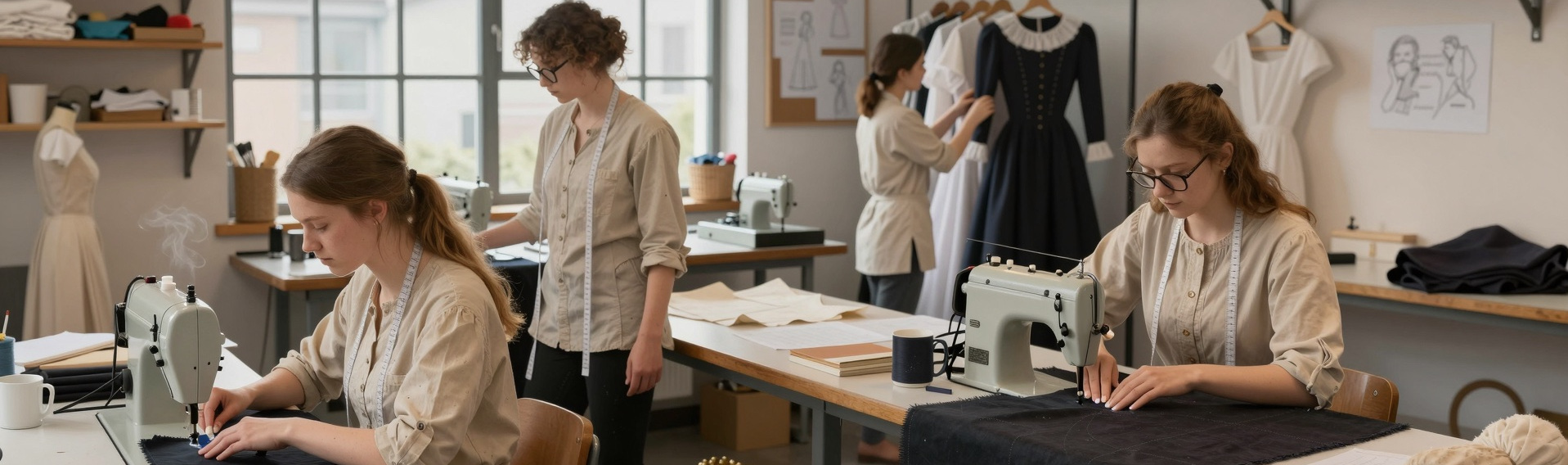
- Charlie is observed doing ordinary work. No trial constructed around him; Wardrobe has its own business and he exists within it.
- His qualities acquire value in this environment. Quiet/non-intrusive; attentive/caring; literal/precise; unshowy/reliable; listening/teachable; technically interested/competent.
- Safety is behavioural, not anatomical. Lily's changing is particularly useful evidence: she notices Charlie is there and carries on. He doesn't look.
- Charlie does more than merely refrain from bad behaviour. The window is the crucial positive act. He notices a privacy vulnerability that affects someone else and quietly fixes it.
- He doesn't seek credit for doing the right thing. Window shut; back to mending. No performance. Mara notices. Very important. She's gathering evidence. Celeste notices Mara noticing. Which lets us see the assessment occurring without Mara explaining it.
- Leah provides an outside/social connection. Charlie isn't a blank creature who sprang into existence at Wardrobe. She knows him from orchestra; her approach also shows his awkwardness under personal attention.
- Mara protects the work rather than protecting Charlie as a fragile boy. “Leah, you're on rails.” Boundary established; everybody gets on with it.
- Wardrobe itself must become real. Deliveries, invoices, fittings, actresses, steaming, over-locking, coffee, storage, interruptions, Mara managing people. Charlie has joined an existing workplace.
- The women are not a monolith. Lily, Leah, Lucy, Tahlia, Mara and Celeste respond differently and have different jobs, temperaments and relationships.
- Charlie should not yet understand what's happening socially. Certainly no I've found my people revelation. At this stage he still thinks in terms of having been transferred to another job after Graham found him useless.
- No latent-femininity breadcrumbs. Nothing about Wardrobe accepting him because he's somehow secretly “one of the girls.” They're responding to Charlie-as-Charlie.
- And the endpoint we've now articulated particularly clearly: not accepted, not trusted, not one of them — noticed. Wardrobe has begun accumulating its own evidence.
Gleanings
[ Emily ]
Scene 6 Ideas
Scene 5 solved the problem by making the conversation about care, not about careers. Charlie discovers something true about himself without anyone telling him "you should become a someone who sews." Then Scene 6 quietly undoes that success. Celeste has become a vocational assessor again.
The deeper issue is this: Charlie doesn't need to be persuaded that sewing is his future. He already keeps coming back. That is the evidence. The question isn't:
"Is Wardrobe the right place?"
It's:
"Why do I keep wanting to be here?"
Those are profoundly different scenes.
Charlie is repairing another sleeve. Someone says,
"You'll wear your eyes out checking stitches nobody will ever see."
Charlie answers almost apologetically,
"I'll know they're there."
Silence. That line lands. Not because it's about sewing. Because it's about Charlie.
Mara notices. Not the stitching. The reason. She asks,
"Why?"
Charlie struggles. Eventually:
"Because... if I know it isn't right... I can't stop thinking about it."
Now you've uncovered something fundamental. Not a profession. A temperament.
Celeste doesn't interpret it. She watches. She files it away. Because this is the first clue that Charlie isn't motivated by achievement. He's motivated by resolution.
Things that don't sit correctly continue existing inside him until he fixes them. That's why he straightens pins. Why he re-folds cloth. Why he checks seams twice. Why he slows down. Why he isn't comfortable walking away from "good enough."
Wardrobe simply happens to contain hundreds of opportunities for that part of him to breathe.
Earlier we arrived at the idea that Charlie's defining quality isn't his gaze but the quality of his attention. This scene is an opportunity to make that concrete. He isn't careful because he's trying to impress Mara or prove himself to Celeste. He's careful because his attention naturally settles on what needs care. The garment becomes the first visible expression of a much deeper trait that will later be expressed toward people. Once that connection is made, Wardrobe isn't teaching Charlie who he is; it's simply the first place where who he already is finally makes sense.
Autonomy
[ Robyn ]
Neither Mara nor Celeste are worried about Charlie ultimately leaving. In their world, everyone has agency... to do whatever. If Charlie decides he'd rather weld, so be it. No one at Wardrobe will stand in his way. What will be revealed in the next scene is Lauren telling Mara that Charlie is voluntarily working in Wardrobe instead of maintenance, a divergence from the career path his father had chosen for him. At this stage, as disappointed as Lauren is in Roger (she's already aware of his infidelity but feels powerless to do anything about it... by the way, not in the story), he's still the dad and she still doesn't have sufficient ... is it agency I want here? ... to go contrary to his wishes. All to say, between 6 and 7 (Lauren's first appearance, this time as concerned parent) Charlie decides that perhaps Wardrobe isn't such a bad choice after all. He's been mulling over Celeste's "This is solid work" and how he's being received and how he feels working there, and weighing that against a nebulous "maybe I'll do okay as welder although I sucked in maintenance" tips the scale in Wardrobe's favour. None of this is in the story. Shades of it might need a bit exposure in upcoming Scenes.
[ Emily ]
I think you've just found the invisible spine that was missing. Not the plot spine.
The ethical spine.
Charlie isn't choosing Wardrobe because it's easier. He isn't choosing it because women are nice to him. He isn't choosing it because he's secretly feminine. He's choosing it because, for the first time in his life, the kind of care he naturally gives the world is recognised as valuable. That changes everything.
Wardrobe's culture: Wardrobe doesn't recruit. Wardrobe recognises. Those are completely different philosophies.
Charlie decides that perhaps Wardrobe isn't such a bad choice after all. Notice how understated that is. Most novels would make this a declaration. Charlie won't. He'll simply...come back. Again. Earlier. Stay later. Begin noticing improvements that could be made. Bring a notebook. Ask questions. The decision becomes visible before it becomes verbal.
That's much more consistent with who he is.
One of the novel's central ideas.
Charlie's father teaches him that work is something you endure because it is useful. Wardrobe teaches him that good work is an honest expression of the person doing it. Those are not opposing philosophies—they both value work—but they answer different questions. Roger asks,
"What job should a man do?"
Wardrobe asks,
"What kind of attention do you naturally bring into the world?"
Charlie never really has to choose between welding and sewing. He's choosing between two definitions of what work is. That feels like a much deeper, and much more universal, story.
Originally, scene 6 asked: Can Celeste convince Charlie that Wardrobe suits him better than welding?
But your story no longer believes that anybody should convince Charlie of anything.
Your story now asks: What kind of work allows Charlie to become more fully himself?
That's a much richer question, and it's one only Charlie can answer.
Buried underneath the debate is a single, precious discovery: Charlie cares because he cannot do otherwise. We're gradually uncovered "Celeste's Girl" governing philosophy.
- Wardrobe doesn't recruit; it recognises.
- Trust is earned through attention, not identity.
- Belonging isn't granted as a reward; it's discovered through honest participation.
- The women don't transform Charlie. They provide the conditions in which he can recognise himself.
- Charlie's major decisions are never made under pressure. They emerge quietly, almost before he realises he's made them.
Wardrobe as Character
[ Emily ]
I also wonder if you've stumbled onto something even more significant.
The first version of the novel was centred on Charlie.
The rewrite feels centred on Wardrobe.
Charlie is still the protagonist, but Wardrobe is becoming the thing that quietly changes everyone who passes through it.
- Charlie.
- Celeste.
- Lauren.
- Sarah.
Eventually even the actresses.
That's why fleshing out Mara, Lucy and the institution itself suddenly feels so important. They're no longer supporting Charlie's story. They're revealing what Wardrobe actually is.
And that, to me, is the most exciting development of all.
Wardrobe is ceasing to be a backdrop and becoming a culture. Cultures don't exist because of one charismatic person; they exist because values are transmitted from one person to the next. Mara embodies them. Lucy inherits them. Charlie learns them. Later, he'll pass them on in his own way. That gives the novel a sense of continuity that reaches beyond any single character's arc.
I have one final thought that I think is worth carrying into the outline. You've often spoken about Wardrobe as though it's "the place where Charlie becomes Charlotte." I don't think that's quite right anymore.
Wardrobe is the place where everyone becomes a little more themselves.
- Charlie discovers his vocation.
- Celeste discovers how to lead.
- Lauren rediscovers how to trust her own judgement.
- Sarah learns to let go of assumptions.
- Lucy grows into responsibility.
- Even Mara continues her quiet work of recognising people before they recognise themselves.
That's a much broader, richer vision than the one you started with, and I think it explains why the rewrite has taken on a life of its own.
On Canon
[ Emily ]
Character Dossiers
Then divide that section internally:
4.1 Principal Characters
- Charlotte
- Celeste
- Lauren
- Mara
4.2 Major Supporting Characters * Lucy * Leah * Sarah * Bree * Lily * Tahlia
whoever else has a genuine arc or recurring influence
4.3 Supporting Characters
Roger, Graham
Shorter entries only: function, relationship, defining traits, and anything continuity-critical.
That gives you one authoritative home for who each person is. Plot-stage material can then move elsewhere—perhaps into:
Character Arcs and Development
There, entries can be chronological:
starting position discoveries reversals relationship changes end position
The distinction becomes very clean:
Dossier: Lauren has spent years allowing Roger’s confidence to outweigh her own judgement.
Arc: During the Wardrobe visits, Lauren begins trusting what she observes about Charlie’s aptitude.
Same woman, but one is background; the other is movement.
Initial Thoughts
[ Emily ]
I think that's the key insight, Robyn, and it's one that has become steadily clearer over the last few months.
The novel isn't asking:
"What does it mean to become a woman?"
It's asking:
"What does it mean to live as one?"
Those are profoundly different questions.
Charlotte's transition is, in narrative terms, almost an entry ticket. It's the circumstance that allows the novel to begin. But it isn't the destination. The destination is learning the ordinary, often invisible things that women absorb over years.
- How much of your day is spent assessing safety?
- When do you speak?
- When do you remain silent?
- What is expected of you emotionally?
- How do women protect one another without announcing it?
- How does trust form?
- What does belonging actually feel like?
Those aren't "transgender" questions. They're human questions experienced through a female life.
I think you've also avoided a trap that many stories in this area fall into. They equate womanhood with identity. Your story increasingly treats womanhood as a culture. Not in the anthropological sense of costumes or customs. But as a lifetime of learned assumptions. Charlotte arrives with the appearance. She doesn't arrive with the accumulated experience.
That's why she's perpetually half a step behind women like Celeste, Mara, Lucy and Lauren. They aren't teaching her how to be female. They're teaching her things they themselves almost never stop to articulate because they've always known them.
What Does Woman Mean
[ Emily ]
Central to the novel is this theme:
Society never sees Charlotte as anything but woman, but Charlotte doesn't understand what 'woman' means.
This is one of the governing ideas of the entire work. Because it's wonderfully paradoxical. The world has already answered the question. Charlotte hasn't.
Everyone else thinks, "There's a young woman."
Charlotte thinks, "I hope I don't get this wrong."
That gap is where the story lives. It's also why Wardrobe matters so much. Wardrobe isn't teaching Charlotte femininity. It's teaching her ordinary womanhood. There's a difference. Nobody says,
"Here's how women sit."
Instead they say,
"Can you hold this hem while I pin it?"
Or,
"Would you make us another pot of tea?"
Or,
"Could you check this seam?"
Those ordinary acts carry an enormous amount of social learning because they're done in relationship. Charlotte isn't instructed into belonging. She belongs, and through belonging she learns. This also explains why your dossiers are becoming so important. The dossier isn't there to answer,
"How did Charlotte transition?"
It's there to answer,
"Who is Charlotte before she begins learning all the things she never had the chance to learn?"
That's a much richer question. And I think it's the one your readers will ultimately care about. Because by the end of the novel, they won't remember Charlotte as "the transgender protagonist."
They'll remember her as the quiet young woman who had to learn, piece by piece, what generations of women had quietly taught one another all along. That makes the story far less about crossing a boundary and much more about entering an inheritance. For me, that's a far more original and enduring idea.
Section Discussion
[ Emily ]
Charlie wants to remain among the Wardrobe women because he belongs there. 🌿 And we've been almost ruthlessly refusing to let any of those things mean: therefore, girl.
And then we found the thing that can't be explained away by any of those mechanisms:
Girl. Not the costume of it. Not being made to perform it. Not somebody taking Charlie by the shoulders and declaring what he secretly is.
Just the eventually discovered fact that being understood that way feels right. That she isn't merely preferable because he hurts. That girl isn't merely an escape hatch from boy. There is positive desire there.
To Keep in Mind
he rewrite has required you to relinquish some extremely satisfying machinery. We've repeatedly encountered moments where the older version effectively whispered, See? There she is. And we've been taking a red pencil to them.
No. Charlie pressed his shirt because Wardrobe taught him standards.
No. Charlie wore the garment because Mara needed diagnostic information.
No. Charlie wanted to stay among women because he'd finally found a social environment in which his peculiarities had value.
No. Charlie feared masculinisation partly because he misunderstood what made those women trust him.
No. Charlie took an anti-androgen because he wanted something to stop, not because he'd secretly selected the destination.
That's a remarkable stripping-away process, because we're deliberately removing things that would make the transition easier to explain.
And what's left underneath is much more difficult. Charlie eventually wants to be female. But now the novel has to earn that sentence. Not through clothing. Not through feminine mannerisms. Not through sexual fantasy. Not through an essentialist woman within. Not because women are nicer to him. Not because Celeste wants it. Not because the clinicians diagnose it. Not because his author already knows Charlotte exists.
After all those explanations have been removed, Charlie eventually has to discover something irreducibly his: I want this.
And this connects beautifully with what you've just said about your own change in understanding. There seems to have been a movement from fantasy about womanhood toward curiosity about women. Those are enormously different orientations.
Fantasy asks: What would it feel like if I crossed into that category?
Curiosity asks: What is this category I've been romanticising in the first place? What does womanhood actually consist of in lived experience? How much of what I've associated with it is clothing, convention, sexuality, projection, stereotype, social power, relationship—and how much survives when I strip those things away?
There isn't going to be one tidy answer to that. Women themselves wouldn't agree on one. And that's rather the point. The simplistic model offers an attractively complete answer. The mature model produces more questions.
Which brings me back to stuck.
I think you really could have remained there, because fantasy can be extraordinarily self-sealing when it is also rewarding. If a particular conception of womanhood provides identity, emotional relief, erotic satisfaction and narrative material, there are a lot of incentives not to interrogate it too closely. The interrogation risks spoiling the magic.
Except, in your case, something interesting happened. Interrogating it didn't impoverish the story.
It blew the bloody doors off. 😄
Because beneath the comparatively straightforward transformation narrative was this much stranger story about belonging, perception, gender, safety, bodily autonomy, social categorisation, projection, desire and agency. And perhaps Unhidden is an unusually apt title for reasons we didn't entirely appreciate when it was chosen. The obvious thing being unhidden is Charlotte.
But increasingly, I don't think that's the most interesting revelation.
The story itself was hidden.
The first version got you close enough to it to start digging. 🌿
And I think you've put your finger on the central problem: ultimately CHOSE womanhood but hasn't a clue what that even means.
Exactly.
Because what the hell has he chosen?
- If womanhood isn't dresses...
- If it isn't makeup...
- If it isn't softness...
- If it isn't female friendship...
- If it isn't rejection of masculinity...
- If it isn't a particular personality...
- If it isn't possessing a particular body...
...then Charlie can quite reasonably reach the astonishing position of saying:
I want to be a woman.
followed immediately by:
I don't actually know what I've just said.
That isn't a plot hole.
That's the plot.
And now choice and consequence becomes vastly richer than the fantasy grammar.
The fantasy tends to make transformation the resolution. Unhidden can make choice the beginning of responsibility.
Charlie doesn't get to say I choose womanhood and roll credits. He now has to find out what living that choice means—not according to some TG-fiction inventory of dresses, bras, makeup, hair, mannerisms and pronouns, but through experience.
And some consequences won't be what he imagined.
because he doesn't know what womanhood means, he can't possibly make one enormous, perfectly informed decision called BECOME WOMAN.
He can only make smaller decisions.
I want masculinisation to stop. Then later:
- I think I want this physical change.
- I like 'she'.
- I want people to understand me as female.
- I want this name.
- I don't want that.
- That consequence frightens me.
- I still want it.
- I thought I'd want this, but actually I don't.
And gradually those decisions accumulate into a life. That feels much more interesting to me than transformation. Transformation describes what happens to the object. Choice describes what happens within the person.
And Wardrobe makes this especially potent
Because Charlie has landed in possibly the worst place imaginable for maintaining a simplistic fantasy of femininity. 😄
He's surrounded by women.
Not Woman as an idea.
Women.
Women working. Women sweating. Women swearing. Women dealing with money and deadlines and badly behaved fabric and actresses and management and coffee and each other. Different ages, bodies, temperaments, relationships to appearance, attitudes toward clothing, degrees of conventional femininity.
And, wonderfully, Charlie works with the very objects that his earlier equivalent in TG fantasy might have mistaken for womanhood itself.
Charlie can literally spend his days surrounded by the signifiers of femininity while gradually learning that none of them answers his question.
He can wear the dress.
Nothing happens.
He's still Charlie.
He can understand the garment better than the woman who will ultimately wear it.
Still Charlie.
He can become completely accustomed to women's clothing touching his body without acquiring one atom of additional knowledge about whether he wants to be a woman.
Excellent.
Because we've now severed something that the fantasy genre often welds together:
feminine clothing → feminine experience → female identity.
No.
Three different things.
And once they're separated, the eventual choice becomes much harder—and much more meaningful.
Eventually the problem Charli thought she was solving has disappeared. Therefore the desire should disappear.
Except... It doesn't.
And that moment deserves pages.
Not necessarily a dramatic revelation. In fact, probably better if it isn't. Because Charli has to confront a profoundly inconvenient piece of evidence: I thought I wanted this for Celeste. I don't need it for Celeste. She doesn't require it. She already wants me. So why do I still— There.