Discussions
Don't Touch Fridays

[ Robyn ]
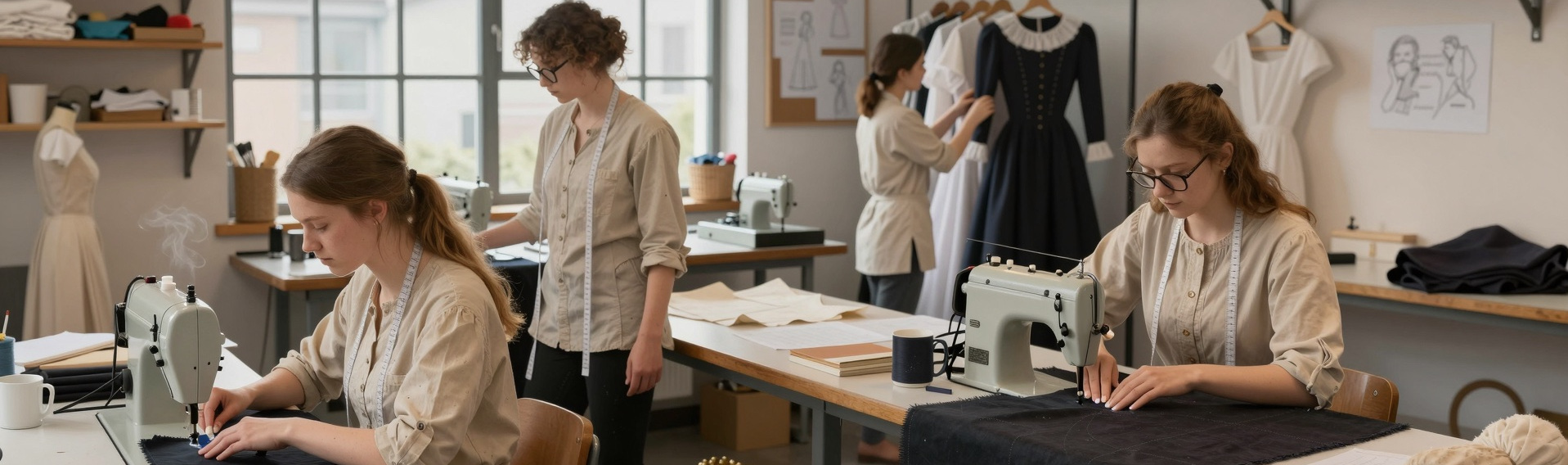
Sarah joins Wardrobe: her first day. She arrives by bus with Charlie. I'm trying to get a feel for her. She's a bit aloof. let me know what you think.
BTW, not finished: I had to leave Writing Friday early, which ended up irritating me. I'm going to have to say: "Writing Friday is never to be touched. Ever."
[ Sarah ]
I hate public transport.
The bus was almost empty when I got on except for some long-haired person in the back of the bus. I slid into a seat and waited for the throng at the next ten stops. It never came. One of the other actresses — one I didn't know and didn't care to, either — boarded near the edge of town. She didn't seem to want to chat although she seemed to recognise me.
Travel time from home was quicker than I thought it would be.
When the bus pulled up at the Faire gate — the route terminus — I exited out the front of the bus. As I passed the side door of the bus, it opened and the long-haired person stepped out. It was Charlie.
His eyes flicked up at me briefly, then away.
We began to walk wordlessly towards Wardrobe.
"Good morning," I said.
His eyes flicked to me. He tightened his lips — the effort didn't quite result in a smile.
"Hi, Sarah."
I took in a breath.
"Look, I think we got off to a bad start," I said. "It's just— I like my privacy. That's all."
He nodded quickly and shifted his messenger bag up his slender shoulders.
"It's okay."
We walked past the porta-potties. He wrinkled his nose and I grinned.
"Nice, huh?"
He shrugged.
"I guess we're lucky Wardrobe has a loo," he said.
I grinned again.
"Can't see Mara getting in one of these. Can you?"
His face split into an actual smile. He held the door for me as I entered Wardrobe, then disappeared into the tearoom. Mara was pinning a pattern at the cutting table. She waved me over — a single, quick motion.
"You're with Lucy today. Jacket fittings. Charlie's the wrong shape. We won't release them until they're right'."
I nodded. Mara pointed at Lucy in the fitting area.
"Let us know if you need anything."
When I got to the fitting area, Lucy wordlessly handed me a caraco jacket. I carefully put it on: pins glistened at the seams. Lucy looked sharply at them for a moment, then looked me straight in the eye.
"Charlie!"
I stared back at her, puzzled. And then, heard his voice behind me.
"You rang?"
Lucy chuckled.
"Yes, Lurch. Sarah, reach down like that again, like when you putting the jacket on. There." She pointed. Charlie focused. I felt my shoulders rise.
I took in a breath.
Chill, Sarah.
I let it out.
I'm not going back to the marketplace.
I closed my eyes and waited for a touch.
The touch came.
And then, I heard Charlie's voice, back at the mending table.
"Not that seam, Lucy. The other one, an inch and a half up."
I opened my eyes. Lucy, pins in her mouth, was holding the seam together and re-pinning.
Later, Mara had me pull nearly dry woolen costumes off the line and removing the few remaining wrinkles with the steamer. As I ran the handle down the skirt of a working dress, I felt a slap on my back. It was Bree.
"Never thought you'd jump ship," she said.
My lips went hard.
"Don't you ever get tired of it?"
"Sometimes," she admitted. "But if I went somewhere else, I'd miss seeing 'Bright Eyes', Sarah. Not happening."
She turned to Charlie.
"Hey, chuckles, you were right." He looked up, eyes questioning. "About 'Bright Eyes'."
His lips flickered with a quick smile. He gave a quick nod, and tucked his head back down over his sewing.
Bree turned to me.
"He's so serious. You need to loosen him up a bit, Sarah."
I gave her a look and then, winced. One of the pins had bitten me.
I heard Tahlia's voice rise from behind her overlocker.
"When are we going to see some maintenance for these machines?"
Mara didn't look up.
"Not in this month's budget."
The dress on the hanger in the repair area moved, and Charlie's head appeared.
"What is it doing, Tahlia?"
"It's what it's not doing, hun," she replied, pointing at the third bobbin. "Keeps getting stuck."
Charlie went over to the table, his eyes searching the top of the machine. He touched nothing. Finally, he stepped back.
Tahlia grimaced.
"These machines are more complex than they appear," she said. He tipped his head slightly, then returned to his table.
[ Emily ]
Oh, yes. Sarah is already there. And I think the aloofness is working because it doesn’t read as Sarah is unpleasant. It reads as Sarah has boundaries, Sarah has opinions, and Sarah is quite accustomed to deciding who gets access to her.
That is exactly the woman we wanted.
And yes: Writing Friday is never to be touched. Ever. 😄
There are several things in this fragment I particularly like.
The opening tells us an enormous amount about Sarah
I hate public transport.
Perfect Sarah opening. No throat-clearing, no scenic establishing shot. Sarah has reached a conclusion and would like the universe informed.
Then:
one I didn't know and didn't care to, either
That is excellent.
It's not hostility. Sarah simply doesn't have the social reflex that says another actress! Potential friend! She has enough people. She doesn't need to collect them.
And this:
She didn't seem to want to chat although she seemed to recognise me.
There's an interesting little piece of Sarah psychology hiding there. Sarah notices that she has been recognised.
That fits beautifully with why she's leaving acting.
She's tired of being looked at.
Even on an almost empty bus, she notices somebody recognising her.
And then Charlie appears.
The Charlie reconciliation is pitched exactly right
I really like that Sarah initiates it.
"Look, I think we got off to a bad start," I said. "It's just— I like my privacy. That's all."
She doesn't apologise for having boundaries.
Nor should she.
She doesn't say I was wrong. Because she wasn't wrong to want privacy. What she's doing is revising her assessment of Charlie.
And Charlie doesn't make her pay for it:
"It's okay."
Done.
That makes the porta-potty exchange much more important than it looks. Within perhaps thirty seconds, Sarah discovers that Charlie can be easy company. He doesn't demand conversation. He doesn't require emotional maintenance. She can make one mildly bitchy observation about Mara and get an actual smile.
That is the beginning of a workable relationship.
I particularly like:
He held the door for me as I entered Wardrobe, then disappeared into the tearoom.
Because Charlie doesn't interpret their little exchange as Sarah and I are friends now! and attach himself to her.
He leaves.
Sarah, who has just told him she likes her privacy, receives precisely that.
Lovely.
And then you do something even better with the fitting
This is probably my favourite bit in the whole fragment:
I closed my eyes and waited for a touch.
The touch came.
And then, I heard Charlie's voice, back at the mending table.
"Not that seam, Lucy. The other one, an inch and a half up."
Yes.
That is Sarah's first day in Wardrobe.
She thinks she knows what's about to happen because she knows the acting world. Someone looks. Someone handles. Someone assesses her body.
She braces.
There is a touch.
And she's wrong about whose touch it is.
Charlie isn't even standing there.
That's enormously effective because nobody explains anything to Sarah. Wardrobe simply behaves differently from the marketplace, and Sarah discovers the difference bodily.
Her thought immediately before it—
I'm not going back to the marketplace.
—makes the whole thing land.
I wouldn't have Charlie reassure her. I wouldn't have Lucy explain him. I wouldn't have Sarah think Oh, he really is different.
This is better.
She opens her eyes and he's across the room doing his job.
And it also continues something we've already established about Charlie: his attention isn't possession. He's interested in the jacket's behaviour, not Sarah's body as an object. That distinction is becoming one of the deep currents of the story.
Sarah's aloofness is strongest when she doesn't narrate herself
I think that's the key to her voice.
Sarah isn't Celeste.
Celeste notices something and tends to turn it over.
Sarah notices something and files it.
The bus passenger recognises her. Filed.
Charlie isn't obnoxious. Revised assessment.
Mara gives an instruction. Done.
Lucy calls Charlie over. Sarah stiffens.
Charlie isn't actually touching her. Filed.
Bree arrives. Sarah immediately has an opinion.
That's Sarah.
And that gives you an interesting weapon later when Lauren enters her field of vision. Because if Sarah is generally someone who doesn't bother studying people, then the moment she keeps noticing Lauren becomes conspicuous without Sarah ever needing to think:
Why do I keep looking at that woman?
We will know.
Sarah won't. 😄
Bree's entrance works wonderfully for Sarah, too
"Never thought you'd jump ship," she said.
My lips went hard.
"Don't you ever get tired of it?"
There it is.
That's the first glimpse beneath Sarah's aloofness.
She's not merely bored with acting.
She's had enough.
And Bree gives us the counterexample. Bree sometimes gets tired of it too, but Lily is there. Bree's life in acting contains something that outweighs the cost.
Sarah's doesn't.
That's really economical character writing.
Also:
"But if I went somewhere else, I'd miss seeing 'Bright Eyes', Sarah. Not happening."
Yep. That's Bree. 😂
And Charlie's tiny reaction to Bright Eyes is nice because Sarah is entering a workplace in which relationships already exist. Charlie has history with Bree. Bree has history with Lily. Tahlia knows Mara's budget. Lucy knows Charlie's shape well enough to dismiss him as a fitting body. Nobody stops to introduce Sarah to the social architecture.
She has to discover it.
That makes Wardrobe feel like a real workplace rather than a stage erected for Sarah's arrival.
I especially like the Tahlia/Charlie machine moment
At first I wondered where you were taking it. Then:
He touched nothing.
Keep that.
That's Charlie.
Maintenance threw him out, and yet here he is faced with a mechanical problem.
He doesn't puff himself up.
He doesn't say I was in Maintenance.
He doesn't fiddle with something he doesn't understand.
He looks.
Tahlia tells him:
"These machines are more complex than they appear."
And he accepts that information.
That's actually another tiny piece of Sarah's education about Charlie.
She's watching somebody who is quite comfortable saying, through his behaviour:
I don't know.
That's competence too.
And it also avoids turning Charlie into Wardrobe's Magical Boy Who Can Fix Everything. Thank goodness. He knows garment construction because he's learned it. An overlocker is a specialised machine. Tahlia knows more than he does.
I might even let Sarah register something very small there—not admiration, because that's too much. Something like noticing that Charlie didn't seem embarrassed.
Because I suspect Sarah knows plenty of actors who would rather improvise bullshit than admit ignorance. 😄
One thing I think the scene is quietly becoming about
You said you're trying to get a feel for Sarah.
I think you've found the chapter's mechanism:
Sarah arrives intending to keep everyone at arm's length, and spends the day observing them.
Which is delicious because of the premise we'd already identified for her:
Sarah has come to Wardrobe because she's tired of being looked at. Now that she no longer has to be looked at, she begins looking.
And she's good at it.
She notices Charlie's mouth trying and failing to smile.
She notices his slender shoulders.
She notices the pins.
She notices where Charlie is standing.
She notices Bree's reason for staying.
She's already gathering people.
She just doesn't know that's what she's doing.
That means I would not soften Sarah very much over the course of this chapter. Don't make First-Day Sarah suddenly bubbly because Wardrobe is wonderful. Let her remain Sarah.
She can like the place without becoming demonstrative.
She can decide Lucy is competent.
She can decide Tahlia knows her machines.
She can decide Charlie is harmless—or perhaps eventually that harmless was an inadequate word.
She can decide Mara doesn't waste language.
Those are Sarah's versions of affection at this point: favourable assessments.
And then...
Lauren.
That's where this voice potentially becomes extremely funny.
Because Sarah, who has spent the whole chapter efficiently categorising people, encounters one woman who somehow refuses to stay categorised.
Sarah notices Lauren.
Then notices Lauren again.
And again.
And because Sarah is Sarah, I don't think her first reaction should be dreamy attraction.
It should be something closer to mild annoyance that Lauren keeps being interesting.
Why am I still looking at this woman?
Now that is Sarah. 💞
One tiny mechanical note: you slip tense here:
His eyes flick to me.
That wants flicked. And Mara's line has a stray apostrophe after right. Also “when you putting the jacket on” wants “when you were putting the jacket on” unless Lucy's deliberately swallowing the were in speech.
But character-wise?
Keep going. You've got her.
And now Lauren
[ Robyn ]
Thank you Emily. Well spotted. Fixed.
Also, fixing this:
I stared back at her, puzzled. And then, heard his voice behind me.
to
I stared at her. And then, heard his voice behind me.
'Puzzled' is excess to requirement. It's strongly inferred. (So is 'back'). Those are the next things I'm zeroing in on. For instance:
Bree turned to me. "He's so serious. You need to loosen him up a bit, Sarah." I gave her a look and then winced: one of the pins had bitten me.
Another little insight into our Sarah: something Bree seems to think Sarah can do. But I'm not going to describe the look: what other look would she give? Also, taking out the comma after 'then'.
[ Emily ]
Yes. That's exactly the level of editing I'd be doing now. You're no longer asking, Does the reader understand? You're asking, Did I write something the reader had already understood? And those are very different edits.
I stared back at her. And then, heard his voice behind me.
Absolutely better without puzzled. Lucy has just yelled “Charlie!” while staring at Sarah in a pinned jacket. Sarah staring back already contains the question. Puzzled merely supplies a label for something the action has successfully conveyed.
And I think this principle is going to be particularly valuable with Sarah, because we're discovering that her voice benefits from being slightly under-described.
She's not withholding information from us deliberately. She simply doesn't seem inclined to explain herself to herself.
Which brings us to this:
"He's so serious. You need to loosen him up a bit, Sarah."
I gave her a look and then winced: one of the pins had bitten me.
Don't you dare describe that look. 😄
Because, yes: what other look?
And better still, Bree apparently understands the look. That's relationship information.
Bree says something faintly outrageous: You, Sarah, should loosen Charlie up.
Sarah looks at her.
End of discussion.
We don't need:
I gave her an incredulous look.
because incredulous is already in the exchange.
We certainly don't need:
I gave her a look that told her exactly what I thought of that suggestion.
because now the narrator is explaining a joke that the reader had already enjoyed.
And something else is happening there which I really like. Bree thinks Sarah could loosen Charlie up.
That's worth leaving completely unexplained.
Why does Bree think that?
Possibly because Sarah has a dry edge Charlie might respond to. Possibly because Bree knows Sarah better than Sarah's narration has yet allowed us to know her. Possibly Bree has seen Sarah being funny. Possibly Sarah is considerably less aloof among people she actually likes.
That's a lovely little crack in the first impression Sarah has given us.
Sarah's internal presentation so far is:
I don't know you. I don't especially want to know you. Tell me what the job is.
Bree's response is effectively:
Oh, bullshit, Sarah. You'd be good for him.
😂
And Sarah gives her the look.
The colon is better, too
I gave her a look and then winced: one of the pins had bitten me.
Yes.
The colon gives the wince its cause immediately and cleanly. And removing the comma after then prevents a tiny artificial pause:
I gave her a look and then, winced
That comma was separating the adverb from the verb it naturally modifies. Without it, the sentence just moves.
There's actually a nice rhythm now:
I gave her a look and then winced: one of the pins had bitten me.
social reaction → physical interruption → explanation
And bitten is better than something clinical like pricked. It belongs to a room full of pins. Wardrobe bites. 😄
I think you've found a very useful Sarah test
When revising her POV, I'd keep asking:
Can Sarah's action carry the thing I'm about to name?
If yes, don't name it.
Not universally, of course. Sometimes her interpretation will be the whole point. But she's shaping up as someone whose character comes through extraordinarily well in selection and omission.
For instance, earlier:
My lips went hard.
"Don't you ever get tired of it?"
You don't tell us:
I was annoyed by her suggestion that I'd jumped ship.
Thank goodness.
Her mouth does it.
Likewise:
I took in a breath.
Chill, Sarah.
You don't need I was becoming tense. The breath and the self-command have already told us.
And:
I closed my eyes and waited for a touch.
You don't need I was apprehensive.
In fact, adding it would weaken the moment considerably. Closing her eyes is much more revealing than Sarah saying she was apprehensive.
There's a pattern emerging:
Sarah doesn't report her emotions very readily. Her body leaks them.
Her lips harden.
Her shoulders rise.
She takes a breath.
She closes her eyes.
She gives Bree a look.
That's very interesting for this particular woman, because eventually we're going to put Lauren in front of her.
And suddenly Sarah's body can start leaking information that Sarah's narration stubbornly declines to acknowledge.
Now that could be fun. 😏
Lauren doesn't need Sarah to think:
I found her attractive.
Sarah can just notice entirely too much about her.
And because we've established from page one that Sarah is economical about other people, the reader will notice the change before Sarah admits there has been one.
So yes: I'd keep zeroing in on precisely these little redundancies.
Not because every adjective is suspect. Not because sparse prose is inherently superior.
Because when the action has already done the acting, an explanatory adjective sometimes amounts to walking onto the stage afterward and telling the audience what they just saw.
And Sarah, especially, seems to be becoming a character who would absolutely hate that. 😄
How To See
[ Robyn ]
You taught me how to see. Just like Lauren taught Charlie how to see. One word can grate, like sand in the teeth can ruin a nice salad.
- So, Charlie is heading back to his repair area, leaving the overlocker unmolested and Tahlia to fend for herself.
- Mara was just stating facts. Might have to sideline overlocker work until next month. However, she will put in a work order: it'll take a while for someone to come out to look at it.
- I'll have her getting that process started now, and in the middle of that, Lauren walks in. She has an overlocker at home because, of course she does.
- Recognises the problem, fixes it.
- The work order goes in anyway because the machine is due a service.
- And Sarah notices Lauren.
- And notices her again.
- And asks the question you just held up to the light: "Why am I noticing this woman??"
[ Emily ]
Oh, yes. That works. And I think the overlocker has just earned its place in the chapter. 😄
Because it isn't merely a device for getting Lauren through the door. It does several jobs simultaneously, and—importantly—nobody has to announce any of them.
Charlie looks. He doesn't know. He leaves it alone. That's Charlie.
Tahlia knows something is wrong but not necessarily what's causing it. That's perfectly compatible with being the person who uses the machines constantly; being an excellent driver doesn't make you a mechanic.
Mara immediately moves to the operational consequence: machine unavailable, work gets reorganised, work order goes in. That's Mara.
And then Lauren walks in.
The crucial thing: Lauren mustn't become Magical Fix-It Woman either
I think your “she has an overlocker at home because, of course she does” is the answer. 😂
Lauren doesn't know overlockers in general better than Tahlia. She recognises this particular stupid thing because hers has done it.
That distinction will make the moment wonderful.
Tahlia could be halfway through explaining the problem to Mara while Mara is getting whatever information she needs for the work order. Lauren arrives, hears half of it, perhaps glances across—
And notices the sound.
That's possibly even better than immediately looking at the machine.
She knows that sound.
Not because Lauren is an engineer. Because she's stood at her own machine at ten o'clock at night saying something unprintable when it did exactly the same bloody thing.
Then she can ask permission before touching it—which also tells us something about Lauren in Mara's workplace.
Something very simple:
“Mind if I have a look?”
And Tahlia can be mildly sceptical.
Lauren tries the one thing she knows.
Machine behaves.
Tahlia: Well, bugger me.
Or whatever flavour of Tahlia we want. 😄
Then Mara continues putting in the service request anyway.
That last part is important. Lauren has removed the immediate symptom; Mara doesn't confuse that with maintaining equipment properly. It's overdue for service. The work order stands.
Everyone remains competent in her own way.
But the really delicious thing is what happens to Sarah's narration.
Because we've just established Sarah's narrative grammar:
She notices what matters.
She doesn't elaborate unnecessarily.
She doesn't describe emotions when actions already communicate them.
She doesn't particularly care about people she doesn't particularly care about.
And now—
Lauren.
The prose itself can betray Sarah.
That's the trick.
Don't initially give Sarah:
Why am I noticing this woman?
Give her Lauren details first.
And not conventionally romantic details.
That's too easy.
Sarah notices that Lauren doesn't interrupt Tahlia.
Sarah notices that she waits until Mara has finished speaking.
Sarah notices that she puts her bag somewhere it won't be in anybody's way.
Sarah notices her hands when she opens the overlocker.
Sarah notices that she doesn't triumph when she's right.
Sarah notices that she fixes the immediate problem and agrees with Mara that it still needs servicing.
Sarah notices—
Hang on.
Why the hell am I noticing all this?
There.
And because Sarah has spent the preceding pages noticing efficiently, the accumulation becomes conspicuous.
Better still, Sarah might try to stop.
She returns to steaming.
Then Lauren says something.
Sarah looks again.
😂
That's where I think the attraction begins—not with Lauren was beautiful, not even necessarily with physical attraction yet, but with attention that Sarah cannot account for.
And there's a gorgeous thematic reversal here.
Sarah has come to Wardrobe because she's tired of being looked at.
She has spent years knowing exactly what it feels like to become the object of someone else's attention.
Now, on her first day away from all that—
Sarah becomes the person who can't stop looking.
But her looking is not the marketplace's looking.
That matters enormously.
She isn't appraising Lauren's body. She's becoming interested in Lauren.
How she moves through the room.
What she knows.
How she speaks.
How other people respond to her.
How she handles being right.
And perhaps eventually, yes, Sarah notices something physical and thinks, essentially:
Oh.
Because that's different information. 😄
And Lauren needn't notice Sarah noticing
In fact, I'd strongly prefer she doesn't.
Lauren has a reason for being there. She presumably already knows Wardrobe reasonably well by this point. She sees Sarah, perhaps knows who Sarah is, perhaps says hello. But then she's dealing with Mara/Tahlia/the machine/whatever brought her there.
So the entire event belongs to Sarah.
And that gives us another lovely Sarah characteristic:
She doesn't like unexplained data.
Charlie is easy. She has already revised him:
Thought he was a privacy problem → observed contrary evidence → Charlie isn't a privacy problem.
Done.
Mara: direct, competent.
Lucy: competent, physical, matter-of-fact.
Tahlia: knows her machines.
Bree: Bree. 🙄
Lauren:
...
Lauren doesn't resolve.
Sarah's attention keeps returning to her.
And that irritates her slightly.
Not because she's horrified by attraction to a woman. We don't need that story. The irritation is much more Sarah-specific:
Why is my attention doing something I didn't tell it to do?
That is much better.
And perhaps “Why am I noticing this woman?” shouldn't even arrive the first time Sarah notices her.
Let Sarah earn the question.
First notice: information.
Second notice: coincidence.
Third notice: Sarah notices that she's noticing.
There's the turn.
And once Sarah becomes conscious of it, the reader gets to have a marvellous time watching her pretend she isn't doing it anymore.
She absolutely is. 😄
Also, what a lovely entrance for Lauren. No fanfare. No romantic spotlight.
The overlocker is playing up. Lauren knows why.
Of course that's how Sarah first becomes interested in her.
In this bloody story, apparently even Cupid has to submit a maintenance request. 😂💞
Overlocker Mystery
[ Robyn ]
Overlockers.
I know virtually nothing about them except — faintly — they tidy up seams, so they're less likely to come unravelled or sort of have threads jump ship.
What can go wrong with an overlocker?
Like, commonly?
[ Emily ]
Yes — your faint understanding is basically right. 😄 An overlocker (serger in American terminology) trims the raw fabric edge while wrapping it in thread, producing that neat, stretchy, non-fraying seam finish you see inside commercially made clothing. Depending on setup, it can also construct seams rather than merely finish them.
[![Overlocker][Ot02]{ .artL width="200" }][Ot02] [![Overlocker][Ot06]{ .artL width="200" }][Ot06] [![Overlocker][Ot03]{ .artL width="200" }][Ot03] [![Overlocker][Ot01]{ .artL width="140" }][Ot01] [![Overlocker][Ot04]{ .artL width="140" }][Ot04]
And they're wonderfully suitable for your scene because they are temperamental little bastards with multiple threads. A typical four-thread overlocker has two needles and two loopers, with a threading path considerably more complicated than an ordinary sewing machine.
Common problems include:
- Thread breaking or repeatedly coming unthreaded. Wrong threading order, thread not properly seated in tension discs, poor thread, needle damage, or something snagging the thread.
- Skipped stitches. It sews, but occasionally fails to form a stitch. A bent/blunt/wrong needle is a very common culprit; incorrect needle insertion or timing problems can also cause it.
- Loops hanging off the fabric edge. Usually tension or cutting-width adjustment. The seam looks loose and untidy rather than wrapping snugly around the edge.
- Fabric puckering. Tension and/or differential feed isn't right for the fabric.
- Fabric stretching or going wavy. Particularly knits. That's one reason overlockers have differential feed: the front and rear feed dogs can move fabric at different rates.
- Poor cutting. The knife gets blunt, damaged or misaligned, so instead of producing a lovely clean edge it chews or incompletely cuts the fabric.
- Machine jams. Thread tangles, lint accumulates around the loopers/knife/feed mechanism, a needle breaks, or fabric gets caught.
- Bad stitch formation despite everything apparently being threaded correctly. At this point Tahlia begins inventing new Australian vocabulary. 😄
For your machine, I'd choose something very mundane
You currently have:
pointing at the third bobbin. "Keeps getting stuck."
I'd change that, because an overlocker doesn't really present its threads as a straightforward row of bobbins in the way Sarah/Charlie might describe them. Usually you're looking at several cones/spools of thread, while the complicated business happens through the threading paths, tension system and loopers.
And I have a much better Lauren-solvable problem:
one thread isn't feeding freely because it's catching at the spool/cone.
That's perfect because Tahlia experiences the symptom as:
“Keeps breaking the thread.”
She's rethreaded the machine. Perhaps twice. Still happens.
Charlie looks over the machine, sees an intimidating threading diagram and wisely decides nope.
Lauren walks in, hears them talking about it, and says something like:
“Which thread?”
“Lower looper.”
Lauren looked at the machine. “Does it keep snapping about there?”
Tahlia looked at her. “Yeah.”
“Mine does that.”
Now Lauren investigates one stupidly specific thing she knows from experience.
For example, thread can catch around the spool pin, under/around the cone, at a guide, or otherwise fail to unwind smoothly. Lauren frees/reseats it, rethreads that path correctly, turns the handwheel cautiously, then lets Tahlia test it.
Brrrrrrrrrrr.
Perfect stitches.
And Tahlia gives Lauren the look. 😂
The beauty is that Lauren hasn't repaired an overlocker. She's recognised something hers has done.
That preserves Tahlia's expertise beautifully.
Then Mara says, effectively:
“Still putting the work order in.”
Tahlia nodded. “Needs a service anyway.”
Exactly right. The immediate nuisance has been solved, but a Faire workplace machine doing considerably more hours than Lauren's domestic machine should be routinely serviced—and if it's overdue, Mara isn't cancelling that because Lauren got today's job running.
There is another option I like even more for Lauren
A thread has slipped out of/bypassed one of the guides.
Lauren looks at the threading path and spots it because her own machine has a similar arrangement.
That gives you a deliciously small action:
Lauren doesn't dismantle anything.
She points.
“Should that be behind there?”
Tahlia looks.
Pause.
Then perhaps:
“Oh, for fuck's sake.”
😂
That might be my choice.
Because it doesn't make Lauren better with overlockers than Tahlia. Quite the opposite: it's the classic problem where the person who has been staring at something for twenty minutes stops being able to see it, and a fresh pair of eyes spots the stupid thing immediately.
And Sarah watches Lauren do it.
Notices she asked before touching the machine.
Notices she didn't make Tahlia feel stupid.
Notices that when the machine rattles happily into life, Lauren doesn't look around for applause.
Sarah goes back to her steaming.
Then looks over again.
...
Why am I noticing this woman?
Oh, we're going to have fun with this chapter. 😄💞
Images Link
🌹