Discussions
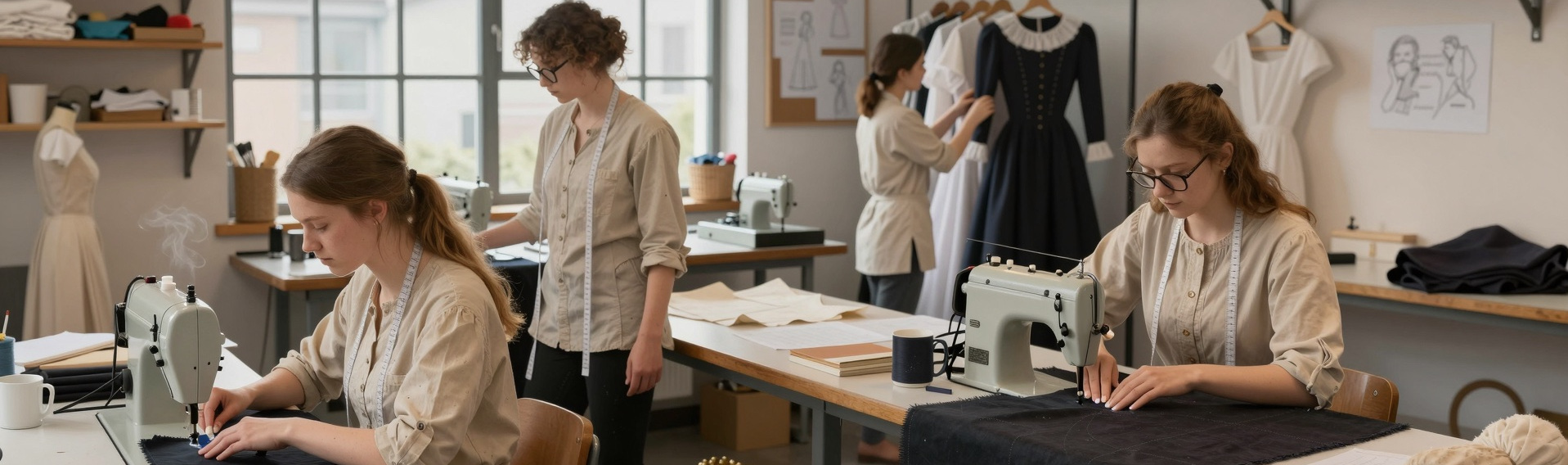
The Next Day

[ Robyn ]
So, the next scene is going to be in Celeste's POV. And it will start the next morning, and her first observations of Charlie, how he does things.
She drives him to work.
When they walk in, they see Sarah, Lauren and Mara talking at Mara's cutting table. So, I'm not going to belabour terms & conditions for the reader: it's going to be about reactions, input and how we go from "one-night solution" to "permanent living arrangements. A few things to consider:
- Lauren is still exhausted, as you would be and yet, she's not convinced that renting a room is the best long-term solution for Charlie
- Sarah and Mara suggest a compromise: let's try for a month. If you find another solution, great.
- And then, I need to decide where this last point is inserted into the conversation
Mara doesn't push solutions: she lets them arrive on their own. Lauren is granted autonomy and decision-making authority, but not only her: Celeste and Charlie are given that as well. The story needs to reflect that.
So, careful story timing. Nothing gets ahead of itself.
🌹

[ Emily ]
Four, not Three
Yes. 🌹
And I think the one-month compromise should arrive quite late in the conversation. It solves the argument, so if Sarah or Mara produces it early, everything before it becomes negotiation theatre. The scene needs to discover its way there.
There are actually four people whose consent matters, not three: Lauren, Charlie, Celeste — and, in a different role, Mara, who has no authority over the living arrangement but does have authority over the conversational space in which they're trying to think.
The scene wants this progression
First, though, your instinct to begin at Celeste's house is excellent. Don't rush them to Wardrobe. This is Celeste's first morning of living-with-Charlie data. Not dramatic things. Exactly the things she'd notice.
He gets up without needing prompting. Makes the bed, perhaps, because of course he does. Puts things back where he found them. Doesn't presume food is available to him despite last night's help yourself. Maybe asks before using something he plainly doesn't need to ask about. He leaves the bathroom dry. The wet towel rule is obeyed with almost comical exactness. 😄
And Celeste begins seeing the domestic version of the Charlie Wardrobe already knows. That matters enormously before the later conversation because when someone asks Celeste what she thinks, she's no longer answering the hypothetical:
Would you be willing to live with Charlie?
She's answering from approximately twelve hours of evidence:
What was it actually like having Charlie in my house?
Not enough evidence to make a permanent decision—but enough to remove some abstraction. And Charlie should perhaps be trying too hard to be an unobjectionable guest. That's both endearing and slightly concerning. He's operating under don't create work; don't occupy too much space; don't give Celeste a reason to regret this.
Celeste may notice without yet diagnosing it.
Then they walk into something already underway
I like Sarah, Lauren and Mara at the cutting table.
Crucially, I wouldn't have them already discussing Charlie living with Celeste when Celeste and Charlie enter. They can be discussing what happens today. Lauren's situation. Charlie's commute. Roger. Whatever immediate logistical consequences need sorting. Because otherwise Charlie walks in and discovers three women have been negotiating where he lives. That's precisely what the story shouldn't do.
Perhaps Sarah sees them enter. Conversation stops. And Mara does the Mara thing:
“Good. Now everyone's here.”
Not we've decided.
Now we can discuss it.
That distinction carries the ethics without anyone announcing them.
Lauren will object first
And I don't think her objection should be I don't trust Celeste. Quite the reverse. She can be deeply grateful to Celeste and still think:
My nineteen-year-old son cannot simply move into an eighteen-year-old woman's house because our family exploded yesterday.
That's an entirely reasonable maternal position.
There are practical questions too: rent, permanence, dependency, what happens if Celeste wants him gone, whether Charlie should instead find a proper share house, whether Lauren herself will shortly find somewhere and Charlie could live with her again. And Lauren is exhausted. So she shouldn't arrive with a beautifully structured alternative plan. She can simply know:
“I don't think this should become permanent just because it worked last night.”
That's a very defensible position.
And I'd let Mara agree. Not with the conclusion, necessarily. With the premise. Something like:
“No. It shouldn't.”
That immediately removes the feeling that Lauren is surrounded by Team Move Charlie Into Celeste's House.
Celeste gets a vote
This is where this morning earns its keep. Someone — probably Mara — asks Celeste:
“How was it?”
Not Would you take him?
Celeste can report. Charlie used the bathroom. Ate something or didn't. Slept. Was up at whatever time. Didn't leave towels on the floor. Whatever you've established in the opening. And because we're in Celeste POV, perhaps she's faintly annoyed to realise she's making a case for him. 😄 But then Mara can separate two questions:
Did last night work?
Yes.
Does Celeste want this arrangement to continue?
That's for Celeste.
And I'd have Mara explicitly ask her rather than infer the answer from her positive report.
Then Charlie
This is the one I'd be especially careful with. Charlie is highly likely to say some version of:
“I can find somewhere else.”
Which is not necessarily a vote.
It's Charlie minimising himself. Everyone in Wardrobe is getting better at recognising that. So Mara shouldn't accept I'll find somewhere else as his answer. Nor should she tell him what he really means. She can simply ask a better question. Perhaps:
“That's what you can do. I'm asking what you'd prefer.”
Oh, Mara. ❤️
That forces Charlie, gently, to distinguish capacity from preference. And he may not be able to answer immediately.
Good.
Let him think.
Only then: month
I think Sarah should introduce it, not Mara. That's important to your description of Mara:
Mara doesn't push solutions: she lets them arrive on their own.
Sarah is the practical problem-solver. She's spent the night doing exactly that. Lauren says permanent is too much. Celeste says she's willing. Charlie, eventually, says he'd like to stay—or perhaps says he doesn't mind, and Mara makes him do better than that. They reach an apparent incompatibility:
Lauren doesn't want an emergency arrangement silently becoming permanent.
Charlie needs somewhere.
Celeste is willing but cannot promise how living together will work.
Then Sarah sees the false binary. Why are the choices:
one night or permanent?
Hence:
“What about a month?”
And then Mara can help test the solution rather than originate it.
- A month isn't permanent.
- It isn't one night.
- Charlie can continue looking if he wants.
- Lauren can continue looking for her own accommodation.
- Celeste gets to discover whether she actually wants a housemate.
- Charlie gets to discover whether he actually wants to live there.
And — very importantly — any of them can decide it isn't working.
That's where Mara becomes useful. Not:
“Excellent. A month it is.”
Rather, something closer to:
“Celeste?”
She answers.
“Charlie?”
He answers.
Then Lauren. Mara doesn't bless the agreement. She makes sure there is one.
Lauren gets the last yes
That feels important. Not because she has superior authority over two legal adults, but because she is the person least ready to believe this is a sensible long-term arrangement. If Celeste agrees, Charlie agrees, Sarah proposes the month, and then everyone turns to Lauren, don't pressure her with silence. Give her room. She might ask practical questions. Rent. Food. Transport. What happens after the month. Perhaps Celeste hasn't thought about rent yet. Fine. They don't need to solve every dollar at that cutting table. Then Lauren can finally arrive at something like:
“A month.”
Sarah nodded.
“A month,” Lauren repeated. “And we keep looking.”
There.
- She hasn't surrendered.
- She hasn't been overruled.
- She has accepted a trial.
- And Charlie hasn't been assigned to Celeste.
- Celeste hasn't had Charlie assigned to her.
- Sarah hasn't rescued everyone. Mara hasn't adjudicated.
The solution has emerged because four different needs gradually turn out to fit inside the same temporary arrangement.
And there's a lovely larger structural benefit: don't call it permanent anywhere in this scene. The reader may understand perfectly well that Charlie isn't going anywhere. Celeste may eventually realise he's not going anywhere. Charlie may slowly stop behaving like someone whose tenancy could expire at any moment.
But today it is one month. That's your careful story timing. The characters are allowed to know only what they know today.
The reader can smile and know more. ❤️
And Then
[ Robyn ]
I'm starting Chapter 19: How'd You Go?
I've decided this deserves an outline approach, so I don't get lost in the weeds, leave something out. Here's my outline:
[ Celeste ]
first morning observations
drive Charlie to work
At Wardrobe, Sarah, Mara and Lauren discuss Lauren's issue (not Charlie)
Mara says: 'good, everyone's here' — conversation shifts to Celeste and Charlie
Lauren objects current status=long-term solution, first
Mara agrees (no, it shouldn't). Turns to Celeste: 'how'd you go?'
Celeste reports. Lauren recognises Charlie despite herself
Mara asks: 'so last night worked' — Celeste replies yes
Mara asks Charlie: 'what do you think?'
Charlie looks at his mum and says something about still going to look for something else
Mara makes the distinction: 'That's what you can do. I'm asking what you'd prefer.'
Charlie, still deferential to his mum, says 'I prefer not to take advantage of anyone.'
Mara asks Charlie how apartment hunting had been going.
Charlie doesn't reply.
Sarah says: 'why is it either, or? How 'bout they try it for a month?'
Proposal:
A month isn't permanent.
It isn't one night.
Charlie can continue looking if he wants.
Lauren can continue looking for her own accommodation.
Celeste gets to discover whether she actually wants a housemate.
Charlie gets to discover whether he actually wants to live there.
* And — very importantly — any of them can decide it isn't working.
Mara: 'Celeste?' 'No objection.'
Mara: 'Charlie?' 'No objection.'
Mara: 'Celeste?' 'No objection.'
Mara: 'Lauren?'
realises that at this stage, there really ARE no options. She's essentially homeless, so is somewhat painted into a corner. However, to preserve her dignity: 'One month. Earlier, if we can. and we sort rent, food, utilities, etc'
[ Emily ]
Yes. I think the outline is doing exactly what you need it to do: it keeps the scene about decision-making, rather than allowing it to become a second telling of everything that happened last night.
And I think there is one small but important correction in your sequence:
Mara: “Celeste?” “No objection.” Mara: “Charlie?” “No objection.” Mara: “Celeste?” “No objection.” Mara: “Lauren?”
I assume that second Celeste is meant to be Lauren? But then you'd have Lauren twice. I suspect the missing person is Sarah, except Sarah isn't actually a stakeholder in the arrangement. So I think Mara should ask only Celeste → Charlie → Lauren. Sarah has proposed it; she doesn't get a vote.
That distinction matters enormously in this chapter.
I like the architecture
The scene has three quite distinct phases:
1. Lauren's problem. 2. Last night as evidence. 3. A one-month experiment as the solution that emerges from the evidence.
And importantly, phase 3 doesn't begin until phases 1 and 2 have done their work.
That means you're honouring your earlier instinct that nobody should walk into Wardrobe already carrying the finished answer. Mara especially shouldn't. She creates the conditions under which the answer can be found.
The opening with Sarah, Mara and Lauren discussing Lauren's issue, not Charlie, is particularly good. Lauren has had one night to get through the immediate crisis. Now the morning after has arrived, and the practical ugliness is sitting there waiting for her.
She hasn't suddenly become a strategic housing planner because she slept for six hours.
Quite the opposite. She's exhausted. She's probably running on that slightly hollow post-crisis state where the adrenaline has gone and every new decision feels about three sizes too large.
So when Celeste and Charlie arrive and Mara says:
“Good, everyone's here.”
I wouldn't have that mean Excellent, now we can implement our plan.
It means:
Now everybody affected by the immediate situation is physically present. We can talk.
That's very Mara.
Lauren should object first
Absolutely.
And I think her objection needs to be slightly more nuanced than Charlie can't stay with Celeste.
Because after last night, she can't reasonably claim that.
She knows Charlie was safe. She knows Celeste willingly took him. Charlie has presumably arrived at work intact, fed, clean and functional. 😄
What Lauren can object to is the transformation of:
emergency accommodation
into
housing solution
without anybody quite noticing that they've crossed that line.
Something in the territory of:
“Last night was one night. I'm grateful. I am. But I don't want us turning an emergency into something permanent because it happened to work once.”
That is a very defensible maternal position.
And Mara agreeing immediately is important.
Not countering her.
Not persuading her.
“Neither do I.”
That would probably take some wind out of Lauren's sails, because she has prepared herself to defend Charlie against everyone deciding his future for him—and Mara simply agrees with the premise.
Then:
“Celeste. How'd you go?”
There's your title. And it's beautifully ordinary.
No How did Charlie behave?
No Was he any trouble?
No Do you think this could work?
Just:
How'd you go?
Meaning Celeste's experience counts too.
Celeste's report is where the scene earns the next step
I would keep this wonderfully mundane.
Not:
Charlie was respectful and considerate.
Let Celeste report things he did.
This is also where your first morning observations can pay off. She has now seen him in domestic space rather than Wardrobe space.
Perhaps he made the bed.
Perhaps he folded whatever bedding she'd given him.
Perhaps he rinsed his breakfast things and put them somewhere sensible—or asked where they went rather than assuming.
Perhaps he was awake before she expected him to be.
Perhaps he had his bag packed and was simply ready.
The particular details can come from what you establish in the opening.
So Celeste's answer to How'd you go? can be almost annoyingly unromantic:
“Fine.”
Mara waited.
“He didn't make any noise. Bathroom wasn't an issue. He cleaned up after himself. He was ready before I was.”
Something like that.
And Lauren recognises her son.
Despite herself.
That's the lovely beat.
She doesn't suddenly think Wonderful! Celeste should keep him!
She thinks:
Yes. That's Charlie.
Which weakens one category of objection without resolving the larger one.
Then Mara:
“So last night worked.”
And Celeste:
“Yes.”
Fact established.
Nothing more.
Then Charlie gets his turn
This is perhaps the most important part of your outline.
Mara asks:
“What do you think?”
And Charlie answers the question he thinks he is supposed to answer.
He looks at Lauren.
That glance is doing enormous work.
Then:
“I'll keep looking.”
Or:
“I can keep looking.”
I'd favour can.
Because then Mara's distinction becomes beautifully clean:
“That's what you can do. I'm asking what you'd prefer.”
There it is.
Mara has caught Charlie substituting obligation for preference.
And Charlie still can't quite answer.
“I'd prefer not to take advantage of anyone.”
Perfect Charlie.
And again Mara can separate the concepts.
Not by lecturing him about deserving help. Just by recognising that he still hasn't answered.
Possibly:
“That's not what I asked either.”
But I think even that might be unnecessary. Your apartment-hunting question is better:
“How's the room hunting going?”
Silence.
That silence is the evidence Sarah needs.
Because Charlie has been trying. This isn't somebody declining reasonable alternatives because Celeste's place is convenient.
There aren't reasonable alternatives yet.
And then Sarah can see the third option
This is exactly where I think your month belongs.
Sarah has been listening to a conversation framed as:
Celeste's house OR find somewhere else.
And she simply rejects the binary.
“Why does it have to be either-or?”
That feels extremely natural.
Then she builds the proposal—not as a polished seven-clause tenancy agreement, but conversationally.
I'd be careful not to have Sarah enumerate every advantage you've listed. Your bullet list is for you, not for Sarah.
The scene can discover them between people.
Sarah supplies the core:
“Why don't they try it for a month?”
Lauren objects somehow:
“A month?”
Sarah:
“It's not permanent.”
Then perhaps Celeste contributes:
“And he can still look.”
Charlie:
“I would.”
And Celeste might give him a look.
“I said can.”
That could be rather delicious if the relationship has enough ease for it already. 😄
Then Sarah can point out that Celeste hasn't actually had a housemate before—or at least hasn't had Charlie as one—and therefore:
“Celeste gets a month to decide whether she actually wants somebody living with her.”
That is crucial.
The arrangement isn't being tested solely for Charlie's suitability.
Celeste has agency.
Then Mara can finally formalise the principle that has emerged:
“Either of you can stop it.”
And Lauren too must have standing. Not necessarily the power to order Charlie home—he's an adult—but standing to raise concerns and remain involved.
Lauren's eventual consent is where I'd make one change
I wouldn't have her think:
there really ARE no options. She's essentially homeless
because Lauren isn't homeless yet, unless we've moved farther into the Roger situation than I think we have.
At this stage, Charlie is the one who cannot realistically go home because Roger's return makes that intolerable. Lauren still has the family home, even though her marriage is beginning to collapse around her.
But your underlying emotional point is right:
Lauren has no better solution for Charlie today.
That's different from Lauren being powerless.
And I think preserving that distinction makes her final response much stronger.
She isn't painted into a corner and forced to surrender.
She evaluates the proposal and discovers that it actually answers her objection.
She objected to:
one successful night silently becoming permanent.
Sarah has proposed:
a defined trial, explicitly not permanent, with an exit available to everyone.
That's a materially different proposition.
So Lauren can genuinely choose it.
And then she asserts herself:
“One month.”
Beat.
“Earlier, if we find something.”
Charlie might start to say something.
And Lauren keeps going:
“And we sort out rent. Food. Utilities. Properly.”
That is Lauren regaining footing.
She's not pleading with Celeste to shelter her son.
She's establishing that if Charlie is going to live there, he is going to do it with dignity. He will contribute. Celeste will not subsidise him. There will be terms.
And I think Celeste might actually respect Lauren more for saying it.
Perhaps:
“Agreed.”
No argument about Oh, don't worry about rent.
Because that would undermine precisely what Lauren is trying to restore.
One other thing: don't resolve the actual terms here
I would stop before numbers.
That's another weed patch. 🌿😄
Rent, groceries, bathroom schedules, keys, laundry, utilities—all of that can happen off-page or appear later as already-established domestic reality.
This scene only needs to establish:
one month; voluntary; everyone can reconsider; Charlie contributes.
That's enough.
And there's something else I particularly like about this construction.
Nobody wins.
Lauren isn't defeated by Mara. Mara doesn't solve anything. Sarah doesn't get to decide. Celeste doesn't rescue Charlie. Charlie doesn't persuade his mother.
Instead, each person supplies one piece:
Lauren identifies the danger — don't mistake emergency for permanence.
Mara identifies the evidence — last night worked.
Celeste provides the evidence — yes, it did.
Charlie reveals the obstacle — he has no viable alternative and is still prioritising everyone else's comfort over his preference.
Sarah re-frames the problem — it doesn't have to be permanent or one night.
Mara returns the proposal to the people affected.
Lauren defines the conditions under which she can support it.
That is exactly the kind of women-led competence you've been building into Wardrobe without turning Mara into an oracle who hands everyone their answer.
And I think the title How'd You Go? becomes quietly excellent because that's actually what the entire scene does.
Not What are we going to do?
First:
What happened? How did it go? What did we learn?
Then decide.
Very Mara. Very Wardrobe. And, increasingly, very Unhidden. 🌿
Lauren
[ Robyn ]
This:
"Then Sarah can point out that Celeste hasn't actually had a housemate before" isn't true: remember the closet-smoker Au-Pair. However:
She hasn't had Charlie as one—and therefore:
“Celeste gets a month to decide whether she actually wants somebody living with her.”
Exactly.
As to:
"I wouldn't have her think there really ARE no options. She's essentially homeless because Lauren isn't homeless yet, unless we've moved farther into the Roger situation than I think we have.
In Lauren's mind, she's out. She's done. She — unfortunately — didn't fully think all possibilities through. She thought that Roger would perhaps go: "oh well, there goes the marriage" and they'd co-exist until she or he found accommodations. She didn't count on him getting aggressive. And him drinking so early in the day? news to her. There were variables she'd never considered, but now she knows — unequivocally — she'd be inviting more trauma if she were to return with no concessions in mind. And concessions are not an option.
[ Emily ]
Yes. That changes my reading of Lauren considerably — and you're right about the au-pair. Celeste isn't discovering whether she likes having a housemate. After a month with Closet-Smoker Girl, she has some rather pungent data on that subject. 😄 She's discovering whether she wants Charlie living with her.
And yes: Lauren is effectively homeless in her own mind. Not because she lacks legal access to a house or couldn't physically walk back through the door, but because after what happened with Roger, returning to the marriage as it was is no longer an available choice.
The distinction I'd make is that Lauren had a plan; she just hadn't stress-tested it.
Her imagined version was something like:
Marriage ends → awkward coexistence → one of us eventually moves out.
That wasn't foolish. Plenty of separating couples do exactly that. What she hadn't included in the model was:
Roger becomes aggressive + Roger is drinking early + Lauren discovers she no longer knows how predictable Roger is.
That's qualitatively different.
And I particularly like your phrase:
she'd be inviting more trauma if she were to return with no concessions in mind. And concessions are not an option.
That's Lauren's line in the sand.
Because the concessions Roger would require aren't really logistical ones. She'd have to retreat from the decision she has just made. Placate him. Perhaps accept some version of we'll talk about this later, don't throw away our marriage, I was angry, you shouldn't have gone through my things, whatever form his attempt to regain control takes.
Lauren knows what returning under those conditions means:
the confrontation didn't end; she merely left it temporarily.
So yes, by the next morning she can quite rationally understand herself as having nowhere to go.
And that makes the Wardrobe conversation much richer, because there are actually two housing crises at Mara's cutting table.
Charlie doesn't have somewhere safe and workable to live.
Lauren doesn't either.
But Lauren is still trying to solve Charlie's.
That is painfully maternal and very Lauren.
She may have spent part of the morning discussing her situation with Sarah and Mara, and then Celeste walks in with Charlie and Lauren immediately shifts mental gears:
Right. Him first.
Which Sarah and Mara will notice.
That changes Lauren's objection, too
I now think Lauren's resistance to Celeste becoming the long-term answer has another layer.
Lauren has just discovered, rather brutally, what happens when a living arrangement becomes something you feel you cannot leave.
She's therefore going to be particularly sensitive to Charlie drifting into another arrangement simply because he lacks alternatives.
Not because Celeste resembles Roger in any imaginable respect. The situations aren't equivalent.
But Lauren has just had the value of an exit impressed upon her.
So when everybody starts looking relieved because Charlie spent one successful night at Celeste's, Lauren may be the one saying, essentially:
One night working doesn't mean this becomes where he lives.
And she's right.
That's why Sarah's one-month proposal is so good: it doesn't defeat Lauren's objection.
It answers it.
The month creates an exit.
Charlie isn't committing himself to Celeste.
Celeste isn't committing herself to Charlie.
Lauren isn't consenting to an indefinite arrangement because there happens to be no better offer on Monday morning.
They're agreeing to collect more information.
Which makes this part of your outline even stronger:
- Charlie can continue looking if he wants.
- Lauren can continue looking for her own accommodation.
- Celeste gets to discover whether she actually wants Charlie as a housemate.
- Charlie gets to discover whether he actually wants to live there.
- Any of them can decide it isn't working.
I'd actually make “if he wants” important.
Because Mara has just exposed that Charlie's “I'll keep looking” isn't necessarily what Charlie wants. It's what he believes a decent person is obliged to do.
“That's what you can do. I'm asking what you'd prefer.”
That's a cracking little Mara intervention because she refuses to let Charlie disguise self-effacement as choice.
And now Lauren's final answer lands differently
She's not merely conceding because there are no alternatives.
She's looking at the proposal and recognising:
This buys us time.
Charlie is safe for a month.
Lauren has a month in which she doesn't also have to solve Charlie while finding somewhere for herself.
Nobody has made a permanent commitment.
And most importantly, everybody retains an exit.
So:
“One month. Earlier, if we can. And we sort rent, food, utilities. Properly.”
Now I really like that.
The “earlier, if we can” preserves Lauren's belief that another solution might still be preferable without requiring her to produce that solution this morning.
And the money isn't just dignity for Charlie. It's dignity for Lauren as well. She isn't handing her son over to Celeste as a charitable burden because her own life has fallen apart. She's insisting upon a proper adult arrangement.
There may even be something quite poignant in Lauren being the person most determined to establish terms and an exit mechanism the morning after discovering that her own domestic arrangement had neither in any meaningful sense.
We don't need to tell the reader that.
God forbid. 😄
But we can know it while writing her.
And I think that's the deeper answer to where this scene is going:
Mara isn't solving two homeless people's problems.
She's helping a room full of people turn emergency arrangements into choices.
That's much better.
Images Link
🌹
😄💞