Trauma Night
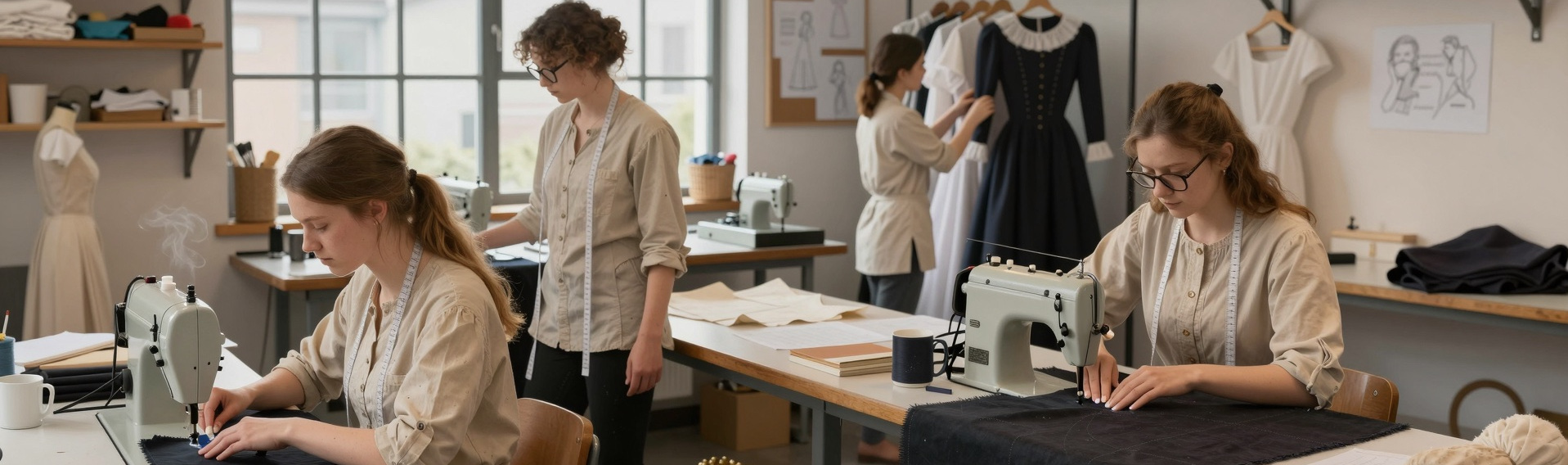
Rough

[ Robyn ]
An update for you, Emily (or a recap, if you refer).
In 'No Room', we left Charlie wanting to leave home, but with no place to move to.
Then, in 'The Missing Spark', Sarah realises her future is woman-shaped.
And now, things come to a head for Lauren. Roger's returning home after a long stint on the Naval Base. So, this chapter 'No Longer Needed' (title totally up for discussion, perhaps a bit obvious) needs to do several key things:
- Lauren confronts Roger about his affair
- he's incensed that she's going through his messages, sidestepping his infidelity completely
- Lauren suddenly realises the relationship has been done for a long time, sees no reason to continue the charade
- Roger realises Lauren's serious, starts having a tantrum
- Lauren appreciates she might be in danger of violence
- Sarah messages her, tells her to come to her place
- Lauren decides to leave
There are some big holes in this chapter.
- Just because "I hadn’t told Sarah anything, but I noticed her eyes on me all day." isn't enough of a reason she should message Lauren just then. That needs dealing with.
- What about Charlie? Lauren is a mother first. She would stay because Charlie lives there too, to protect her son. If she left and Roger — now furious over Lauren leaving and Charlie's career choices... yeah, that doesn't wash.
Got some thinking to do.
Here's what I have so far:
[ Lauren ]
Wardrobe had always been busy in the way a good kitchen was busy — productive noise, purposeful movement, women speaking in shorthand because competence didn’t need speeches.
But that week was different.
That week the workroom had a weight.
The thirty-six costume order was well underway. Tasks had been allocated. Mara had evening interviewed — albeit reluctantly — some potential applicants for casual staff. Only two had any of the skills Wardrobe needed.
My hands stayed steady on my clipboard as if my body didn’t realise my life was rearranging itself by the hour. I moved through the workroom collecting fabric quotes, noting quantities, listening to Celeste’s quiet directives — this, then this, then this, and all the while, another storm loomed at the horizon of my mind.
Roger.
Coming home after an extended period on the base. It was almost laughable how long I’d managed to put dealing with him on hold by staying too busy to feel anything properly.
But busy-ness had limits.
So did denial.
That afternoon, when I finally went home, the air in my house felt wrong: empty, staged, like a hotel room with painted cinder-block walls displaying local artwork in an effort to look cozy.
Roger’s shoes were by the door. His keys were in the bowl. His scent — aftershave and entitlement — hung in the hallway as if it owned the place.
My stomach tightened.
I didn’t go to the kitchen.
I didn’t tidy.
I didn’t do any of my old rituals that had served as delay tactics for years.
I went straight to the study.
Roger was there, leaning back in his chair, phone in hand, smiling at something on the screen. He looked up as if he’d been expecting me.
Not with warmth: with calculation.
“Hey.”
I heard my own voice come out calm.
“So, I know.”
His smile faltered. Then returned, thinner. “Know… what?”
I placed my handbag on the desk with care. I needed my hands to do something controlled.
“Your messages to—.” I waved my hand, dismissive. “Hotel receipts. The lies that don’t even bother trying anymore.”
His expression did the small, practiced shift into indignation.
“You went through my—"
“Don’t bother.”
It came out as a single word. It surprised me how cleanly it came out. Roger stared at me, recalibrating.
Then he tried the other tack, the one that used to work.
“Look, you’re tired,” he said. “You’ve been working too much. And you’re letting those women get in your head.”
It hit me that the penny hadn't dropped. He was speaking to the old version of me: the woman who needed him, who stayed because there was no way out.
“No,” I said. “I’m seeing reality for what it is. For the first time in years.”
His jaw tightened. “So what does this mean?”
“It means I’m done.”
“You’re leaving me?”
I paused.
It was strange.
I was standing in my own house, looking at the man I’d built my life around, and felt nothing but a tired sadness.
“Normally I’d ask you to,” I said. “At your earliest convenience. Tonight.”
His eyes widened, genuinely offended.
“You can’t be serious. You need me!”
Something steady rose in me — quiet, not dramatic.
“No,” I said. “That I don’t. At all.”
I watched that land. Watched the way his face changed — not grief or remorse — just anger at losing a convenience.
“You ungrateful—" he started.
I lifted my hand.
“Don’t.”
Roger stood so suddenly his chair scraped the floor.
“Oh, you think you’re all "independent woman" now, do you?” he snapped. “Just because you’re in some little women’s club playing dress-ups?”
He was so transparent, his words — so revealing.
Dress-ups.
“No,” I said. “I’m awake. And I want better than— this.”
He stepped closer. His voice dropped into that intimate threat men used when they wanted you to remember you were smaller.
“You’re making a mistake.”
I didn’t step back.
“Actually, I’m correcting one.”
He stared at me, breathing hard, then turned away with a violent gesture.
“You are so going to regret this!”
It was almost a script line.
It wasn't until after he'd stormed out that my hands started to shake. I stood alone in the strange quiet.
I felt free, but not safe.
Then, as if on cue, my phone buzzed in my pocket.
Sarah.
You okay?
My eyes stung.
I hadn’t told Sarah anything, but I noticed her eyes on me all day.
My fingers hovered over the keyboard. I tried to type 'I’m fine'. Instead:
No
The reply came instantly, as if she’d been anticipating that response.
Come here now
I sat down slowly on the edge of the chair Roger had scraped the floor with. My chest tightened so hard it stole the air from me.
Sarah’s flat certainty shouldn’t have made me cry.
But it did.
My screen was blurry: I found it hard to type.
I can’t
A beat. Then:
Because you’re proud? Or because you’re scared?
I stared at the words.
My fingers went cold.
I hadn’t said it, not to anyone. I hadn't admitted it even to myself But the true answer rose immediately, humiliating in its honesty:
I had feelings for Sarah.
Because, one day recently — I couldn’t tell the exact day — I’d started wanting Sarah’s attention the way you wanted warmth when you’d been cold for too long: quietly, desperately, and with a shame that didn’t belong to me.
And I was certain Sarah could never want me back.
Sarah was fire. Sarah was sharp. Sarah was the sort of woman who looked like she’d never needed anyone.
And I was— me.
Middle-aged.
Careful.
And, a woman.
My thumbs shook as I typed:
I don’t think you understand
Sarah’s reply took slightly longer this time.
I’m offering you a door that locks Lauren
I swallowed.
The silence was broken with the sound of Roger's tantrum' — cupboards being slammed, something thrown, the heavy-footed performance of a man making sure I heard him.
My body cringed before my mind could stop it.
And that decided it.
I typed:
Ok
A final message came back, firm as a hand at my elbow.
Bring nothing you can’t live without. I’ll make tea.
I stared at the words.
Tea.
Such an ordinary promise.
Such an enormous mercy.
I stood, wiped my cheeks with the heel of my hand, and went to the bedroom to pack with the quiet efficiency of a woman who had finally stopped asking permission. At the front door, I hesitated: one last, stupid reflex of loyalty toward a life that hadn’t been loyal to me.
I stepped out.
The evening air was warm and alive. Somewhere a neighbour’s sprinkler hissed. A couple of crows were gossiping on a power pole.
I moved towards my car.
And for the first time that day I felt the faintest hint of peace: not because everything was resolved, but because I knew women who would not let me face it alone.
A Few Potholes

[ Emily ]
Oh, yes. There are holes — but I think they are the useful sort, because the two biggest ones may actually solve each other.
And I think there is a third issue hiding underneath them:
this chapter currently knows too clearly what it is about.
Lauren knows the marriage is dead, knows Roger is dangerous, knows she has feelings for Sarah, knows Sarah is sanctuary, packs, leaves, and finishes by understanding the solidarity of women. It is emotionally satisfying, but compared with what we've been doing elsewhere, it's doing rather a lot of the reader's work for them.
I think we can make it considerably more dangerous, quieter, and better.
First: Charlie is not an obstacle. Charlie is the mechanism.
You've put your finger on the fatal problem with the current ending. Lauren absolutely cannot simply walk out while Charlie remains in that house with an enraged Roger.
Not this Lauren.
And especially not when Roger's two grievances have now collided:
Lauren has rejected him. Charlie has rejected the future Roger arranged for him.
Roger has lost control of both wife and son on the same evening.
Lauren would see that.
Which suggests to me that her decision isn't:
I have to get out.
It's:
Neither of us is staying here tonight.
And suddenly No Room pays off.
Charlie has spent a whole chapter trying and failing to solve his accommodation problem. Don't solve it there. Let Lauren's crisis solve it here.
That's deliciously structural.
Lauren doesn't need to decide Charlie's permanent accommodation tonight. She only needs to make one immediate maternal decision:
Charlie is not coming home.
Where is Charlie while this confrontation happens?
I think the cleanest answer is almost absurdly simple:
on the bus home from Wardrobe.
That commute we've established becomes useful at last.
Lauren gets home before him because she's driving. Roger is already there. The confrontation happens. Roger's behaviour changes. Lauren realises she doesn't feel safe.
And then — Charlie.
Not as an authorial problem. As Lauren's first thought.
She grabs her phone.
Calls him.
He's perhaps twenty/thirty/forty minutes away, sitting on a bus, messenger bag beside him, completely unaware.
“Mum?”
“Where are you?”
“On the bus.”
“Where?”
He tells her.
“Don't come home.”
Silence.
“Mum?”
“Charlie. Listen to me. Don't come home.”
There's your chapter.
Because Charlie will understand far more from Lauren's voice than from whatever explanation she gives him.
And now Lauren needs somewhere for Charlie to go.
Not herself.
Mother first.
That is when she calls — or messages — Celeste.
Not Sarah.
And I think this is how we finally cash the cheque written in the thirty-six-costume meeting:
“If Charlie moved closer, like, with Celeste—”
The idea already exists in the social world of the story. Celeste has already said found a roomie. The reader doesn't need a new mechanism.
Lauren can call Celeste:
“I need a favour.”
“Okay.”
“Can Charlie stay with you tonight?”
“Yes.”
I wouldn't even let Celeste ask why.
Especially wouldn't let her ask why.
That would be Celeste demonstrating exactly what Lauren needs: yes first; explanation when you're ready.
And notice what that does to Lauren emotionally.
She has secured Charlie.
Now she is allowed to think about herself.
That feels completely true to her.
And that solves Sarah's message too.
I wouldn't have Sarah magically detect a domestic crisis from meaningful looks across Wardrobe.
Give her one concrete piece of information earlier that day.
Lauren doesn't need to confide the affair. She only has to mention:
“Roger gets home today.”
Sarah knows enough about Roger already — particularly the Maintenance/apprenticeship business and Lauren's reactions whenever he comes up — for that to mean something.
Perhaps Sarah is beside her while they're working:
“Roger gets back tonight, doesn't he?”
Lauren keeps writing. “Apparently.”
Sarah looks at her.
“What?”
“Nothing.”
That's enough.
Or stronger — and I like this better — Sarah makes a tiny offer before Lauren leaves Wardrobe:
“Message me when you get home.”
Lauren looks at her. “Why?”
Sarah shrugs. “So I know you got home.”
Lauren knows perfectly well that isn't why.
Sarah knows Lauren knows.
Neither says it.
Now the later:
You okay?
isn't psychic Sarah.
It's Sarah doing exactly what she telegraphed she was going to do.
And if Lauren hasn't messaged her by the expected time, Sarah has an even better reason to initiate:
You home?
Lauren:
Yes
Sarah:
You okay?
Lauren stares at it.
No
Oh, I like that much more.
Sarah has not magically diagnosed violence. She has simply opened the door.
Lauren walks through it.
There is another thing I'd change fairly substantially.
I don't think this is the place for:
I had feelings for Sarah.
In fact, I think that's the equivalent of the future shaped like him line we just murdered in The Missing Spark. 😄
Look at what you've already written around it:
Because, one day recently — I couldn’t tell the exact day — I’d started wanting Sarah’s attention the way you wanted warmth when you’d been cold for too long...
That's lovely prose.
And I think it should go.
Because the scene doesn't need Lauren to diagnose her feelings.
Sarah says:
Come here now
Lauren replies:
I can't
Then Sarah:
Because you're proud? Or because you're scared?
But at present Lauren interprets scared as somehow connected with her attraction to Sarah, whereas the actual danger in the scene is Roger. That muddles the emotional logic precisely when it should sharpen.
I'd make Sarah mean exactly what she appears to mean:
Are you refusing because accepting help is difficult, or because you're frightened of what Roger will do if you leave?
And Lauren knows the answer.
That's much stronger.
Something like:
Because you're proud? Or because you're scared?
I stared at the words.
From somewhere down the hall came the crack of a cupboard door.
Then another.
I looked towards the study.
Scared
Three dots appeared almost immediately.
Then this isn't a discussion. Come here.
Sarah doesn't need to know Lauren loves her.
Lauren doesn't need to know Sarah wants her.
The reader has just come from The Missing Spark, where Sarah has discovered something enormous.
That gives this scene gorgeous dramatic asymmetry.
Sarah knows something Lauren doesn't.
Don't equalise them yet.
Sarah's Come here means considerably more to the reader than it means to Lauren.
That is much tastier. 🌷
And Roger himself could become more frightening by becoming less theatrically frightening.
This:
“Oh, you think you’re all "independent woman" now, do you?” “You are so going to regret this!”
is starting to edge towards Villain Roger.
We don't need him to become a monster to justify Lauren leaving him.
Indeed, I think the affair confrontation gives you something nastier and more revealing:
he simply refuses to discuss the affair.
Lauren says hotel receipts, messages, lies.
Roger says:
“You went through my phone?”
And keeps returning to that.
Lauren eventually realises:
He hasn't denied it. Not once.
That could be the penny-drop.
Not some magnificent feminist awakening.
Just:
I waited.
He didn't say it hadn't happened.
He didn't ask what I'd seen.
He didn't even look embarrassed.
He was angry because I'd found it.
Oh.
That could be the moment the marriage dies — or, more accurately, the moment Lauren realises it died years ago.
And Roger doesn't need to threaten her explicitly.
He stands.
Chair scrapes.
He gets too close.
Lauren becomes aware of the desk behind her.
That's enough.
No:
His voice dropped into that intimate threat men used...
That is author interpretation — precisely the sort of moral regurgitation we've been happily stripping out.
Instead:
Roger stood.
The chair shot backwards and struck the filing cabinet.
I didn't move.
He came around the desk.
Only then did I notice I'd put myself between him and the wall.
There's the danger.
Lauren's a nurse. She's spent a lifetime reading bodies. Let her body read Roger before her conscious mind catches up.
And perhaps that is what changes:
She doesn't think Roger is going to hit me.
She thinks:
I couldn't get past him.
That is a frighteningly practical thought.
And once she's had it, she cannot un-have it.
Which leads to another important change.
I don't think Roger should storm out.
Lauren should leave while Roger is still there.
The current version lets the pressure out:
It wasn't until after he'd stormed out...
If he's gone, Lauren is safe. The urgency collapses.
Instead, Roger storms out of the study and starts banging around elsewhere in the house. That seems to be what the later draft is trying to do anyway, because presently he apparently storms out and then mysteriously continues slamming cupboards inside the house. 😄
Make the geography explicit.
He leaves the room.
Lauren remains.
Then the cupboard.
Another.
Something hits the sink/floor/wall.
She hears him moving through her house.
Now:
I felt free, but not safe.
lands beautifully.
And then Charlie occurs to her.
I'd actually put Charlie before Sarah's message.
Something structurally like:
- Lauren confronts Roger.
- Roger makes the privacy violation the offence; never denies the affair.
- Lauren realises the marriage isn't merely failing — there's nothing left she wants to save.
- She tells him it's over.
- His behaviour changes enough that Lauren becomes physically aware of danger.
- Roger leaves the study but remains in the house, angrily making his presence felt.
- Lauren thinks: Charlie.
- Calls Charlie on the bus: Don't come home.
- Calls Celeste: Can he stay with you tonight? — immediate yes.
- Only after her son is safe does Lauren discover that she herself has nowhere to go.
- Sarah, who knew Roger was coming home and had told Lauren to message, checks in.
- Lauren finally answers No.
- Sarah offers the locked door.
- Lauren leaves.
That is so much stronger to me.
And it produces a lovely double movement:
Charlie has been looking for somewhere to leave to. Lauren hasn't realised she needs somewhere to leave to.
On the same night, both problems become unavoidable.
One more thing: I'd seriously reconsider the final paragraph.
...because I knew women who would not let me face it alone.
It's true.
Which is exactly why Lauren doesn't need to say it.
We've just watched Celeste take Charlie without interrogation and Sarah offer Lauren a door that locks.
The reader has eyes. 😄
I'd be tempted to end much smaller.
Perhaps she gets into the car.
Locks the doors.
Then Sarah messages:
Tell me when you're moving
Lauren:
Moving
And she drives.
Or your sprinkler/crows material could give us the ordinary world continuing around this enormous private rupture:
I stepped outside and closed the door behind me.
Somewhere down the street, a sprinkler hissed across somebody's lawn.
Two crows argued on the power line.
I put my bag on the passenger seat, locked the doors, and started the car.
End.
No peace yet.
No interpretation.
No solidarity thesis.
No romantic revelation.
Just Lauren in a locked car.
Going somewhere safe.
And Sarah is waiting there.
The reader who has just read The Missing Spark knows something Lauren doesn't.
That's the spark. ❤️
As for the title: No Longer Needed is doing the same explanatory work I'd remove from the prose. It tells us Lauren discovers she doesn't need Roger. I'd look for something concrete from the chapter instead. A Door That Locks immediately appeals to me — because it isn't about independence at all. It's about safety, Sarah's offer, and Lauren finally accepting help. No Room → The Missing Spark → A Door That Locks also has a rather lovely progression: nowhere to go → something newly recognised → somewhere safe to go.
What About?
[ Robyn ]
And now, to the discussion at Celeste's. This is actually a bit challenging, because of the personalities involved. So far:
[ Celeste ]
I found Charlie standing at the bus stop, looking like something that had been ordered and forgotten about.
He slipped wordlessly into the passenger seat. I caught the quick glance in my direction.
His throat worked.
"I promise I'll find something soon."
I raised my hand as we pulled away from the kerb.
"Let's cross that bridge when we come to it," I said. "We might just pop into Woolies and get you a toothbrush."
As we were crossing the carpark, I got a text from Sarah.
Charlie with you?
I texted back as we entered the store:
yes just at woolies
We were in the medication aisle when my phone pinged again.
we're heading to your place with stuff for Charlie
I turned to him.
He was staring at toothbrushes.
For far too long.
His eyes caught mine, and he reddened slightly.
"I'd go with extra soft, Charlie," I said. "I hear they're easier on your gums."
He nodded. And selected what was on special.
Sarah and Lauren were standing next to Lauren's little i20 when we got home.
I unlocked the door. It creaked as I pushed it open with my shoulder, and waved everyone in.
Sarah marched in with all the confidence of someone in charge of things. Lauren followed her, her shoulders a bit stiff carrying a canvas bag. And Charlie stood on the landing, uncertain. I waved him in, almost impatient.
"Tea!" I announced as I flipped on the kettle.
Lauren settled slowly into a chair in the kitchenette and looked around her.
"Where's the loo?" Sarah asked.
I pointed.
"Put your bag in your room, Charlie," I told him. "It's the last door on the right, after the toilet."
Lauren motioned him over.
"Sorry, I was in a bit of a hurry," she said as she handed him the canvas bag. He disappeared into his room.
By the time he'd re-emerged, everyone had settled into the tiny living room. Sarah perched on the edge of a kitchen chair. She took a sip of her tea.
... and then, it's discussion: rules / terms
At First Blush
[ Emily ]
Oh, this is challenging, because the danger now is writing a committee meeting. 😄 And these four people absolutely would not conduct one.
What you've got before the discussion is doing something important: it decompresses after Lauren's scene. Toothbrushes. Woolies. Tea. Toilet. Canvas bag. Nobody says Tonight has been traumatic. They deal with practical things. Very Wardrobe.
And Charlie staring at the toothbrushes for too long is excellent. He isn't actually choosing a toothbrush. His entire life has just been displaced and his brain has been presented with soft, medium or firm. Celeste understands enough to solve that tiny decision without commenting on the enormous one.
"I'd go with extra soft, Charlie."
Lovely.
But I think the conversation that follows has one crucial structural requirement:
Charlie must not discover that three women have already decided where he is going to live.
Sarah and Celeste can have developed a framework. They can have done the arithmetic. They can have identified the safety issues. They can even be convinced it's an excellent solution.
But what they bring to Lauren and Charlie must be a proposal.
And each woman has a different stake in it.
Who does what
Sarah starts it. Definitely.
She's the one who contacted Celeste. She's the one who has been thinking ahead while Lauren was still dealing with Roger. And Sarah is Sarah: once Charlie is back in the room and tea has been distributed, she's not going to spend fifteen minutes discussing the weather.
I can almost hear:
Sarah took another sip.
"Right. Charlie needs somewhere to live."
Poor Charlie. 😄
Celeste might immediately moderate:
"Potentially."
Sarah looks at her.
"He does."
That gives us both women instantly.
Lauren is the difficult one.
She's going to be enormously grateful Charlie is safe, but the moment she realises Sarah and Celeste have been discussing her son's living arrangements without her, I think her back goes up.
Not explosively.
Just:
"You've discussed this?"
That's Lauren.
And Sarah doesn't apologise for solving the problem:
"Yes."
Celeste, however, understands what Lauren is actually asking:
Have you made decisions about my son without me?
So Celeste needs to make very clear:
"Discussed. Not decided."
And then — critically — Charlie needs to be included.
Something like:
"And nobody's deciding anything now," I said. "Charlie lives here only if Charlie wants to live here."
That protects the entire ethos of the book.
Charlie may initially misunderstand the offer
This could be delicious.
He's already said:
"I promise I'll find something soon."
He thinks tonight is emergency accommodation.
So when Sarah says they've been discussing a more permanent arrangement, Charlie may immediately hear:
I have become a problem requiring management.
That's why I'd let the first practical question come from him:
"How much?"
Not Do you really want me here?
Not Would that be okay?
How much?
Because Charlie has been searching rentals. He knows rooms cost money. He wants to establish immediately that he's not being kept.
And this is where Celeste needs to be very careful.
She cannot say:
"Don't worry about rent."
Because Charlie would hate that, Lauren would dislike it, and it would turn an adult arrangement into charity.
There should be rent.
Affordable, real rent.
And I think Lauren would actually relax slightly when she hears that.
This is not Celeste taking her son in. Charlie would be renting a room.
That distinction is huge.
Then Sarah's framework can emerge organically
Don't have her read a list.
Let each term arise because somebody needs it.
For instance:
"How much?"
I told him.
His eyebrows rose.
"That's less than—"
"Yes," Sarah said. "We know."
Lauren looked at her. "You've worked this out?"
"We had a drive."
😂
There's Sarah.
Then perhaps Sarah explains the reasoning: Charlie already travels to Wardrobe; Celeste has the room; the rent contributes to Celeste's household; Charlie gets dramatically shorter travel; nobody is financially exploiting anybody.
Lauren starts doing calculations automatically.
Nurse/planner Lauren comes back online.
"Food?"
"Separate," I said.
Sarah shook her head. "Stupid."
I stared at her.
"You'll end up cooking together."
"That's not the point."
"It's exactly the point."
Lauren rubbed her forehead. "Can we perhaps establish the important things first?"
There they all are. 😄
And Charlie is sitting quietly absorbing the fact that these women have apparently constructed a small housing policy around him while he was buying a toothbrush.
The rules should tell us about Celeste
This is the bit I'd enjoy.
Because Celeste has already said in the earlier meeting:
"We follow rules here; why not at home?"
Now she has to discover what her rules actually are.
And I don't think she has many.
Lauren will want structure.
Sarah will want safety.
Charlie will want to know exactly what is expected.
Celeste may be the least organised person in the room about the actual domestic mechanics because, until about an hour ago, she didn't have a tenant.
So:
"Rules," Lauren said.
I nodded.
"Yes."
She waited.
I realised she expected me to have some.
That is very Celeste POV. 😂
Sarah has already thought about some, of course.
But I'd avoid cute roommate rules. The important framework is adult and practical:
Rent. Privacy. Guests. Household expenses. Food. Cleaning. Notice if either wants to end the arrangement. Keys/security. Communication about being away overnight.
And one particular issue needs to surface because of what happened tonight:
Roger does not get access to Charlie through Celeste.
That one I think comes from Lauren.
Not:
"Roger isn't allowed here."
because this is Celeste's house.
Lauren might instead say:
"There's something else."
I waited.
"Roger."
Charlie went still.
"He doesn't get a key," Lauren said.
"Obviously," Sarah said.
I looked at Lauren.
"He doesn't come in unless I invite him."
That's Celeste establishing her own boundary.
Perhaps:
"And I won't."
But I'm not sure she should make an eternal promise in the heat of tonight. Better:
"This is my home. Nobody comes in because they think they're entitled to."
That has wider resonance without being a speech.
And I think Charlie should get one rule of his own
This is important.
Everyone else establishing terms for Charlie risks recreating precisely the thing Roger has been doing.
So at some point Celeste asks:
"Anything you need?"
Charlie is surprised.
"Me?"
"You're the other person who'd be living here."
And what does Charlie ask for?
I wouldn't make it profound.
Something practical.
Perhaps:
"Can I put a lock on my door?"
Ooof.
Maybe too loaded immediately after Roger. And Celeste's house probably already has ordinary bedroom privacy.
Something more Charlie:
"Where do I put washing?"
😂
Honestly, that might be perfect.
Everyone has been discussing rent and security and Roger and boundaries, and Charlie's pressing concern is that he has just noticed there is nowhere obvious for dirty clothes.
It tells us he has already, tentatively, begun imagining living here.
Celeste notices.
She doesn't interpret it for us.
Lauren needs to relinquish something
The emotional movement of this scene, I think, belongs primarily to Lauren even though Celeste narrates it.
Lauren arrives carrying Charlie's things.
She expects emergency accommodation.
She discovers Sarah and Celeste have developed a possible longer-term solution.
Her initial response is:
Wait. You did what?
Then she interrogates it.
Rent? Food? Transport? Privacy? Safety? Roger? Duration?
And gradually she discovers that the proposal survives scrutiny.
That's what convinces Lauren.
Not affection.
The plan is good.
That's exactly how you convince a planner.
And eventually perhaps she turns to Charlie:
"What do you think?"
Charlie has barely spoken.
And there's your important moment.
He looks around Celeste's little place. His canvas bag is already in the room down the hall. There's a Woolies toothbrush sitting beside whatever else they bought.
Maybe:
"The bus is twenty minutes."
Lauren laughs.
Not because it's funny, exactly.
Because of course that's Charlie's answer.
Or:
"I'd like to try it."
I think try is important.
Nobody needs to decide tonight that this is permanent.
A trial period would be extremely Lauren/Sarah/Celeste:
Four weeks. Then review.
Suddenly the whole thing becomes safer psychologically.
Charlie isn't moving in forever.
Celeste isn't making an indefinite commitment.
Lauren isn't surrendering her son.
They are testing an arrangement.
Good heavens, they're Wardrobe women.
Of course they'd prototype it. 😂
That may actually be your framework.
One-month trial. Defined rent. Defined household expectations. Charlie has his own room and privacy. Roger has no automatic access. Either Charlie or Celeste can end it. Review after four weeks.
No grand decision required.
And Mara would approve:
No guesses. Test.
I wouldn't actually invoke Mara or the ledger, because that would be too darling by half. But structurally, it's exactly how these people think.
And then I'd resist ending the scene with Lauren thanking everyone tearfully.
Give us something domestic.
Agreement reached.
Lauren looks tired.
Sarah perhaps takes her empty mug.
Charlie asks where he should put his toothbrush.
Or Celeste realises:
I hadn't bought him a towel.
That's gorgeous because the grand housing summit collapses back into somebody staying tonight.
They've solved rent, privacy, safety and Roger.
Nobody remembered a bloody towel. 😄
That's where I'd head with this scene: Sarah opens the proposal, Lauren stress-tests it, Celeste establishes the boundaries of her home, Charlie is given the deciding vote.
Four personalities, four jobs.
Then it won't feel like a meeting.
It'll feel like them. ❤️
One Night Only
[ Robyn ]
I agree: this would be a long chapter because this would be a long talk.
Couple of points: Lauren's just been through trauma. So, that post-trauma period is likely to be hitting her. As a mum, the initial hurtle was getting him to safety. Done. She's not going to be much in the mood to discuss more permanent living arrangements: this is a two-days-max solution, in her mind. And likely, in Charlie's as well. Too-hard basket to be planning that far in the future.
Have Celeste and Sarah discussed it? Of course. Backstory would be that when Celeste brought it up in Wardrobe, Sarah and her would have hashed out a lot of details. And watched the thing with Tahlia fall through. Celeste wouldn't have been all that keen at first anyway, but after a month with closet-smoker Au-Pair girl, she would have been quite happy to see her south side heading north and been a lot more amenable to having Charlie replace her. Charlie doesn't do things in hiding (Celeste wouldn't know about the Spiro at this stage - no one does).
So, that's my take in this chapter. We deal with tonight and tomorrow, and perhaps discuss something more full-time/permanent at Wardrobe with Mara present.
Oh, Actually Yes
[ Emily ]
Yes. I think your version is psychologically much truer, and I'd pull back from my previous idea of letting the permanent-arrangement discussion happen tonight.
Lauren has already used up her executive-function budget. 😄
She has confronted her husband, discovered him intoxicated, had her exit physically blocked, assessed an unfamiliar risk, protected Charlie without alerting him, packed and left her home, and put herself in Sarah's hands. By the time she gets to Celeste's, the planner isn't available for a housing summit.
And there's an important distinction:
Lauren hasn't changed her planning horizon. Her planning horizon has collapsed.
Normally she thinks weeks and months ahead. Tonight she can manage:
- Is Charles safe?
- Where is he sleeping?
- Does he have what he needs?
- Where am I sleeping?
- What happens tomorrow morning?
Anything beyond that belongs firmly in the too-hard basket.
Which changes what this Celeste scene is actually about
It's not the room discussion.
It's the scene that makes the later room discussion possible.
And I think that's considerably better.
Celeste and Sarah already know there's a potential solution. They've previously kicked the tyres on it. Celeste originally wasn't enormously enthusiastic, partly because she already had someone occupying the room; Sarah and Celeste have discussed practicalities; Tahlia was another possibility; that collapsed because of the Saint Bernards/allergy problem.
Now circumstances have unexpectedly lined everything up:
Charlie needs somewhere. Celeste's room is becoming available. Charlie is already there. The commute works enormously better. Celeste knows him and trusts him. Sarah trusts both of them.
Sarah and Celeste can see the pieces clicking together.
Lauren cannot.
Not tonight.
And because they're competent women rather than plot-delivery mechanisms, they recognise that.
That gives the coming conversation much more texture.
Sarah may arrive prepared to discuss what she and Celeste have already worked out. Then she sees Lauren.
And shelves it.
That would be a lovely Sarah beat.
So what actually gets discussed?
Very little beyond the immediate arrangement—and yet because of the personalities, it can still be a substantial scene.
Lauren needs to know exactly what tonight means.
Charlie is sleeping in the spare room.
For how long?
Celeste might say:
"As long as he needs."
And Lauren immediately rejects the vagueness because she can't cope with another undefined thing tonight:
"No. Just tonight."
Or perhaps:
"Tonight and tomorrow. I'll work something out."
There's Lauren.
She hasn't stopped being the planner. She's desperately trying to restore the planner:
Give me forty-eight hours. I'll fix this.
Charlie probably shares that assumption completely.
"I'll look tomorrow."
Of course he will.
He's already been looking.
And Celeste and Sarah exchange the glance.
Not a sitcom glance. Just recognition.
Because both know:
You two are about to spend forty-eight hours trying to solve a problem for which we may already have an answer.
But they don't say it.
That restraint is important.
Celeste especially shouldn't push
Your Au-pair backstory makes Celeste's position much better.
Previously the proposition was:
Would I want Charlie living with me?
And Celeste's answer was probably something like:
Ehhhhhh... maybe?
Not because she dislikes Charlie. Because sharing your home with someone is enormous.
Then she's had a month of closet-smoker Au-Pair Girl. 😂
Someone who conceals things, breaks whatever household understanding exists, perhaps thinks Celeste can't smell cigarette smoke because apparently Celeste was born yesterday.
Now compare that with Charlie.
Charlie asks before touching things.
Charlie follows rules literally.
Charlie cleans up.
Charlie doesn't sneak.
Charlie probably tells Celeste he's going outside before he goes outside. 😄
And, crucially, Celeste has spent months learning that Charlie is extremely safe company.
So without Charlie doing anything at all, the comparison tenant has made him look spectacular.
That's a much better reason for Celeste's attitude to have changed than Celeste has become closer to Charlie and therefore wants him there.
She has acquired data about what she values in a housemate.
And Charlie scores ridiculously well.
Sarah knows this
That's where I think Sarah can quietly operate tonight.
She doesn't need to sell Lauren the arrangement.
She just needs to establish that Lauren doesn't have to solve it tomorrow morning.
Perhaps Lauren says:
"I'll start looking tomorrow."
And Sarah says:
"Don't."
Lauren looks at her.
Sarah softens it:
"Not tomorrow."
That's all.
Because Sarah has just watched Lauren come out of an unsafe domestic situation. The last thing she needs is Lauren getting up at seven tomorrow morning and opening Flatmates while still running on adrenaline.
Celeste can support:
"He's fine here."
Charlie perhaps starts:
"I don't want to—"
Celeste:
"Charlie. You bought a toothbrush."
😂
Not necessarily that line, but that energy.
Nobody is asking him to decide anything. Sleep here. Eat breakfast. Go to work. We'll deal with the rest later.
That should be tonight's framework.
And I strongly agree
about moving the permanent discussion to Wardrobe
Especially with Mara present.
That's much more powerful.
Because then we're not discussing Lauren's emergency while Lauren is traumatised.
We're discussing Charlie's living arrangements after everyone has slept, after Roger is no longer immediately relevant, and in the place where the practical benefits of the arrangement are obvious.
And Mara adds something nobody in Celeste's living room can quite provide:
distance.
Sarah has feelings for Lauren.
Celeste has feelings for Charlie.
Lauren is his mother.
Charlie desperately needs somewhere.
They're all interested parties.
Mara isn't.
Mara can look at the proposal and ask:
Does this actually work?
Rent. Transport. Hours. Privacy. Boundaries. Duration.
And—very Mara—she can puncture any hint that Charlie owes Celeste gratitude beyond the obligations of an ordinary tenant.
If he's paying rent, he's renting a room.
Not being rescued.
That distinction will matter enormously to Charlie.
It also lets the eventual agreement become very Wardrobe:
Sarah and Celeste have already done preliminary thinking.
Lauren examines the proposal when she's capable of examining it.
Mara stress-tests it.
Charlie decides.
Perfect.
Which means the present scene can breathe
And I think that's why you're right that this chapter may become long.
The Celeste section doesn't have to advance the housing plot very far. It can advance people.
Lauren can sit there with tea and gradually come down.
Charlie can be desperately uncertain about what he's allowed to do.
Celeste can make ordinary domestic accommodations without turning them into generosity.
Sarah can watch Lauren.
Lauren can watch Charlie.
And everybody can conspicuously not talk about Roger very much.
In fact, I think one of the strongest moments might simply be Lauren seeing Charlie emerge from that spare room after putting his bag down.
He's safe.
There.
Physically in front of her.
Perhaps that's when some of her composure finally fails—not dramatically, but something tiny. Her hand tightens around the mug. She looks down. Sarah notices.
Because the first objective Lauren set herself after Roger blocked that doorway was:
Charles can't come home.
And now he hasn't.
Mission accomplished.
Only then does her nervous system have permission to start presenting the bill.
So I'd make the governing principle of the Celeste scene:
Tonight is not for solving their lives. Tonight is for making sure everybody has somewhere safe to sleep.
Tomorrow can arrive tomorrow.
And the real room discussion belongs at Wardrobe, where Charlie's future can be considered as a practical proposition rather than as an extension of Lauren's emergency.
I think that's substantially better. ❤️
Images Link
😄💞 /-->
🌹